
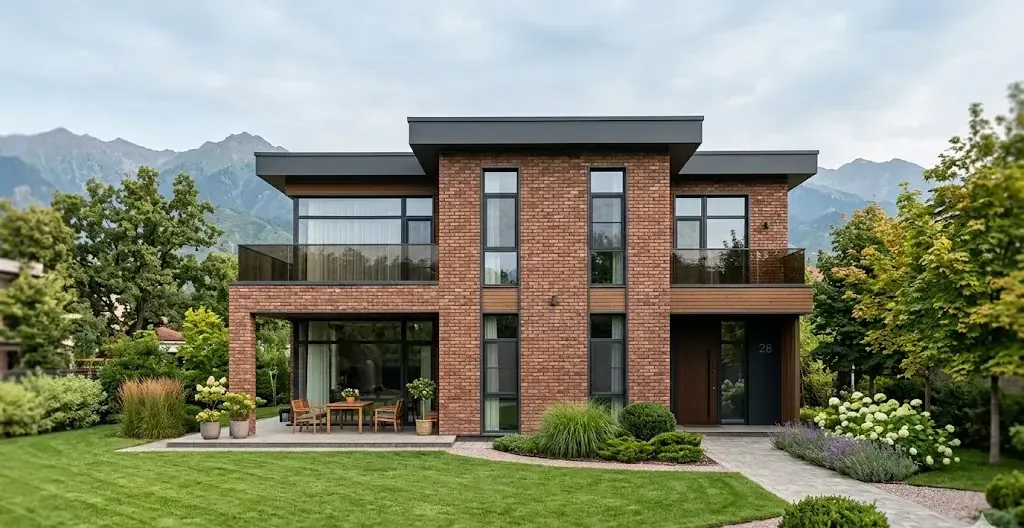
Facade finishing with brick-look panels in Almaty
from 6 000 tg.* per linear metre
Durable, high-quality facade finishing thanks to compliance with building codes and the high qualifications of our craftsmen.
 Joints to GOST 5264-80
Installation from 1 day Arrival within 45 minutes
Installation from 1 day 3-year warranty
 Prices from 5000 ₸
Contract and estimate
Facade finishing with brick-look panels in Almaty
from 6 000 tg.* per linear metre
Durable, high-quality facade finishing thanks to compliance with building codes and the high qualifications of our craftsmen.
Joints to GOST 5264-80
Installation from 1 day
Arrival within 45 minutes
Installation from 1 day
3-year warranty
Prices from 5000 ₸
Contract and estimate
Facade finishing with brick-look panels in Almaty
from 6 000 tg.* per linear metre
Durable, high-quality facade finishing thanks to compliance with building codes and the high qualifications of our craftsmen.
Joints to GOST 5264-80
Installation from 1 day
Arrival within 45 minutes
Installation from 1 day
3-year warranty
Prices from 5000 ₸
Contract and estimate
Types of facade
work we do
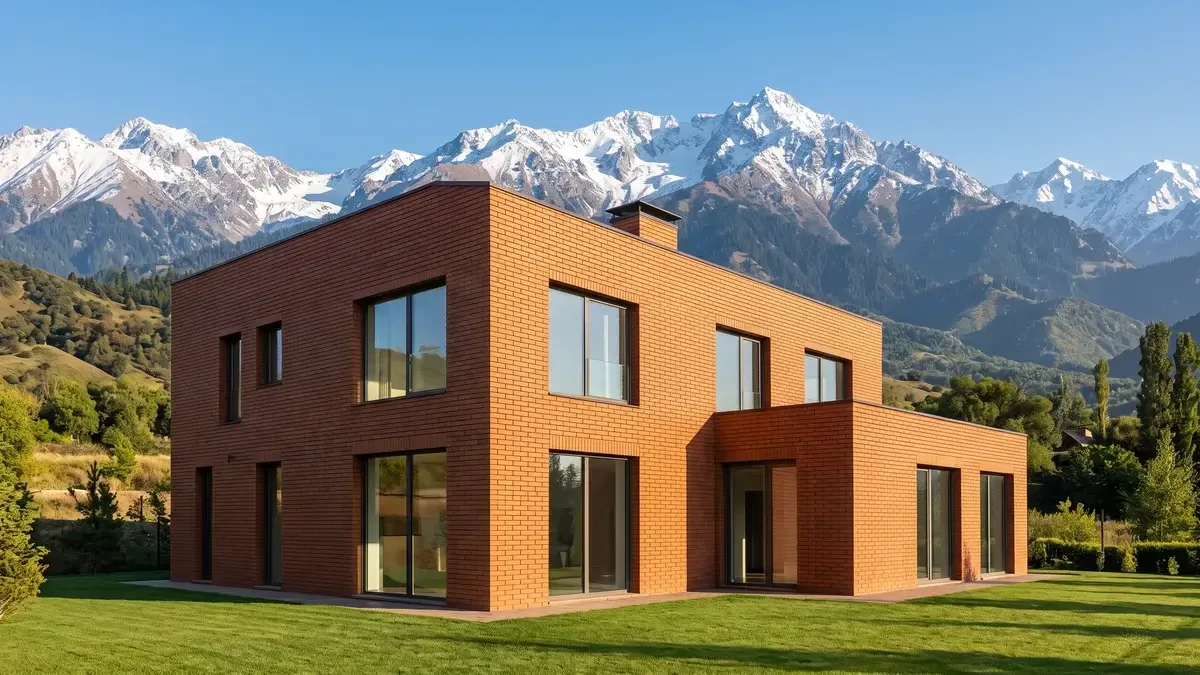
Cladding a house with facing brick
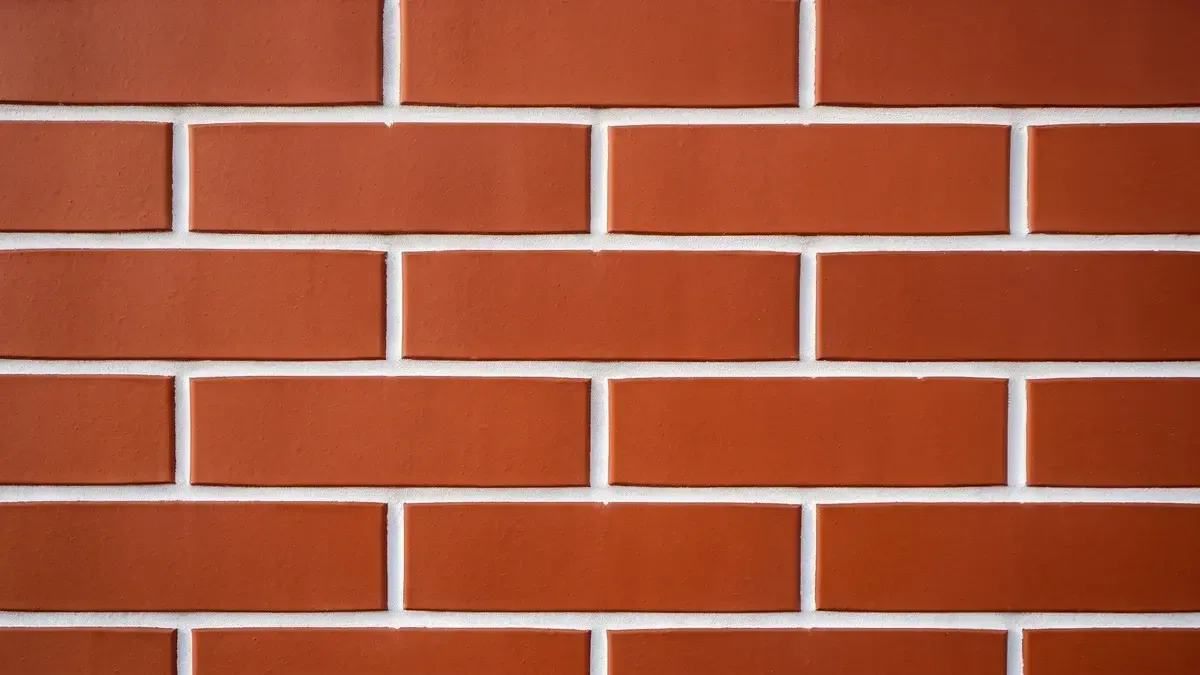
Laying facing brick for jointing
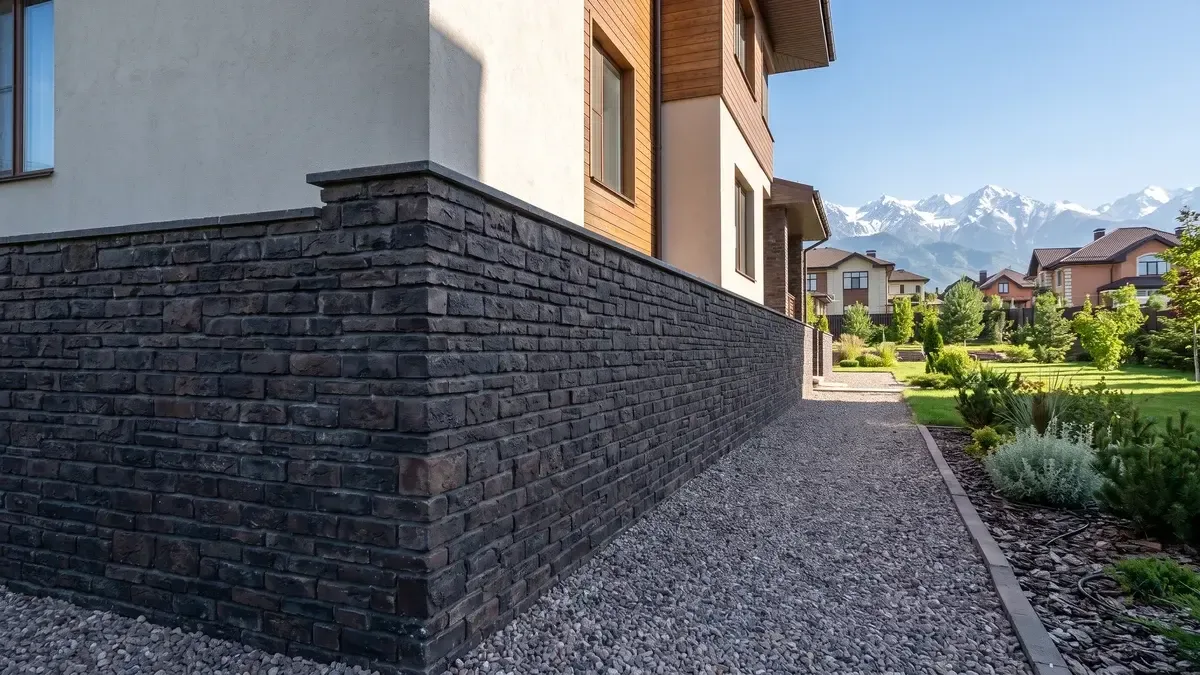
Plinth cladding with brick
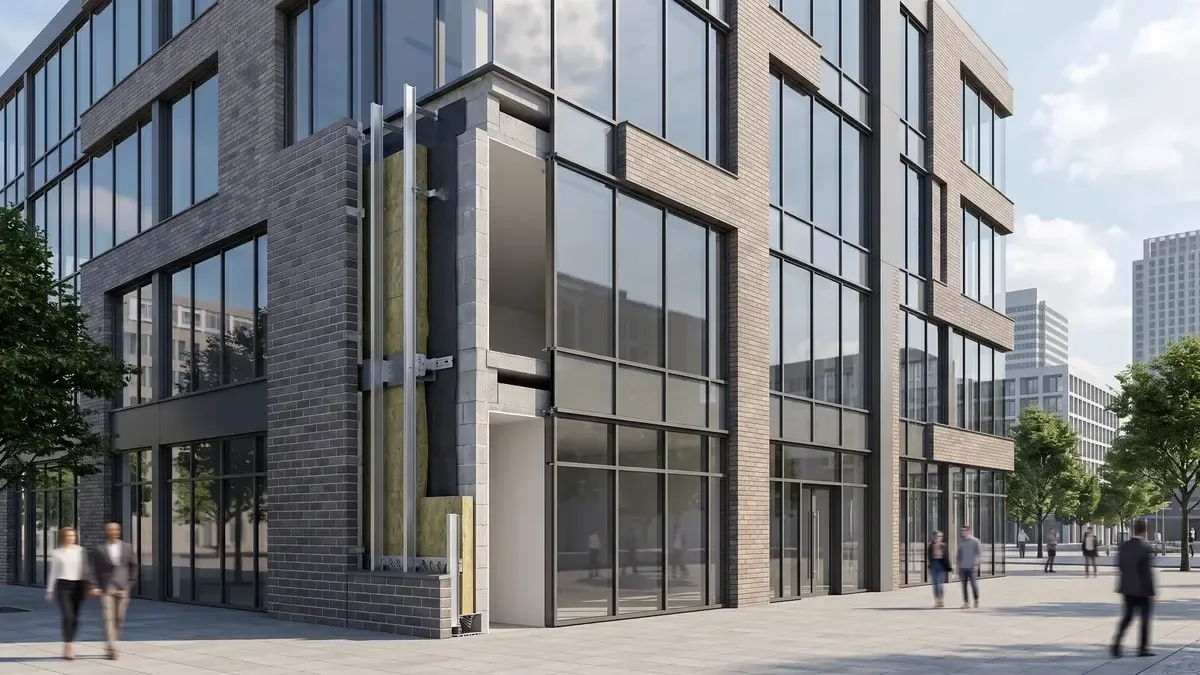
Installation of a ventilated facade with cladding
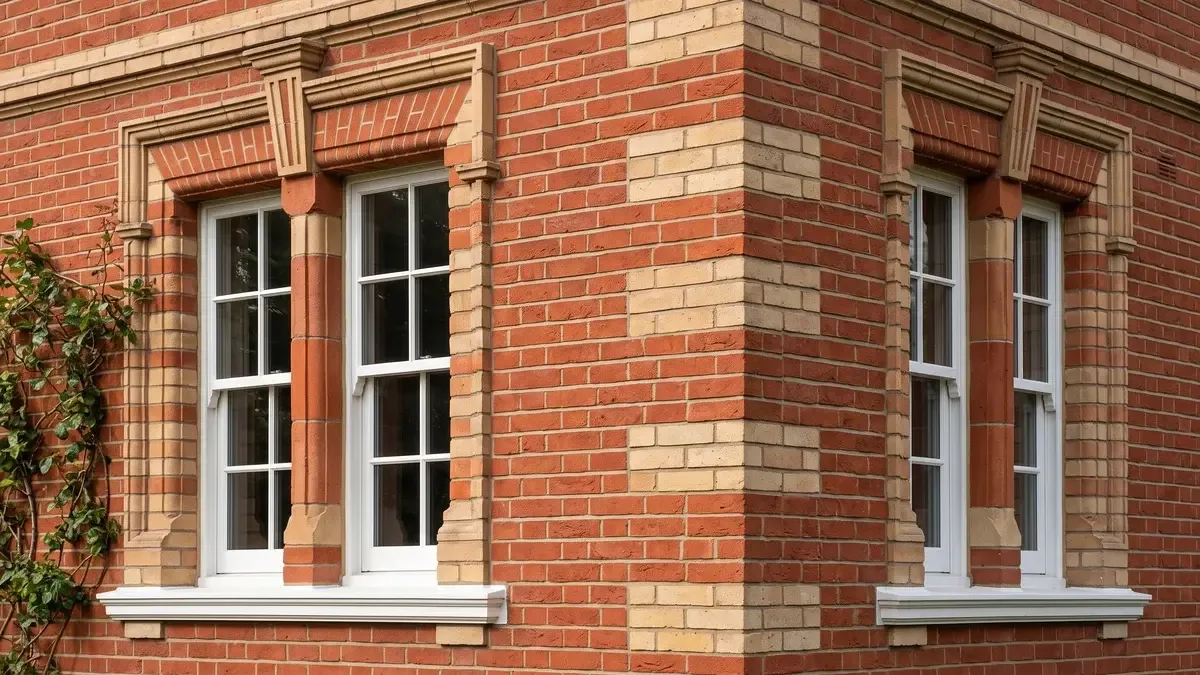
Cladding of corners and window openings
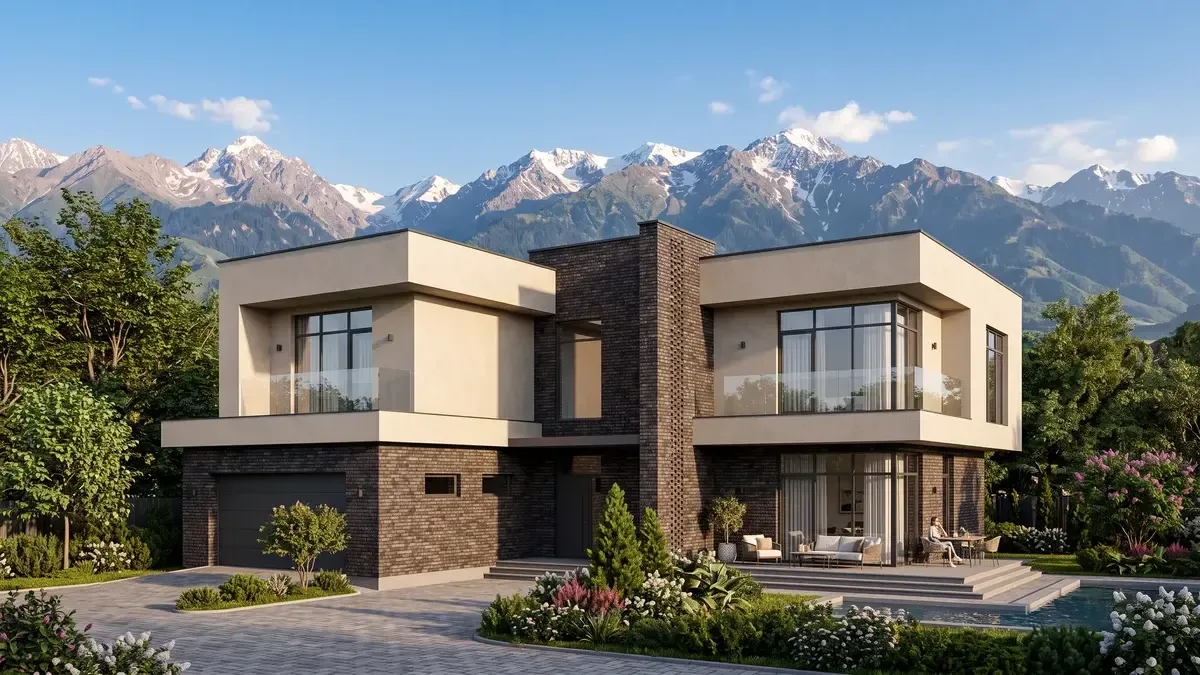
Combined facade cladding
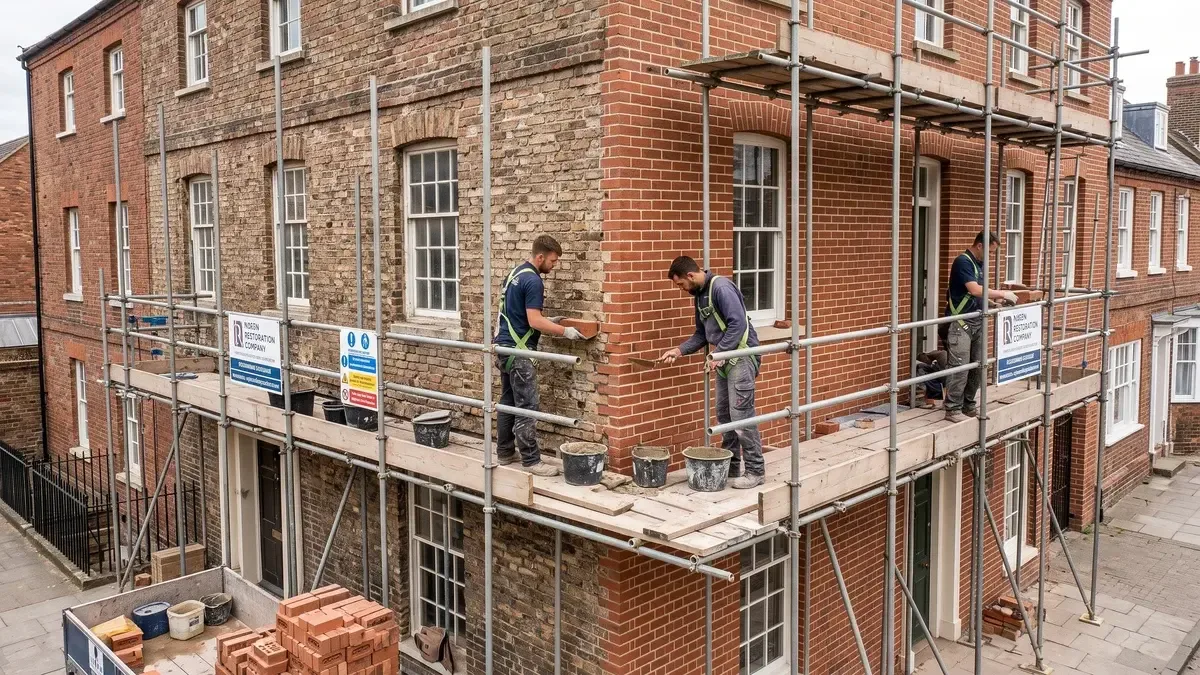
Repair and restoration of brickwork
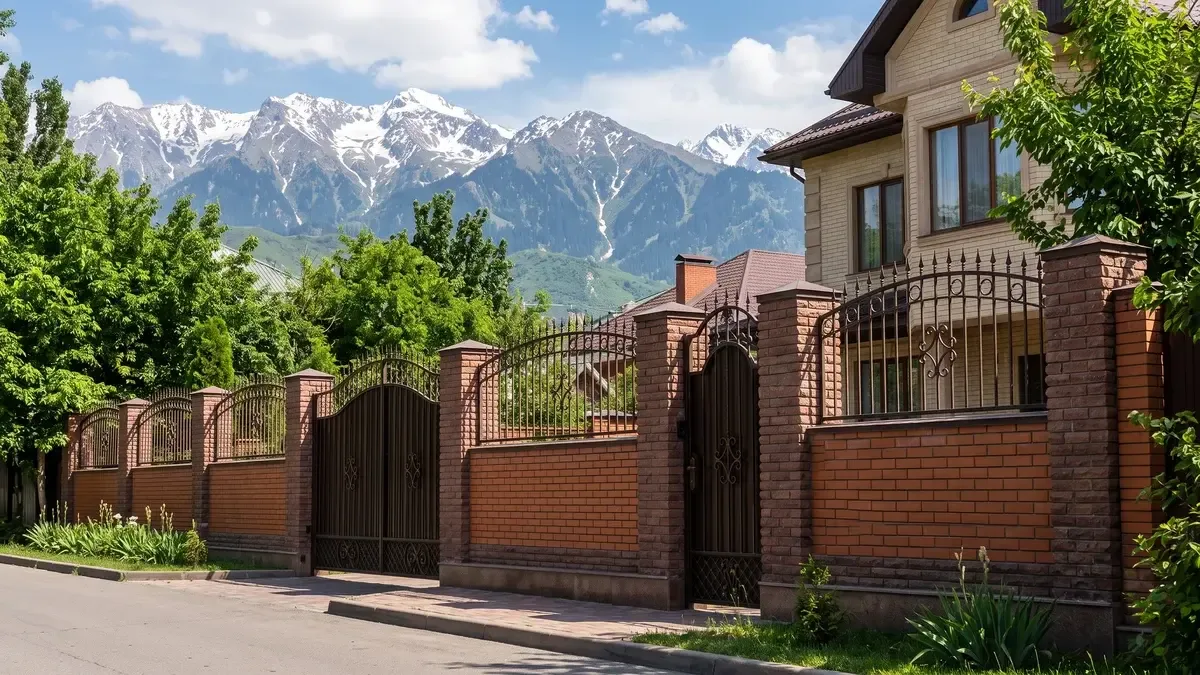
Cladding of fences and enclosures
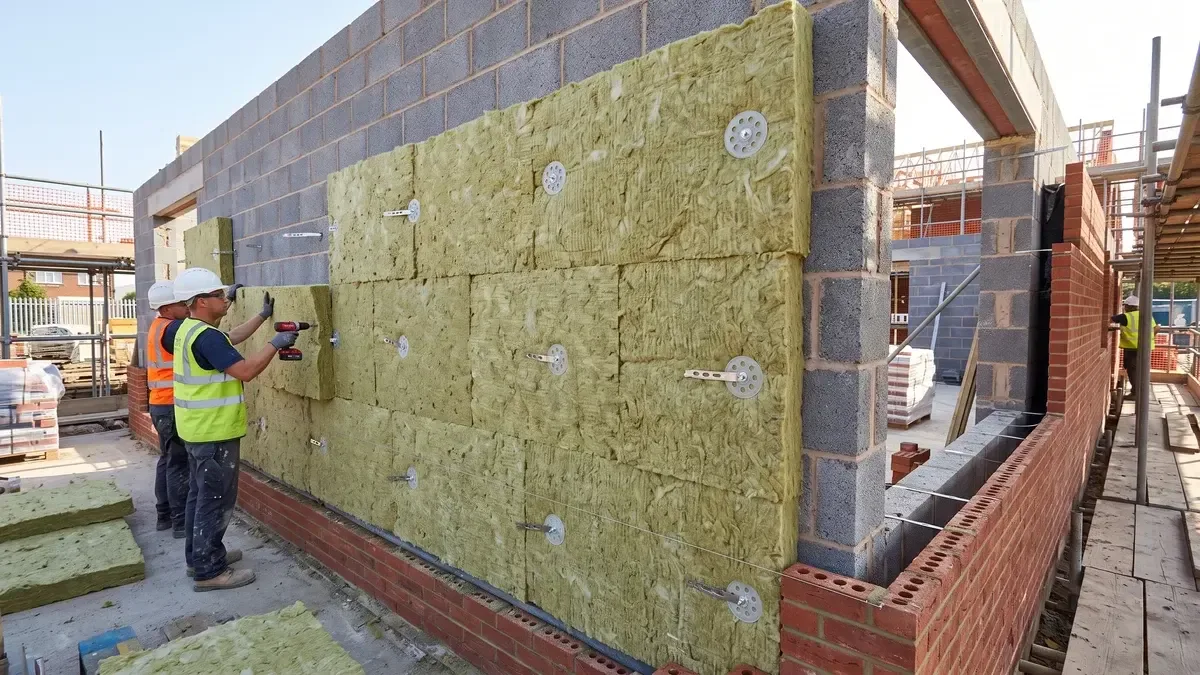
Facade insulation under facing brick
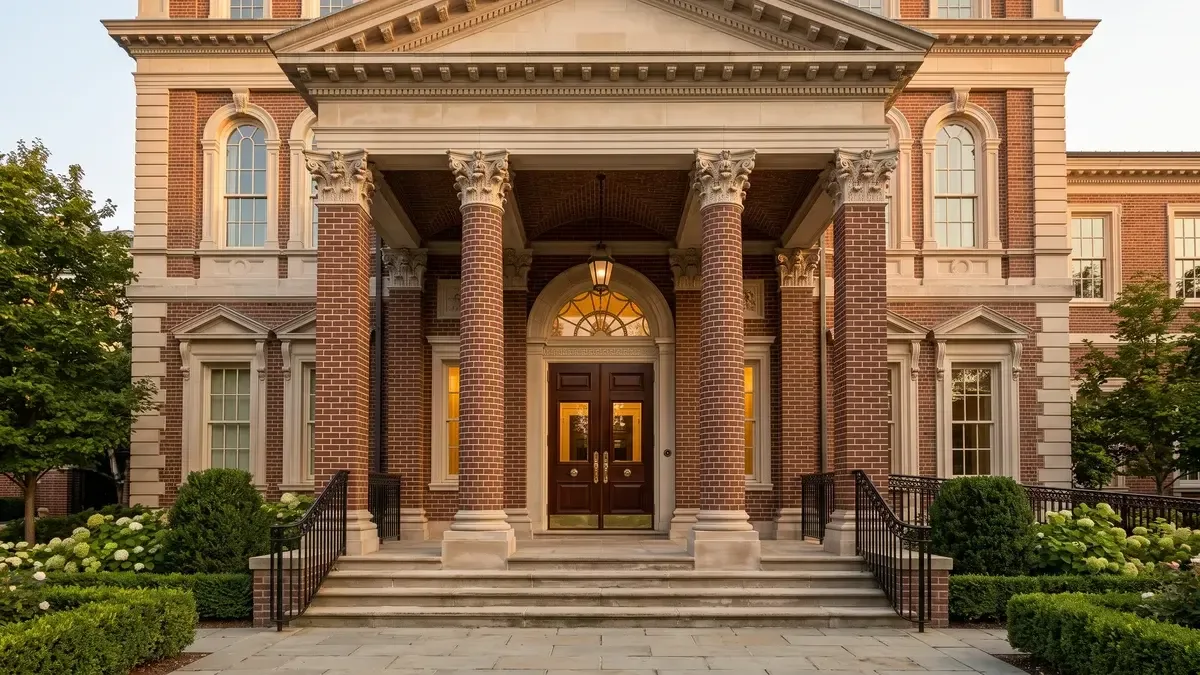
Cladding of columns and pilasters
Types of facade
work we do
Cladding a house with facing brick
Laying facing brick for jointing
Plinth cladding with brick
Installation of a ventilated facade with cladding
Cladding of columns and pilasters
Cladding of fences and enclosures
Combined facade cladding
Repair and restoration of brickwork
Facade insulation under facing brick
Cladding of corners and window openings
We will call you back within 3 minutes
Types of facade
work we do
Cladding a house with facing brick
Laying facing brick for jointing
Plinth cladding with brick
Facade insulation under facing brick
Cladding of columns and pilasters
Cladding of fences and enclosures
Cladding of corners and window openings
Combined facade cladding
Repair and restoration of brickwork
Installation of a ventilated facade with cladding
We will call you back within 3 minutes
Cost of facade work in
Almaty
| SERVICE | COST | TIME |
|---|---|---|
| Specialist visit to the site (survey, consultation) | from 5 000 ₸ | from 1 hour |
| Minimum order value | from 80 000 ₸ | — |
| Installation of panels on a prepared base (per 1 m²) | from 3 500 ₸ | from 2 days |
| Installation with battening (per 1 m²) | from 5 000 ₸ | from 3 days |
| Installation with facade insulation (per 1 m²) | from 7 000 ₸ | from 4 days |
| Finishing of corners and reveals (per 1 linear metre) | from 2 500 ₸ | from 1 day |
| Wall preparation (levelling, priming) per 1 m² | from 1 500 ₸ | from 1 day |
| Sealing joints and seams (per 1 linear metre) | from 800 ₸ | from 1 hour |
| Removal of old cladding (per 1 m²) | from 1 200 ₸ | from 1 day |
| Clean-up and removal of construction debris | from 15 000 ₸ | from 1 day |
Advantages of facade work from Profi-Dom

Neat joints with no chips
We use professional jointing tools that prevent damage to the tiles during laying

Certified craftsmen
Each specialist confirms their qualification with an annual exam in facade technologies

Equipment for a wet facade
We use industrial mixers and plastering stations that ensure even application of the layers

Meeting the finishing deadlines
The average cycle of turnkey facade work takes 21 working days on a weekly schedule

5-year
warranty on the facade
We fix our obligations in a contract, including protection against plaster peeling and fastener corrosion

Transparent estimate in ₸
We fix the cost of materials and work in the estimate, with no hidden markups or extra charges
Advantages of facade work from Profi-Dom
We use professional jointing tools that prevent damage to the tiles during laying
Neat joints with no chips
Each specialist confirms their qualification with an annual exam in facade technologies
Certified craftsmen
We use industrial mixers and plastering stations that ensure even application of the layers
Equipment for a wet facade
The average cycle of turnkey facade work takes 21 working days on a weekly schedule
Meeting the finishing deadlines
We fix our obligations in a contract, including protection against plaster peeling and fastener corrosion
5-year
warranty on the facade
We fix the cost of materials and work in the estimate, with no hidden markups or extra charges
Transparent price in KZT
We will call you back within 3 minutes
Advantages of facade work from Profi-Dom
We use professional jointing tools that prevent damage to the tiles during laying
Neat joints with no chips
Each specialist confirms their qualification with an annual exam in facade technologies
Certified craftsmen
We use industrial mixers and plastering stations that ensure even application of the layers
Equipment for a wet facade
The average cycle of turnkey facade work takes 21 working days on a weekly schedule
Meeting the finishing deadlines
We fix our obligations in a contract, including protection against plaster peeling and fastener corrosion
5-year
warranty on the facade
We fix the cost of materials and work in the estimate, with no hidden markups or extra charges
Transparent price in KZT
We will call you back within 3 minutes
HOW WE WORK
- 01.Discussion and estimate
We visit the site or hold an online consultation to determine the scope of work precisely and prepare a transparent estimate with no hidden charges.
- 02.Visit for precise measurements
Our specialist comes at a time convenient for you, takes all the necessary measurements and records the features of the facade for a perfect fit of the material.
- 03.Creating the design and sketch
We develop a detailed cladding plan with a panel layout, so that you can see in advance how your house will look after installation.
- 04.Approval of the contract
In the contract we fix the final cost, the exact completion dates and the warranty obligations, so that you feel protected.
- 05.Preparation of materials
We order certified siding and all components, checking each batch for compliance with quality standards and colour.
- 06.Professional installation
Our craftsmen install the battens and fix the panels using a technology that prevents deformation and ensures a long facade service life.
- 07.Finishing and sealing
We carefully finish all corners, joints and openings, treating them with sealant to protect against moisture and draughts.
- 08.Handover of the site and cleanup
After the work is finished we remove the construction debris and carry out a final inspection together with you to make sure the result is flawless.
Find out the cost and timing of facade work in 1 minute
catalogue of completed facade work
 Facade insulation and plastering of a private house in the Alatau microdistrict
 Plinth cladding of a shopping centre on Abay Avenue
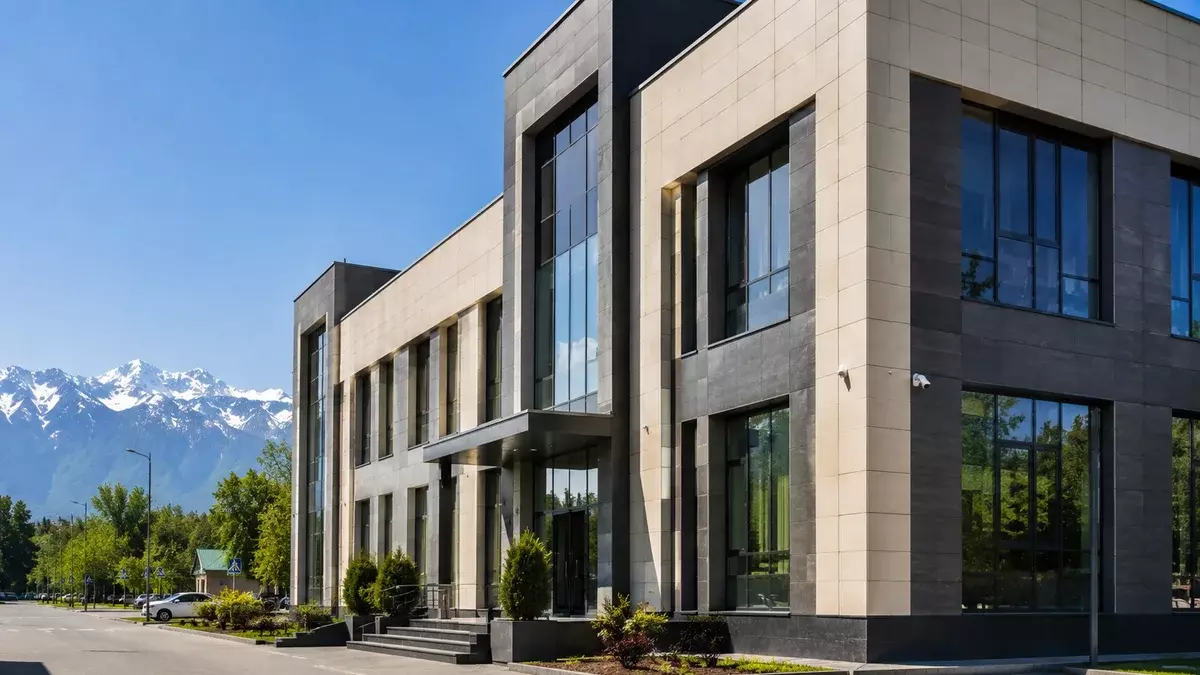 Installation of a ventilated facade on an office building in the Bostandyk district
 Painting and repair of the facade of an apartment building in the Samal microdistrict
FIND OUT THE COST OF FACADE WORK FOR YOUR PROJECT
Leave a request and we will contact you within 3 minutes
Thank you! We will contact you within 3 minutes.
By clicking the button you agree to the terms of the
 Privacy Policy
FIND OUT THE COST OF FACADE WORK FOR YOUR PROJECT
Leave a request and we will contact you within 3 minutes
Thank you! We will contact you within 3 minutes.
By clicking the button you agree to the terms of the
Or call us at
+7 (707) 068-88-68Privacy PolicyFIND OUT THE COST OF FACADE WORK FOR YOUR PROJECT
Leave a request and we will contact you within 3 minutes
Thank you! We will contact you within 3 minutes.
By clicking the button you agree to the terms of the
Or call us at
+7 (707) 068-88-68Facade finishing with brick-look panels in detail
Finishing a facade with brick-look panels is a modern alternative to natural brick that is lighter, warmer and cheaper. In Almaty PROFI-DOM offers 5 types of panels: clinker thermal panels, fibre cement, PVC, metal and panels without insulation. The price per m² is from 8 500 to 18 000 KZT including installation.
What brick-look facade panels are and what types exist
The brick-look finishing price depends on the facade area, material and complexity — we calculate the exact sum after taking measurements. Brick-look facade panels are a cladding material that imitates brickwork but is 3–4 times lighter than natural brick. On the Almaty market this material is gaining popularity: it gives a solid look without weighing down the foundation or wet processes.
What brick-look facade panels are
Brick-look facade panels are a cladding material that imitates the texture and colour of brickwork but weighs 3–4 times less than natural brick and requires no reinforcement of the foundation. The structure is a base of insulation or cement mix with a fused decorative layer, where each 'brick' has a chamfer and joint depth visible from any angle — unlike textured 'fur coat' plaster or smooth siding. Installation is done on battens or guides without wet processes, which rules out the shrinkage and cracks typical of plastered facades on aerated concrete and SIP panels in new builds. The ventilated gap between panel and wall carries away condensation, and the low weight allows the material to be mounted on old facades without removing the previous cladding — this cuts the preparation budget by 30–40 %.
Five types of brick-look facade panels
| Panel type | Material | Thickness | Service life | Price per m² (material) |
|---|---|---|---|---|
| Clinker thermal panels | Clinker tile + polystyrene foam | 60–100 mm | 50+ years | 7 500–12 000 Kzt |
| Fibre cement panels | Cement + cellulose | 8–12 mm | 30–40 years | 5 000–8 000 Kzt |
| PVC plinth siding | Polyvinyl chloride | 2–3 mm | 20–25 years | 3 000–5 000 Kzt |
| Metal panels | Galvanised steel with polymer coating | 0,5–0,7 mm | 25–30 years | 4 000–6 000 Kzt |
| Panels without insulation | Clinker / fibre cement | 8–14 mm | 30–50 years | 4 500–7 000 Kzt |
Fibre cement is suitable for the plinth and areas of high humidity, while PVC siding is only for walls above 1 metre from the ground, as it cracks on impact.
Which brick-look panels are best for the Almaty climate
For the Almaty climate, with its frequent crossings through zero and frosts down to -30 °C, clinker thermal panels are the best fit — they have a frost resistance rating of F150 (150 freeze cycles) and do not crack. PVC panels lose their flexibility at -25 °C: an impact from a branch or hail can split the facade, so they are used only on the southern side or on a protected plinth. Fibre cement withstands the swings, but its joints need silicone sealing every 5–7 years — otherwise moisture gets under the board and tears off the coating when it freezes. Metal panels with a polymer coating are UV-resistant, but on the southern side in summer they heat up to +70 °C, deforming the locking connections. The best solution is clinker with 60–80 mm of polystyrene foam: it insulates the walls and fears neither frost nor sun, and its service life exceeds 50 years without repair.
Brick-look panels or real brick — which to choose
A comparison of brick-look panels and natural brick by key parameters: weight, price, thermal insulation, installation speed, durability.
Comparison of brick-look panels and natural brick
| Parameter | Brick-look panels | Natural brick |
|---|---|---|
| Weight of 1 m² | 15-25 kg | 80-120 kg |
| Price per m² (material + work) | 8 500-18 000 Kzt | 15 000-25 000 Kzt |
| Thermal insulation | Yes (with insulation) | No (requires insulation) |
| Installation speed (100 m²) | 5-10 days | 20-30 days |
| Service life | 30-50 years | 100+ years |
| Need for a foundation | No | Yes |
When brick-look panels are more cost-effective than brick
This kind of finishing beats natural brick in three scenarios: when cladding an old house without reinforcing the foundation (reinforcing a strip foundation for brick costs from 15 000 KZT per m²), with a budget of up to 12 000 KZT per m² of facade, and when the walls need insulation — clinker thermal panels with expanded polystyrene or mineral wool give a thermal resistance of 2.5–3.5 m²·°C/W against 0.5 for bare brick. On the Almaty market in the winter of /26 the price difference between insulated brick (25 000–35 000 KZT per m²) and thermal panels (11 000–18 000 KZT) came to 40–55% for comparable thermal performance. If you count the full cost with materials and labour, panels with insulation are 30–50% — cheaper than brick with separate insulation — this is confirmed by the estimates for our projects in the Nurlytau and Gorny Gigant neighbourhoods.
Installation technology for brick-look facade panels
Installing brick-look facade panels takes five stages: from the measurer's visit to the final grouting of the joints. The panels are fixed to a frame (battens) or with adhesive — the choice depends on how even the walls are and whether insulation is needed.
Stages of installing brick-look facade panels
Installing brick-look facade panels takes place in 5 stages: the surveyor visit, base preparation, battening (or an adhesive layer), fitting the panels, grouting the joints and installing the corner elements. At the first stage the surveyor records the geometry of the facade with a laser rangefinder, noting the wall deviations and window reveals — in order to cut the panels to the millimetre. Base preparation includes cleaning off dust, old paint and detachment; where deviations exceed 2 cm, levelling with beacon plaster is required. For the frame method a galvanised profile or timber 40×40 mm is used at a 50–60 cm spacing to the level; for the adhesive method, polyurethane adhesive is applied to an even wall with a notched trowel. The panels are fitted from the bottom up, fixed to the frame with washer-head self-tapping screws or pressed to the adhesive for 10–15 seconds. In local practice the most common defect in DIY installation is the wrong gap: if you do not leave 3–5 mm for thermal expansion, the panels will bulge in summer and the facade will go wavy.
Can brick-look panels be installed over an old facade
Yes, brick-look panels can be installed over an old facade if the walls are even (deviations of no more than 2 cm per 2 metres) and there is no detachment of the plaster — in that case the panels are fixed to battens over the old finish. The frame method is preferable here: it evens out irregularities in the old base and creates a ventilation gap of 20–40 mm that removes condensation from behind the cladding. If the old plaster is not holding firmly, it is chipped off down to the brick or gas block with a rotary hammer — otherwise the battens will tear off together with the panels under the weight of 15–20 kg/m². If fungus or mould is found, the walls must be treated with antiseptic before installation — otherwise the deterioration will continue under the panels, and in 3–5 years the facade will have to be redone.
Is insulation needed under facade panels
If clinker thermal panels with insulation (polystyrene foam 60–100 mm) are chosen, no additional insulation is needed — they provide the thermal insulation themselves. For panels without insulation (fibre cement, polypropylene) a separate insulation layer of mineral wool or foam 50–100 mm thick is required, fixed to the wall before the battens. Thermal panels with 80 mm of insulation give a thermal resistance of R=2,5 m²·°C/W, which meets the standards for residential houses — in Almaty winters this is enough without additional wall insulation.
Can brick-look panels be installed in winter
Yes, installing brick-look facade panels in winter is possible at temperatures down to -10°C, provided adhesives with winter additives are used and the panels are given 24 hours to acclimatise on site. Winter-grade polyurethane adhesive sets at sub-zero temperatures — temporary props are used to hold the panels while they dry. With frame (batten) installation there are practically no winter restrictions: it is enough to avoid snowfall and strong wind, which can knock the rails out of line.
Details and joining of the imitation brickwork
Correct joining of the panels and the finishing of corners, window and door openings is the key factor determining the appearance and durability of the facade.
How brick-look panels join together
Brick-look panels are joined with a tongue-and-groove system or overlapped with a mandatory gap of 3-5 mm for thermal expansion — the joints are then filled with frost-resistant grout that does not crack under temperature swings. In local conditions, where there can be up to 40 freeze-thaw cycles over a winter, an elastic acrylic-based grout lasts 5-7 years longer than a cement one — the latter shrinks and produces microcracks already after the first winter. The fasteners (dowels with heat-resistant heads or metal self-tapping screws) are installed in pre-drilled holes at 30-40 cm spacing along the guide profiles, and the heads are hidden under a layer of grout or decorative caps in the panel colour. If the joints are grouted poorly, water gets into them, expands when it freezes and tears the panels off the wall — this accounts for 80% of all problems with panel facades in Almaty.
Finishing of corners and window openings
Corners and window openings are finished with special corner elements made of the same material as the panels — they close the joints and give the facade the look of solid brickwork with no visible seams. For clinker thermal panels the corner pieces are cast together with the brick texture, and on the finished facade the joint between panel and corner is noticeable only by touch — visually it is a monolithic wall. Window and door reveals are made from the same panels, but with mandatory insulation of 50-80 mm expanded polystyrene, otherwise up to 15% of the whole facade's heat is lost through cold bridges in the openings. On windows and doors, reveals of the same panels or metal ones must be fitted — without them water will run down the wall under the panels, and after 2-3 winters the material will start to peel off.
Price of facade finishing with brick-look panels per m² in Almaty
We break down the cost of cladding a facade with brick-look panels: the real price per m² of material, the price per m² of installation and the final turnkey estimate for a 100 m² house at Almaty rates.
Price per m² of brick-look facade panels
| Panel type | Material price per m² | Installation per m² | Total turnkey per m² |
|---|---|---|---|
| Clinker thermal panels | 7 500–12 000 Kzt | 4 000–6 000 Kzt | 11 500–18 000 Kzt |
| Fibre cement panels | 5 000–8 000 Kzt | 3 500–5 000 Kzt | 8 500–13 000 Kzt |
| PVC plinth siding | 3 000–5 000 Kzt | 3 000–4 000 Kzt | 6 000–9 000 Kzt |
| Metal panels | 4 000–6 000 Kzt | 3 000–4 000 Kzt | 7 000–10 000 Kzt |
Clinker thermal panels are the most expensive of all (up to 18 000 KZT/m²), but the built-in polystyrene foam with a density of 25 kg/m³ replaces a separate insulation layer — a saving of 3 000–5 000 KZT/m². Fibre cement is the golden mean: it does not crack in the sun or fade over 5–7 years in the local climate, unlike PVC, which on the southern side deforms after just 2–3 seasons.
What is included in the installation cost
The installation cost of brick-look facade panels includes: base preparation, fitting the battens, fixing the panels, grouting the joints, installing corner elements and reveals, and site clean-up. Wall preparation includes cleaning off old plaster and dust, and on problem areas — levelling with cement mortar or fitting a levelling layer of cement-bonded particle board (an extra 1 000–1 500 KZT/m²). Battens of galvanised profile for clinker thermal panels cost 1 200–1 800 KZT/m² at a 60 cm spacing that withstands a load of 45–60 kg/m², while coloured frost-resistant grout (Quick-Mix or Ceresit) adds 800–1 200 KZT/m² — without it the joints crumble within a year from temperature swings. The surveyor visit and estimate are usually free, which lets you find out the exact final cost with no hidden surcharges for complex areas or extra materials.
How much does cladding a 100 m² house with brick-look panels cost
Cladding a house of 100 m² with brick-look panels costs from 850 000 to 1 800 000 KZT turnkey — depending on the chosen type of panels and the complexity of the facade (number of windows, corners, storeys). For a rectangular single-storey house of 8×10 m with four windows in fibre cement the estimate will be around 1 000 000–1 200 000 KZT at an average consumption of 115 m² of panels (allowing for 5–7% waste on cutting). With clinker thermal panels the same house will cost 1 500 000–1 700 000 KZT, but 300 000–400 000 KZT for separate insulation is deducted from the sum — it is already built into the panel. A house with bay windows, arches or complex wall geometry is 15–20% more expensive due to the increased material consumption of 10–15% for each corner and projection.
Turnkey facade finishing with brick-look panels with PROFI-DOM
Turnkey facade finishing with brick-look panels is a full cycle: from measuring to clearing the site, with a fixed estimate and a guarantee on the result.
How PROFI-DOM finishes facades with brick-look panels
PROFI-DOM carries out turnkey facade finishing with brick-look panels: a surveyor visit, estimate calculation, material delivery, installation with base preparation, joint grouting, fitting of corners and reveals, and site clean-up. The first stage is a free measurement: the engineer visits the site, records the geometry of the walls with a laser rangefinder, and checks the level deviations and the type of base (concrete, gas block, old facade). From this data the exact quantity of clinker thermal panels with insulation, corner elements and joint sealant is calculated — the estimate is fixed in the contract with no right to increase it. Material delivery is arranged the day before work starts so the crew is not left idle. The installation itself is done on a frame of galvanised profile or antiseptic-treated timber, with a windproof membrane laid under the panels as a must — this prevents condensation inside the assembly. We use only clinker thermal panels with insulation from trusted suppliers — this rules out the risk of defects often found in cheap panels from the market.
Warranty on work and materials from PROFI-DOM
PROFI-DOM gives a warranty on facade panel installation of 5 years, and on the materials (clinker thermal panels) up to 25 years from the manufacturer, confirmed by certificates and the contract. The installation warranty is written into the contract as a separate clause: it covers detachment of the panels from the base, the appearance of cracks in the joint grout and deformation due to errors in installing the frame or incorrect fastening. On the clinker thermal panels themselves the manufacturer gives 25 years: clinker does not fade in the sun (unlike plastic analogues), does not absorb moisture and withstands up to 300 freeze-thaw cycles — this is critical for an Almaty winter with swings from -25 to +5 in a day. The materials warranty applies provided the installation follows the manufacturer's technology, which we confirm with a hidden-works certificate. The installation warranty covers panel detachment, cracks in the joints and deformation due to installation errors — this protects the client from rework that with unscrupulous contractors costs as much as a new facade.
Why clients choose PROFI-DOM for facade finishing in Almaty
PROFI-DOM is chosen for three reasons: work with clinker thermal panels that do not fade or crack in the climate of the southern capital; a 5-year warranty on the installation; and a free visit for measurement and estimate with no hidden surcharges. Our specialists have at least 3 years of experience installing clinker thermal panels, are trained by the material supplier and work with a fixing system that eliminates cold bridges. Our crews travel to the Auezov, Bostandyk, Medeu and Nauryzbai districts — this lets them get to measurements promptly and oversee every stage of the installation in person.
Conclusion
We have covered the key points of finishing a facade with brick-look panels: from choosing the material to the installation technology and a real estimate at Almaty rates.
Key takeaways
Finishing a facade with brick-look panels is a modern solution that combines the aesthetics of brickwork with light weight, thermal insulation and an affordable price. Unlike natural brick, the panels weigh 15–25 kg/m² against 180–250 kg/m², require no reinforcement of the foundation and are installed in 7–14 days instead of 2–3 months. At the same time, the imitation of brickwork with quality clinker thermal panels is visually indistinguishable from real brick, while an insulation thickness of 60–100 mm gives a heat transfer resistance of up to 3.5 m²·°C/W — above the SNiP requirements in Almaty. A ventilated facade additionally protects the walls from overwetting and mould. When choosing panels it is important to take the region's climate into account — for the city, clinker thermal panels with frost resistance F150 and 60-100 mm of insulation are optimal.