
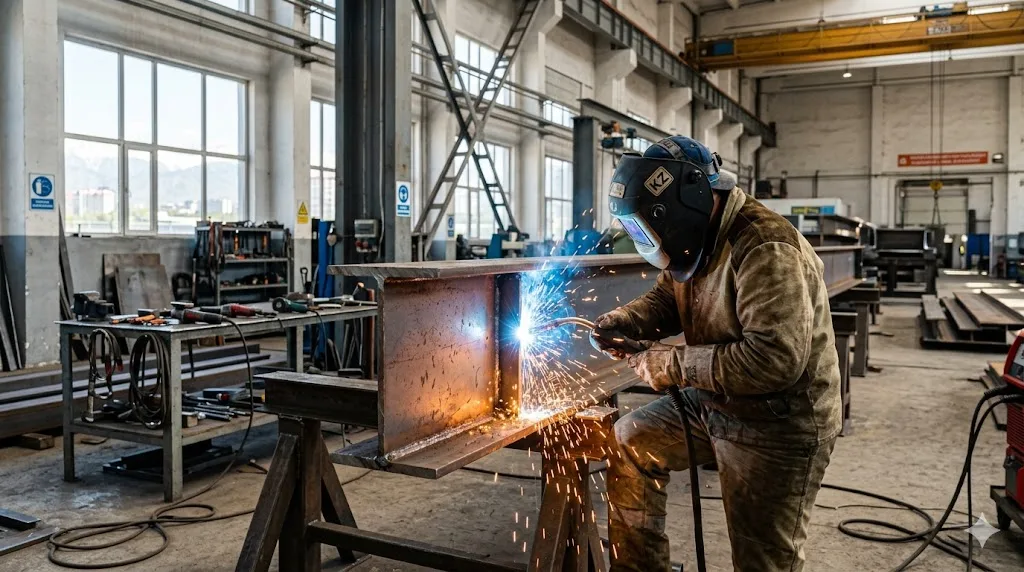
Metal structure welding in Almaty
from 5 000 KZT* per metre of joint
Durable and high-quality welding of steel structures, thanks to adherence to high quality standards and the high skill of our employees.
 Joints to GOST 5264-80
Installation from 1 day Arrival within 45 minutes
Installation from 1 day 3-year warranty
 Prices from 5000 ₸
Contract and estimate

Metal structure welding in Almaty
from 5 000 KZT* per metre of joint
Durable and high-quality welding of steel structures, thanks to adherence to high quality standards and the high skill of our employees.
Joints to GOST 5264-80
Installation from 1 day
Arrival within 45 minutes
Installation from 1 day
3-year warranty
Prices from 5000 ₸
Contract and estimate
Metal structure welding in Almaty
from 5 000 KZT* per metre of joint
Durable and high-quality welding of steel structures, thanks to adherence to high quality standards and the high skill of our employees.
Joints to GOST 5264-80
Installation from 1 day
Arrival within 45 minutes
Installation from 1 day
3-year warranty
Prices from 5000 ₸
Contract and estimate
Types of welding
work we do
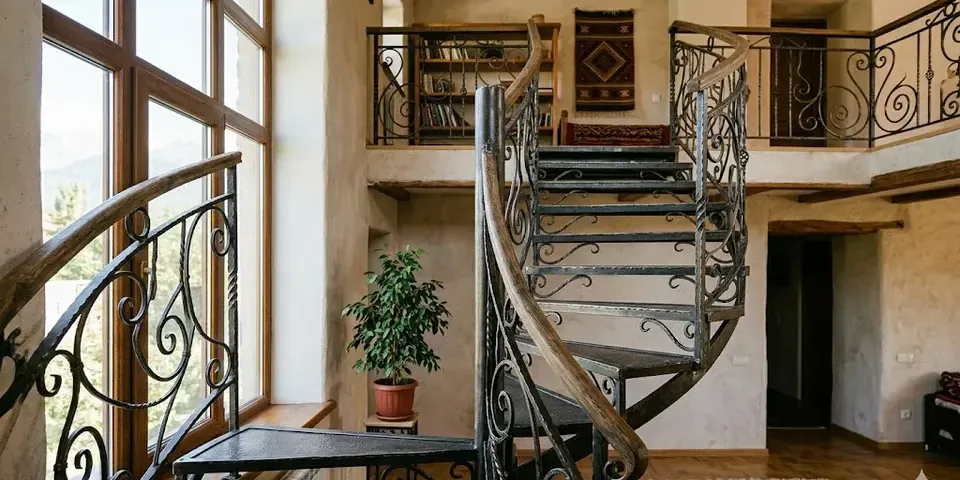
Manufacture of staircases
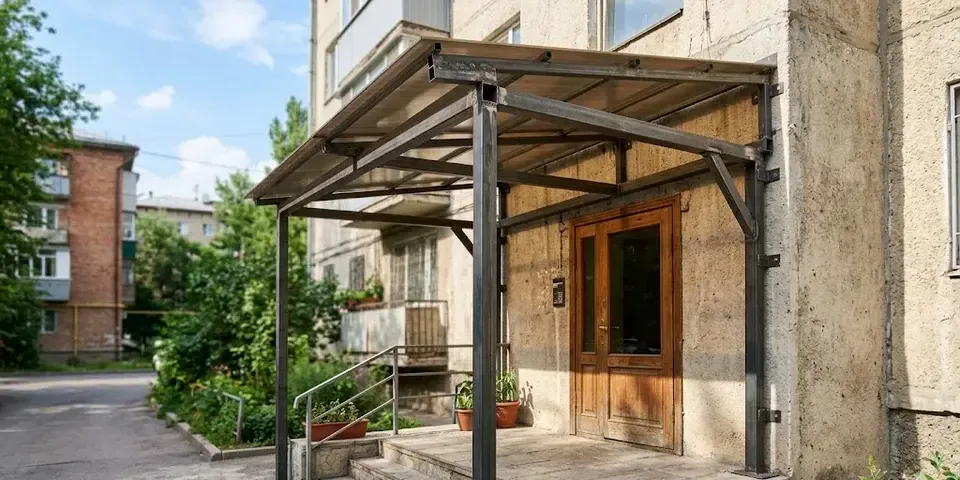
Installation of canopies
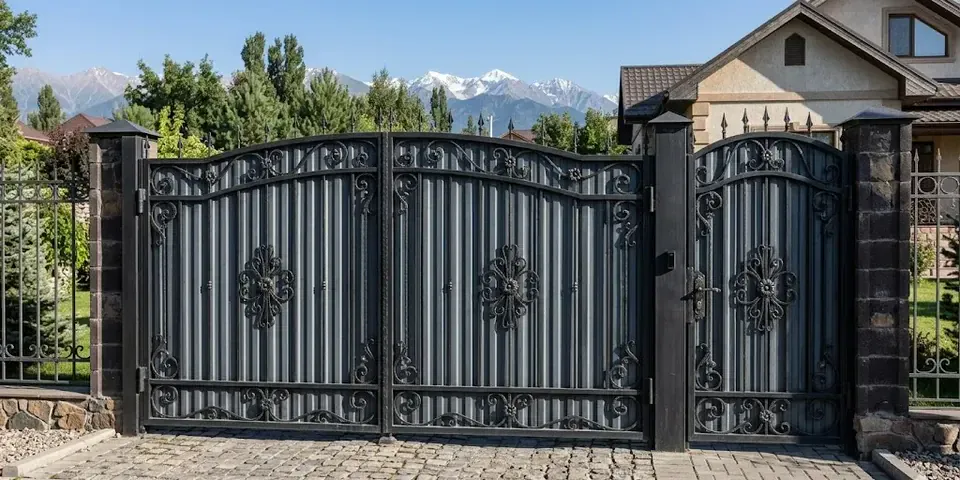
Welding of gates and wickets
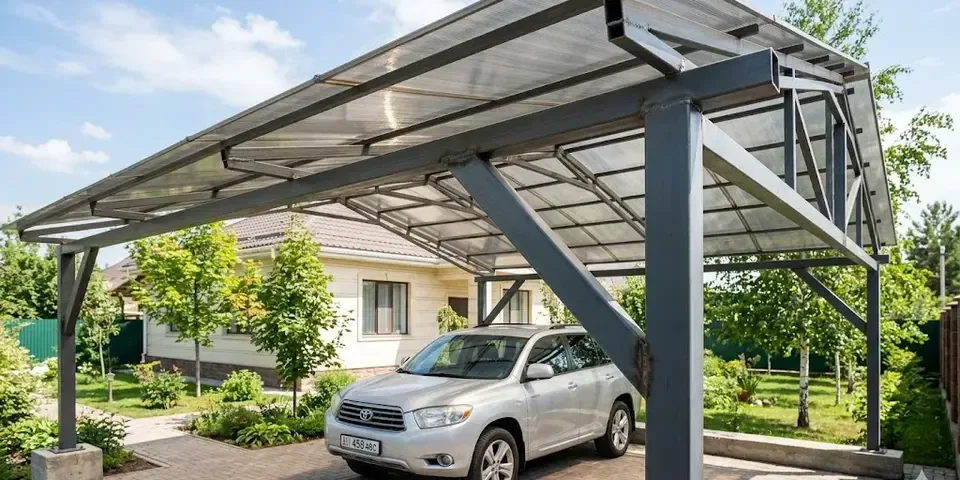
Manufacture of canopies
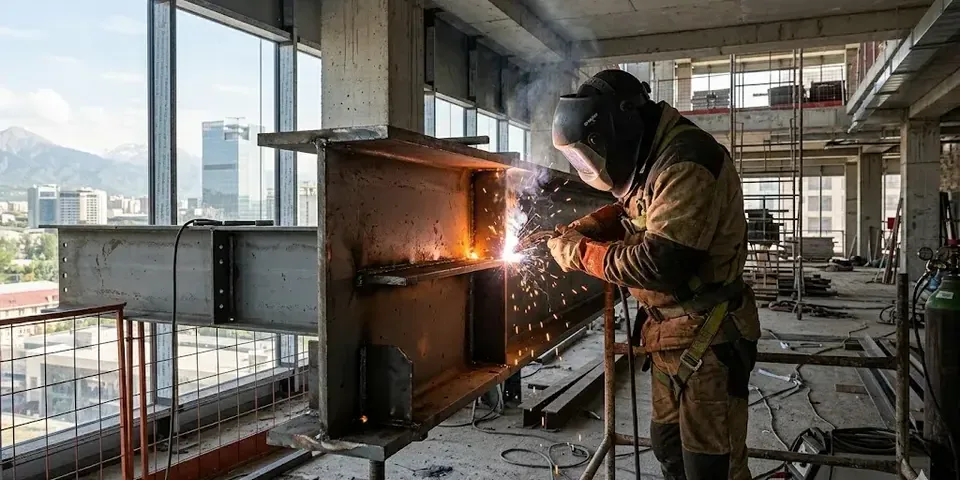
Structural reinforcement
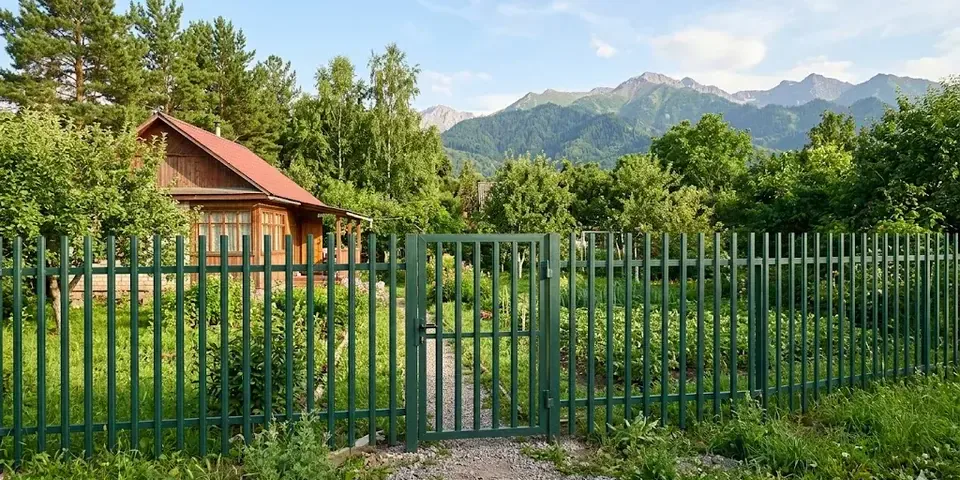
Welding of fences
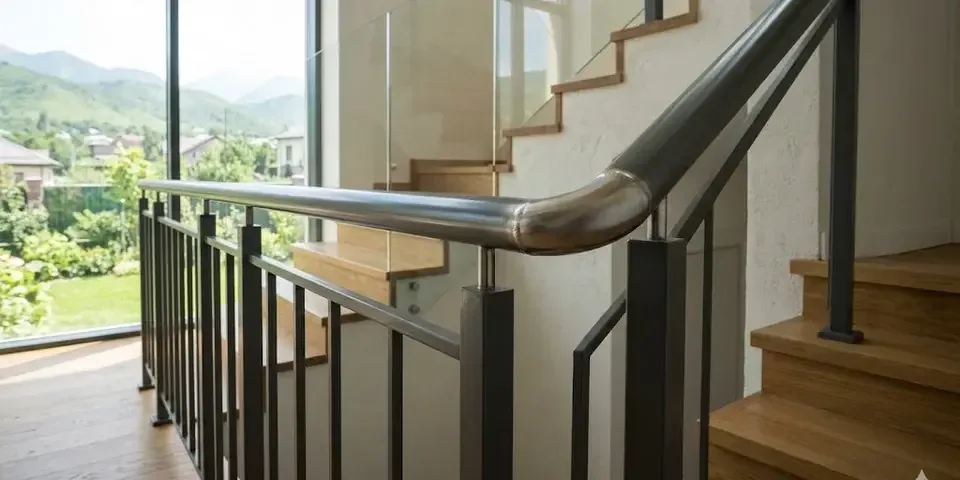
Manufacture of railings
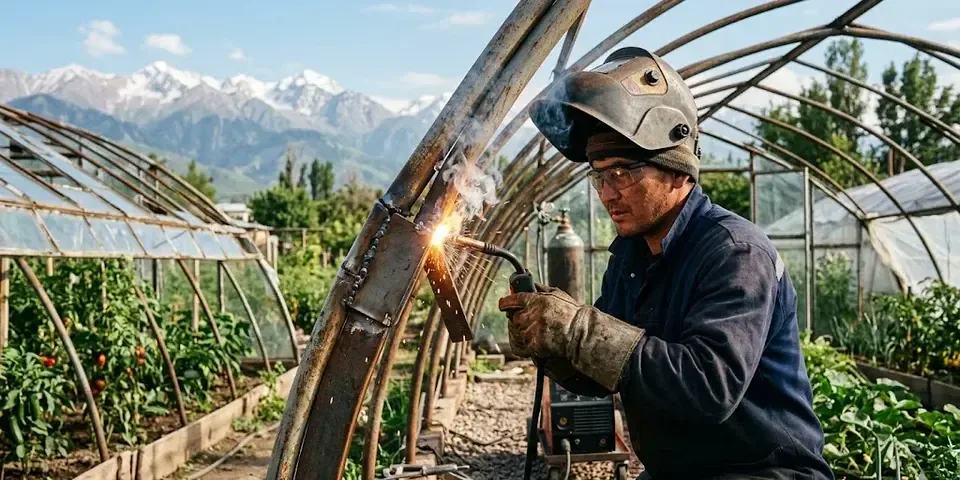
Repair of steel structures
Types of welding
work we do
Manufacture of staircases
Installation of canopies
Welding of gates and wickets
Manufacture of canopies
Repair of steel structures
Welding of fences
Manufacture of railings
Structural reinforcement
We will call you back within 3 minutes
Types of welding
work we do
Manufacture of staircases
Installation of canopies
Welding of gates and wickets
Repair of steel structures
Structural reinforcement
Welding of fences
Manufacture of railings
Manufacture of canopies
We will call you back within 3 minutes
Cost of METAL STRUCTURE WELDING IN ALMATY
| SERVICE | COST | TIME |
|---|---|---|
| Master's visit to the site (within the city) | from 5 000 ₸ | from 1 hour |
| Minimum order (call-out + work) | from 15 000 ₸ | from 2 hours |
| Manual metal arc welding (MMA) — structural steel | from 2 500 ₸ | from 0,5 hour |
| Semi-automatic welding (MIG/MAG) — thin metal | from 3 000 ₸ | from 0,5 hour |
| Tungsten inert gas welding (TIG) — stainless steel/aluminium | from 4 500 ₸ | from 1 hour |
| Welding of fence/railing (section 2×2 m) | from 25 000 ₸ | from 3 hours |
| Welding of gates/wickets (swing) | from 40 000 ₸ | from 4 hours |
| Welding of a canopy/overhang (frame + roofing) | from 60 000 ₸ | from 1 day |
| Welding of a staircase (flight 1 m) | from 80 000 ₸ | from 2 days |
| Cleaning and grinding of welds | from 1 000 ₸ | from 0,5 hour |
| Priming and painting of welded seams | from 1 500 ₸ | from 0,5 hour |
| Dismantling of old steel structures | from 10 000 ₸ | from 2 hours |
Advantages of welding work from Profi-Dom

Neat seams with no defects
We follow the welding technology and clean every seam so that the structure is strong and attractive

Certified craftsmen with experience
All welders have confirmed qualifications and regularly undergo skills assessments

Professional equipment
We work with modern inverter machines that provide a stable arc and precise control

Meeting the agreed deadlines
We complete orders from 1 day, fix the completion date in the contract and do not drag out the process

An official warranty on the work
We give a warranty of up to 3 years on all welded joints, set out in the closing documents

Transparent price in KZT
The cost is fixed in the estimate before work begins, with no hidden mark-ups or extra charges
Advantages of welding work from Profi-Dom
We follow the welding technology and clean every seam so that the structure is strong and attractive
Neat seams with no defects
All welders have confirmed qualifications and regularly undergo skills assessments
Certified craftsmen with experience
We work with modern inverter machines that provide a stable arc and precise control
Professional equipment
We complete orders from 1 day, fix the completion date in the contract and do not drag out the process
Meeting the agreed deadlines
We give a warranty of up to 3 years on all welded joints, set out in the closing documents
An official warranty on the work
The cost is fixed in the estimate before work begins, with no hidden mark-ups or extra charges
Transparent price in KZT
We will call you back within 3 minutes
Advantages of welding work from Profi-Dom
We follow the welding technology and clean every seam so that the structure is strong and attractive
Neat seams with no defects
All welders have confirmed qualifications and regularly undergo skills assessments
Certified craftsmen with experience
We work with modern inverter machines that provide a stable arc and precise control
Professional equipment
We complete orders from 1 day, fix the completion date in the contract and do not drag out the process
Meeting the agreed deadlines
We give a warranty of up to 3 years on all welded joints, set out in the closing documents
An official warranty on the work
The cost is fixed in the estimate before work begins, with no hidden mark-ups or extra charges
Transparent price in KZT
We will call you back within 3 minutes
HOW WE WORK
- 01.Discussion and estimate
We consult you free of charge by phone or messenger and prepare a transparent estimate with no hidden charges.
- 02.Measurement visit
We visit the site at a time convenient for you to take precise measurements and account for the specifics of the location.
- 03.Creating a sketch
We develop a detailed drawing of the future structure so that you can clearly see the result before the work begins.
- 04.Approval of the contract
We set out in the contract the final price, clear deadlines and warranty obligations for all types of work.
- 05.Metal preparation
We purchase certified rolled metal of the required grades and thicknesses, guaranteeing the strength and durability of the product.
- 06.Professional welding
We make all the welds on modern equipment, ensuring reliable and neat-looking joints.
- 07.Anti-corrosion protection
We treat the metal with primer and paint, protecting the structure from corrosion and extending its service life.
- 08.Delivery and installation
We deliver the finished product to your address in Almaty and install it on your site strictly according to the design.
Find out the cost and timeframe for building your prefabricated warehouse in 1 minute
catalogue of completed welding work
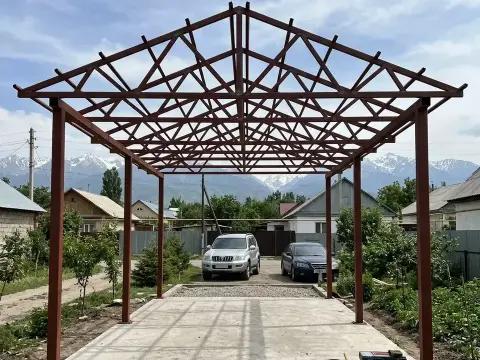 Welding of a car canopy frame in the Nauryzbai district
Manufacturing and installation took 3 days, the cost of the work was 180 000 ₸. The structure withstands heavy Almaty snowfalls.
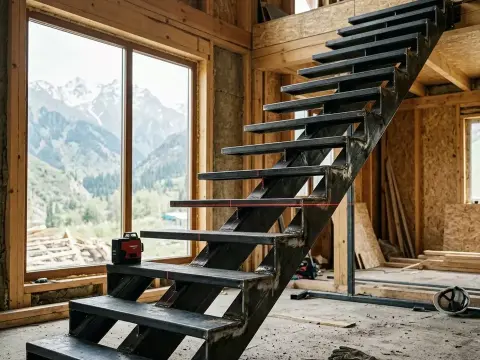 Installation of a steel frame for an inter-storey staircase in the Medeu district
The completion time was 2 days, the budget — 150 000 ₸. The frame is completely monolithic, with no squeaks or vibrations.
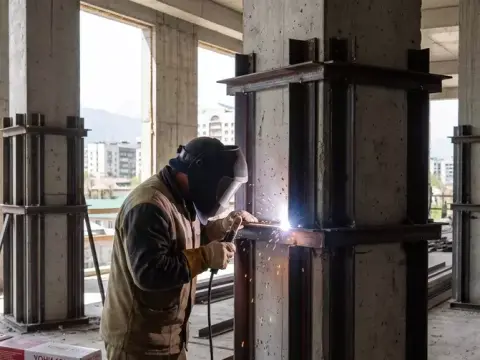 Seismic reinforcement of a building's load-bearing columns in the Almaly district
The work took 4 days and cost 320 000 ₸. Welding was performed with UONI electrodes with full penetration in accordance with KazNIISA requirements.
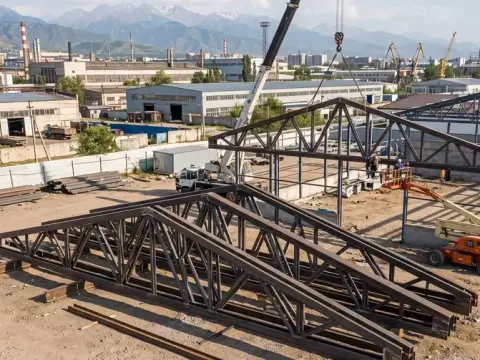 Welding of roof trusses for a warehouse on Ryskulov Avenue
The project took 7 days and cost 650 000 ₸. The steel structure passed ultrasonic testing of the welds (UT).

FIND OUT THE COST OF WELDING WORK FOR YOUR PROJECT
Leave a request and we will contact you within 3 minutes
Thank you! We will contact you within 3 minutes.
By clicking the button you agree to the terms of the
Or call us at
+7 (707) 068-88-68Privacy PolicyFIND OUT THE COST OF WELDING WORK FOR YOUR PROJECT
Leave a request and we will contact you within 3 minutes
Thank you! We will contact you within 3 minutes.
By clicking the button you agree to the terms of the
Or call us at
+7 (707) 068-88-68Privacy PolicyFIND OUT THE COST OF WELDING WORK FOR YOUR PROJECT
Leave a request and we will contact you within 3 minutes
Thank you! We will contact you within 3 minutes.
By clicking the button you agree to the terms of the
Or call us at
+7 (707) 068-88-68More about welding steel structures
PROFI-DOM performs steel structure welding in Almaty — from frames and trusses to staircases and custom items to drawing. We work with Ст3 and 09Г2С steel grades, using manual metal arc MMA and MIG/MAG semi-automatic welding. Price — from 450 000 ₸ per tonne. Every weld undergoes visual and measurement inspection. Workmanship guarantee.
What steel structures PROFI-DOM welds — from frameworks to custom work
Turnkey manufacturing of welded structures in Almaty — every welded structure undergoes visual and measuring inspection before being sent to the site. Here is what each category includes.
Steel structure welding services include a full cycle — from profile cutting to on-site installation.
Frameworks of buildings and extensions — load-bearing structures for the roof and walls
We weld the frames of buildings and extensions from profile pipe and I-beams — from small canopies to hangars with an area of 600 m² or more. We make the columns and beams from hot-rolled I-beam 20Ш1–35Ш1, the bracing and purlins from profile pipe 60×60×3 – 120×120×5 made of steel Ст3. Welding is carried out with a MIG/MAG semi-automatic unit in a carbon dioxide atmosphere: a category С3 weld in accordance with GOST 23118-2019 carries the design load without cracks. For each frame our technologist prepares a layout drawing broken down by mark and weight. For a 20×30 metre hangar with a truss spacing of 6 metres, metal consumption is 12–18 tonnes depending on the snow load of the Almaty region in accordance with SP RK 2.04.01-2017 — — request an estimate from the drawing so you can set an accurate budget.
Rafter and sub-rafter trusses — for long-span floors
We weld roof and sub-roof trusses from profile pipe 40×20 up to 120×120 mm for spans from 6 to 30 metres. Typical solutions are triangular trusses with a 15–25° slope for single- and double-pitched roofs and trusses with parallel chords for flat floors. We assemble the nodes on gusset plates made of 6–12 mm sheet steel and check the welds by visual and measuring inspection — every tenth one is cut into a sample to measure the leg. A truss with a 18 metre span and a 6 metre spacing weighs 450–650 kg. Trusses with parallel chords save up to 20% of the metal compared with I-beams at spans over 12 metres — the workshop has jigs for assembly up to 24 metres long without splicing.
Staircases, platforms, railings and custom items to drawings
- Straight-flight staircases: straight and turning with landings, stringers from channel 12–20 or profile pipe 100×50, treads — 3–4 mm checker plate or grating, installed on anchors to the foundation or floor structure.
- Platforms and ramps: frame made of channel bar and I-beam, decking of 5–6 mm checker plate or galvanised grating, guardrail 1100 mm high to GOST 23120-2016.
- Non-standard products: canopies, frames, supports, handrails, posts — made to a drawing or sketch, with the profile selected for the load and tied to the location on site.
Types of metal welding — electric MMA, MIG/MAG semi-automatic, submerged arc
Three main types of welding are used for different steel structures and steel grades — from manual electrode to automatic submerged arc. We break down which method suits your task. Welding structures from square tube and I-beam is carried out with MIG/MAG semi-automatic welding — this produces a neat weld without spatter and with minimal metal distortion. Depending on the steel grade and part thickness, metal welding is carried out by one of three methods — manual metal arc MMA, MIG/MAG semi-automatic, or submerged arc.
Electric MMA welding (manual metal arc) — for thick metal and on-site installation
We use this method (manual arc welding) for thick-walled structures from 4 mm and for on-site assembly work — it gives deep root penetration even with poor access to the joint. Inverter MMA machines (for example, Foxweld 2500) with a flat volt-ampere characteristic hold the arc steadily during voltage drops on a construction site — a common problem in Almaty new builds with temporary wiring. On critical assemblies — I-beam joints, column base plates — the welders use УОНИ 13/55 electrodes with a cellulose coating: they provide weld impact toughness of at least 34 J/cm² at temperatures down to –40 °C. For on-site work in the Aksai and Alatau districts, where the structures stand outdoors, this is the only method that produces a ductile weld without the risk of brittle failure during frosts.
MIG/MAG semi-automatic welding — for thin-walled structures and trusses
We use MIG/MAG semi-automatic welding for thin-walled profile pipes from 1,5 to 4 mm — the method produces a neat weld without spatter and with minimal metal deformation. In a carbon dioxide CO₂ atmosphere, Св-08Г2С wire with a diameter of 0,8–1,2 mm melts at 180–220 A, forming a dense bead without slag: for trusses made of 40×20×2 mm profile pipe the welding speed reaches 15 m/h — 2–3 times faster than manual arc welding with constant slag cleaning. The semi-automatic unit is indispensable on stair flights and railings with frequent short welds — the wire overconsumption on re-strikes here is negligible, and the deformation of a 1,5 mm thin wall does not exceed 0,3 mm per metre. In practice, for a 6 m truss span the MIG/MAG semi-automatic unit allows all the nodes to be welded in one shift without correcting the geometry — with MMA the same job takes two days with the risk of warping the pipe.
Submerged arc welding — for series-produced straight seams
We use this method for serial straight welds on beams and columns — it delivers high productivity and consistent quality on long joints without burn-through. АН-348А flux is poured in a 30–50 mm layer along the joint of a 200–600 mm high I-beam: the arc burns under the layer of granules, completely isolating the weld pool from the air — the weld comes out dense, without porosity and with uniform reinforcement. Automatic feeding of 3–5 mm diameter wire at a current of 600–900 A provides a deposition rate of up to 40 m/h — on a batch of ten columns 6 m long each, this is 4–5 times faster than manual welding with multi-pass electrodes. Submerged arc welding eliminates metal spatter and does not require subsequent cleaning of the weld — this reduces labour intensity by 30% compared with MMA, which is critical in the serial production of beams for standard hangars.
Pricing for steel structure welding — per tonne, per metre of weld, per assembly
The cost of work is made up of complexity, volume and type. We break down three pricing options — from per tonne to per individual assembly. Metal welding in our workshop is performed with MIG/MAG semi-automatic and manual metal arc MMA — we select the method based on the metal thickness and seam type.
Price per tonne of metal structure — the main rate for typical projects
Metal welding price per tonne — from 450 000 ₸ for standard frames made of square tubing and I-beams, including fabrication and painting. This rate applies to building and extension frames, roof trusses with a span of up to 24 m, columns and floor beams — where the drawing is standardised. It covers the workshop cycle: cutting on a band saw, assembly on a jig, MIG semi-automatic welding, seam grinding and application of two coats of GF-021 primer. The steel grade is St3sp or 09G2S, with a metal thickness of 3–12 mm. On-site installation and city delivery are calculated separately — from 80 000 ₸ per machine-shift of a crane-manipulator. When ordering, request a specification with a cutting plan: if the drawing contains more than 20% curved parts, the rate per tonne increases by 10–15%, and it is more cost-effective to switch to per-assembly pricing.
Price per metre of seam and per joint — for complex and non-standard items
For complex assemblies and non-standard items, we estimate the work by the price per weld metre — from 1 500 ₸ per linear metre, or per assembly — from 5 000 ₸ per joint. The first option is convenient for lattice trusses, spatial frames and staircases with short welds (50–150 mm) — you pay for the actual length of deposited metal rather than the weight of the workpiece. The second is for one-off critical assemblies: column base plates, I-beam assembly joints, flange connections, where every weld is checked by visual and measuring methods and ultrasonic testing. In both cases the price includes cleaning, root back-welding and checks for lack of penetration. For trusses with a large number of short welds, the per-metre calculation is more cost-effective than a per-tonne rate, since you do not pay for metal that ends up as offcuts.
Table — examples of cost calculation for typical structures
| Type of structure | Steel grade | Unit of calculation | Price from, ₸ |
|---|---|---|---|
| Building / hangar framework | St3, square tube | tonne | 450 000 |
| Rafter truss (span 12–24 m) | St3, square tube | tonne | 480 000 |
| I-beam (welded) | St3, I-beam | tonne | 500 000 |
| Straight flight staircase (with installation) | St3, channel bar | item | from 80 000 |
| Platform / ramp | St3, 09G2S | tonne | 520 000 |
| Custom item to drawing | to specification | metre of weld / assembly | from 1 500 / from 5 000 |
The exact cost is calculated after the drawing is approved and a surveyor visits the site — the final price is fixed in the contract.
Quality control and weld acceptance — GOST, visual and measuring inspection, welder certification
The quality of the weld determines the load-bearing capacity of the steel structure and its operational safety. GOST-compliant inspection and the welders' qualifications are two conditions without which acceptance of the work is impossible.
Visual and measuring inspection (VMI) — checking every weld
PROFI-DOM carries out visual and measurement inspection (VMI) of every weld in accordance with GOST 3242-79 — the inspector examines the weld through a four-power magnifier, measures the leg with a УШС-2 gauge, and the width and reinforcement with callipers. On load-bearing frame and truss elements VMI is performed after each pass: first the weld root, then the capping layer — this makes it possible to record a defect before it is covered by the next layer of metal. VMI detects up to 80% welding defects — undercuts, overlaps, uneven leg — and is carried out immediately after the weld cools to a temperature below 100 °C. If VMI on site reveals cracks or lack of fusion, the structure is not sent for installation until the defective section has been re-welded.
Weld leg and root penetration — strength parameters to GOST 5264-80
We calculate the weld leg from the design documentation — for load-bearing structures the minimum leg is 6 mm with a metal thickness of 8 mm in accordance with GOST 5264-80. The welder sets the MIG/MAG semi-automatic mode so that the root penetration depth reaches 100% of the thickness of the parts being joined: for a 10 mm sheet this is 10–11 mm of penetration, allowing for convexity. Penetration control on critical assemblies — trusses with a span of 12 metres or more, columns under a load of 5 tonnes or more — is duplicated by ultrasonic testing (UT) in accordance with GOST 14782-86. Root penetration is the most common defect among uncertified welders: with a lack of penetration of just 10% of the cross-section, the load-bearing capacity of the weld drops by 40%, which is why the root is specifically checked on site — visually after cleaning and by the welder's stamp.
NAKS welder certification — confirmation of qualifications
PROFI-DOM's staff includes welders certified under NAKS, confirming their qualification to work with critical steel structures of levels I and II. Certification involves a practical exam: the welder welds test specimens in the same spatial positions (flat, vertical, overhead) as on the actual site, after which the specimens undergo mechanical tensile and bend tests in a laboratory. On local projects — hangars, canopies, staircases — we employ welders of at least the fourth grade with authorisation to weld carbon and low-alloy steels. NAKS certification must be reconfirmed every 3 years — this guarantees that the welder is up to date with current methods and standards, so when accepting work, ask for the NAKS certificate for each welder.
Warranty on welding work — terms and conditions
We provide a guarantee on welding work — up to 12 months for hidden weld defects discovered during operation. A defect is considered hidden if it was not detected during visual inspection and only appears under load: a crack in the weld after the first winter shrinkage of the metal, or a joint separating on a truss under snow load. The guarantee covers all welded joints that have passed visual and measuring inspection and are recorded in the concealed work inspection certificate — for a guarantee claim the customer provides the acceptance certificate and a photo of the defective area. Every welded item is recorded in the work log, which rules out disputes about which weld was made and when.
Work stages from the drawing — from detailing to on-site installation
Ordering welded steel structures goes through four stages — from detailing to installation on the foundation. Let us go through each stage with figures and typical operations.
Development of detail drawings (KMD) — detailing for production
Our engineers develop fabrication drawings for steel structures (KMД — detail drawings) based on the architectural design — with cutting layouts for each element, profile specifications and connection details. The structural engineer works out the assembly joints, assigns weld leg sizes and specifies steel grades for the frames of buildings and extensions. For standard trusses with a span of 12-24 metres, the fabrication drawings take 2-3 days, while for complex curved structures — up to a week. The drawing contains a parts list with length, weight and quantity — this is the only document used to purchase the metal. Without fabrication drawings it is impossible to accurately calculate the consumption of square tubing or I-beams — the detail drawing eliminates material overspending by up to 15% compared with an “approximate” cutting layout on site.
Cutting, assembly and welding in the workshop — fabrication to drawing
PROFI-DOM manufactures welded steel structures to the customer's drawing in its own workshop — cutting 40×20 — 160×160 mm square tube and №10-№40 I-beam, assembling the joints with tack welds, MMA welding (УОНИИ 13/55 electrode for critical welds) or MIG/MAG (Lincoln Electric semi-automatic, Св-08Г2С wire). For beams and columns up to 12 metres long we use a longitudinal weld on both sides — leg 6-8 mm, without undercut. For serial elements (identical trusses, beams with spans of 6, 9, 12 metres) we use jigs — this gives assembly accuracy of ±2 mm on a 6- metre item and reduces fabrication time by 30% compared with manual assembly to marking.
Cleaning, priming and painting — anti-corrosion protection
After welding, we grind the seams to a smooth surface with an angle grinder and flap disc, apply a single coat of GF-021 primer and paint — a two-coat finish with PF-115 enamel to protect hangars and industrial canopies from corrosion. For roof and sub-rafter trusses operating in aggressive environments (livestock complexes, chemical warehouses), we add EP-0010 epoxy primer. For outdoor structures (canopies, porch roofs, supports) we apply an additional coat of KhV-110 — enamel, extending the coating service life to 8 years without renewal.
Delivery and on-site installation — from the workshop to assembly
We deliver the finished steel structures to the site by flatbed transport, secured against shifting, and carry out the installation — setting the columns on anchor bolts, lifting the trusses with a 25-50 tonne crane, fixing the beams on support brackets with temporary tack welding. After levelling by spirit level and plumb line — final welding of the assembly joints with an МР-3 electrode or semi-automatic unit, cleaning and a check of the geometry with a tape measure. Installation includes slinging, lifting, temporary fixing and welding — after installation the surveyor checks the deviations: for building frames the vertical tolerance for columns is no more than 1/1000 of the height, and for trusses horizontally no more than 10 mm per span.
Common structures and steel grades — frame, truss, hangar, staircase
Each steel structure requires its own steel grade and profile — the load-bearing capacity and service life depend on this. We break down the common scenarios on the Almaty market. Metal can only be welded to a high standard with the correct selection of welding mode and electrode or wire grade — our technologist controls this.
The frame of a hangar or canopy — Ст3 or 09Г2С profile pipe
For a hangar or canopy frame we recommend profile pipe made of steel Ст3 for dry premises and 09Г2С for outdoor structures in regions with temperatures down to –40 °C. Steel 09Г2С has a yield strength of 325 MPa versus 235 MPa for Ст3 — this allows the profile cross-section to be reduced by 15–20% at the same load-bearing capacity, for example a column from 140×4 mm to 120×4 mm over a span of 18 metres under a load of 150 kg/m². On canopies over car parks in Almaty, 09Г2С pays for itself through the lower weight of the structure and a simpler foundation; at spans over 24 metres recalculation to this grade is mandatory because of the snow load of 1,6 kPa for the third snow region.
Truss for a floor — square tube or I-beam
On trusses with a span of up to 18 metres, square or rectangular profile pipe is optimal — it is 25–30% lighter than an I-beam at equal load-bearing capacity. Tubular trusses made of bent profile 80×60×4 mm give metal consumption 12–15 kg/m² lower than an I-beam scheme over a span of 12–15 metres with a 3 metre spacing. At spans over 24 metres, trusses made of I-beams with parallel chords give less deflection — 1/250 of the span versus 1/200 for tubular ones. On floors above workshops with an overhead crane, trusses are welded from I-beam 30Ш1 or 35Ш1 — it is stiffer and easier to join to the crane runway beams; for corrugated sheeting with a 10% slope a tubular truss is enough, for soft roofing with a 5% — slope only an I-beam will do.
Steel staircase — channel bar, angle bar, square tube
On straight-flight staircases, channel №10–16 is used for the stringers and angle 40×4 or profile pipe 20×20 for the treads — depending on the load. In private houses in Almaty the stringers are made from channel №12 — this is enough for a flight width of 900 mm and a load of 300 kg/m²; at a load of more than 400 kg/m² in public buildings the stringers are reinforced with an I-beam or a double channel without changing the tread spacing. Spiral staircases on a central post made of 159×6 mm pipe with cantilevered treads from angle 50×5 — are the most compact option where space is limited, but the minimum headroom must be 1900 mm from the tread to the floor structure, otherwise during installation the stringer has to be cut or the flight raised.
Conclusion
Welding of steel structures is a process where every stage affects the final strength and budget. We have put together the key takeaways that will help you avoid typical mistakes when ordering.
Key takeaways
- Welding of steel structures is not just about seams, but also about the choice of steel grade, welding type and quality control: from purchasing the profile to acceptance on site.
- The price per tonne is the main rate for standard projects, but for complex assemblies with stiffeners it is more cost-effective to calculate per metre of seam or per item.
- Certified welders and VMI are essential for loaded structures that undergo construction acceptance: without documents for the specialist the structure will be rejected at inspection.
- A full cycle from detail drawings to installation — eliminates dimensional errors and metal overuse: the deviation from the drawing for a single contractor does not exceed 1-2 mm.
- A workmanship guarantee is a mark of responsibility: if a weld fails load testing, it must be re-welded at the contractor's own expense, not “ground down and painted over”.
Frequently asked questions
about welding steel structures
How much does metal structure welding cost in Almaty?
- The cost depends on complexity, volume and type of metal. On average in Almaty, the price per linear metre of seam starts from 1500 KZT, and per tonne of finished structure — from 200 000 KZT. An exact estimate is prepared after a specialist visits the site.