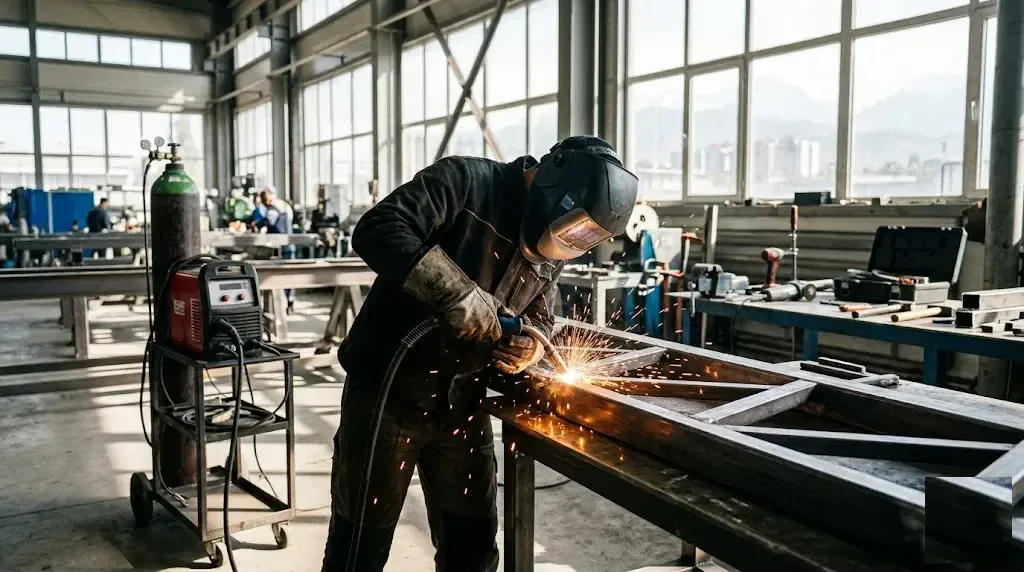
STEEL WELDING IN ALMATY
from 2 500 KZT* per metre of joint
Cracked seam on the gate or need a frame for a canopy? We'll weld pipe, sheet and angle with root penetration, clean and prime the seams — from 1 day.
 Root pass welding —
MMA and semi-automatic Travel within the city
from 3 000 ₸ 3-year warranty
on every seam Gates and wickets
from 15 000 ₸
STEEL WELDING IN ALMATY
from 2 500 KZT* per metre of joint
Cracked seam on the gate or need a frame for a canopy? We'll weld pipe, sheet and angle with root penetration, clean and prime the seams — from 1 day.
Root pass welding —
MMA and semi-automatic
Travel within the city
from 3 000 ₸
3-year warranty
on every seam
Gates and wickets
from 15 000 ₸
STEEL WELDING IN ALMATY
from 2 500 KZT* per metre of joint
Cracked seam on the gate or need a frame for a canopy? We'll weld pipe, sheet and angle with root penetration, clean and prime the seams — from 1 day.
Root pass welding —
MMA and semi-automatic
Travel within the city
from 3 000 ₸
3-year warranty
on every seam
Gates and wickets
from 15 000 ₸
Types of welding
work we do
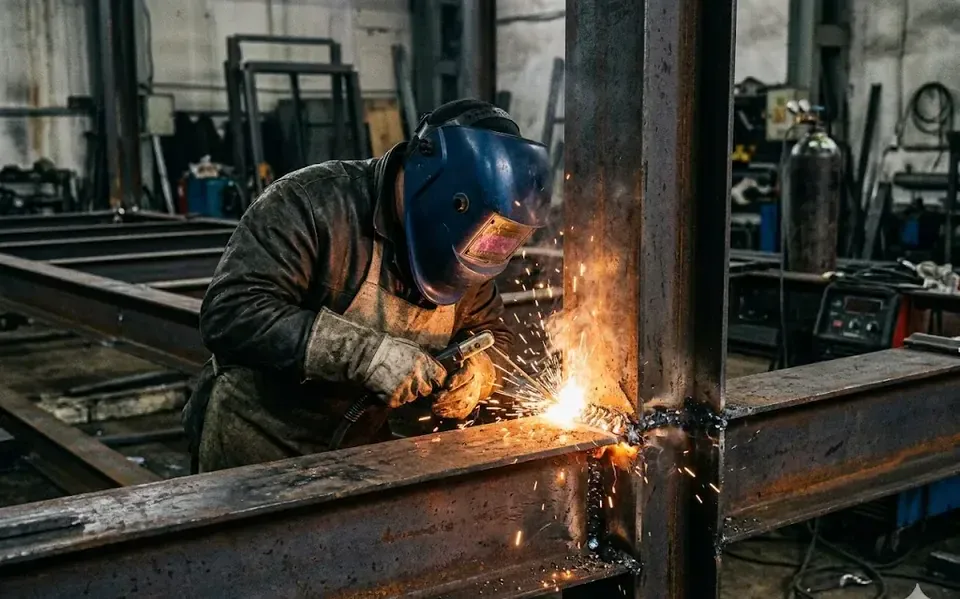
Welding of steel structures
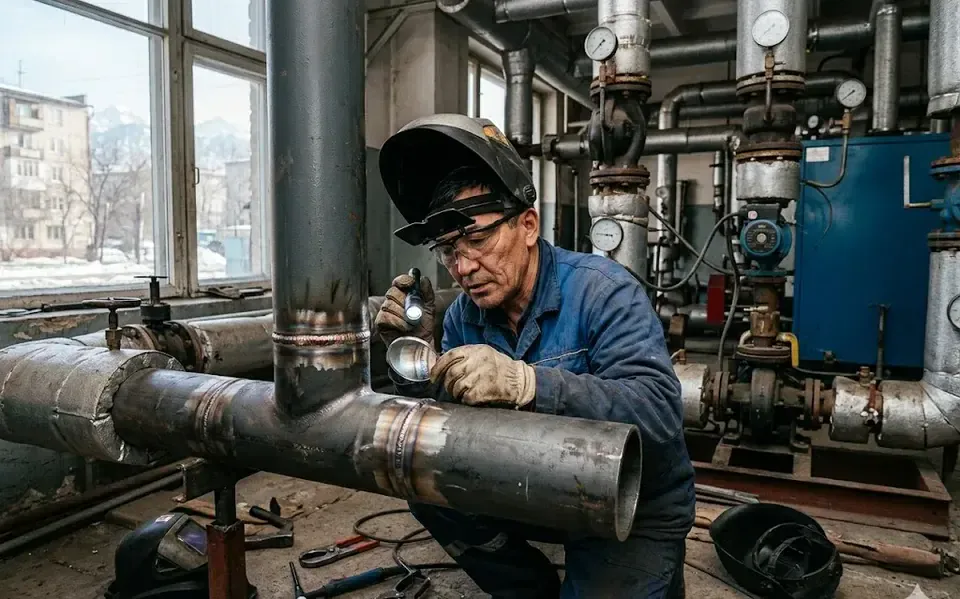
Pipeline welding
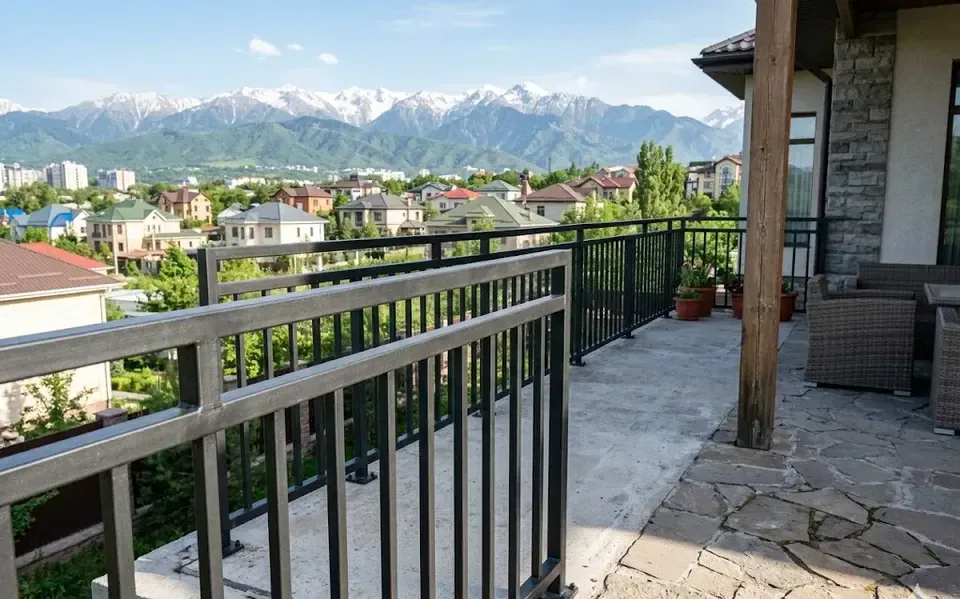
Welding of fences and railings
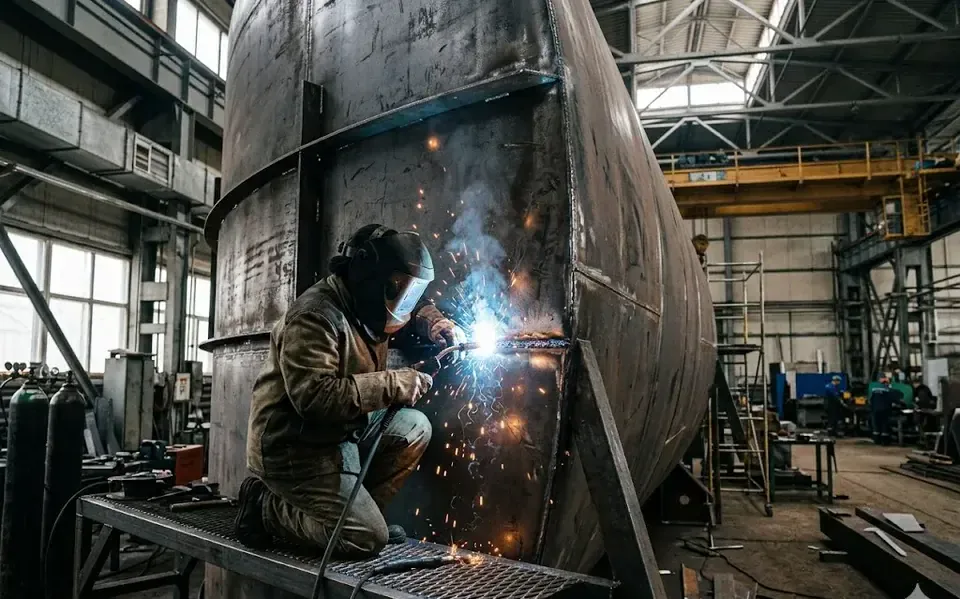
Welding of reservoirs and tanks
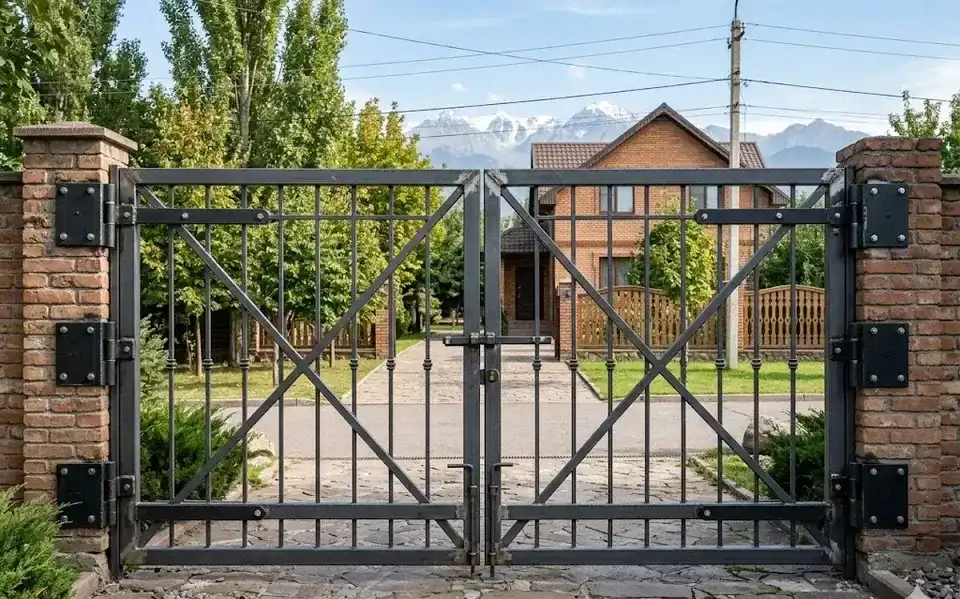
Welding of gates and wickets
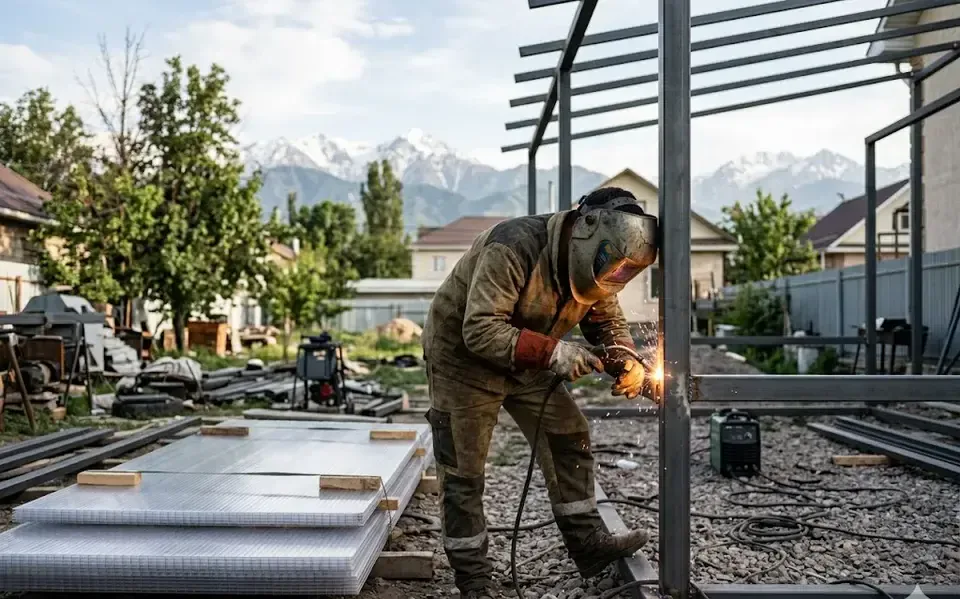
Welding of frames for canopies
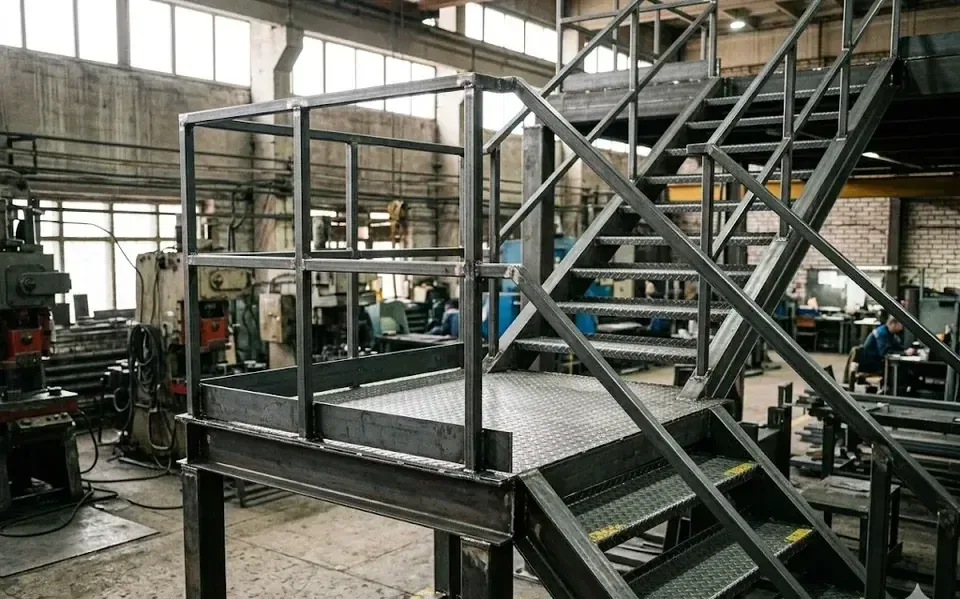
Welding of staircases and platforms
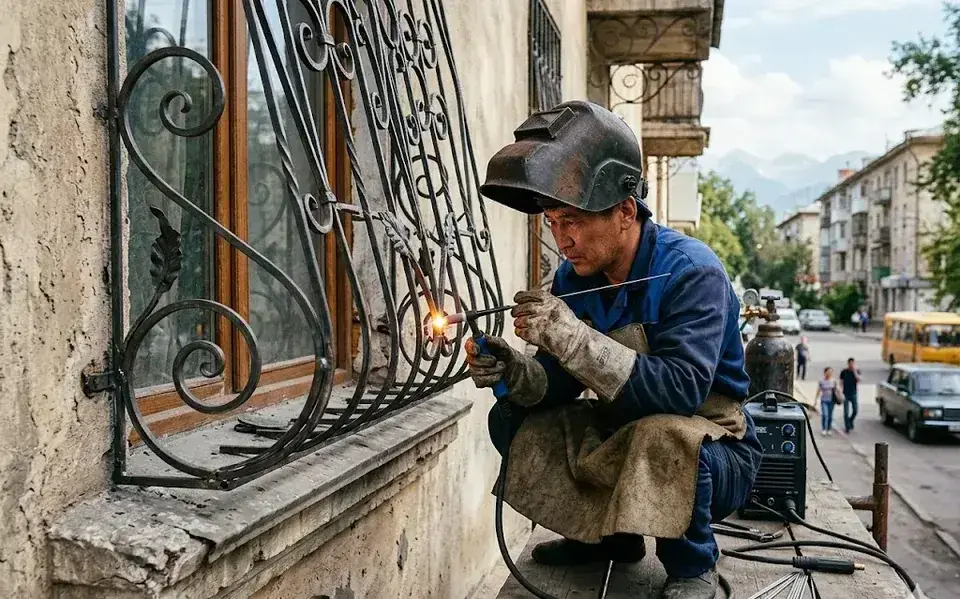
Welding of forged elements
Types of welding
work we do
Welding of steel structures
Pipeline welding
Welding of fences and railings
Welding of reservoirs and tanks
Welding of forged elements
Welding of frames for canopies
Welding of staircases and platforms
Welding of gates and wickets
We will call you back within 3 minutes
Types of welding
work we do
Welding of steel structures
Pipeline welding
Welding of fences and railings
Welding of forged elements
Welding of gates and wickets
Welding of frames for canopies
Welding of staircases and platforms
Welding of reservoirs and tanks
We will call you back within 3 minutes
Cost of STEEL WELDING
IN ALMATY
| SERVICE | COST | TIME |
|---|---|---|
| Technician site visit (within the city) | from 3 000 ₸ | — |
| Minimum order value | from 5 000 ₸ | — |
| Welding of a butt joint (per metre of weld) | from 2 500 ₸ | from 1 hour |
| Welding of a corner joint (per metre of weld) | from 3 000 ₸ | from 1 hour |
| Welding of a T-joint (per metre of weld) | from 3 500 ₸ | from 1 hour |
| Tack welding of rebar (spot) | from 500 ₸ | from 30 min |
| Welding of metal gates/pedestrian gates (per unit) | from 15 000 ₸ | from 3 hours |
| Welding of fence sections (per metre) | from 2 000 ₸ | from 2 hours |
| Cleaning and grinding of the seam (per metre) | from 800 ₸ | from 30 min |
| Priming and painting (per sq. metre) | from 1 500 ₸ | from 1 hour |
| Delivery of materials (within the city) | from 5 000 ₸ | — |
Преимущества СВАРОЧНЫХ РАБОТ ОТ Profi‑Dom

Seam with root penetration
First pass current +10–15%, gap 1–3 mm, edge preparation from 5 mm — the weld will not crack

Welder with 13+ years of experience
We weld St3, 09G2S and steel 20 with MMA electrode or MIG/MAG semi-automatic — depending on the task

Weld leg from 4 to 12 mm
We check every seam with a gauge: 4 mm — for fences, 10–12 mm — for trusses and tanks

Deadlines in the contract
Gates — from 3 hours of work, fence section — from 2 hours; we write the date in the contract

3-year warranty on seams
If a seam cracks or isn't fully welded — we'll re-weld it free of charge, including a repeat visit

Price per meter of seam
Butt weld — from 2 500 ₸/m, tee weld — from 3 500 ₸/m; estimate before work starts
Преимущества СВАРОЧНЫХ РАБОТ ОТ Profi‑Dom
First pass current +10–15%, gap 1–3 mm, edge preparation from 5 mm — the weld will not crack
Seam with root penetration
We weld St3, 09G2S and steel 20 with MMA electrode or MIG/MAG semi-automatic — depending on the task
Welder with 13+ years of experience
We check every seam with a gauge: 4 mm — for fences, 10–12 mm — for trusses and tanks
Weld leg from 4 to 12 mm
Gates — from 3 hours of work, fence section — from 2 hours; we write the date in the contract
Deadlines in the contract
If a seam cracks or isn't fully welded — we'll re-weld it free of charge, including a repeat visit
3-year warranty on seams
Butt weld — from 2 500 ₸/m, tee weld — from 3 500 ₸/m; estimate before work starts
Price per meter of seam
We will call you back within 3 minutes
Преимущества СВАРОЧНЫХ РАБОТ ОТ Profi‑Dom
First pass current +10–15%, gap 1–3 mm, edge preparation from 5 mm — the weld will not crack
Seam with root penetration
We weld St3, 09G2S and steel 20 with MMA electrode or MIG/MAG semi-automatic — depending on the task
Welder with 13+ years of experience
We check every seam with a gauge: 4 mm — for fences, 10–12 mm — for trusses and tanks
Weld leg from 4 to 12 mm
Gates — from 3 hours of work, fence section — from 2 hours; we write the date in the contract
Deadlines in the contract
If a seam cracks or isn't fully welded — we'll re-weld it free of charge, including a repeat visit
3-year warranty on seams
Butt weld — from 2 500 ₸/m, tee weld — from 3 500 ₸/m; estimate before work starts
Price per meter of seam
We will call you back within 3 minutes
HOW WE WORK
- 01.Request and photo
Send a photo of the unit or a sketch — we'll call back in 3 minutes and give you a ballpark: seam from 2 500 ₸ per meter.
- 02.Technician call-out
The welder arrives with a machine (travel within the city — from 3 000 ₸), inspects the metal, and takes measurements.
- 03.Sketch and estimate
We draw the structure, calculate the meters of seam and metal — we quote the price before work begins.
- 04.Contract and deadlines
We fix the price, deadline, and a 3-year warranty on the seams — the estimate does not change after welding begins.
- 05.Edge preparation
We clean the metal to a shine up to 20–30 mm from the edge, and on sheets from 5 mm we make a 30–45° bevel.
- 06.MMA or MIG/MAG welding
Gates and fences — with an electrode, thin pipes and frames — with a semi-automatic welder, without burn-through or lack of fusion.
- 07.Cleaning and priming
We knock off the slag, clean the seam and prime the metal — painting from 1 500 ₸ per m² to prevent rust.
- 08.Installation and handover
We install the structure, check the seams with a template and sign the act — from this date the warranty is 3 years.
Find out the cost of steel welding per 1 minute
catalogue of completed welding work
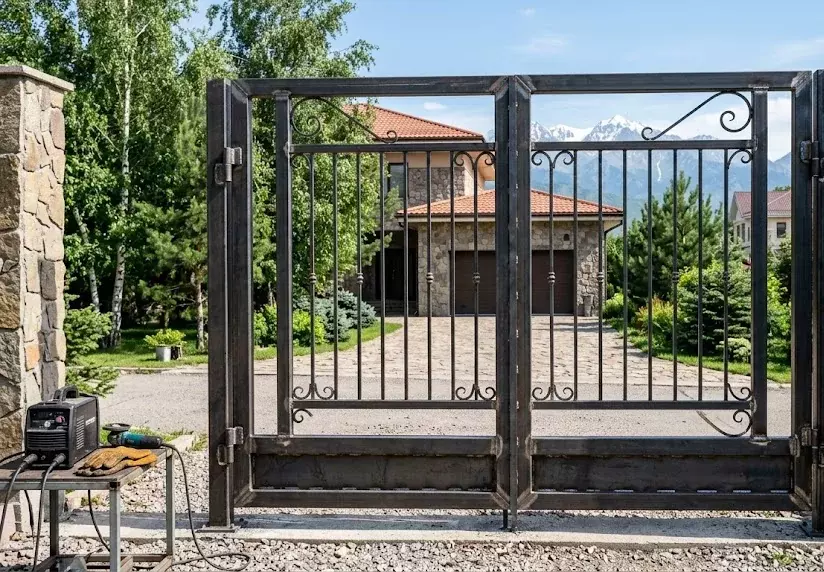 Welding of the entrance group in the Taugul microdistrict
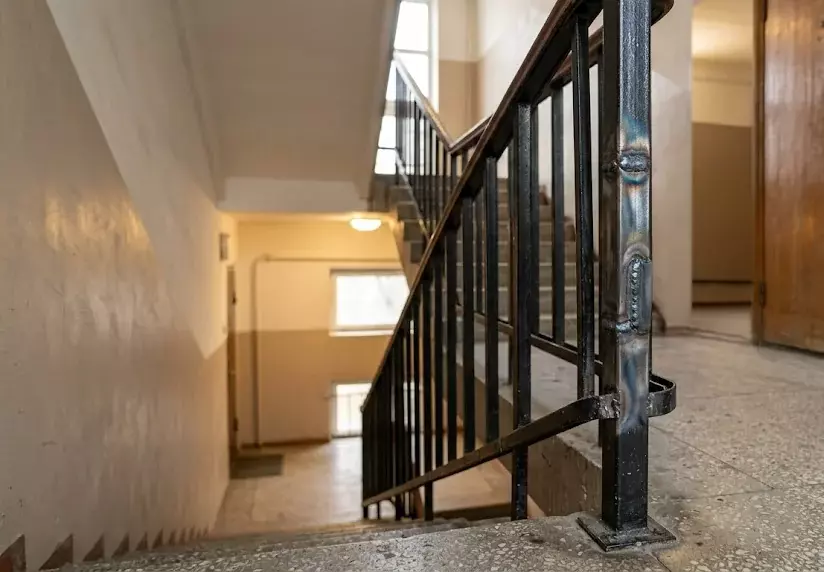 Repair of stair railing in the Nurly Tau residential complex
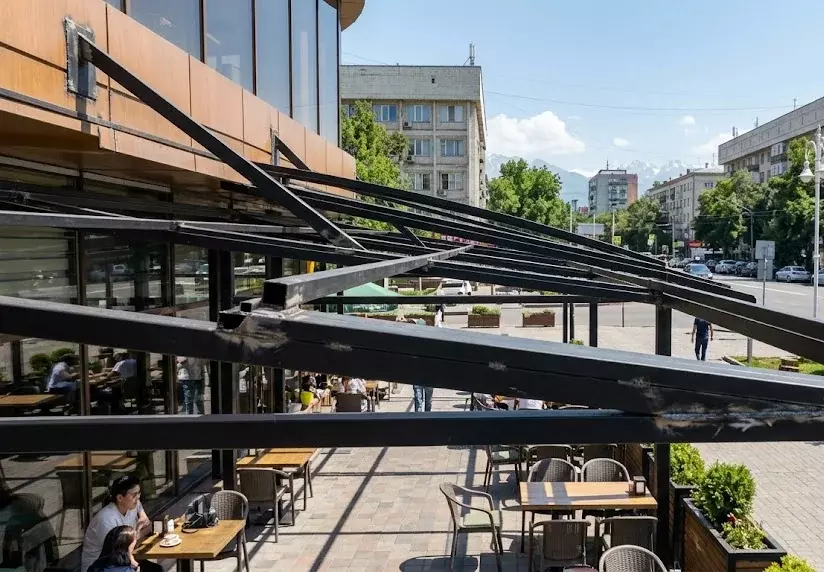 Fabrication of a canopy for a cafe in the Arbat area
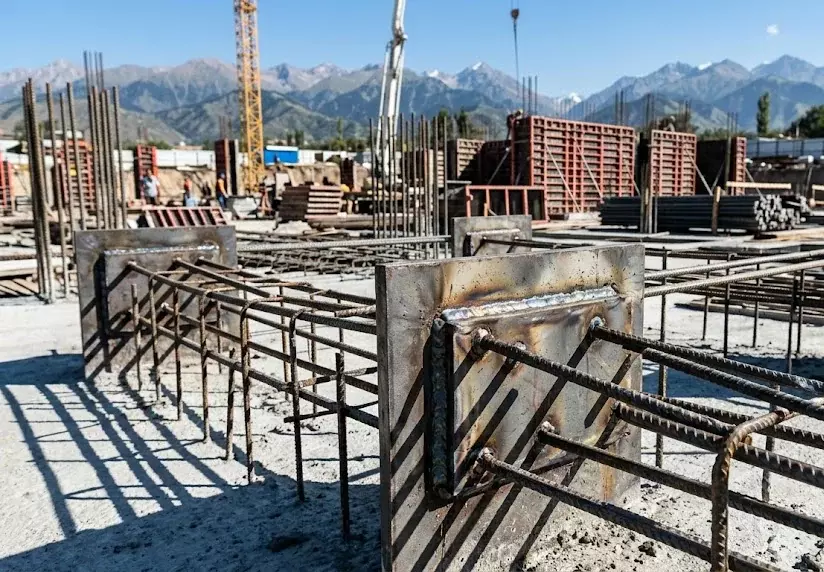 Welding of embedded parts for concreting at a construction site in the Alatau district


FIND OUT THE COST OF WELDING WORK FOR YOUR PROJECT
Leave a request and we will contact you within 3 minutes
Thank you! We will contact you within 3 minutes.
By clicking the button you agree to the terms of the
Or call us at
+7 (707) 068-88-68Privacy PolicyFIND OUT THE COST OF WELDING WORK FOR YOUR PROJECT
Leave a request and we will contact you within 3 minutes
Thank you! We will contact you within 3 minutes.
By clicking the button you agree to the terms of the
Or call us at
+7 (707) 068-88-68Privacy PolicyFIND OUT THE COST OF WELDING WORK FOR YOUR PROJECT
Leave a request and we will contact you within 3 minutes
Thank you! We will contact you within 3 minutes.
By clicking the button you agree to the terms of the
Or call us at
+7 (707) 068-88-68Сварка стали в Алматы от PROFI‑DOM: MMA и полуавтомат, цены
Steel welding at PROFI-DOM — manual arc (MMA) and semi-automatic (MIG/MAG), in the workshop and on-site across Almaty. We work with ferrous metal: profile pipe, sheet, angle, channel, rebar. Butt weld — from 2 500 ₸ per meter, tee weld — from 3 500 ₸, master's visit — from 3 000 ₸. Warranty on all welds — 3 years.
Published: 20 · Updated: 25
MMA or semi-automatic — which steel welding method to choose
Steel is welded using two main methods — manual arc (MMA) and semi-automatic (MIG/MAG). The choice depends on the metal thickness, the type of structure and the requirements for the weld.
How MMA differs from MIG/MAG when welding steel
With MMA, the welder guides the electrode (ANO-4 for routine seams, MR-3 for installation, UONI-13/55 for critical structures) by hand — the slag is knocked off with a hammer after solidification, which increases time by 20-30% compared to a semi-automatic machine. MIG/MAG uses solid wire Sv-08G2S with a diameter of 0.8-1.2 mm, melting in a shielding gas stream (CO2 or an Ar+CO2 mixture) — the seam does not require slag cleaning, only light brushing off of soot. The semi-automatic machine provides a speed of 20-40 cm/min versus 10-20 cm/min for MMA at the same metal thickness. For structures under load (trusses, frames), the semi-automatic machine is more often chosen — it ensures stable root penetration and fewer spatters, which reduces the risk of microcracks under tension. MMA is indispensable when working at height, in confined conditions and when repairing on site without access to gas — the wind does not blow away the arc, and the electrodes are compact.
Which steel welding method to choose for a specific task
- MMA for gates and fences: with a 3-4 mm electrode we weld 40×20 square tube and angle bar — the weld withstands wind loads, and cleaning slag outdoors is not a problem.
- MIG/MAG for canopies and frames: a semi-automatic welder with 0.8-1.0 mm wire produces a smooth weld on thin tube (20×20, 30×30) without burn-through — 2 times faster than MMA.
- MMA for rebar and on-site repairs: on a construction site without gas, an inverter with an MR-3 electrode welds even rusty metal and wet rebar — a semi-automatic machine is useless there.
- MIG/MAG for staircases and tanks: on 2-4 mm sheet, a semi-automatic welder with Ar+CO2 gas produces a leak-tight weld without porosity — critical for a tank, and aesthetically pleasing for a staircase, with no cleaning needed.
- General rule: if the structure works in bending or tension (a truss, a gantry crane), we recommend a semi-automatic welder — it produces a more ductile weld with a smaller heat-affected zone than MMA at the same leg.
Comparison table of MMA and MIG/MAG for steel welding
| Parameter | MMA (manual arc) | MIG/MAG (semi-automatic) |
|---|---|---|
| Steel thickness | from 2 mm (electrode 2.5–5 mm) | from 0.8 mm (wire 0.8–1.2 mm) |
| Welding speed | 10–20 cm/min | 20–40 cm/min (1.5–2 times higher) |
| Weld quality | Requires slag removal | Minimum spatter, no slag |
| Outdoor work | Yes (wind is not a problem) | Requires protection from wind (gas blows away) |
| Repair on site | Convenient (mobile) | Requires a gas cylinder |
| Starting price | Below (inverter + electrodes) | Higher (semi-automatic + gas + wire) |
For household tasks (fence, wicket, greenhouse), MMA with a 3 mm electrode is sufficient — it is cheaper and easier to arrange. For series production (canopies, frames), a semi-automatic machine pays for itself through speed and no need for cleaning — on a batch of 10 frames the time saving reaches 2-3 hours.
What we weld from steel: grades, profiles and finished products
The welding method, electrode consumption and the final strength of the structure depend on the grade of metal, thickness and profile. Let us look at the main rolled products used for typical tasks in Almaty.
Which steel grades we weld
We weld St3 steel (the most common, welds well with all methods), 09G2S (increased strength, requires preheating at thickness from 20 mm) and 20 steel (structural, for critical nodes). St3 with a yield strength of 235 MPa is used for gates, fences and frames — it is sufficient for ordinary loads. 09G2S with a limit of 345 MPa is used for ceiling trusses and pressure tanks: at the same thickness it withstands one and a half times greater tensile load. 20 steel is more ductile than St3 and does not crack in the seam during concrete shrinkage — it is used for embedded parts and reinforcement of openings. Before welding 09G2S with a thickness of 20 mm, preheating to 100–150 °C with a torch is required — without it, cold cracks appear in the heat-affected zone.
Which profiles and products we weld from steel
- Square tube 15×15–100×100 mm: the base for gates, fences, canopies and frames — sections of 40×20 and 60×30 mm give the optimal balance of rigidity and weight.
- Sheet steel 1–10 mm: used for water tanks (3–4 mm with root penetration), platforms, gusset plates and reinforcing pads.
- 25–100 mm angle bar and channel up to 20P: used on staircases, support frames, opening surrounds and assembly tables.
- I-beam up to 30B1: used in floor beams and columns — we join them on factory splice plates with full penetration of the web.
- A500C rebar 6–25 mm: for embedded parts, ties, foundation cages and mesh — lap welding with a semi-automatic machine does not overheat the bar.
- Finished products: swing and sliding gates, wickets, fences, canopies, frames, stairs, trusses, tanks, embedded parts — with priming and anti-corrosion treatment of the welds.
For canopies and frames we use 80×80 mm profile pipe for posts and 60×40 mm for trusses with a truss spacing of 1,2–1,5 m — with a larger span, deflection under snow load (up to 150 kg/m² in the Almaty foothills) exceeds the permissible 1/200 of the span.
Which electrode or wire is needed for different steel grades
| Steel grade | MMA (electrode) | MIG/MAG (wire) | Note |
|---|---|---|---|
| St3 | ANO-4, MR-3 (3–4 mm) | Св-08Г2С (0.8–1.0 mm) | Standard seams, gates, fences |
| 09Г2С | UONI -13/55 (3–4 mm) | Св-08Г2С (1.0–1.2 mm) | Preheating for thickness over 20 mm |
| Steel 20 | UONI -13/45, MR -3 | Св-08Г2С (0.8–1.0 mm) | Embedded parts, reinforcement |
| Rebar A500C | MR-3 (3–4 mm) | Св-08Г2С (0.8–1.0 mm) | Meshes, cages, foundation |
For St3 and steel 20, we use rutile electrodes ANO or MR — they provide a soft arc and are suitable for routine seams. For 09G2S and critical structures — basic electrodes UONI-13/55. We weld with a semi-automatic machine using Sv-08G2S wire with a diameter of 0.8–1.2 mm. UONI require higher welder qualification: they provide deep penetration, but the arc is harsher and it is more difficult to run the seam. For A500S rebar, a rutile electrode of 3–4 mm is sufficient, but for lap welding (meshes, frames) a semi-automatic machine is better — it does not overheat the rod and does not reduce its strength.
Strength and quality of the weld: how to avoid lack of penetration
Welding steel under load requires weld quality control: the reliability of the structure depends on it — from a fence to a load-bearing truss. Let's look at how metal preparation, penetration control and welder certification affect joint strength.
Preparing steel for welding: cleaning and edge preparation
Before starting work, we clean the metal with an angle grinder to a shine at 20–30 mm from the edge — removing rust, scale, paint and oil. On thick sheet (from 5 mm) we bevel the edges at 30–45° to fully weld the root of the seam. On sheet metal up to 4 mm, cleaning is sufficient — at a current of 90–120 A the filler material welds through. Rolling scale melts at 1500°C and contaminates the seam with non-metallic inclusions, so on black sheet we remove up to 0,3 mm of the layer. On profile pipe for fences we clean only the seam area, on sealed containers — the entire contact surface. Working over rust is one of the main causes of lack of fusion and porosity: even a thin layer of corrosion creates gas inclusions that noticeably reduce the strength of the joint, so on critical structures (trusses, tanks) cleaning is mandatory, and on ordinary ones (gates, sawhorses) — desirable.
How the root pass penetration and the weld leg are controlled
We ensure root penetration by using a current 10–15% higher on the first pass, a gap of 1–3 mm between parts and edge preparation on thick metal. We maintain the weld leg according to the specification: from 4 mm on fences to 10–12 mm on trusses and tanks. On T-joints (angle to channel), the leg should not exceed 0,8 of the thickness of the thinner part — otherwise we overheat the metal and get an undercut along the edge. For a V-shaped joint on 10 mm sheet, we make two passes: root with a 3 mm electrode (130–150 A) and filling with 4 mm (170–190 A). Lack of root fusion is the most dangerous defect: the seam looks intact, but under load the crack starts exactly from the root. Our master checks penetration visually — by the color and shape of the bead — and if necessary makes a second pass from the back side, and on critical seams uses UONI electrodes that provide deep penetration at lower current on sites with unstable voltage.
Visual and measuring inspection (VMI) and welder certification
Our welders are certified and authorized for critical structures. The foreman performs visual and measuring inspection of every seam — checking geometry, absence of cracks, pores, undercuts and overlaps. The UShS-2 gauge measures the leg to within 0,5 mm, and a 10-x magnifying loupe detects microcracks down to 0,1 mm. On tanks and vessels, after the work we conduct a hydro test — filling with water at 1,5 of the working pressure and holding for 10 minutes. For trusses and beams under load, visual inspection plus geometry check with a laser level is sufficient: deviation in length is no more than 1 mm per metre. Certification is not a formality: on load-bearing elements (trusses, beams, pressure tanks) you should demand a certified welder — the safety of the entire structure depends on the seam here.
Typical steel welding defects and how to avoid them
- Lack of root penetration: absence of fusion at the base of the weld — occurs with low current, a large gap or a thick layer of rust. It is remedied by increasing the current by 10–15% and cleaning the edges to a shine.
- Pores in the weld: gas voids from damp electrodes or dirty metal — electrodes are baked at 200–250°C for an hour, and the steel is cleaned down to bare metal.
- Cold cracks: appear during rapid cooling of thick metal (09G2C from 20 mm) — preheating to 100–150°C with a gas torch is mandatory.
- Undercuts: grooves along the weld edge that weaken the base metal by 10–20% — as a result of high speed or high current. The speed is reduced by 15–20%, and the electrode tilt angle is reduced to 15°.
- Overlaps: excess deposited metal without fusion with the base — the result of low current or excessive electrode stick-out. The current is increased and the stick-out reduced to 15–20 mm.
Repair and strengthening of steel structures
Steel gates, fences and frames eventually require repair — cracks, corrosion and wear reduce their load-bearing capacity. We explain when a defect needs rewelding and when stiffening ribs need to be installed.
When welding repairs are needed: cracks, ruptures, corrosion
We repair cracks in gates, frames, tanks, and fence sections — we clean the defect area down to bare metal with an angle grinder, cut the edges for an MR-3 electrode, and apply a reinforcing patch from 4–6 mm sheet. In case of through corrosion on a 40×20 mm profile pipe, we cut out the damaged section 15–20 mm wider than the rust boundary and weld in a patch from the same metal. A crack cannot simply be welded over — it will continue along the base metal. Its ends must be drilled with a 4–5 mm drill (stop holes), cut to full depth with a U-shaped groove, and only then welded. After repairing a gate or canopy frame, we reinforce the joint with a gusset from 5 mm sheet — this prevents re-cracking under wind load.
Reinforcement of steel structures: trusses, beams, openings
We reinforce trusses and openings by welding stiffening ribs from 50×50 mm angle, gussets and plates from 6–8 mm sheet. To reinforce №12 channel or 20Б1 I-beam we use UONI 13/55 electrodes with tensile strength of 550 MPa — the weld must be equal in strength to the base metal, leg at least 6 mm with wall thickness of 8 mm. Reinforcing a gate opening in a load-bearing wall is a classic task: we install №14 channel along the perimeter and weld it to the existing rebar at 200–300 mm spacing. The weld is continuous along the entire perimeter, leg at least 6 mm. After reinforcement the structure withstands the load from the concrete lintel and roof over a span of up to 4 meters. Before reinforcing an opening, a design solution with load calculation is required — working without accounting for the floor weight can lead to wall settlement.
Steel welding price: per metre, per product and per shift
The cost is calculated in three ways — per meter of weld, per finished product, or per shift of a welder with equipment. The choice depends on the scope of work, the type of structure, and the welding location.
How much does a weld metre cost
Сварка за метр шва от PROFI‑DOM стоит от 2 500 ₸ на стыковых швах профильной трубы (катет 4 мм), от 3 000 ₸ на угловых и от 3 500 ₸ на тавровых соединениях и ответственных швах с разделкой кромок (катет 8–10 мм). Расценка включает прихватку и провар корня шва; зачистка ржавого металла считается отдельно. Для толстого металла от 8 мм требуется разделка кромок под 45° и два-три прохода — каждый проход оплачивается отдельно, так как увеличивает время работы сварщика и расход электрода. Швы на вертикальных и потолочных поверхностях стоят на 20–30 % дороже горизонтальных из-за сложности удержания ванны. На большом объёме удобнее расчёт за метр шва — это самый прозрачный способ: оплачивается только фактически выполненный шов, без наценки за простой.
How much does welding a product cost: gates, fence, canopy, tank
| Product | Material | Welding method | Price from, ₸ |
|---|---|---|---|
| Swing gates (3×2 m) | Square tube 40×20 mm | MMA / semi-automatic | 45 000 |
| Fence section (2.5×1.5 m) | Square tube 40×20 mm | MMA | 2 000 per linear m |
| Canopy frame (6×4 m) | Profile pipe 80×80 and 60×40 mm | Semi-automatic | 192 000 |
| Water tank (1 m³) | Sheet 3 mm | Semi-automatic | 55 000 |
| Staircase (3 m, stringers) | Channel bar 12P + angle bar | MMA / semi-automatic | 70 000 |
| Truss (6 m, from pipe) | Square tube 60×40 mm | Semi-automatic | 25 000 |
The price per product includes metal preparation, welding, cleaning and priming of seams. Painting of the entire structure is calculated separately. For complex structures (stairs, trusses with a span from 6 m) we make an individual calculation taking into account the number of nodes and passes.
How much does a welder's shift with equipment and callout cost
A welder's shift with travel around Almaty — from 20 000 ₸ (8 hours): the technician arrives with his own machine (MMA or semi-automatic), electrodes/wire and a grinder. Travel within the city — from 3 000 ₸, outside — by agreement. The shift price includes equipment preparation, setting the modes and cleaning the seams after welding. Consumables are paid separately upon fact — the average consumption per shift is 3–5 kg of electrodes and 2–3 cutting discs. A welder's shift with a machine is advantageous when the volume of work is large (an entire fence, a greenhouse frame, reinforcement of openings) or when welding must be done on site rather than transporting the structure to the workshop. The shift is a minimum of 8 hours; if there is less work, we charge per meter or per item (minimum order — from 5 000 ₸).
What affects the price of steel welding: factors and nuances
- Metal thickness: up to 3 mm — one pass, from 4 to 8 mm — two passes, over 10 mm — edge preparation and three to four passes with preheating.
- Difficulty of access to the weld: at a height of over 2 m, in corners and while suspended — adds 20–40 % to the rate because of the welder's awkward position.
- Welding method: a MIG/MAG semi-automatic machine is 15–20 % more expensive than MMA because of the consumption of shielding gas (CO₂ or a mix) and wire.
- Surface preparation: cleaning from rust, scale and paint — from 800 KZT per linear metre if the metal has not been cleaned beforehand.
- Quality control: visual inspection (VI) is included in the work, capillary defectoscopy of critical seams — from 2000 ₸ per seam.
How to order steel welding in Almaty: equipment, certification, on-site visits
Steel welding in Almaty means work in the workshop and on-site visits across the city. An order begins with choosing a contractor who has a professional inverter or semi-automatic machine, certified welders and readiness to travel to the site. Let's break down what to rely on when ordering: equipment, certification and warranty.
What equipment we use for steel welding
PROFI-DOM uses professional welding inverters for MMA (current up to 250 A) and MIG/MAG semi-automatic machines (current up to 300 A) with smooth wire feed adjustment — on Kemppi and Fubag machines. For gas shielding, cylinders with CO2 or Ar+CO2 (82/18) mixture are used, and the workshop is equipped with welding tables with clamps and forced exhaust. A chameleon mask, an angle grinder with metal discs and a cleaning brush are a mandatory kit on every visit. Professional equipment provides a stable arc without current fluctuations, which is critical for root penetration on thick metal. Household inverters often "sag" during prolonged operation, leading to lack of penetration, so we use machines with a duty cycle of 60–80% — — they weld a full shift without overheating.
Welder certification and warranty on the work
PROFI-DOM hires only certified specialists with permission to weld metal structures — this confirms that the master can weld corner seams on vertical and ceiling surfaces, not just in the lower position. All welding work is covered by a 3-year warranty — both for standard structures (gates, fences) and for critical ones (trusses, tanks, reinforcement of load-bearing beams). The warranty covers the integrity of the seam — if within the term the seam cracks or has a lack of fusion, the master re-welds it free of charge. However, the warranty does not apply to mechanical damage to the structure by impact or overload, as well as to corrosion due to lack of painting — these risks are covered by anti-corrosion treatment, which we always recommend immediately after welding.
Conclusion
Working with steel is a technological process where the result is determined not only by the welder's hand but also by the correct choice of material, preparation and control. We have collected the main rules for a strong and durable seam.
Key takeaways
- Choice of steel grade: for ordinary structures, including outdoor ones, St3 with painting is sufficient; for increased loads — 09Г2С.
- Edge preparation: on metal thicker than 5 mm always prepare the edges (V-shaped or X-shaped) — this ensures penetration of the weld root through the full thickness.
- Corrosion protection: after welding, clean the weld from scale and apply rust-converting primer-enamel in 2 coats. For tanks and vessels use an epoxy primer.
- Quality control: check the seam visually — it should be uniform, without undercuts and pores. For critical structures, ultrasonic testing (UT) or capillary flaw detection is required.
- Welding geometry: when welding long seams (more than 300 mm), use the back-step method — this reduces residual deformations and prevents warping of the part.