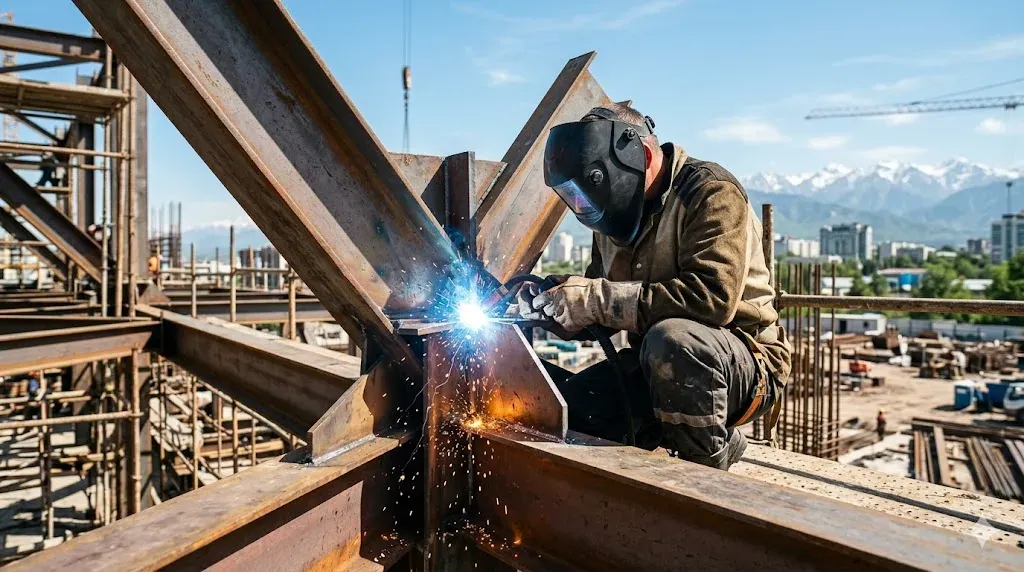
Welder-fitter in Almaty
from 3 500 KZT* per metre of joint
The frame is skewed and the foreman is losing a shift explaining the drawing? The installer reads the KM D himself, sets the units with a tolerance of up to 2 mm and welds — a shift from 25 000 ₸.
 Assembly according to
KM D with tolerance up to 2 mm Crew of 2–5 people
for projects from 5 tons 3-year warranty
on every seam Shift from 25 000 ₸,
measurement free
Welder-fitter in Almaty
from 3 500 KZT* per metre of joint
The frame is skewed and the foreman is losing a shift explaining the drawing? The installer reads the KM D himself, sets the units with a tolerance of up to 2 mm and welds — a shift from 25 000 ₸.
Assembly according to
KM D with tolerance up to 2 mm
Crew of 2–5 people
for projects from 5 tons
3-year warranty
on every seam
Shift from 25 000 ₸,
measurement free
Types of welding
work we do
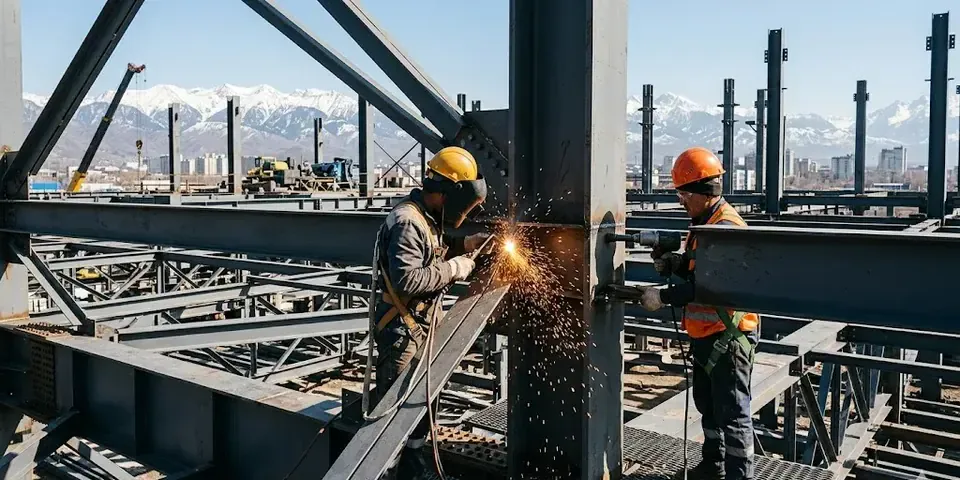
Installation of steel structures
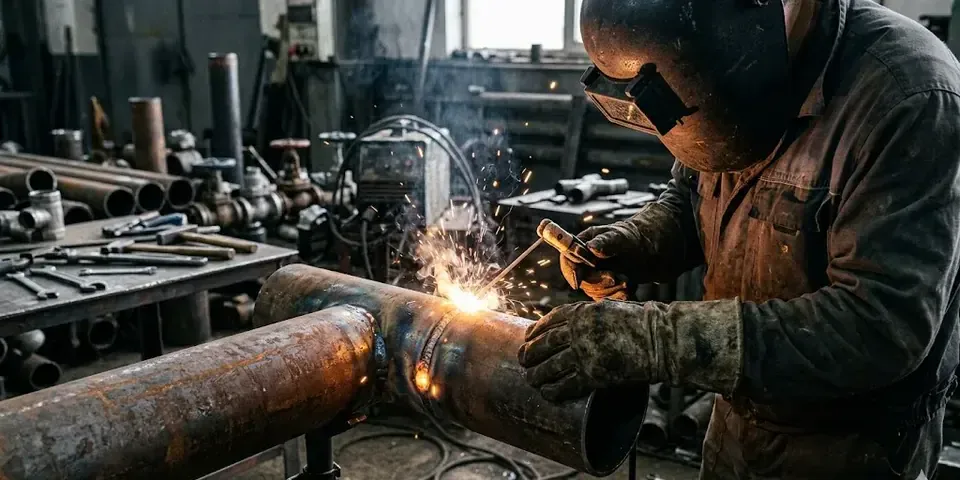
Pipeline welding
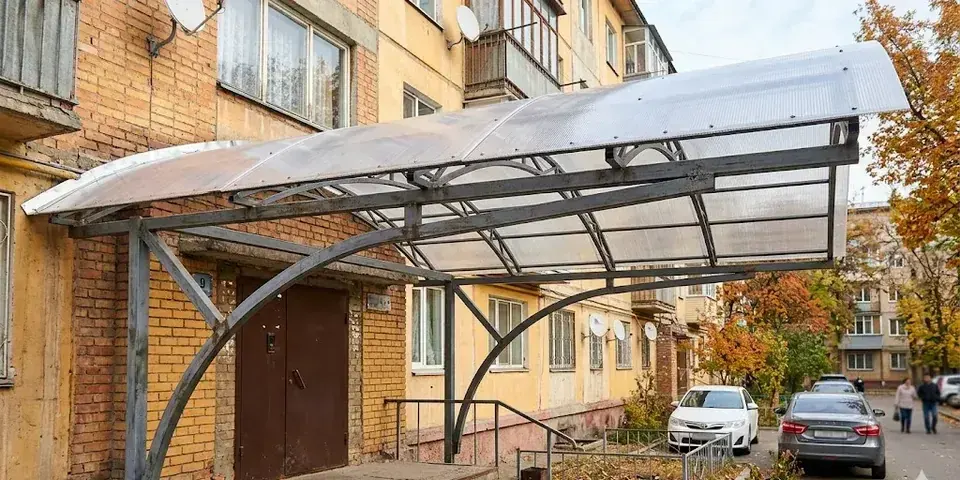
Manufacture of canopies
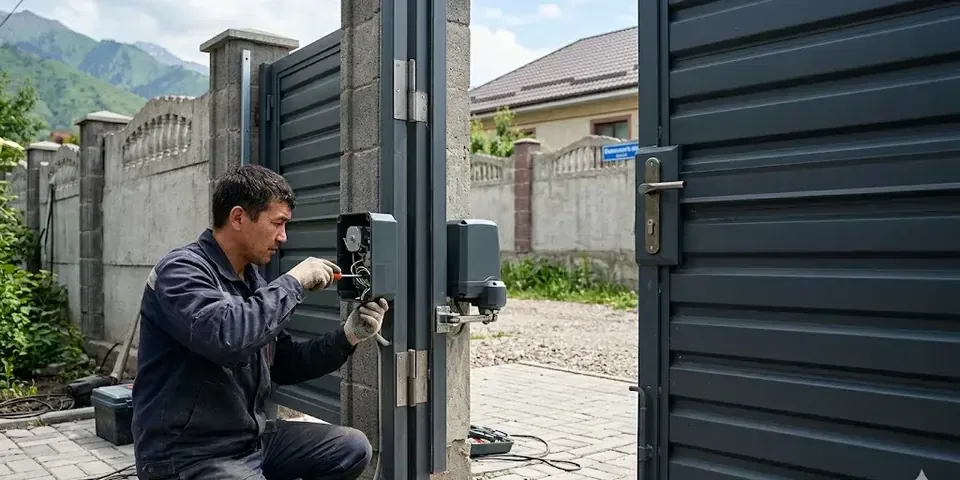
Installation of gates and wicket doors
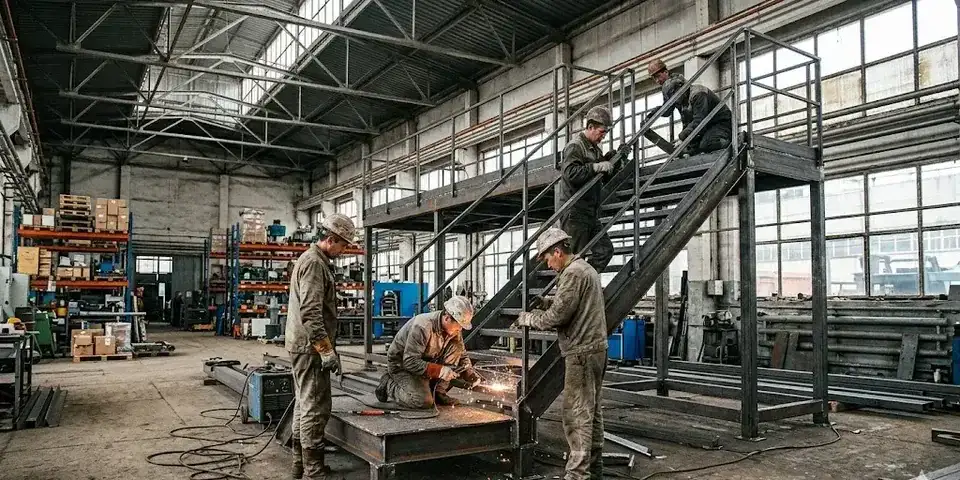
Installation of stair flights
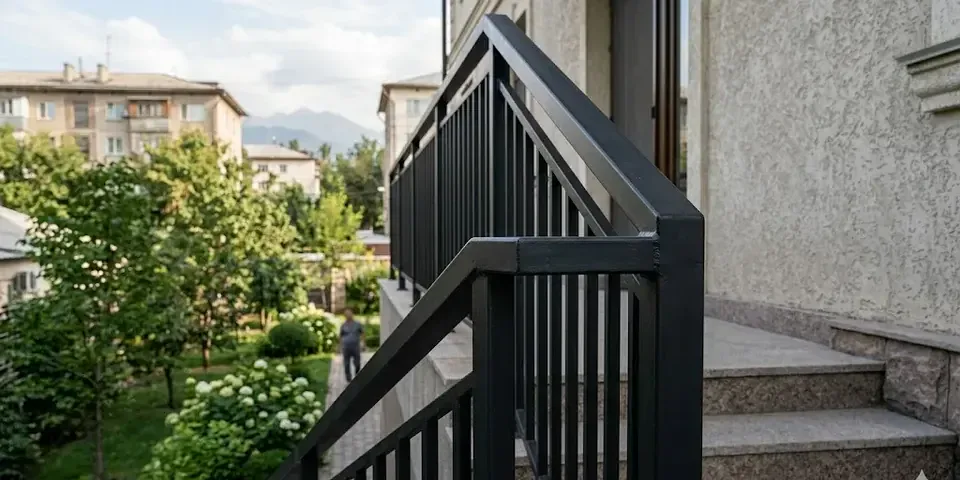
Welding of fences and railings
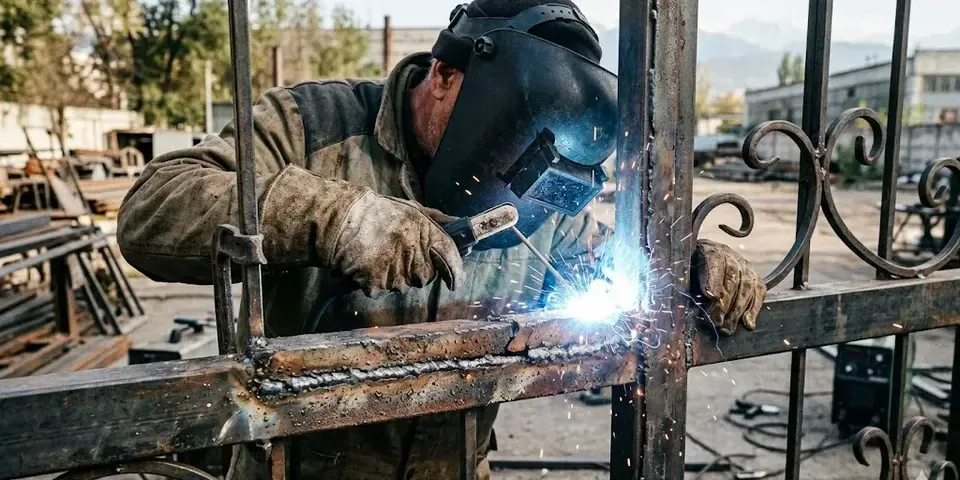
Repair of metal products
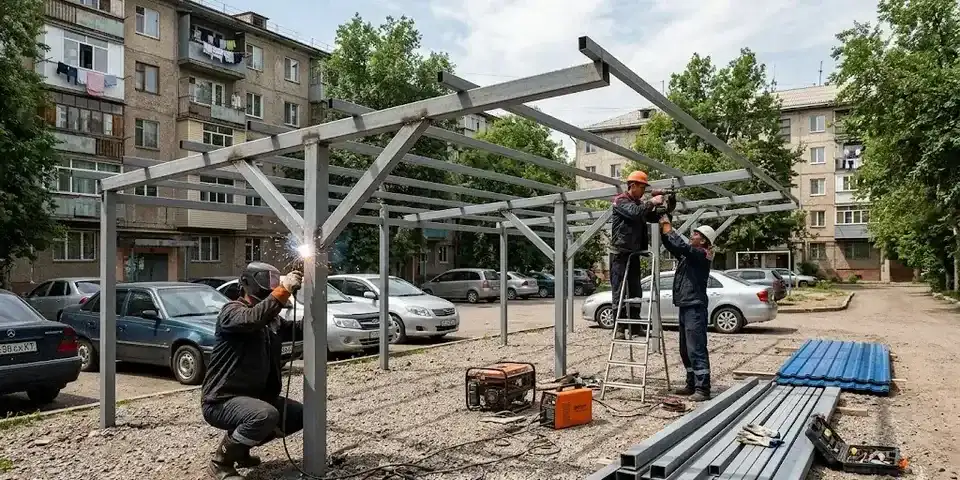
Installation of car canopies
Types of welding
work we do
Installation of steel structures
Pipeline welding
Manufacture of canopies
Installation of gates and wicket doors
Installation of car canopies
Welding of fences and railings
Repair of metal products
Installation of stair flights
We will call you back within 3 minutes
Types of welding
work we do
Installation of steel structures
Pipeline welding
Manufacture of canopies
Installation of car canopies
Installation of stair flights
Welding of fences and railings
Repair of metal products
Installation of gates and wicket doors
We will call you back within 3 minutes
Cost of WELDER-FITTER WORK IN ALMATY
| SERVICE | COST | TIME |
|---|---|---|
| Visit for inspection and measurement of the object | free of charge | from 1 hour |
| Minimum order | from 15 000 ₸ | — |
| Electric arc welding MMA (per meter of seam) | from 3 500 ₸ | from 1 hour |
| MIG/MAG semi-automatic (per meter of weld) | from 4 000 ₸ | from 1 hour |
| TIG argon-arc welding (per meter of seam) | from 5 500 ₸ | from 1 hour |
| Frames, trusses, beams from 5 t (per tonne) | from 120 000 ₸ | from 5 days |
| Frames, trusses, beams up to 5 t (per ton) | from 150 000 ₸ | from 2 days |
| Truss support joint | from 8 000 ₸ | from 2 hours |
| Flight staircase up to 3 m with handrails | from 25 000 ₸ | from 1 day |
| Spiral staircase up to 3 m | from 40 000 ₸ | from 2 days |
| Welder-installer shift (8 h) | from 25 000 ₸ | 1 shift |
| Shift of a team of 3 people | from 70 000 ₸ | 1 shift |
| Metal cutting with a grinder or plasma (per meter) | from 1 500 ₸ | from 30 min |
Преимущества СВАРОЧНЫХ РАБОТ ОТ Profi‑Dom

Geometry with a tolerance of 2 mm
We check the axes of the support plates and the diagonals of the frames before welding — the column will not stand skewed

Foreman with 14 years of experience
Our installers read the KMД drawings themselves and weld load-bearing assemblies using MMA, MIG/MAG and TIG — without a supervisor

Own generator 5–7 kW
We weld at facilities without a 220 V network: the generator is included in the price of a shift or ton without markup

Deadlines in the contract
A crew of 3 people completes a project up to 5 tons in 5–7 working days, the date is written in the contract

3-year warranty on seams
A crack, pinhole or lack of fusion — the foreman will arrive within 2 working days and re-weld for free

Price per ton or shift
Ton from 120 000 ₸, truss assembly from 8 000 ₸, shift from 25 000 ₸ — we choose the best option
Преимущества СВАРОЧНЫХ РАБОТ ОТ Profi‑Dom
We check the axes of the support plates and the diagonals of the frames before welding — the column will not stand skewed
Geometry with a tolerance of 2 mm
Our installers read the KMД drawings themselves and weld load-bearing assemblies using MMA, MIG/MAG and TIG — without a supervisor
Foreman with 14 years of experience
We weld at facilities without a 220 V network: the generator is included in the price of a shift or ton without markup
Own generator 5–7 kW
A crew of 3 people completes a project up to 5 tons in 5–7 working days, the date is written in the contract
Deadlines in the contract
A crack, pinhole or lack of fusion — the foreman will arrive within 2 working days and re-weld for free
3-year warranty on seams
Ton from 120 000 ₸, truss assembly from 8 000 ₸, shift from 25 000 ₸ — we choose the best option
Price per ton or shift
We will call you back within 3 minutes
HOW WE WORK
- 01.Application and drawing
You send KM D, a sketch or a photo of the site — we call back within 3 minutes and give a price estimate.
- 02.Site inspection
The foreman checks foundations, anchors and embedded parts free of charge; we record deviations from the drawing in a report.
- 03.Calculation and format
We calculate the price per ton, assembly or shift and select the team: one installer or a crew of 2–5 people.
- 04.Approval of the contract
We fix in the contract the price, deadlines, and a 3-year warranty on welded seams of load-bearing units.
- 05.Marking and assembly
We mark the axes, assemble the assemblies with tack welds and check the diagonals — the difference is no more than 3–5 mm.
- 06.Full penetration of load-bearing seams
We apply root and fill passes at the joints of columns, trusses and bracing with the leg specified by the project.
- 07.Weld seam control
We inspect every seam, measure the leg with a gauge, cut out the defective section, and re-weld it on site.
- 08.Handover and acceptance act
We sign the certificate of completed work — from this date, a 3-year warranty on welded seams is valid.
Find out the cost of metal structure installation in 1 minutes
catalogue of completed welding work
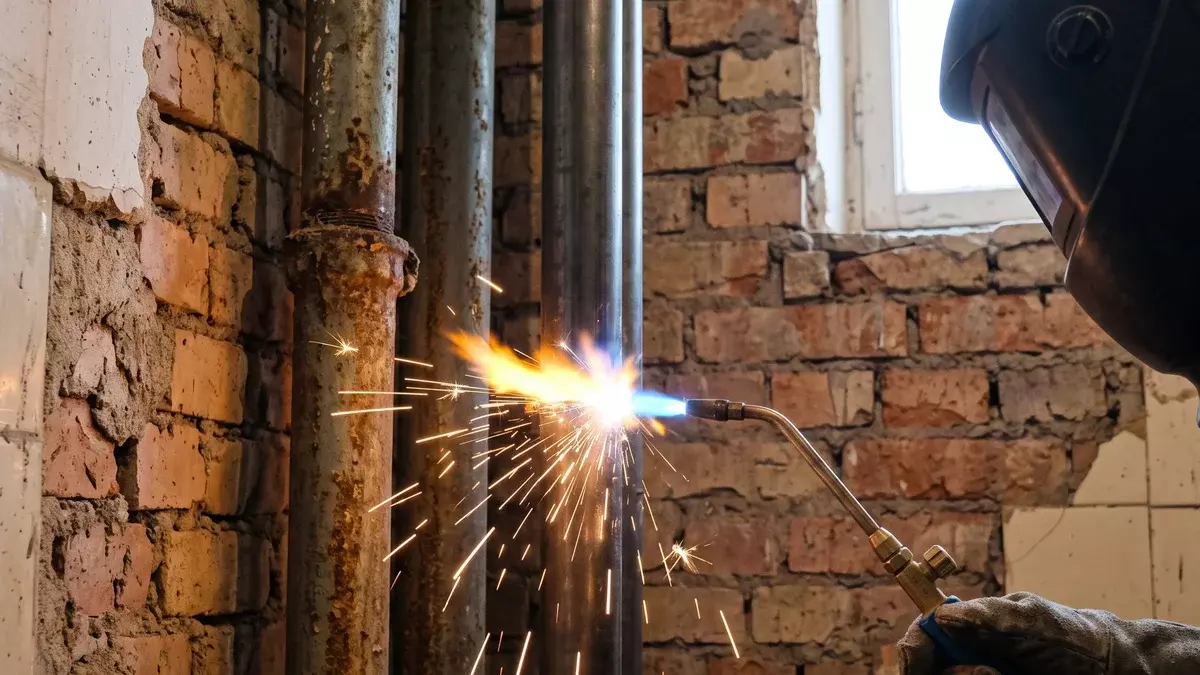 Replacement of cold and hot water risers was carried out in an apartment in a residential complex in the Samal-2 microdistrict.
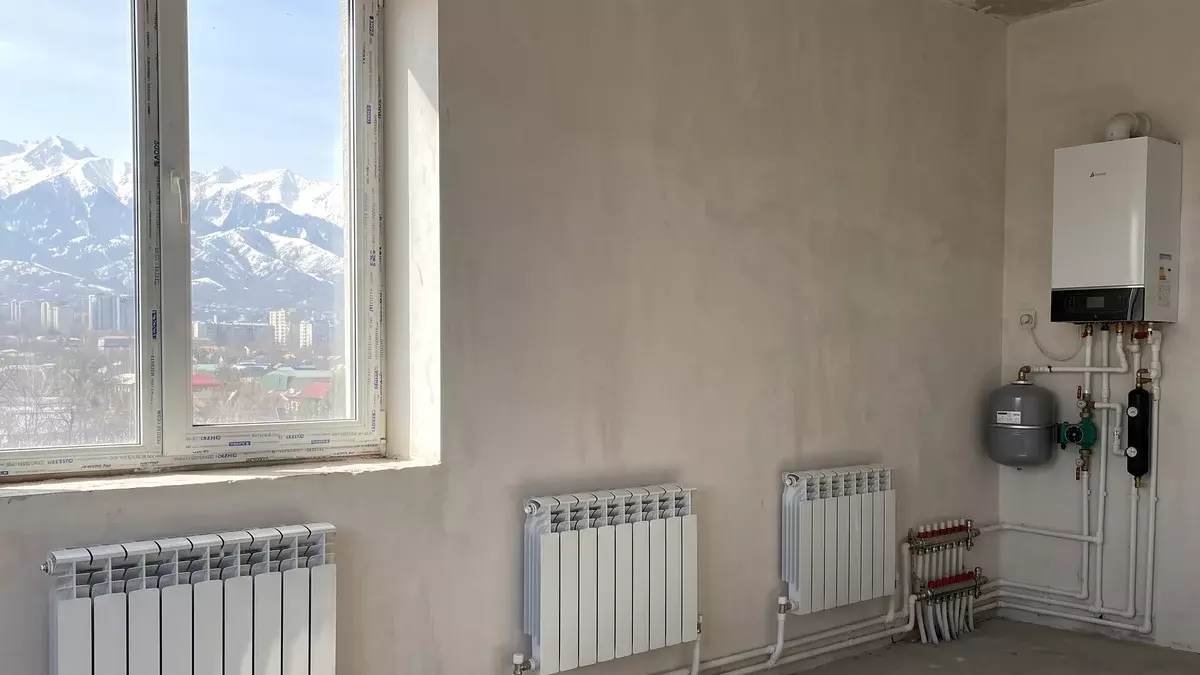 A heating system with radiators was installed in a private house in the Koktobe settlement.
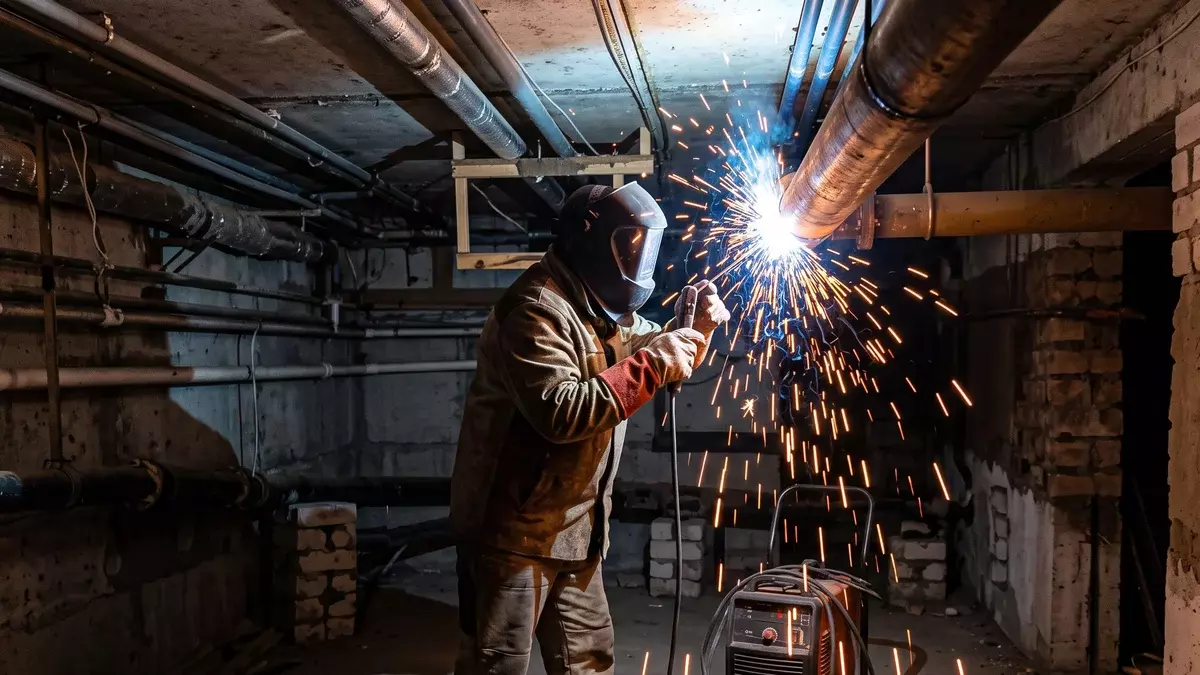 Replacement of a toilet and washbasin with connection to the sewerage system was carried out at an office in central Almaty.
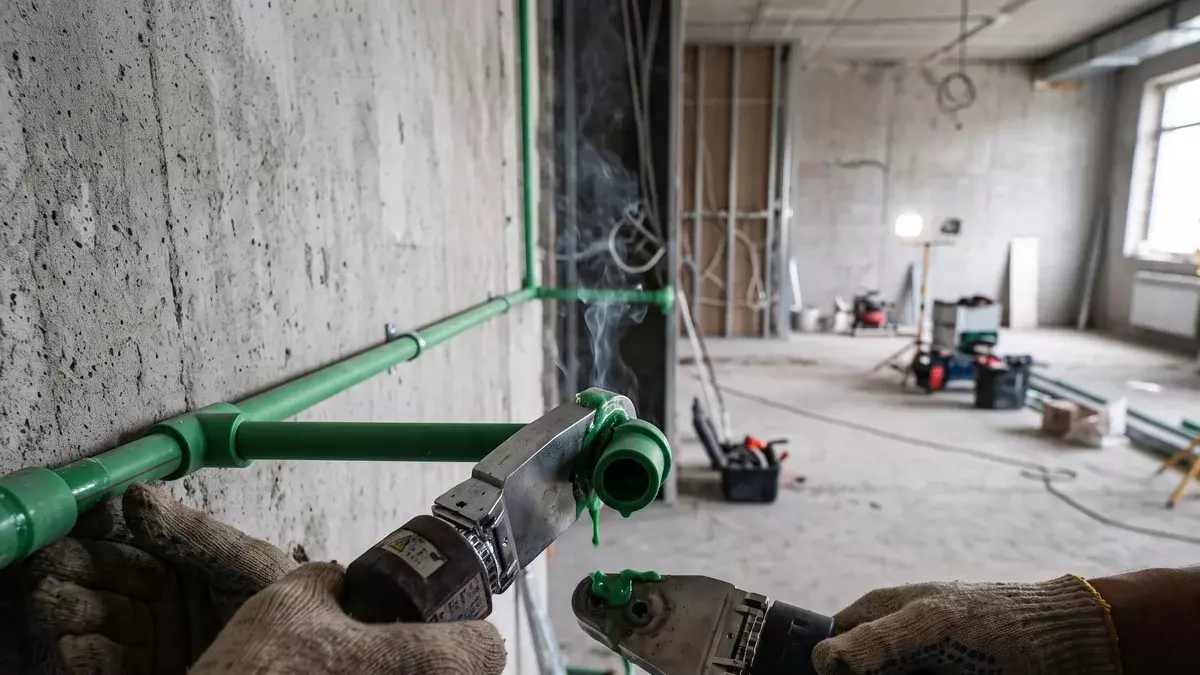 Welding of polypropylene water supply pipes was carried out for a new cafe on Abay Avenue.

FIND OUT THE COST OF WELDING WORK FOR YOUR PROJECT
Leave a request and we will contact you within 3 minutes
Thank you! We will contact you within 3 minutes.
By clicking the button you agree to the terms of the
Or call us at
+7 (707) 068-88-68Privacy PolicyFIND OUT THE COST OF WELDING WORK FOR YOUR PROJECT
Leave a request and we will contact you within 3 minutes
Thank you! We will contact you within 3 minutes.
By clicking the button you agree to the terms of the
Or call us at
+7 (707) 068-88-68Privacy PolicyFIND OUT THE COST OF WELDING WORK FOR YOUR PROJECT
Leave a request and we will contact you within 3 minutes
Thank you! We will contact you within 3 minutes.
By clicking the button you agree to the terms of the
Or call us at
+7 (707) 068-88-68Сварщик-монтажник в Алматы: монтаж металлоконструкций от PROFI‑DOM
PROFI-DOM's welder-installer in Almaty reads KM/KMD drawings, assembles metal structures according to level and welds load-bearing joints on site — a full cycle from marking and tack welding to full penetration and weld inspection. A master's shift — from 25 000 ₸, installation of frames from 5 tons — from 120 000 ₸ per ton, a visit for measurement is free. The masters are certified and authorized for work at height.
Published: 21 · Updated:
Metal structure installer: role at the site
We will explain the fundamental difference and why such a specialist is needed for metal structures on site.
How a fitter differs from an ordinary welder
Our craftsman reads KM/KMD drawings, assembles metal structures by level, sets up assemblies and welds them on site — this is a full "assembly + welding" cycle in one pair of hands, unlike an ordinary welder who works on a finished assembly. The installer lays out the parts on the building site himself, checks the diagonals of the frames and the alignment of the beams, makes tack welds, then welds the load-bearing assemblies — whether the frame will fit the project without distortions depends on him. On subsiding soils the foundation geometry shifts, and such a craftsman corrects the layout on site so that the structure fits the project.
What the installer does on site
- Reading KMD: he studies the joint drawings, the profile specification and the installation elevations before the metal is even unloaded on site.
- Marking out and assembly-tacking: sets out the columns and beams along the centre lines and benchmarks, tack-welds them, checking the vertical with a plumb line and the diagonals with a tape measure.
- Welding of load-bearing seams: after checking, applies root and fill passes at the joints of trusses, girders and ties — the weld leg matching the design value.
- Cleaning and visual inspection: removes slag and spatter, examines the weld for lack of fusion and porosity, and if necessary repairs the defect on the spot.
- Work at height: assembles roof purlins and ties along trusses up to 15 metres using a fall protection system.
Why metal structures need an installer, not just a welder
Installation of load-bearing metal structures — frames, trusses, beams, stairs — requires a master installer, because he combines the skills of assembling according to drawings, welding critical joints and working at height, while an ordinary welder without installation experience will not set out the geometry. A typical picture: a bundle of metal is brought according to the detailed design, and the welder waits for the foreman to lay out the parts and mark the seam locations — a shift is lost. The installer starts by reading the specification, assembles the shipping marks himself, tacks the frame, checks the diagonal and only then welds — the whole operation takes 3–4 hours instead of a full day with an inspector. At a height of 6–12 meters, when installing purlins or bracing along trusses, not only a permit is needed, but also the skill of fixing a part with one hand while tacking with the other, which an ordinary welder is not taught.
What the master installs and welds on site
We list the main types of steel structures that a mobile specialist assembles and welds on projects across Almaty — from frames to hangars and staircases.
Building frames, trusses, beams and columns
We assemble and weld building frames, roof trusses, beams and columns — all load-bearing elements that are assembled according to KMD drawings with level and plumb verification. On site it looks like this: first the foreman checks the geometry of the base plates and anchor groups — axial deviation must not exceed 2 mm, otherwise the column will be skewed and it will be impossible to fix. Then the truss is assembled on a stand from individual profiles (angle, I-beam, bent channel) with each joint tack-welded — over a span of 18 meters this is 12-14 joints per truss. After checking the diagonals (difference no more than 5 mm), the specialist welds the seams in field conditions with an MMA/SMAW machine using UONI 13/55 electrodes for critical connections.
Straight and spiral staircases, platforms and trestles
Our installer assembles and welds straight and spiral staircases, service platforms and ramps — with precise on-site fitting of steps, railings and supporting stringers. On a typical site (for example, a production workshop or an office with a mezzanine) the craftsman first marks the stringer mounts on the wall or column, then assembles the flight frame from №12-16 channel with a step pitch of 220-250 mm in height. For service platforms at a height of 3-6 meters he welds a frame from 50×50 angle with a grated deck and a 1100 mm high railing — the platform is designed for a load of up to 200 kg/m². For spiral staircases the specialist makes a template of the central post on site so that the rotation angle and step height match the project — the factory template often does not fit due to concrete tolerances.
Hangars, canopies, fences and embedded parts
Hangars and canopies of any configuration — from arched to gable — are also our work, as are fences, embedded parts, and opening reinforcements. On the foundation for a 12×30 meter hangar, the master first checks the location of the anchor bolts according to the drawing: if the deviation along the axes is more than 10 mm, the bolts are repositioned or a reinforcing plate is welded. Then he assembles the end frames on the ground from 80×80×4 profile pipe, verifies the geometry by diagonals (difference no more than 3 mm), lifts them with a crane, and fixes them on the anchors — this is safer and more accurate than assembling elements at height. After installing all frames, the specialist connects them with purlins made of channel and welds a fence around the perimeter 1,2 meters high with a post spacing of 2 meters.
Welder certification, height access permit and seam quality control
The installer works on load-bearing units only with certification. We will analyze what documents and permits a specialist must have to work on site — certification, height permit and weld quality control.
Is certification required for a welder-installer in Kazakhstan
Certification of welders of load-bearing metal structures at facilities in Kazakhstan is most often required by the customer's technical supervision — without a certificate, welds may not be accepted. The certificate is issued after a theoretical exam and a practical test of welding a control sample; it specifies permission for specific types of work: manual arc (MMA), semi-automatic (MIG/MAG) or argon-arc (TIG). On Almaty construction sites, a welder-installer with manual arc certification is most often required — this is the method usually used to weld columns, beams and trusses of frames. During inspections by construction supervision or the customer's technical supervision, the absence of certification for such a worker may become grounds for redoing all welded joints at the contractor's expense.
Working at height permit — which documents are required
Only an installer who has completed training and knowledge testing on safety and labor protection and has no medical contraindications based on the results of a mandatory medical examination is allowed to work at height. The work itself on site is carried out under a work permit and under the supervision of a responsible manager — this is required by the Kazakh Rules on ensuring safety and labor protection when working at height. A welder's certificate is a separate document: it is extended according to the rules for certification of welders, not according to the schedule of height permits. The installer brings his own safety harness and slings.
How welded seams are quality-checked — visual inspection (VT)
After welding the load-bearing units, our master performs visual and measuring control (VMC) of each seam — checks geometry, absence of cracks, pores, undercuts and overlaps, measures the weld leg with a UShS-2 gauge. Permissible deviations are set by the project and the construction norms of the Republic of Kazakhstan for acceptance of metal structures: for load-bearing seams, the leg height is set by the project, usually 6-8 mm, deviation — no more than +1 mm. If a discrepancy is found, the seam is marked with chalk, chipped out with a pneumatic chisel or cleaned with a grinder to the base metal and re-welded — this is a standard procedure, not a defect. VMC detects most external defects, but for hidden ones (root undercuts, lack of fusion) on critical units, ultrasonic testing is additionally used — the customer can request it separately.
A crew or a single installer — work formats on site
An installer-welder in a crew covers both assembly and welding on site. We'll break down when one specialist is enough for a site and when a crew is more cost-effective — and how the format affects timelines and budget.
When one welder-erector is enough
One of our welder-fitters is enough for projects of up to 2,5-3 tonnes of steel structures: staircases, canopies, railings, porch roofs, small platforms up to 10 m² where all the joints are accessible from the ground or from a single level. Such a specialist marks out from the drawing himself, assembles with tack welds, checks by level and diagonals, then welds the main seams — without a helper. On a single-storey frame for a 1,5 tonne canopy he works 2-3 shifts, on a spiral staircase with a platform — 3-4 shifts. The structures are delivered by the customer's crane or by hand; rigging on light profiles up to 80 kg does not require a slinger. If the project is within the city limits and there is no tight deadline, one such specialist costs 40-50% less than a crew — without any loss of weld quality. On projects of up to 3 tonnes a crew of two increases the estimate by a factor of 1,5-1,7, yet the timeframe is compressed by only 1 shift — economically unjustified.
When a crew of welder-erectors is needed
Our crew of welder-fitters (2-5 people) is essential for projects from 5 tonnes: building frames, hangars, trusses with a span from 12 metres, bridge crossings, multi-tier platforms where assembly on the ground, crane lifting and installation at height take place simultaneously. Such a team includes a foreman (who is also the senior fitter), who reads the drawing, marks out the axes and controls the geometry of the joints, and 1-2 riggers for slinging and moving beams up to 500 kg. On a 12×30 metre hangar (about 12 tonnes of metal) a crew of 4 people works 10-12 shifts, whereas a single specialist would need 25-30 shifts, and the seams on load-bearing trusses require mandatory visual and dimensional inspection after each stage. Parallel work on the ground and at height cuts the installation time by a factor of 2-3 on projects of 10+ tonnes — the crew pays for itself through earlier commissioning of the property and savings on crane hire.
Certified welder-erectors (rotational crew) for the site
Our shift rotation for welder-fitters means a crew working on site on a 10/10- or 12/12-hour shift schedule with accommodation on site when it is more than 30 km from the city, ideal for projects in the suburbs (Kargaly, Irgeli, Otegen-batyr) or with tight handover deadlines. The rotational format includes mobilisation: delivery of the crew, welding equipment (inverters, angle grinders, cables up to 50 m), protective equipment and camp beds if necessary. On a 20 tonne hangar outside the city, a crew of 4 people on a 12/12-day rotation finishes the installation in 12-14 days, whereas daily travel from Almaty eats up 1,5-2 hours on the road and stretches the timeframe to 18-20 days. Rotation is worthwhile for volumes from 15 tonnes and a deadline of less than 2 weeks — mobilisation pays for itself through the absence of daily downtime for assembly/disassembly and logistics.
Welder-fitter rate: per tonne, unit, shift and crew
We will analyse all the pricing models for welder-fitter services — per tonne of steel structures, per joint, per shift and per crew — so that you can choose the best option for your project.
Price per tonne of steel structures — when it is worthwhile
The price of a PROFI-DOM specialist per ton of metal structures is from 120 000 ₸ for volumes from 5 tons, including assembly according to KMD drawings, welding of load-bearing joints, and visual inspection. On building frames up to 3 floors and roof trusses with spans up to 24 meters, tonnage correlates with labor intensity: per ton there are 12–16 linear meters of weld and 4–6 joints, which gives an estimate error of up to 5 %. For volumes less than 5 tons (a 3-ton overpass), the rate rises to 150 000 ₸ — the share of preparatory work is not distributed over a smaller weight. On stairs and platforms with railings, tonnage is deceptive: a 300--kilogram spiral staircase requires 2–3 times more welds per kilogram than a frame, so such structures are more cost-effective to calculate per assembly to avoid overpaying.
Price per assembly/unit — for one-off structures
Price per node or product — from 25 000 ₸ for a flight of stairs, from 8 000 ₸ for a truss support node, from 5 000 ₸ for a 1 m² platform — suitable for objects up to 2 tons. Price per node is calculated when the structure is complex and tonnage does not reflect labor intensity: a spiral staircase weighs 300 kg, but there is more work in it than in 2 tons of beams due to 24–30 curved seams and fitting steps on site. The price of a flight of stairs includes leveling and welding embedded parts to the column. If there are more than three identical nodes at the site, the price per series is calculated — it is lower due to conveyor assembly.
Price per shift and per crew — for flexible tasks
The price of a PROFI-DOM specialist per shift (8 hours) is from 25 000 ₸ for one craftsman; a team of 3 people is from 70 000 ₸ per shift, including work with tools and a generator if necessary. Shift payment is convenient when the scope is unclear or the site requires phased handover — you pay only for the days worked, without being tied to tonnage. During workshop reconstruction, old beams are first cut out (2 shifts), then embedded parts are installed (1 shift), and then the mezzanine frame is assembled (4 shifts) — tonnage cannot be calculated, while the shift rate provides flexibility. A team of 3 people (welder-installer, assistant, foreman) handles facilities up to 5 tons in 5–7 working days, while a team of 5 people — from 110 000 ₸ per shift — copes with 10--ton frames in 8–10 shifts. For rotational work outside the city (a team of 3 people, 24-hour stay) — 90 000 ₸ per day, which is cheaper than paying for two shifts of a team with travel.
PROFI-DOM welder-fitter price table
| Work / Structure | Unit of calculation | Price from, ₸ | Note |
|---|---|---|---|
| Frames, trusses, beams (from 5 t) | tonne | 120 000 | Includes assembly to detail drawings (KMD), welding and visual inspection (VT) |
| Frames, trusses, beams (up to 5 t) | tonne | 150 000 | Small volume — higher rate |
| Straight flight staircase (up to 3 m) | item | 25 000 | With handrails and a platform |
| Spiral staircase (up to 3 m) | item | 40 000 | Complex geometry |
| Truss support joint | unit | 8 000 | With levelling |
| Platform 1 m² | item | 5 000 | With fencing |
| One installer | shift (8 h) | 25 000 | With tools |
| Бригада 3 человека | shift (8 h) | 70 000 | With a foreman |
| Бригада 5 человек | shift (8 h) | 110 000 | For facilities from 10 t |
| Shift (crew of 3 people) | per day | 90 000 | With accommodation |
Prices are given excluding the cost of material (rolled metal is supplied by the customer) and include tools and visual and measuring inspection (VMI).
How to order a welder-erector for a site in Almaty
We will explain how to order a specialist to your site — from request to arrival, including work without electricity and warranties on the seams.
How to order a PROFI-DOM welder-erector
You can order a welder-installer from us in Almaty by phone or via a request on the website — you state the scope of work, the type of structures, and the site address, and we select a craftsman or a crew and agree on the visit date. After the request, a foreman — a senior installer with 14 years of experience — contacts you to clarify details: the steel grade (С245, С345), metal thickness (from 4 to 40 mm), the number of joints, and the need to work at heights above 5 meters. If there is a КМД drawing or a sketch with dimensions, the foreman immediately provides a preliminary estimate by price per ton or per joint; if there is no drawing, he visits the site to measure foundations and embedded parts, and this service is free.
Installation on a site without electricity — a solution
Our specialist travels to sites without electricity with his own generator — a 5–7 kW petrol inverter ensures stable operation of the MIG/MAG semi-automatic machine and the angle grinder throughout the entire shift. Such a generator also powers an MMA inverter machine for root welds on thick metal from 20 mm, and a welding rectifier for manual arc welding with coated electrodes — we transport all equipment in a minibus together with tools and scaffolding. At sites in remote industrial zones (Alatau industrial zone, Kuldzha tract), working without a 220 V grid is a normal situation. The generator is included in the cost of the shift or tonnage without markup — the main thing is to warn us when ordering so we can bring the equipment.
Warranties on welded seams and work quality
We provide a warranty on welded seams of load-bearing structures — 3 years from the date of signing the work completion certificate, during which we eliminate free of charge defects identified during operation. A warranty case occurs if a seam cracks, a fistula appears, or lack of fusion is found in the root — the foreman visits within 2 working days, cleans the defective area, re-welds it and performs a repeated visual and measuring inspection (VMI) with a note in the log. At the same time, the warranty does not cover mechanical damage that occurs after installation — for example, a forklift hitting a column or drilling holes in a seam without approval. The warranty applies only to seams made according to the KMD drawing and that have passed VMI inspection — if the customer makes changes to the structure after installation, the warranty on the modified units is void.
What is needed for a site visit — documents and inspection of the site
When the foreman visits the site, the customer must provide: a detailed drawing (KMD) or sketch, access to the installation area, permission for work at height (if required by the site regulations), and ensure vehicle access for delivering the structures. If there is no drawing, the foreman takes measurements on site within 1–2 hours and prepares a sketch with dimensions, which is agreed with the site supervisor; this is free of charge. Additionally, a manufacturer's certificate for the metal rolled products (steel quality certificate) may be required — if the site undergoes state acceptance, we request it to complete the as-built documentation. Before starting work, the foreman inspects the foundations and embedded parts for compliance with the drawing — if there are deviations, a report is drawn up so that there are no disputes later about the geometry of the installed structure.
Conclusion
We have gathered the key things you need to know when ordering a welder-fitter to a site in Almaty — from the difference in qualifications to the formats of work and weld inspection.
Key takeaways when choosing a specialist
- A welder-fitter is not just a welder. He reads KMD drawings, assembles the structure to level and welds load-bearing joints — this is exactly the specialist needed for steel structures on site.
- Certification and permits are mandatory. A welder's certificate for load-bearing seams and permission to work at height are requirements of construction supervision; check documents before the visit.
- The format of work depends on the scope. Up to 3 tonnes, one craftsman is enough; from 5 tonnes and for complex joints — a crew of 2–5 people; shift work is convenient on sites outside the city.
- Pricing is calculated in different ways. Per tonne is advantageous for identical structures from 5 tonnes, per joint — for one-off items, per shift — for small jobs of up to 1 tonnes.
- A site visit requires preparation. Drawings, access to the installation location and vehicle access for the structures are the minimum; inspecting the foundations before starting prevents disputes about geometry.