Wood facade cladding in Almaty
from 4 500 tg.* PER SQUARE METER
The wooden facade will not darken or rot after 2–3 years: ventilation gap 40–50 mm, hidden fasteners, and UV-filtered oil in 2 coats.
 With a 40–50 mm ventilation
gap, the wood does not rot A 150–200 m² house
in 5–10 days Warranty 5 years under
the contract Discount 5–10%
from 100 m² of facade
Wood facade cladding in Almaty
from 4 500 tg.* PER SQUARE METER
The wooden facade will not darken or rot after 2–3 years: ventilation gap 40–50 mm, hidden fasteners, and UV-filtered oil in 2 coats.
With a 40–50 mm ventilation
gap, the wood does not rot
A 150–200 m² house
in 5–10 days
Warranty 5 years under
the contract
Discount 5–10%
from 100 m² of facade
Types of facade
work we do
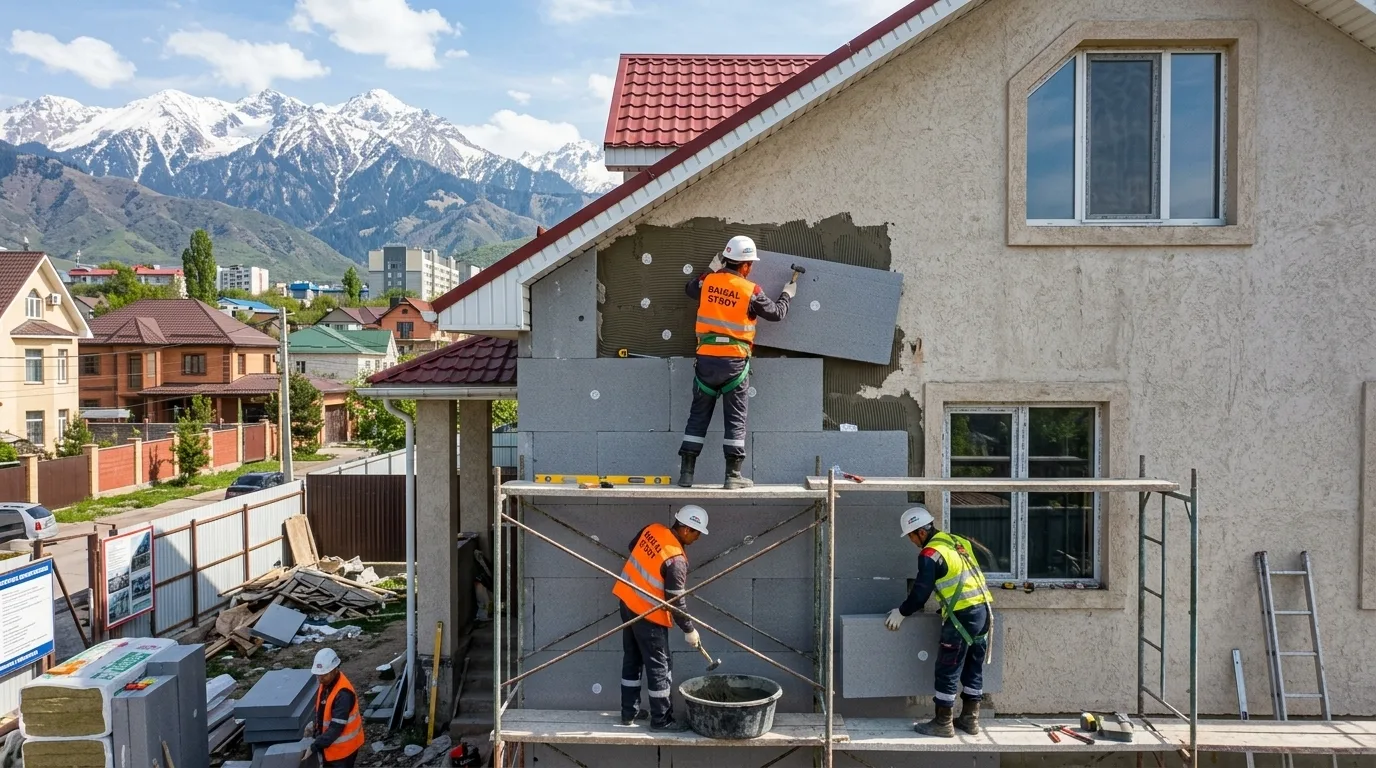
Facade insulation
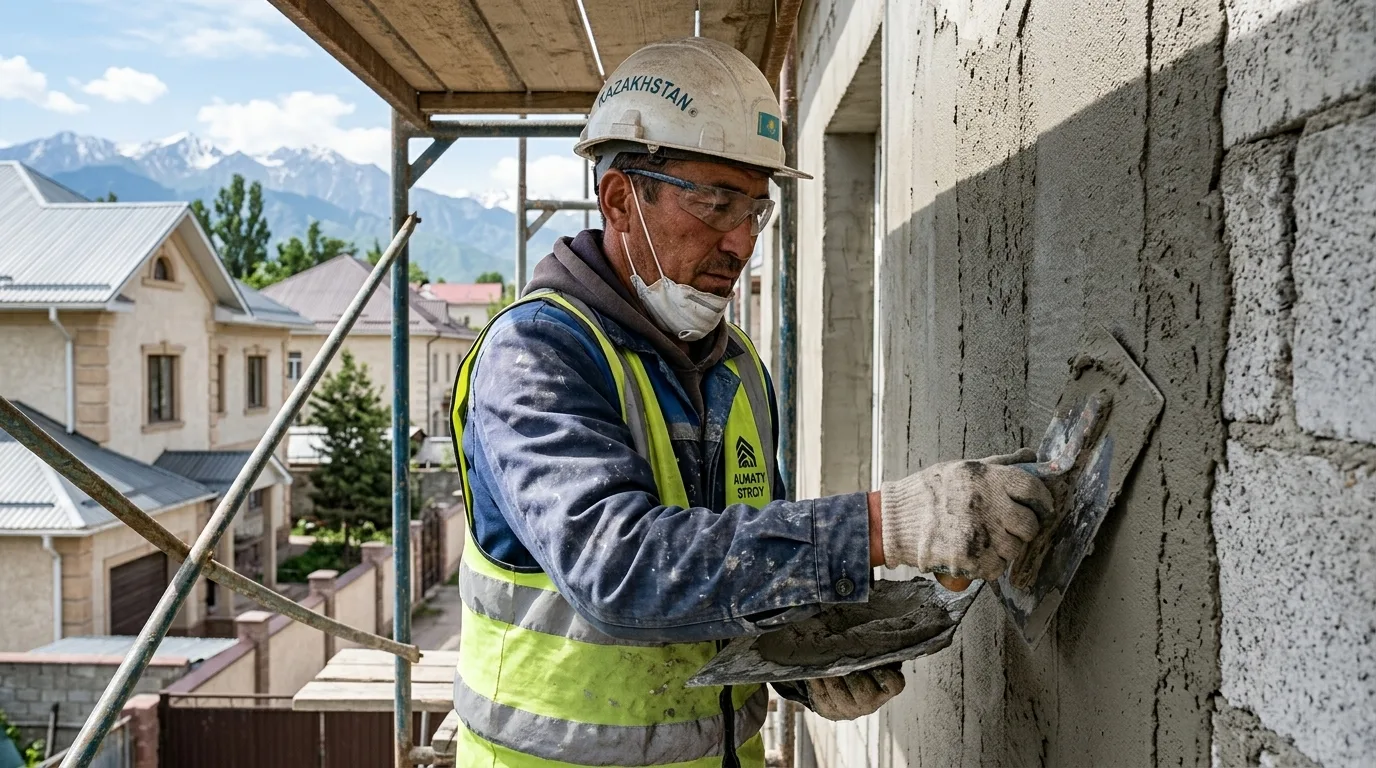
Plastering the walls
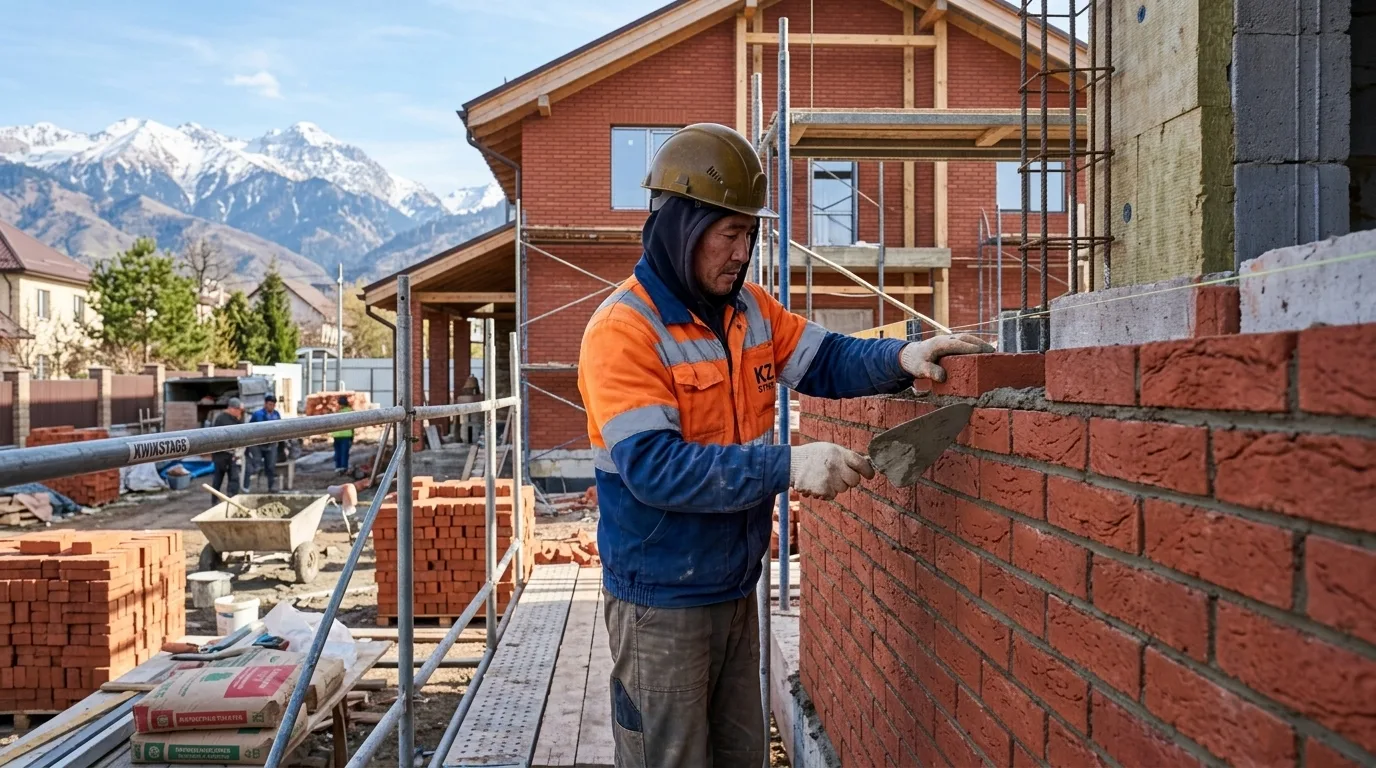
Brick cladding
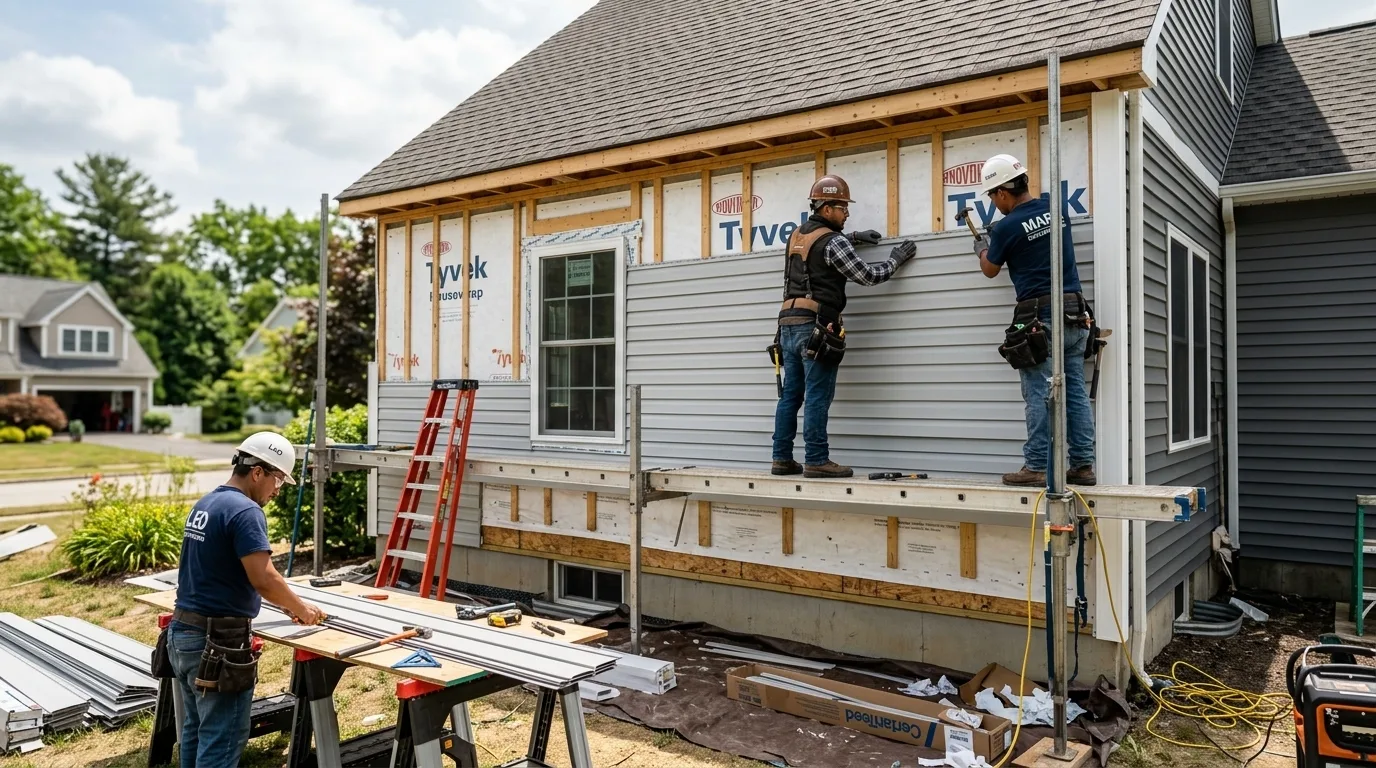
Siding installation
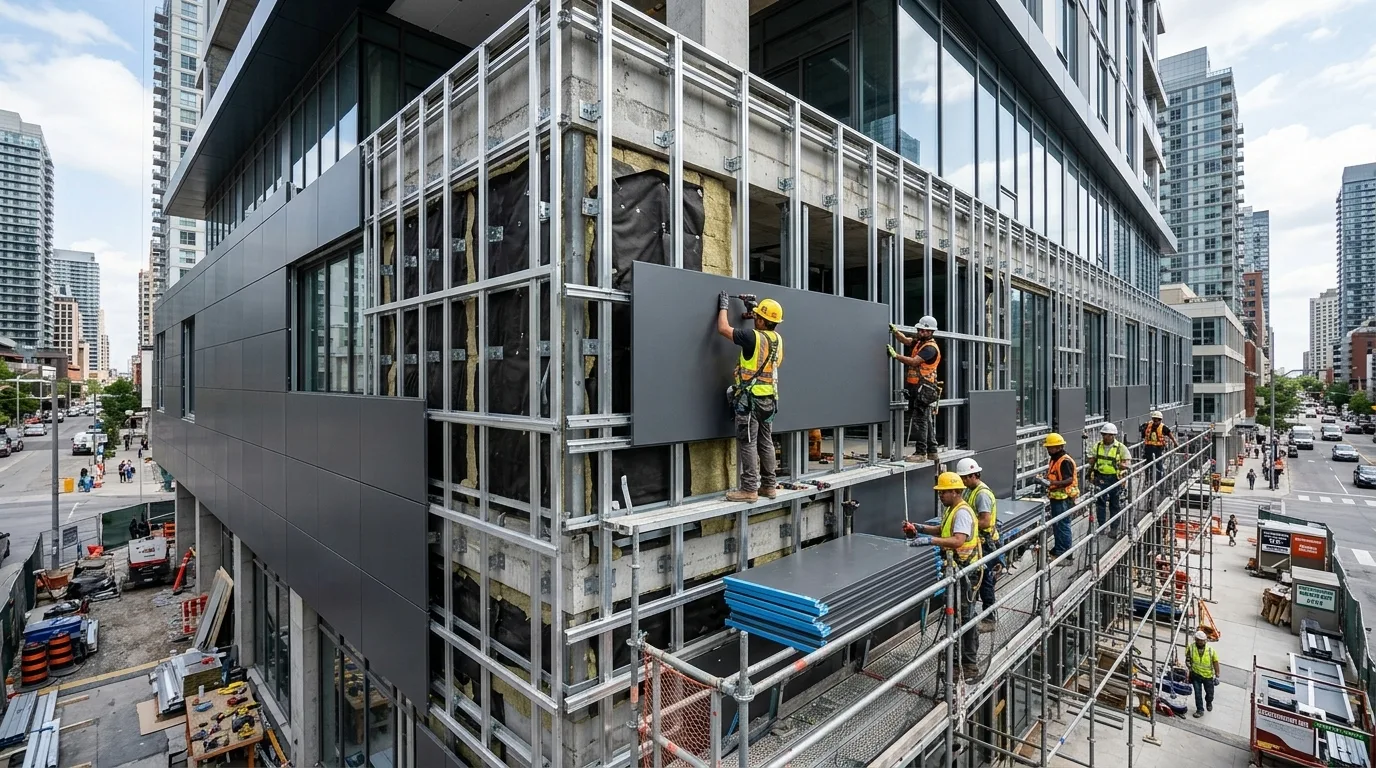
Construction of ventilated facades
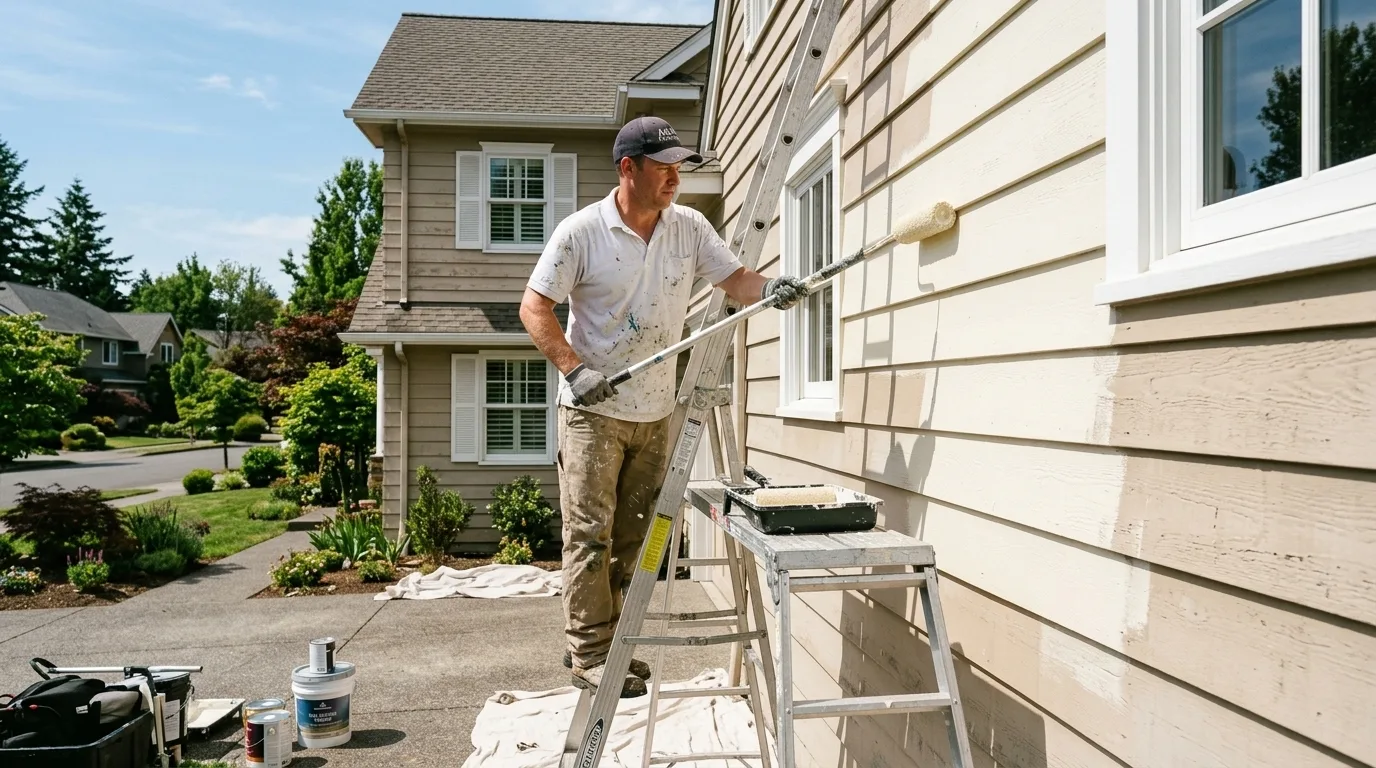
Facade painting
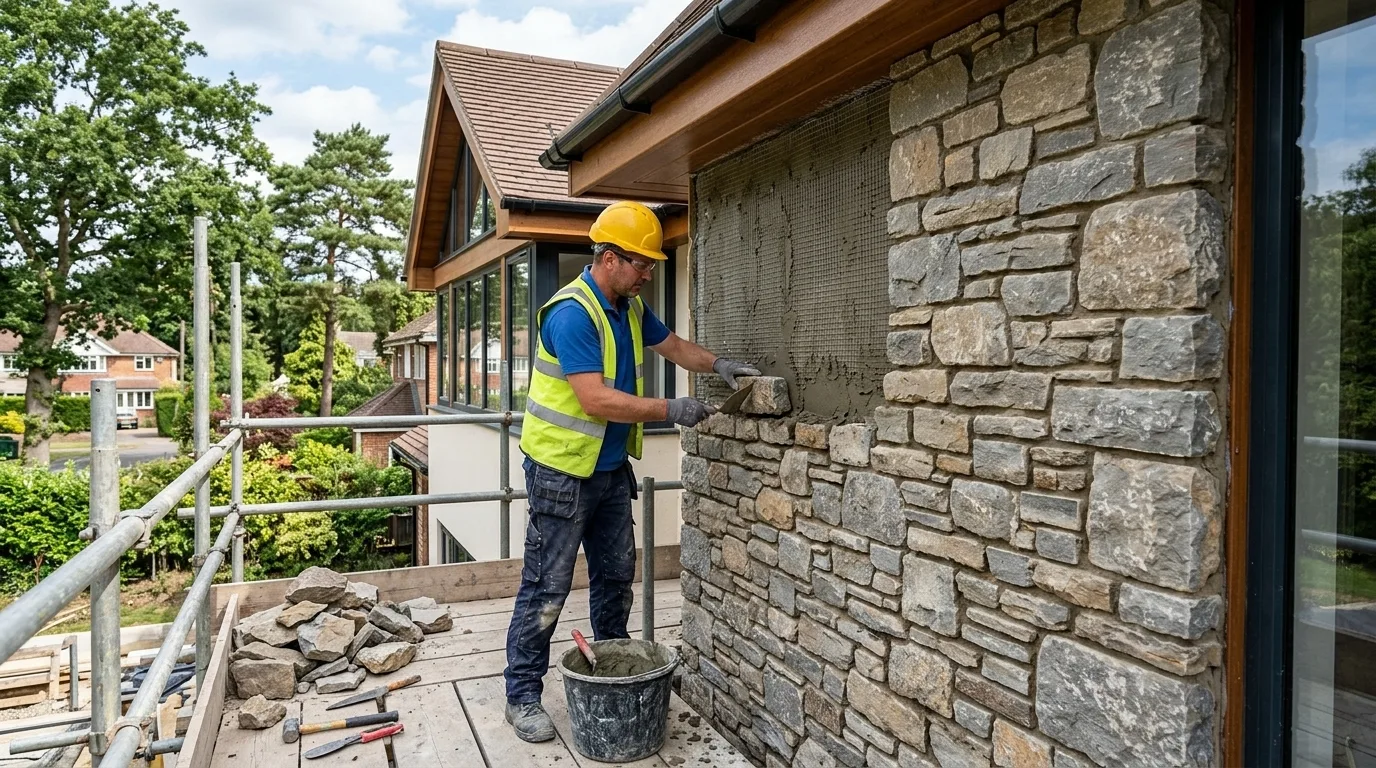
Stone finishing
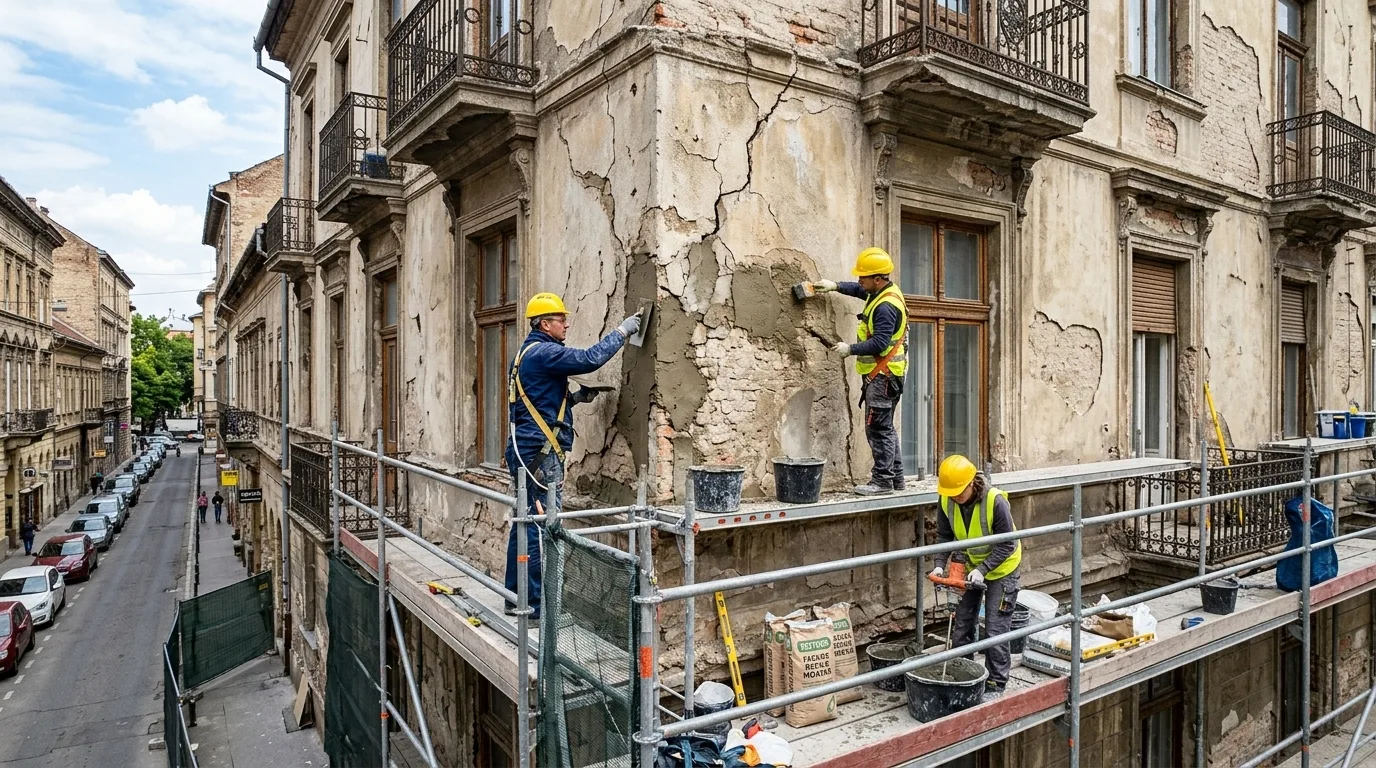
Facade repair
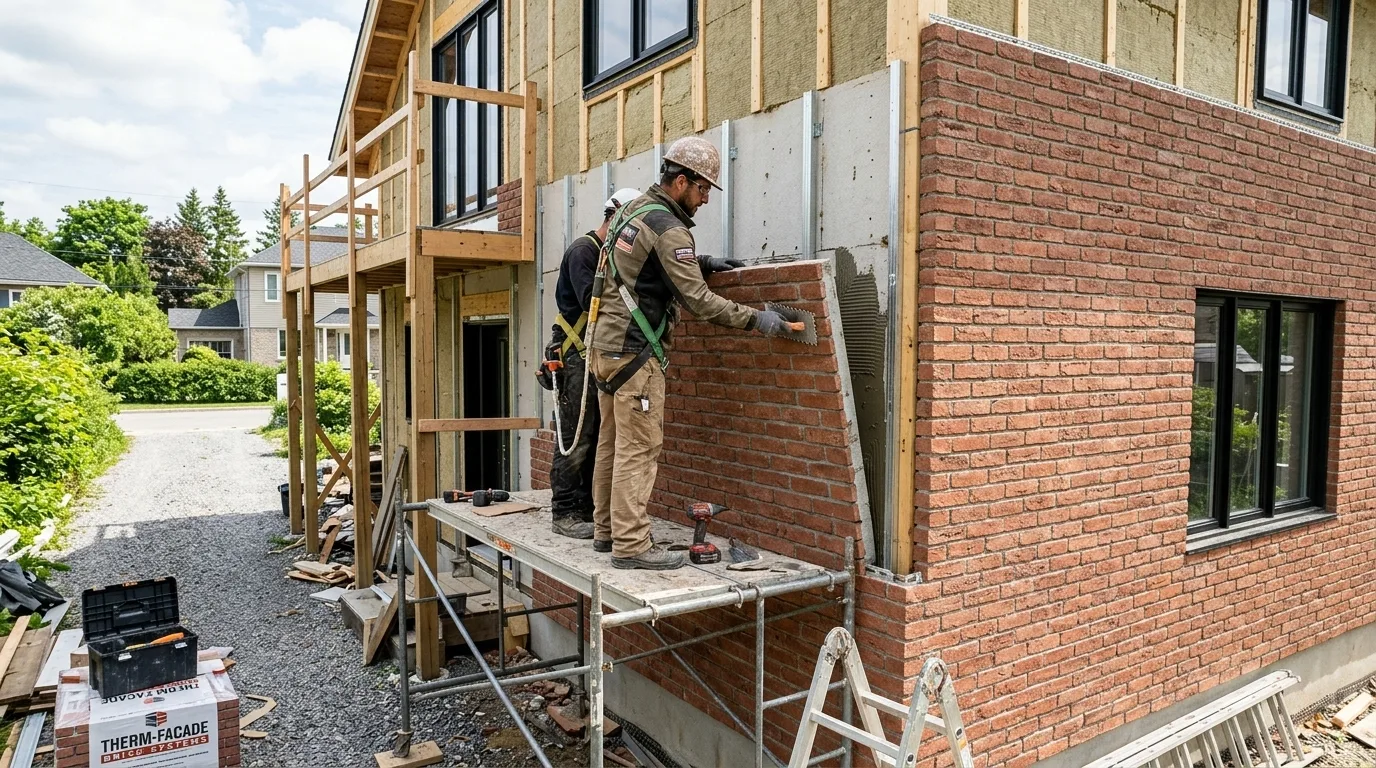
Installation of facade panels
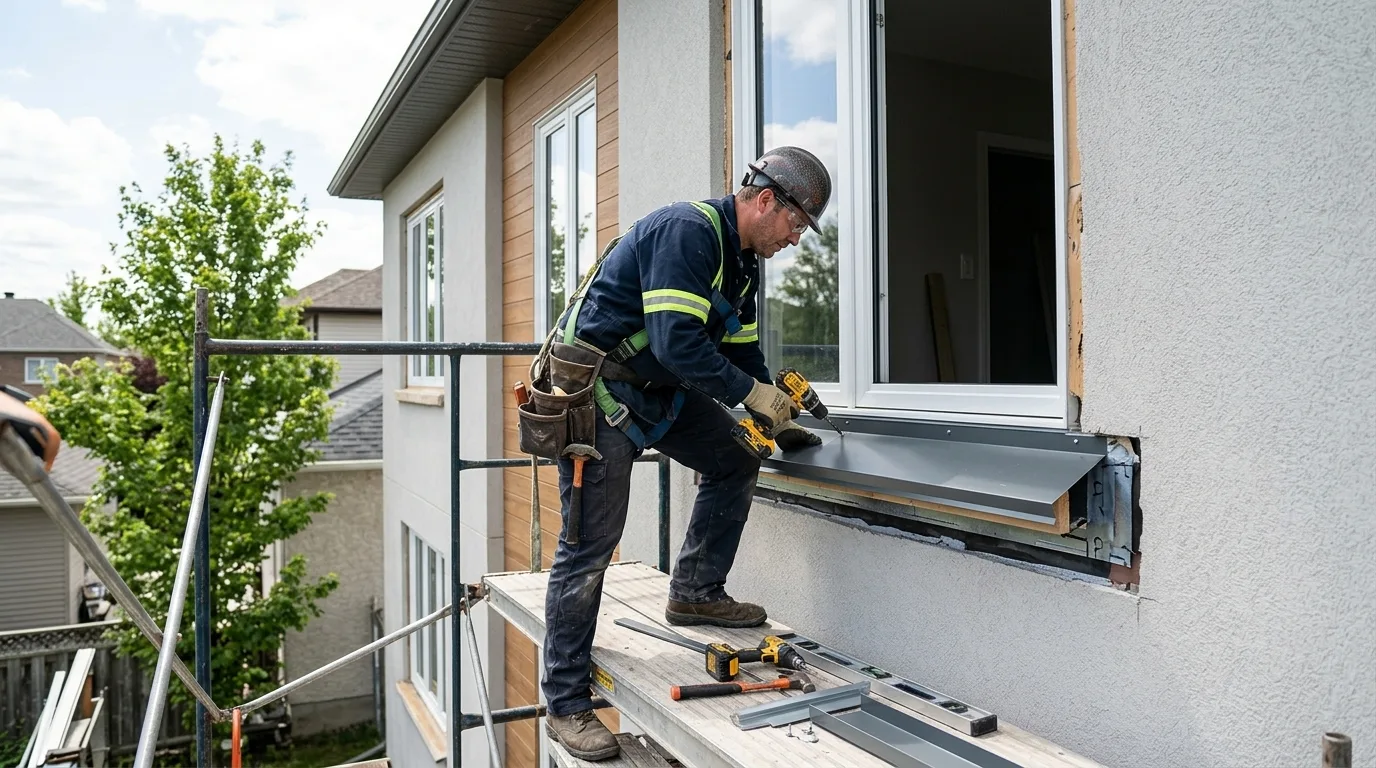
Installation of flashings and reveals
Types of facade
work we do
Facade insulation
Plastering the walls
Brick cladding
Siding installation
Installation of flashings and reveals
Facade repair
Facade painting
Stone finishing
Installation of facade panels
Construction of ventilated facades
We will call you back within 3 minutes
Types of facade
work we do
Facade insulation
Plastering the walls
Brick cladding
Installation of facade panels
Installation of flashings and reveals
Facade repair
Construction of ventilated facades
Facade painting
Stone finishing
Siding installation
We will call you back within 3 minutes
Cost of facade work in
Almaty
| SERVICE | COST | TIME |
|---|---|---|
| Specialist visit for a survey and consultation | free of charge | — |
| Minimum order value | from 150 000 ₸ | — |
| Installation of wooden panels (planken, imitation timber) | from 4 500 ₸/m² | from 3 days |
| Blockhouse installation | from 5 000 ₸/m² | from 4 days |
| Installing the battens and counter-battens | from 1 500 ₸/m² | from 1 day |
| Facade insulation for cladding | from 2 500 ₸/m² | from 2 days |
| Treating the wood with antiseptic/oil | from 800 ₸/m² | from 1 day |
| Installation of drip caps and corner trims | from 1 200 ₸/linear m | from 1 day |
| Dismantling the old cladding | from 1 000 ₸/m² | from 1 day |
Advantages of FACADE WORKS FROM Profi‑Dom

Facade without rot and mold
A frame with a 40–50 mm ventilation gap removes condensation — insulation and boards stay dry

Concealed fasteners
Stainless steel clamps are invisible on the facade and do not let moisture enter the board through the screws

Wood protection in 2 layers
Antiseptic and oil with a UV filter: the color lasts 5–7 years even on the south side of the house

A 150–200 m² house in 5–10 days
Panel installation — from 3 days, we fix the timeline of each stage in the contract

5-year
warranty on the facade
If a board has come loose or a joint has opened through our fault — we will fix it free of charge, this is written in the contract

Transparent estimate in ₸
Material, lathing, fasteners and treatment — as separate lines; from 100 m² the price is lower by 5–10%
Advantages of FACADE WORKS FROM Profi‑Dom
A frame with a 40–50 mm ventilation gap removes condensation — insulation and boards stay dry
Facade without rot and mold
Stainless steel clamps are invisible on the facade and do not let moisture enter the board through the screws
Concealed fasteners
Antiseptic and oil with a UV filter: the color lasts 5–7 years even on the south side of the house
Wood protection in 2 layers
Panel installation — from 3 days, we fix the timeline of each stage in the contract
A 150–200 m² house in 5–10 days
If a board has come loose or a joint has opened through our fault — we will fix it free of charge, this is written in the contract
5-year
warranty on the facade
Material, lathing, fasteners and treatment — as separate lines; from 100 m² the price is lower by 5–10%
Transparent estimate in ₸
We will call you back within 3 minutes
HOW WE WORK
- 01.Discussion and estimate
We visit the site or hold an online consultation to determine the scope of work precisely and prepare a transparent estimate with no hidden charges.
- 02.Visit for precise measurements
Our specialist arrives at a time convenient for you, takes all necessary measurements, and records facade features for precise material fitting.
- 03.Material selection
We select planken, imitation timber, block house or thermowood to match the house style and budget and show samples in daylight.
- 04.Approval of the contract
In the contract we fix the final cost, the exact completion dates and the warranty obligations, so that you feel protected.
- 05.Preparation of materials
We order dry boards, stainless steel fasteners and a windproof membrane, and check every batch for moisture and color.
- 06.Professional installation
We install lathing and counter-lathing with a 40–50 mm ventilation gap, insulate the wall and fasten boards with a 3–5 mm gap for expansion.
- 07.Protective treatment
We coat the wood with antiseptic and UV-filtered oil in 2 coats, and treat the ends, corners and slopes separately.
- 08.Handover of the site and cleanup
After completing the work, we remove construction waste and conduct a final inspection together with you to check the result.
Find out the cost and timing of facade work in 1 minute
catalogue of completed facade work
 Facade insulation and plastering of a private house in the Alatau microdistrict
 Plinth cladding of a shopping centre on Abay Avenue
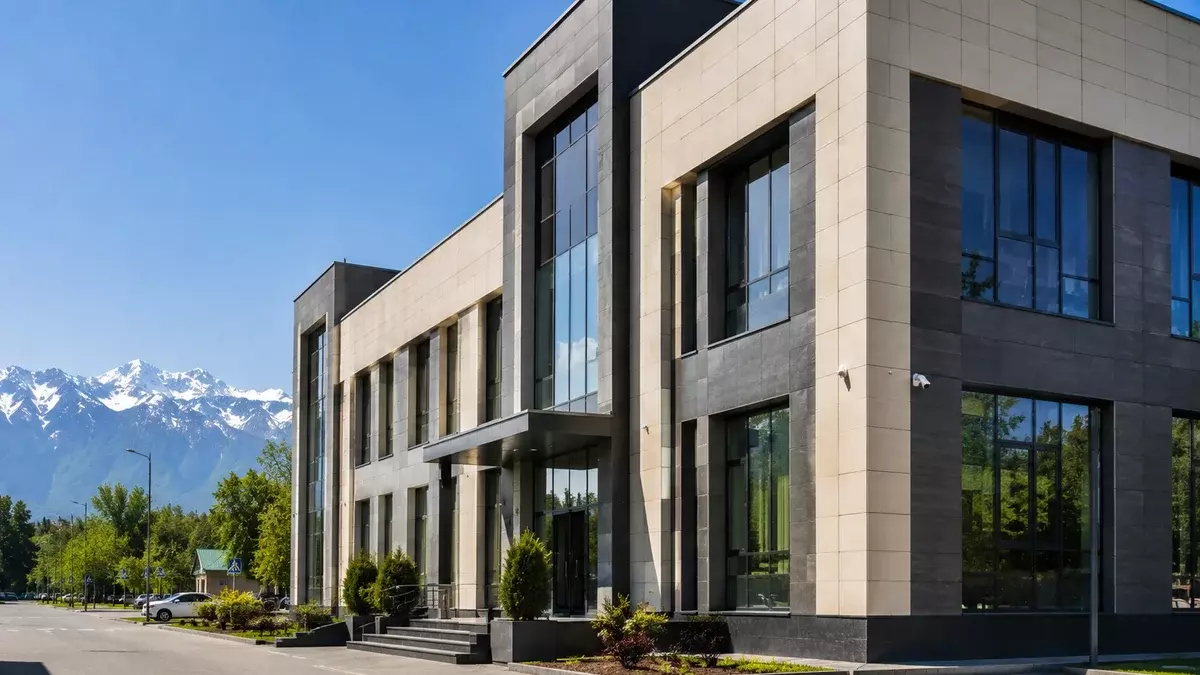 Installation of a ventilated facade on an office building in the Bostandyk district
 Painting and repair of the facade of an apartment building in the Samal microdistrict

FIND OUT THE COST OF FACADE WORK FOR YOUR PROJECT
Leave a request and we will contact you within 3 minutes
Thank you! We will contact you within 3 minutes.
By clicking the button you agree to the terms of the
 Privacy Policy
FIND OUT THE COST OF FACADE WORK FOR YOUR PROJECT
Leave a request and we will contact you within 3 minutes
Thank you! We will contact you within 3 minutes.
By clicking the button you agree to the terms of the
Or call us at
+7 (707) 068-88-68Privacy PolicyFIND OUT THE COST OF FACADE WORK FOR YOUR PROJECT
Leave a request and we will contact you within 3 minutes
Thank you! We will contact you within 3 minutes.
By clicking the button you agree to the terms of the
Or call us at
+7 (707) 068-88-68Облицовка фасада деревом в Алматы от PROFI‑DOM: материалы и цены
Облицовка фасада деревом от PROFI‑DOM — навесной вентилируемый фасад из планкена, имитации бруса, блок-хауса или термодерева на обрешётке с вентзазором 40–50 мм. Монтаж панелей стоит от 4 500 ₸/м², блок-хауса — от 5 000 ₸/м², обработка антисептиком и маслом — от 800 ₸/м². Гарантия — 5 лет по договору, выезд на замер — бесплатно.
Published: 21 · Updated:
About the author
What a wooden facade is and what it is made of
A wooden facade is a hinged ventilated system where the outer layer is assembled from natural panels. We analyze which materials are used and why such a solution is suitable for the capricious climate of Almaty.
What wood facade cladding is
Such cladding is a three-layer system of a hinged ventilated facade: a load-bearing frame made of metal or dry timber, insulation (mineral wool 100–150 mm), and external sheathing made of planken, wood imitation, or block house with an air gap of 40–60 mm. It is the ventilation gap that distinguishes the system from simple tight boarding: it removes condensate outside, preventing the insulation from getting wet. In foothill conditions, where humidity in spring and autumn reaches 70–80 %, and in winter the thermometer drops to –25 °C, the ventilated scheme is critical — without it, condensate accumulates inside the wall, causing insulation rot and mold on interior surfaces.
What materials are used for a wooden facade
- Straight planken: a board with even edges, mounted with a 3–5 mm gap. It gives a strict, minimalist facade with even seams.
- Bevelled planken: a board with bevelled edges, laid butt to butt at an angle. It creates a “herringbone” effect and visually increases the height of the wall.
- Timber imitation: a panel with a profile resembling timber, 18–28 mm thick. Visually it resembles a timber wall, but it is thinner and lighter — it does not require foundation reinforcement.
- Blockhouse: a panel with a convex face that imitates a rounded log. It is more often chosen for chalet- or country-style facades.
- Thermowood: wood (pine, ash) that has undergone heat treatment at 180–230 °C. Resistant to moisture and biological damage — does not rot even in direct contact with water.
Planken is the most popular choice among Almaty developers: it provides a smooth surface and is installed with hidden fasteners, which extends the service life of the facade.
Why a wooden facade is chosen in Almaty
In Almaty, a wooden house facade is chosen because of the climate: sharp temperature fluctuations and high humidity in spring and autumn require a "breathing" system that does not accumulate condensation and does not crack in frost. Cement-based plaster facades in foothill conditions, if the technology is violated, develop cracks after just 2–3 seasons due to freeze-thaw cycles — water enters microcracks, expands when freezing, and chips off pieces of the coating. Wooden cladding with a ventilation gap works differently: the panels are attached to a frame, and temperature deformations are compensated by gaps between the boards and the elasticity of the wood itself. In addition, wood acts as a natural humidity buffer — at high humidity, the panels absorb excess vapor, and in dry weather they release it back, stabilizing the microclimate inside the house. For the Medeu and Bostandyk districts, where the difference between daytime and nighttime temperatures in spring reaches 15–18 °C, this is especially relevant: a wooden facade with a ventilation gap remains stable.
Planken, imitation timber and thermowood — what to choose for a facade
We analyze the three main selection questions: which planken is better, which is more expensive — larch or thermowood, and how timber imitation differs from block house.
Straight or bevelled planken — what's the difference
| Parameter | Straight planken | Bevelled planken |
|---|---|---|
| Board profile | Rectangular, straight edges | With edges bevelled at 45° |
| Installation method | With a 3–5 mm gap | Butted, with no gap |
| Appearance | A flat surface with even joints | A continuous surface with no visible gaps |
| Price per m² (material) | from 3500 ₸ | from 4000 ₸ |
| Installation complexity | Medium | Higher — precise fitting required |
What is best for a facade — planken, imitation timber or blockhouse
| Parameter | Plank cladding | Imitation timber | Block house |
|---|---|---|---|
| Appearance | A flat board with gaps | Timber wall | Log wall |
| Board thickness | 18–22 mm | 20–28 mm | 25–35 mm |
| Price per m² (material) | from 3500 ₸ | from 4500 ₸ | from 5500 ₸ |
| Installation complexity | Medium | Medium | High |
| Recommended in Almaty | For modern houses | For houses in a classic style | For country houses and cottages |
Larch or thermowood — which lasts longer on a facade
| Parameter | Larch | Thermowood (thermo-ash) |
|---|---|---|
| Service life | 30–50 years | 25–40 years |
| Moisture resistance | High (resinous) | Very high (after heat treatment) |
| UV resistance | Medium (requires oil) | High (does not fade) |
| Need for treatment | Every 2–3 years | Every 5–7 years |
| Price per m² | from 5000 ₸ | from 7000 ₸ |
| Behaviour in Almaty's climate | Can warp in the heat | Stable under temperature swings |
Battens and ventilation gap for a wooden facade
We explain why battens are needed, what ventilation gap to leave and how to choose fasteners for a wooden facade so that the structure does not rot or deform.
Why battens are needed for a wooden facade
Battens are a frame made of 40×40 mm timber or galvanised profiles: it is fixed to the wall and serves as the base onto which the facade is clad with boards. It performs three functions: it levels the plane (differences of up to 20 mm are removed with shims), creates a rigid support for the boards and forms a gap for air circulation. The spacing of the vertical studs is 600 mm, which matches the width of mineral wool slabs, simplifying simultaneous insulation. On concrete and brick, the timber is fixed with 8×100 mm anchors; on aerated concrete — with chemical anchors, since ordinary dowels hold poorly in porous material. On local projects, pine timber with impregnation is more often used — it is cheaper than profile and easier to fit, although galvanising is more reliable on walls with differences of 30 mm. If the panels are installed directly on the wall without a frame, condensation will accumulate under the boards — after 2–3 years rotting will begin, even if the wood has been treated with antiseptic.
What ventilation gap is needed for a wooden facade
- Minimum gap: 30 mm — for facades with no insulation or with thin insulation of up to 50 mm.
- Optimal gap: 40–50 mm — the standard for insulated facades with mineral wool or XPS; it provides stable circulation in any wind.
- Maximum gap: 60 mm — with thick insulation (100+ mm) or in high humidity conditions typical of Almaty spring and autumn.
- Size control: the ventilation gap is fixed by the counter-battens — a second layer of battens over the main one, which additionally levels the plane. In the city, where humidity in spring and autumn exceeds 65%, a gap of less than 30 mm is ineffective: the condensation does not have time to dry out, and the wood rots from the inside, unnoticed from outside until mould appears at the joints.
Concealed or exposed fasteners — what to choose
| Parameter | Concealed fasteners | Exposed fasteners |
|---|---|---|
| Appearance | Not visible on the facade — the boards look like a single surface | Screw or nail heads are visible on every other board |
| Installation complexity | Higher — precise marking and routing of grooves for the clips required | Lower — can be fixed faster, without extra treatment |
| Price per m² for fasteners | from 500 ₸ | from 300 ₸ |
| Facade service life | Longer — no points for moisture to enter, the protective layer is intact | Shorter — cracks and rot appear around the fasteners within 2–3 years |
| Recommended materials | Planken, thermowood | Imitation timber, blockhouse |
Exposed fasteners are acceptable for imitation timber and blockhouse — these panels are thicker than planken and crack less from screws. For planken, concealed fasteners are the only correct choice: screws on the face create points for moisture to enter, and within 2–3 years dark patches of rot appear around them that cannot be removed by sanding.
Installation and protection of a wooden facade
Exterior wood finishing of a house lasts as long as installation and protection allow: we explain how to properly assemble the facade, how to protect it from moisture and sun, and whether work can be done in winter in Almaty's climate.
How a wooden facade is installed — the main stages
- Wall preparation: cleaning from old finish, leveling and treatment with antiseptic to protect against mold before starting work.
- Installing the battens: fixing battens with a cross-section of 40×40 mm at a pitch of 60 cm, strictly aligned to level.
- Insulation and wind protection: laying mineral wool with a density of 35–50 kg/m³ between the battens and fixing a wind-barrier membrane — without it the insulation gets wet from condensation and loses 50–70% of its properties in the first season.
- Counter-battens: a second layer of battens 30–50 mm thick creates the ventilation gap for drawing moisture out from under the cladding.
- Panel installation: fastening planken or wood imitation with hidden fasteners with a 3–5 mm gap for ventilation and compensation of wood expansion.
How to protect a wooden facade from moisture and sun
| Protective product | Purpose | Renewal frequency | Price per m² (treatment) |
|---|---|---|---|
| Wood antiseptic | Protection against fungus, mould and insects | Every 3–5 years | from 200 ₸ |
| Oil with a UV filter | Protection against fading and cracking | Every 2–3 years | from 400 ₸ |
| Combined compound (antiseptic + oil) | Comprehensive protection | Every 3–4 years | from 500 ₸ |
In Almaty's conditions, with 300+ sunny days a year, oil without a UV filter is ineffective — the wood fades within 1–2 seasons, turning grey and losing its texture. Oil with a UV filter keeps the facade bright for up to 5–7 years, and treating it in the shade or in overcast weather gives a more even absorption than under direct sunlight.
Can a facade be clad in wood in winter in Almaty
Wood facade cladding can be done in winter, but at a temperature no lower than –10 °C and with mandatory acclimatisation of the wood indoors for 2–3 days. Winter installation has an advantage — the wood is drier (moisture content of 8–10% against 14–18% in summer), which lowers the risk of deformation after it dries out. But antiseptics and oils cannot be worked with in sub-zero temperatures: they do not soak in, and in the frost they form a film that cracks. So in winter only “bare” wood is installed and the treatment is put off until spring — this adds 2–3 weeks to the overall finishing time compared with the summer schedule.
The price of wood facade cladding per m² — a table
We break down the cost of wood facade finishing per m² item by item — from the material to the turnkey work, with real figures for planken, imitation timber and thermowood.
What makes up the price of wood facade cladding
- Material (planken/imitation/blockhouse): 3500–7000 ₸ per m² — pine is cheaper, larch and thermowood are more expensive; a thickness of 20 mm versus 28 mm makes a difference of up to 30%.
- Battens and counter-battens: from 1 500 ₸ per m² — 40×40 mm timber treated with antiseptic, spacing 600 mm, for uneven walls consumption is 15–20% higher.
- Insulation and wind protection: from 2 500 ₸ per m² of work — mineral wool plus membrane; with Almaty temperature fluctuations from -30 to +40 °C, the insulation thickness must be at least 100 mm.
- Fastening (hidden/open): 300–500 ₸ per m² — hidden (clips, snakes) is more expensive but invisible on the facade and does not rust.
- Installation work: from 4 500 ₸ per m², block house — from 5 000 ₸ per m²; complex elements (bay windows, arches, slanted corners) increase the rate by 30–50%.
- Protective treatment (antiseptic + oil): from 800 ₸ per m² — two-layer application with intermediate sanding, for the south side an oil with UV filter is required.
The cost of wood facade cladding per m² — a table by material
| Material | Material (₸/m²) | Labour (₸/m²) | Fasteners + battens (₸/m²) | Treatment (₸/m²) | Total without insulation (₸/m²) |
|---|---|---|---|---|---|
| Straight planken (pine) | 3500 | from 4500 | from 1800 | from 800 | from 10600 |
| Bevelled planken (pine) | 4000 | from 4500 | from 1800 | from 800 | from 11100 |
| Imitation timber (pine) | 4500 | from 4500 | from 1800 | from 800 | from 11600 |
| Straight planken (larch) | 5000 | from 4500 | from 1800 | from 800 | from 12100 |
| Blockhouse (larch) | 5500 | from 5000 | from 1800 | from 800 | from 13100 |
| Thermowood (thermo-ash) | 7000 | from 4500 | from 1800 | from 1000 | from 14300 |
The price per m² drops by 5–10% for a facade area from 100 m² thanks to a bulk discount on the material and optimised crew work.
What the free surveyor visit includes
- Facade survey: precise measurements of the walls, windows and doors — to calculate the material without overpaying.
- Wall assessment: checking the flatness, the wall material and the need for insulation — houses made of shell rock or gas block need reinforced fasteners.
- Material recommendation: selecting planken, imitation timber or thermowood to suit the house's style and budget — for chalet-style houses blockhouse is more often chosen, for minimalism straight planken.
- Estimate: a breakdown by materials, labour, fasteners and treatment — with no hidden charges, stating the price per m² for each item.
- Material samples: at the survey you can get pieces of planken, imitation timber and thermowood to assess the colour and texture on the facade in daylight.
Turnkey wood facade cladding with PROFI-DOM
We analyze how PROFI-DOM manages a facility in Almaty — from the first measurement to the warranty period — and what to look for in the contract so that the facade lasts for decades.
How we do turnkey wood facade cladding
- Step 1 — — survey: a free surveyor visit across the city and suburbs, measuring the facade with its openings, and selecting the material to suit the budget and the house's architecture.
- Step 2 — — estimate: a transparent breakdown by materials, labour, fasteners and protective treatment — with no hidden mark-ups for delivery or removal of construction debris.
- Step 3 — — installation: assembling the battens from dry planed timber, laying 100–150 mm basalt wool, a wind-barrier membrane, a 40–50 mm ventilation gap, and fixing the panels with concealed stainless-steel fasteners.
- Step 4 — — protection: applying antiseptic and oil with a UV filter in two coats with drying in between — for larch we use Remmers, for thermowood OSMO.
- Step 5 — acceptance: checking the quality of joints and gaps, signing the act, 5-year warranty on work.
What is the service life of a wooden facade after PROFI-DOM cladding
| Material | Service life (years) | Renewing the protection | Workmanship warranty |
|---|---|---|---|
| Planken (pine) | 20–30 | Every 2–3 years | 5 years |
| Planken (larch) | 30–50 | Every 2–3 years | 5 years |
| Imitation timber (pine) | 20–30 | Every 2–3 years | 5 years |
| Blockhouse (larch) | 30–40 | Every 2–3 years | 5 years |
| Thermowood (thermo-ash) | 25–40 | Every 5–7 years | 5 years |
The actual lifespan depends not on the species but on the quality of installation: a properly made ventilation gap and concealed stainless-steel fasteners extend the life of the facade by 10–15 years compared with facades mounted without these elements — before ordering, check in the estimate what gap and fasteners the contractor is offering.
How to combine a wooden facade with other materials
- Wood + stone: a plinth of granite, slate or agglomerate 60–120 cm high protects the wood from dirt and knocks from the ground, with planken or blockhouse above.
- Wood + brick: accent inserts of clinker brick around windows and doors visually highlight the openings and create a contrast with the warm texture of the wooden facade.
- Wood + plaster: smooth mineral or silicone plaster on the large planes, wooden panels on the gables, bay windows and eaves overhangs.
- Wood + metal: galvanised corrugated sheet or aluminium-composite panel on the service areas (ventilation grilles, garage doors, plinth), wood — on the living-space walls.
- The main rule: keep a uniform thickness of battens and ventilation gap — the difference in insulation thickness between zones must not exceed 10 mm, otherwise the junction of materials will create a cold bridge and cause the wall to freeze through in winter.
Conclusion
Cladding a house with wood is not just about choosing the material: the durability of the finish is decided by proper installation with a ventilation gap and protection from the Almaty sun.
Key takeaways
- Planken: a universal option with hidden fastening, suitable for any facades and architectural styles.
- Timber imitation: a budget solution for houses in a classic style, but it requires high-quality impregnation against moisture.
- Blockhouse: a log-cabin imitation with a semicircular profile; it needs its protective layer renewed regularly every 2-3 years.
- Thermowood: maximum dimensional stability and minimal maintenance, but the price per m² is 40-60% higher than larch planken.
- Combining materials: a modern trend that lets you zone the facade — for example, thermowood on the sunny side and imitation timber in the shade, which reduces the overall project cost by 15-20%.