
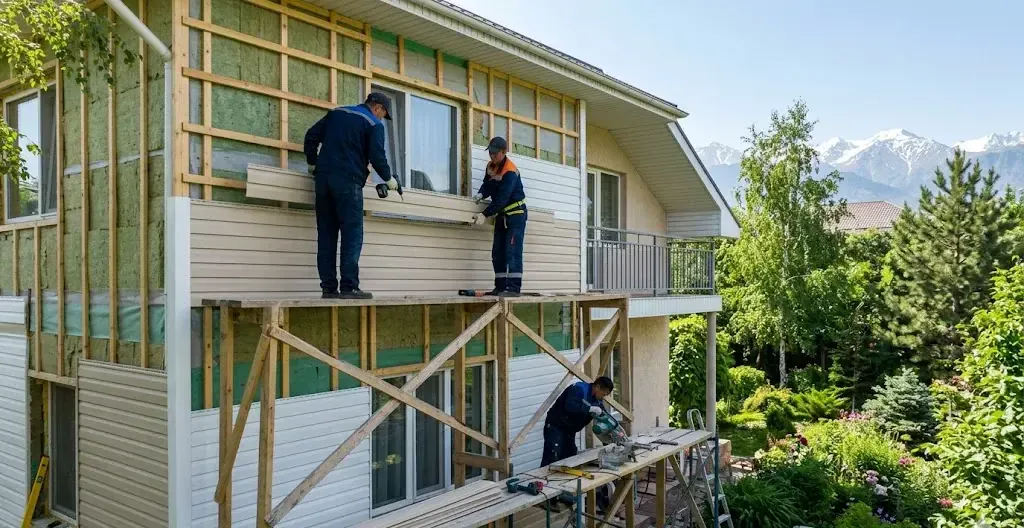
Siding installation in Almaty
from 6 000 tg.* per linear metre
Reliable, high-quality siding installation thanks to strict adherence to the technology and the high qualifications of our specialists.
 Joints to GOST 5264-80
Installation from 1 day Arrival within 45 minutes
Installation from 1 day 3-year warranty
 Prices from 5000 ₸
Contract and estimate
Siding installation in Almaty
from 6 000 tg.* per linear metre
Reliable, high-quality siding installation thanks to strict adherence to the technology and the high qualifications of our specialists.
Joints to GOST 5264-80
Installation from 1 day
Arrival within 45 minutes
Installation from 1 day
3-year warranty
Prices from 5000 ₸
Contract and estimate
Siding installation in Almaty
from 6 000 tg.* per linear metre
Reliable, high-quality siding installation thanks to strict adherence to the technology and the high qualifications of our specialists.
Joints to GOST 5264-80
Installation from 1 day
Arrival within 45 minutes
Installation from 1 day
3-year warranty
Prices from 5000 ₸
Contract and estimate
Types of facade
work we do
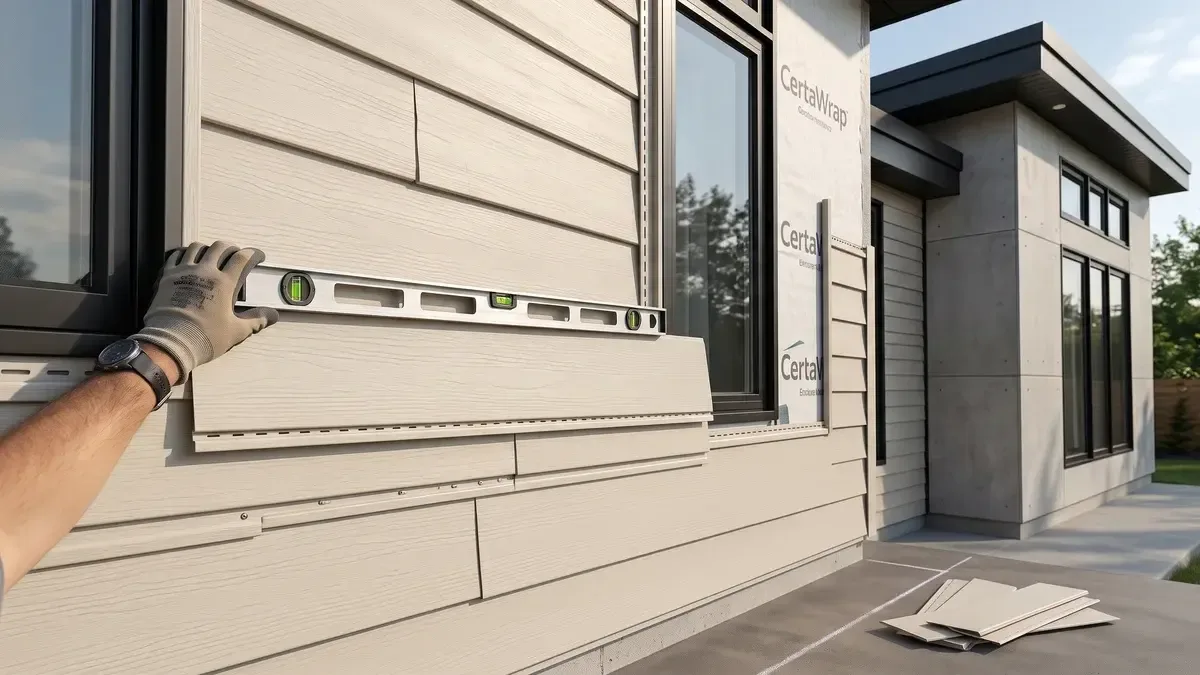
Facade cladding with vinyl siding
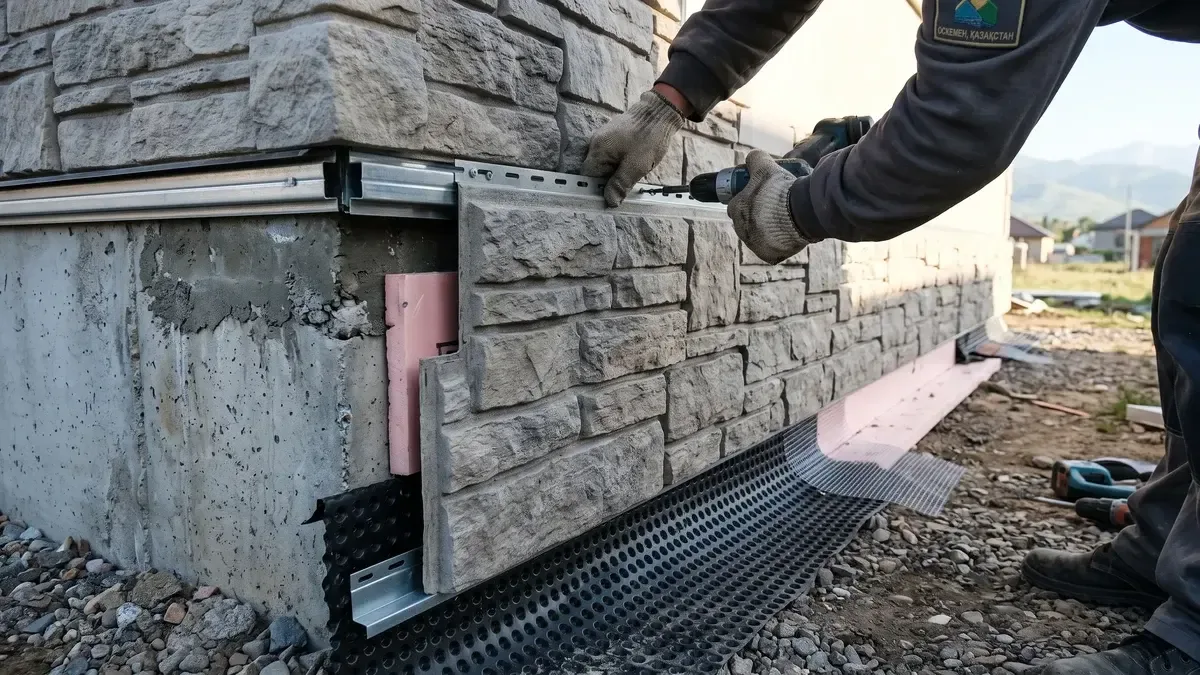
Installation of plinth siding
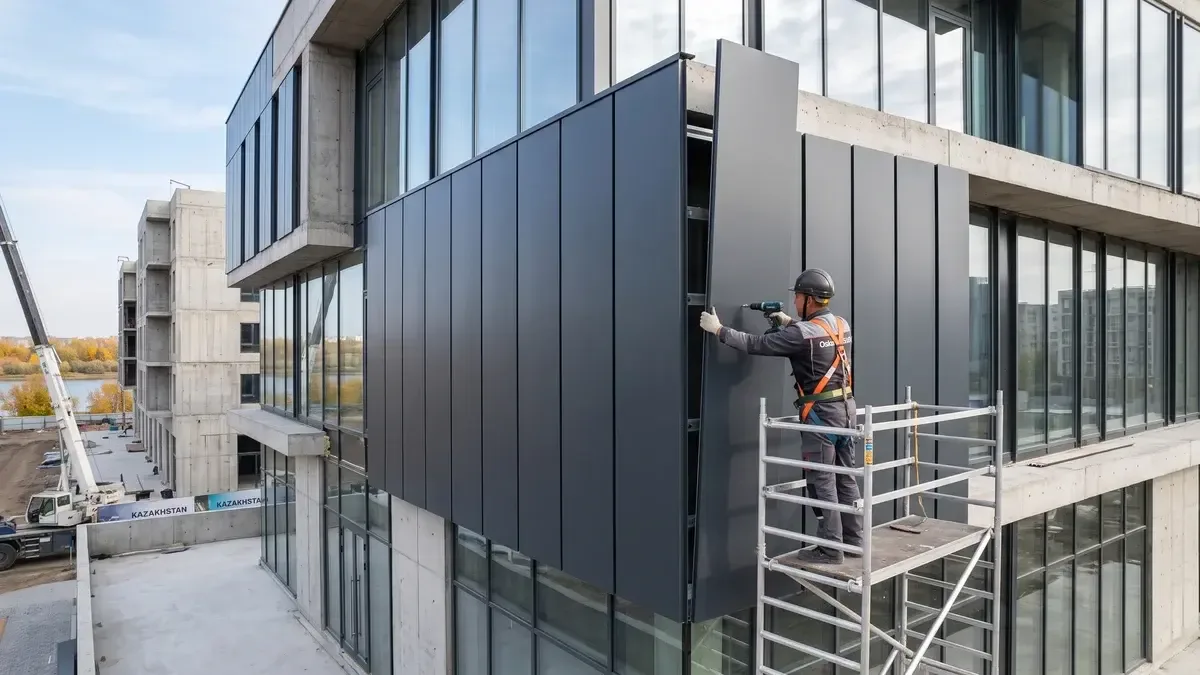
Metal siding installation
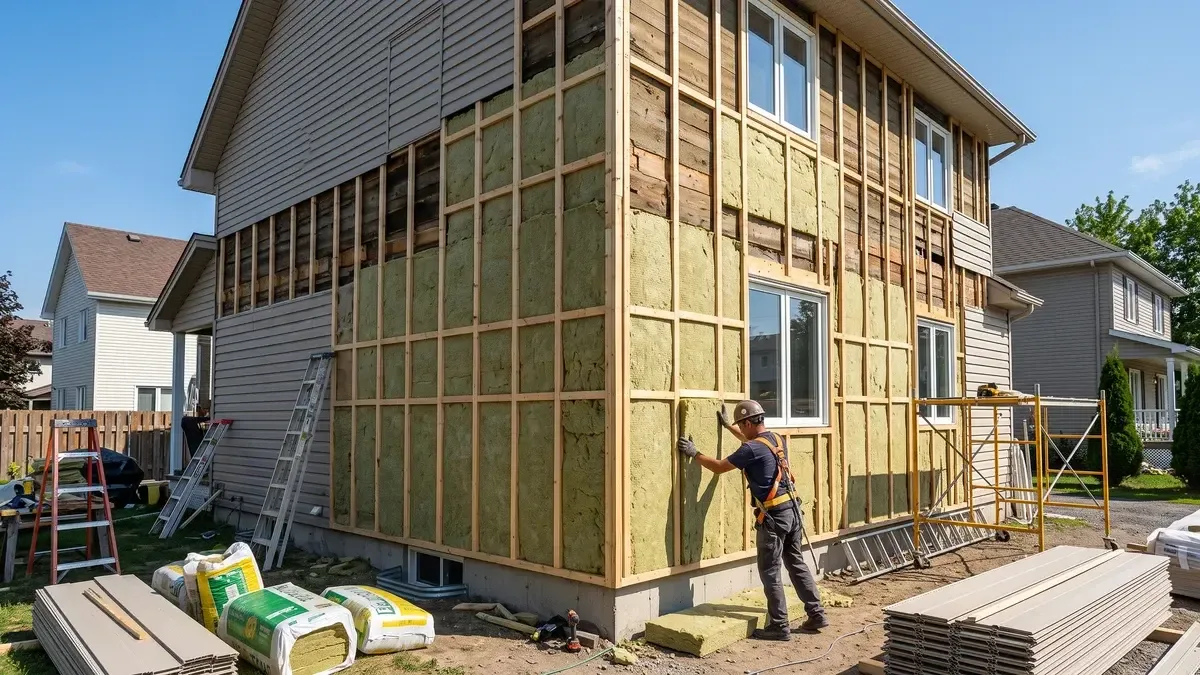
Facade insulation under siding
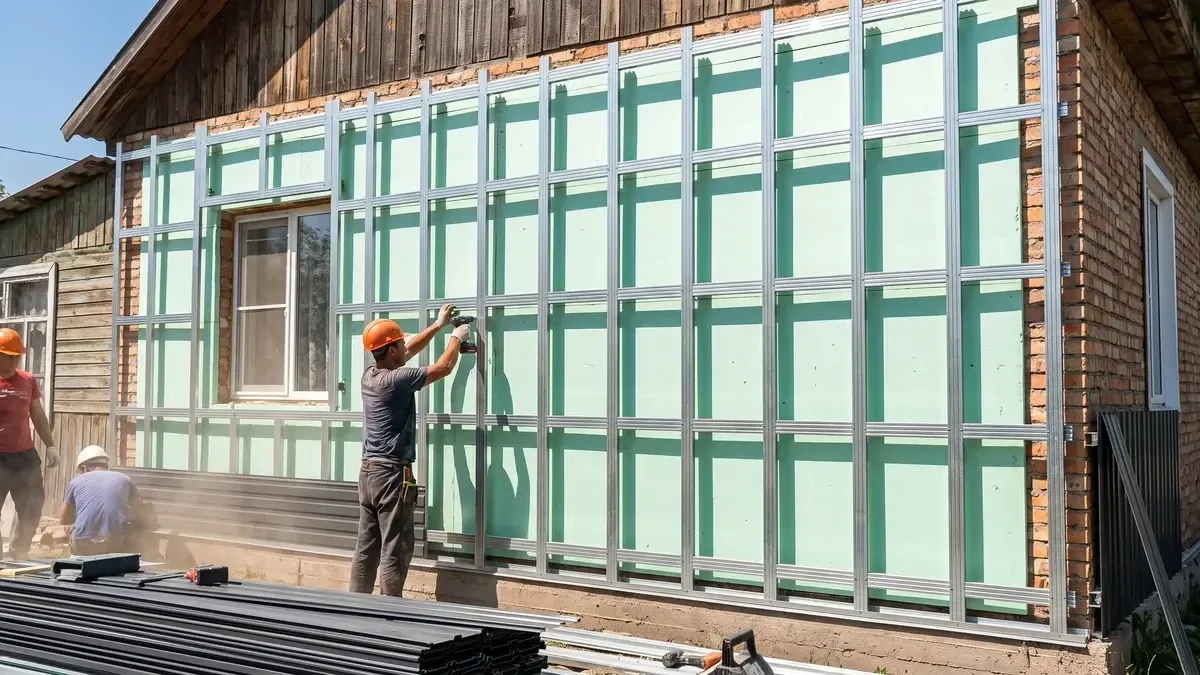
Siding installation with battens
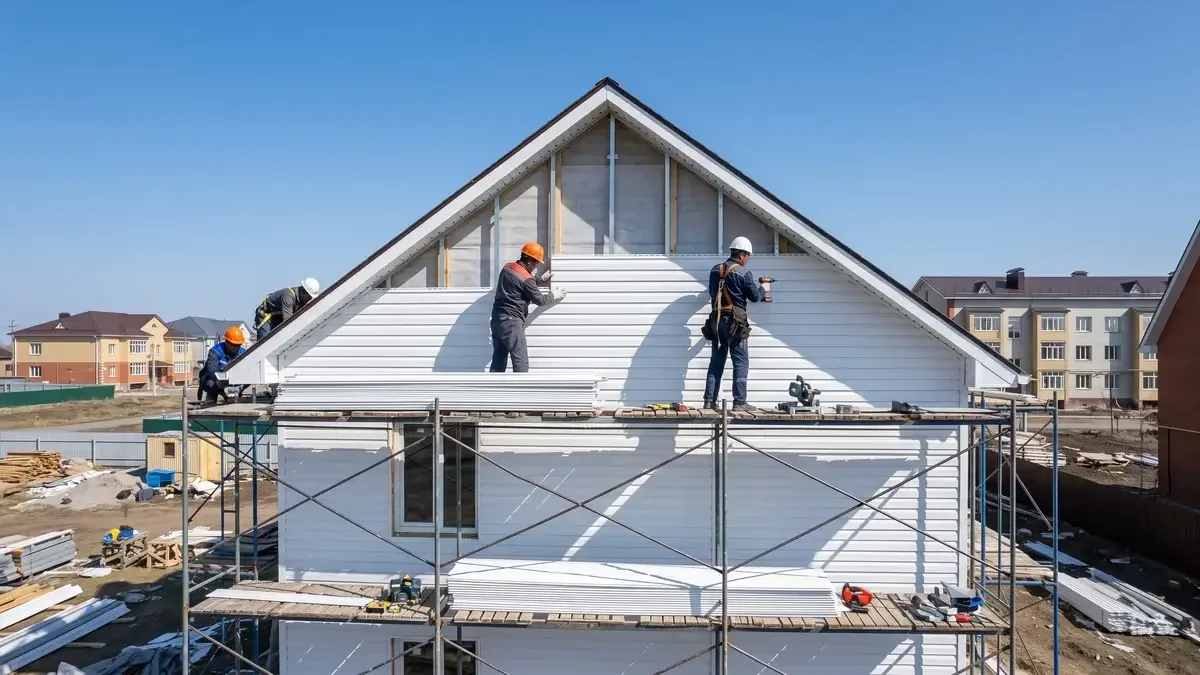
Siding cladding of gables
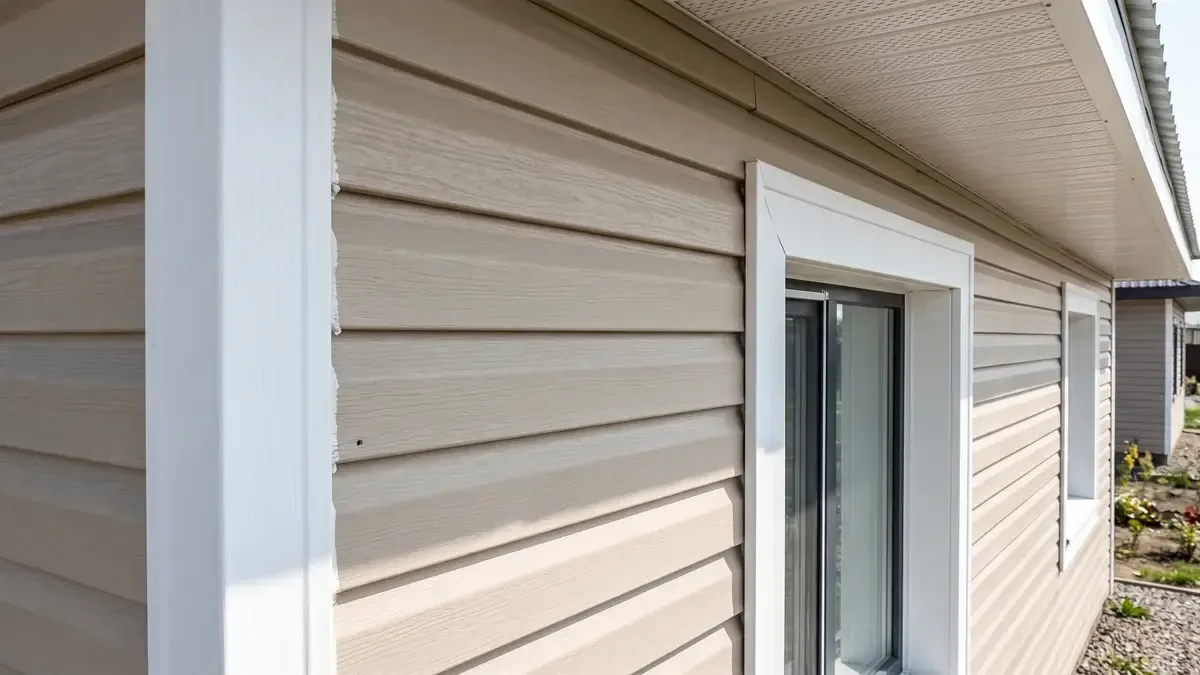
Installation of siding accessories
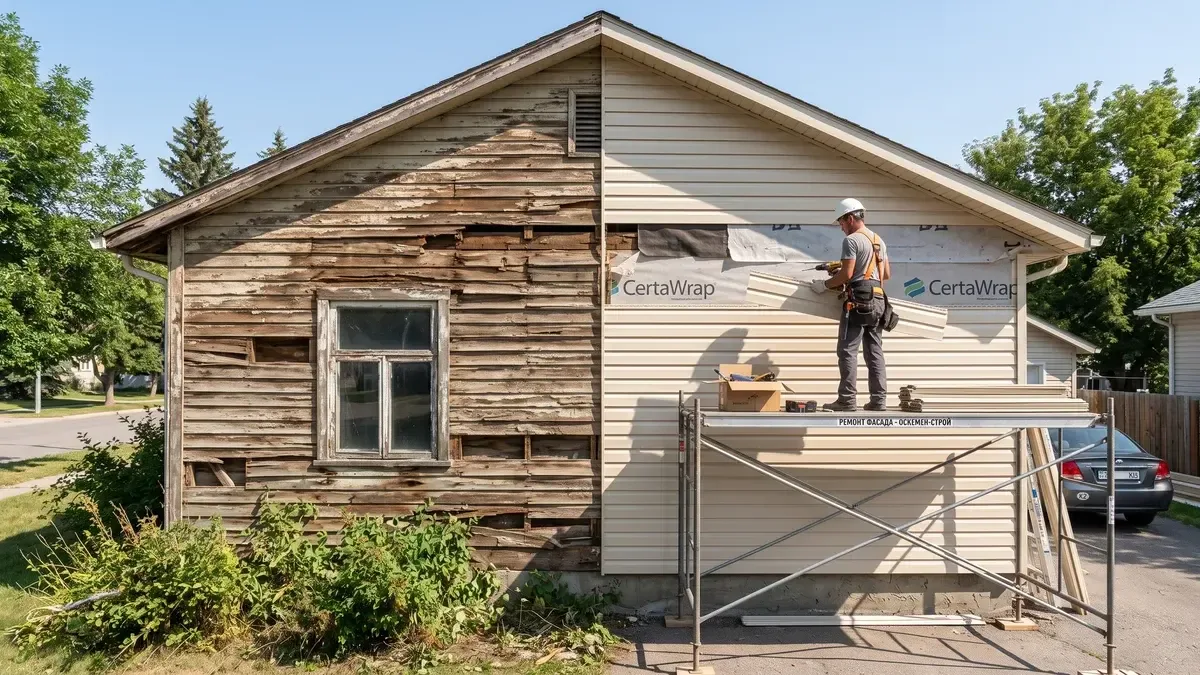
Replacement of old siding
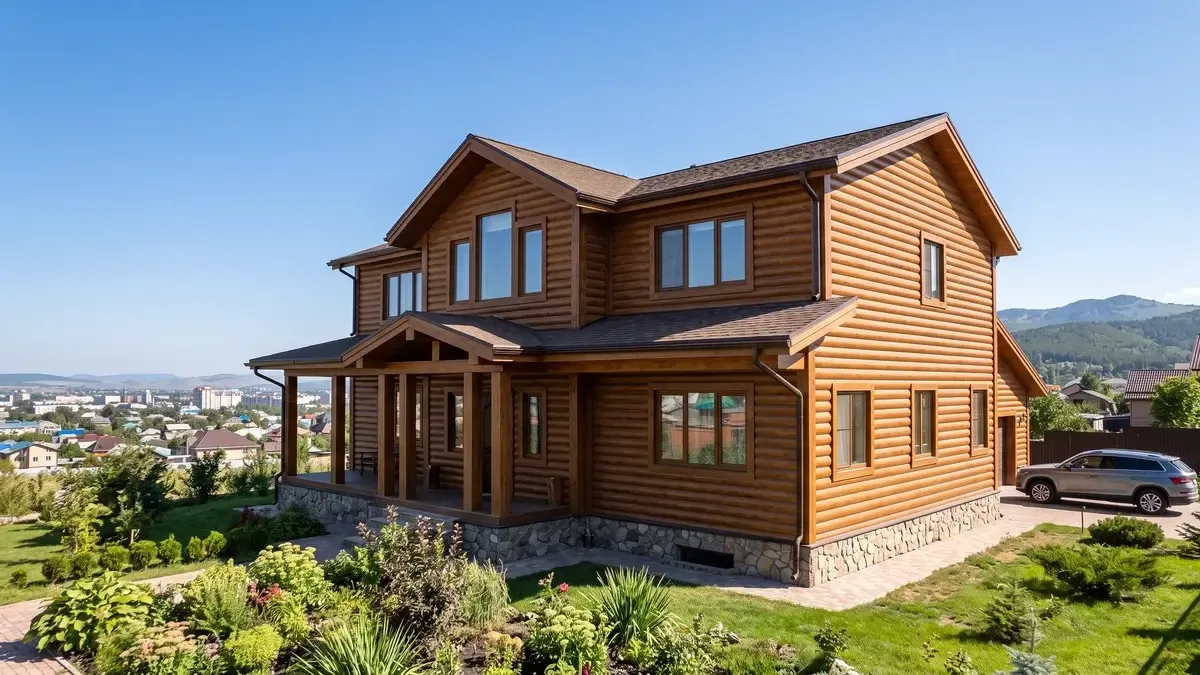
Wood-look siding installation
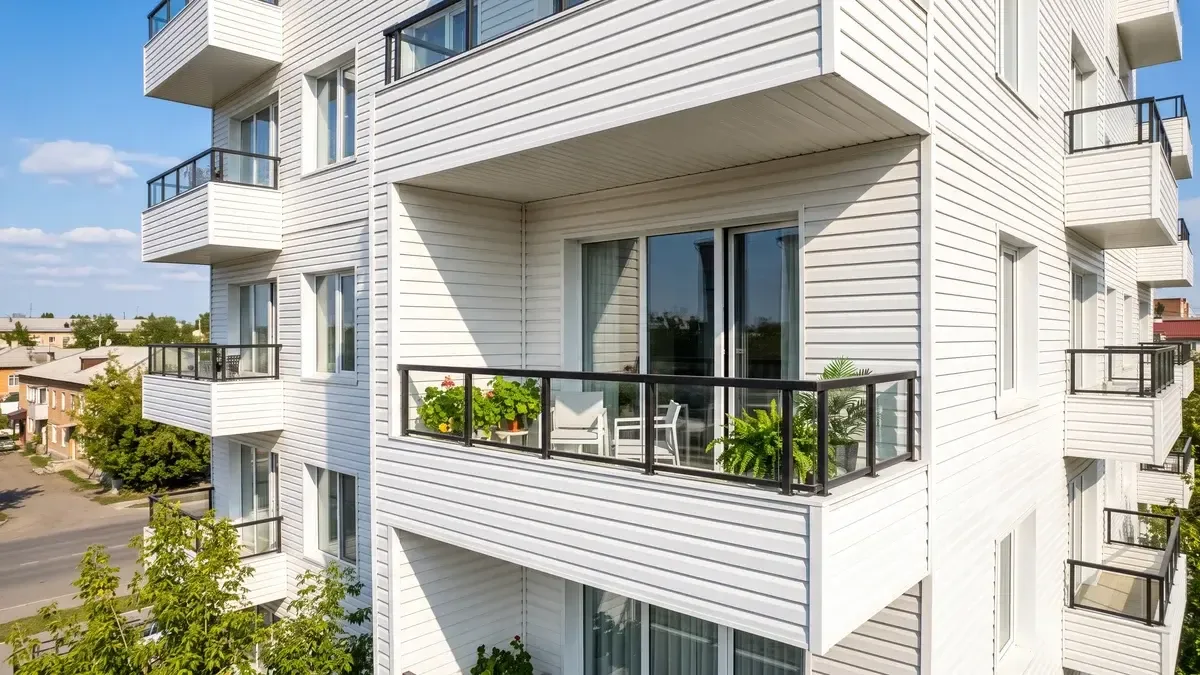
Finishing balconies and loggias with siding
Types of facade
work we do
Facade cladding with vinyl siding
Installation of plinth siding
Metal siding installation
Facade insulation under siding
Finishing balconies and loggias with siding
Replacement of old siding
Siding cladding of gables
Installation of siding accessories
Wood-look siding installation
Siding installation with battens
We will call you back within 3 minutes
Types of facade
work we do
Facade cladding with vinyl siding
Installation of plinth siding
Metal siding installation
Wood-look siding installation
Finishing balconies and loggias with siding
Replacement of old siding
Siding installation with battens
Siding cladding of gables
Installation of siding accessories
Facade insulation under siding
We will call you back within 3 minutes
Cost of facade work in
Almaty
| SERVICE | COST | TIME |
|---|---|---|
| Master's visit to the site (within the city) | from 3 000 ₸ | — |
| Minimum order value | from 15 000 ₸ | — |
| Vinyl siding installation (walls) | from 2 500 ₸ / m² | from 2 days |
| Metal siding installation | from 3 000 ₸ / m² | from 2 days |
| Plinth siding installation | from 3 500 ₸ / m² | from 1 day |
| Installation of facade panels (stone/brick-look) | from 4 000 ₸ / m² | from 3 days |
| Making the battens (wood/metal) | from 1 200 ₸ / m² | from 1 day |
| Facade insulation under siding | from 1 500 ₸ / m² | from 1 day |
| Installation of drip caps and window strips | from 1 500 ₸ / linear m | from 2 hours |
| Installation of soffits (fascia lining) | from 2 000 ₸ / m² | from 3 hours |
| Installation of external and internal corners | from 800 ₸ / linear m | from 1 hour |
| Removal of old siding | from 800 ₸ / m² | from 1 day |
Advantages of facade work from Profi-Dom

Neat joints with no chips
We use professional jointing tools that prevent damage to the tiles during laying

Certified craftsmen
Each specialist confirms their qualification with an annual exam in facade technologies

Equipment for a wet facade
We use industrial mixers and plastering stations that ensure even application of the layers

Meeting the finishing deadlines
The average cycle of turnkey facade work takes 21 working days on a weekly schedule

5-year
warranty on the facade
We fix our obligations in a contract, including protection against plaster peeling and fastener corrosion

Transparent estimate in ₸
We fix the cost of materials and work in the estimate, with no hidden markups or extra charges
Advantages of facade work from Profi-Dom
We use professional jointing tools that prevent damage to the tiles during laying
Neat joints with no chips
Each specialist confirms their qualification with an annual exam in facade technologies
Certified craftsmen
We use industrial mixers and plastering stations that ensure even application of the layers
Equipment for a wet facade
The average cycle of turnkey facade work takes 21 working days on a weekly schedule
Meeting the finishing deadlines
We fix our obligations in a contract, including protection against plaster peeling and fastener corrosion
5-year
warranty on the facade
We fix the cost of materials and work in the estimate, with no hidden markups or extra charges
Transparent price in KZT
We will call you back within 3 minutes
Advantages of facade work from Profi-Dom
We use professional jointing tools that prevent damage to the tiles during laying
Neat joints with no chips
Each specialist confirms their qualification with an annual exam in facade technologies
Certified craftsmen
We use industrial mixers and plastering stations that ensure even application of the layers
Equipment for a wet facade
The average cycle of turnkey facade work takes 21 working days on a weekly schedule
Meeting the finishing deadlines
We fix our obligations in a contract, including protection against plaster peeling and fastener corrosion
5-year
warranty on the facade
We fix the cost of materials and work in the estimate, with no hidden markups or extra charges
Transparent price in KZT
We will call you back within 3 minutes
HOW WE WORK
- 01.Discussion and estimate
We visit the site or hold an online consultation to determine the scope of work precisely and prepare a transparent estimate with no hidden charges.
- 02.Visit for precise measurements
Our specialist comes at a time convenient for you, takes all the necessary measurements and records the features of the facade for a perfect fit of the material.
- 03.Creating the design and sketch
We develop a detailed cladding plan with a panel layout, so that you can see in advance how your house will look after installation.
- 04.Approval of the contract
In the contract we fix the final cost, the exact completion dates and the warranty obligations, so that you feel protected.
- 05.Preparation of materials
We order certified siding and all components, checking each batch for compliance with quality standards and colour.
- 06.Professional installation
Our craftsmen install the battens and fix the panels using a technology that prevents deformation and ensures a long facade service life.
- 07.Finishing and sealing
We carefully finish all corners, joints and openings, treating them with sealant to protect against moisture and draughts.
- 08.Handover of the site and cleanup
After the work is finished we remove the construction debris and carry out a final inspection together with you to make sure the result is flawless.
Find out the cost and timing of facade work in 1 minute
catalogue of completed facade work
 Facade insulation and plastering of a private house in the Alatau microdistrict
 Plinth cladding of a shopping centre on Abay Avenue
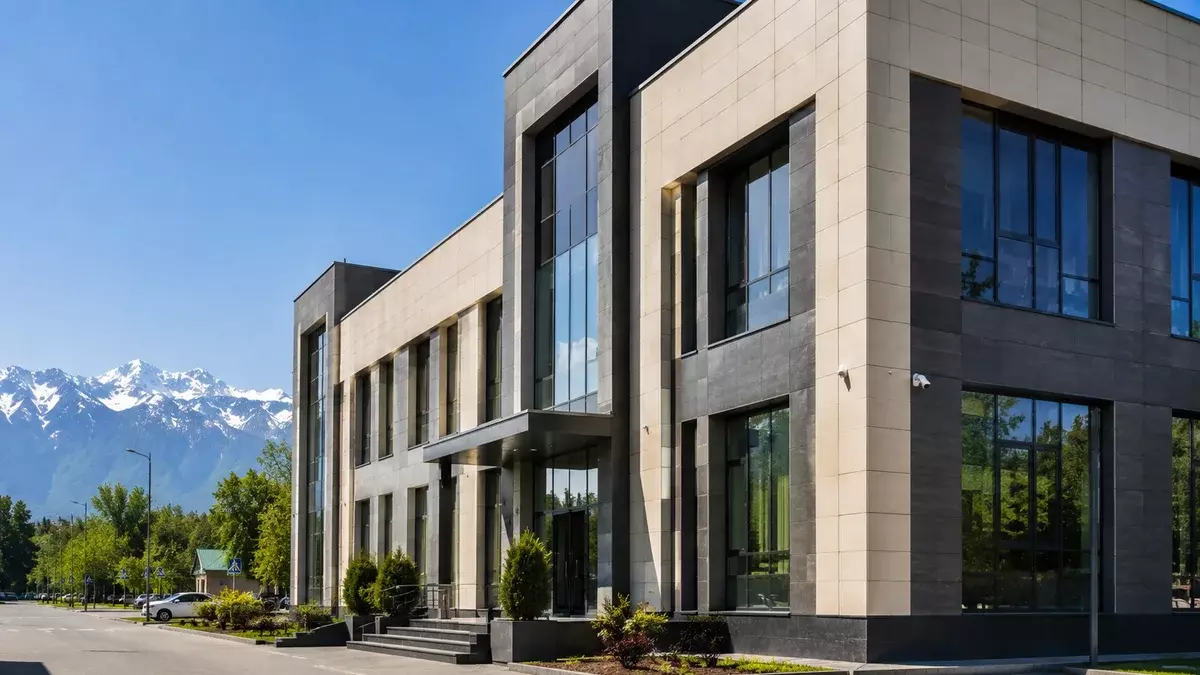 Installation of a ventilated facade on an office building in the Bostandyk district
 Painting and repair of the facade of an apartment building in the Samal microdistrict
FIND OUT THE COST OF FACADE WORK FOR YOUR PROJECT
Leave a request and we will contact you within 3 minutes
Thank you! We will contact you within 3 minutes.
By clicking the button you agree to the terms of the
 Privacy Policy
FIND OUT THE COST OF FACADE WORK FOR YOUR PROJECT
Leave a request and we will contact you within 3 minutes
Thank you! We will contact you within 3 minutes.
By clicking the button you agree to the terms of the
Or call us at
+7 (707) 068-88-68Privacy PolicyFIND OUT THE COST OF FACADE WORK FOR YOUR PROJECT
Leave a request and we will contact you within 3 minutes
Thank you! We will contact you within 3 minutes.
By clicking the button you agree to the terms of the
Or call us at
+7 (707) 068-88-68In detail about siding installation
Siding installation is the cladding of a facade with panels, insulation and a ventilation gap. In Almaty vinyl and metal siding are popular. The installation price per m² depends on the material, the complexity of the facade and the need for insulation. We have covered every stage: from choosing the siding to the final finish.
What siding is and which types suit Almaty's climate
Siding installation almaty is a sought-after solution that we carry out across Almaty and the suburbs. Siding is facade panels used to protect the walls and decorate the house. Not all materials suit Almaty's climate with its hot summers, frosty winters and strong ultraviolet light.
Vinyl siding — affordability and resistance to temperature swings
Vinyl panels are the most popular material on private houses across Almaty thanks to a price from 1200 ₸/m² and resistance to swings from -40°C to +50°C. PVC panels do not rot or rust and weigh only 1.5-2 kg/m², which allows them to be installed on old battens without reinforcing the foundation. Popular brands such as Docke, Grand Line and FineBer have collections with wood and stone imitations — in Almaty cottages the “ship-lap” or “herringbone” texture is often chosen. When installing vinyl, a 5-7 mm temperature gap between panels is critically important — without it the siding will ripple in summer, and the rework will be at your own expense.
Metal siding — strength and resistance to mechanical loads
Metal siding made of galvanised steel with a polymer coating withstands hail and impacts, but costs more — from 1800 ₸/m². Profiled panels 0.4-0.5 mm thick do not crack in the frost and last up to 40 years, yet they weigh 3.5-5 kg/m² — they need reinforced battens with a pitch of 40-50 cm. In Almaty metal is often chosen for cladding garages and fences for the same reason: it is not afraid of scratches from branches and stones. The main drawback of metal for this region is strong heating in the sun: in summer the surface can heat up to +70°C, which increases heat gain into the house and makes the air conditioner run at full power.
Plinth and acrylic siding — for specific tasks
Acrylic siding does not fade in the sun for up to 15 years, while plinth siding imitates stone and brick — both options suit high-load areas. Acrylic panels cost more than vinyl (from 2500 ₸/m²), but they keep their colour on south-facing facades, where ordinary PVC fades within 3-5 years — a common problem for Almaty houses with sides open to the sun. Plinth siding 3-4 mm thick is made of composite PVC and withstands shovel blows when clearing snow, so it is installed not only on the plinth: it is used to clad garages, fences and outbuildings where impact resistance is needed.
Comparison of siding types — characteristics table
| Parameter | Vinyl | Metal | Plinth | Acrylic |
|---|---|---|---|---|
| Price per m² | from 1200 KZT | from 1800 KZT | from 2200 KZT | from 2500 KZT |
| Service life | 25-30 years | 30-40 years | 30-40 years | 35-40 years |
| UV resistance | average | high | high | very high |
| Impact resistance | average | high | very high | high |
| Weight of 1 m² | 1.5-2 kg | 3.5-5 kg | 5-7 kg | 2-3 kg |
| Winter installation | yes (up to -10°C) | yes | yes | yes |
For the south-facing walls of a house in Almaty, choose light shades of vinyl or acrylic — they heat up less and do not fade, which saves up to 15% on cooling during the summer months.
Battens and the wall build-up under siding — mandatory elements
Siding installation price per m2 depends on the area, the material and the complexity of the facade — we calculate the exact sum after a survey. A proper siding build-up is not just panels on the wall. How the battens and insulation are done determines whether the house will be warm and whether mould will appear.
Are battens needed under siding — debunking the myths
Battens for siding are mandatory — they create the ventilation gap and level the wall; without them the panels deform and condensation collects beneath them. A metal profile or 40×40 mm timber is fixed at a pitch of 40–60 cm strictly to level: on a brick wall, frame anchors of 6×60 mm are used, on a wooden one, wood screws of 50 mm. If the wall is uneven, straight brackets are placed under the profile — they compensate for deviations of up to 10–15 cm per span. On our projects on the outskirts of Almaty (the Aksai, Alatau and Shanyrak districts) the wall deviation often reaches 5–8 cm because of foundation settling — without battens it is impossible to mount the panels evenly. Even on a perfectly flat wall battens are needed: without them there is no air circulation and the insulation gets damp within a single season.
How to insulate a facade under siding — mineral wool or foam
To insulate a facade in Almaty, mineral wool with a density of 35–50 kg/m³ or PSB-S-25 foam 50–100 mm thick is used. Mineral wool is chosen for wooden and frame houses — its vapour permeability of 0,3–0,6 mg/(m·h·Pa) lets the walls “breathe”, while foam, with a vapour permeability of 0,05 mg/(m·h·Pa), is practically airtight. Foam 50 mm thick costs 2500–3000 KZT per 1×0,5 m sheet, and mineral wool of the same thickness costs 3500–4500 KZT per 1×6 m roll. A wind-barrier membrane is mandatory for both materials: without it foam breaks down under ultraviolet light within 2–3 months, and mineral wool draws moisture from the air and loses its insulating ability. Mineral wool is better for wooden houses — it is vapour-permeable and keeps the walls from rotting, while foam is cheaper but requires mandatory wind protection.
Ventilation gap and wind barrier — why they are needed
A 20–40 mm ventilation gap between the insulation and the siding is an air layer that carries away condensation and extends the life of the facade. Moisture that penetrates from inside the house through the walls condenses on the inner side of the panels when there is a temperature difference between outside and inside — in Almaty winters with frosts down to –30 °C the difference reaches 50 °C. A wind-barrier membrane (for example, Izospan A or Juta Jutavek) is fixed over the insulation with an overlap of 10–15 cm and taped at the joints with butyl-rubber tape. Counter-battens of 20×40 mm timber, nailed over the membrane, create the ventilation gap and at the same time hold the membrane down against billowing in strong wind. Without a wind-barrier membrane the insulation is blown out by the wind within 2–3 years, and mineral wool loses up to 30% of its thermal-insulation properties when it gets wet.
The wall build-up under siding — the correct order of layers
- - Wall: cleaned and treated with an antiseptic (on wood) or a primer (for concrete/brick).
- - Battens: a metal profile or 40×40 mm timber at a pitch of 40–60 cm, aligned to level.
- - Insulation: mineral wool or foam 50–100 mm thick, fitted snugly between the profiles.
- - Wind-barrier membrane: a film that lets vapour out but does not let moisture and wind in.
- - Counter-battens: 20×40 mm timber to create a 20–40 mm ventilation gap.
- - Siding: panels fixed with a temperature gap of 5–7 mm.
Siding installation technology step by step
Installing siding is a sequence of strict operations. Each stage affects the end result: how the starter strip is set out determines whether the facade will ripple.
Installing the starter strip — the basis of the whole facade
The starter strip is fixed strictly to level at a height of 30–40 mm from the lower edge of the battens — the geometry of the whole facade depends on it. The first strip is set out from the lowest corner of the house, marking the horizontal with a laser or water level, and the pitch between screws is kept at 300–400 mm. A gap of 6–10 mm is left at the joint of two strips for thermal expansion — this is especially important in Almaty's climate, with swings from −30 °C in winter to +40 °C in summer. If the wall is longer than 3,5 metres, the starter strip is assembled with an overlap of 25–30 mm, offsetting the locks of adjacent panels. An error of 2–3 mm on the starter strip gives a skew of 1–2 cm at a height of 3 metres — this can only be corrected by a complete dismantling.
Fastening the panels — rules and the temperature gap
A temperature gap of 5–7 mm is left between siding panels — this compensates for the material expanding in summer and contracting in winter. Each panel is clicked into the lock of the previous one until it snaps, without stretching or squeezing it, otherwise it will deform at the very first temperature swing. The screws are driven exactly into the centre of the oval hole without tightening them all the way — a 1–2 mm gap is left for the panel to move freely. The fixing pitch is 400 mm horizontally and 300 mm vertically, and at corners and around openings the pitch is reduced to 200 mm. In practice, in windy weather, vinyl siding panels fixed too tightly on the south walls of houses in Almaty develop waves by the end of the first summer — the material expands and bows, having no play.
Cladding around windows and doors — complex junctions
Around windows and doors a J-profile, window trims and drip caps are used — these elements cover the panel ends and divert water away from the openings. The window profile is fixed so that its top flange sits 20–30 mm above the horizontal drip cap, otherwise water runs in under the panel. On window reveals wider than 150 mm a finish strip is fitted rather than a J-profile — it gives a rigid fixing for the last panel with no gaps. The top drip cap is mounted with a 10–15° slope away from the window, running its edges under the side J-profiles by at least 20 mm. A mistake when fitting the window profile is the most common cause of leaks: the top drip cap must run under the J-profile by at least 20 mm, otherwise driving rain floods the wall through the joint.
Can siding be installed in winter — features of the cold season
Vinyl siding can be installed in winter at temperatures down to −10 °C, but with an increased temperature gap of 7–9 mm because the material contracts. In sub-zero temperatures vinyl becomes brittle — it should be cut with a fine-tooth jigsaw or a sharp knife, not with an angle grinder, which overheats and melts the edge. Metal siding is cut in winter only with shears — an angle grinder overheats the metal and damages the polymer coating, which leads to corrosion. In winter the screws are driven at a reduced torque: an over-tightened panel will expand in spring and crack at the fixing hole. In practice, cold installation takes twice as long — each element is test-fitted with an allowance for the gap, and cuts are made 2–3 mm longer than calculated so that the panel does not butt against its neighbour when it warms up.
Trim accessories and junctions — what is needed for a complete set
Trim elements are not an option but a mandatory part of finishing the facade. Without them the facade is left unfinished and the joints unprotected from moisture and wind.
Which trim accessories are needed for a complete set
- - Outer and inner corners: they cover the panel ends at the corners of the house, standard length 3 metres.
- - J-profile: frames window and door openings and also holds the soffits in place.
- - Starter strip: it sets the direction for the whole row — the geometry of the facade depends on how level it is.
- - Finish strip: it fixes the top edge of the last panel under the eaves, keeping it from coming away.
- - Casings: decorative framing of openings, covering the joint between the siding and the frame.
- - Drip caps: divert rainwater away from windows and the plinth, preventing the walls from getting wet.
- - Soffits: perforated panels for lining the eaves — they provide ventilation of the under-roof space.
Why waves appear on siding and how to avoid this
Waves on siding appear for three reasons: the absence of a temperature gap between panels, screws tightened too firmly, and uneven battens. Vinyl expands when heated by the sun to +50 °C — if the panels are clamped in their locks with no 6-10 mm gap, they bow into an arc. The screws are driven exactly into the centre of the oval hole and not all the way: a 1-2 mm gap is left between the head and the panel. Before work begins the battens are checked with a straightedge — a deviation of more than 3 mm over 2 metres gives a wave visible to the eye. If the defect has already appeared, it can only be corrected by reinstalling: loosen the fasteners, level the battens and reassemble the panels while maintaining the gaps.
Sealing the joints and protection from moisture
The joints between the siding and the trim elements are sealed with silicone sealant — it prevents wind from blowing in and moisture from getting under the facade. A quality compound stays elastic in frosts down to -40 °C and withstands direct UV for about 5-7 years without cracking. The sealant is applied with a thin spatula where the J-profile meets the window trims and at the joints of the corner strips — a 2-3 mm layer. Expanding foam is not used for this purpose: it expands and deforms the panels, and breaks down in the sun within one or two seasons. Sealing is mandatory on the windward side of the house — in Almaty this is the south and west, where the wind off the mountains reaches 15-20 m/s.
Price of siding installation per m² — cost table
The cost of facade-cladding work is made up of the cost of labour, materials and trim elements. In Almaty prices range from 1500 to 3500 ₸/m² depending on the complexity.
Cost of siding installation per m² — labour and materials
| Type of installation | Labour (KZT/m²) | Materials (KZT/m²) | Total (KZT/m²) |
|---|---|---|---|
| Vinyl siding without insulation | 1500-1800 | 1200-1800 | 2700-3600 |
| Vinyl siding with insulation | 1800-2200 | 1200-1800 + 800-1200 | 3800-5200 |
| Metal siding without insulation | 1800-2200 | 1800-2500 | 3600-4700 |
| Metal siding with insulation | 2200-2600 | 1800-2500 + 800-1200 | 4800-6300 |
| Plinth siding | -2500 | 2200-3000 | 4200-5500 |
| Acrylic siding | -2500 | 2500-3500 | 4500-6000 |
How to calculate a turnkey siding estimate — real figures for a 100 m² house
For a 100 m² house with vinyl siding and insulation, the turnkey estimate will be 380 000-520 000 ₸, including labour, materials and trim elements. This sum covers installation of the vinyl panels (1500-1800 ₸/m² labour + 1200-1800 ₸/m² material), insulation with mineral wool or polystyrene 50-100 mm thick (800-1200 ₸/m²), a vapour barrier and wind protection (200-300 ₸/m²), as well as starter and finish strips, outer and inner corners, J-profile, window trims and drip caps. A 100 m² house needs 50-80 linear metres of trim elements with a total cost of 60 000-100 000 ₸. Trim elements add 15-25% — to the estimate; a 100 m² house needs 50-80 linear metres of corners, J-profile and window trims.
What affects the final installation cost
Three factors affect the final price: the type of siding, the presence of insulation and the complexity of the facade (the number of windows, corners and bay windows). Metal siding costs 600-800 ₸/m² more than vinyl in materials, but it is more durable — a service life of up to 50 years against 30 for vinyl. Insulating the facade with 50 mm basalt wool adds 800-1200 ₸/m², but it pays for itself within 2-3 heating seasons by cutting heat losses by 30-40%. A facade with 10+ window openings or dormer windows increases the cost of work by 20-30% because of the greater number of trim elements and complex junctions.
Turnkey siding installation with PROFI-DOM
Turnkey siding cladding of a house is a single cycle of work: from the surveyor's visit to the final handover certificate. We run the project without your involvement, with a transparent estimate and a guaranteed result.
What the turnkey service includes — the full cycle of work
The turnkey service from PROFI-DOM includes a free survey, drawing up the estimate, delivery of materials, installation with insulation and a 2-year warranty. A crew of three installers led by a foreman comes to the site with all the tools — from hammer drills to a laser level. The work proceeds strictly in sequence: fixing the vapour barrier and battens, laying the insulation (Rockwool mineral wool or PSB-S-25 polystyrene), fitting the wind-barrier membrane and only then fixing the siding panels with the trim elements. The house is left without a facade for an average of 4-7 days — the time depends on the wall area and the complexity of the gables. We bring materials with a 10-15% surplus, which rules out situations where panels or strips run short during the process, and the work does not stop because of a reorder.
Free measurement and estimate — with no hidden charges
The PROFI-DOM surveyor comes to the site free of charge, measures the facade with a laser rangefinder and draws up a detailed, itemised estimate. The document lists on separate lines: the area of the walls and gables, the number of panels of each colour, the running length of the starter and finish strips, corners, drip caps and soffits, as well as the volume of insulation and fasteners. The survey takes 30-40 minutes for a typical 100-150 m² house, after which within 1-2 days the client receives the finished estimate in print or via WhatsApp. The price is fixed in the contract and does not change once work has begun, even if additional facade details come to light during the process — for example, wall curvature that requires a thicker layer of insulation.
Workmanship warranty — 2 years of peace of mind
PROFI-DOM provides a 2-year warranty on all completed work — if any defects appear within this period, we fix them free of charge. A warranty case is recorded from a photo or a site visit by the foreman: the typical reasons for claims are panels peeling away due to house settling, a damaged lock joint after heavy hail, or a loss of seal at a window-unit joint. Our crew arrives within 3-5 working days of the request and replaces the damaged element without dismantling the entire facade. The warranty covers panels peeling away, the appearance of waves and loss of joint sealing — that is, the defects that arise solely from installation errors rather than from mechanical damage or natural wear of the material.
Why people choose PROFI-DOM — quality control at every stage
PROFI-DOM controls quality at every stage: from accepting the materials to the final inspection of the facade and drawing up a work-completion certificate. A foreman works on site — he checks the batten spacing (40 cm for vinyl, 50 cm for metal), the gap between panels (6-10 mm depending on the season), the accuracy of the corner cuts and the alignment of the trim elements by level. Every batch of panels is checked against colour and batch number before installation — a mismatched tone on the facade is ruled out. Once the work is finished, the foreman carries out a final walk-through with the client: he checks the gaps, the sealing and the fixing of the trim elements, and then gives written recommendations on caring for the facade — for example, how to wash the panels and when to inspect the joints after winter.
Conclusion
We have covered the technology, the prices and the typical mistakes — now all that is left is to lock in the key points so you can choose a contractor and not overpay for unfinished work.
Key takeaways
Siding installation is not just cladding but a full facade-protection system. The right choice of material for Almaty's climate, mandatory battens with a ventilation gap and precise adherence to the technology are the three conditions for a durable result. The cost of work per m² ranges from 1500 to 3500 ₸ depending on the type of panels and the need for insulation. Trim elements and joint sealing are not an option but a mandatory part of the process that protects the facade from moisture and wind. The key is not to skimp on preparation: level battens and the correct temperature gap prevent waves and deformation. When choosing a contractor, pay attention to the warranty and the make-up of the estimate — a fixed price with no hidden extras shows the team's professionalism.