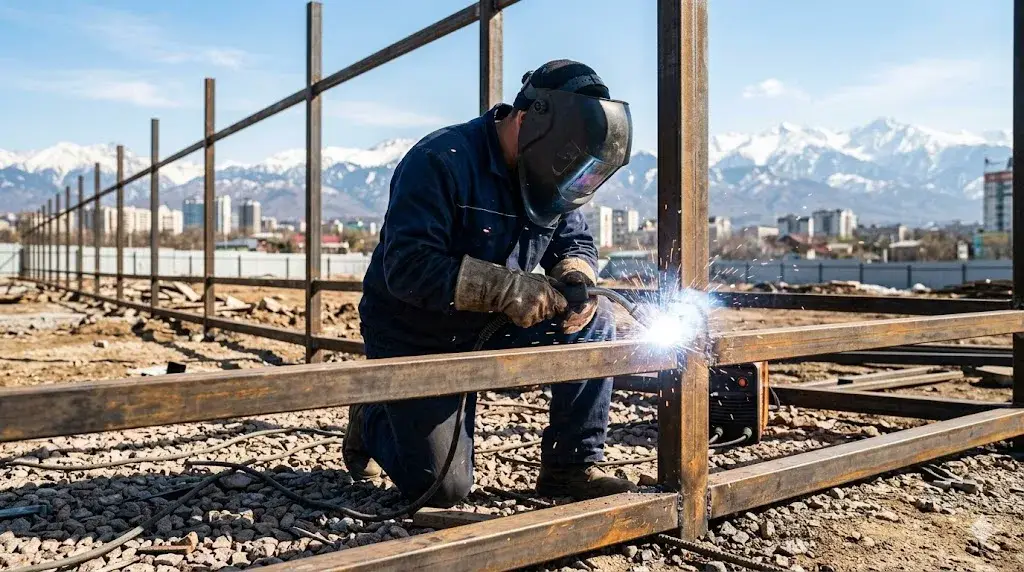
Fence welding in Almaty
from 2 500 tg.* PER METER OF FENCE
A fence that will not warp or rust: we weld sections from 40×20 mm pipe in the workshop, concrete the posts to 1–1,2 m, measurement in Almaty is free.
 The seams don't rust:
soil in 2 layer Installation — 2 days,
sections from the workshop 3-year warranty
on seams and frame Measurement is free, the
estimate has no extra charges
Fence welding in Almaty
from 2 500 tg.* PER METER OF FENCE
A fence that will not warp or rust: we weld sections from 40×20 mm pipe in the workshop, concrete the posts to 1–1,2 m, measurement in Almaty is free.
The seams don't rust:
soil in 2 layer
Installation — 2 days,
sections from the workshop
3-year warranty
on seams and frame
Measurement is free, the
estimate has no extra charges
Types of welding
work we do
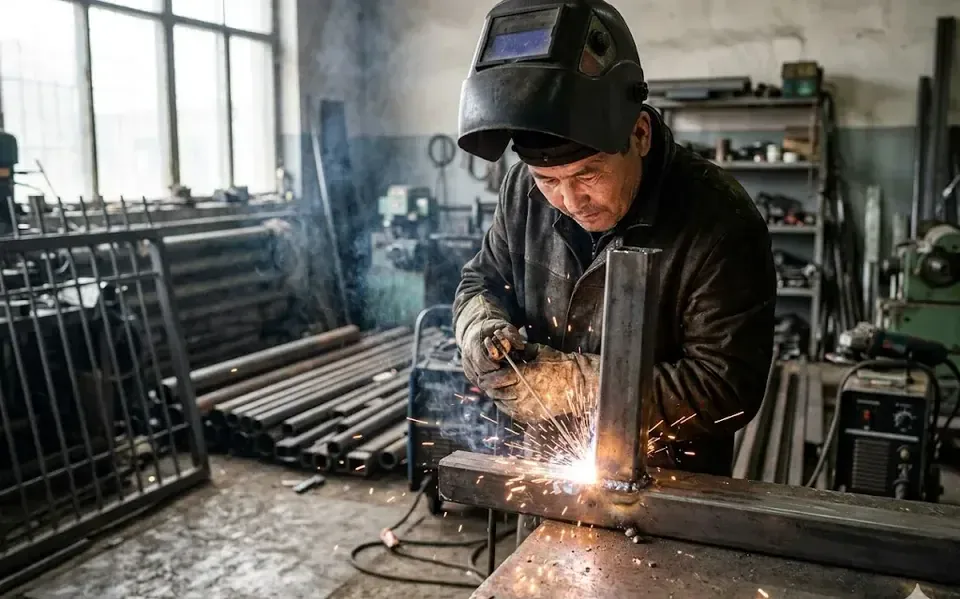
Welding of fence sections
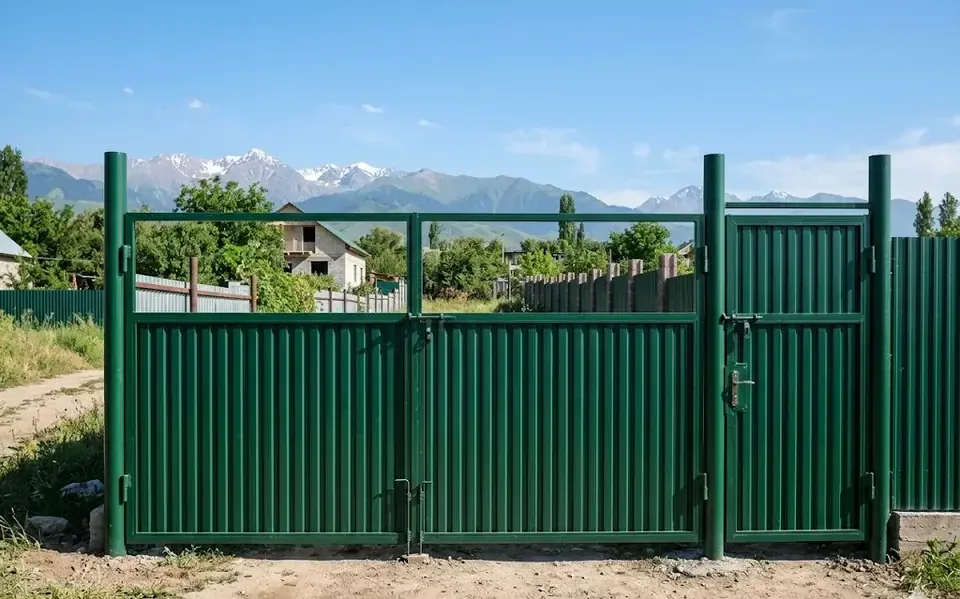
Installation of gates and wicket doors
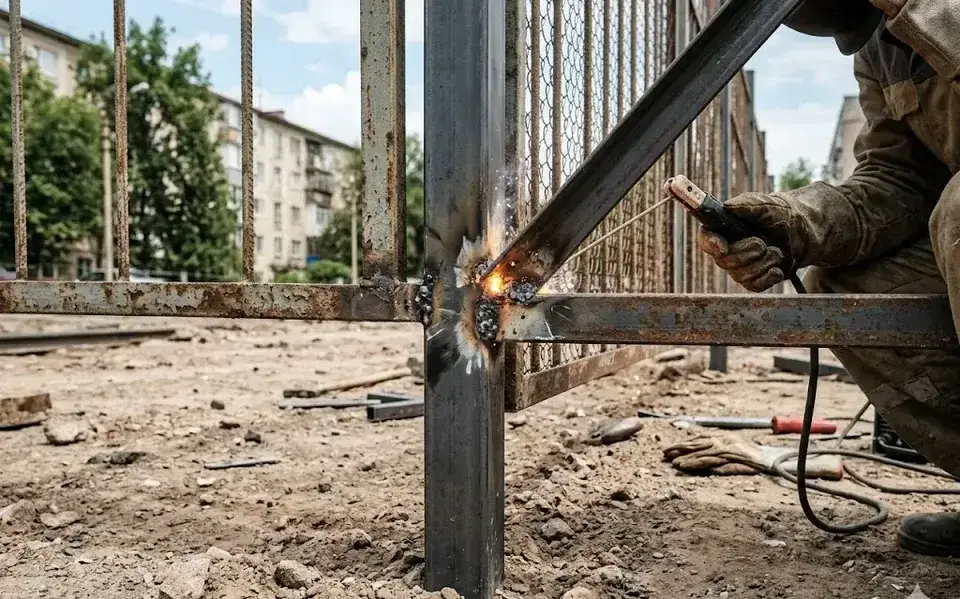
Reinforcement of an existing fence
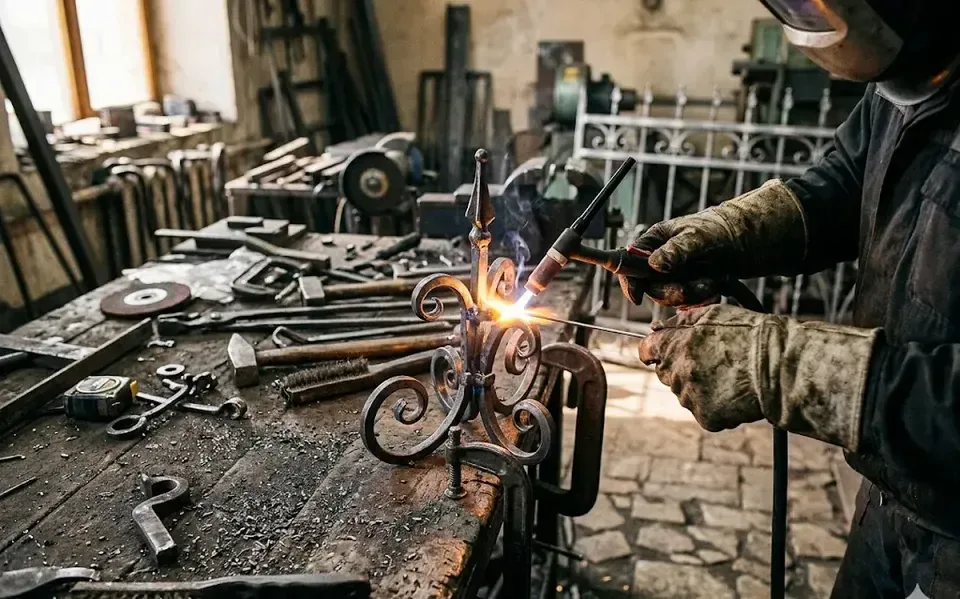
Manufacture of forged elements
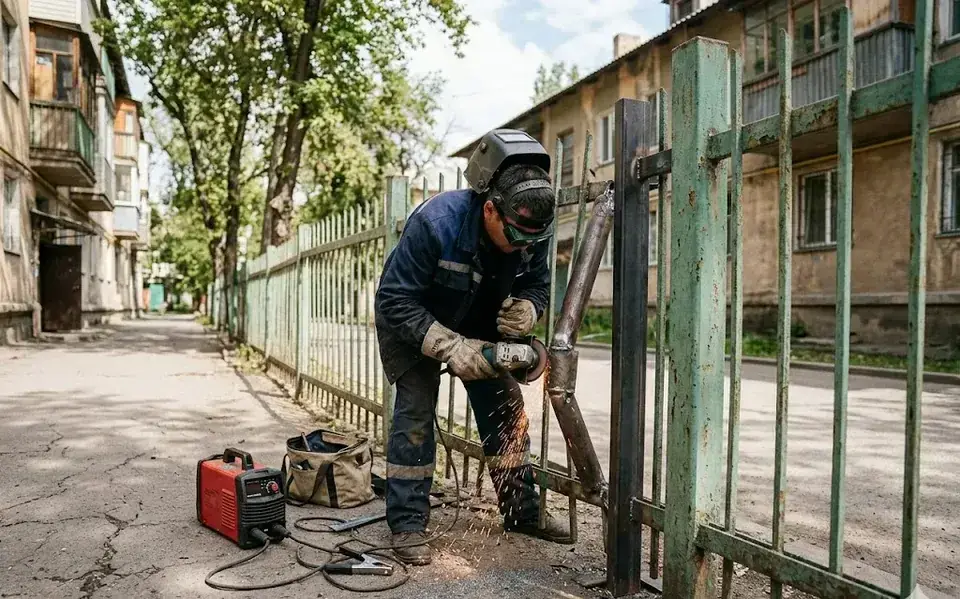
Repair of fence sections
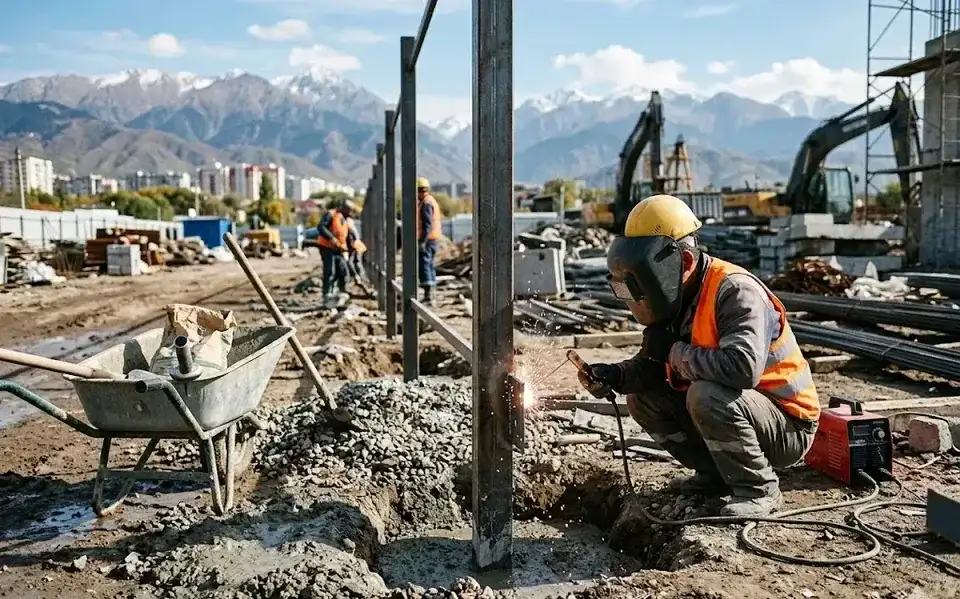
Installation of support posts
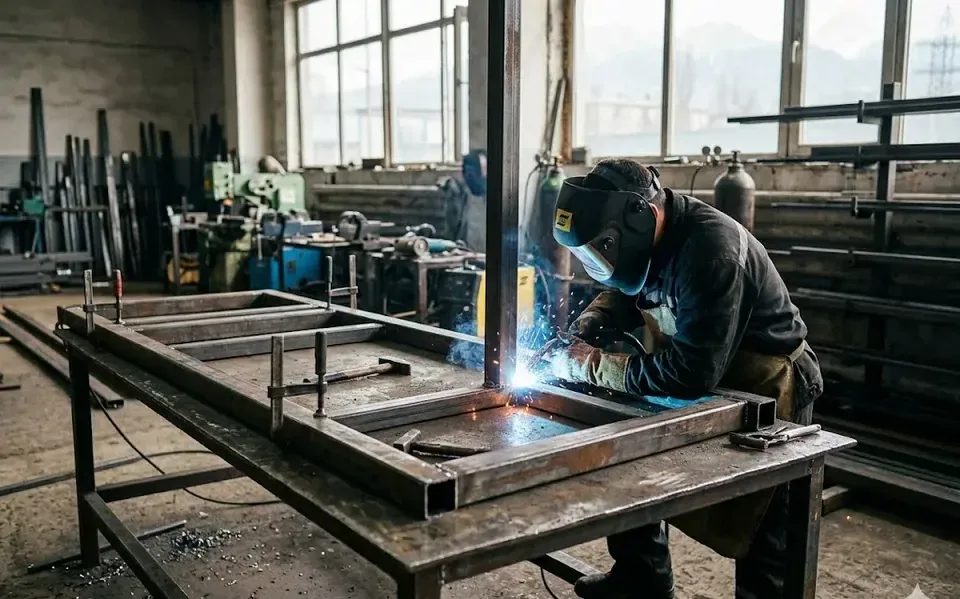
Welding of a frame for corrugated sheeting
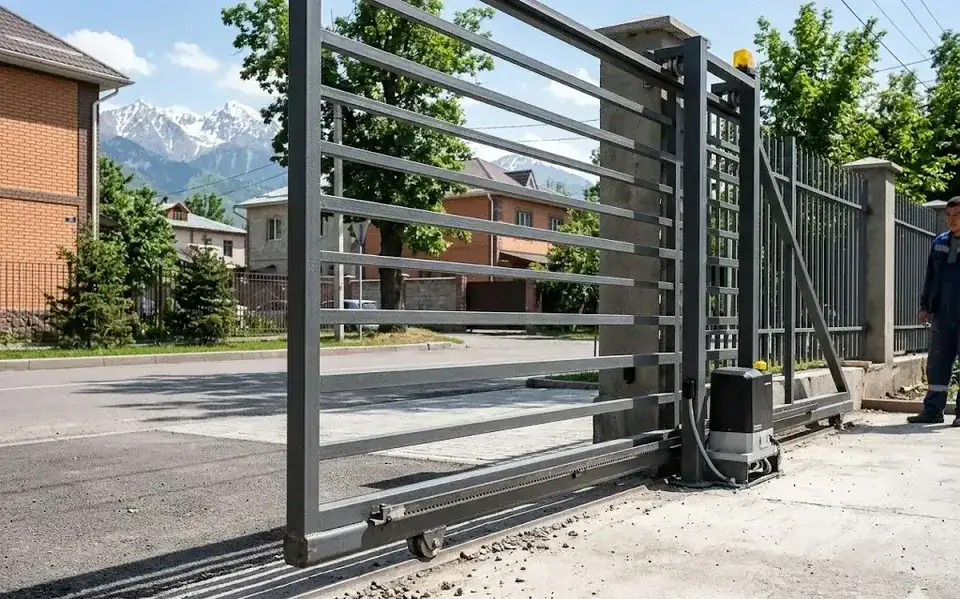
Installation of sliding gates
Types of welding
work we do
Welding of fence sections
Installation of gates and wicket doors
Reinforcement of an existing fence
Manufacture of forged elements
Installation of sliding gates
Installation of support posts
Welding of a frame for corrugated sheeting
Repair of fence sections
We will call you back within 3 minutes
Types of welding
work we do
Welding of fence sections
Installation of gates and wicket doors
Reinforcement of an existing fence
Installation of sliding gates
Repair of fence sections
Installation of support posts
Welding of a frame for corrugated sheeting
Manufacture of forged elements
We will call you back within 3 minutes
Cost of FENCE WELDING
IN ALMATY
| SERVICE | COST | TIME |
|---|---|---|
| Welder's visit for repair (within the city) | from 5 000 ₸ | — |
| Minimum order value | from 15 000 ₸ | — |
| Welding of a metal section frame (per 1 linear metre) | from 2 500 ₸ | from 2 hours |
| Fastening profiled sheeting to the frame (per 1 sheet) | from 1 500 ₸ | from 1 hour |
| Gate welding (swing/sliding, per 1 item) | from 25 000 ₸ | from 4 hours |
| Wicket welding (per 1 item) | from 12 000 ₸ | from 2 hours |
| Installation of support posts (per 1 post) | from 3 000 ₸ | from 30 min |
| Turnkey fence with material, per 1 linear meters | from 9 800 ₸ | 2 days |
| Structural reinforcement (additional stiffening ribs, per 1 point) | from 1 000 ₸ | from 20 min |
| Anti-corrosion treatment of welded seams (per 1 metre of seam) | from 500 ₸ | from 15 min |
| Painting of steel structures (per 1 sq. m) | from 1 200 ₸ | from 1 hour |
Преимущества СВАРОЧНЫХ РАБОТ ОТ Profi‑Dom

Frame made of 40×20 mm pipe
Joists with a 1,5–2 mm wall do not bend under the profiled sheet and maintain the fence geometry for 15–20 years

We weld the sections in the workshop
Semi-automatic in CO₂ on a level stand: seam without slag and burn-through, sections without distortion

Posts in concrete at 1,2 m
We concrete below the frost depth — the fence doesn't "wander" on heaving soil and doesn't collapse in spring

Installation in 2 days
We prepare sections and gates in the workshop in 2–3 days, install them on site in 2 days — we write the deadlines in the contract

3-year warranty on seams
If a seam cracks or rust appears on it — we will come and re-weld it free of charge, the term is specified in the act

Price per meter in the estimate
Section frame — from 2 500 ₸/linear m, gates — from 25 000 ₸; we fix the price after a free measurement
Преимущества СВАРОЧНЫХ РАБОТ ОТ Profi‑Dom
Joists with a 1,5–2 mm wall do not bend under the profiled sheet and maintain the fence geometry for 15–20 years
Frame made of 40×20 mm pipe
Semi-automatic in CO₂ on a level stand: seam without slag and burn-through, sections without distortion
We weld the sections in the workshop
We concrete below the frost depth — the fence doesn't "wander" on heaving soil and doesn't collapse in spring
Posts in concrete at 1,2 m
We prepare sections and gates in the workshop in 2–3 days, install them on site in 2 days — we write the deadlines in the contract
Installation in 2 days
If a seam cracks or rust appears on it — we will come and re-weld it free of charge, the term is specified in the act
3-year warranty on seams
Section frame — from 2 500 ₸/linear m, gates — from 25 000 ₸; we fix the price after a free measurement
Price per meter in the estimate
We will call you back within 3 minutes
HOW WE WORK
- 01.Request and calculation
You send the length and height of the fence, a photo of the plot — we immediately give a price guideline per linear meter.
- 02.Free measurement
A surveyor with a laser level measures the length, height difference and soil type — free within Almaty.
- 03.Sketch and estimate
We draw a scheme: post spacing 2,5 m, number of joists, gates and wicket — and calculate the estimate without hidden extra charges.
- 04.Approval of the contract
We fix in the contract the price per meter, an installation period of 2 days and a 3-year warranty on seams and the frame.
- 05.Welding sections in the workshop
We cut profile pipe to size and weld sections and gates with a semi-automatic welder on a level jig — without distortions.
- 06.Seam protection
We clean every seam, prime with Zincar in 2 coats and paint the frame — rust won't appear along the seams.
- 07.Posts and concrete
We drill holes 1–1,2 m deep, concrete the posts 60×60 mm to level and wait 12–24 hours for the concrete to set.
- 08.Installation in 2 days
We install the sections, gates and wicket level, adjust the leaves and sign the act — the warranty starts from it.
Find out the cost of welding your fence in 1 minutes
catalogue of completed welding work
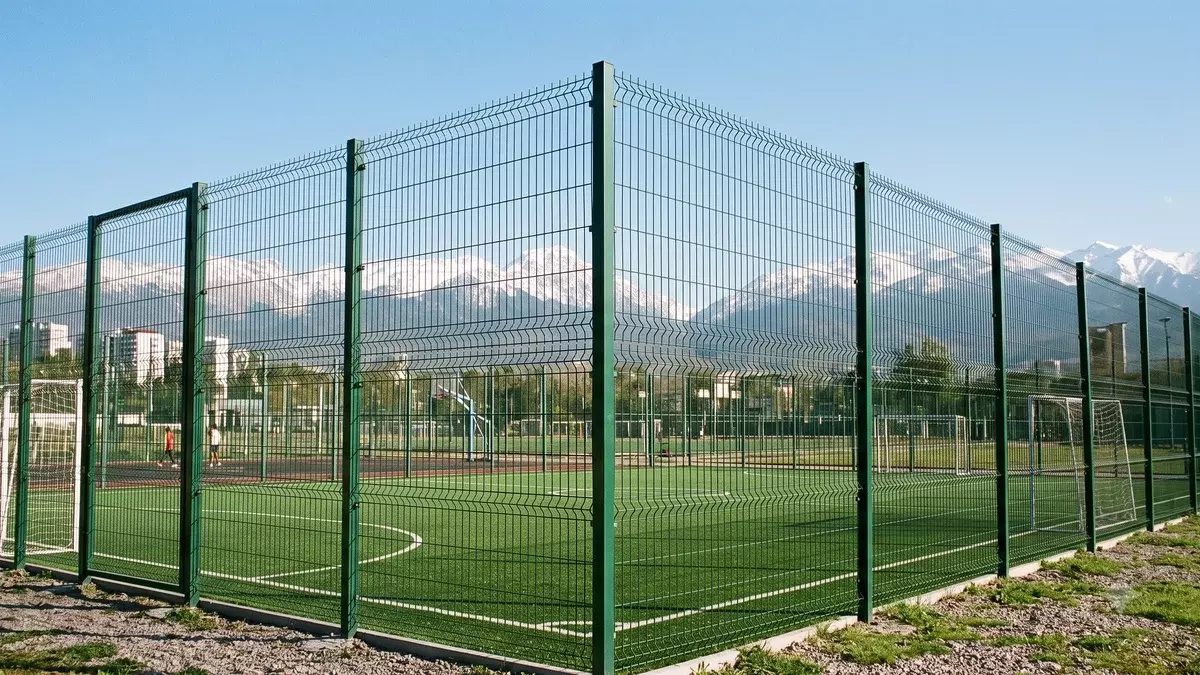 Welding and installation of a sectional fence in the Alatau district
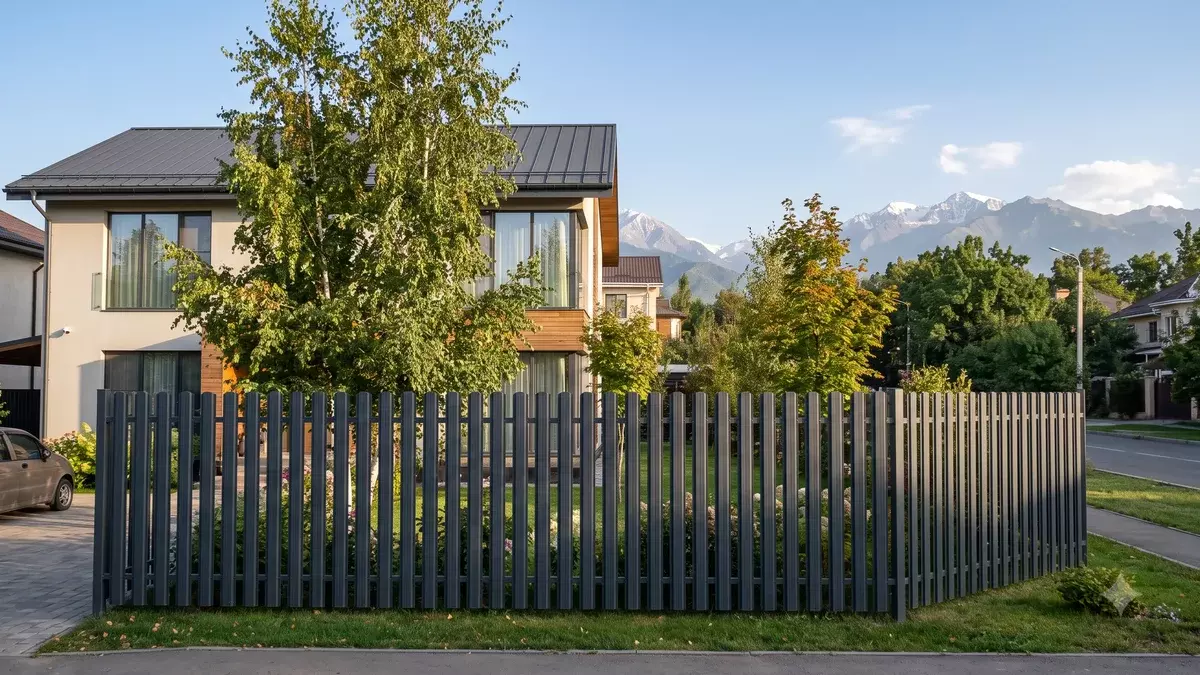 Manufacture of swing gates with a wicket in the Nurlytau residential complex
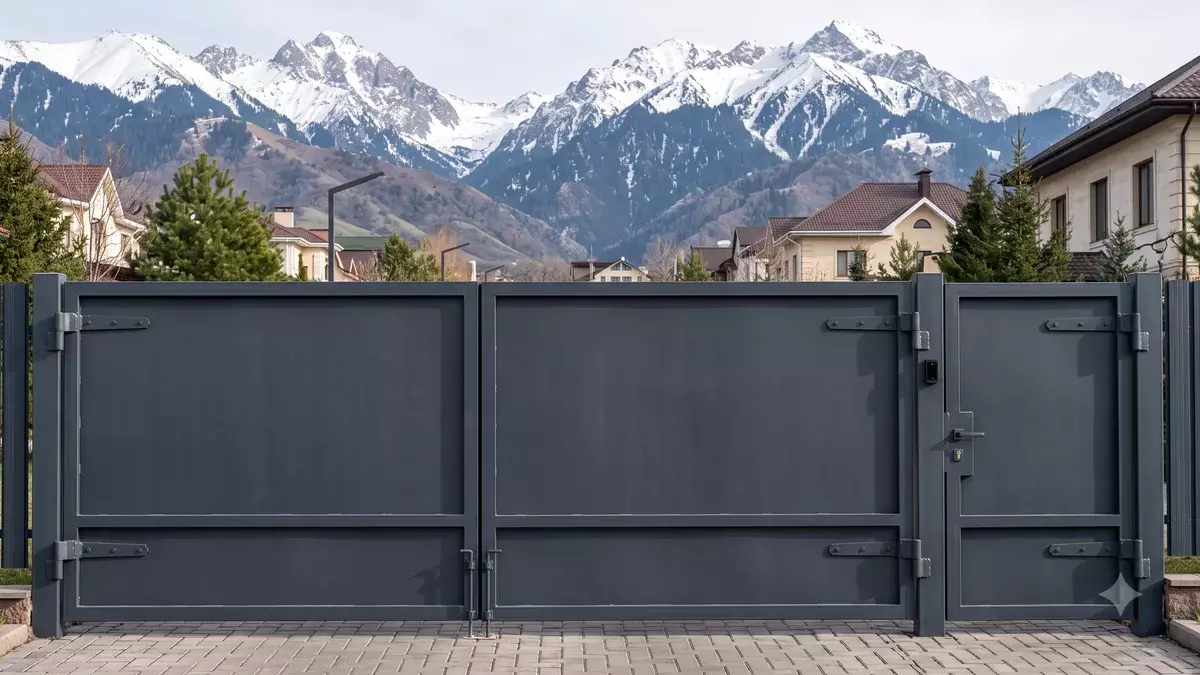 Repair and reinforcement of an old fence in Kokkainar village
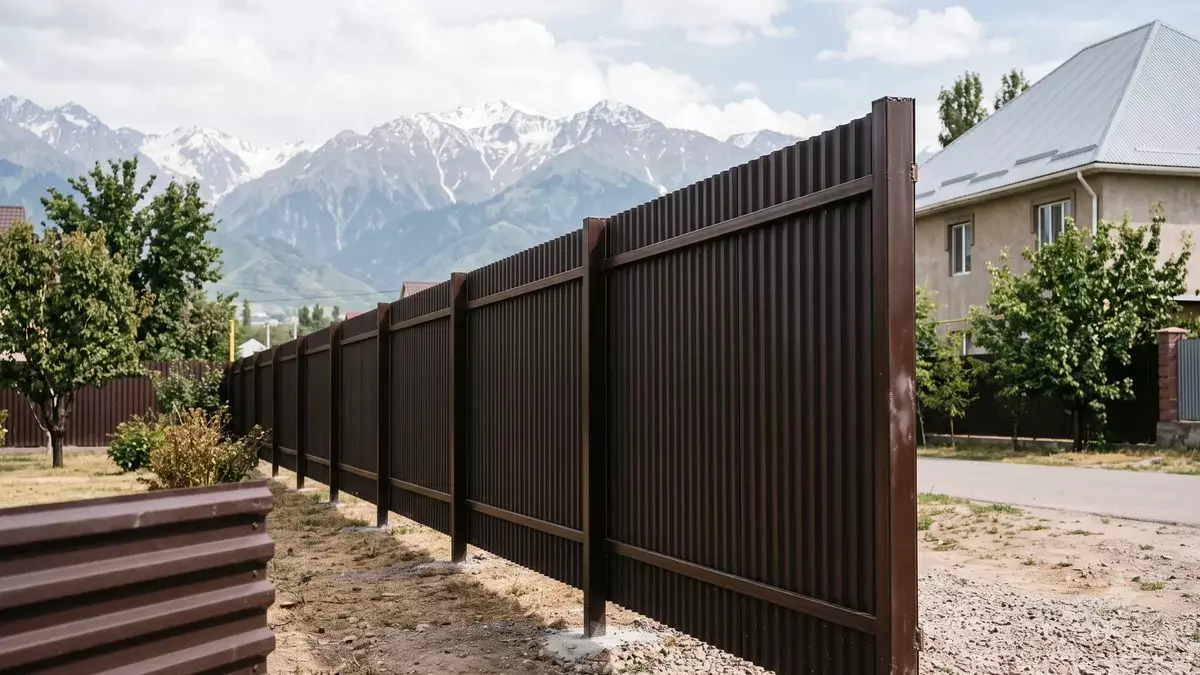 Installation of a corrugated sheet fence on a metal frame in the Bostandyk district



FIND OUT THE COST OF WELDING WORK FOR YOUR PROJECT
Leave a request and we will contact you within 3 minutes
Thank you! We will contact you within 3 minutes.
By clicking the button you agree to the terms of the
Or call us at
+7 (707) 068-88-68Privacy PolicyFIND OUT THE COST OF WELDING WORK FOR YOUR PROJECT
Leave a request and we will contact you within 3 minutes
Thank you! We will contact you within 3 minutes.
By clicking the button you agree to the terms of the
Or call us at
+7 (707) 068-88-68Privacy PolicyFIND OUT THE COST OF WELDING WORK FOR YOUR PROJECT
Leave a request and we will contact you within 3 minutes
Thank you! We will contact you within 3 minutes.
By clicking the button you agree to the terms of the
Or call us at
+7 (707) 068-88-68Сварка забора в Алматы от PROFI‑DOM: каркас, ворота, сетка, цены
Fence welding at PROFI-DOM — frames, gates and wickets made of 40×20–80×80 mm profile pipe: in the workshop we weld with a MIG/MAG semi-automatic machine, on site — with an MMA electrode. We clean the seams, prime and paint, warranty — 3 years. Section frame — from 2 500 ₸ per linear meter, turnkey profiled sheet fence with material — from 9 800 ₸/linear m, measurement in Almaty is free.
Published: 11 · Updated:
What fences, gates and railings PROFI-DOM welds
Let's list the main types of fences, gates, and enclosures that the workshop produces. Each option includes the material, pipe cross-section, and typical application so you immediately understand what suits your site.
Corrugated sheet fence on a welded frame
At PROFI-DOM we weld the frame for corrugated sheet from 40×20 mm profile pipe with 40×20 mm purlin, post spacing 2,5 meters, fence height up to 2,5 m. We use corrugated sheet of grades C8, C20 or C21 — — the first two for wind protection along the boundary, C21 is stiffer and goes on visible facade sections. Workshop fabrication with semi-automatic in CO₂ gives a seam without slag and burn-through, unlike a suspended electrode — the frame does not warp or twist. We concrete posts below the frost depth (1,2 m) so the fence does not "wander" on heaving soils. To prevent the corrugated sheet from "sailing" in the wind, we install three purlins at a height from 2 m — this is stiffer than the standard two and eliminates metal flapping in a storm.
Chain-link fence with a frame
We weld the frame for the chain-link mesh from 40×20 mm profile pipe; the mesh is galvanized, with a 50×50 mm cell, does not rust, and does not require painting. Hot-dip galvanizing lasts 10–12 years in the open air in the Almaty climate, while ordinary black mesh begins to rust after 2–3 seasons. We weld the frame on a flat stand in the workshop — this ensures level geometry without distortions that are inevitable when welding on the knee directly on the site. We mount it on posts made of 60×60 mm pipe with a spacing of 2,5 m, and cover the upper edge of the frame with a U-shaped strip — eliminating cuts during installation. Mesh without a frame on tension hooks sags after 2–3 years — a pipe frame maintains geometry throughout its service life.
Metal picket and welded mesh 3D/2D fence
We manufacture fences from euro picket (metal 0,5 mm, gap 5 cm) and welded panels 3D/2D (rod 4–5 mm) on a frame made of profile pipe 40×20 mm. For euro picket we choose one-sided or two-sided coating — for the street one-sided polymer is enough, for the facade two-sided is better so it looks neat from both sides. Welded panels 3D (rod 4 mm with horizontal reinforcements) we install at dachas and playgrounds — they prevent climbing over and do not block the view, while panels 2D (rod 5 mm, without bends) are stronger and are used for perimeters of enterprises where rigidity is needed. Euro picket with a gap provides airflow — on windy plots this is better than solid profnastil, and welded mesh 3D is a budget option with rigid geometry.
Swing and sliding gates, pedestrian gates
We weld swing gates from profile pipe 60×40 mm, sliding gates — from 60×40 mm with a guide, wickets — from 40×20 mm, all with hinges and locks. On swing gates we install reinforced hinges for welding with a sliding bearing — they do not loosen over 5–7 years, unlike cheap garage overlay hinges. Sliding gates are equipped with roller supports with closed bearings and a gear rack for the drive — we attach the rack to an even lower beam so that the drive gear does not slip. We cut the wicket into the gate leaf or install it separately on a post — the second option is more convenient if the gate is wide and the wicket does not interfere with opening the leaves. For swing gates wider than 4 m, we reinforce the frame with a diagonal brace — the leaves do not sag even after 5 years.
How we weld the frame and why the seams do not rust
For us, fence welding starts with a strong frame. Let us explain how we weld frames, why we use two types of welding and how we protect the seams from corrosion — so that the fence lasts 15–20 years without rust spots.
MIG/MAG semi-automatic welder for frames in the workshop
In the PROFI-DOM workshop we weld all fence and gate frames with a MIG/MAG semi-automatic welder — the weld comes out even, spatter-free and with deep metal penetration. On frames made of 40×20 mm square tubing with a 1,5–2 mm wall we use 0,8 mm wire and a current of 120–150 A: this is enough to weld the joint through without burning the thin wall. Unlike an electrode, the semi-automatic welder produces a continuous weld with no breaks to change electrodes — the welder runs the torch along the entire perimeter of the section in a single pass, and the work rate in the workshop is 30–40 % higher than outdoors. Semi-automatic welding uses a shielding gas (CO₂ or an Ar/CO₂ mix) that stops the weld from oxidising — which is why it does not rust from the inside, unlike an electrode weld with scale, where pinpoint corrosion begins under the paint after a year or two.
MMA electrode on site installation — when and why
On site, we use MMA electrode welding to tack the frame to posts and for connections in hard-to-reach places where a semi-automatic welder is inconvenient due to hose length or wind blowing away the shielding gas. We use rutile-coated electrodes of the "Monolit" brand, 3 mm in diameter — they produce a soft seam that is easy to clean with a grinder and spatter less than basic-coated electrodes. A 2–3 cm tack fixes the section by level, after which the welder welds the joint along its entire length and cleans the seam before installing the next section. During installation, the electrode is indispensable for fixing gate hinges and locks — these points bear maximum load, and a seam welded along its entire length withstands daily gate opening without cracks.
Welding corners, cleaning and anti-corrosion treatment of seams
We clean every seam with an angle grinder and a flap disc of P60 grit down to bare metal, degrease with white spirit, prime with two coats of «Tsinkar» anti-corrosion primer and paint in the frame color with polymer metal paint — the full corrosion protection cycle takes 20–30 minutes per fence section. Special attention is paid to welding corners and joints: in the corner connection of the profile pipe, the welder makes a «lock» — welding not only the outer joint but also the inner end of the pipe so that water does not get into the cavity. If scale is not cleaned after welding, pinpoint corrosion will begin under the paint — after a year the seam «blooms» with rusty spots, and the entire section has to be repainted. We clean all seams, including hidden ones — those that end up inside the corrugated sheet or welded mesh cladding, because an uncleaned seam under the corrugated sheet is invisible but rusts faster than an open one.
Warranty on welded seams — what it covers and for how long
We provide a warranty on welded seams — if a seam bursts or corrosion starts along the seam, we come out and re-weld free of charge within the warranty period. The warranty is 3 years on all seams: both on sections, gate frames and wickets welded with a semi-automatic machine in the workshop, and on installation seams made with an electrode on site. We count the term from the date of signing the act, and we clean and prime installation seams the same way as workshop ones. The warranty does not cover mechanical damage to seams (car impact, machinery running over) or corrosion caused by a violation of the integrity of the paint coating after an impact — such cases are repaired for a separate fee with repainting of the section.
Swing and sliding gates — mechanism, sagging, automation
Let us explain how swing and sliding gates differ in design, how to avoid sagging and what automation can be installed on each type.
Swing gates — profiled pipe, hinges, diagonal brace
We weld swing gates from 60×40 mm square tubing with a diagonal brace, hinges are reinforced weld-on bearing hinges, leaves up to 3 m each. For the frame we use tubing with a 2–3 mm wall — it holds the weight of profiled sheeting or euro picket fencing without deformation. The hinges are welded not only to the leaf frame but also to an embedded plate on the post — this distributes the load to the support rather than to the weld seam. The brace made of 40×20 mm tubing locks the diagonal rigidly: if you weld the leaf without it, in a year the geometry will "float" — the bottom corner will sag by 2–3 cm.
Sliding gates — rollers, guide rail, foundation
We manufacture sliding gates with a cantilever rail made of channel steel, rollers on bearings and a concrete foundation for the embedded part — the leaves move smoothly without skewing. The rail is welded along the entire length at the bottom, and the roller trolley is mounted on the embedded part in the foundation: two support rollers bear the weight, while the upper ones keep the leaf from swinging. The opening width for sliding gates is from 3 to 6 m, and the leaf is longer than the opening by 40–50 % for the counterweight. A foundation for sliding gates is a must: if you simply concrete the posts, within a year the rail will be warped by frost heave and the gate will jam.
Gate automation — drives, remotes, photoelectric sensors
We install drives for swing and sliding gates with remote controls, safety photocells and a “pedestrian” mode (partial opening of the leaf for passage). For swing gates we install lever or linear drives — the former are more compact, the latter cheaper. The drive power is selected according to the weight of the leaf: 200–300 N is enough for 600–800 kg, while 400–600 N is needed for 1200 kg. Photocells are installed at a height of 50–70 cm from the ground: if a child or animal ends up in the opening, the drive stops and reverses the leaf. For swing gates it is important that the leaves are perfectly balanced — otherwise the drive overheats and fails within 2–3 months. We adjust the balance before installation.
Gate adjustment and maintenance — so they do not sag
We adjust the rollers of sliding gates by height and the tension of the guide during installation — the gap between the leaf and the post is 1–2 cm along the entire height. On swing gates, we adjust the hinge tension and, if necessary, weld the upper retaining angle so that the leaf does not sway in the wind. Maintenance is minimal: if squeaking — a drop of oil on the hinges of swing gates, and the rollers and guide of sliding gates are lubricated with lithol once a year; properly welded gates need nothing more.
Welded mesh for fences and panel barriers
Let us tell you about welded mesh for fences — what panels there are (2D and 3D), what wire they are made of, what frame they are fixed to and how long they last without painting.
Welded mesh 2D and 3D — the difference, wire, cell
We use 2D welded mesh (flat panels made of 4–5 mm rod) and 3D (panels with a V-shaped bend for rigidity, 4–5 mm rod) — both hot-dip galvanized. The cell size of 2D is usually 50×200 mm or 100×200 mm, and of 3D — 50×200 mm with a bend pitch. Hot-dip galvanizing provides a zinc layer of 80–120 microns, so we do not weld the panels themselves but attach them to the frame with clamps — the zinc stays intact and the mesh does not rust. 3D mesh is stiffer than flat mesh made of the same rod due to the V-bends — we install it along the perimeter of a private plot, while 2D made of 5 mm rod — where maximum strength is needed.
Frame for welded mesh — which pipe to use
We weld frames for welded mesh from square tube 40×20 mm for sections up to 2 m high and 60×40 mm for reinforced sections from 2,5 m high. The wall thickness is 1,5–2 mm: thin pipe (1 mm) will distort during welding, while 2- mm holds its geometry and does not bend under the weight of 3D panels. The frame is welded with a semi-automatic welder in the workshop — the seam is even, without spatter, and is primed immediately. If the mesh is fixed directly to the posts without a frame, within 2–3 years the panels will move and the fastenings will tear off. A tube frame holds the mesh rigidly around the entire perimeter.
Welding of fences — railings, sections, mesh wickets
We weld not only fences but also welded mesh enclosures: stair railings, sections for sports grounds, gates complete with mesh — all on a frame made of 40×20 mm profile pipe. The gate is made 1–1,2 m wide with hinges for a padlock or magnetic lock, and sections for sports grounds are reinforced with an additional crossbar in the middle so the mesh does not bend from ball impacts. Hot-dip galvanized welded mesh lasts longer without painting than polymer-coated profiled sheet.
Price of welding a fence and gates — per metre, per section, turnkey
Welding fences and gates is priced differently — per linear meter, section, gate, wicket, and post installation. Below are prices for work with and without material.
Price per linear metre of fence — corrugated sheet, mesh, metal picket
We calculate the price per linear meter of fence based on the infill material: turnkey profiled sheet — from 9 800 ₸/m, chain-link mesh with frame — from 5 900 ₸/m, euro picket fence — from 11 900 ₸/m (work + material). The price includes a frame made of 40×20 mm profile pipe with two longitudinal lags, 60×60 mm posts with a 2,5 m spacing, semi-automatic welding, cleaning and priming of seams, and painting of the frame. For chain-link mesh, galvanized mesh with a 50×50 mm cell is used; for euro picket fence, 0,5 mm metal pickets with double-sided polymer coating. If there is a height difference on the site, the cost of manufacturing a stepped section is added for each difference — approximately 15–20% of the meter price. Concreting of posts is included in these prices.
Price table for welding fences, gates and wickets
| Work / product | Material | Unit | Price from, ₸ |
|---|---|---|---|
| Turnkey fence made of profiled sheet (concrete posts, frame, profiled sheet, installation) | Profile pipe 40×20 mm, profiled sheet C8, concrete M200 | linear metre | 9 800 |
| Chain-link fence (frame + mesh) | Profiled pipe 40×20 mm, galvanised mesh | linear metre | 5 900 |
| Metal picket fence (frame + pickets) | Profiled pipe 40×20 mm, pickets 0,5 mm | linear metre | 11 900 |
| Welded mesh 3D fence (frame + panel) | Profiled pipe 40×20 mm, mesh 3D 4 mm | linear metre | 6 200 |
| Swing gates (2 leaves up to 3 m) | Profiled pipe 60×40 mm, hinges | set | 45 000 |
| Sliding gates (up to 4 m) | Profiled pipe 60×40 mm, guide rail, rollers | set | 85 000 |
| Wicket (1 leaf up to 1,2 m) | Profiled pipe 40×20 mm, hinges, lock | piece | 15 000 |
| Installation of a post with concreting | Concrete M200, crushed stone | post | 3 000 |
| Gate automation (drive + remotes) | Drive, photocells, 2 remotes | set | 35 000 |
Prices are given for standard designs; the exact cost is calculated after a free on-site measurement — length, height, soil type and travel outside the city are taken into account.
Gate welding price for work only — without material
If you already have the square tube and material, we can weld gates for labour only: swing gates — from 25 000 KZT, sliding gates — from 50 000 KZT, a wicket gate — from 12 000 KZT. The price includes cutting the pipes, welding the frame with corners reinforced by gusset plates, cleaning the seams and priming the welded areas — without painting the whole product. On sliding gates, welding on the guide rail and installing the roller supports are charged separately — around 5 000 KZT more. When working with your material, we check the pipe for geometry and rust — if the metal is used and corroded, we do not give a warranty on the seams, because the seam will not take on rusty metal.
Additional work — concreting, site visits, minimum order
We concrete posts from 3 000 ₸ per piece: a 1–1,2 m pit, M200 concrete with crushed stone, centering the post by level and fixing for 24 hours until the frame is welded. The minimum order amount for a new fence is 50 000 ₸, for repair and small welding — 15 000 ₸. Measurement in Almaty is free, the visit of a welder for minor repairs within the city — from 5 000 ₸. If the plot is outside the city (up to 30 km from Almaty), the visit is free for orders from 100 000 ₸; further 30 km — additional payment for fuel at the rate of 200 ₸/km.
Measurement, on-site installation and ordering in Almaty
Let us explain how ordering fence welding works: from a free measurement to installation on site, including work on uneven terrain and production times.
Free measurement and material calculation
We carry out measurements in Almaty free of charge — the surveyor arrives with a tape measure, laser level and a form, and on site records the perimeter length, fence height, soil type (chernozem, clay, rock) and the required amount of square tube 40×20 or 60×40 mm, posts 60×60 or 80×80 mm and fasteners. They note the number of wicket gates and gates, their width and whether automation is needed — this produces an estimate with no hidden extras. On plots with elevation changes of more than 50 cm per 20 metres, the frame will be stepped. During measurement it is immediately clear whether a pile foundation is needed for the posts (if the soil is heaving) or whether standard concreting is enough — this directly affects the price and timeframe, so we recommend not skipping this stage.
Levelling work on uneven ground
We weld fences on slopes with elevation differences up to 1 m over 10 m — the frame is set using a laser level, and sections are installed in steps or inclined along the terrain. Each section is tacked separately: first the first post is set by level, then the second is aligned by cord, and only after checking the horizontal is the rail welded. On areas with a slope greater than 30 cm per 6 meters, we do not level the ground but cut posts of different heights — this is faster and cheaper than backfilling. If you simply weld a fence "by eye" on a slope, after a year the sections will "shift" relative to the posts — that is why we set each section by level separately rather than aligning the entire span with a single cord from corner to corner: this way the geometry holds for 15–20 years.
Timelines for manufacturing and installing the fence
A fence 30 meters long with gates is manufactured in the workshop in 2–3 working days, installation on the site — 2 days, plus 1 day for concreting the posts. In the workshop, the profile pipe is cut to size, welded on a MIG/MAG semi-automatic machine, the seams are cleaned, and the sections are primed — this eliminates downtime due to weather. On site, workers drill holes for the posts to a depth of 1–1,2 m, concrete them, and after setting (12–24 hours) mount the sections and gates with automation. The deadlines may increase if the site has rocky soil — drilling holes takes longer, or if automation is needed — its installation adds 1–2 days, so when ordering it is worth clarifying the type of soil and the availability of automation.
How to order fence welding at PROFI-DOM
We accept fence welding requests by phone or WhatsApp — we agree on a measurement date, calculate the estimate, and after approval start work. For plots from 20 meters, the price per meter is lower. Prepayment — 50% for materials, the rest — after installation; we work with individuals and legal entities: Kaspi, card transfer, cash. We recommend agreeing on the estimate in writing — this eliminates disputes over the scope of work and materials.
Conclusion
We have gathered the essentials you need to know before ordering fence, gate and enclosure welding — so that the structure stands level, the seams do not rust and the budget does not grow. These principles are relevant in the Almaty market.
Key takeaways
- A square tube frame of 40×20 mm is the basis of a durable fence. It is not worth going thinner: 20×20 mm bends under the weight of corrugated sheet, while 40×20 mm holds its geometry for 15–20 years.
- MIG/MAG semi-automatic welding produces a clean seam without scale. MMA electrodes are good only for assembly tacks — gas is better for the frame.
- Anti-corrosion treatment is mandatory if the fence stands for more than one season. Metal primer and two coats of paint significantly extend the life of the frame.
- Gates on roller supports last longer than swing gates. Sliding mechanisms do not sag and need no adjustment every spring.
- It is better to take measurements and calculate on site. An online calculator will not account for elevation changes, soil type or the position of the posts — a specialist's visit saves money on rework.