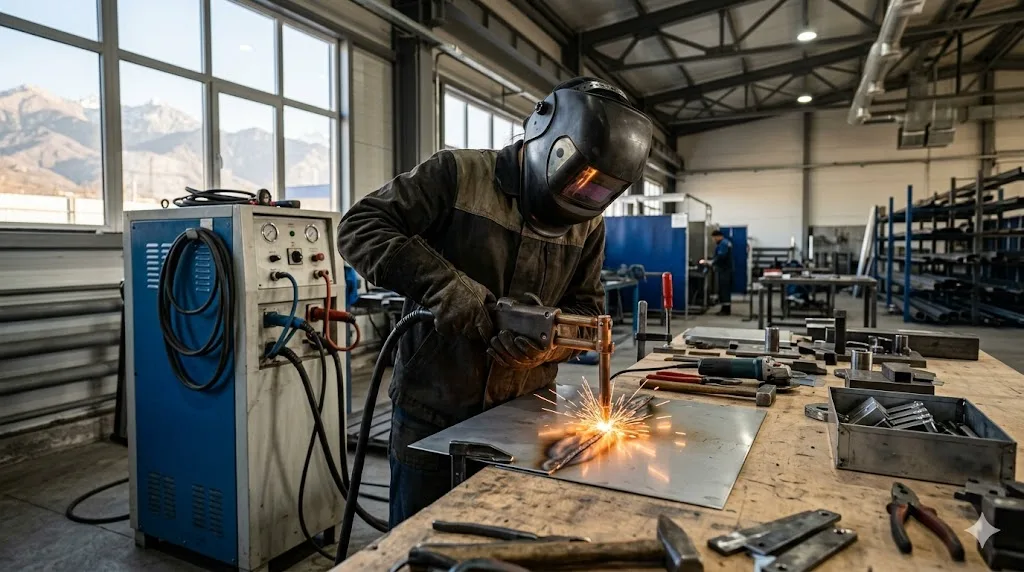
SPOT WELDING IN ALMATY
from 5 tg.* PER WELD POINT
We weld thin 0,5–3 mm sheet without burn-through or warping: spot from 5 ₸, deformation no more than 0,3 mm per meter, batch up to 500 parts — in 3–7 days.
 Sheet from 0,5 mm
without burn-through or marks Series of 20–500 pcs
in 3–7 days 3-year warranty
 Calculation from a drawing
in 1 hour
SPOT WELDING IN ALMATY
from 5 tg.* PER WELD POINT
We weld thin 0,5–3 mm sheet without burn-through or warping: spot from 5 ₸, deformation no more than 0,3 mm per meter, batch up to 500 parts — in 3–7 days.
Sheet from 0,5 mm
without burn-through or marks
Series of 20–500 pcs
in 3–7 days
3-year warranty
Calculation from a drawing
in 1 hour
SPOT WELDING IN ALMATY
from 5 tg.* PER WELD POINT
We weld thin 0,5–3 mm sheet without burn-through or warping: spot from 5 ₸, deformation no more than 0,3 mm per meter, batch up to 500 parts — in 3–7 days.
Sheet from 0,5 mm
without burn-through or marks
Series of 20–500 pcs
in 3–7 days
3-year warranty
Calculation from a drawing
in 1 hour
Types of welding
work we do
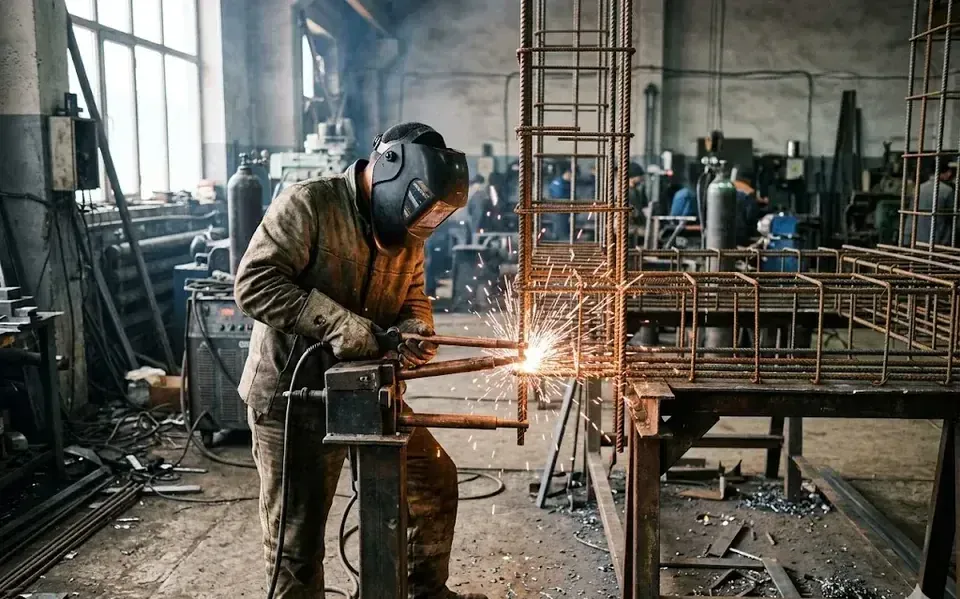
Welding of rebar cages
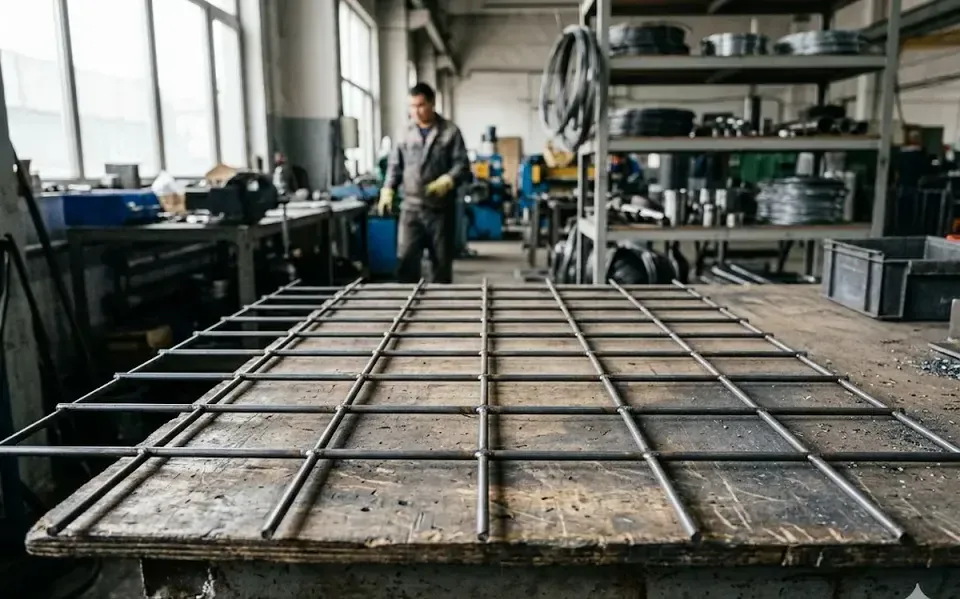
Manufacture of metal mesh
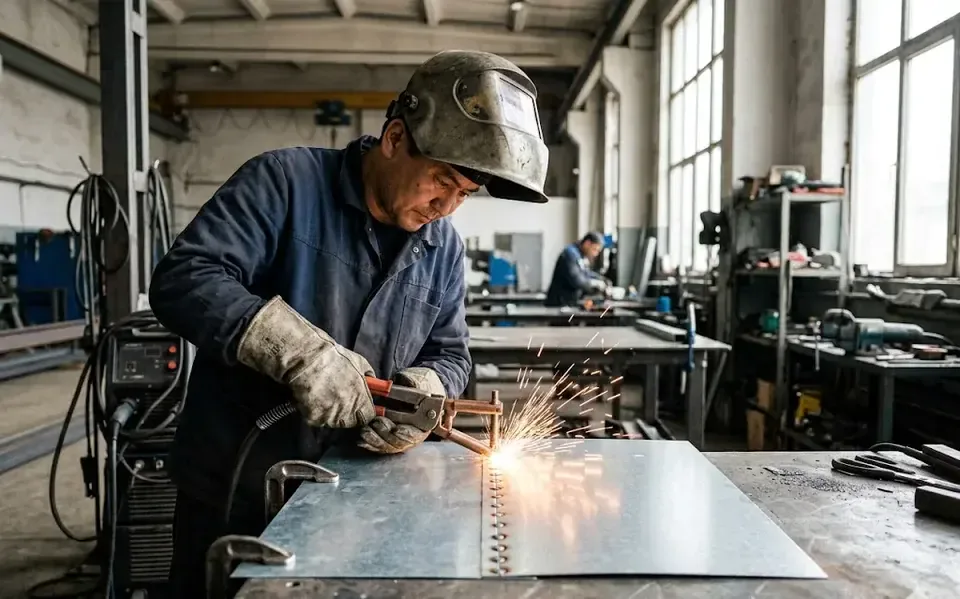
Sheet metal welding
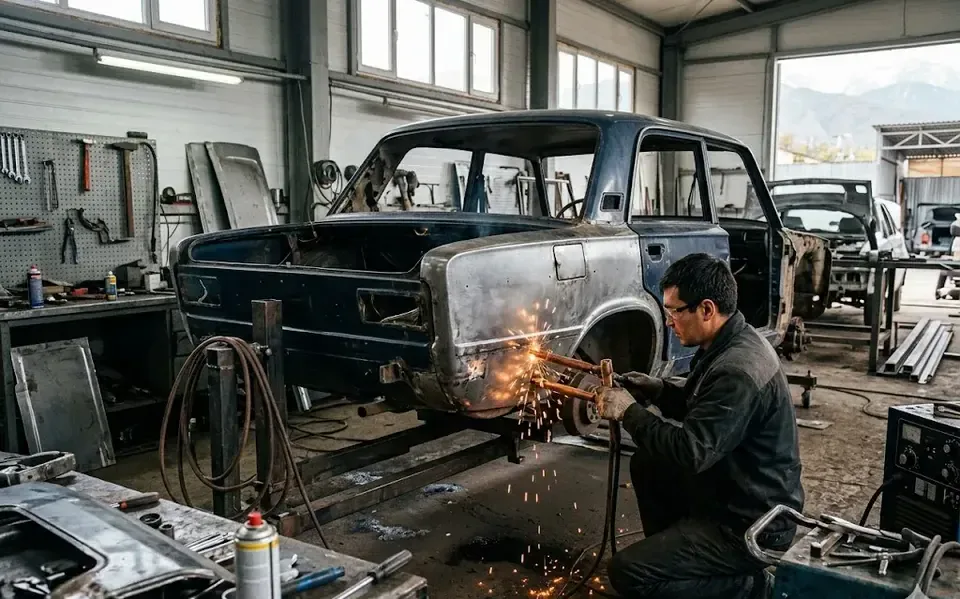
Car body repair
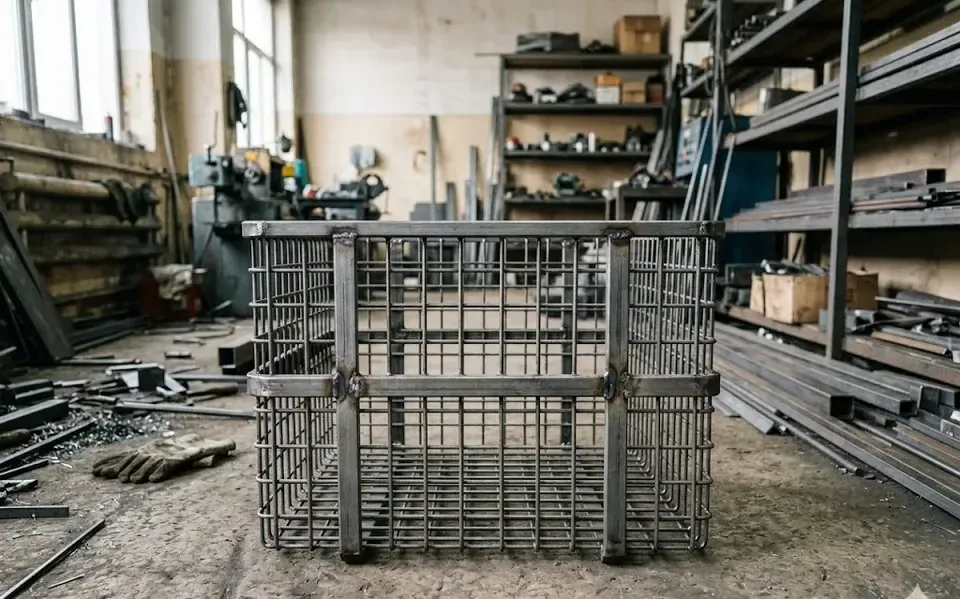
Manufacture of metal baskets
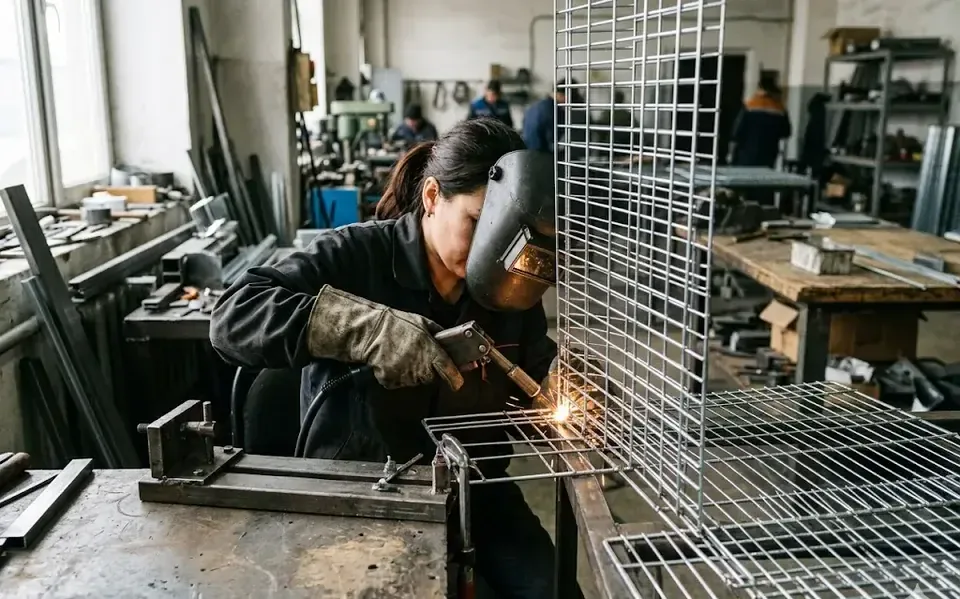
Welding of wire products
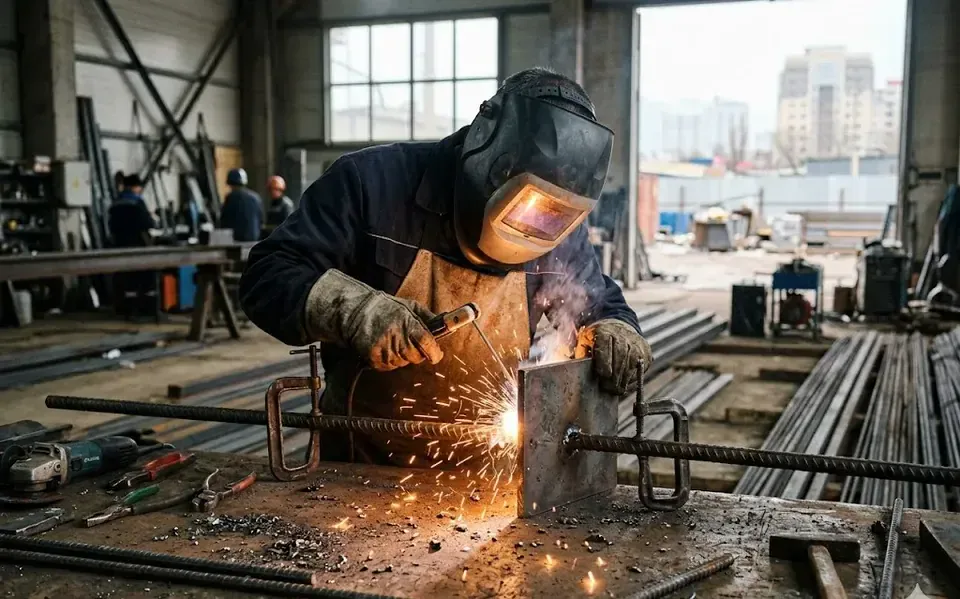
Welding embedded parts
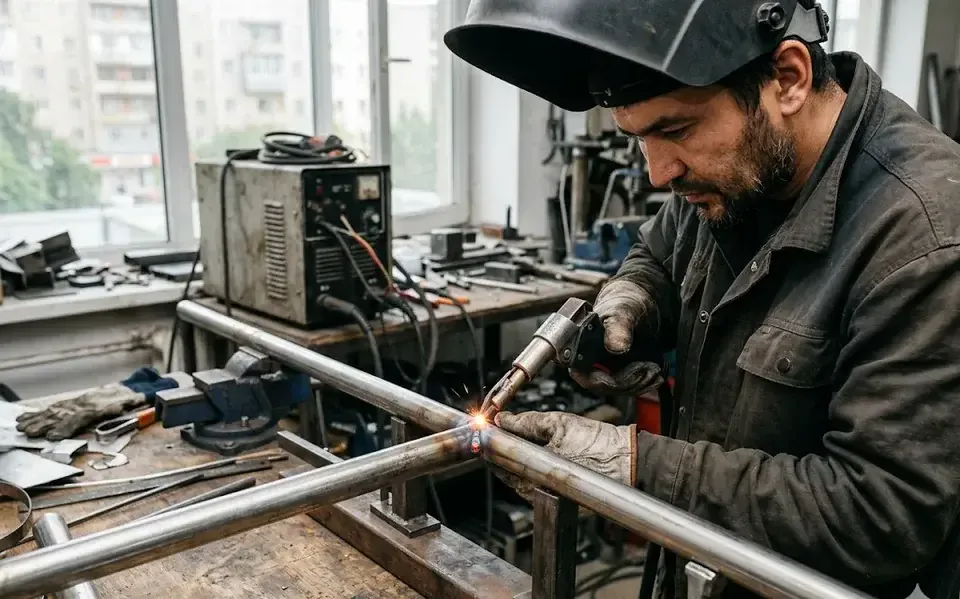
Welding of small-diameter pipes
Types of welding
work we do
Welding of rebar cages
Manufacture of metal mesh
Sheet metal welding
Car body repair
Welding of small-diameter pipes
Welding of wire products
Welding embedded parts
Manufacture of metal baskets
We will call you back within 3 minutes
Types of welding
work we do
Welding of rebar cages
Manufacture of metal mesh
Sheet metal welding
Welding of small-diameter pipes
Manufacture of metal baskets
Welding of wire products
Welding embedded parts
Car body repair
We will call you back within 3 minutes
Cost of RESISTANCE WELDING IN ALMATY
| SERVICE | COST | TIME |
|---|---|---|
| Adjusting the mode for the part (black steel) | from 3 000 ₸ | from 1 hour |
| Setup for galvanized or stainless steel | up to 10 000 ₸ | from 1 hour |
| Spot on a 0,5–1,5 mm sheet (ferrous metal) | from 5 ₸ | from 2 hours |
| Spot on a 2–3 mm sheet (ferrous metal) | from 10 ₸ | from 2 hours |
| Spot on 0,5–1,5 mm galvanised steel | from 7 ₸ | from 2 hours |
| Spot on 0,5–2 mm stainless steel | from 10 ₸ | from 2 hours |
| Simple part (up to 20 points, without tooling) | from 150 ₸ | from 1 day |
| Complex part (20–50 points, with tooling) | from 300 ₸ | from 3 days |
| Welded mesh 1×2 m made of 2 mm wire | from 2 500 ₸ | from 1 day |
| Sealed seam with a roller (per meter) | from 800 ₸ | from 1 day |
| Butt welding of 2–6 mm wire (per joint) | from 50 ₸ | from 1 hour |
Преимущества СВАРОЧНЫХ РАБОТ ОТ Profi‑Dom

Thin sheet without burn-through
Heating only between the electrodes: 0,5–1,5 mm sheet does not burn through, the front side stays clean

Adjuster with 10+ years of experience
We select the mode for the part based on test samples: current 5–20 kA, force and pulse time
Resistance welding machines
Spot, seam and butt welding: up to 60 spots per minute and identical spot core in a series

Batch up to 500 pcs. in 7 days
We fix the deadline in the contract: individual parts — from 2 hours, series from 1000 pieces — up to 14 days

Official 3 year warranty
Warranty on welded joints — in the contract, we check each batch by pull-testing 3–5 samples

Transparent price in KZT
Spot from 5 ₸, price is fixed after drawing approval, tooling is paid once
Преимущества СВАРОЧНЫХ РАБОТ ОТ Profi‑Dom
Heating only between the electrodes: 0,5–1,5 mm sheet does not burn through, the front side stays clean
Thin sheet without burn-through
We select the mode for the part based on test samples: current 5–20 kA, force and pulse time
Adjuster with 10+ years of experience
Spot, seam and butt welding: up to 60 spots per minute and identical spot core in a series
Resistance welding machines
We fix the deadline in the contract: individual parts — from 2 hours, series from 1000 pieces — up to 14 days
Batch up to 500 pcs. in 7 days
Warranty on welded joints — in the contract, we check each batch by pull-testing 3–5 samples
Official 3 year warranty
Spot from 5 ₸, price is fixed after drawing approval, tooling is paid once
Transparent price in KZT
We will call you back within 3 minutes
Преимущества СВАРОЧНЫХ РАБОТ ОТ Profi‑Dom
Heating only between the electrodes: 0,5–1,5 mm sheet does not burn through, the front side stays clean
Thin sheet without burn-through
We select the mode for the part based on test samples: current 5–20 kA, force and pulse time
Adjuster with 10+ years of experience
Spot, seam and butt welding: up to 60 spots per minute and identical spot core in a series
Resistance welding machines
We fix the deadline in the contract: individual parts — from 2 hours, series from 1000 pieces — up to 14 days
Batch up to 500 pcs. in 7 days
Warranty on welded joints — in the contract, we check each batch by pull-testing 3–5 samples
Official 3 year warranty
Spot from 5 ₸, price is fixed after drawing approval, tooling is paid once
Transparent price in KZT
We will call you back within 3 minutes
HOW WE WORK
- 01.Discussion and estimate
You send a drawing, sketch or photo of the part — within 1 hours we will calculate the price per point, part or batch.
- 02.Test point
We weld a test sample from your metal and check the 3–8 mm spot core diameter by pull-out test.
- 03.Tooling and jig
For a series of 50 parts, we make a jig so that the pitch and position of the spots match on each part.
- 04.Approval of the contract
We fix in the contract the unit price, batch deadline, and a 3-year warranty on welded joints.
- 05.Metal preparation
We degrease the parts, remove rust and paint with a brush — dirt weakens the point at 40–60%.
- 06.Batch welding
We weld at a tuned mode up to 60 points per minute — the point core is the same throughout the batch.
- 07.Quality control
Every 100 parts we take samples for pull-out testing and check the dent — no deeper than 30% of the thickness.
- 08.Batch issue
We hand over finished parts at the workshop or deliver them across Almaty; large series are shipped in stages.
Find out the cost of resistance welding for your parts in 1 minutes
catalogue of completed welding work



FIND OUT THE COST OF WELDING WORK FOR YOUR PROJECT
Leave a request and we will contact you within 3 minutes
Thank you! We will contact you within 3 minutes.
By clicking the button you agree to the terms of the
Or call us at
+7 (707) 068-88-68Privacy PolicyFIND OUT THE COST OF WELDING WORK FOR YOUR PROJECT
Leave a request and we will contact you within 3 minutes
Thank you! We will contact you within 3 minutes.
By clicking the button you agree to the terms of the
Or call us at
+7 (707) 068-88-68Privacy PolicyFIND OUT THE COST OF WELDING WORK FOR YOUR PROJECT
Leave a request and we will contact you within 3 minutes
Thank you! We will contact you within 3 minutes.
By clicking the button you agree to the terms of the
Or call us at
+7 (707) 068-88-68Contact welding in Almaty: spot, seam, and butt welding at PROFI-DOM
Contact welding in Almaty is the joining of metals by current and pressure, without an arc, filler or gas; in the PROFI-DOM workshop we weld 0.5–3 mm sheet, wire, mesh and serial parts according to drawings using spot, seam, butt and projection welding. Price — from 5 ₸ per spot on 0.5–1.5 mm black sheet, mode setup — from 3000 ₸. Warranty on welded joints — 3 years.
Published: 6 · Updated: 29
What resistance welding is and how it differs from arc welding
We explain the principle of this method — current plus pressure, without an arc or filler — and why it does not burn through thin sheet, unlike arc and TIG welding.
The principle of contact welding — current and pressure, no arc
This method joins metals by passing current through the contact point while clamping with electrodes - without an arc, filler material or shielding gas. We use this principle on our own equipment: welding current 2–20 kA, clamping force 100–500 kg, pulse duration 0,04–0,5 seconds. The metal in the contact zone heats up to 900–1000 °C, becomes plastic, and under the pressure of the electrodes a solid nugget 3–8 mm in diameter forms. Unlike arc processes, there is no spatter and no ultraviolet radiation, and the thermal effect is limited to the weld zone within a radius of 1–2 mm from the spot. The absence of an arc means heat does not spread to adjacent areas - so thin sheet is not burnt through or distorted, and the face side remains mark-free.
Why this method does not burn through thin metal
Thin 0,5–1,5 mm sheet is not burned through in resistance welding because the heating is strictly localised in the contact zone of the electrodes and lasts a fraction of a second — the heat does not have time to spread beyond the spot nugget. For each thickness we set an individual mode: on 0,8 mm steel — current 4 kA, pulse 0,08 s, force 150 kg; on 1,2 mm — current 6 kA, pulse 0,12 s, force 250 kg. A temperature of 900–1000 °C is reached only inside the nugget, while the edges of the part stay cold — sheet deformation does not exceed 0,1–0,3 mm per metre. With arc welding, the arc temperature of 5000–7000 °C burns through sheet up to 1,5 mm in a second, and the thermal effect extends 10–30 mm from the weld. This method gives local heating without the risk of burn-through — this is the main advantage for 0,5–1,5 mm sheets, especially in serial parts with frequent spots.
Comparison of resistance and arc welding for thin sheet
| Parameter | Spot welding | Arc (MMA/MIG) | Argon (TIG) |
|---|---|---|---|
| Heating temperature | 900–1000 °C locally | 5000–7000 °C arc | 5000–7000 °C arc |
| Burn-through of 0,8 mm sheet | No | Yes | Yes, if there is an error |
| Deformation per 1 m of sheet | 0,1–0,3 mm | 2–5 mm | 1–3 mm |
| Welding speed | Up to 60 points/min | 10–20 cm/min | 5–15 cm/min |
| Consumables | Copper electrodes | Electrodes/wire + gas | Tungsten electrode + gas |
| Welder qualification | Medium | Medium | High |
Types of resistance welding — spot, seam, butt and projection
We will look at the four main types — spot, seam, butt and projection — and show which method suits your task.
Spot welding — for sheets, mesh and batch parts
Spot welding is the main type: two copper electrodes clamp the parts, pass a current pulse, and a nugget with a diameter of 3–8 mm forms in the contact zone. Using this method, we join sheet metal of 0.5–3 mm, weld meshes from wire of 1–6 mm, attach furniture fittings, and make serial parts. Productivity is up to 60 spots per minute on simple parts, and 15–25 spots on complex configurations with repositioning. The nugget diameter is regulated by current and force: a 0.8 mm sheet requires 4–5 kA and 150–200 kgf, a 2 mm sheet — 8–10 kA and 300–400 kgf. The spot pitch is selected according to the load: on load-bearing structures — 20–30 mm, on decorative elements — 50–80 mm. In serial production, we use jigs so that the pitch is the same on every part.
Seam (roller) welding — for sealed seams
Seam welding is spot welding with rotating roller electrodes: parts pass between the rollers, and the spots are applied with overlap, forming a hermetic seam. Using this method we make tanks, filter housings, air ducts, and casings from 0.5–2 mm sheet. The seam withstands pressure up to 2–3 atm without subsequent sealing, and the speed of 1–4 m/min is 5–10 times higher than argon welding of the same seam. The current is selected according to thickness: on 1 mm sheet — 6–8 kA, on 1.5 mm — 10–12 kA, the force on the rollers — 200–350 kgf. Roller electrodes require periodic dressing: after 50–100 meters of seam, wear appears on the copper wheels and the seam quality drops.
Butt and projection welding — for wire, rod and parts with projections
Butt welding joins wire, rod and strip end to end: the parts are clamped in the electrodes, heated to a plastic state and upset. By resistance butt welding we weld wire 1–8 mm for meshes, baskets and frames; by flash butt welding — rod up to 16 mm for reinforcement structures. Projection welding joins parts with pre-formed projections — it is suitable for attaching M6 nuts, studs and brackets to sheet at a current of 12–15 kA and a pulse time of 0.2–0.4 seconds. For butt welding it is important that the ends are even and cleaned: a misalignment of more than 1 mm over a 10 mm cross-section reduces the weld strength by 30–50%. Projection welding gives precise positioning of the part thanks to the projections, so it is often used for serial fastening.
Table of resistance welding types — which to choose
| Welding type | What it joins | Typical products | Weld tightness | Speed |
|---|---|---|---|---|
| Spot | Sheets, meshes, fittings | Enclosures, brackets, meshes, furniture | No | Up to 60 points/min |
| Seam (roller) | Overlapping sheets | Tanks, air ducts, casings | Yes (up to 3 atm) | 1–4 m/min |
| Resistance butt | Wire, rod, strips | Meshes, cages, baskets | No | 1–3 welds/min |
| Flash butt | Rod, rebar up to 16 mm | Rebar cages, bars | No | 0.5–1 weld/min |
| Relief | Parts with protrusions | Nuts, studs, brackets to the sheet | No | Up to 30 welds/min |
Which metals and thicknesses we weld by resistance welding
We will explain which metals and thicknesses are welded by resistance welding — from thin stainless steel to galvanised steel and nichrome — and how to prepare the part.
Sheet metal 0.5–3 mm — the main range
Contact welding reliably welds sheet metal with a thickness of 0.5–3 mm — this is our main working range. For 0.5 mm sheet, we use a current of 2–3 kA, pulse time 0.04–0.06 s, force 80–120 kg; for 3 mm — current up to 15 kA, time 0.3–0.5 s, force 400–500 kg. With different package thicknesses (e.g., 0.8 mm + 2 mm), the mode is set according to the thinner sheet — otherwise the thin part will burn through. Thickness above 3 mm requires switching to MIG/MAG arc welding — machines with current from 30 kA are rare and cost several times more. For 0.3–0.4 mm sheet, this method is possible, but precise mode adjustment and clean electrodes are needed — the slightest overheating causes burn-through.
Galvanised sheet — welding without damaging the coating
Galvanised sheet is welded by resistance welding without damaging the zinc coating — with the correct mode the zinc does not burn off, and corrosion protection remains in the spot area. For 0.5–1.5 mm galvanised steel we use a current 10–15% lower than for black sheet and a short pulse (0.04–0.08 s) so that the zinc does not evaporate. After welding, the spot area does not require additional anti-corrosion treatment — unlike arc welding, where the zinc burns off within a radius of 5–15 mm from the seam and a corrosion centre forms. That is why ventilation ducts, casings and housings made of galvanised sheet are welded in exactly this way.
Thin stainless steel, wire, nichrome — special materials
0.5–2 mm stainless steel is welded without burn-through — it is important to set the mode taking into account the higher resistivity of stainless steel. For it, we use a current 20–30% lower than for black sheet and a shorter pulse — otherwise overheating leads to seam corrosion. We weld 1–6 mm wire by butt welding — for meshes, baskets and rebar frames. Nichrome and thermocouples are a special case: we weld by butt welding with reduced current so as not to burn the alloy. For nichrome, it is important not to exceed 1100 °C — when overheated, the alloy loses its properties. We use a mode with pulse time control up to 0.1 s and visual color control in the welding zone.
Preparing the part for spot welding — is cleaning required
For resistance welding, cleaning is not always required: clean rolled sheet without rust and oil is welded without preparation. If there is a thick layer of scale, rust or paint on the metal — cleaning with a brush or grinding wheel is mandatory, otherwise the quality of the spot drops by 40–60% due to high contact resistance. Galvanized and stainless steel are welded without cleaning — degreasing is sufficient. Oil and moisture on the surface lead to spatter and a weak nugget — the spot easily tears off under load. For serial parts, degreasing in a bath or wiping is a standard operation that takes 5–10 seconds per part.
Batch production — tooling, setup, quality control
We will explain how serial production by resistance welding is organised — tooling and jigs, setting the mode for the part, quality control of every spot and ensuring repeatability within the batch.
Tooling and jigs — identical parts in series
For serial parts, PROFI-DOM manufactures tooling and jigs — devices that hold the workpiece in one position and set the pitch of the spots. A jig guarantees that every part in a batch of 100, 500 or 1000 pieces will be welded identically: the same spot coordinates, the same pitch, the same electrode indentation depth. The cost of the jig is included in the setup and pays off on a batch of 50–100 parts or more. For simple products — brackets, angles, plates — tooling is made in 1–2 hours from 3 mm steel; for complex assemblies with multiple welding planes, the jig is designed to the drawing and assembled from aluminum plates on adjustable stands. Without a jig, the deviation of spot position reaches 2–5 mm from part to part — the jig reduces it to 0.3–0.5 mm, which is critical for furniture hardware with a tolerance of ±0.5 mm on spot pitch.
Setting the parameters for the part — current, force, time
Each new part requires adjusting the welding mode for the specific thickness, material, and configuration. Our setup technician performs the adjustment — he welds test samples, checks the spot core diameter by the pull-out method, and corrects the parameters. The current is set in the range of 5–20 kA, the clamping force — 150–400 kgf, the pulse time — 0.08–0.4 seconds depending on the stack thickness. The setup cost is from 3000 ₸ for a simple low-carbon steel part up to 10 000 ₸ when welding galvanized or stainless steel. A properly configured mode ensures a stable spot core on all parts of the batch — without setup, the variation in spot strength reaches 50%, and some products will be rejected at the pull-out stage.
Weld quality control — peel test, nugget diameter, repeatability
We check the quality of a resistance welding spot by the pull-out method: we weld a test sample, tear off the spot and measure the nugget diameter — it should be 3–8 mm depending on the thickness. We carry out inspection on every batch: out of the first hundred parts we take 3–5 samples for pull-out testing; if the nugget is smaller than the norm, we adjust the mode. For serial parts we keep an inspection log: we record the nugget diameter, the presence of cracks and the indentation depth. For batches of 500 pieces or more, we additionally carry out spot checks every 100 parts — in case the electrodes have worn out or the tooling has shifted. The permissible electrode indentation depth is no more than 30% of the part thickness, otherwise a stress concentrator appears. If the spot is oval or offset, the part was skewed or the electrode is worn, and the tooling needs to be straightened.
Minimum batch and lead times for serial orders
The minimum batch for a serial order using contact welding is from 20–50 parts, depending on complexity. For simple ones — brackets, angles, plates — from 50 pieces; for complex ones with tooling — from 20. The production time for a batch of up to 500 parts is 3–7 working days, including setup; large series (1000+ parts) — up to 14 days with phased shipment. If you need 5–10 parts — this is piece production: we calculate the price per spot — from 5 ₸ for sheet steel up to 1.5 mm plus setup from 3000 ₸. For a serial order, the price per spot is reduced by 20–40%, because tooling and setup are distributed across the entire batch.
Resistance welding price — per spot, part, batch
Let's break down what makes up the cost of contact welding for Almaty customers — from a single spot to a serial batch — and how not to overpay. In the workshop we charge per spot, per part or per series, and we fix the price after the drawing is approved.
Price per spot — from 5 KZT for a simple part
The price per point at PROFI-DOM is from 5 ₸ on 0.5–1.5 mm black steel without tooling (including electricity and electrode wear). For AISI 304 stainless steel or 2–3 mm sheet, the rate is from 10 ₸ per point, and on galvanised steel — from 7 ₸. Up to 50 points, per-point calculation is more cost-effective, but if there are more than 200 points, an estimate per part is more advantageous: the rate per point is reduced by 15–30%, otherwise the overpayment will amount to up to a third of the budget.
Price per part and per batch — calculation examples
For serial parts, the price is calculated per piece: we add up the cost of all points, setup, tooling (jig) and material if it is provided by the workshop. Example — a part made of 1 mm sheet with 20 points: from 150 ₸ per piece for a batch of 100 units; welded mesh made of 2 mm wire, cell 50×50 mm, size 1×2 m — from 2500 ₸ per piece for a run of 10 pieces. Tooling, jig and mode setup are paid one-time and distributed over the entire batch: when ordering from 500 parts, they add no more than 5–10 ₸ to the unit price, and the part itself comes out 30–40% cheaper than in a batch of 50 pieces.
Price list table — main types of work
| Work / product | Welding type | Unit | Price from, ₸ |
|---|---|---|---|
| Spot on a 0.5–1.5 mm sheet (ferrous metal) | Spot | 1 spot | 5 |
| Spot on a 2–3 mm sheet (ferrous metal) | Spot | 1 spot | 10 |
| Spot on 0.5–2 mm stainless steel | Spot | 1 spot | 10 |
| Spot on 0.5–1.5 mm galvanised steel | Spot | 1 spot | 7 |
| Simple part (up to 20 points, without tooling) | Spot | 1 part | 150 |
| Complex part (20–50 points, with tooling) | Spot | 1 part | 300–800 |
| Welded wire mesh 2 mm, 1×2 m | Spot | 1 pcs | 2500 |
| Sealed seam (0.8–1.5 mm sheet) | Seam | 1 metre of weld | 800 |
| Butt joining of wire 2–6 mm | Butt | 1 joint | 50 |
| Butt joining of strip 10×2 mm | Butt | 1 joint | 120 |
The prices in the table are for labor only, excluding the cost of metal. We calculate the exact cost based on a drawing or sketch — the calculation takes about an hour.
Limitations of spot welding and ordering by drawing in Almaty
This method is powerful, but not universal. Let us look at which materials and parts cannot be welded this way, which are welded regularly, and how to order work from a drawing.
Which metals and thicknesses are unsuitable for resistance welding
Aluminium and its alloys cannot be welded by this method — due to their high thermal conductivity and tough oxide film, the joint turns out unstable with burn-throughs. We also do not accept ferrous steel sheets thicker than 3 mm: they require machines with a current from 30 kA and a clamping force from 5 kN — this is beyond the standard equipment available on the local market. Parts with access to the welding point from one side only are another limitation: resistance welding needs two electrodes on both sides, otherwise the current will not close through the joint zone. Galvanising thicker than 1,5 mm causes zinc burn-off and loss of corrosion resistance of the seam, so for such thicknesses a semi-automatic welder is better. If you need to weld aluminium or thick metal, consider TIG or MIG/MAG welding, while for thin sheet up to 3 mm this method remains the fastest and most economical.
Common products we weld in Almaty
Most often at PROFI-DOM, contact welding is used to make welded meshes from 1–4 mm wire with a cell from 10×10 to 100×100 mm — these are grilles for facades, aviaries, fences and reinforcement frames. Baskets and containers from 0,5–2 mm sheet — for sorting and storage in production, and racks and shelves from 0,8–2 mm sheet — for commercial equipment and warehouse systems. Frames and carcasses for furniture (beds, sofas) and advertising structures (light boxes, stands) require neat spots without marks on the front side — this is our specialty. Furniture fittings — hinges, corners, brackets — come in series from 100 pieces, and we make tooling for the identity of each spot. We also weld repair inserts for car bodies and ventilation elements — ducts, adapters, flanges from galvanized steel up to 1,5 mm. If your part is serial from 50 pieces, we manufacture a jig that speeds up the process and guarantees repeatability — for single orders tooling is not needed, we will weld according to a drawing or sample.
How to order resistance welding from a drawing in Almaty
We perform contact welding in Almaty at our workshop and consult on complex assemblies on-site. For a quote we need a drawing or sketch of the part indicating the material, thickness, dimensions and number of spots — based on it we calculate the cost within an hour and give you the timeline. If there is no drawing, a photo or the sample itself will do: our welders will select the mode using a test spot and determine the complexity of the tooling. For serial parts from 50 pieces, the production time is from 3 working days; for one-offs, from two hours. Payment — in cash or via Kaspi. The more detailed the drawing, the more accurate the quote — tolerances for spot positions (±1 mm) and requirements for the weld appearance (whether electrode indentation is acceptable) matter, as they affect the complexity of the tooling and the final price. For standard products such as mesh or baskets, a drawing is not required — just provide the cell dimensions, wire diameter and overall dimensions, and we will prepare a commercial offer within an hour.
Conclusion
We have collected the main points about contact welding — from types of joints to cost calculation and limitations of the method. Here are the key theses for decision-making.
Key takeaways
- Resistance welding is a fast and economical method for sheets up to 3 mm of ferrous metal, stainless steel and galvanised steel that does not burn through thin material.
- Spot welding suits most parts, seam welding — hermetic seams, butt welding — joining wire and strip end to end.
- The price is calculated per point, per part or per series — the larger the batch, the lower the unit cost: setup and tooling are divided across the entire batch.
- Aluminium, sheets thicker than 3 mm and parts with one-sided access cannot be welded by this method — they require arc or argon methods.
- You can order the work to a drawing, sketch or sample — the cost estimate takes about an hour, not a day.