
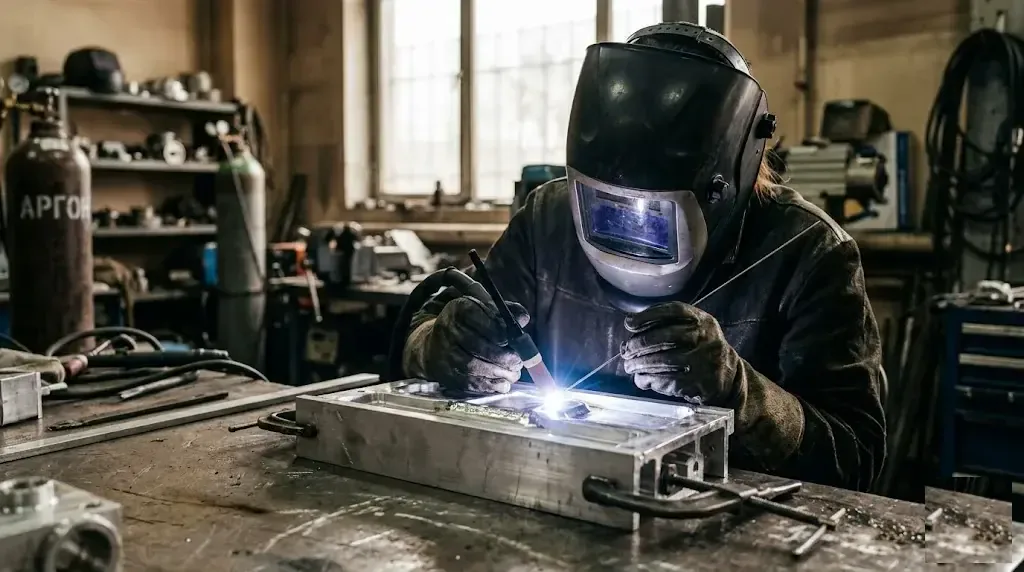
ARGON WELDING in ALMATY
from 7 000 KZT* per 1 METRE
Durable and high-quality argon welding, thanks to compliance with high quality standards and the high qualifications of our staff.
 Joints to GOST 5264-80
Installation from 1 day Arrival within 45 minutes
Installation from 1 day 3-year warranty
 Prices from 7000 ₸
Contract and estimate

ARGON WELDING in ALMATY
from 7 000 KZT* per 1 METRE
Durable and high-quality argon welding, thanks to compliance with high quality standards and the high qualifications of our staff.
Joints to GOST 5264-80
Installation from 1 day
Arrival within 45 minutes
Installation from 1 day
3-year warranty
Prices from 7000 ₸
Contract and estimate
ARGON WELDING in ALMATY
from 7 000 KZT* per 1 METRE
Durable and high-quality argon welding, thanks to compliance with high quality standards and the high qualifications of our staff.
Joints to GOST 5264-80
Installation from 1 day
Arrival within 45 minutes
Installation from 1 day
3-year warranty
Prices from 7000 ₸
Contract and estimate
ARGON WELDING SERVICES
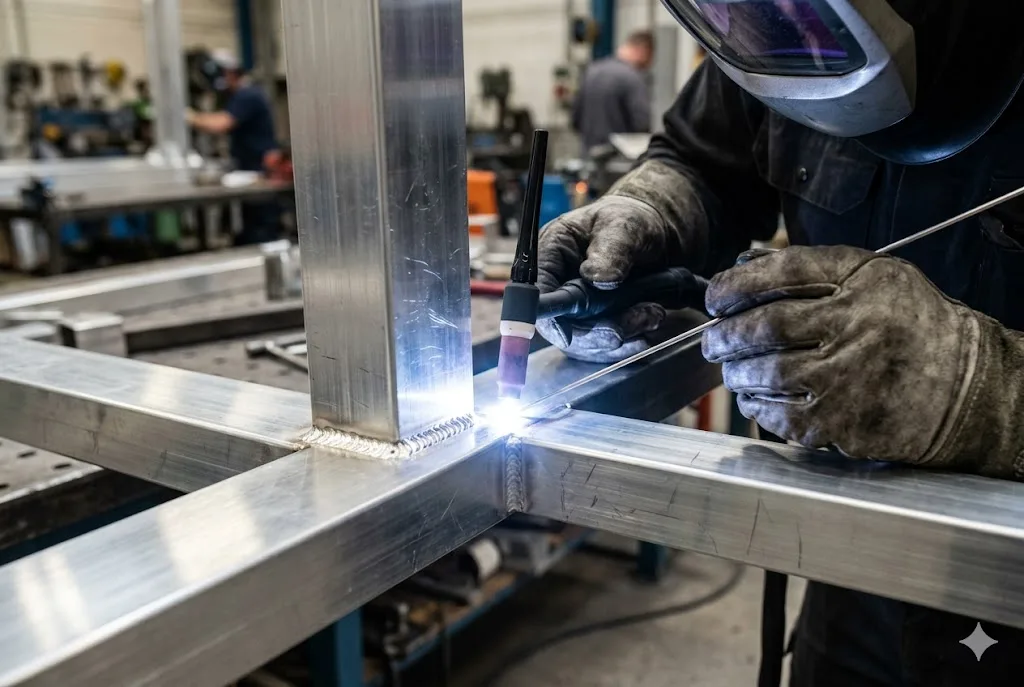
Welding of aluminium structures
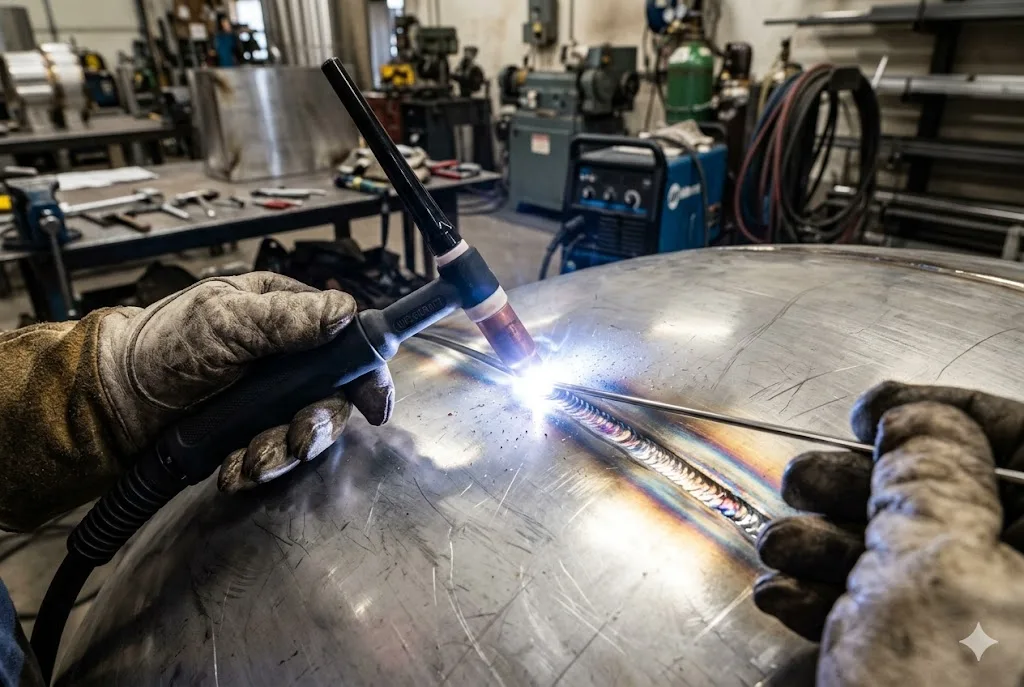
Repair of stainless steel items
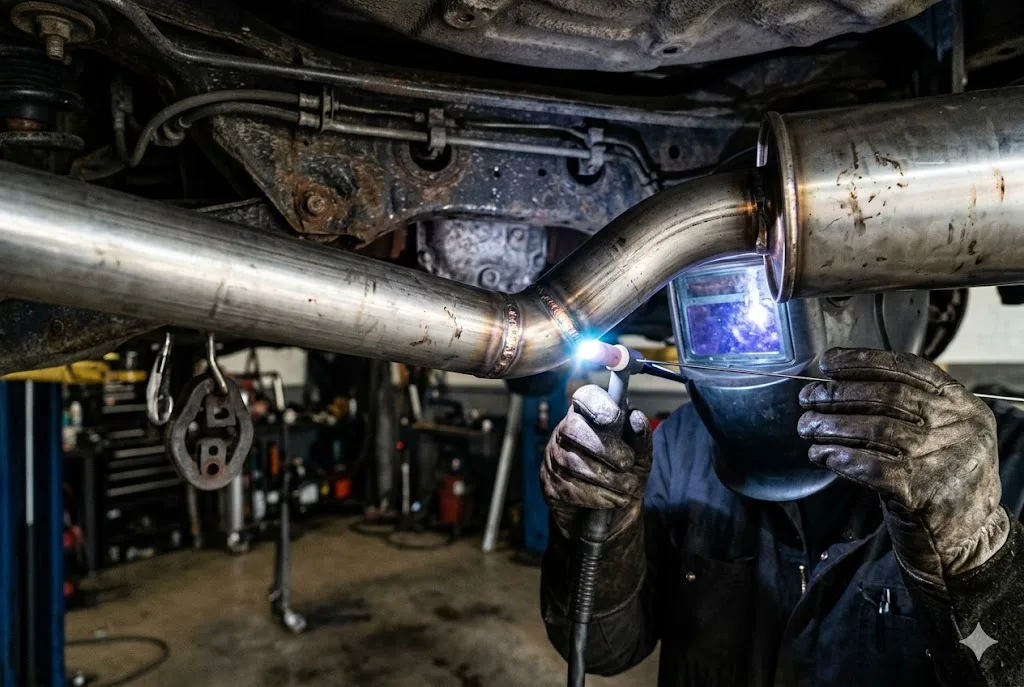
Muffler and exhaust system welding
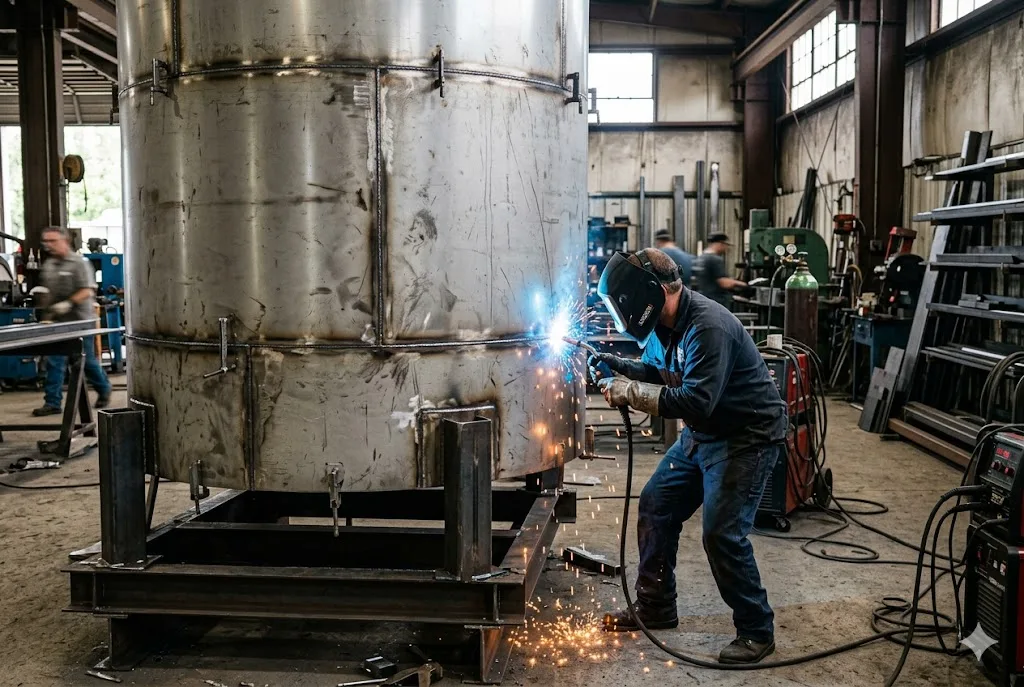
Manufacture of metal tanks
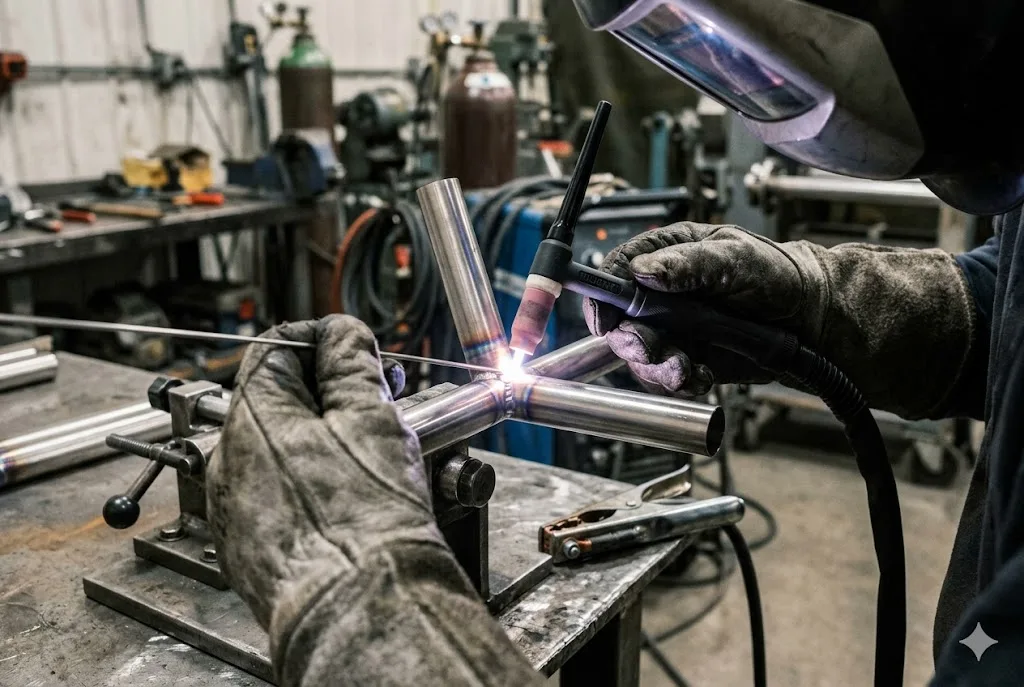
Thin-walled pipe welding
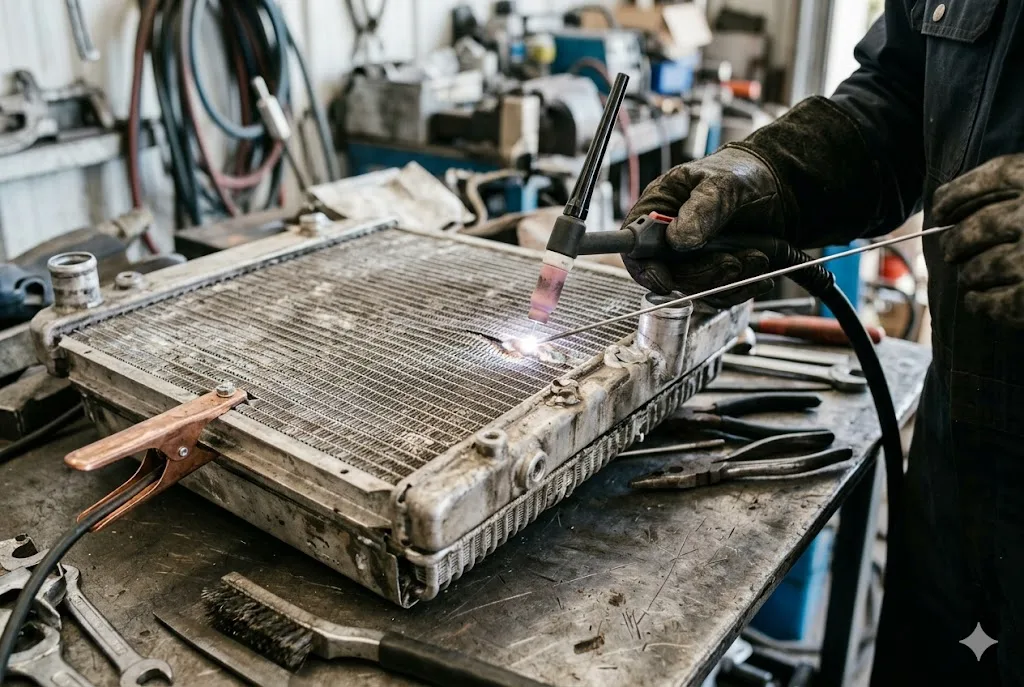
Repair of radiators and heat exchangers
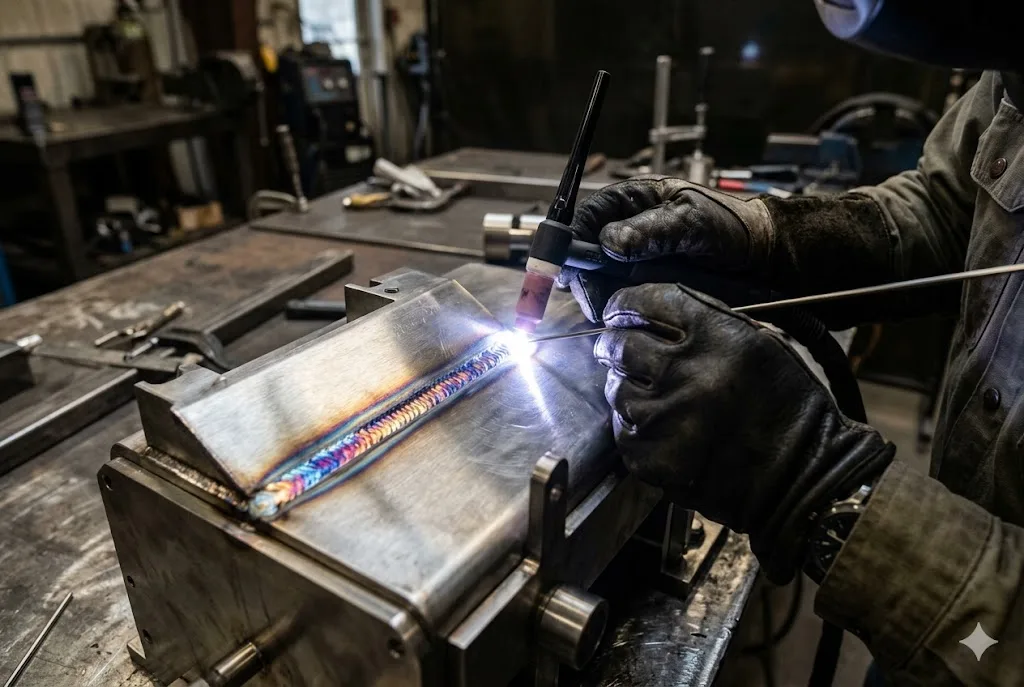
Titanium part welding
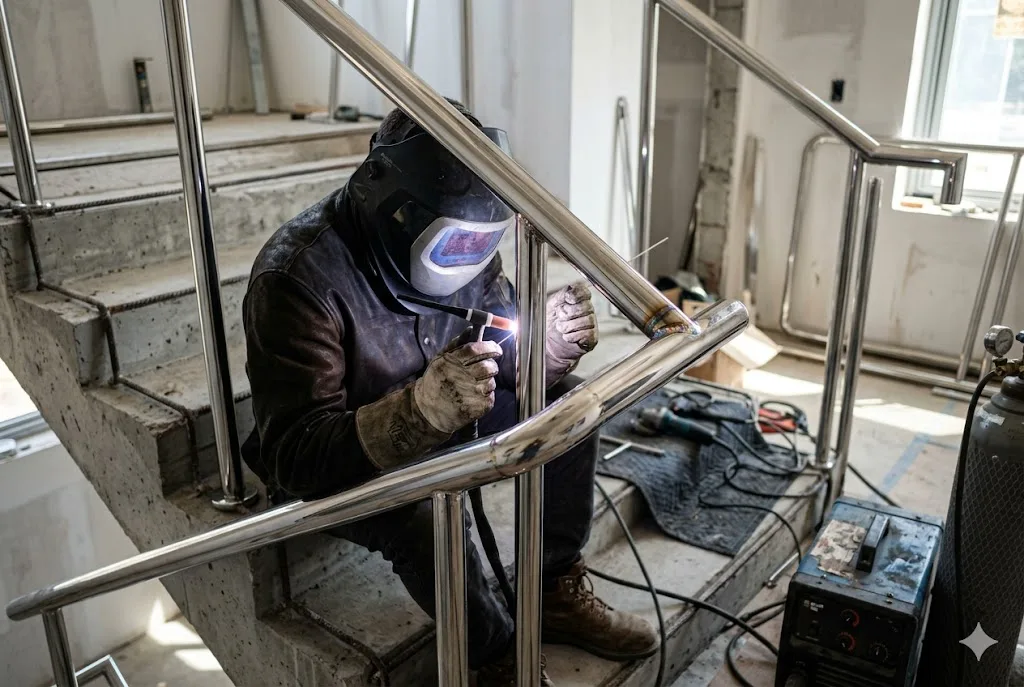
Manufacture of railings and handrails
ARGON WELDING SERVICES
Welding of aluminium structures
Thin-walled pipe welding
Repair of stainless steel items
Repair of radiators and heat exchangers
Muffler and exhaust system welding
Manufacture of metal tanks
Titanium part welding
Manufacture of railings and handrails
We will call you back within 3 minutes
ARGON WELDING SERVICES
Welding of aluminium structures
Thin-walled pipe welding
Repair of stainless steel items
Repair of radiators and heat exchangers
Muffler and exhaust system welding
Manufacture of metal tanks
Titanium part welding
Manufacture of railings and handrails
We will call you back within 3 minutes
ARGON WELDING PRICES IN
ALMATY
| SERVICE | COST | TIME |
|---|---|---|
| On-site visit by a technician across the city (Almaty) | from 3 000 ₸ | from 1 hour |
| Minimum order value | from 5 000 ₸ | — |
| Welding of aluminium structures (per metre of seam) | from 2 500 ₸ | from 1 hour |
| Welding stainless steel (per metre of weld) | from 3 000 ₸ | from 1 hour |
| Welding copper pipes (per joint) | from 1 500 ₸ | from 30 minutes |
| Welding titanium parts (per item) | from 5 000 ₸ | from 2 hours |
| Repair of radiators and heat exchangers (per point) | from 3 500 ₸ | from 1 hour |
| Gas cylinder replacement (argon) | from 2 000 ₸ | from 30 minutes |
| Grinding and polishing of the weld | from 1 -00 ₸ | from 30 minutes |
| Urgent call-out (within 2 hours) | from 5 000 ₸ | from 1 hour |
Advantages of argon welding with Profi-Dom

Neat seams with no defects
We follow the welding technology and clean every seam so that the structure is strong and attractive

Certified craftsmen with experience
All welders have confirmed qualifications and regularly undergo skills assessments

Professional equipment
We work with modern inverter machines that provide a stable arc and precise control

Meeting the agreed deadlines
We complete orders from 1 day, fix the completion date in the contract and do not drag out the process

An official warranty on the work
We give a warranty of up to 3 years on all welded joints, set out in the closing documents

Transparent price in KZT
The cost is fixed in the estimate before work begins, with no hidden mark-ups or extra charges
Advantages of argon welding with Profi-Dom
We follow the welding technology and clean every seam so that the structure is strong and attractive
Neat seams with no defects
All welders have confirmed qualifications and regularly undergo skills assessments
Certified craftsmen with experience
We work with modern inverter machines that provide a stable arc and precise control
Professional equipment
We complete orders from 1 day, fix the completion date in the contract and do not drag out the process
Meeting the agreed deadlines
We give a warranty of up to 3 years on all welded joints, set out in the closing documents
An official warranty on the work
The cost is fixed in the estimate before work begins, with no hidden mark-ups or extra charges
Transparent price in KZT
We will call you back within 3 minutes
Advantages of argon welding with Profi-Dom
We follow the welding technology and clean every seam so that the structure is strong and attractive
Neat seams with no defects
All welders have confirmed qualifications and regularly undergo skills assessments
Certified craftsmen with experience
We work with modern inverter machines that provide a stable arc and precise control
Professional equipment
We complete orders from 1 day, fix the completion date in the contract and do not drag out the process
Meeting the agreed deadlines
We give a warranty of up to 3 years on all welded joints, set out in the closing documents
An official warranty on the work
The cost is fixed in the estimate before work begins, with no hidden mark-ups or extra charges
Transparent price in KZT
We will call you back within 3 minutes
HOW WE WORK
- 01.Discussion and estimate
We consult you free of charge by phone or messenger and prepare a transparent estimate with no hidden charges.
- 02.Measurement visit
We visit the site at a time convenient for you to take precise measurements and account for the specifics of the location.
- 03.Creating a sketch
We develop a detailed drawing of the future structure so that you can clearly see the result before the work begins.
- 04.Approval of the contract
We set out in the contract the final price, clear deadlines and warranty obligations for all types of work.
- 05.Metal preparation
We purchase certified rolled metal of the required grades and thicknesses, guaranteeing the strength and durability of the product.
- 06.Professional welding
We make all the welds on modern equipment, ensuring reliable and neat-looking joints.
- 07.Anti-corrosion protection
We treat the metal with primer and paint, protecting the structure from corrosion and extending its service life.
- 08.Delivery and installation
We deliver the finished product to your address in Almaty and install it on your site strictly according to the design.
Find out the cost and timeframe of welding work in 1 minute
catalogue of completed welding work
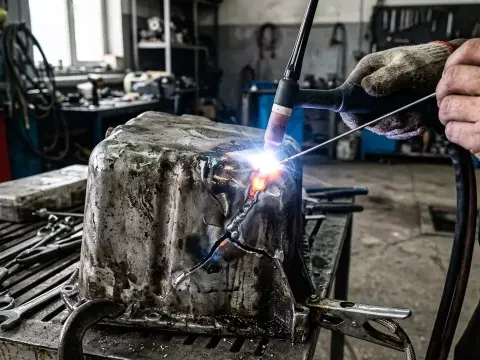 Welding a punctured aluminium crankcase sump in the Alatau district
The repair took 2 hours, the cost was 18 000 KZT. The part was fully restored without the need for an expensive replacement.
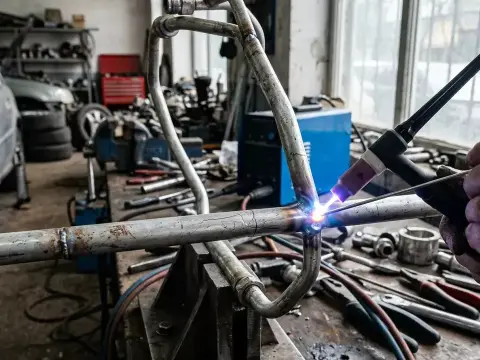 Car air conditioner pipe repair for service stations in the Turksib district
Completed in 1 hour, price — 8 000 ₸. The system successfully passed pressure testing.
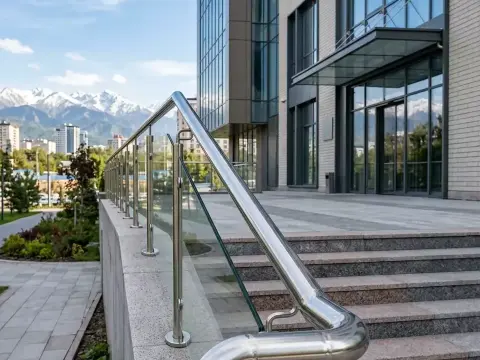 Manufacture of stainless steel railings for the entrance area of a business centre in Almaly district
The project took 3 days, the budget — 145 000 KZT. The client received a premium appearance without the slightest trace of welding.
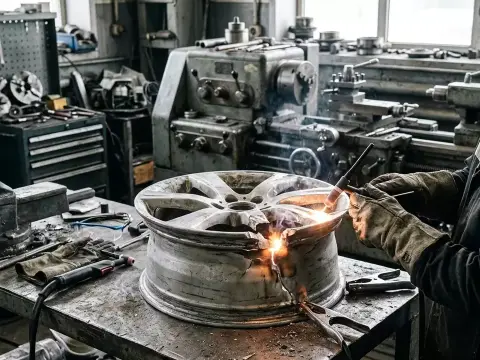 Restoring the geometry of a cast wheel rim in Zhetysu district
The turnaround time is 4 hours, the price — 22 000 KZT. After machining on a lathe, the disc returned to perfect balance.

FIND OUT THE COST OF WELDING WORK FOR YOUR PROJECT
Leave a request and we will contact you within 3 minutes
Thank you! We will contact you within 3 minutes.
By clicking the button you agree to the terms of the
Or call us at
+7 (707) 068-88-68Privacy PolicyFIND OUT THE COST OF WELDING WORK FOR YOUR PROJECT
Leave a request and we will contact you within 3 minutes
Thank you! We will contact you within 3 minutes.
By clicking the button you agree to the terms of the
Or call us at
+7 (707) 068-88-68Privacy PolicyFIND OUT THE COST OF WELDING WORK FOR YOUR PROJECT
Leave a request and we will contact you within 3 minutes
Thank you! We will contact you within 3 minutes.
By clicking the button you agree to the terms of the
Or call us at
+7 (707) 068-88-68More about argon welding
PROFI-DOM performs argon (TIG) welding of aluminium, stainless steel, brass, copper and thin-walled parts from 0.5 mm in Almaty. Price — from 300 ₸ per cm of seam, city call-out — from 3000 ₸, we work around the clock. Warranty on the seam — 6 months.
What we weld with argon — materials and parts
Tungsten inert gas welding (TIG) is suitable for most non-ferrous metals and thin-walled parts. Let us break down which materials we weld and what tasks clients come to us with. Argon welding in Almaty from PROFI-DOM means TIG welding of aluminium, stainless steel and non-ferrous metals with call-outs across the city.
Aluminium and its alloys — radiators, oil pans, sumps
We weld aluminium of the AMg and AD grades — this is the basis for radiators, engine sumps, crankcases and housings. Aluminium requires alternating current (AC) on a TIG machine — this removes the oxide film and gives a clean seam without porosity. In our workshop, for aluminium parts we use ER4043 (for AD) and ER5356 (for AMg) fillers: the first gives fluidity on thin walls, the second gives strength on crankcases and intercoolers. Repairing an aluminium sump from a Toyota Camry or a Volvo radiator is a typical order, taking 40–60 minutes including preparation. In my opinion, aluminium is the most common material in welding around the city: radiators burn out from corrosion, sumps crack on potholes. Before welding, ask for a test seam on an offcut — this will show whether the technician removes the oxide film with AC current rather than simply melting the metal.
Stainless steel AISI 304/430 — railings, handrails, parts
We weld AISI 304 and 430 stainless steel on direct current (DC) — the seam comes out corrosion-resistant and aesthetically pleasing. We weld stainless steel with ER308 — filler rods; they provide seam strength at the level of the base metal. Unlike aluminium, stainless steel requires precise control of heat input: overheating leads to "tempering" and loss of anticorrosion properties along the edges of the seam. In our orders, stainless steel railings for private houses in Gorny Gigant and handrails for cafes on Arbat are common — parts up to 6 metres long, where the aesthetics of the front side matter. On AISI 430 (ferritic) stainless steel the seam comes out matte, on AISI 304 (austenitic) — with a slight golden tint with proper gas shielding. When ordering welding of stainless steel parts, ask the technician which filler he welds with — ER308L for food-grade steel does not cause "tempering" on thin-walled pipes up to 1 mm.
Non-ferrous metals — brass, copper, titanium
Brass, copper and titanium are difficult materials, but we have experience with each: titanium requires strict gas shielding, brass requires precise filler selection. We weld titanium (for example, exhaust systems on motorcycles) only in an argon environment with an oscillator — without it the seam becomes brittle due to saturation with nitrogen and oxygen. Copper, because of its high thermal conductivity, requires preheating to 200–300 °C and a phosphor bronze filler — otherwise the melt does not fill the joint. We weld brass L63 and LS59 at minimum current with a silicon bronze filler (ERCuSi-A) to avoid zinc burn-off — otherwise the seam comes out porous and yellow. If you are welding a copper manifold for a boiler, ask the technician to preheat it with a gas torch — this shortens the welding time and reduces the risk of lack of root penetration.
Thin-walled parts from 0.5 mm — without burn-through
We weld thin steel and aluminium from 0.5 mm using pulsed TIG mode — this eliminates burn-through and distortion. Pulsed current produces short welding cycles, during which the metal does not have time to overheat and the seam remains hermetic. In pulsed mode we repair bicycle frames made of 6061 aluminium alloy (walls 0.8–1.2 mm) — without the pulse, the part is pulled by the arc. On thin-walled brackets made of AISI 304 stainless steel 0.5 mm thick, we use a 1.6 mm tungsten electrode and a minimum current of 15–20 A — this is enough for penetration without burn-through provided the gap is no more than 0.2 mm and the part is cleaned of oil with acetone. On parts thinner than 0.8 mm with complex geometry (for example, a motorcycle air filter housing), ask the welder to make tack welds every 15–20 mm — this fixes the shape and allows welding without distortion.
Why TIG welding — advantages for aluminium and stainless steel
Argon welding is work with a non-consumable tungsten electrode in a shielding environment of inert gas. Argon-arc welding (TIG) is fundamentally different from conventional electrode or semi-automatic welding in a CO₂ environment. Let us explain why it is chosen for aluminium and stainless steel and what different current modes provide.
How TIG differs from conventional welding
TIG welding uses a non-consumable tungsten electrode and the shielding gas argon — this produces a clean, precise seam without slag or spatter. Argon TIG welding is the only way to get a clean seam without slag or spatter on aluminium and stainless steel. Unlike electrode welding, where the electrode coating forms a slag crust, argon fully isolates the weld pool from oxygen — no scale appears, and the part does not need to be cleaned with an angle grinder after welding. For comparison: a semi-automatic welder in a CO₂ environment produces a lot of spatter that has to be knocked off, and on thin-walled aluminium of 1–2 mm it will simply burn through the part. A TIG machine allows you to adjust the current from 5 to 200 A in steps of 1 A — this makes it possible to weld a wall 0,8 mm thick without deformation. A TIG AC/DC inverter, an argon cylinder and a set of collets with nozzles are the basic kit for such work. On aluminium radiators or stainless steel housings, spatter and slag are unacceptable: they clog the fins or spoil the appearance — TIG solves this task without post-weld treatment.
AC and DC modes — for which metals
We weld aluminium on alternating current (AC) — it destroys the Al₂O₃ oxide film, which melts at 2050 °C versus 660 °C for the metal itself, and produces a clean weld pool. We weld stainless steel and steel on direct current of straight polarity (DC), which gives deep penetration without overheating the edges. Filler rods are selected for the metal: ER4043 for general aluminium, ER5356 for stronger seams on load-bearing elements, ER308 for AISI 304/316 stainless steel. At PROFI-DOM, the pulse frequency on the inverter is set for each material — this further reduces heating of the part. If you weld aluminium on direct current, the oxide film will not break down — the seam will be porous with a black deposit, and it will crack under the slightest load. The filler is selected not “by eye” but according to the alloy grade: on cast aluminium AK7, ER4043 works, on wrought AMg5 —, ER5356.
Weld cleanliness and minimal distortion
A TIG seam requires no additional treatment — it is even, free of pores and cracks, with a minimal heat-affected zone (HAZ) of 2–5 mm wide versus 10–20 mm for electrode welding. Less heating of the part means that an aluminium radiator or thin-walled housing will not warp after welding — the geometry is preserved within 0,1 mm per 100 mm of seam. Weld quality control includes visual inspection for pores and craters, a water tightness test at a pressure of 2–4 atm and, if necessary, capillary flaw detection. If after TIG welding on aluminium there are black spots or a crater at the end of the seam, this is a defect caused by incorrect argon shielding or an abrupt arc break. A defect-free seam withstands tensile loading at 80–95 % of the strength of the base metal — on stainless steel railings or brackets this is a strength margin for decades.
Price per cm of weld and how the cost is calculated
The cost of argon welding is made up of the length of the seam, the material and the difficulty of access. Argon welding in Almaty at a transparent price per cm of seam — from 300 ₸ for aluminium, with no hidden mark-ups. We use a transparent formula — the price per centimetre of seam or per part, with no hidden mark-ups.
Price per cm of weld — aluminium, stainless steel, non-ferrous metals
Argon welding in Almaty price — from 300 ₸ per cm of weld on aluminium and AMg/AD alloys, from 350 ₸ on AISI 304/430 stainless steel, from 400 ₸ on brass and copper. Argon welding price per cm — from 300 ₸ on aluminium and AMg/AD alloys, from 350 ₸ on AISI 304/430 stainless steel, from 400 ₸ on brass and copper. Titanium parts start from 500 ₸ per cm due to the need for strict shielding of the weld pool with 99.998%-purity argon. In our workshop the rate is fixed for each material within the thickness range of 0.5–6 mm — thin-walled 0.8 mm stainless steel costs the same 350 ₸ per cm as 3 mm sheet. The weld length is counted by the actual penetration: if the weld is 15 cm, you pay for 15 cm, with no rounding up to the metre — this saves 30–50% compared with workshops that charge a minimum of a “metre”.
Price table — standard works and prices
| Type of work | Material | Unit of calculation | Price from, ₸ |
|---|---|---|---|
| Aluminium welding (radiator, sump) | Aluminium AMg/AD | per cm of weld | 300 |
| Stainless steel welding (railings, handrails) | Stainless steel AISI 304/430 | per cm of weld | 350 |
| Brass / copper welding | Brass, copper | per cm of weld | 400 |
| Titanium welding | Titanium | per cm of weld | 500 |
| Engine part repair (crankcase, block) | Aluminium / cast iron | per part | from 5000 |
| On-site visit in Almaty | — | per call-out | from 3000 |
| Minimum order | — | — | 3000 |
The final price may change with difficult access to the weld — for example, in the engine bay or at height — or if the oxide film needs to be cleaned beforehand with a stainless steel brush.
Price per part — when it is more cost-effective
If the part is complex (crankcase, engine block, gearbox housing), we charge per part — from 5000 ₸, including preparation and inspection. We apply this approach for repairing cracks on aluminium sumps, restoring stripped threads in a cylinder head or welding a water pump housing. The per-part price is often more advantageous for larger repairs — welding a crack on a sump with cleaning and tightness testing comes to 5000–7000 ₸, whereas by the centimetre a six-centimetre weld with preparation would come to 6000–7500 ₸. The difference of 10–15% arises because preparation is included in the fixed price rather than charged separately for every millimetre.
What affects the final cost
The final cost of welding is affected by the length of the seam, the material, the complexity of access, the need for a call-out and urgency. A call-out to the client within Almaty adds from 3000 KZT — this amount covers transport and the technician's travel time. Difficult access to the welding site (inside a body, at height, in a hard-to-reach compartment) can increase the price by 20–30% due to additional preparation and the awkward position of the torch. Metal thickness also adjusts the cost — thin-walled parts (0.5–1 mm) require a pulsed current mode, which adds 10–15% to the price per cm, but prevents burn-through that elsewhere would ruin the part in a single pass.
Call-outs across Almaty, urgent and round-the-clock
On-site welding at a house or in a garage is a sought-after service. Let us tell you how we travel, how much it costs and when you can call a technician. Argon welding in Almaty with a technician call-out — we work around the clock, price from 3000 KZT per call-out plus the cost of the seam.
City call-outs — districts, terms, cost
Argon welding with a call-out costs from 3000 ₸ — this amount includes the technician's travel within the city, and the rest is the price per weld. We travel to all eight districts: Alatau, Almaly, Auezov, Bostandyk, Zhetysu, Medeu, Nauryzbai and Turксиб — no surcharge is charged for distance within the city, the cost depends only on the length of the weld and the material. The technician arrives with his own TIG welder, argon cylinder, filler rods and mask — he only needs access to a 220 V socket and space to work. If the part is removed and lying on a table, welding on site is faster than working on a wing. We travel to all districts — Alatau, Bostandyk, Zhetysu, Medeu, Turксиб — no surcharge is charged for distance if you are within the city limits.
Out-of-town call-out — surcharge per km
To the suburbs (Kargaly, Uzynagash, Kaskelen, Issyk) we travel with a surcharge of 150 ₸ per km from the city limits. We calculate the distance from the ring road to the destination by the shortest route — for example, to Kaskelen it comes to about 30 km one way, a surcharge of around 4500 ₸ on top of the weld price. A trip out of town makes sense if the scope of work is more than 10–15 cm of weld — otherwise the travel surcharge eats up the saving on delivering the part to the workshop. For an exact calculation of an out-of-town call-out — call us, we will tell you the total amount before the technician sets off.
Round-the-clock welding — when you need it urgently
Argon welding in Almaty around the clock — if a radiator leaks at night or a part needs to be welded urgently before you set off, call us at any time. Night call-outs (from 23:00 to 07:00) — no surcharge, the price is the same as during the day. In our practice there was a case: the owner of a Nissan Patrol punctured the aluminium engine sump on the highway at one in the morning, the technician arrived at a garage in the Alatau district within 40 minutes and welded a 8 cm crack for 3500 ₸. The car drove away under its own power at 3 in the morning — no tow truck and no downtime. Night call-outs (from 23:00 to 07:00) — no surcharge, the price is the same as during the day.
Call-out times — from 1 hour
Urgent specialist visit — from 1 hours from the moment of the call, in standard mode — on the day of order. If the part can be brought to the workshop, the timing is even shorter — you often pick up the finished work in 2–3 hours. Under a standard workload, the specialist sets off within 3–4 hours — we take the order in the morning and are already welding by lunchtime. If the part can be brought to the workshop, the timing is even shorter — you often pick up the finished work in 2–3 hours.
Weld warranty and quality — no porosity, burn-through or cracks
Weld quality is the customer's main fear: you worry that the seam will leak or a crack will appear. Let us tell you how we guarantee tightness. Argon welding services from PROFI-DOM — with a 6-month guarantee, hydro testing and a transparent price per cm of seam.
Weld warranty — 6 months
We give a 6-month guarantee on all seams — if the seam leaks or a crack appears along the seam itself or the heat-affected zone, we re-weld free of charge. This applies to aluminium sumps, radiators, stainless steel silencers and thin-walled engine parts. The guarantee does not cover mechanical damage after welding (a stone impact, deformation during installation) or traces of corrosion from aggressive reagents — these are easily distinguished from manufacturing defects by the nature of the failure. Over 8 years of practice, the percentage of warranty returns does not exceed 2 %, and in 90 % of cases the cause is hidden material defects (blowholes in castings) that are revealed during welding, rather than a welder's error. Before handing over the part, we photograph the seam and record the mode parameters — this helps rule out disputed situations in the event of a warranty claim.
How we check weld quality — visual and hydro testing
We check every welded joint visually for porosity, craters and cracks, and sealed parts (radiators, intercoolers, sumps) with a hydro test under a pressure of 1,5–2 atm. Visual inspection reveals gross defects: lack of root penetration, undercut along the edge, lack of fusion with the base metal — these are visible to the naked eye even on aluminium. Hydro testing with a soap solution reveals microcracks from 0,1 mm in size that are invisible to the eye — this is a standard procedure for parts of cooling systems and oil lines. On complex assemblies (intake manifolds, compressor housings) we additionally use a vacuum test with a rarefaction of 0,5 bar — it reveals pores that let air through but do not allow water to leak. Moreover, a hydro test is mandatory for any radiator or intercooler — without it you risk filling with antifreeze and only discovering the leak after a week of operation.
How to spot a good welder — signs of quality welding
An experienced argon welder gives a guarantee, uses TIG AC/DC, selects the filler for the metal and checks the seam — these are the basic signs of a professional. A quality welded joint on aluminium is even, matte-silver, without dark spots of oxides or blowholes, with a uniform scaly structure — the scale pitch is 2–3 mm, the bead width does not exceed the metal thickness by more than 2 times. On stainless steel a slight golden tint in the heat-affected zone is acceptable (a trace of the shielding gas), but not black soot — it indicates insufficient argon or too high a welding speed. Ask the technician to show photos of completed work, or better still, come to the workshop and look at the seam in person: an experienced welder is not afraid to demonstrate, he is himself interested in his reputation. On models with thick-walled aluminium (gearbox crankcases) a quality seam is ground flush without chips or blowholes — if the technician refuses to grind it, he is hiding pores under the top layer of weld metal.
What to do if the seam leaks — free re-welding
If within 6 months the welded joint leaks or a crack appears — call us, at PROFI-DOM we re-weld free of charge with no additional conditions or paperwork. Re-welding does not mean the part is ruined: we clean the old joint with a milling cutter or abrasive down to sound metal, re-prepare the edges and apply a new welded joint with a section increased by 10–15 % — it ends up stronger than the first thanks to removal of the heat-affected zone. The average re-welding time is 20–30 minutes for a radiator, up to an hour for a complex-shaped sump; the part does not stay in the workshop longer than one working day. An important nuance: if the leak arose from a fatigue crack in the base metal (for example, at a point of vibration on the supercharger), we reinforce the area free of charge with a gusset or patch — this is not a warranty case, but in our practice such modifications are done at no extra charge so that the client does not have to come back.
Common jobs — radiator, sump, railings, engine part
Most often people come to us with four types of jobs: a radiator, a sump, railings and engine parts. Some of them are handled on site — mobile argon welding saves the time of dismantling the unit. Let us look at each case.
Aluminium radiator repair — crack, pinhole, chip
We weld an aluminium radiator (cooling, intercooler, air conditioner) using TIG welding on alternating current — the seam is airtight, without overheating the neighbouring fins, which remain intact. On AMg and AD alloys (most radiators are made from them) we use filler from the same series — this way the seam does not crack under vibration and temperature swings from –30 to +110 °C. If a crack has developed along the joint between the fins and the tank, there is no need to disassemble the radiator and unsolder the damaged section — it is enough to weld it in place, without removing it from the car. At PROFI-DOM this is how most radiators are done: it takes 1-2 hours, not half a day. If the crack is at the joint between the fins and the tank, we do not disassemble the radiator — we weld it in place, which cuts the repair time to 1-2 hours.
Engine sump welding — crack, puncture
We weld the engine sump (aluminium or steel) with preliminary cleaning of oil contamination — price from 5000 KZT per part. Without this cleaning, porosity and lack of penetration are guaranteed: oil, even degreased with solvent, remains in the micropores of the metal. On aluminium sumps we use a pulsed AC mode — this means less heating of adjacent walls, and the sump does not "distort" from overheating. We weld steel sumps (most often on old SUVs) on direct current with ER70S-6 — filler; the seam withstands vibration and stone impacts. If the sump is brought to the workshop, the cost is lower than with a call-out — you do not pay for the technician's travel.
Stainless steel railings and handrails — on-site welding
We weld stainless steel railings and handrails on site — we come with the equipment, and the seam is masked to match the matte or mirror surface. For AISI 304 stainless steel we use ER308L filler — it gives a seam that does not darken or corrode in outdoor conditions. We come with a Fronius TransTig 2200 inverter and a 10 l argon cylinder — this is enough for 4-5 metres of seam in one visit. We weld on direct current with full root penetration — penetration from the reverse side without beads that catch on clothing. After welding, the seam can be polished to a mirror shine — the railing looks like a single piece.
Internal combustion engine parts — block, crankcase, head, muffler
We repair internal combustion engine parts (blocks, crankcases, heads, silencers) with TIG welding — restoring cracks, chips and stripped threads. Grey cast iron blocks and heads are welded with preheating to 250 °C — without this the weld cracks on cooling due to the difference in expansion coefficients between cast iron and the deposited metal. For aluminium crankcases we use AK5 filler (silumin) — it matches the composition of the cast housing and the weld does not shrink. AISI 409 stainless steel silencers are welded on direct current — the weld withstands high temperatures and vibration.
Conclusion
Argon welding is the solution for thin-walled parts, non-ferrous metals and hermetic welds. The main thing is transparent pricing, proven quality and technicians with TIG experience. Here are the key takeaways.
Key takeaways
- TIG technology is universal: it is suitable for aluminium, stainless steel, brass, copper, titanium and thin-walled parts from 0.5 mm.
- The price is calculated transparently: per cm of seam (from 300 ₸) or per part (from 5000 ₸) — with no hidden mark-ups for edge preparation and filler materials.
- Call-outs within the city are available: from 3000 ₸ per call-out, around the clock, urgent call-out from 1 hour — technicians arrive with a welder, cylinder and consumables.
- Weld quality is checked by: visual inspection and hydro test for sealed parts — a 6-month guarantee on the seam, which rules out a repeat visit.
- Common jobs are handled on site: radiators, sumps, railings, engine parts — with a visit or at the workshop, after a preliminary consultation by phone.