
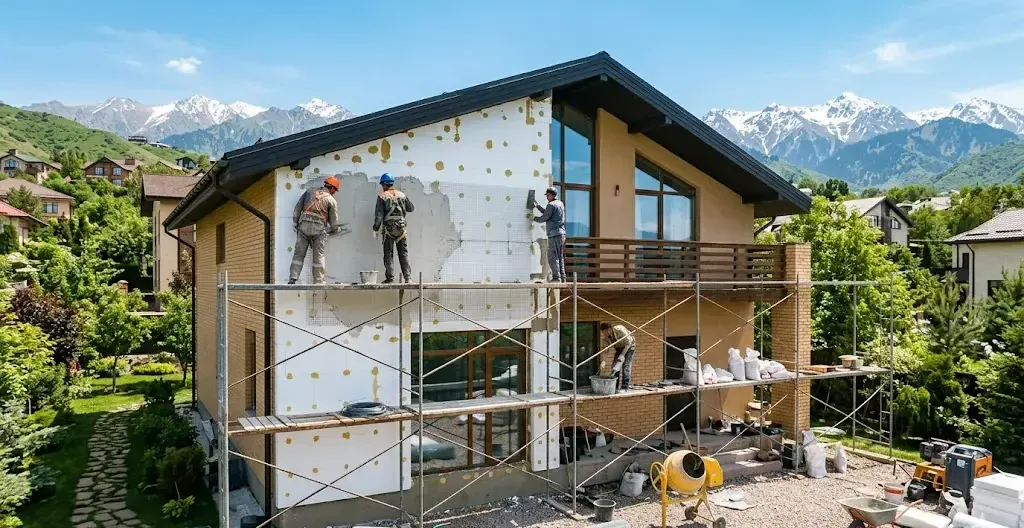
Facade insulation in Almaty
from 6 000 tg.* per linear metre
Durable, high-quality facade finishing thanks to compliance with building codes and the high qualifications of our craftsmen.
 Joints to GOST 5264-80
Installation from 1 day Arrival within 45 minutes
Installation from 1 day 3-year warranty
 Prices from 5000 ₸
Contract and estimate
Facade insulation in Almaty
from 6 000 tg.* per linear metre
Durable, high-quality facade finishing thanks to compliance with building codes and the high qualifications of our craftsmen.
Joints to GOST 5264-80
Installation from 1 day
Arrival within 45 minutes
Installation from 1 day
3-year warranty
Prices from 5000 ₸
Contract and estimate
Facade insulation in Almaty
from 6 000 tg.* per linear metre
Durable, high-quality facade finishing thanks to compliance with building codes and the high qualifications of our craftsmen.
Joints to GOST 5264-80
Installation from 1 day
Arrival within 45 minutes
Installation from 1 day
3-year warranty
Prices from 5000 ₸
Contract and estimate
Types of facade
work we do
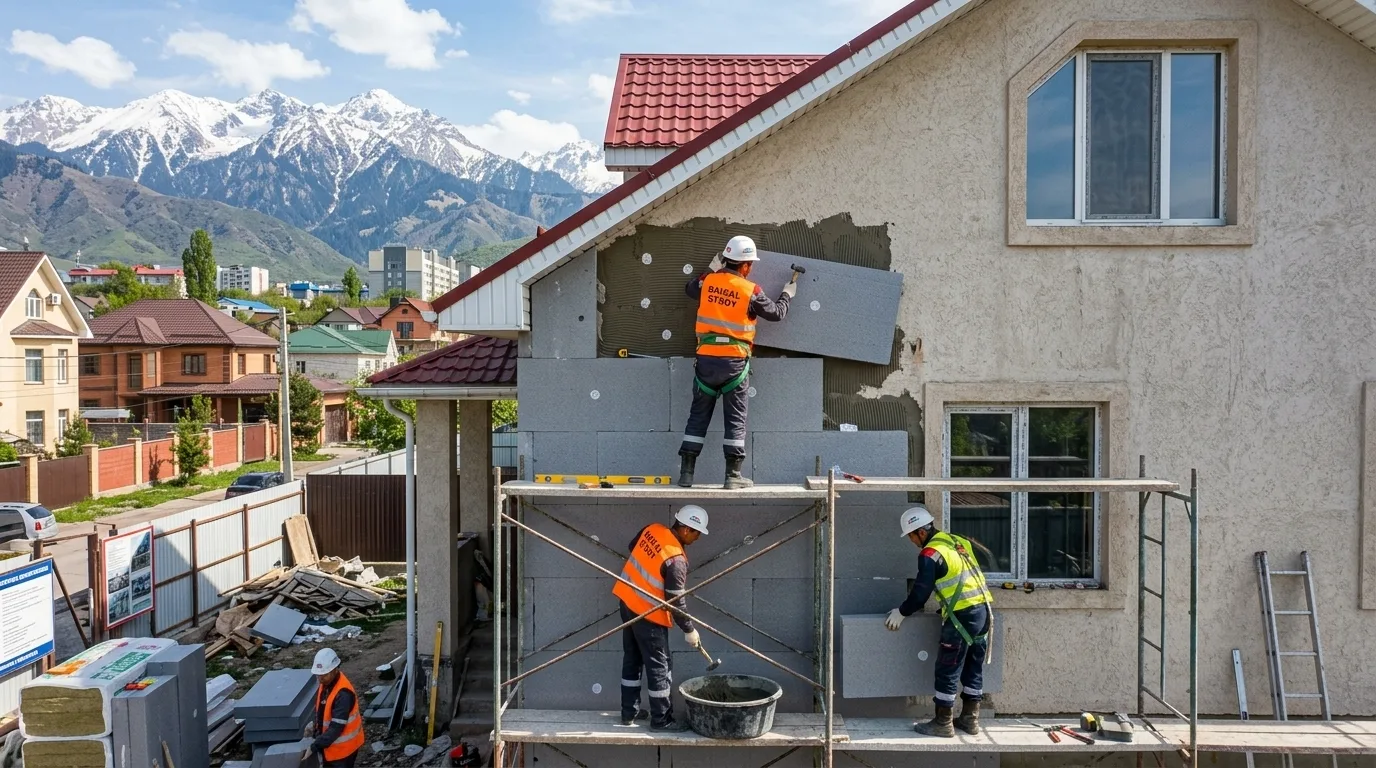
Facade insulation
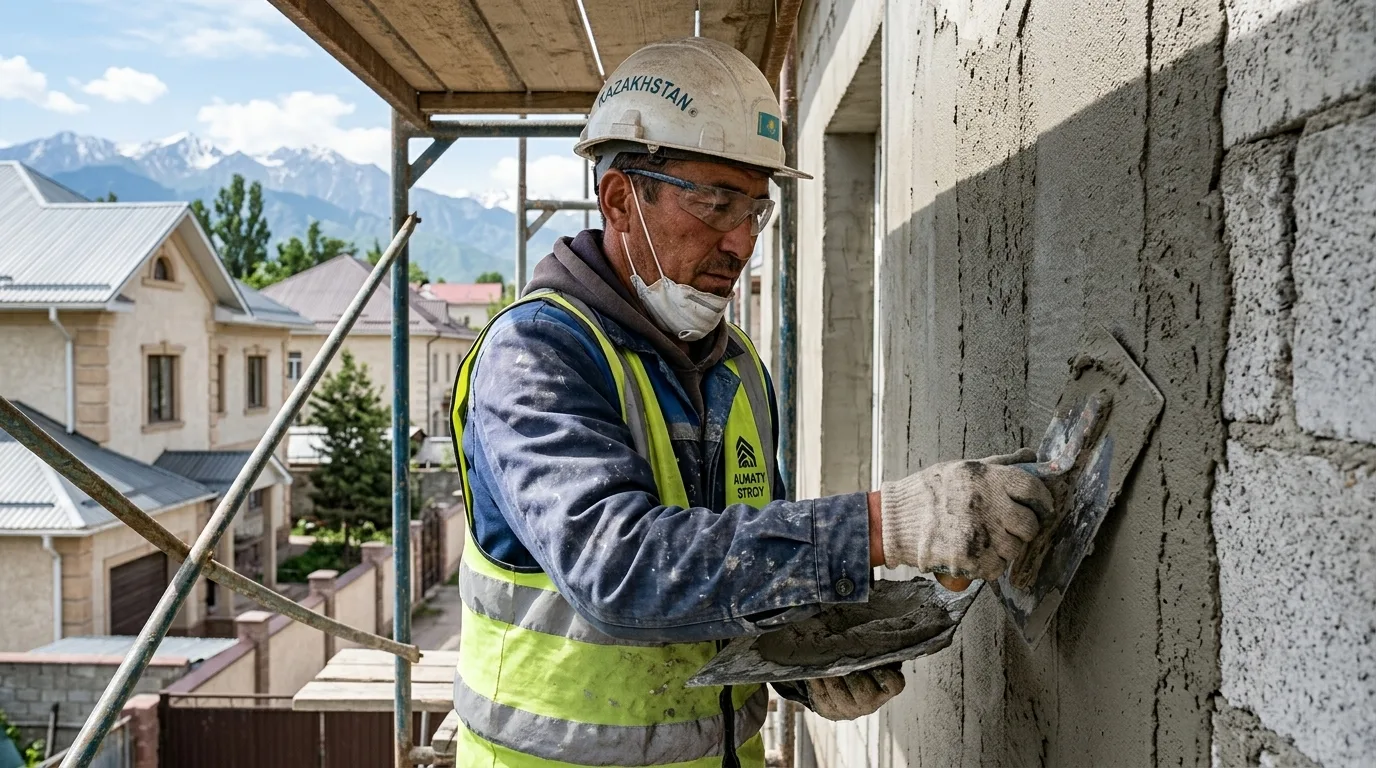
Plastering the walls
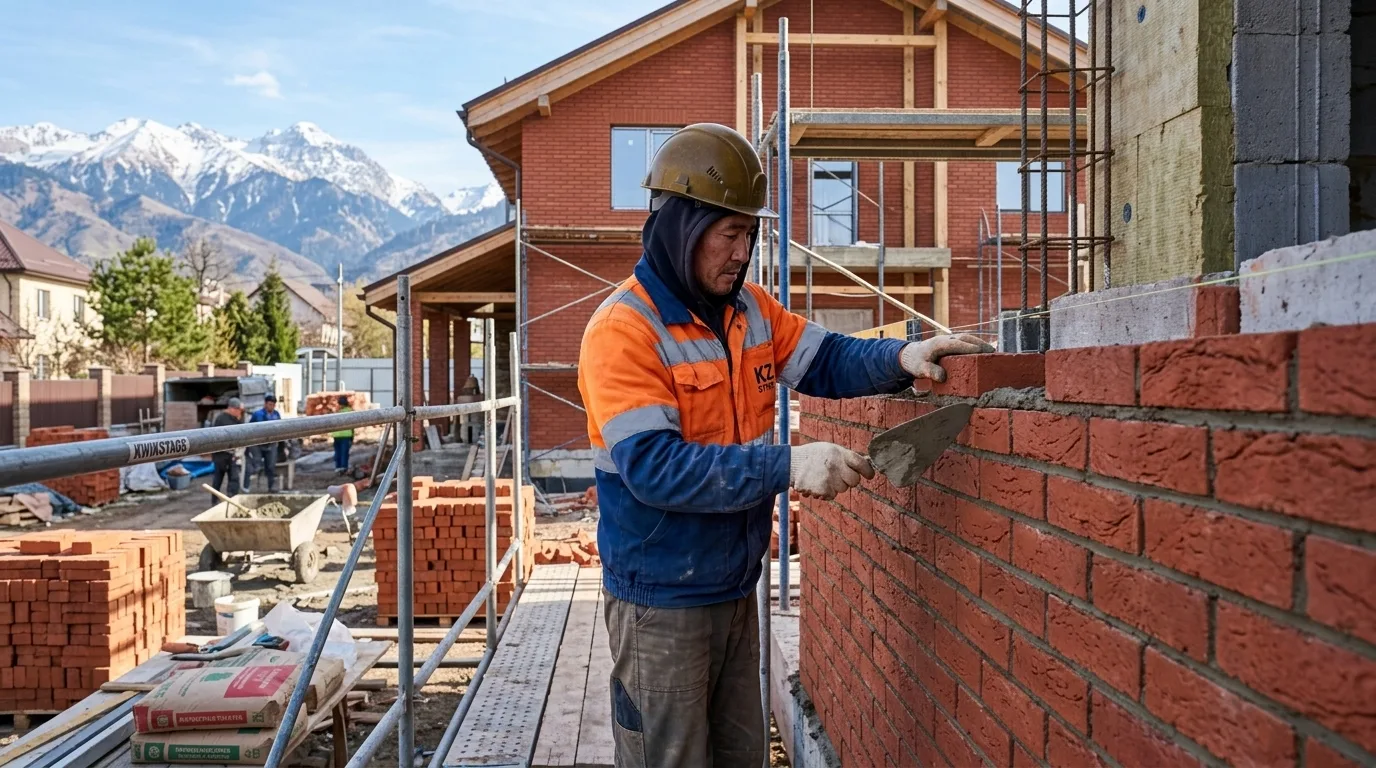
Brick cladding
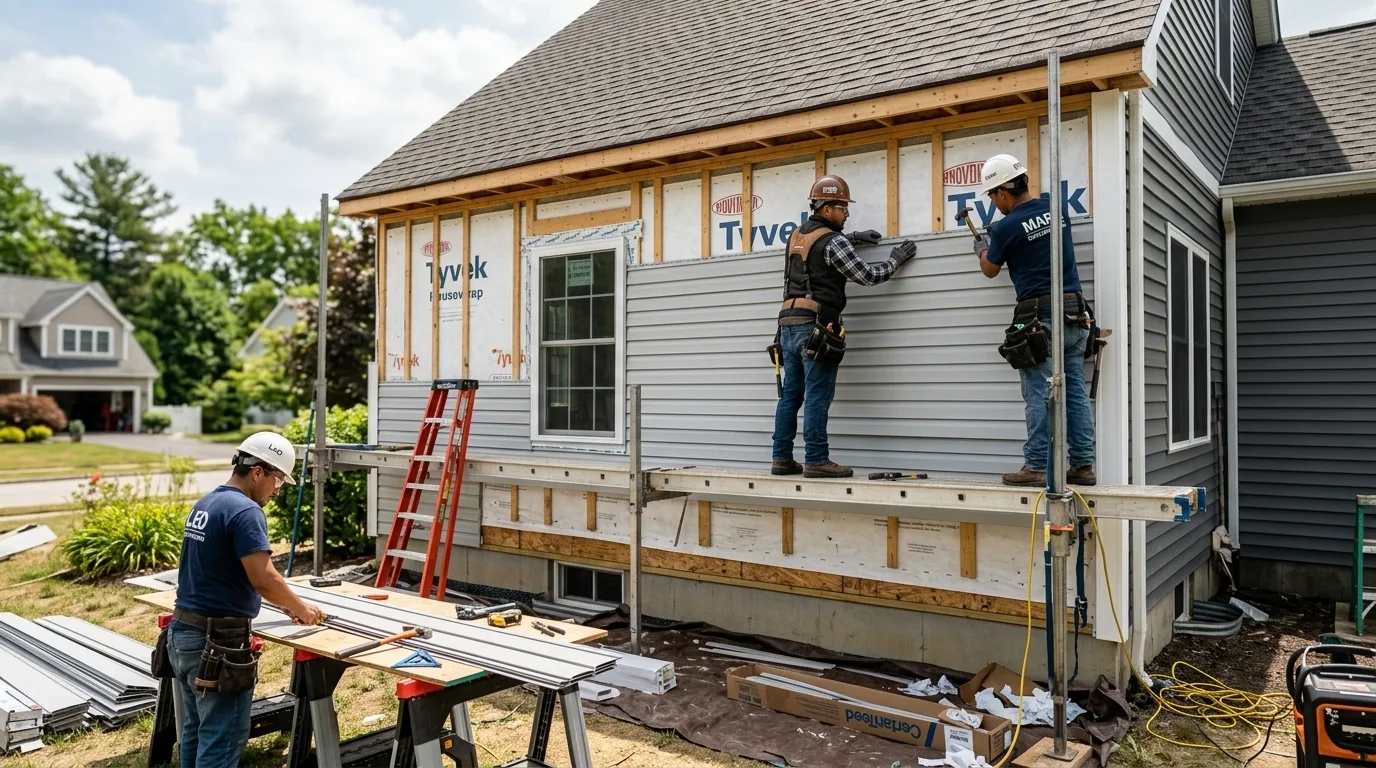
Siding installation
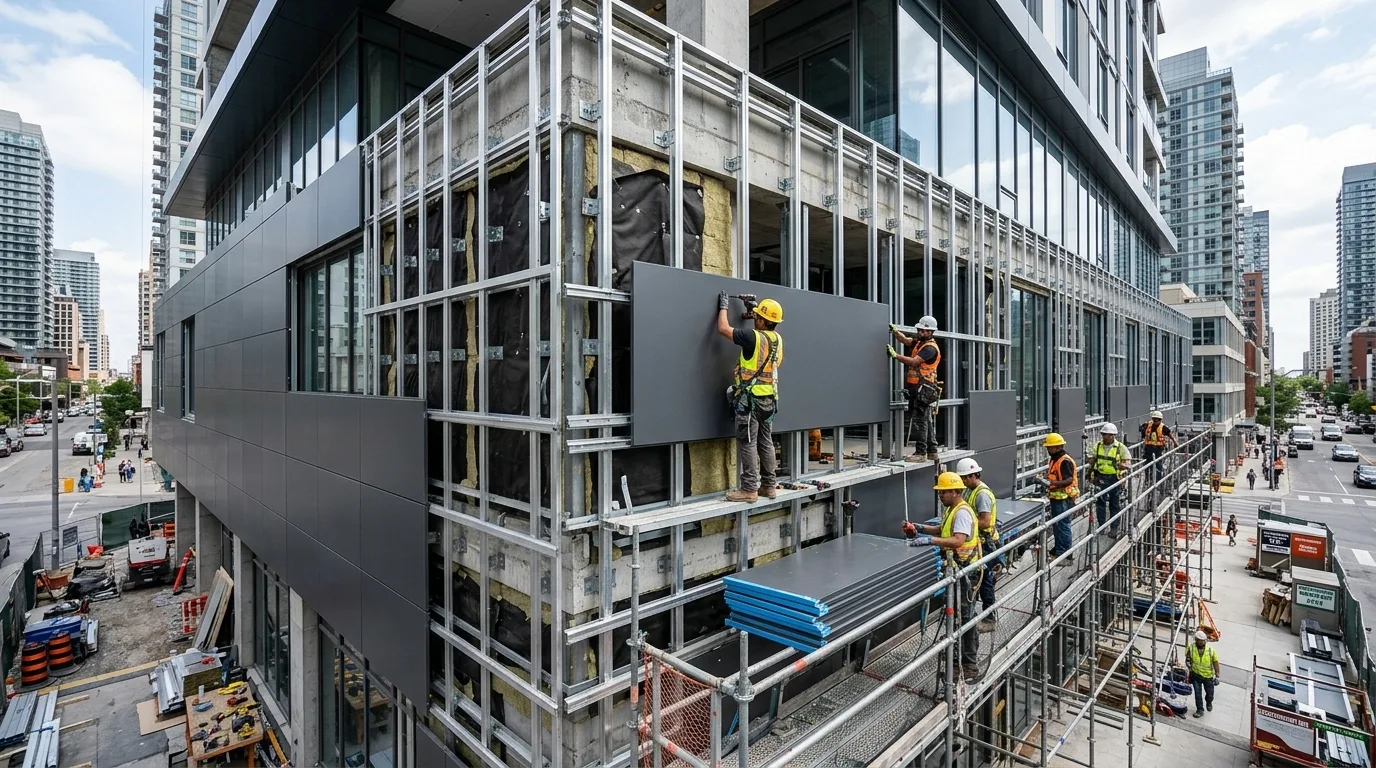
Construction of ventilated facades
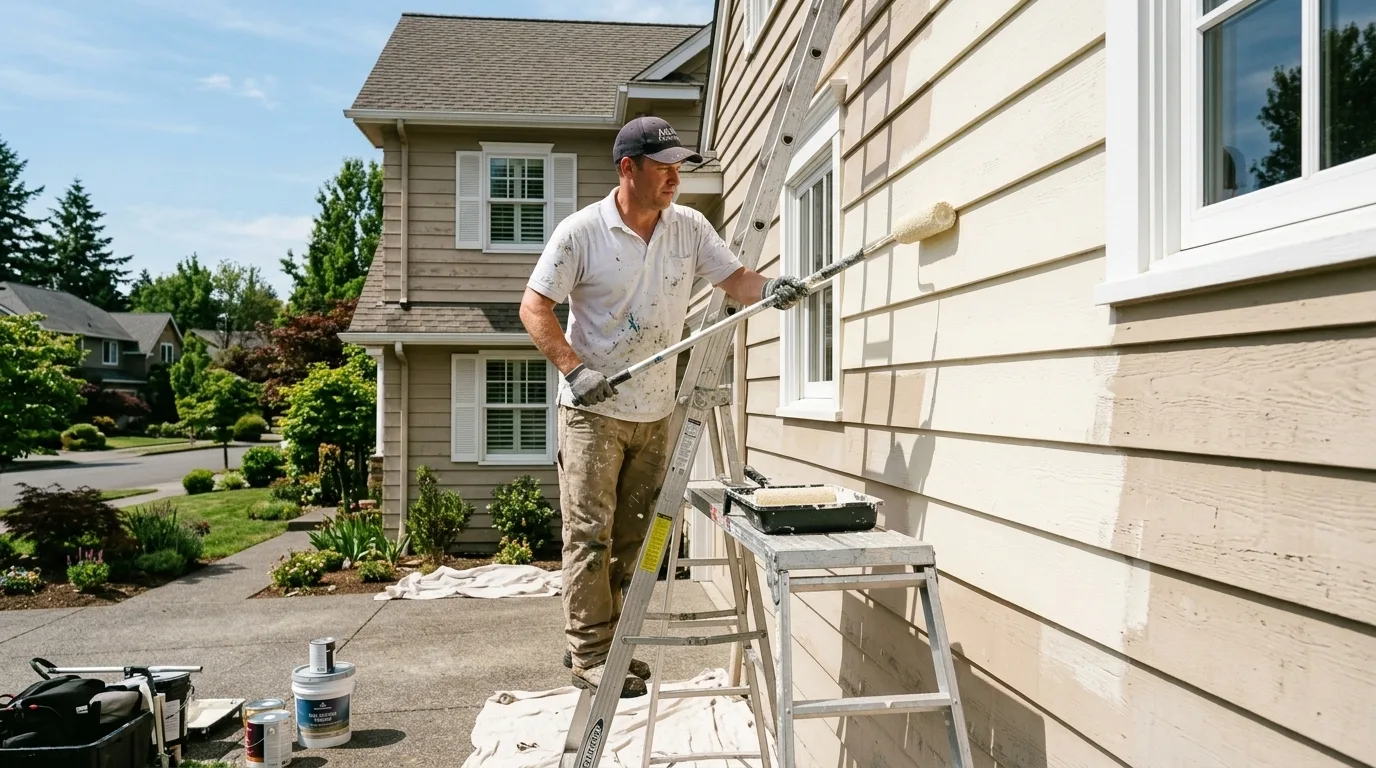
Facade painting
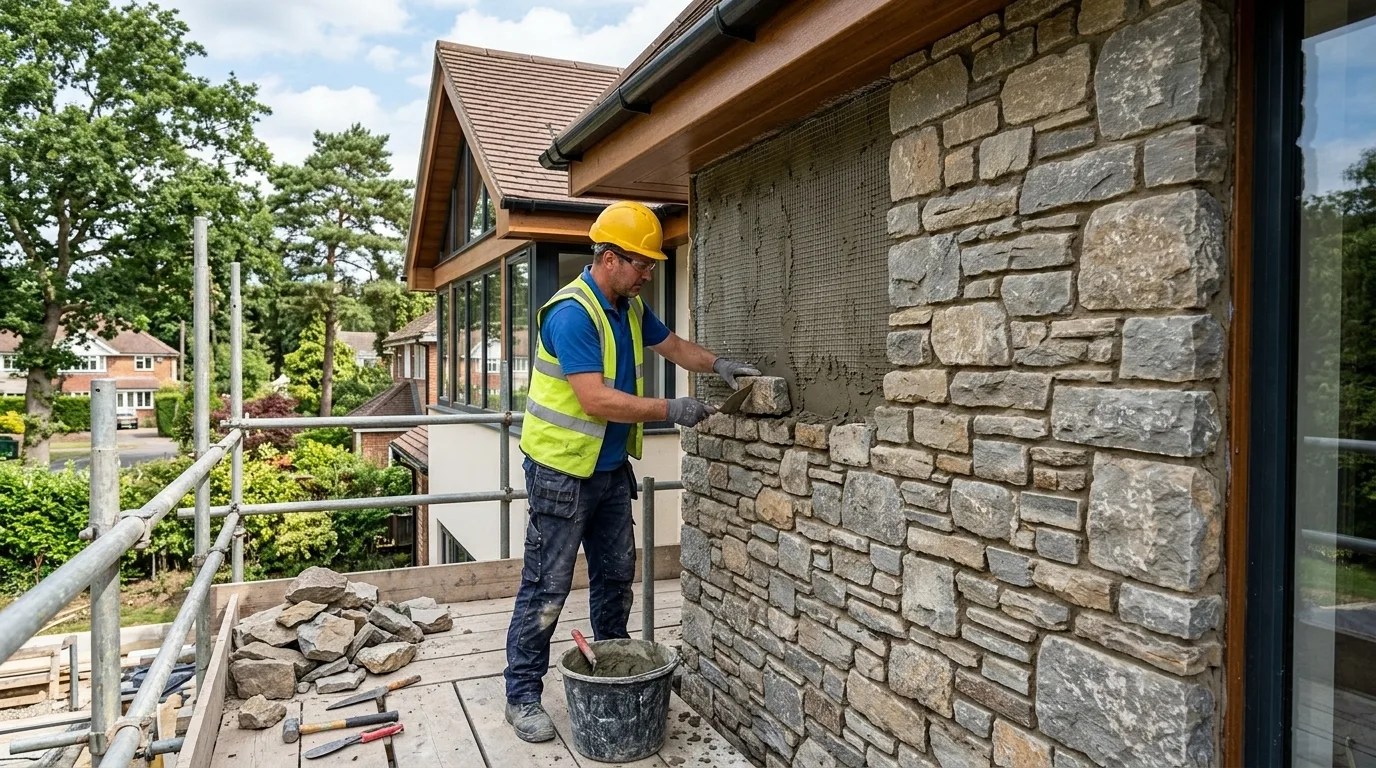
Stone finishing
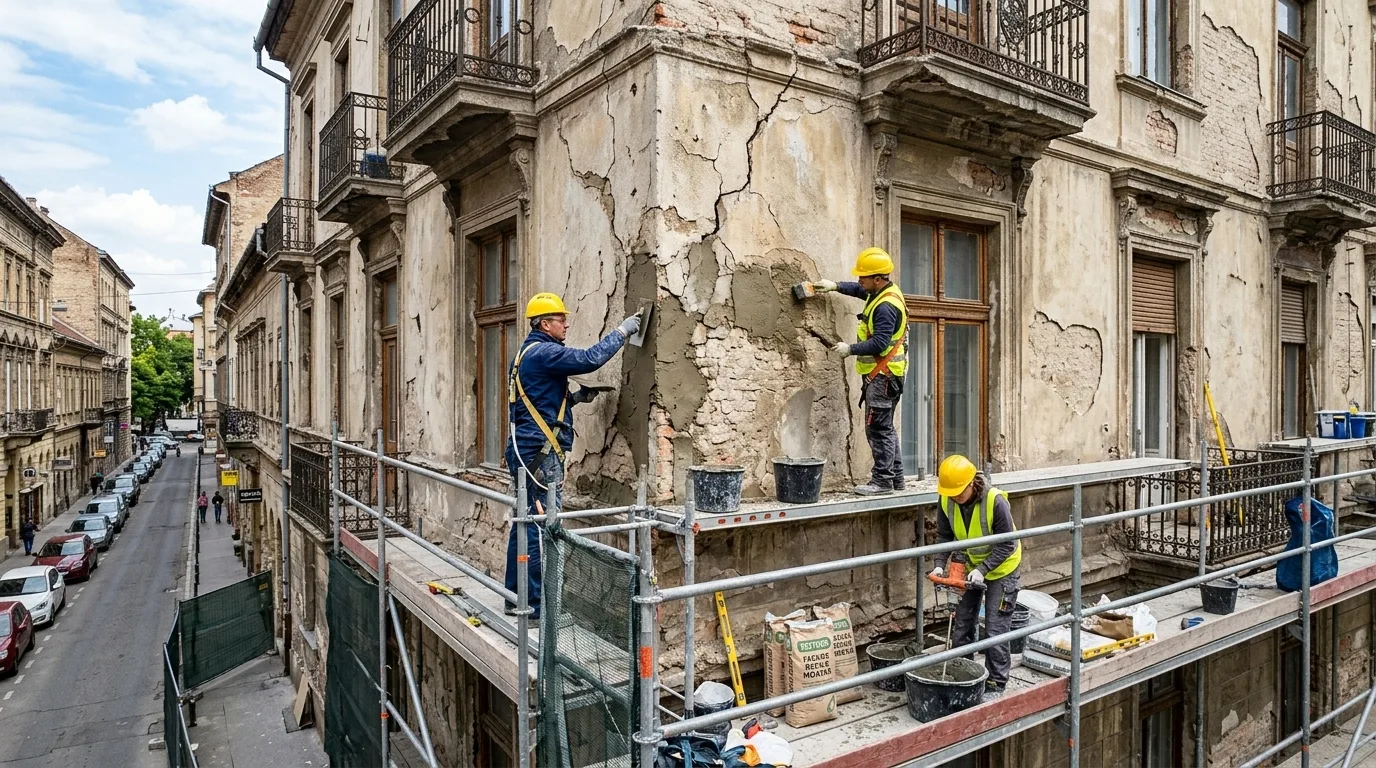
Facade repair
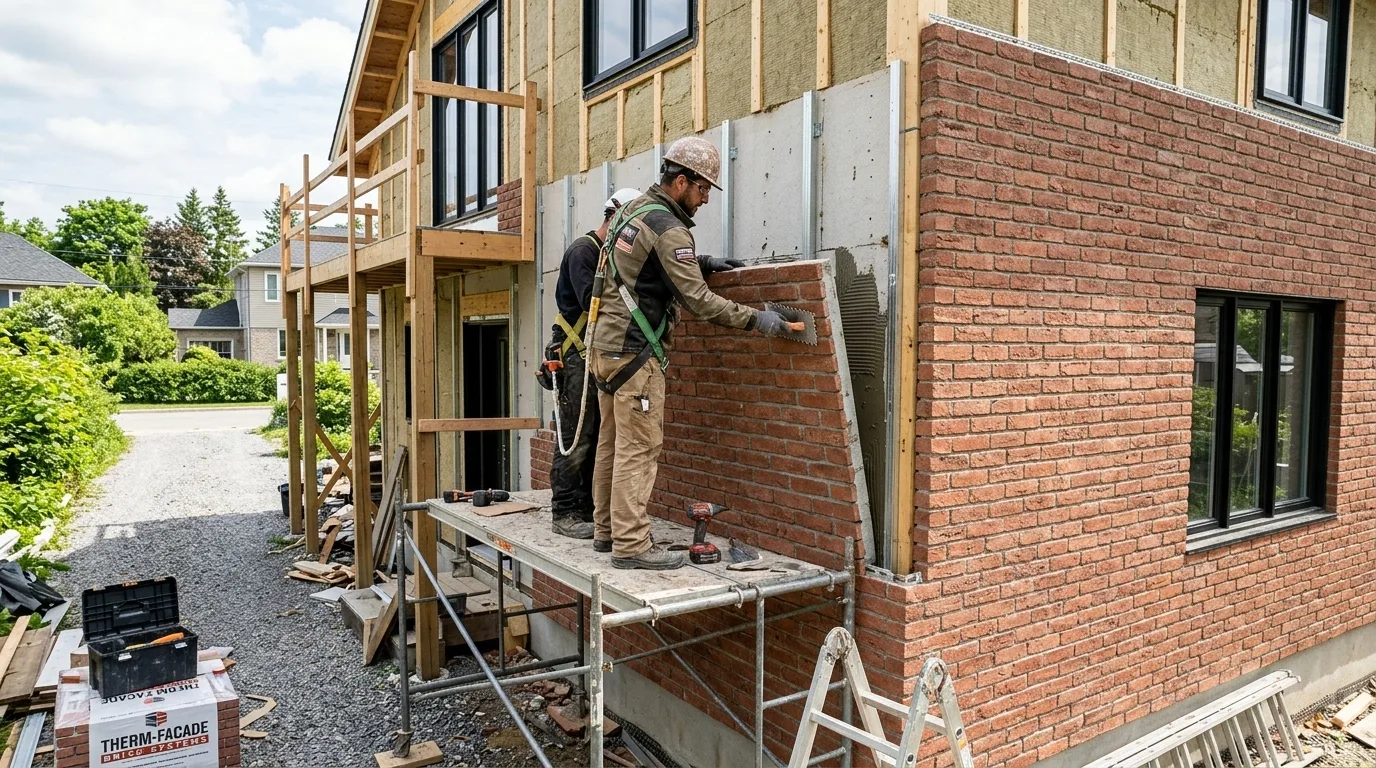
Installation of facade panels
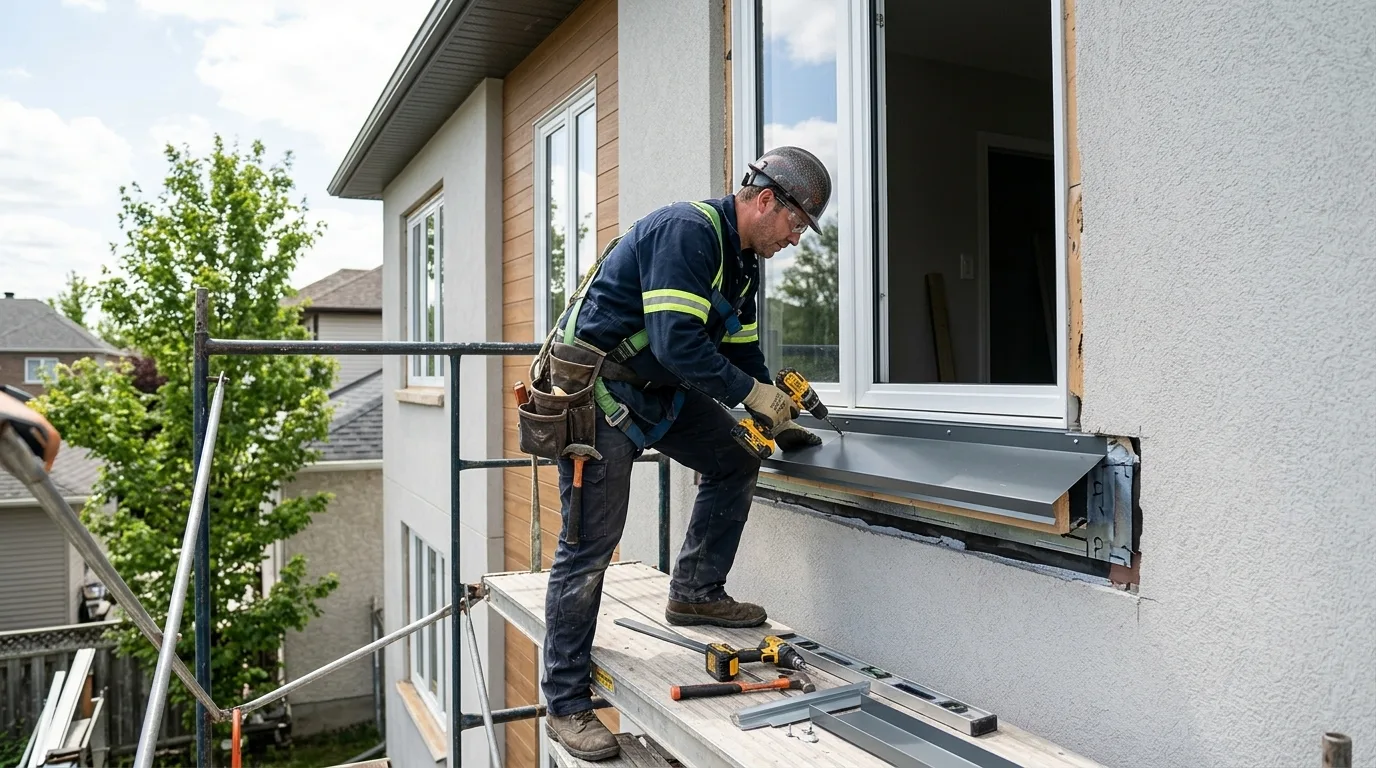
Installation of flashings and reveals
Types of facade
work we do
Facade insulation
Plastering the walls
Brick cladding
Siding installation
Installation of flashings and reveals
Facade repair
Facade painting
Stone finishing
Installation of facade panels
Construction of ventilated facades
We will call you back within 3 minutes
Types of facade
work we do
Facade insulation
Plastering the walls
Brick cladding
Installation of facade panels
Installation of flashings and reveals
Facade repair
Construction of ventilated facades
Facade painting
Stone finishing
Siding installation
We will call you back within 3 minutes
Cost of facade work in
Almaty
| SERVICE | COST | TIME |
|---|---|---|
| Specialist visit for a survey and consultation | from 5 000 ₸ | from 1 hour |
| Minimum order value | from 50 000 ₸ | — |
| Facade insulation with polystyrene foam (wet facade) | from 3 200 ₸/m² | from 2 days |
| Facade insulation with mineral wool | from 3 800 ₸/m² | from 2 days |
| Plinth insulation with extruded polystyrene | from 3 500 ₸/m² | from 1 day |
| Reinforcing insulation with mesh and adhesive | from 1 500 ₸/m² | from 1 day |
| Insulating window reveals | from 1 800 ₸/linear m | from 3 hours |
| Decorative plaster over insulation | from 2 500 ₸/m² | from 2 days |
| Painting an insulated facade | from 1 500 ₸/m² | from 1 day |
| Erecting scaffolding | from 600 ₸/m² | from 1 day |
| Removing old insulation | from 1 000 ₸/m² | from 1 day |
Advantages of facade work from Profi-Dom

Neat joints with no chips
We use professional jointing tools that prevent damage to the tiles during laying

Certified craftsmen
Each specialist confirms their qualification with an annual exam in facade technologies

Equipment for a wet facade
We use industrial mixers and plastering stations that ensure even application of the layers

Meeting the finishing deadlines
The average cycle of turnkey facade work takes 21 working days on a weekly schedule

5-year
warranty on the facade
We fix our obligations in a contract, including protection against plaster peeling and fastener corrosion

Transparent estimate in ₸
We fix the cost of materials and work in the estimate, with no hidden markups or extra charges
Advantages of facade work from Profi-Dom
We use professional jointing tools that prevent damage to the tiles during laying
Neat joints with no chips
Each specialist confirms their qualification with an annual exam in facade technologies
Certified craftsmen
We use industrial mixers and plastering stations that ensure even application of the layers
Equipment for a wet facade
The average cycle of turnkey facade work takes 21 working days on a weekly schedule
Meeting the finishing deadlines
We fix our obligations in a contract, including protection against plaster peeling and fastener corrosion
5-year
warranty on the facade
We fix the cost of materials and work in the estimate, with no hidden markups or extra charges
Transparent price in KZT
We will call you back within 3 minutes
Advantages of facade work from Profi-Dom
We use professional jointing tools that prevent damage to the tiles during laying
Neat joints with no chips
Each specialist confirms their qualification with an annual exam in facade technologies
Certified craftsmen
We use industrial mixers and plastering stations that ensure even application of the layers
Equipment for a wet facade
The average cycle of turnkey facade work takes 21 working days on a weekly schedule
Meeting the finishing deadlines
We fix our obligations in a contract, including protection against plaster peeling and fastener corrosion
5-year
warranty on the facade
We fix the cost of materials and work in the estimate, with no hidden markups or extra charges
Transparent price in KZT
We will call you back within 3 minutes
HOW WE WORK
- 01.Discussion and estimate
We visit the site or hold an online consultation to determine the scope of work precisely and prepare a transparent estimate with no hidden charges.
- 02.Visit for precise measurements
Our specialist comes at a time convenient for you, takes all the necessary measurements and records the features of the facade for a perfect fit of the material.
- 03.Creating the design and sketch
We develop a detailed cladding plan with a panel layout, so that you can see in advance how your house will look after installation.
- 04.Approval of the contract
In the contract we fix the final cost, the exact completion dates and the warranty obligations, so that you feel protected.
- 05.Preparation of materials
We order certified siding and all components, checking each batch for compliance with quality standards and colour.
- 06.Professional installation
Our craftsmen install the battens and fix the panels using a technology that prevents deformation and ensures a long facade service life.
- 07.Finishing and sealing
We carefully finish all corners, joints and openings, treating them with sealant to protect against moisture and draughts.
- 08.Handover of the site and cleanup
After the work is finished we remove the construction debris and carry out a final inspection together with you to make sure the result is flawless.
Find out the cost and timing of facade work in 1 minute
catalogue of completed facade work
 Facade insulation and plastering of a private house in the Alatau microdistrict
 Plinth cladding of a shopping centre on Abay Avenue
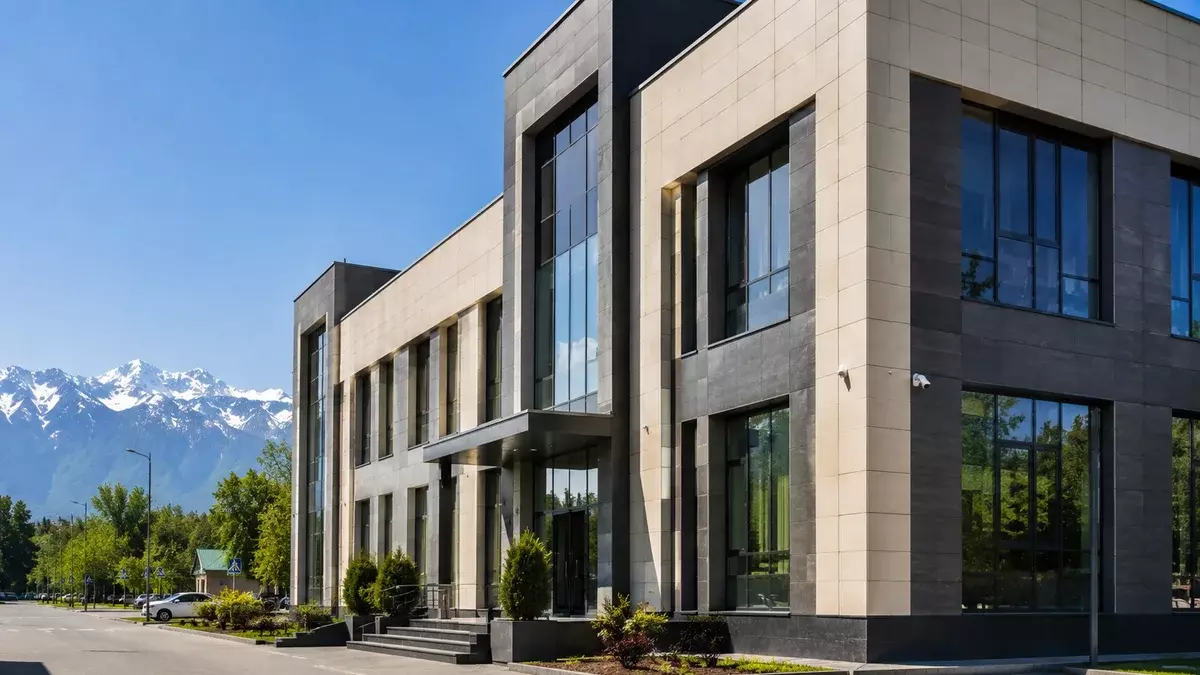 Installation of a ventilated facade on an office building in the Bostandyk district
 Painting and repair of the facade of an apartment building in the Samal microdistrict
FIND OUT THE COST OF FACADE WORK FOR YOUR PROJECT
Leave a request and we will contact you within 3 minutes
Thank you! We will contact you within 3 minutes.
By clicking the button you agree to the terms of the
 Privacy Policy
FIND OUT THE COST OF FACADE WORK FOR YOUR PROJECT
Leave a request and we will contact you within 3 minutes
Thank you! We will contact you within 3 minutes.
By clicking the button you agree to the terms of the
Or call us at
+7 (707) 068-88-68Privacy PolicyFIND OUT THE COST OF FACADE WORK FOR YOUR PROJECT
Leave a request and we will contact you within 3 minutes
Thank you! We will contact you within 3 minutes.
By clicking the button you agree to the terms of the
Or call us at
+7 (707) 068-88-68About facade insulation in detail
Facade insulation in Almaty from PROFI-DOM is a professional turnkey service with a surveyor visit, a heat calculation and a 3-year guarantee. We work using wet and ventilated facade technologies and use polystyrene foam, mineral wool and XPS. Price per m² — from 8 500 KZT including materials.
Why insulate the facade and walls from the outside
Facade insulation price depends on the area, the material and the complexity of the facade — we calculate the exact amount after a site measurement. External facade insulation is the only solution in the Almaty climate: it removes cold bridges, shifts the dew point into the insulation and reduces wall heat loss by 70–80%.
Why walls should be insulated from the outside, not the inside
With external insulation the dew point shifts into the insulation, and the wall stays warm and dry — this rules out freezing and mould formation. Moist air from inside passes freely through the vapour-permeable wall and is released outside, without lingering inside the structure. If, however, the walls are insulated from the inside, the dew point ends up inside the load-bearing wall — in winter moisture will condense there, leading to deterioration of the material and mould. On Almaty houses of aerated concrete and ceramic block, internal insulation creates a thermos effect: the wall freezes and the condensate destroys the masonry in 2–3 seasons. Internal insulation also eats into the usable floor area of the rooms — up to 10–15 cm of space is lost on each wall. Before choosing a method, be sure to calculate the vapour permeability of all the wall layers — if any layer turns out to be vapour-tight, condensate is guaranteed.
What thickness of insulation is needed for a facade in Almaty
For the Almaty climate the optimal insulation thickness is 100 mm for polystyrene foam and 100–150 mm for mineral wool, depending on the wall material and the number of storeys. For aerated concrete houses 400 mm thick, 100 mm of polystyrene foam is enough, while for brick walls 2 bricks thick it is already 120–130 mm. On the upper floors of high-rises, where the wind load is higher, Almaty fitters recommend increasing the wool layer to 150 mm to compensate for draughts. At the same time, the thermal calculation is individual for each house: the city's winters, with swings from –5 °C by day to –25 °C at night, require precise account to be taken not only of the climate zone but also of the wall material, the number of windows and the orientation of the house to the points of the compass — there is no universal figure for all houses. Order a thermal calculation before buying materials — it costs 10–15 thousand KZT but saves up to 30% of the budget on insulation.
What the dew point is and why it matters when insulating
The dew point is the temperature at which the water vapour in the air turns into condensate; with proper external insulation it is located in the insulation rather than in the wall. In Almaty houses with reinforced-concrete floors and a monolithic frame, the dew point shifts inside the wall in winter if the vapour permeability of the layers is not observed — especially in corners and around window openings. Polystyrene foam, for example, barely lets vapour through, so it cannot be installed on aerated concrete without a ventilation gap — the condensate would be trapped inside the block. Mineral wool, on the contrary, is vapour-permeable but loses its properties when wet, so it requires waterproofing on the outside. If the dew point shifts inside the wall because of the wrong insulation thickness or layer vapour permeability, the wall begins to get damp and freeze — this is the main cause of facade failure. Before buying materials, check that the layers are compatible in vapour permeability: each successive layer from the room outwards should be more vapour-permeable than the previous one.
How much heat is lost through uninsulated walls
Through uninsulated walls a private house loses up to 40% of its heat — 2–3 times more than through the windows or roof. In Almaty's brick cottages built in the 1980-s, heat loss through the walls reaches 55–60% because of the absence of insulation and gaps in the masonry. For comparison: 15–20% escapes through the roof, 10–15% through the windows, and another 5–10% through the foundation. This is exactly why insulating the walls from the outside has the greatest effect: it blocks the main channel of heat leakage and at the same time protects the load-bearing structures from temperature swings. Facade insulation 100 mm thick reduces wall heat loss by 70–80%, which pays for itself over 2–3 heating seasons through savings on heating. For a house of 150 m² with gas heating this gives a saving of 80–120 thousand KZT a year — work out for yourself how much you are overpaying now.
Insulation systems: wet facade and ventilated facade
We examine the two main facade insulation technologies — the wet facade and the ventilated facade — their pros, cons and which houses they suit.
What a wet facade (SFTK) is and how it is built
- - Adhesive compound: a cement-polymer mix that fixes the insulation boards to the wall — applied around the perimeter of the board and in 'dabs' in the centre for even contact.
- - Insulation: PSB-S 25F polystyrene foam or XPS (extruded polystyrene) with a thickness from 50 to 150 mm — the main layer responsible for heat retention.
- - Dish-shaped dowels: plastic mushroom anchors with a metal or plastic pin — driven in 2–3 hours after gluing, providing mechanical fixing against wind loads.
- - Reinforcing mesh: alkali-resistant fibreglass mesh with a density of 145–165 g/m², embedded in the base adhesive layer — it prevents the plaster from cracking as the building settles and with temperature changes.
- - Finishing plaster: silicone, silicate or acrylic decorative plaster, “koroed” or “pebble” — applied after priming, it sets the colour and texture of the facade.
What a ventilated facade is and when it is chosen
A ventilated facade is a system with a load-bearing framework, insulation, a windproof vapour-permeable membrane and an air gap of 40–60 mm between the insulation and the cladding, through which a convective flow carries moisture out of the walls. The framework is assembled from galvanised profiles or wooden battens treated with an antiseptic — the spacing of the vertical rails is 600 mm to suit the standard width of the insulation boards. Fibre-cement panels, metal siding, porcelain stoneware or composite cassettes are used as cladding — the material is chosen by weight and the wind load on the facade. A ventilated facade is 30–50% more expensive than a wet one: a m² with metal siding starts from 12 000 KZT and with porcelain stoneware from 18 000 KZT, but it is indispensable for wooden houses and buildings with high vapour-permeability requirements — the walls 'breathe' and do not accumulate moisture, which rules out rot and mould.
Comparison of wet and ventilated facades: table
| Parameter | Wet facade (ETICS) | Ventilated facade |
|---|---|---|
| Design | Insulation + plaster | Insulation + battens + cladding |
| Wall material | Brick, aerated concrete, concrete | Any, including wood |
| Vapour permeability | Medium (depends on the plaster) | High (air gap) |
| Price per m² | from 8 500 KZT | from 12 000 KZT |
| Service life | 25–30 years | 30–50 years |
| Repairability | Requires renewing the plaster | Replacement of individual panels |
Which system to choose for a private house in Almaty
For most private houses made of brick or aerated concrete, the optimal choice is a wet facade with 100 mm thick polystyrene foam, as the most budget-friendly and effective solution: the finishing plaster allows the facade to be integrated into any architectural style, from classic to minimalist, and installation takes 2–3 weeks for a house of 150 m². If the house is wooden — from timber, logs or frame technology — or stands on a plot with a high groundwater level (the Aksai, Kargaly and Talgar districts), choose a ventilated facade: the air gap ensures moisture is removed from the walls, protecting them from rot and biological damage. Before buying materials, request a thermal calculation of the walls — for aerated concrete 300 mm thick, 80 mm of polystyrene foam is enough, while for 380 mm brick, 120 mm is required, and overpaying for extra centimetres can amount to 15–20% of the budget.
Which insulation to choose for a house facade
We compare the three main facade materials — polystyrene foam, mineral wool and extruded polystyrene (XPS) — by their properties, price and use in the Almaty climate.
Polystyrene foam (EPS) in facade insulation: pros and cons
EPS polystyrene foam with a density of 25–35 kg/m³ is the most popular option for a wet facade thanks to its low price and insulating properties: a thermal conductivity of 0,035–0,040 W/m·K allows a thickness from 50 mm for aerated concrete up to 100 mm under brick, otherwise the dew point stays in the wall. EPS-25F boards withstand the load of the plaster layer without deforming, while EPS-35F is denser — it is used under reinforced mesh on basement floors. Polystyrene foam does not rot, but it absorbs water capillary-wise at chips, so all edges are sealed with adhesive, and only the EPS-25F or EPS-35F grades with flame retardants are used on the facade — ordinary packaging foam burns and is banned for facade work under Kazakhstani standards.
Mineral wool for a facade: when it is needed
Mineral wool is a non-combustible material with high vapour permeability, essential for ventilated facades and timber houses, where polystyrene foam creates a greenhouse effect between the layers. Two-layer stone wool boards with a density of 80–100 kg/m³ have a rigid top layer — it holds the windproof membrane without sagging, while the looser lower layer draws vapour out of the wall. In a wet facade, lamella mats (fibres perpendicular to the facade) with a density from 130 kg/m³ are used — they do not slip under the mesh. The main drawback is hygroscopicity: when soaked, mineral wool loses up to 60% of its thermal insulation, so it must be installed with a ventilation gap or under plaster. Mineral wool is 40–60% more expensive than polystyrene foam, but for houses made of combustible materials and systems with an air gap it is the only option permitted by fire-safety rules — Almaty experts will not approve a design with polystyrene foam on a timber facade.
Extruded polystyrene (XPS): for the plinth and load-bearing zones
XPS is the strongest and most moisture-resistant option for the plinth, blind areas and zones under mechanical load, where polystyrene foam crumbles and mineral wool is compressed by the weight of the soil. Its thermal conductivity of 0,030–0,035 W/m·K is 10–15% better than polystyrene foam, so 40–60 mm is enough for the plinth instead of 80 mm. The boards are made with an L-shaped edge — the joints lock together without cold bridges, which is critical for the soil freezing zone to a depth of up to 1,2 metre. XPS absorbs almost no moisture (less than 0,2% by volume), so it is installed in the ground and in places in contact with water, but on walls above the plinth it is excessive in price — polystyrene foam with normal waterproofing is sufficient there, and the difference in thermal conductivity does not pay off the difference in cost.
Comparison of insulation materials: a table of characteristics
| Parameter | EPS polystyrene foam | Mineral wool | XPS |
|---|---|---|---|
| Thermal conductivity, W/m·K | 0,035–0,040 | 0,035–0,042 | 0,030–0,035 |
| Vapour permeability | Low | High | Very low |
| Flammability | Group G1 (self-extinguishing) | NG (non-combustible) | G1–G2 |
| Moisture resistance | Medium | Low (requires protection) | High |
| Price per m² (50 mm) | from 1 200 KZT | from 2 000 KZT | from 2 500 KZT |
| Application | Wet facade | Ventilated facade | Plinth, blind area |
For a wet facade the best value for money is given by PPS-35F polystyrene foam, for a ventilated one by mineral wool with a density of 80–100 kg/m³, and keep XPS for the plinth: on walls above the zero mark its advantages do not pay off.
Facade insulation technology: stages and nuances
We break down the technology step by step — from preparing the walls to the final finishing — so you understand what goes into a quality result.
Wall preparation and profile installation
The first stage is cleaning the walls of old paint, dirt and flaking, followed by installing the base profile, which holds the bottom row of insulation and protects it from moisture. At this same stage the corner profiles and drip edges are installed — they divert rainwater away from the facade and prevent the insulation from getting wet in the area of the window reveals and plinth. In houses with Soviet-era finishing, delaminating cement plaster is often found under the layer of paint — it has to be knocked off with a rotary hammer, which adds 1–2 days to the preparation time. The base profile is set strictly to level — the geometry of the whole facade depends on it, so this stage takes up to 20% of the installation time.
Fixing the insulation: adhesive and dowels
The material is fixed to the wall with adhesive over the entire surface of the board, and after drying it is additionally secured with plate dowels at a rate of 5–8 pieces per square metre. The adhesive is applied in a strip around the perimeter of the board and in several dabs in the centre — this ensures contact over at least 40% of the area, otherwise air pockets will remain under the insulation where moisture will condense. The dowels are placed at the corners of the board and in the centre, with the head sunk flush with the surface; a protruding dowel will create a bump under the reinforcing layer, and the plaster will crack in that spot. Dowelling is a critical stage: if there are fewer than 5 dowels per m², the insulation can come away from the wall under wind loads, especially on tall facades.
Reinforcement and finishing
The reinforcing layer is a facade mesh embedded in the adhesive, which prevents cracks from appearing on the plaster under thermal deformation. Mesh with a density of 145–160 g/m² is pressed into the fresh adhesive with a trowel, first diagonally from the corners and then across the whole plane — the corner zones are reinforced with an additional strip of mesh, since it is precisely at the corners that cracks appear first. After the base layer dries, the finishing plaster is applied — acrylic, silicone or silicate; in Almaty, with its sharp temperature swings from -25°C in winter to +40°C in summer, silicone plaster gives the greatest elasticity and does not crack in the sun. The mesh is embedded in the adhesive with a 10 cm overlap at the joints — if you butt the joints edge to edge, cracks will appear on the plaster in exactly these places within a year.
Work timeframes and installation conditions
Insulating the facade of a house of 100–150 m² takes 5 to 20 days depending on the complexity, the weather and the chosen technology. A wet facade with polystyrene foam on a simple rectangular wall without bay windows or decorative elements is completed in 5–7 days, while a ventilated facade with mineral wool and porcelain stoneware cladding on a house of complex configuration stretches to 15–20 days. The timing is also affected by the weather: after rain a wet facade cannot be plastered for 2–3 days until the wall dries; in April and May in Almaty such stoppages happen 2–3 times per project. A wet facade can only be installed at temperatures from +5°C to +30°C — in winter work by this technology is not carried out, unlike a ventilated facade, which can be installed in frost.
Facade insulation warranty and what to do about cracks
The warranty on facade insulation work is from 1 to 5 years depending on the company; the standard term for professional installation is 3 years. The contract spells out exactly what the warranty covers: peeling of the plaster, cracks wider than 1 mm, the insulation coming away from the wall — and what it does not cover: mechanical damage, roof leaks from above, errors in the foundation design. Before signing the acceptance certificate, check the uniformity of the plaster colour and the absence of visible mesh at the corners — if the mesh is visible, the reinforcement has been done incorrectly and cracks will appear in the very first season. If cracks appear a year after insulation, the cause is most often a breach of the technology: insufficient reinforcement, the wrong adhesive or installation at a low temperature — this is a warranty case.
Price of facade insulation per m² in Almaty
We break down facade insulation prices across the city per m² — what the cost depends on, what is included in the price list and what hidden expenses may arise.
Price of facade insulation with polystyrene foam per m²
Turnkey facade insulation with polystyrene foam in Almaty costs 8 500 to 11 000 KZT per m² depending on the insulation thickness and the complexity of the facade. The price includes EPS-25 polystyrene foam of density 16–17 kg/m³, Ceresit CM 11 adhesive mix, dish-shaped dowels with a metal pin (5–6 pcs/m²), 160 g/m² facade fibreglass mesh and 1,5–2 mm “koroed” decorative plaster — a full set for a wet facade. A thickness of 50 mm — 8 500 KZT/m², 100 mm — 9 500 KZT/m², 150 mm — 11 000 KZT/m², and for the corners and around windows a second layer of reinforcement with corner beads is required, which adds 500–700 KZT per linear metre. If you are quoted a price below 7 000 KZT per m², they are most likely cutting corners on materials or stages — using polystyrene foam of density 12 kg/m³ or single-layer reinforcement across the whole facade, which leads to cracks within a year or two.
Price of facade insulation with mineral wool and XPS
Facade insulation with mineral wool costs 12 000 to 16 000 KZT per m², while XPS for the plinth costs from 14 000 KZT per m², which is 40–60% more expensive than polystyrene foam. For a wet facade with Rockwool Fasad Batts mineral wool of density 145 kg/m³, the price is 50 mm — 12 000 KZT/m², 100 mm — 13 500 KZT/m², 150 mm — 15 000 KZT/m²; a ventilated facade with the same mineral wool is 1 500–2 500 KZT/m² more expensive because of the galvanised rails, brackets and windproof membrane. XPS TechnoNICOL XPS or Penoplex for the plinth is glued with polyurethane adhesive rather than cement — 50 mm for 14 000 KZT/m², 100 mm — 16 000 KZT/m². The price difference between polystyrene foam and mineral wool is due not only to the cost of the insulation itself but also to the more complex installation technology of a ventilated facade.
Comparison of facade insulation prices per m²
| Type of insulation | Thickness 50 mm | Thickness 100 mm | Thickness 150 mm |
|---|---|---|---|
| Wet facade (polystyrene foam) | 8 500 KZT/m² | 9 500 KZT/m² | 11 000 KZT/m² |
| Wet facade (mineral wool) | 12 000 KZT/m² | 13 500 KZT/m² | 15 000 KZT/m² |
| Ventilated facade (mineral wool) | 14 000 KZT/m² | 15 500 KZT/m² | 17 000 KZT/m² |
| Plinth (XPS) | 14 000 KZT/m² | 16 000 KZT/m² | — |
What is included in the price of facade insulation per m²
- - Insulation: EPS-25 polystyrene foam, Rockwool mineral wool or TechnoNICOL XPS — depending on the chosen technology and thickness.
- - Adhesive mix: Ceresit CM 11 cement adhesive for polystyrene foam and mineral wool, or polyurethane for XPS on the plinth.
- - Fasteners: plate dowels with a metal nail — 5–6 pieces per m², and for a ventilated facade galvanised brackets and rails.
- - Reinforcing mesh: facade fibreglass mesh with a density of 160 g/m², with a second layer and corner beads at the corners and reveals.
- - Finishing: “koroed” or “pebble” decorative plaster 1,5–2 mm, priming and two coats of paint.
- - Installers' work: wall preparation, gluing the insulation, dowelling, reinforcing, plastering and painting — the full cycle.
How to calculate an estimate for insulating a house facade
To calculate the estimate, multiply the facade area by the price per m² of the chosen technology and add 10–15% for reveals, corners and unforeseen work. For a two-storey private house with a wall area of 200 m² and a wet facade of 100 mm polystyrene foam, it works out as: 200 × 9 500 = 1 900 000 KZT, plus 15% — about 2 185 000 KZT. Hidden costs may add another 50 000–100 000 KZT: scaffolding (from 500 KZT/m² of facade), removing old plaster or siding (from 800 KZT/m²), reinforcing the window reveals with cement mortar (from 1 500 KZT per linear metre). Only a surveyor can draw up an accurate estimate after visiting the site — they will take into account the number of windows and doors, the wall material and the condition of the facade, which affect the final price.
Turnkey facade insulation with PROFI-DOM
We explain how we organise turnkey work — from the request to handover of the project with a guarantee — and why clients trust us with this task.
How we work: from request to finish
We start with a free visit from a surveyor, who inspects the facade, checks the geometry of the walls with a laser level and measures the moisture of the base with a moisture meter — this gives a real picture rather than a rough estimate. Based on the measurements, we prepare a three-layer heat calculation in the SmartCalc program — it shows exactly where heat is escaping and what thickness of insulation your house needs. Next we agree on the estimate and materials and sign a fixed-price contract — no surcharges once the work has begun. A crew of 3–5 installers with at least 5 years of experience begins the work: from preparing the walls to the final plaster or cladding. Quality is controlled by the foreman — he checks the evenness of each layer with a straightedge and takes photos of the hidden stages. At the end you receive a work completion certificate and a warranty card — everything transparent, with no surprises.
What warranties we give on facade work
We provide a 5-year guarantee on all facade work — the contract sets out our obligations to fix cracks, delamination and installation defects at our own expense. The guarantee covers not only the finishing layer but also the hidden elements: if a year later cold bridges appear at the joints of the insulation boards because of adhesive shrinkage, we redo the section at no extra charge. In the standard contracts of Almaty crews the guarantee is often limited to a single season and does not cover plaster peeling — we record all risks in writing, including cracking at the corners of window openings. If a defect appears within the guarantee period, the crew comes out within 3 working days — this condition is also in the contract. For the guarantee to remain valid, do not break the rules of use: do not drill the walls in the insulation zone without consulting us and do not mount heavy brackets without reinforcement — this creates local stresses that tear the plaster layer.
Why people choose PROFI-DOM for facade work
People choose PROFI-DOM for the integrated approach: we supply the materials ourselves, carry out the installation and give a warranty — you work with a single contractor rather than a chain of middlemen. On the Almaty market there are many offers from crews who take material from a distributor, hire fitters off the street and are not responsible for the result — in such schemes, when cracks appear, you are left looking for who is to blame: the adhesive supplier or the plasterer. With us there is one responsible party — the company that selects the material to suit your facade (aerated concrete, brick, hollow block), runs the project from survey to finish and fixes defects at its own expense. Having our own crews with 5 or more years of experience and a materials warehouse allows us to fix prices in the estimate and not change them during the process, even if the volume of work grows by 10–15%.
Conclusion
We have gathered the key points worth remembering when choosing facade insulation for a house in Almaty — from the technology to the budget.
Key takeaways on facade thermal insulation
- - Choice of technology: a wet facade is cheaper and simpler to install, a ventilated facade is more expensive but more durable and suitable for any walls, including wooden and frame ones.
- - Insulation thickness: for the Almaty climate, 100–150 mm of mineral wool or 80–100 mm of polystyrene is optimal — this is enough for a comfortable temperature in winter.
- - Price per m²: a wet facade costs 8 000 to 12 000 KZT/m², a ventilated one — 15 000 to 25 000 KZT/m² depending on the materials and the complexity of the facade.
- - Hidden costs: scaffolding, removing the old finish and reinforcing the reveals can add 15–20% to the base estimate — take this into account when planning your budget.
- - Warranty: quality installation with a 5-year warranty rules out the risk of cracks and peeling — check the contract for this clause before signing.