
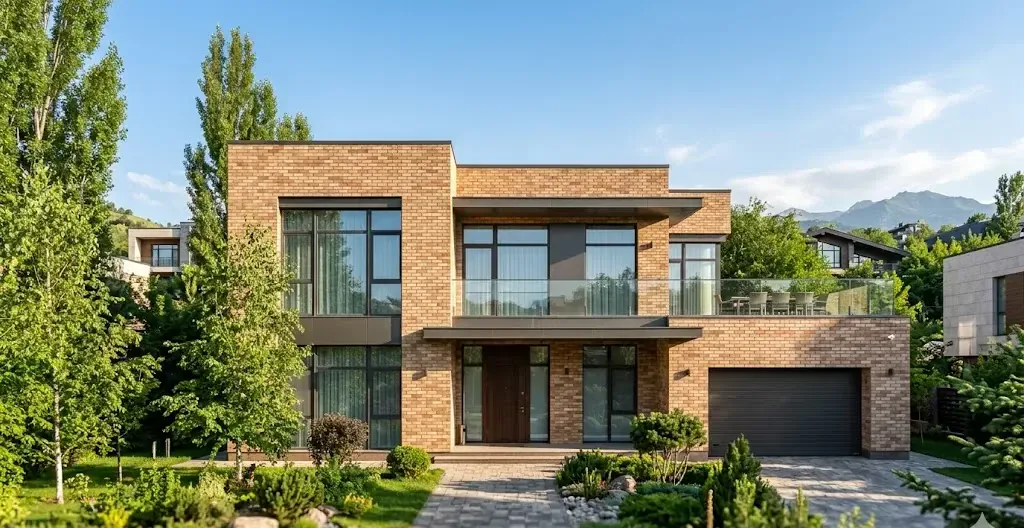
House tile cladding in Almaty
from 6 000 tg.* per linear metre
Durable, high-quality facade finishing thanks to compliance with building codes and the high qualifications of our craftsmen.
 Joints to GOST 5264-80
Installation from 1 day Arrival within 45 minutes
Installation from 1 day 3-year warranty
 Prices from 5000 ₸
Contract and estimate
House tile cladding in Almaty
from 6 000 tg.* per linear metre
Durable, high-quality facade finishing thanks to compliance with building codes and the high qualifications of our craftsmen.
Joints to GOST 5264-80
Installation from 1 day
Arrival within 45 minutes
Installation from 1 day
3-year warranty
Prices from 5000 ₸
Contract and estimate
House tile cladding in Almaty
from 6 000 tg.* per linear metre
Durable, high-quality facade finishing thanks to compliance with building codes and the high qualifications of our craftsmen.
Joints to GOST 5264-80
Installation from 1 day
Arrival within 45 minutes
Installation from 1 day
3-year warranty
Prices from 5000 ₸
Contract and estimate
Types of facade
work we do
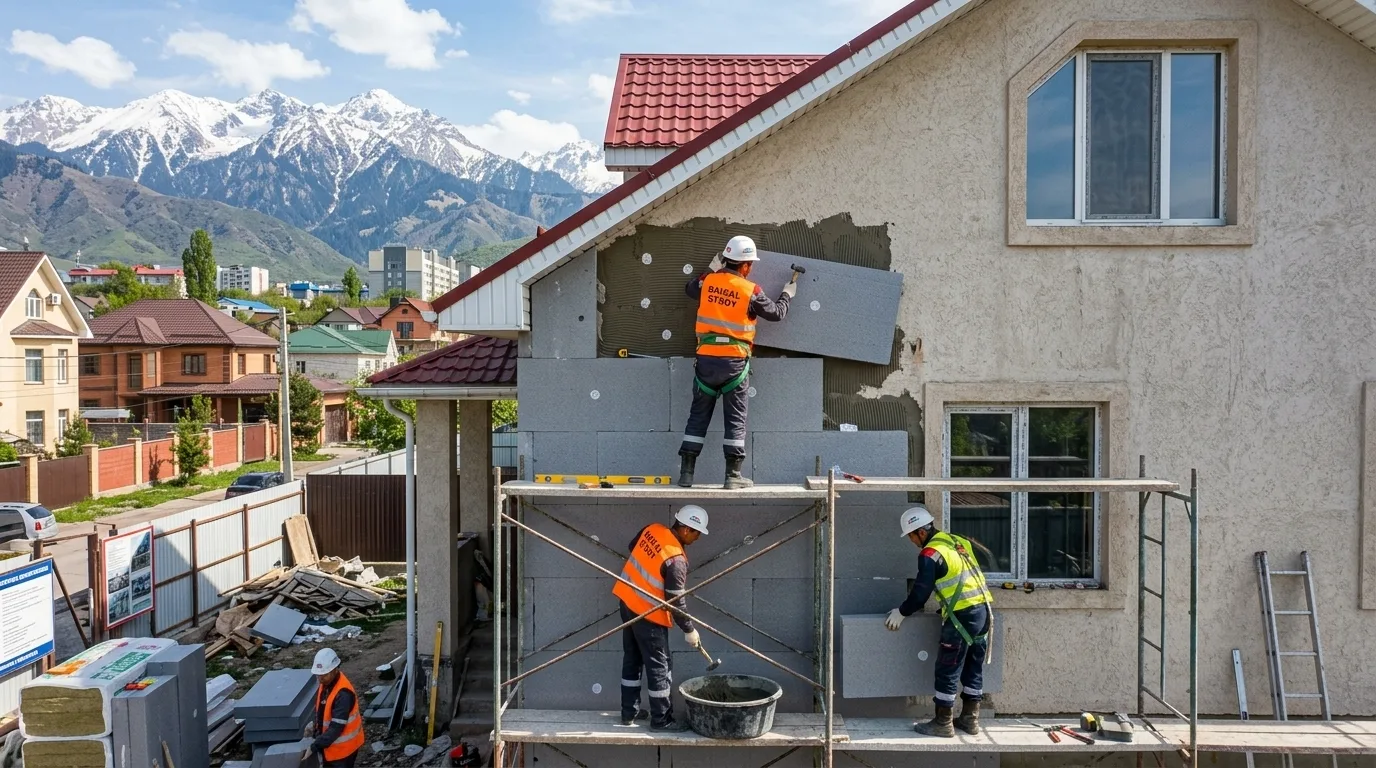
Facade insulation
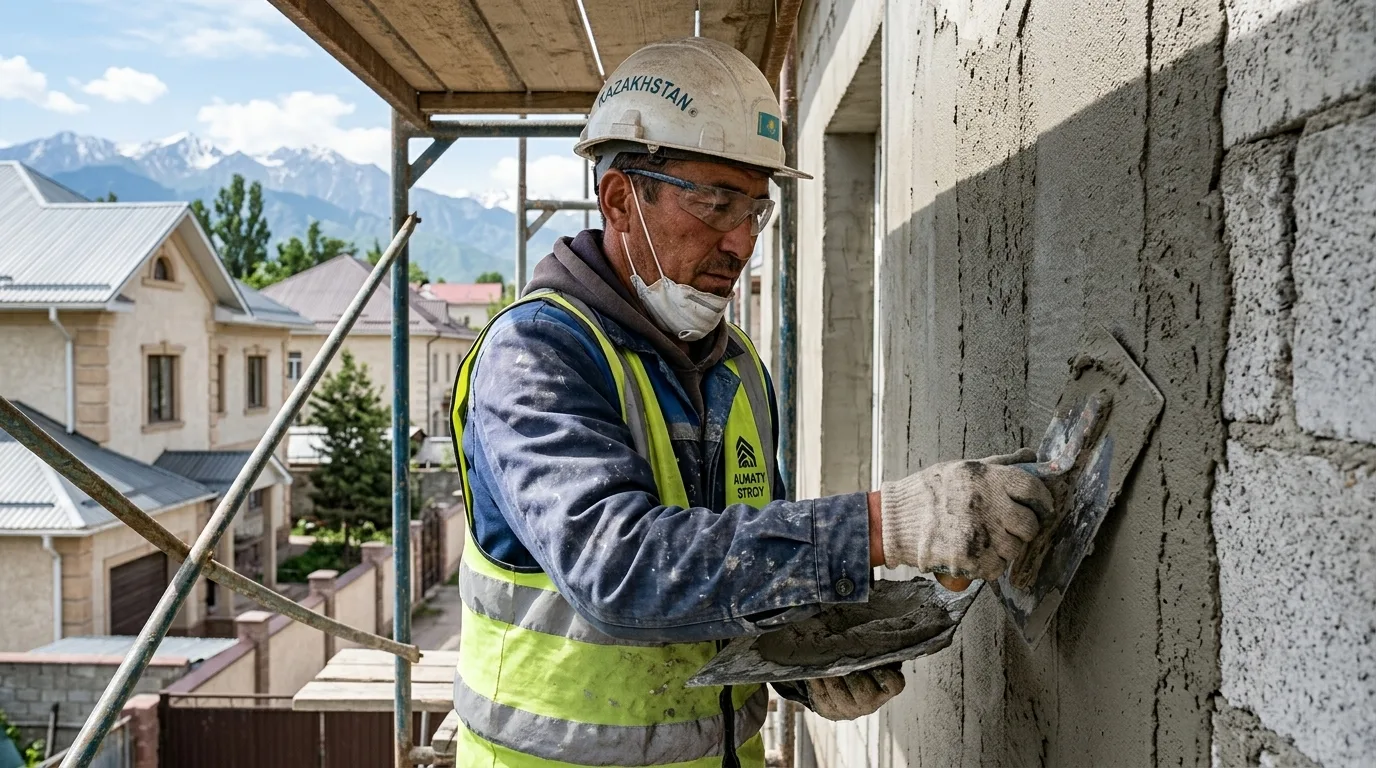
Plastering the walls
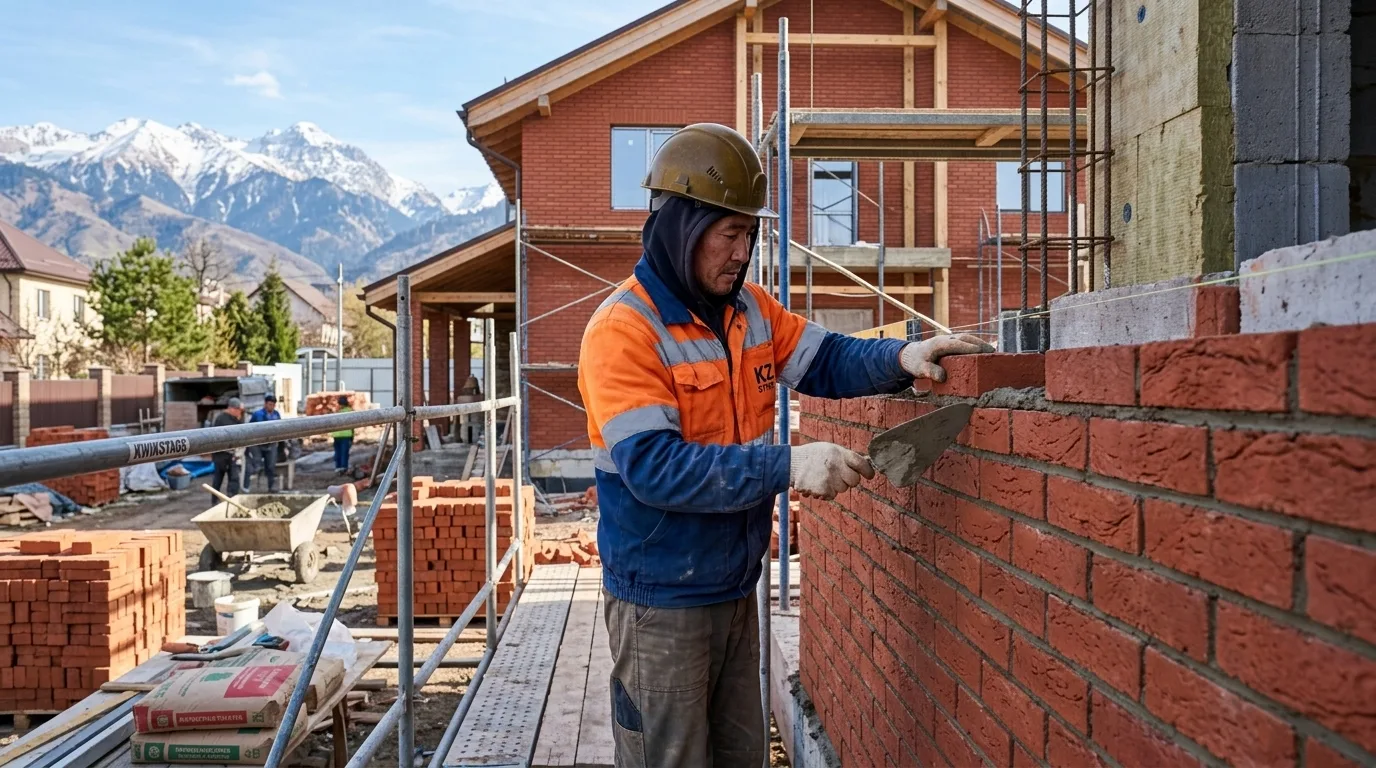
Brick cladding
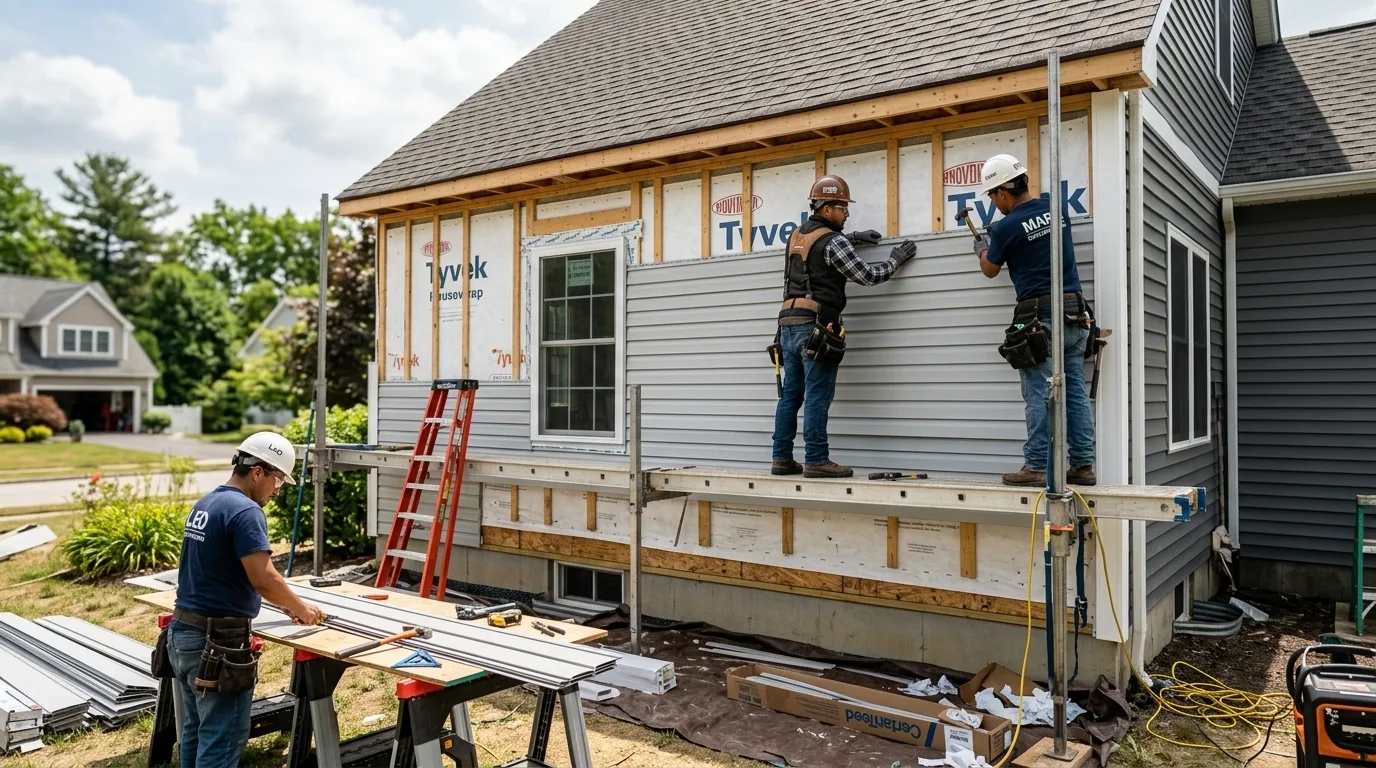
Siding installation
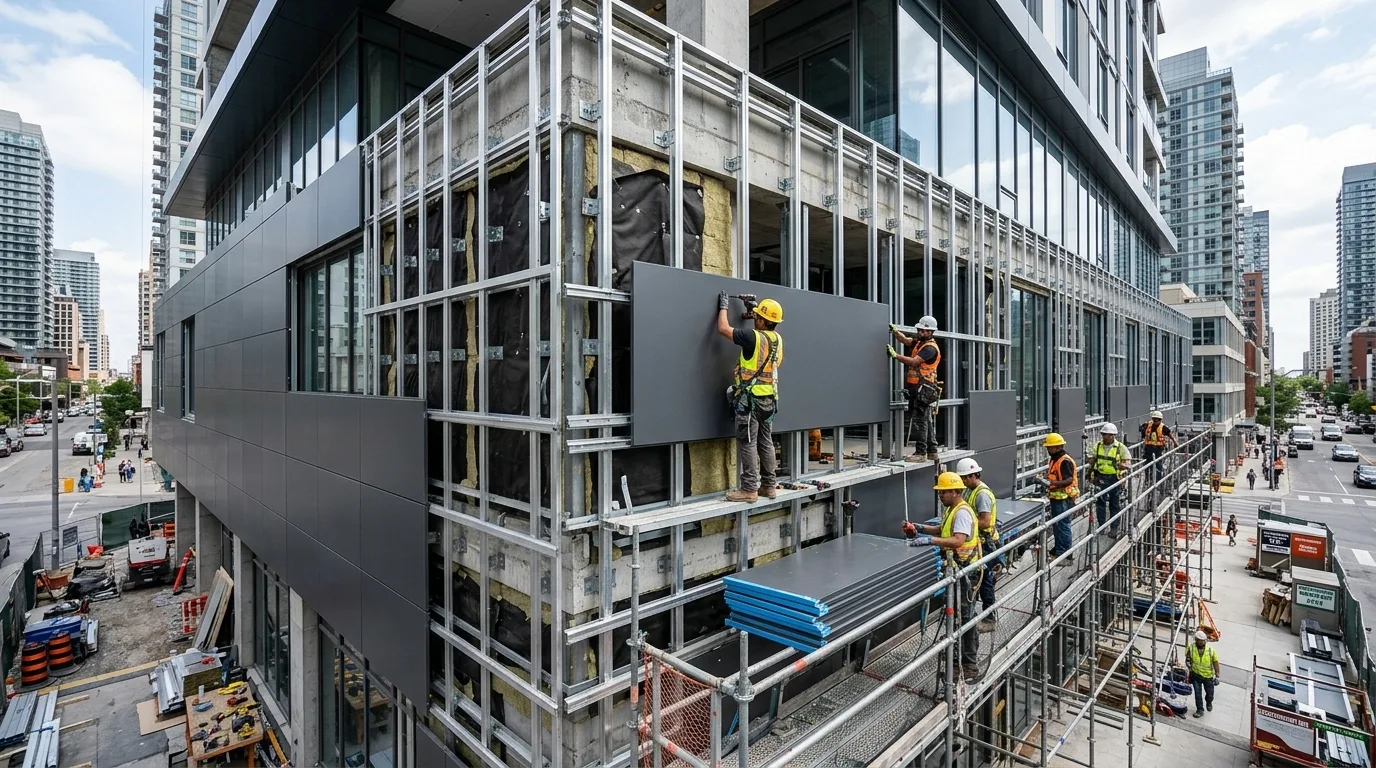
Construction of ventilated facades
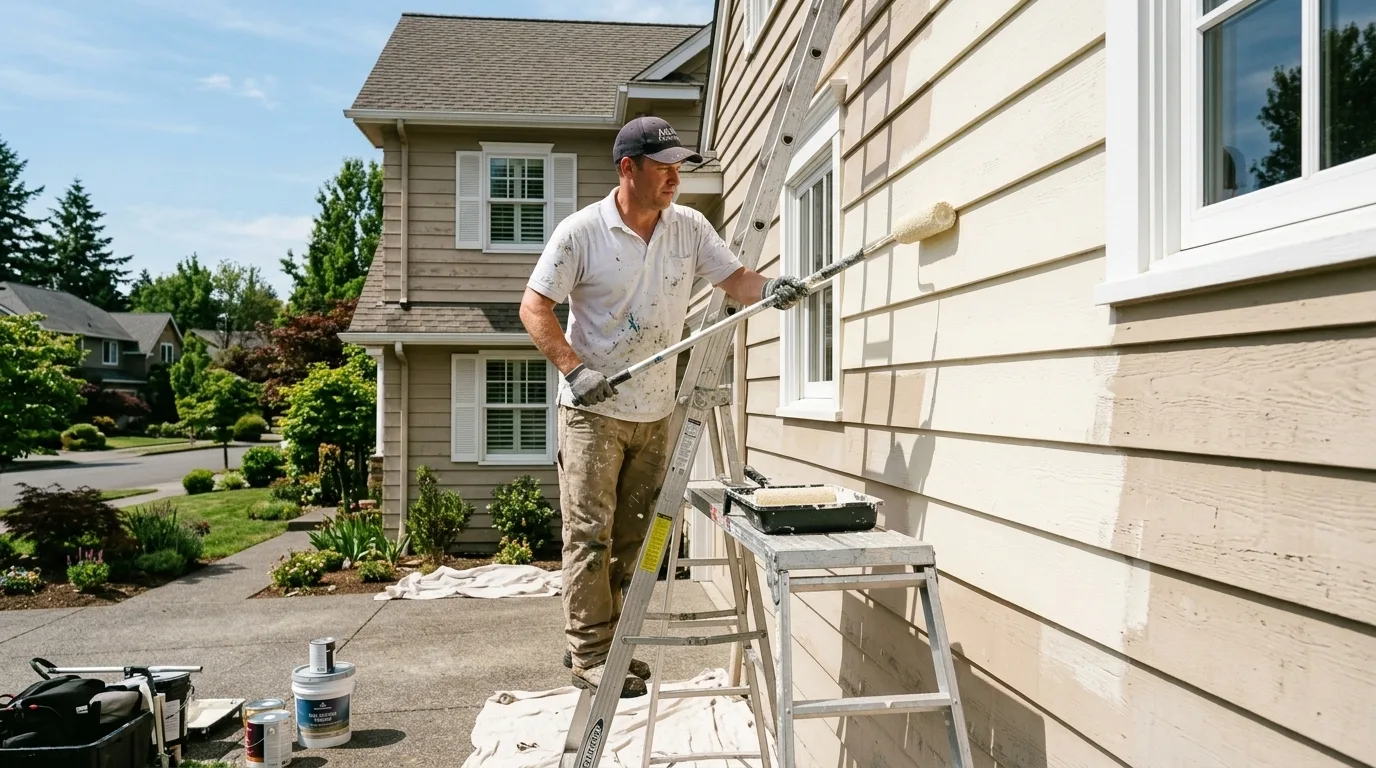
Facade painting
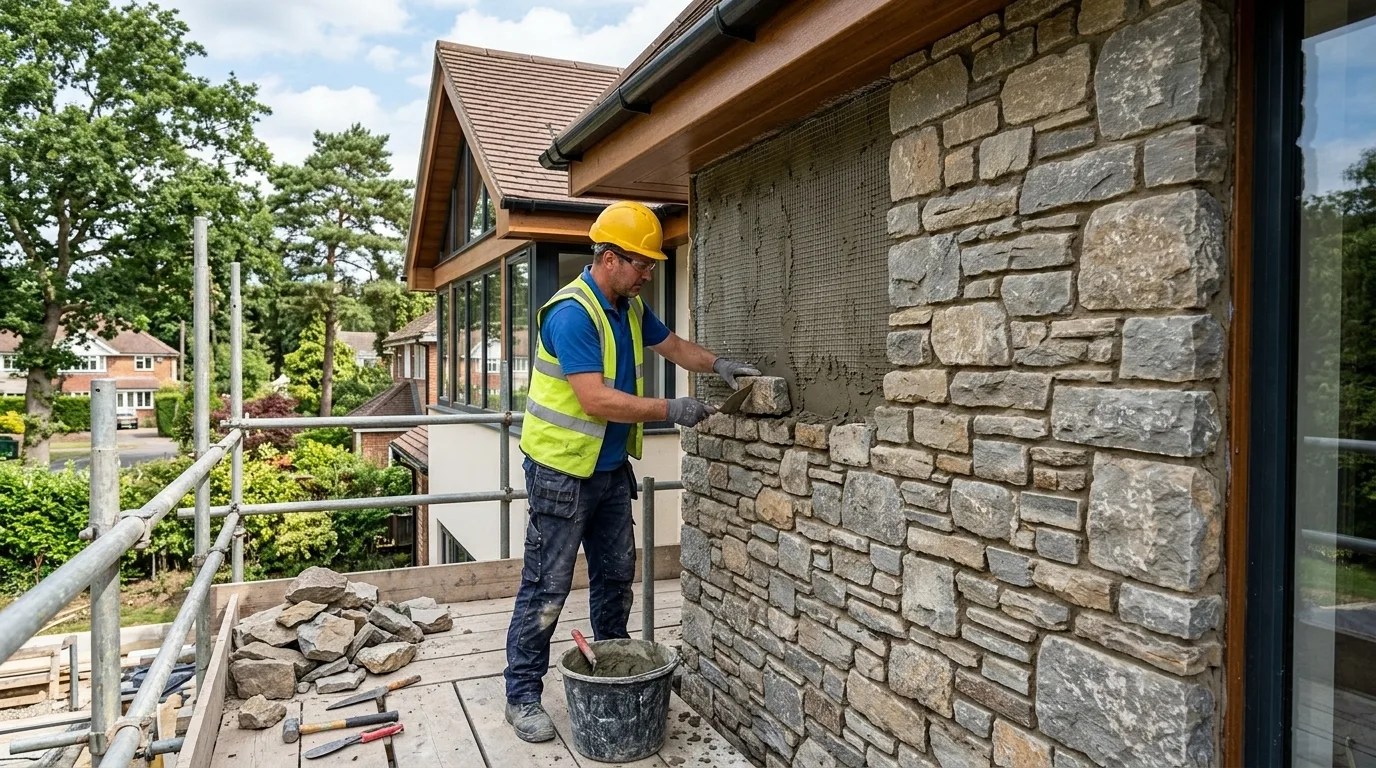
Stone finishing
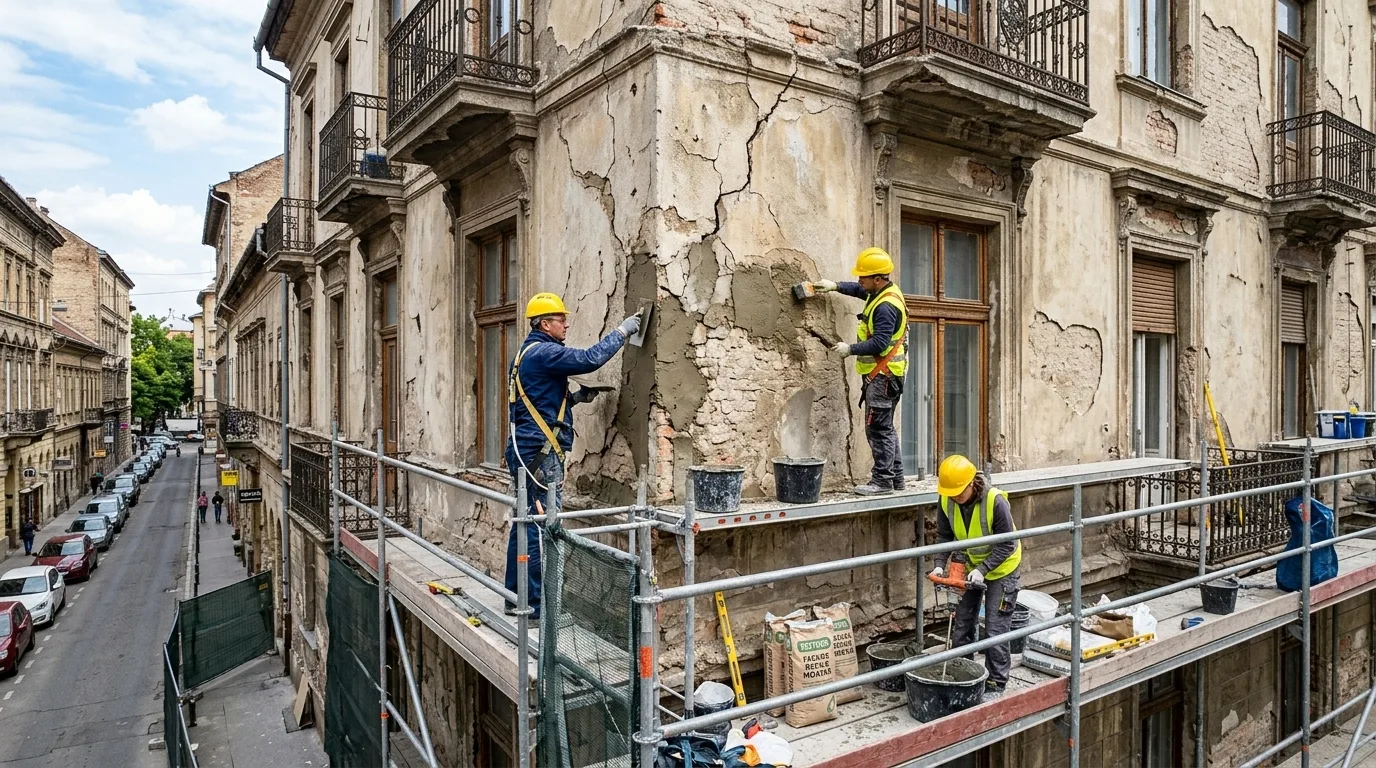
Facade repair
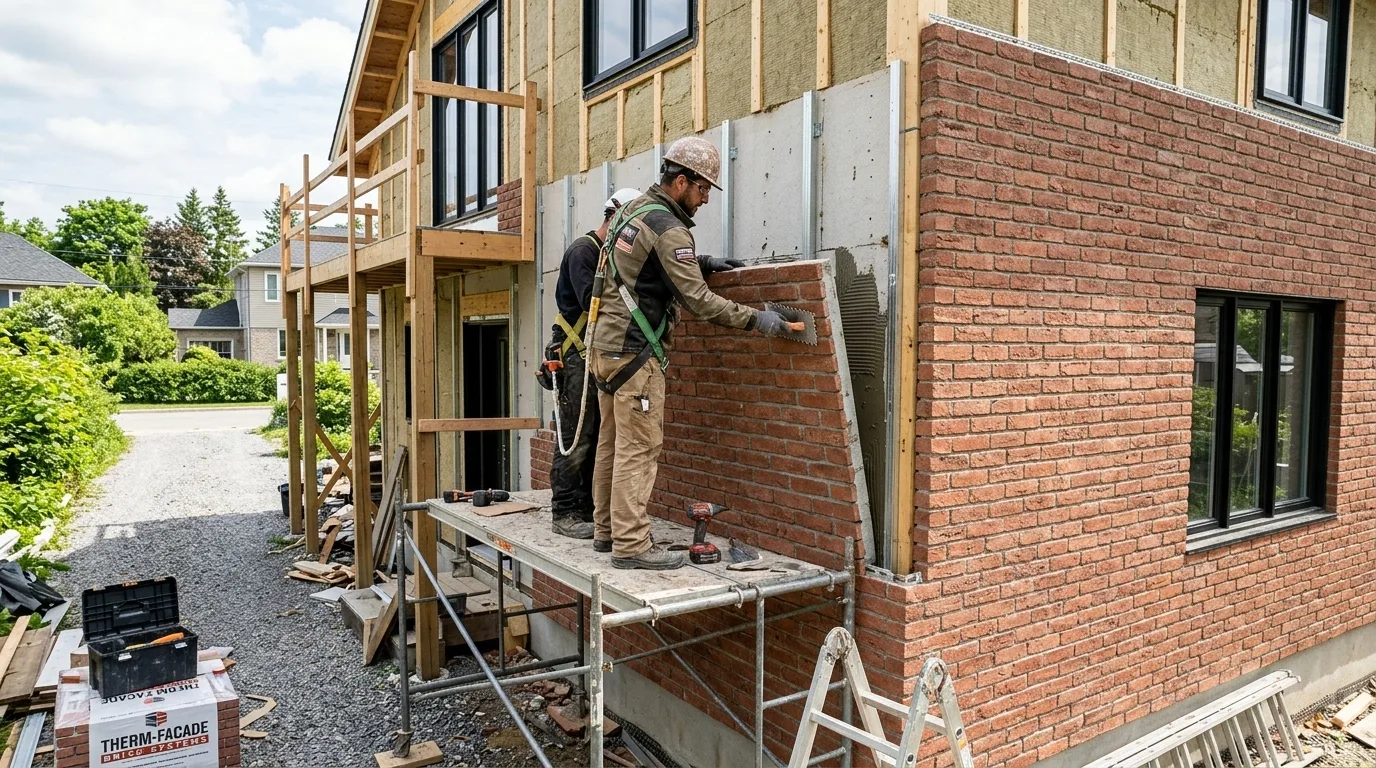
Installation of facade panels
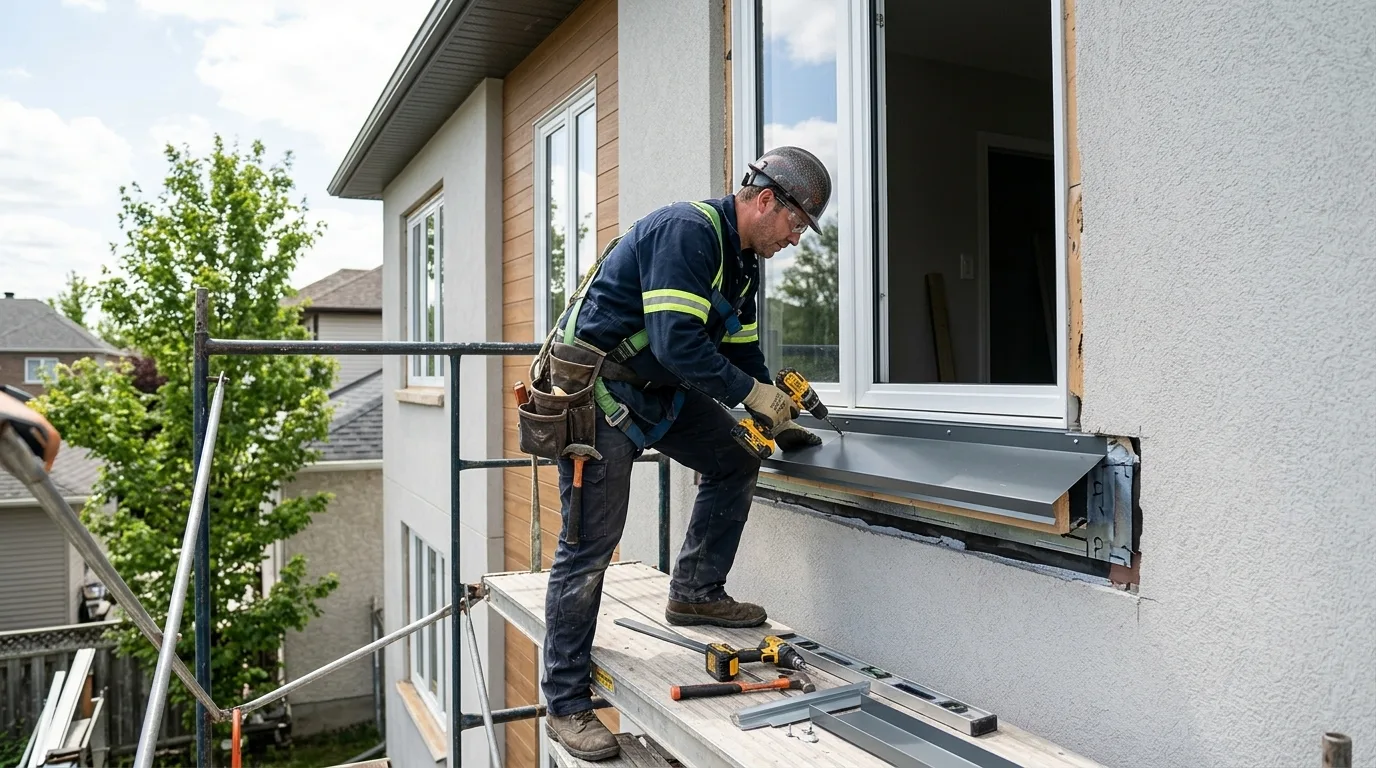
Installation of flashings and reveals
Types of facade
work we do
Facade insulation
Plastering the walls
Brick cladding
Siding installation
Installation of flashings and reveals
Facade repair
Facade painting
Stone finishing
Installation of facade panels
Construction of ventilated facades
We will call you back within 3 minutes
Types of facade
work we do
Facade insulation
Plastering the walls
Brick cladding
Installation of facade panels
Installation of flashings and reveals
Facade repair
Construction of ventilated facades
Facade painting
Stone finishing
Siding installation
We will call you back within 3 minutes
Cost of facade work in
Almaty
| SERVICE | COST | TIME |
|---|---|---|
| Master's visit to the site (within the city) | from 5 000 ₸ | — |
| Minimum order value | from 30 000 ₸ | — |
| Plinth cladding with clinker tiles (per m²) | from 8 500 ₸ | from 2 days |
| Facade cladding with porcelain stoneware (per m²) | from 7 000 ₸ | from 3 days |
| Facade cladding with stone tiles (per m²) | from 9 500 ₸ | from 4 days |
| Laying 'brick-look' tiles (per m²) | from 6 500 ₸ | from 2 days |
| Levelling walls for cladding (per m²) | from 3 000 ₸ | from 1 day |
| Priming the walls (per m²) | from 800 ₸ | from 1 hour |
| Plinth waterproofing (per m²) | from 2 500 ₸ | from 1 day |
| Grouting the joints (per m²) | from 1 500 ₸ | from 1 hour |
| Dismantling the old cladding (per m²) | from 2 000 ₸ | from 1 day |
| Installation of drip flashings and corner pieces (per linear m) | from 1 500 ₸ | from 1 hour |
| Waste removal (per bag) | from 500 ₸ | — |
Advantages of facade work from Profi-Dom

Neat joints with no chips
We use professional jointing tools that prevent damage to the tiles during laying

Certified craftsmen
Each specialist confirms their qualification with an annual exam in facade technologies

Equipment for a wet facade
We use industrial mixers and plastering stations that ensure even application of the layers

Meeting the finishing deadlines
The average cycle of turnkey facade work takes 21 working days on a weekly schedule

5-year
warranty on the facade
We fix our obligations in a contract, including protection against plaster peeling and fastener corrosion

Transparent estimate in ₸
We fix the cost of materials and work in the estimate, with no hidden markups or extra charges
Advantages of facade work from Profi-Dom
We use professional jointing tools that prevent damage to the tiles during laying
Neat joints with no chips
Each specialist confirms their qualification with an annual exam in facade technologies
Certified craftsmen
We use industrial mixers and plastering stations that ensure even application of the layers
Equipment for a wet facade
The average cycle of turnkey facade work takes 21 working days on a weekly schedule
Meeting the finishing deadlines
We fix our obligations in a contract, including protection against plaster peeling and fastener corrosion
5-year
warranty on the facade
We fix the cost of materials and work in the estimate, with no hidden markups or extra charges
Transparent price in KZT
We will call you back within 3 minutes
Advantages of facade work from Profi-Dom
We use professional jointing tools that prevent damage to the tiles during laying
Neat joints with no chips
Each specialist confirms their qualification with an annual exam in facade technologies
Certified craftsmen
We use industrial mixers and plastering stations that ensure even application of the layers
Equipment for a wet facade
The average cycle of turnkey facade work takes 21 working days on a weekly schedule
Meeting the finishing deadlines
We fix our obligations in a contract, including protection against plaster peeling and fastener corrosion
5-year
warranty on the facade
We fix the cost of materials and work in the estimate, with no hidden markups or extra charges
Transparent price in KZT
We will call you back within 3 minutes
HOW WE WORK
- 01.Discussion and estimate
We visit the site or hold an online consultation to determine the scope of work precisely and prepare a transparent estimate with no hidden charges.
- 02.Visit for precise measurements
Our specialist comes at a time convenient for you, takes all the necessary measurements and records the features of the facade for a perfect fit of the material.
- 03.Creating the design and sketch
We develop a detailed cladding plan with a panel layout, so that you can see in advance how your house will look after installation.
- 04.Approval of the contract
In the contract we fix the final cost, the exact completion dates and the warranty obligations, so that you feel protected.
- 05.Preparation of materials
We order certified siding and all components, checking each batch for compliance with quality standards and colour.
- 06.Professional installation
Our craftsmen install the battens and fix the panels using a technology that prevents deformation and ensures a long facade service life.
- 07.Finishing and sealing
We carefully finish all corners, joints and openings, treating them with sealant to protect against moisture and draughts.
- 08.Handover of the site and cleanup
After the work is finished we remove the construction debris and carry out a final inspection together with you to make sure the result is flawless.
Find out the cost and timing of facade work in 1 minute
catalogue of completed facade work
 Facade insulation and plastering of a private house in the Alatau microdistrict
 Plinth cladding of a shopping centre on Abay Avenue
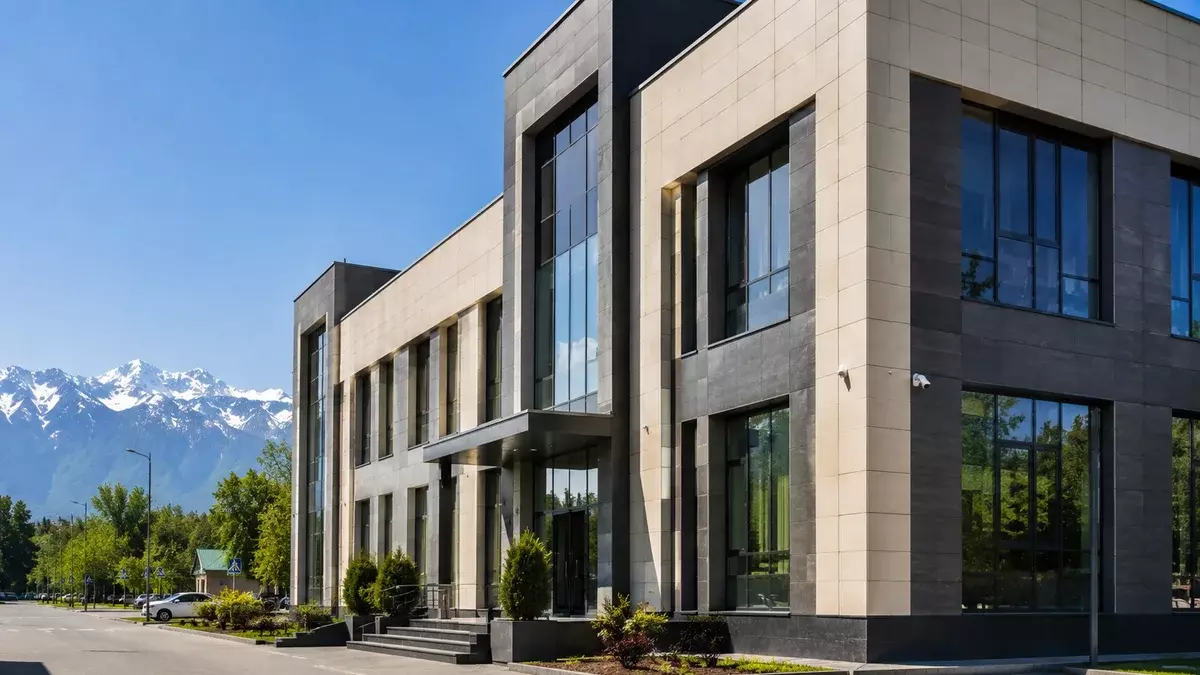 Installation of a ventilated facade on an office building in the Bostandyk district
 Painting and repair of the facade of an apartment building in the Samal microdistrict
FIND OUT THE COST OF FACADE WORK FOR YOUR PROJECT
Leave a request and we will contact you within 3 minutes
Thank you! We will contact you within 3 minutes.
By clicking the button you agree to the terms of the
 Privacy Policy
FIND OUT THE COST OF FACADE WORK FOR YOUR PROJECT
Leave a request and we will contact you within 3 minutes
Thank you! We will contact you within 3 minutes.
By clicking the button you agree to the terms of the
Or call us at
+7 (707) 068-88-68Privacy PolicyFIND OUT THE COST OF FACADE WORK FOR YOUR PROJECT
Leave a request and we will contact you within 3 minutes
Thank you! We will contact you within 3 minutes.
By clicking the button you agree to the terms of the
Or call us at
+7 (707) 068-88-68About house tile cladding in detail
Tiling a house is a reliable way to protect the facade and give the house a presentable look. In Almaty, with its sharply continental climate, it is important to choose tiles with frost resistance of F100–F300 and water absorption below 3%. In this article we will go over the types of tile, the installation technology, prices per m² and warranties.
What facade tiles are and which types suit a house
The price of tiling a house depends on the area, the material and the complexity of the facade — we calculate the exact amount after a measurement. Facade tile is a cladding material for exterior walls that protects the house from precipitation, temperature swings and mechanical impact. Let us go over the main types, their characteristics and where they are used.
Clinker tiles for the facade — properties and advantages
Clinker facade tiles are the most frost-resistant option: they withstand up to F300 freeze-thaw cycles and have water absorption below 2%, which makes them ideal for winters with swings from -30°C to +40°C. They are made from refractory clays fired at 1200–1300°C, which gives a dense, pore-free structure that moisture cannot penetrate. In local conditions, clinker lasts on the facades of houses in the Medeu and Bostandyk districts for 20–30 years without replacement, unlike concrete equivalents, which start to crumble after 5–7 years. Clinker is not afraid of salt and de-icing agents, so it is often chosen for the plinth and the lower part of the facade, where snow and dirt come into contact with the surface.
Porcelain stoneware for the facade — strength and design
Porcelain stoneware for facades has a flexural strength of up to 50 MPa and frost resistance of F150–F200, which suits the walls of a house but is inferior to clinker on the plinth. The production technology — pressing under 400–500 kg/cm² and firing at 1250°C — gives a uniform structure with no hidden cracks or chips that could split when water freezes. On the Almaty market the popular formats are 600×600 mm and 1200×600 mm imitating natural stone or concrete: such slabs are mounted on the ventilated facades of commercial buildings on Al-Farabi Avenue and in the Samal-2 district. Porcelain stoneware is heavier than clinker (weight per m² — 18–25 kg against 12–18 kg), so it requires a stronger reinforced base.
Concrete and flexible facade tiles — for complex areas
Concrete facade tiles are a budget option with frost resistance F100–F150, while flexible tiles on a polymer base are suitable for arches, columns and bay windows where bending is needed. The concrete elements are made by vibro-casting or semi-dry pressing: the first gives a smoother surface, the second — precise geometry for jointing on the facades of private houses in the suburbs (Talgar, Kargaly, Irgeli). Flexible tiles are a polymer-sand mix 3–5 mm thick that bends to a radius of up to 100 mm without cracks, but their water absorption reaches 4–6%, which is critical for the damp Almaty spring. For the plinth it is better to choose clinker or concrete tiles with waterproofing — flexible tiles on the plinth can peel off due to constant contact with moisture.
Comparison of facade tile types: a table of properties
| Type of tile | Frost resistance (cycles) | Water absorption (%) | Weight per m² (kg) | Price per m² (KZT) |
|---|---|---|---|---|
| Clinker | F200–F300 | 1–2% | 12–18 | 7 000–12 000 |
| Porcelain stoneware | F150–F200 | 2–3% | 18–25 | 5 000–9 000 |
| Concrete | F100–F150 | 3–5% | 15–22 | 3 500–6 000 |
| Flexible | F50–F100 | 4–6% | 8–12 | 4 000–7 000 |
For Almaty with swings from -30°C in winter to +40°C in summer, the minimum frost resistance is F100, the optimal is F200–F300. If the budget is limited, take concrete tile for the walls and clinker for the plinth — this will save up to 40% on material without losing durability in the lower zone of the facade.
Requirements for facade tiles in the Almaty climate
Almaty's climate is sharply continental, with frosts down to -30°C, frequent thaws and hot summers. Facade tiles must withstand these loads, and the installation must take the region's specifics into account.
Frost resistance and water absorption — the main parameters in Almaty
For Almaty conditions facade tiles must have a frost resistance of no less than F100 and water absorption below 3% —, otherwise water freezing in the pores will destroy the tile in 2–3 winters. In practice, for residential houses clinker and porcelain stoneware with figures of F150–F300 are used, which pass 150–300 freeze cycles without loss of strength. Damp winters with transitions through zero create up to 50–70 cycles per season — a material with a margin of frost resistance lasts 25–30 years. Tiles with water absorption above 5% (for example, unglazed porcelain stoneware) require mandatory hydrophobisation in local conditions — treatment with a water-repellent compound, otherwise after 2–3 years efflorescence and cracks appear.
Which adhesive to use for facade tiles in Almaty
For facade tiles in Almaty a frost-resistant adhesive of class C2TE (elastic, with an extended adjustment time) is used, which withstands up to F150 freeze cycles. Compounds with polymer additives compensate for the thermal expansion of the material and the base under swings from -25°C in winter to +35°C in the sun in summer — the deformation reaches 0,5–1 mm per metre of wall. The thickness of the adhesive layer under clinker tile is 6–10 mm, applied with a 10–12 mm notched trowel to avoid voids. Ordinary tile adhesive for interior work breaks down on a facade in a single winter — it is not designed for temperature swings and humidity, so before buying check the marking on the bag: 'for exterior work' and 'frost-resistant'.
Does the facade need insulating before tile cladding
Insulating the facade before tiling is not mandatory but recommended: it reduces heat loss by 30–40% and eliminates cold bridges in the walls. In Almaty houses with brick 380–510 mm thick, insulation with mineral wool or polystyrene foam 50–100 mm thick pays off within 3–5 heating seasons through gas savings. For frame houses and aerated concrete walls insulation is mandatory — otherwise the dew point shifts into the wall, condensation accumulates within the masonry, and after 2–3 years mould and mildew appear. The insulation is mounted only on dry walls in the warm season (May–September) — the moisture of the base must not exceed 4%, otherwise the insulation will lose its properties.
Facade tile cladding technology: stages and nuances
Tiling a facade is a multi-stage process, and how long the cladding lasts on the wall depends on its quality. Let us go over each stage: from preparing the base to the final grouting.
Preparing the base — cleaning, levelling, priming
Preparing the base begins with cleaning off old plaster, paint and dust — tiles cannot be laid on an old facade without removing flaking layers, otherwise they will fall off together with them. After cleaning, the flatness is checked: for facade tiles the permissible unevenness is no more than 5 mm over 2 metres of a level, otherwise voids form under the material that burst from freezing moisture in winter. The walls are levelled with a cement-sand mortar or a ready-made cement-based plaster — gypsum compounds are unsuitable for a facade, as they are vulnerable to water. The surface is then primed with a deep-penetrating compound for concrete, brick or aerated concrete — this binds the dust and reduces the absorbency of the base. If there are oil stains or bitumen on the wall, they are removed mechanically or chemically — the adhesive will not grip a contaminated surface.
Reinforcing the base — why mesh is needed
Reinforcing the base with fibreglass mesh is mandatory on facades of aerated concrete, foam block and wood — it prevents cracks from appearing as the house settles and under temperature swings. An alkali-resistant mesh with a density of 145–160 g/m² is used — cheap filler mesh dissolves in the alkaline environment of cement adhesive in 2–3 years. The mesh is embedded in the first layer of adhesive to 1/3 of its thickness — if laid on the surface, the reinforcement will not work and cracks will run along the joints. Strips of mesh are glued with a 10–15 cm overlap, with no breaks at the corners — the corners are additionally reinforced with mesh corner pieces. On concrete and brick walls without cracks or settlement, reinforcement is optional, but it is recommended when cladding with large-format porcelain stoneware 60×60 cm — the heavy tile creates shear loads, and the mesh safeguards the base against local movements.
Laying tiles on the facade — temperature regime and technique
Tiles can be laid on a facade at temperatures from +5°C to +30°C — in winter, winter adhesive with anti-frost additives is used, but the bond quality is still lower. The adhesive is applied to the base with a notched trowel with a 8–10 mm comb for clinker tiles and 10–12 mm for porcelain stoneware — too thin a layer does not compensate for unevenness, while a thick one shrinks and leaves voids. The tile is glued using the “wetting” method: a thin layer of adhesive is applied to the back and pressed against the base with a slight push — this eliminates voids under the material that fill with water in winter and tear the tile when it freezes. The joints are formed with plastic spacers of 6–10 mm for clinker and 3–5 mm for porcelain stoneware, the width depending on the format and the climatic zone. In heat above +30°C the tile and base are wetted with water, otherwise the adhesive dries out in 10–15 minutes and does not gain strength — work is done from the morning until 11 and after 16 o'clock.
How long does tile cladding of a house take
Tiling a house with an area of 100–150 m² takes 2–3 weeks with a crew of 2–3 craftsmen — including preparing the base and grouting the joints. The first week goes on preparation: cleaning, levelling, priming and reinforcement — this stage cannot be rushed, as the fresh plaster must dry for 5–7 days before it gains strength. The second week is laying tiles on even walls; a craftsman covers 8–12 m² a day on simple facades and 5–7 m² on complex ones with bay windows and arches. The third week is grouting the joints with frost-resistant compounds 48–72 hours after laying, then washing the facade and fixing minor defects. The time increases if the facade has a complex geometry (bay windows, arches, columns) — 1–2 days are added for each complex element, and cladding the plinth and window reveals takes another 2–3 days.
Grouting the joints and junctions: how to avoid cracks and leaks
Grouting the joints is the final stage of tiling work, and it is often underrated. The quality of the grouting determines whether water will get under the tiles and whether the joints will crack after the first winter.
How to grout the joints on facade tiles so they do not crack
For facade tiles an elastic frost-resistant grout on a cement or epoxy base is used — it withstands facade deformations and does not crack under temperature swings. Cement compounds with polymer additives, for example Ceresit CE 40 or Litokol Starlike, have a frost resistance of F100-F300 and are suitable for walls where the tile heats up to +50°C in summer and cools to -30°C in winter. The joints are filled completely with a rubber spatula, without voids, to a depth of no less than 2/3 of the tile's thickness — voids become stress concentrators when water that gets into them freezes. The drying time of cement grout at +20°C is 24 hours, but in the local damp autumn weather this increases to 48-72 hours. Epoxy grout is 2–3 times more expensive than cement, but it does not absorb moisture and does not need renewing for 10–15 years — for the plinth it is the optimal choice.
Waterproofing the plinth and junctions — protection from moisture
Plinth waterproofing is a mandatory stage: the lower part of the facade to a height of 30–50 cm from the ground is treated with brush-on waterproofing so that capillary moisture does not destroy the tile. For this, bitumen-polymer mastics (for example, Tekhnonikol №24) or cement waterproofing mixes with a penetrating effect are used — they are applied with a brush in two coats with 6-8 hours of intermediate drying. At the junction of the plinth and the blind area a galvanised steel or plastic drip flashing is mandatory — it carries rainwater away from the wall a distance of 5-7 cm. Junctions with the blind area, porch and windows are additionally sealed with silicone sealant — this is where leaks most often appear.
Caring for a tiled facade — how to extend its service life
Caring for a tiled facade is minimal: once a year it is washed with water from a hose or a soft brush, and the joints are inspected for cracks — if any are found, they are renewed with fresh grout of the same colour. In spring, after the snow melts, the plinth area is inspected: if puddles stand on the blind area, the water must be drained with a gutter or by adding soil, otherwise moisture will constantly wet the lower part of the tiles. Grease stains from barbecues or soot are removed with a weak soap solution and a soft sponge — abrasive cleaners scratch the glaze, and dirt gets into the scratches. A pressure washer with pressure above 100 bar must not be used — water can get under the tiles through microcracks in the grout and tear them off when it freezes.
The price of house tile cladding per m²: a cost table
The price of tiling a house is made up of several components: the craftsmen's labour, materials, preparation of the base and additional services. Let us go over how much each stage costs and what the final estimate is made up of.
The price of house tile cladding per m² — a table of work costs
| Type of tile | Labour per m² (KZT) | Materials per m² (KZT) | Total per m² (KZT) |
|---|---|---|---|
| Clinker | 5 000–7 000 | 7 000–12 000 | 12 000–19 000 |
| Porcelain stoneware | 4 000–6 000 | 5 000–9 000 | 9 000–15 000 |
| Concrete | 3 500–5 000 | 3 500–6 000 | 7 000–11 000 |
| Flexible | 4 500–6 500 | 4 000–7 000 | 8 500–13 500 |
The price per m² drops as the volume grows: for facades of 150 m² or more, craftsmen often give a 10–15% discount.
What is included in the cost of facade tile cladding
The cost of facade tile cladding usually includes: preparing the base (levelling the walls, deep-penetration priming), reinforcing with facade mesh, laying the tile on frost-resistant adhesive and grouting the joints with elastic compounds. The materials — the tile itself, adhesive, grout, primer — may be included in the contractor's estimate or paid for separately, depending on the arrangement. Among local crews the standard practice is a separate estimate: the cost of the work is fixed, while the customer buys the materials themselves or through the contractor with a 10–15% mark-up. A transparent estimate broken down by stage is a sign of a reliable contractor: it lets you keep control of costs and avoid hidden extra charges at the handover stage.
Can you save on facade cladding
You can buy the tiles yourself, but the saving often turns into an overpayment: without experience it is easy to get the quantity wrong (you need a 10–15% reserve for cutting) or to choose tiles unsuitable for a facade. For example, budget samples with water absorption above 3% will break down over a single Almaty winter — thaws and night frosts form ice wedges inside the pores. In practice, clients who buy the material themselves come back for more in 30% of cases because of a shortage or breakage during laying. Saving on adhesive or grout is the worst option: cheap adhesive will not survive the local winter, and the rework will cost more than the initial saving.
Additional costs: delivery, measurer's visit, insulation
Additional costs when cladding a facade include delivery of materials (5 000–15 000 KZT across Almaty depending on distance and volume), insulation (from 2 000 KZT per m² for basalt wool or polystyrene foam 50 mm thick) and the surveyor's visit — at many companies it is free when a contract is signed. Hidden items include dismantling the old finish (1 500–3 000 KZT per m²) and installing drip edges and reveals (from 1 500 KZT per linear metre). In the estimate for a typical house of 150 m², additional work makes up 15–25% of the total. Insulation adds 30–50% to the estimate but pays off within 2–3 heating seasons through lower heating bills — in the city this is especially noticeable with gas heating of a private house.
Turnkey house tile cladding with PROFI-DOM
We provide turnkey facade tiling across Almaty — from measurement to warranty service. Below is how the process is organised, which materials we use and what you can count on after the project is handed over.
How we work: from the survey to handover of the project
We start with a free visit from a surveyor — he inspects the facade, measures the area, assesses the condition of the walls and prepares a detailed estimate broken down by stage: the cost of materials, the work on each section (plinth, reveals, blank wall) and the timeframe, with no hidden surcharges after the start. Once agreed, the crew buys tiles and adhesive with a 10–15% reserve for cutting — this rules out downtime and extra orders during the job. On site, PROFI-DOM craftsmen work to a process chart: first reinforcement and levelling, then laying in rows with level control, then grouting. We hand over the project with a record of the work done — the client signs the certificate only after a visual acceptance. The 10–15% cutting reserve is best discussed at the measurement stage: if the tile has a pattern, the allowance rises to 20%, and we build this into the estimate right away so as not to buy extra later from another batch with a different shade.
What materials and technologies we use
In our work we use clinker facade tiles from European brands (ABC-Klinker, Feldhaus Klinker) with water absorption below 3% and frost resistance F100 — — this guarantees that the coating will not crack after the first winter. The adhesive is cement, class C2TE (Ceresit CM-17, Knauf Diamant), with adhesion to concrete of at least 1,0 MPa and elasticity for the Almaty temperature swings. On the plinth and reveals we additionally apply two coats of brush-on waterproofing (Ceresit CR-65) — protection against the capillary moisture that rises from the ground. Reinforcing the walls with fibreglass mesh with a 5×5 mm cell is mandatory on aerated concrete and foam blocks — without it the tile can fall off due to settlement of the base. For the plinth we also fit a galvanised steel drip flashing with a drip edge — it carries rainwater away from the waterproofing layer, otherwise even a two-coat coating cannot cope with constant soaking in a snowy winter.
Guarantee on facade work — what we cover
We give a 5-year warranty on facade work — during this period we fix defects related to the quality of installation free of charge: tiles peeling off, cracks in the joints, loss of tightness at junctions. The warranty does not cover mechanical damage (impacts, scratches from hail) or force majeure (earthquakes, landslides) — this is standard practice for facade contractors. In the contract we separately state that we are responsible for the adhesion of the tiles to the base — if within two years the cladding falls off without external impact, the surveyor comes out within three working days and restores the area at our own expense. The warranty takes effect from the date the acceptance certificate is signed, not from the moment work begins. When signing the certificate, check that the contract specifies a term of exactly 5 years and not 1 year — some companies write “warranty on installation” without stating the period, and after a season they no longer cover defects.
Portfolio and reviews — our projects across Almaty
PROFI-DOM's portfolio includes more than 50 projects across the city and suburbs: from cottages in the Alatau district to townhouses in the Bostandyk district, with clinker tiles in various formats and colour schemes. The site has before/after photos showing the facade area, the type of tile and the completion time — for example, a 180 m² house in the Shanyrak neighbourhood was clad in 12 working days. Customer reviews are gathered on 2GIS and on the Instagram account — in them people write about meeting deadlines, keeping the site clean and the estimate not growing after the work began. We show the portfolio before starting work — this helps the customer assess the quality of the joints and seams on real projects rather than on advertising renders. It is better to visit one of the finished projects in your area — that way you will see the tile in the flesh under different lighting and can ask questions of the specialist who laid it.
Conclusion
Tiling a house is an investment for 20–30 years. Our breakdown of the key points: from choosing the material to overseeing the contractor.
Key takeaways
- - For the Almaty climate choose tiles with a frost resistance of F200–F300 and water absorption below 3% — — clinker or quality porcelain stoneware.
- - Facade tiling is a multi-stage process: preparing the base, reinforcement, laying, grouting the joints and waterproofing the plinth.
- - The price of facade finishing work per m² is made up of the cost of materials and services — the final amount varies from 7 000 to 19 000 KZT per m² depending on the type of tile.
- - Saving on consumables (adhesive, grout, waterproofing) leads to rework after 1–2 winters — quality materials pay off through the durability of the facade.
- - A transparent estimate broken down by stage and a warranty on the work are the main criteria for choosing a contractor in Almaty.