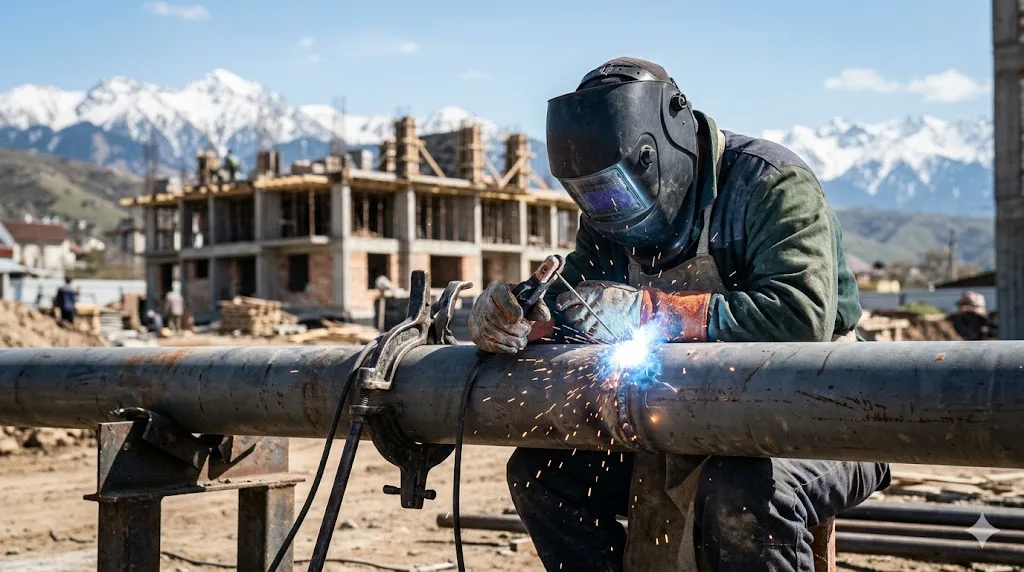
Welding of gas pipes in Almaty
from 2 500 tg.* PER JOINT
The gas service will not accept a gas pipeline without pressure testing and documents. We weld according to the project and check every joint: from 2 500 ₸ per joint, travel within Almaty is free.
 Joint 32–57 mm
in 20–30 minutes Weld certificate and
passport for the gas service 3-year warranty
on every seam Free site visit, estimate
before work starts
Welding of gas pipes in Almaty
from 2 500 tg.* PER JOINT
The gas service will not accept a gas pipeline without pressure testing and documents. We weld according to the project and check every joint: from 2 500 ₸ per joint, travel within Almaty is free.
Joint 32–57 mm
in 20–30 minutes
Weld certificate and
passport for the gas service
3-year warranty
on every seam
Free site visit, estimate
before work starts
Welding of gas pipes in Almaty
from 2 500 tg.* PER JOINT
The gas service will not accept a gas pipeline without pressure testing and documents. We weld according to the project and check every joint: from 2 500 ₸ per joint, travel within Almaty is free.
Joint 32–57 mm
in 20–30 minutes
Weld certificate and
passport for the gas service
3-year warranty
on every seam
Free site visit, estimate
before work starts
Types of welding
work we do
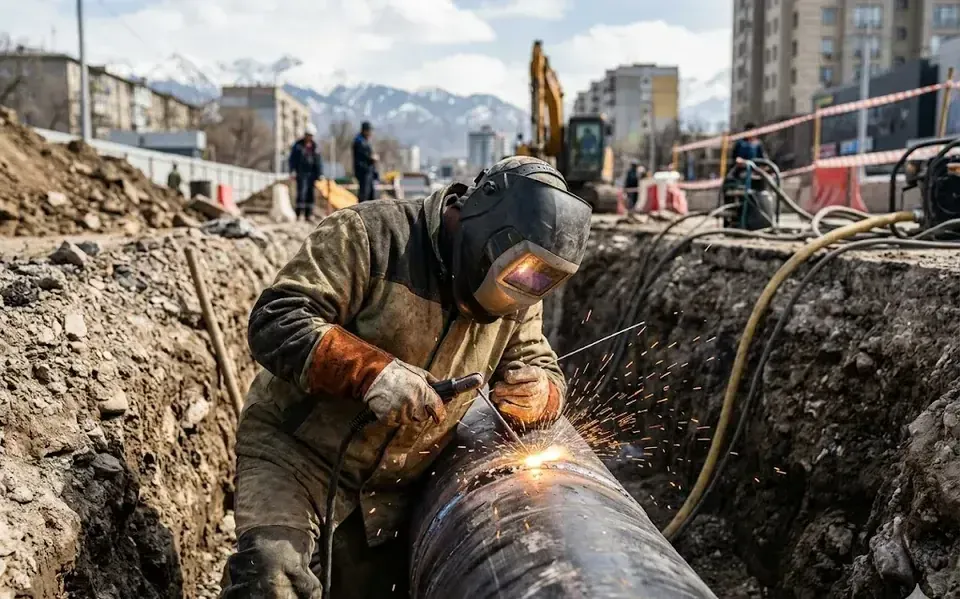
Turnkey gas pipe welding
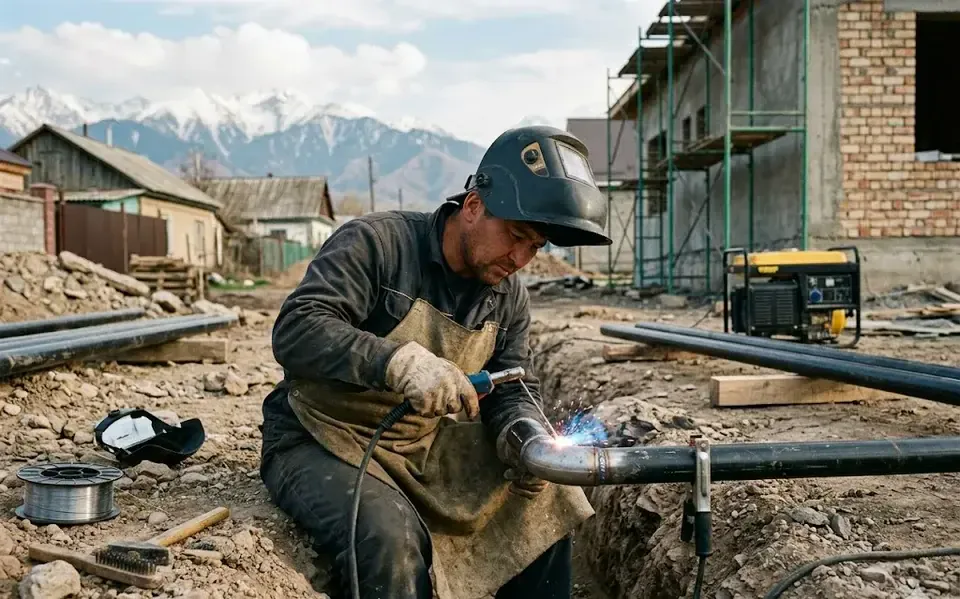
Installation of a steel gas pipeline
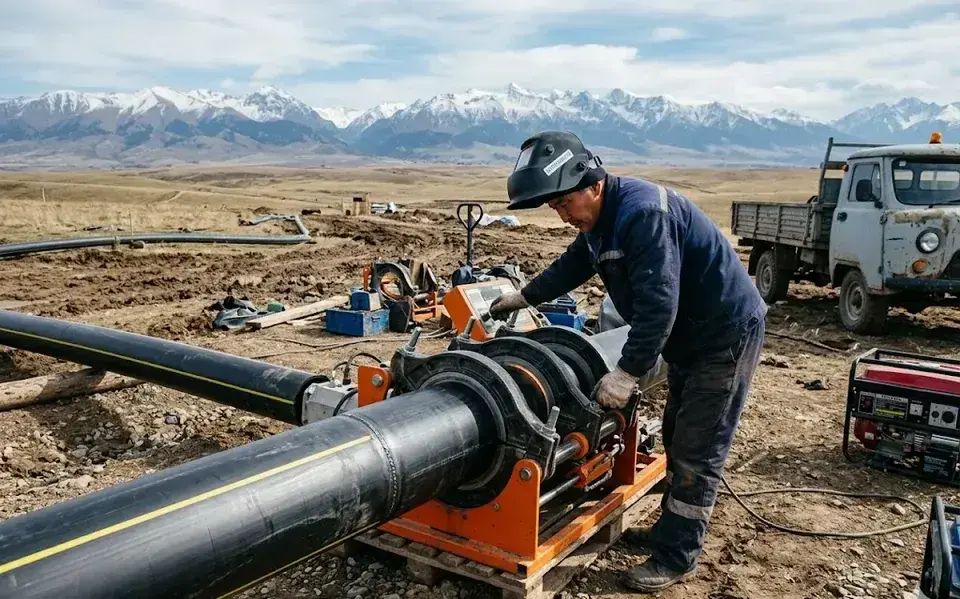
Welding of polyethylene gas pipes
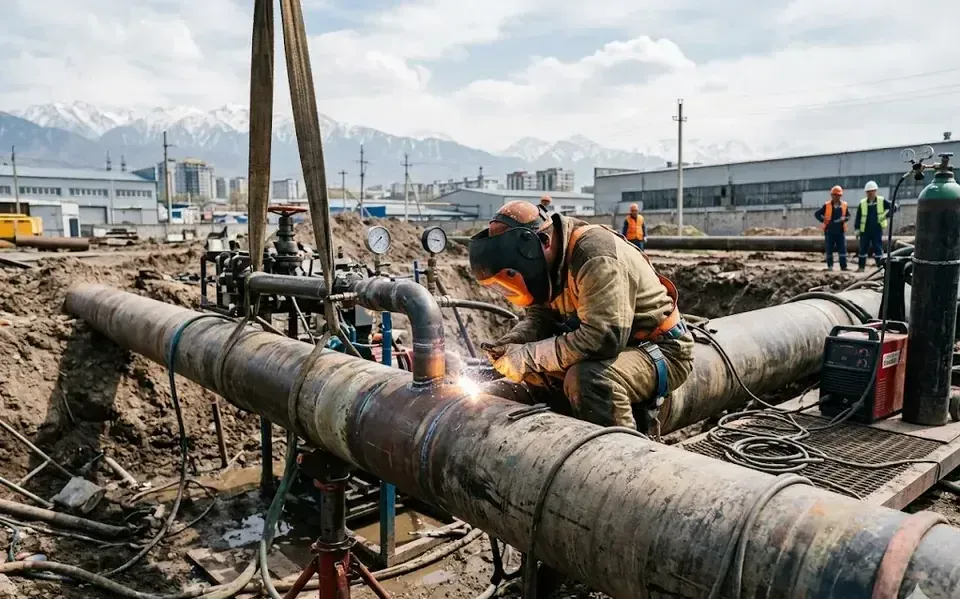
Tapping into an existing gas pipeline
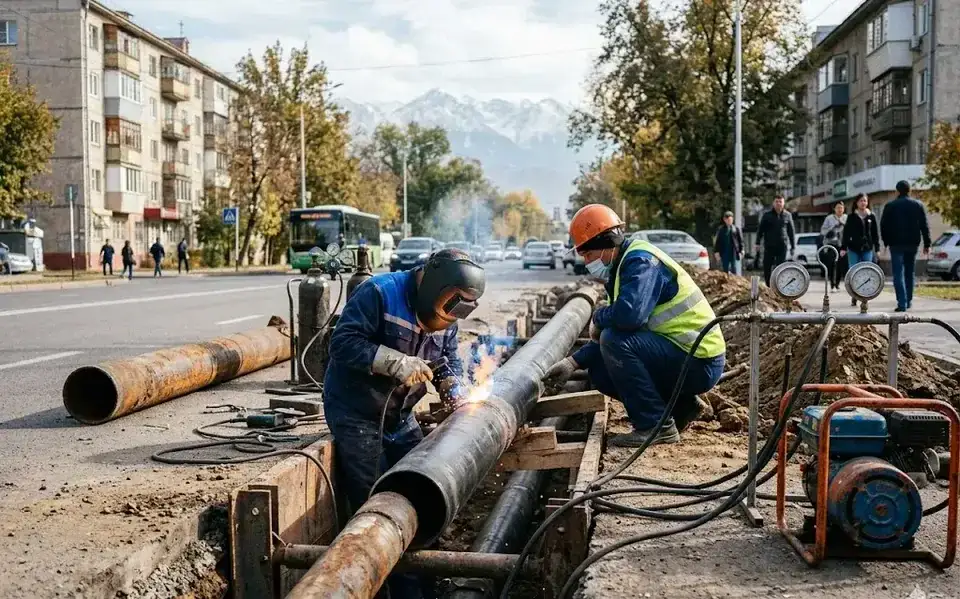
Replacement of a section of gas pipe
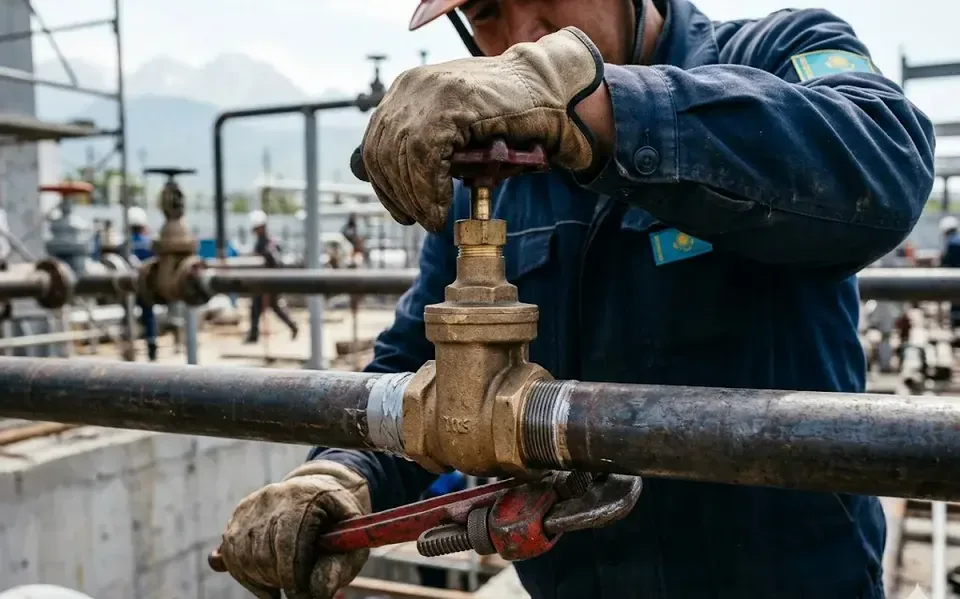
Installation of gas valves and cocks
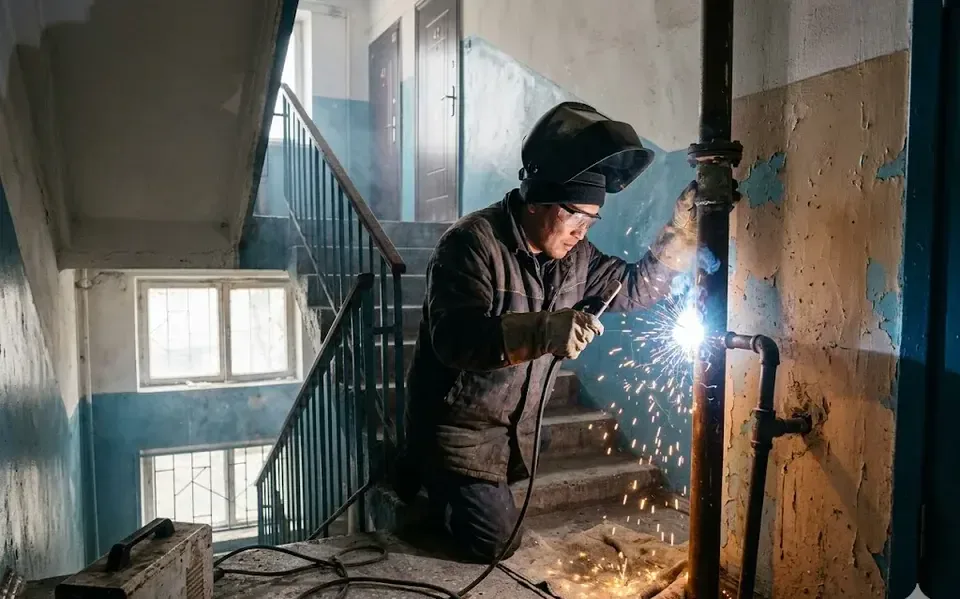
Welding of gas risers in apartment buildings
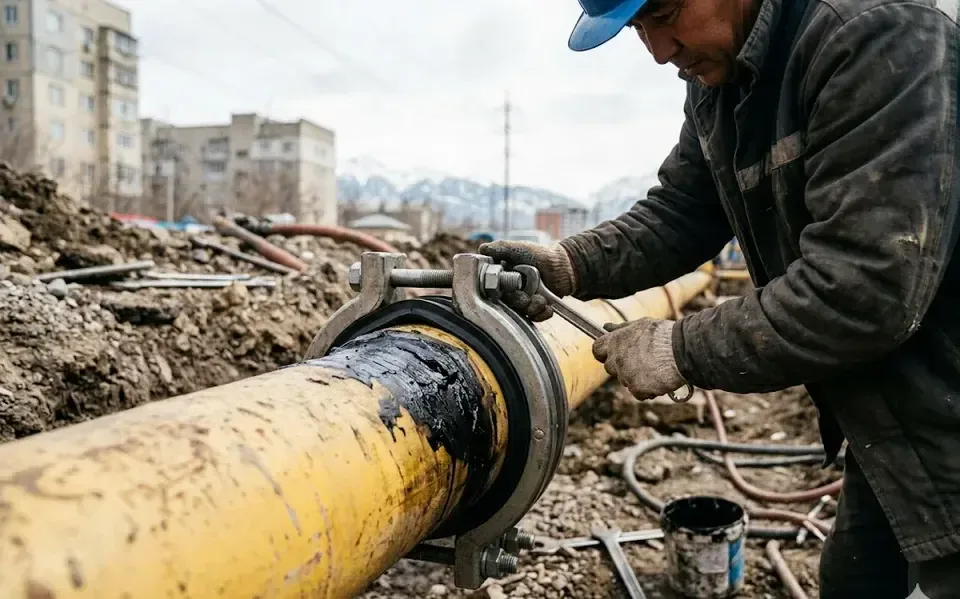
Gas pipe repair without welding
Types of welding
work we do
Turnkey gas pipe welding
Installation of a steel gas pipeline
Welding of polyethylene gas pipes
Tapping into an existing gas pipeline
Gas pipe repair without welding
Installation of gas valves and cocks
Welding of gas risers in apartment buildings
Replacement of a section of gas pipe
We will call you back within 3 minutes
Types of welding
work we do
Turnkey gas pipe welding
Installation of a steel gas pipeline
Welding of polyethylene gas pipes
Gas pipe repair without welding
Replacement of a section of gas pipe
Installation of gas valves and cocks
Welding of gas risers in apartment buildings
Tapping into an existing gas pipeline
We will call you back within 3 minutes
Cost of gas pipe welding in almaty
| SERVICE | COST | TIME |
|---|---|---|
| Site visit by a technician in Almaty | free of charge | from 1 hour |
| Gas pipeline joint 25–32 mm | from 2 500 ₸ | 20–30 min |
| Gas pipeline joint 40–57 mm | from 3 500 ₸ | from 30 min |
| Gas pipeline joint 76–89 mm | from 5 000 ₸ | from 1 hour |
| Connection to a gas stove (up to 2 joints) | from 5 000 ₸ | from 1 hour |
| Connection to a gas boiler (up to 3 joints) | from 7 500 ₸ | from 2 hours |
| Replacement of a section of gas pipe (2 joint + cut-out) | from 7 000 ₸ | from 2 hours |
| Boiler room piping (up to 5 joints + fittings) | from 15 000 ₸ | from 1 day |
| Pressure testing of an existing gas pipeline with a certificate | from 5 000 ₸ | from 1 hour |
| Visual and measuring inspection and pressure testing after our welding | included in the price | — |
Преимущества СВАРОЧНЫХ РАБОТ ОТ Profi‑Dom

Root welding in 2 passes
Root and fill pass on every joint: root penetration 2–3 mm, no porosity

Gas pipeline welder with 13 years of experience
Welds rotating and non-rotating joints of steel gas pipes 25–89 mm

Visual and measurement inspection and pressure testing at 0,3 MPa
We inspect every weld under a ×4 magnifier and keep the gas pipeline under pressure for at least 10 minutes

8–12 joints per shift
We complete a 50 m gas pipeline with 15 joints in 1–2 days, including pressure testing and documents

3-year warranty on seams
If there is a leak or porosity in the seam during the warranty period — we will re-weld at our own expense and repeat the pressure test

Documents for acceptance
Hidden works act, seam passport and pressure test report — everything for the commissioning act
Преимущества СВАРОЧНЫХ РАБОТ ОТ Profi‑Dom
Root and fill pass on every joint: root penetration 2–3 mm, no porosity
Root welding in 2 passes
Welds rotating and non-rotating joints of steel gas pipes 25–89 mm
Gas pipeline welder with 13 years of experience
We inspect every weld under a ×4 magnifier and keep the gas pipeline under pressure for at least 10 minutes
Visual and measurement inspection and pressure testing at 0,3 MPa
We complete a 50 m gas pipeline with 15 joints in 1–2 days, including pressure testing and documents
8–12 joints per shift
If there is a leak or porosity in the seam during the warranty period — we will re-weld at our own expense and repeat the pressure test
3-year warranty on seams
Hidden works act, seam passport and pressure test report — everything for the commissioning act
Documents for acceptance
We will call you back within 3 minutes
Преимущества СВАРОЧНЫХ РАБОТ ОТ Profi‑Dom
Root and fill pass on every joint: root penetration 2–3 mm, no porosity
Root welding in 2 passes
Welds rotating and non-rotating joints of steel gas pipes 25–89 mm
Gas pipeline welder with 13 years of experience
We inspect every weld under a ×4 magnifier and keep the gas pipeline under pressure for at least 10 minutes
Visual and measurement inspection and pressure testing at 0,3 MPa
We complete a 50 m gas pipeline with 15 joints in 1–2 days, including pressure testing and documents
8–12 joints per shift
If there is a leak or porosity in the seam during the warranty period — we will re-weld at our own expense and repeat the pressure test
3-year warranty on seams
Hidden works act, seam passport and pressure test report — everything for the commissioning act
Documents for acceptance
We will call you back within 3 minutes
HOW WE WORK
- 01.Request and scheme
Tell us what you need: inlet, distribution, connection to the boiler or stove — we'll call back within 3 minutes.
- 02.Project check
We check the route against the gas supply project; if there is no project, we will advise how to arrange one.
- 03.Free call-out
The master comes free of charge within Almaty, counts joints and diameters, and prepares an estimate before work begins.
- 04.Approval of the contract
We fix the price per joint, the timeline and a 3-year warranty; if necessary, we coordinate the date with the gas service.
- 05.Edge preparation
We cut the pipe, chamfer and clean the edges down to metal — otherwise pores will appear at the root of the seam.
- 06.Welding in 2 passes
We weld with basic-coated electrodes: first the root pass, then the filling pass.
- 07.VT and pressure testing
We inspect every seam, pressure-test the gas pipeline with air at 0,3 MPa, and check the joints with soap solution.
- 08.Documents and acceptance
We hand over the hidden works act, weld passport and pressure test report for acceptance by the gas service.
Find out the cost of gas pipe welding in 1 minutes
catalogue of completed welding work
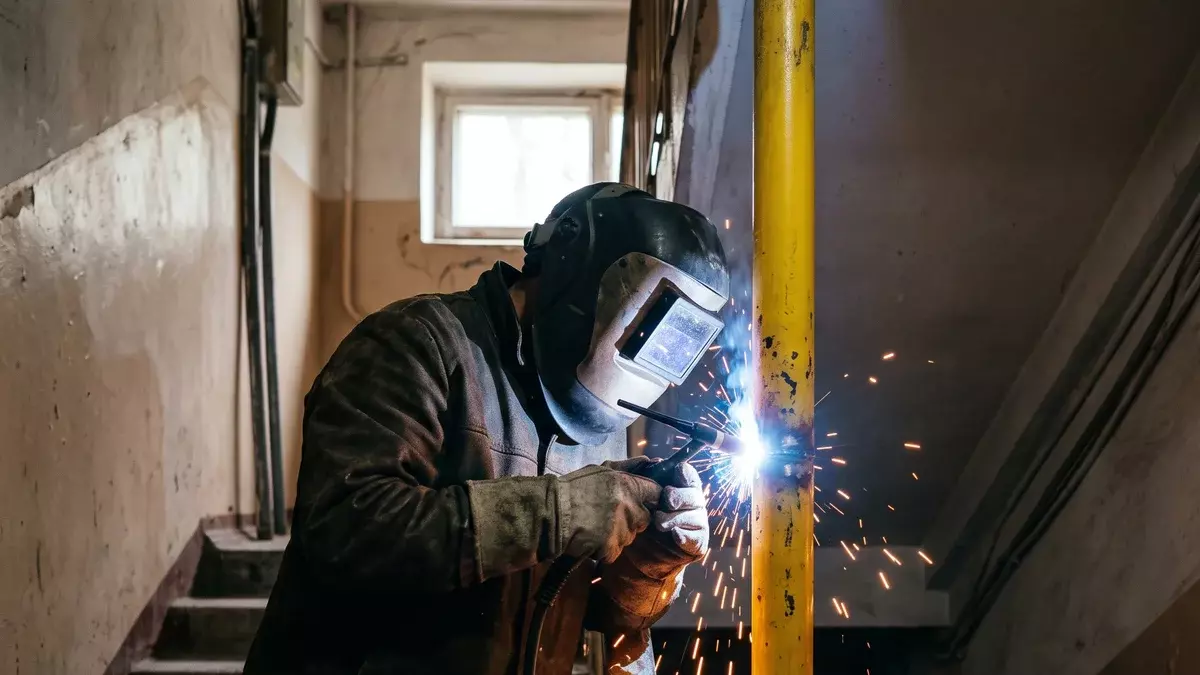
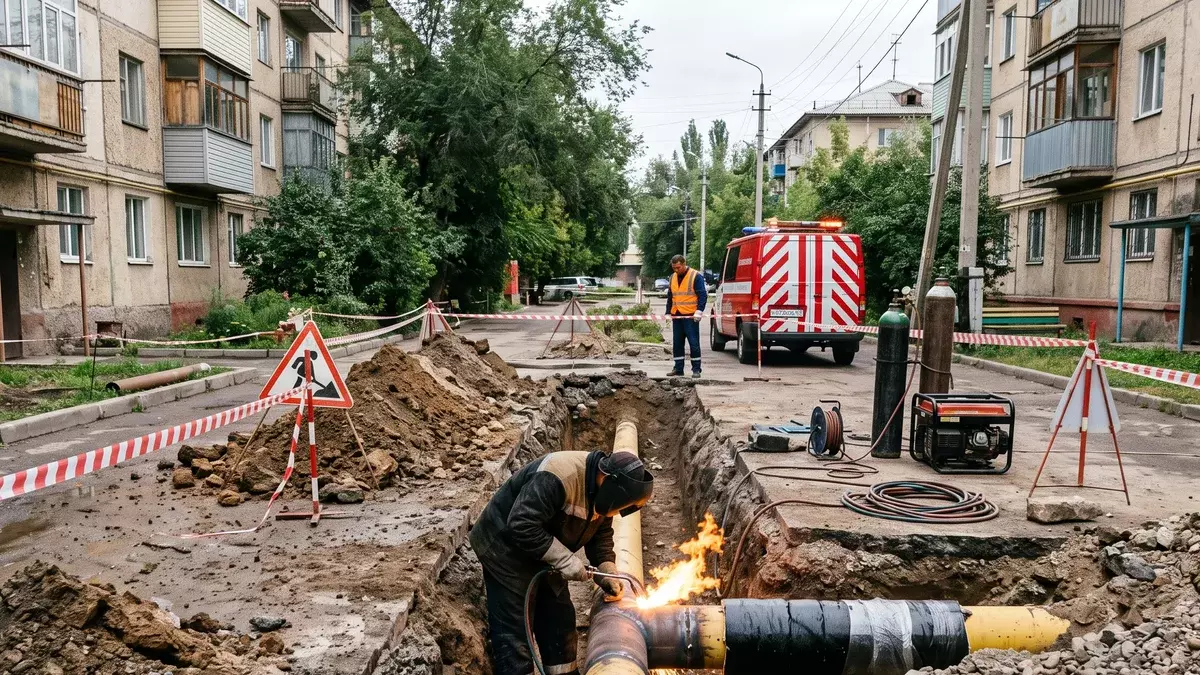 Welding of a gas riser in a multi-storey building, Taugul district
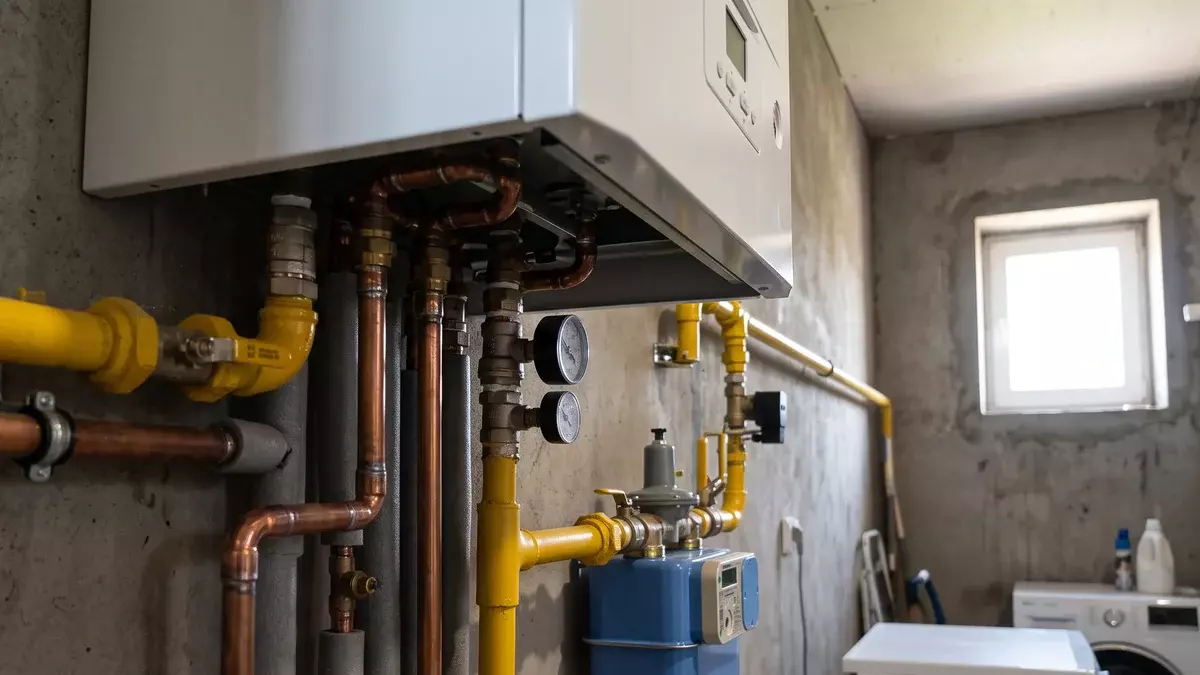 Welding of a gas pipeline for a cafe, Abay Avenue
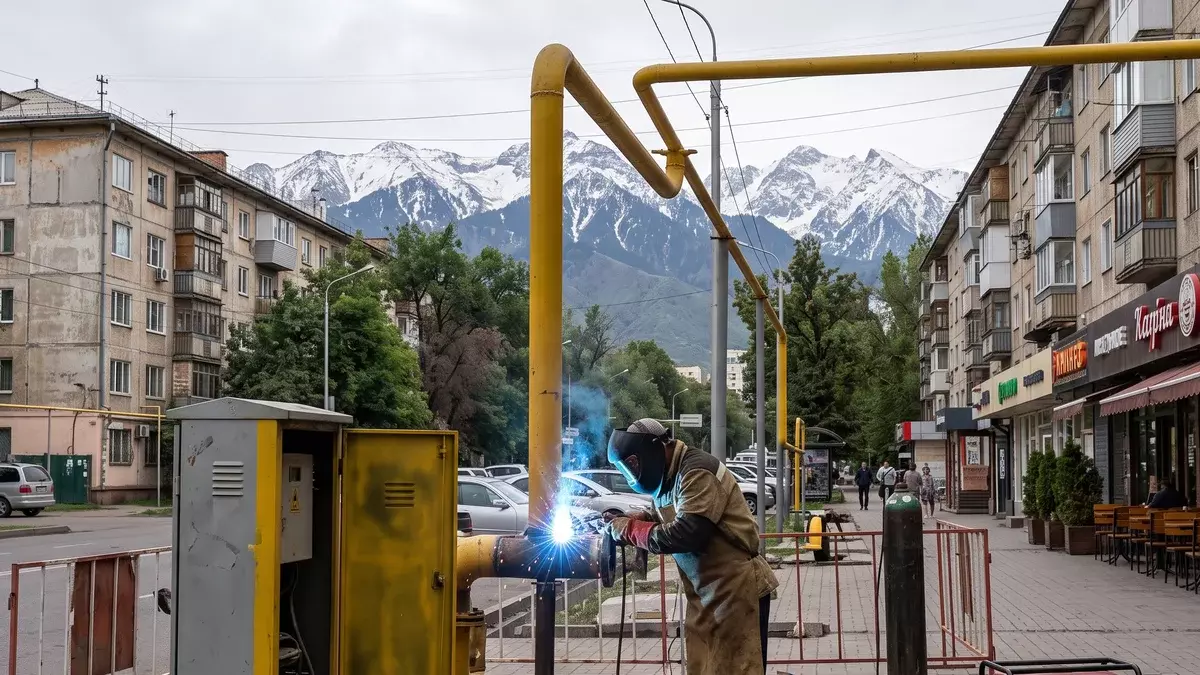 Repair of a gas pipe after damage, Zhetysu district
 Replacement of a gas boiler in a townhouse, Alatau district

FIND OUT THE COST OF WELDING WORK FOR YOUR PROJECT
Leave a request and we will contact you within 3 minutes
Thank you! We will contact you within 3 minutes.
By clicking the button you agree to the terms of the
Or call us at
+7 (707) 068-88-68Privacy PolicyFIND OUT THE COST OF WELDING WORK FOR YOUR PROJECT
Leave a request and we will contact you within 3 minutes
Thank you! We will contact you within 3 minutes.
By clicking the button you agree to the terms of the
Or call us at
+7 (707) 068-88-68Privacy PolicyFIND OUT THE COST OF WELDING WORK FOR YOUR PROJECT
Leave a request and we will contact you within 3 minutes
Thank you! We will contact you within 3 minutes.
By clicking the button you agree to the terms of the
Or call us at
+7 (707) 068-88-68Сварка газопровода в Алматы от PROFI‑DOM: допуск, контроль шва, цены
Gas pipeline welding at PROFI-DOM — external and internal — is carried out according to the gas supply project: welders are certified and authorized for gas work, each weld undergoes visual inspection and pressure testing, and the customer receives a full package of documents for acceptance by the gas service. A 25–32 mm pipe joint is from 2 500 ₸ including inspection and pressure testing; a visit within Almaty is free.
Published: 22 · Updated:
Who has the right to weld gas pipes — welder certification and gas permit
We explain why gas pipes are welded only by certified welders and what risks the customer takes by hiring a private individual without a permit.
Welder certification — what it is and why it is needed for gas work
Certification is an official permit for a welder to work on gas pipelines: it confirms that they have completed training and passed an exam in a certified gas pipe joining technology. The welder passes theory (knowledge of RK standards, seam types and inspection methods) and a trial weld on a sample, which is then checked by mechanical tests and radiography. We ensure every specialist holds a valid permit for low and medium pressure gas pipelines. Without certification, the gas service will not accept the gas pipeline for operation, even if the seam looks even externally.
How a gas pipe joint differs from an ordinary one
Welding a gas pipe requires mandatory full penetration of the root layer of the seam (the first pass), which ensures internal tightness — with conventional water pipe welding, such control is not mandatory. For steel gas pipelines, manual arc welding with a covered electrode (MMA) or semi-automatic welding in carbon dioxide (MAG) is used — both methods provide root penetration of 2-3 mm, eliminating microcracks and pores. After welding, each joint undergoes visual and measuring inspection (VMI): the weld leg is measured, and the absence of undercuts and overlaps is checked. Even a microscopic pore in the root seam of a gas pipeline can eventually cause a leak.
Risks of uncertified welding — refusal of acceptance, leakage, liability
If gas pipe joints are made by an uncertified welder, the gas service will refuse to accept the gas pipeline — all joints will have to be re-welded at your own expense. In Almaty, the gas inspection during checks requests a certification certificate for each welder, a copy of the welding technology certification, and VIC protocols for each seam; without these documents, the acceptance act is not signed. Reworking an already installed gas pipeline costs noticeably more than initial welding — plus dismantling the old joints and repeated pressure testing. If gas leaks due to a poor-quality seam, responsibility falls on the homeowner — insurance will not cover the damage, and in the event of an accident, administrative and criminal consequences are possible.
How we weld a gas pipeline and control weld quality
We explain exactly how we weld a gas pipeline — from pipe preparation to final pressure testing — and which inspection methods guarantee the tightness of every joint.
Technology — manual arc MMA with electrodes
We weld the gas pipeline using manual metal arc welding (MMA) with special electrodes for gas pipes — this is a certified technology that ensures deep penetration of the root seam and joint strength. Unlike ordinary welding, where it is enough simply to join the walls, a gas seam requires two passes: the root pass (the first layer, which forms tightness from the inside) and the filling pass (the second layer, which strengthens the joint and evens out the geometry). Electrodes for gas pipelines have a basic coating (for example, ESAB OK 48.00 or Lincoln Electric), which give minimal gas saturation of the weld metal and withstand pressures up to 16 atmospheres. For fixed joints (where the pipe cannot be rotated), the welder makes the root pass in several stages — this is more difficult, but it is precisely such joints that are most common in the gas pipelines of private houses.
Visual and measuring inspection (VMI) of every weld
After welding each joint, the technician performs visual and measuring inspection (VMI) — examines the weld for cracks, pores, undercuts and measures the geometry of the joint with a template. At PROFI-DOM this stage is mandatory: the welder checks every centimeter of the weld under a four-times magnifying loupe, recording all deviations in the inspection log. Typical defects the technician sees during VMI: crater cracks at the end of the weld (they are welded over with a repeat pass), edge undercuts (weaken the pipe wall by 0,5–1 mm) and pores from moisture in the electrodes (baking at 350°C solves the problem). VMI detects most surface defects of the weld but does not guarantee tightness — that requires pressure testing, which checks the weld from the inside under pressure.
Pressure testing of a gas pipeline — leak-tightness and strength test
Gas pipeline pressure testing is the testing of all welded joints with air under pressure of 0,3 MPa (3 atmospheres), which we carry out on site after welding is completed. The process looks like this: we put a plug on one end of the pipe, connect a compressor with a pressure gauge of accuracy class 0,4 to the other, raise the pressure to the calculated value and hold it from 10 to 30 minutes — during this time the master goes around each joint with soap solution (bubbles indicate a microcrack). In private houses in Almaty, the working gas pressure in the pipe is 0,05–0,3 atmospheres, so pressure testing at 3 atmospheres gives a multiple safety margin. If during pressure testing the pressure drops — it means there is a leak; we find the defective seam, re-weld it and repeat the test until complete tightness, and only after that we draw up the report.
Radiographic weld inspection — when an X-ray of the joint is needed
Radiographic testing (X-ray of the weld) is an additional check that we assign for critical sections of the gas pipeline (for example, tie-ins to the main line or joints in the boiler room) to detect internal defects invisible during visual inspection. The image is taken by an accredited laboratory upon our request: film is placed on the weld, it is exposed to an X-ray machine, and an image is obtained showing pores, lack of fusion and cracks from 0,2 mm deep.
What we weld — external and internal gas pipelines, connections to the boiler and stove
Let us list which gas pipe connections we perform — from the external gas pipeline (from the gas holder or inlet) to the connection to the stove in a private house.
Welding of external gas piping — from the gas holder or the inlet to the house
We perform welding of the external gas pipeline from the gas holder or entry point to the house using steel pipes according to GOST 10704-91 for low-pressure gas — with mandatory pressure testing and anti-corrosion insulation of joints. The standard soil freezing depth in Almaty is about 0,8–1 meters, so the trench for the gas pipe is dug at least 1,2 meters to prevent deformation of seams from soil heaving. Each welded joint on the external section is first checked visually and by the capillary method, then covered with bitumen mastic in two layers or a heat-shrink sleeve — this is the standard for underground low-pressure gas pipelines up to 0,05 MPa. The external gas pipeline from the gas holder, as a rule, runs with a 57-89 mm pipe, and after installation of the entire route, pneumatic pressure testing at 0,3 MPa is carried out for an hour. If the site has a high groundwater level, additional reinforced insulation is applied — a polymer coating over the mastic, otherwise corrosion will quickly destroy the seam.
Welding of internal gas piping — distribution around the house and boiler room
We weld the internal gas pipeline from steel pipes with a diameter of 25-57 mm (for boilers and cookers) — the runs go along the walls fixed on brackets, and every joint is accessible for inspection and pressure testing. In the boiler room of a private house in Almaty, a 32 mm pipe is most often used for the supply to a boiler of up to 35 kW and 25 mm to the cooker, and the distance between supports must not exceed 2,5 metres so that the pipe does not sag under its own weight. All welded seams indoors are positioned at least 200 mm from walls and floors — this is a requirement to allow visual inspection and repair without dismantling structures. When running pipes inside the house it is important to maintain the pipe slope (2-3 mm per metre) for condensate drainage and to install shut-off valves before every appliance — this is a requirement of the gas supply design, otherwise the gas service will not sign the commissioning certificate.
Connection to a gas boiler and stove — welding specifics
We make the connection to the gas boiler and stove with a 25-32 mm pipe with mandatory installation of a shut-off valve in front of the appliance — the welded joint must be 20-30 cm from the valve to ensure access for maintenance. For a gas stove in Almaty apartments and houses, the standard scheme is — a 25 mm pipe comes out of the wall at a height of 1,2 meters from the floor, ends with a valve, and from it a flexible connection in a stainless steel braid no longer than 1,5 meters goes to the stove. We connect the boiler as specified in the project and the boiler passport: with a steel pipe up to the shut-off valve, and from the valve — with a steel pipe or a certified flexible connection.
Replacement of a section of gas pipe and boiler room piping
We replace a section of a gas pipe by cutting out the defective fragment with an angle grinder, cleaning the edges and welding a new piece with two joints — after replacement, pressure testing of the entire gas pipeline is mandatory. In Almaty boiler houses, the supply line to an old boiler is often replaced when equipment is changed: the old pipe is cut off, and the new section is welded at a distance of 30 cm from the boiler body so that the weld seam is not damaged during dismantling. Boiler house piping is a comprehensive connection of all gas elements: from the pipe entry into the room to each boiler, with the installation of shut-off valves, bypasses and drain valves, and every joint is welded by a certified welder and checked by visual inspection and pressure testing. At facilities with two boilers, the piping is made with a manifold from a 57 mm pipe with 32 mm branches to each unit — this scheme allows one boiler to be shut down for maintenance without stopping the entire boiler house.
Design, approval and acceptance by the gas service
We will explain the path from the gas supply design to acceptance of the gas pipeline by the gas service — and the role the welder plays in this process.
Gas supply design — who produces it and why it is needed for the works
A gas supply project is a document developed by a design organization (not a welder) and approved by the gas service; it specifies pipe diameters, laying scheme, connection points, and requirements for welded seams. The project is arranged by the owner of the house or boiler room — the designer visits the site, records the distance from the connection point to the boiler or stove, calculates throughput, and selects the steel grade (usually St20 or 09G2S for underground laying). Without an approved project, the welder cannot start work: he welds strictly according to the design scheme, and any deviation — a different pipe diameter, a half-meter shift of the connection point, or a different type of insulation — will lead to rejection by the gas service. Before ordering welding work, make sure the gas supply project has already been approved — without a project, a welder is not even allowed to cut the pipe.
Approval of welding with the gas distribution organisation
Coordinating welding with the gas distribution organisation is a mandatory stage: the welder notifies the gas service of the date and place of the work, and they appoint a representative to supervise or record that the work was carried out to the design. Through PROFI-DOM you can order welding with full coordination - we submit a notification to the gas distribution organisation, agree the time of their inspector's visit and weld in their presence if required by the design. A tie-in to the mains gas pipeline (connection to an existing street pipe) is carried out exclusively by the gas service - the welder makes a branch from the tie-in point to the house, while the tie-in itself is performed by employees of the gas distribution organisation with their own equipment and permits. If you plan to bring gas into your house, start with the design, then conclude a welding contract - coordination with the gas service will take from three to seven days.
As-built documentation — acts, weld passport, pressure test report
After welding a gas pipeline, the welder hands over to the customer a package of as-built documentation: a hidden works act, a weld passport (indicating the joint number, date and the welder's surname with their certification number) and a pressure test report with signature and seal. At PROFI-DOM we prepare documents for each joint — on an external gas pipeline of 10 seams, each gets its own number and entry in the passport, and the pressure test is recorded by a manometer indicating the pressure (usually 0,3 MPa for low pressure) and holding time. Without as-built documentation, the gas service will not sign the gas pipeline acceptance act — these papers confirm that the work was performed according to the project, by a certified welder and has passed quality control. When receiving the documents, check that the weld passport contains the welder's certification number — without it, the hidden works act is considered invalid.
Gas pipeline acceptance by the gas service — what they check
When accepting the gas pipeline, a representative of the gas service checks that the work complies with the design and that as-built documentation is present, performs a control pressure test and inspects every seam - if everything is in order, they sign the commissioning report. Through PROFI-DOM you are guaranteed that our welder will provide a full package of documents and the seam will pass inspection - we weld to the design and control quality at every joint. If the gas service finds a defect in a seam or a deviation from the design, it issues a rectification order - and the welder re-welds the joint at their own expense, after which a repeat acceptance is scheduled.
Gas pipe welding price — per joint, per metre, call-out
We will break down what makes up the cost - from the diameter of the joint to the technician's visit - and give current prices for work in Almaty.
Price per joint (diameter-joint) — the main unit of calculation
We calculate the cost for each welded joint (diameter-joint) — the larger the pipe diameter, the higher the price, because thick-walled pipes require more electrodes and time for root weld penetration. On typical low-pressure gas pipelines (32-57 mm pipe), one joint costs from 2 500 to 3 500 ₸; on 76-89 mm pipes — from 5 000 ₸ due to preheating of edges and multilayer surfacing. Wall thickness (from 2,8 to 4,5 mm) and joint type (rotatable or non-rotatable) affect the price more than the length of the gas pipeline — a rotatable joint in an open area is welded in 20-30 minutes, a non-rotatable one in a cramped basement takes up to an hour. On average, one welder makes 8-12 joints on a 32-57 mm pipe per day — if the gas pipeline is long (for example, 50 meters with 15 joints), the work takes 1-2 days including pressure testing and paperwork.
Price table for gas pipe welding in Almaty
| Labour | Pipe diameter | Unit | Price from, ₸ |
|---|---|---|---|
| Welding of a gas pipeline joint (external/internal) | 25-32 mm | butt joint | 2 500 |
| Welding of a gas pipeline joint (external/internal) | 40-57 mm | butt joint | 3 500 |
| Welding of a gas pipeline joint (external/internal) | 76-89 mm | butt joint | 5 000 |
| Connection to a gas boiler (up to 3 joints) | 25-32 mm | labour | 7 500 |
| Connection to a gas stove (up to 2 joints) | 25 mm | labour | 5 000 |
| Replacement of a section of gas pipe (2 joint + cut-out) | 25-57 mm | plot | 7 000 |
| Boiler room piping (up to 5 joints + fittings) | 25-57 mm | labour | 15 000 |
| Site visit by a technician in Almaty | — | visit | 0 (free of charge) |
The price includes welding, visual and dimensional inspection, and pressure testing.
What the final cost depends on — visit, scope, complexity
The final price depends on the number of joints, the pipe diameter, the difficulty of access (for example, in a basement or at height) and the need for radiographic inspection — call-outs within Almaty are not charged separately. On an open section along a fence, a welder makes 10-12 rolled joints per shift, while in a cramped basement no more than 4-5 fixed joints, which increases the overall estimate in proportion to the hours spent. If the gas pipeline passes through a wall or a tie-in to an existing riser is required, 1-2 joint is added for each penetration, and Almaty crews often face the need to raise the pipe to a height of 2-3 metres to bypass already installed utilities. The price is fixed in the estimate before work begins — with no hidden surcharges for extra electrode consumption or additional joint insulation.
How much does gas pipeline pressure testing cost — separately or included in the estimate
Pressure testing of the gas pipeline is included in the price of each joint — we do not charge separately for it, because it is a mandatory quality control stage without which the gas pipeline will not be accepted. The test is carried out with air under pressure of 0,3 MPa with a holding time of at least 10 minutes, the drop is recorded by a pressure gauge of accuracy class 0,4 — — this protocol is needed for the acceptance certificate. If the customer only needs pressure testing of an existing gas pipeline (for example, after replacing a boiler without welding), the service costs from 5 000 ₸ per facility including the test report.
Ordering and dispatch of a certified welder in Almaty
We will explain how to call a certified welder to the site and what quality guarantees we provide.
How to order gas pipe welding — call, site visit, estimate
To order gas pipe work, just call us — we clarify the address, scope (external or internal gas pipeline, connection to a boiler or stove), agree on a visit date, and send an estimate before work begins. A certified welder arrives at the site at the agreed time with their own equipment — a welding machine, grinder, consumables, and a pressure gauge for testing. If the customer has a gas supply project, the master checks the gas pipeline route against the drawing; if there is no project, they record the layout on site for a partner design organization, and welding begins after the project is approved. Welding begins after signing the contract, which specifies the scope, deadlines, and cost. A master's visit within the city is free.
Warranty on welds — what we cover and for how long
We provide a warranty on all welded seams — 3 years from the date of signing the completed works act; during this period we fix any defects identified during control pressure testing or operation free of charge. The warranty covers the tightness of joints, the absence of pores and cracks — that is, the parameters checked by visual inspection and air pressure testing at 0,3 MPa. If after six months corrosion appears on a seam due to damage to the anti-corrosion coating during installation — we re-weld the section at our own expense. The warranty is valid provided that gas equipment (boiler, stove, water heater) is installed according to the project and no changes were made to the gas pipeline scheme without our approval — this is a requirement of the gas distribution organization.
What a welder's call-out includes — from inspection to the certificate
A visit by a certified welder includes: inspection of the work site, checking against the gas supply project (if a project exists), welding joints according to the technology, visual inspection of the weld, pressure testing of the gas pipeline and signing the concealed works certificate. The welder brings everything necessary: a welding machine, an angle grinder for edge preparation, consumable electrodes, a pressure gauge and a compressor for pressure testing. After welding is completed, the technician fills out the concealed works certificate — a document that the gas service needs to accept the gas pipeline into operation. If the customer does not have a gas supply project, we help prepare one through a partner design organisation — this is a mandatory condition for connecting to the main and for acceptance by the gas service.
Conclusion
Gas pipe welding is the final but most critical stage of gasification of a house or business. We have gathered the main criteria by which you should choose a contractor.
Key takeaways
- Welder certification is a mandatory requirement: only a welder with a valid certificate has the right to weld gas pipes; working without a permit is a violation of the law and a direct risk of gas leakage.
- Technique is the key to a tight seal: root pass welding, fixed and rotating joints, visual inspection and pressure testing of the gas pipeline — every stage affects the quality of the joint.
- A gas supply project is the basis for a legal connection: without a project, the gas service will not accept the work, and connection to the main will be impossible, so the project is needed before work begins.
- Warranty on seams is an indicator of responsibility: the warranty period and its terms show how confident the contractor is in quality, and it should be arranged in writing.
- Price is not the main criterion: cheap welding often means cutting corners on certification, equipment or inspection; the safety of a gas pipeline is worth the investment.