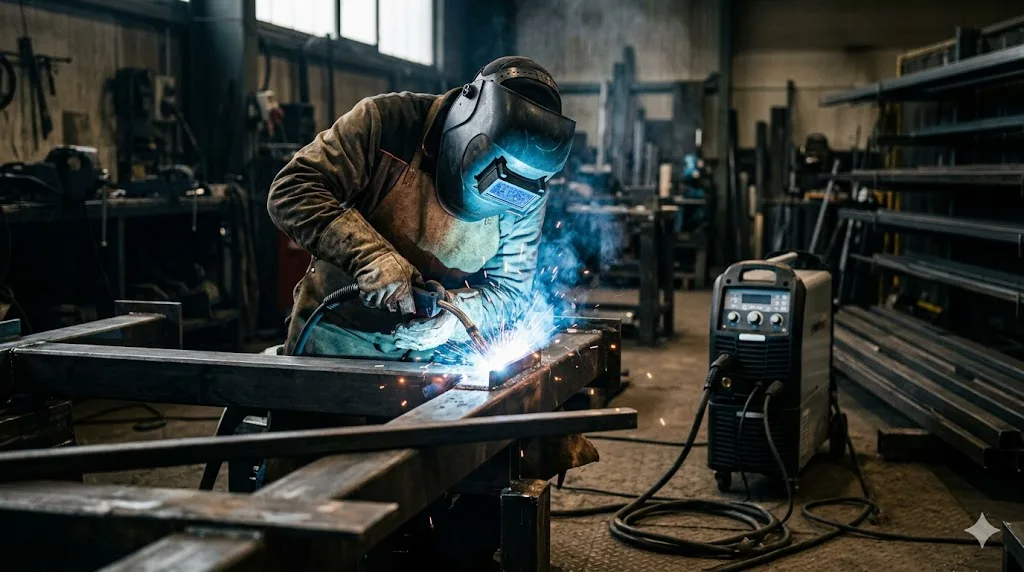
KEMPPI WELDING IN ALMATY
from 2 500 KZT* per metre of joint
Need gates, a canopy, or a solid frame repair? We weld with Kemppi machines: the arc withstands grid surges up to 15%, the seam is free of lack of fusion and spatter.
 MIG, MMA and TIG — 3
types of welding Metal from 0,8
to 8 mm 3-year warranty
on every seam Call-out with the machine
for a 8-hour shift
KEMPPI WELDING IN ALMATY
from 2 500 KZT* per metre of joint
Need gates, a canopy, or a solid frame repair? We weld with Kemppi machines: the arc withstands grid surges up to 15%, the seam is free of lack of fusion and spatter.
MIG, MMA and TIG — 3
types of welding
Metal from 0,8
to 8 mm
3-year warranty
on every seam
Call-out with the machine
for a 8-hour shift
KEMPPI WELDING IN ALMATY
from 2 500 KZT* per metre of joint
Need gates, a canopy, or a solid frame repair? We weld with Kemppi machines: the arc withstands grid surges up to 15%, the seam is free of lack of fusion and spatter.
MIG, MMA and TIG — 3
types of welding
Metal from 0,8
to 8 mm
3-year warranty
on every seam
Call-out with the machine
for a 8-hour shift
Types of welding
work we do
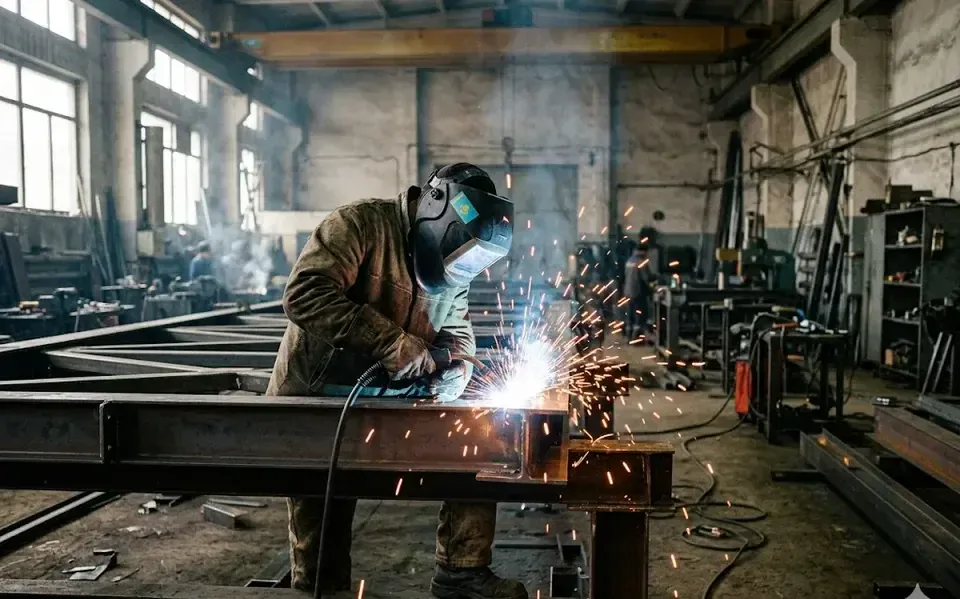
Welding of steel structures
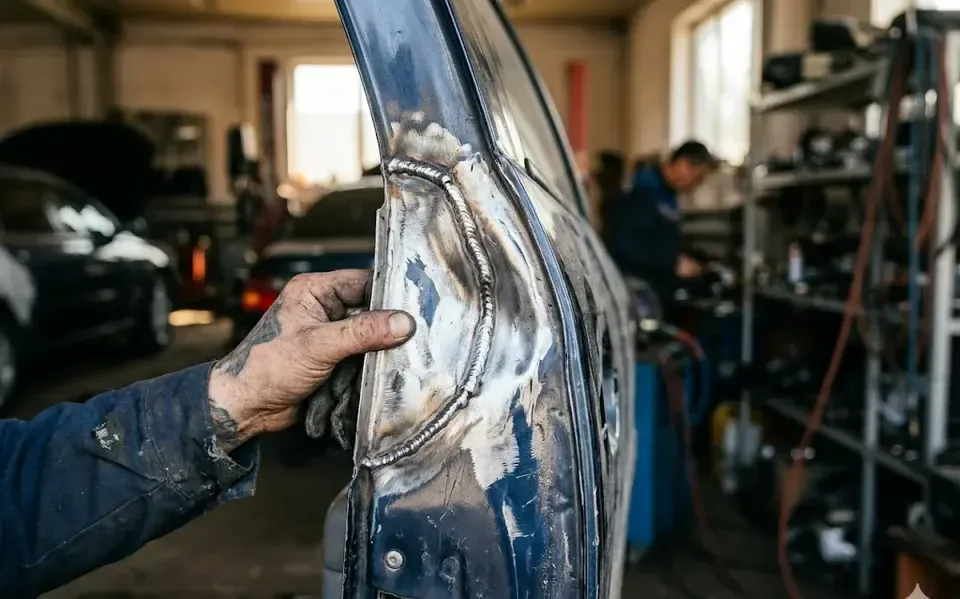
Car body repair
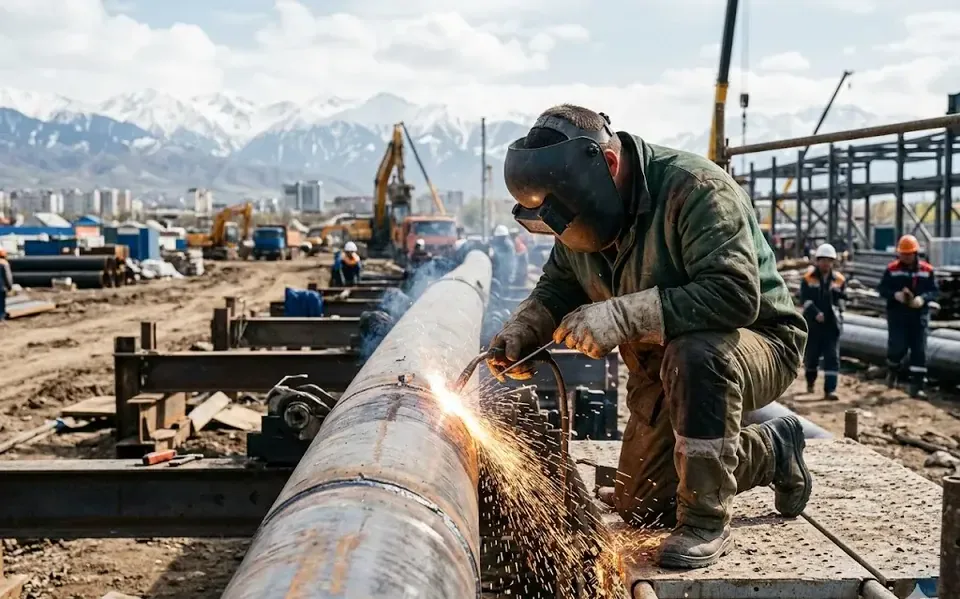
Pipeline welding
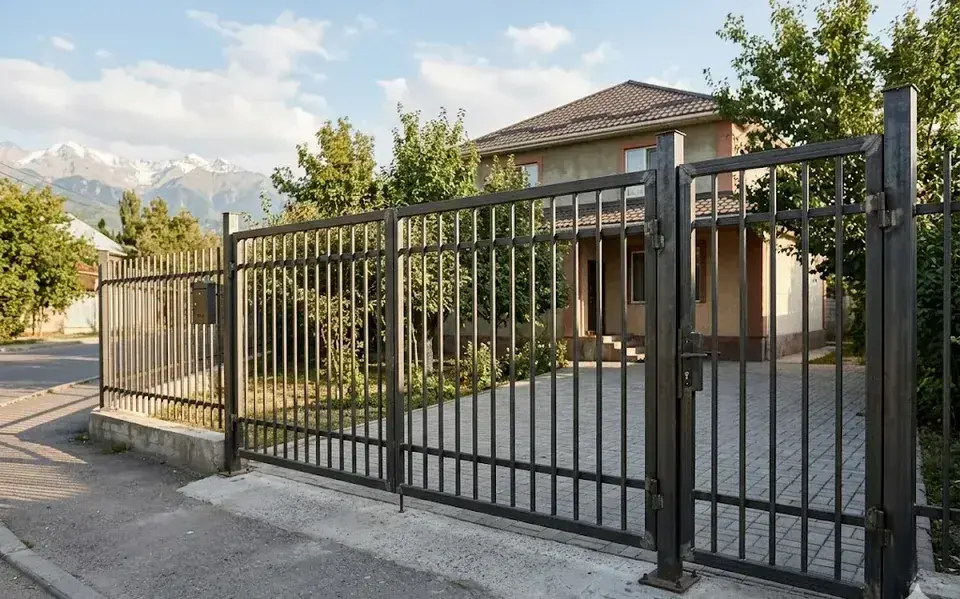
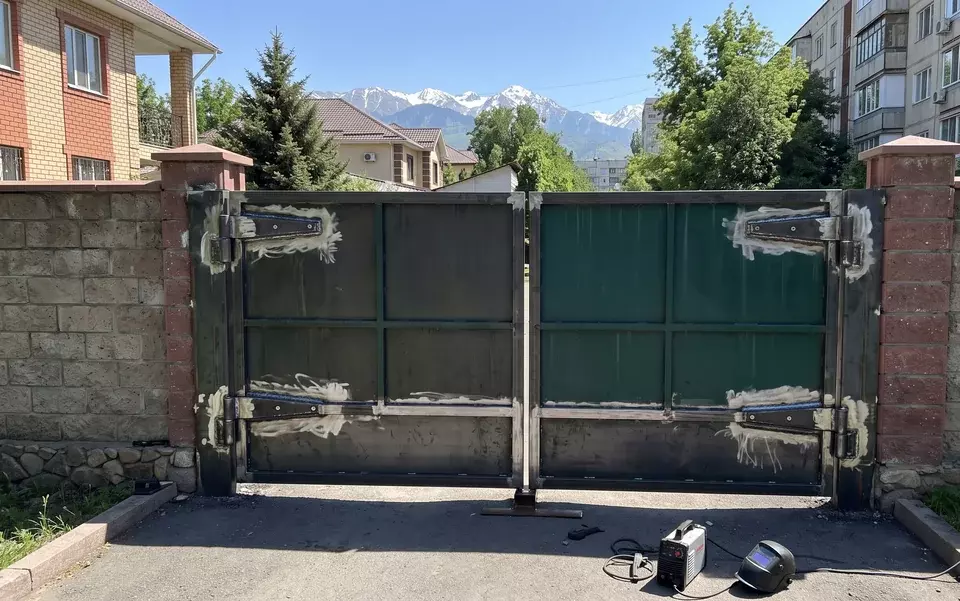
Manufacture of gates and wickets
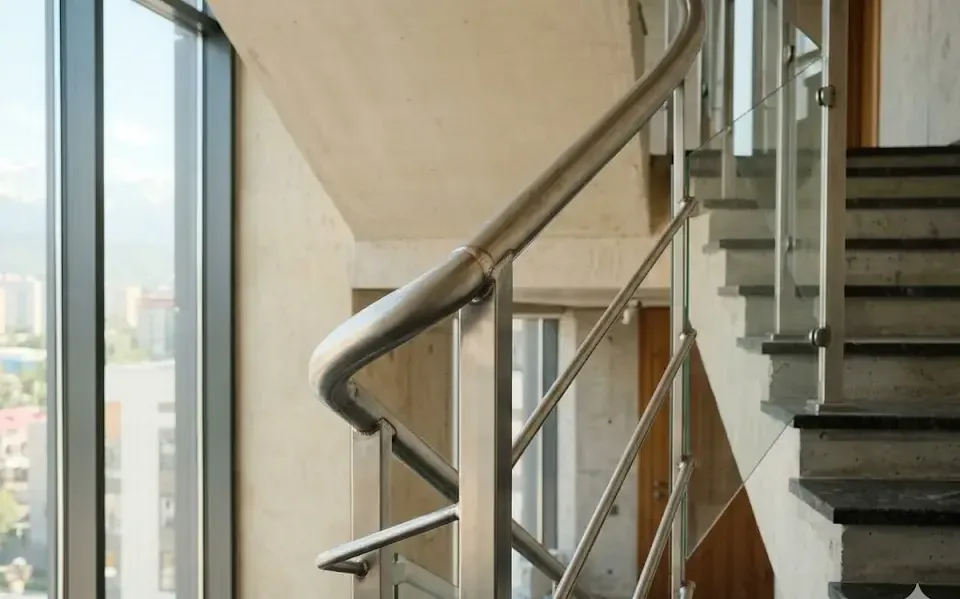
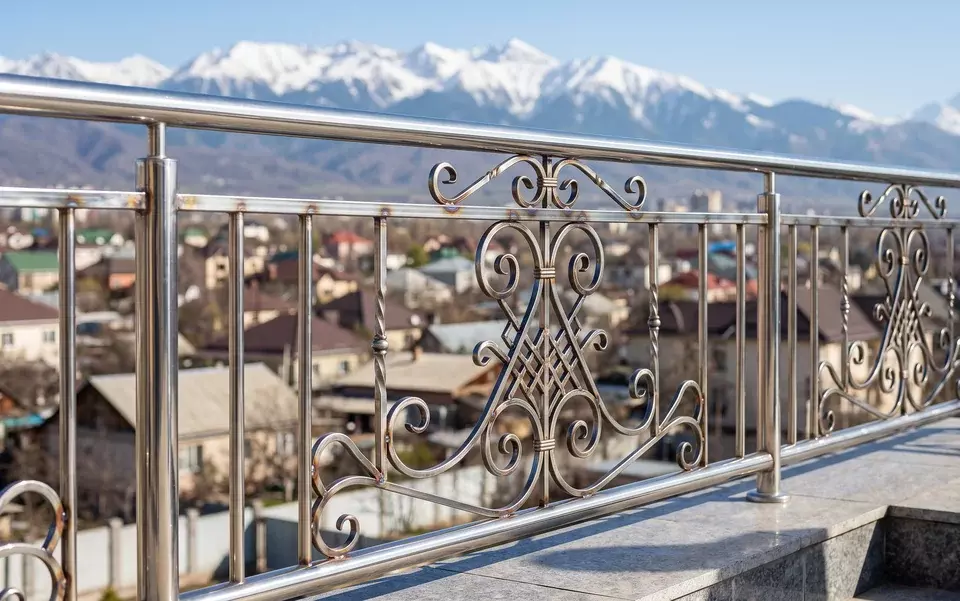
Installation of stair railings
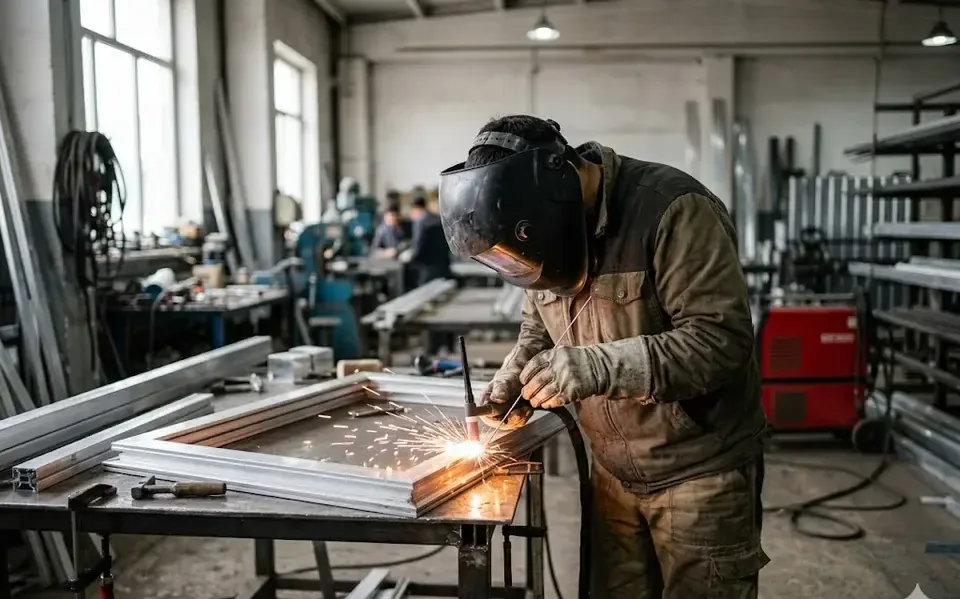
Welding of aluminium structures
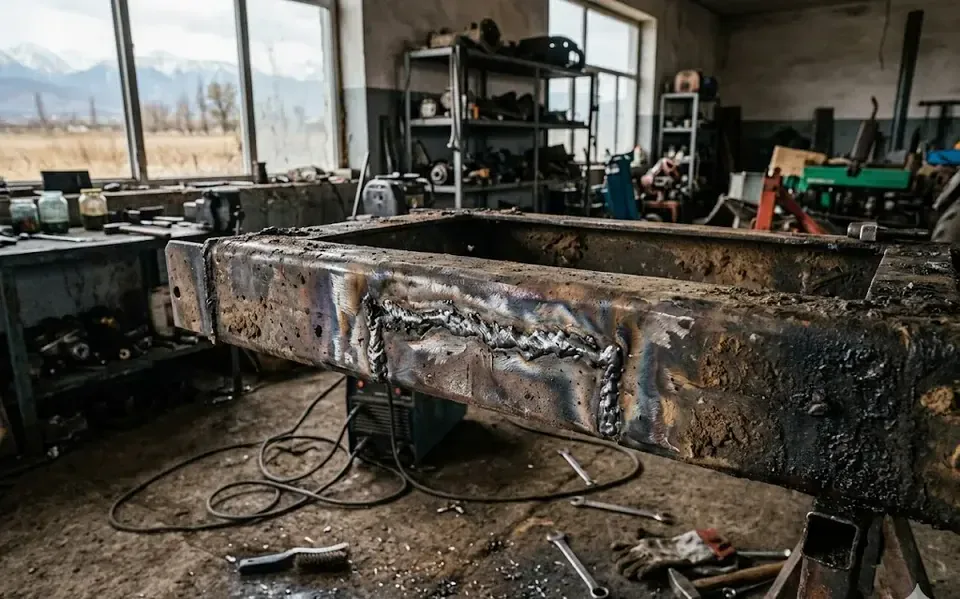
Agricultural machinery repair
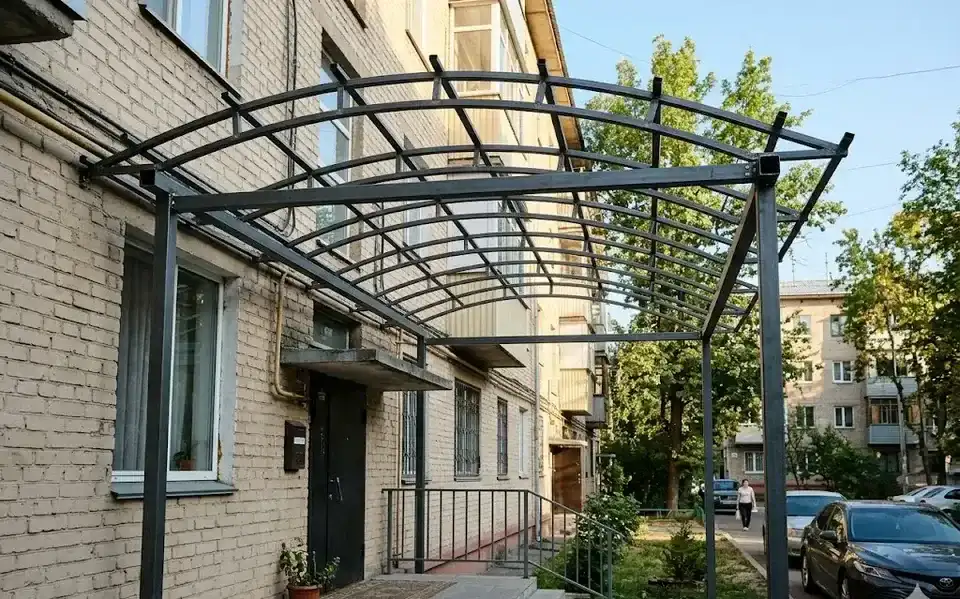
Manufacture of canopies and awnings
Types of welding
work we do
Welding of steel structures
Car body repair
Pipeline welding
Manufacture of gates and wickets
Manufacture of canopies and awnings
Welding of aluminium structures
Agricultural machinery repair
Installation of stair railings
We will call you back within 3 minutes
Types of welding
work we do
Welding of steel structures
Car body repair
Pipeline welding
Manufacture of canopies and awnings
Installation of stair railings
Welding of aluminium structures
Agricultural machinery repair
Manufacture of gates and wickets
We will call you back within 3 minutes
Cost of KEMPPI WELDING
IN ALMATY
| SERVICES | COST | TIME |
|---|---|---|
| Master's visit in Almaty (within the city) | from 3 000 ₸ | from 1 hour |
| Minimum order (call-out + work) | from 5 000 ₸ | from 1 hour |
| Weld seam welding (per linear metre) | from 2 500 ₸ | from 0,5 hour |
| Welding of a single spot (joint/connection) | from 800 ₸ | from 15 minutes |
| Welding of a product (small, up to 1 kg) | from 1 500 ₸ | from 30 minutes |
| Welding of a product (medium, 1–5 kg) | from 3 000 ₸ | from 1 hour |
| Welding of a product (large, from 5 kg) | from 5 000 ₸ | from 2 hours |
| Cleaning and grinding of the seam (per metre) | from 500 ₸ | from 15 minutes |
| Painting the weld seam (per metre) | from 400 ₸ | from 10 minutes |
| Delivery of consumables (if required) | from 1 000 ₸ | from 30 minutes |
Преимущества КЕМПИ СВАРКИ ОТ Profi‑Dom

Even seam without splashes
Kemppi synergy automatically selects voltage and wire feed — the bead is even, without grinding

Welder with 14+ years of experience
Certification in MIG/MAG and TIG; on critical welds we control the leg — from 3 mm on profile pipe

The arc withstands surges up to 15%
The machine adjusts the current 1000 times per second — the arc doesn't go out even in an industrial zone with a poor grid

Metal from 0,8 to 8 mm
We weld 0,8–2 mm sheet with a pulse without burn-through, metal from 5 mm — with full root penetration

3-year warranty on the seam
Pores, cracks, or lack of fusion — we will fix it free of charge; we write the warranty period in the work act

Price per meter or shift
Point — from 800 ₸, meter of seam — from 2 500 ₸, welder's shift 8 hours — according to the estimate before work begins
Преимущества КЕМПИ СВАРКИ ОТ Profi‑Dom
Kemppi synergy automatically selects voltage and wire feed — the bead is even, without grinding
Even seam without splashes
Certification in MIG/MAG and TIG; on critical welds we control the leg — from 3 mm on profile pipe
Welder with 14+ years of experience
The machine adjusts the current 1000 times per second — the arc doesn't go out even in an industrial zone with a poor grid
The arc withstands surges up to 15%
We weld 0,8–2 mm sheet with a pulse without burn-through, metal from 5 mm — with full root penetration
Metal from 0,8 to 8 mm
Pores, cracks, or lack of fusion — we will fix it free of charge; we write the warranty period in the work act
3-year warranty on the seam
Point — from 800 ₸, meter of seam — from 2 500 ₸, welder's shift 8 hours — according to the estimate before work begins
Price per meter or shift
We will call you back within 3 minutes
Преимущества КЕМПИ СВАРКИ ОТ Profi‑Dom
Kemppi synergy automatically selects voltage and wire feed — the bead is even, without grinding
Even seam without splashes
Certification in MIG/MAG and TIG; on critical welds we control the leg — from 3 mm on profile pipe
Welder with 14+ years of experience
The machine adjusts the current 1000 times per second — the arc doesn't go out even in an industrial zone with a poor grid
The arc withstands surges up to 15%
We weld 0,8–2 mm sheet with a pulse without burn-through, metal from 5 mm — with full root penetration
Metal from 0,8 to 8 mm
Pores, cracks, or lack of fusion — we will fix it free of charge; we write the warranty period in the work act
3-year warranty on the seam
Point — from 800 ₸, meter of seam — from 2 500 ₸, welder's shift 8 hours — according to the estimate before work begins
Price per meter or shift
We will call you back within 3 minutes
HOW WE WORK
- 01.Request and calculation
Describe the task or send a photo — we'll call back in 3 minutes, advise on the welding type and give a price estimate.
- 02.On-site visit or workshop
The master arrives with a MinarcMig or Master — or bring the parts to the workshop: for 2–3 meters of weld it is cheaper that way.
- 03.Choosing the type of welding
We weld profile pipes and frames with MIG/MAG, thick metal on site — with MMA, stainless steel and aluminum — with TIG.
- 04.Estimate and contract
We fix the price per meter of weld, per point, per item or per shift and a 3-year warranty on welds.
- 05.Metal preparation
We cut and fit the profile, clean the edges; on metal from 10 mm we make a bevel for 2–3 passes.
- 06.Welding with Kemppi
Synergic mode keeps the arc stable — full root penetration with no spatter or undercut.
- 07.Seam inspection (VIK)
We inspect the seam for pores, undercuts, and overlaps and measure the leg with a gauge — before handing over the order.
- 08.Protection and handover
We clean and prime the seams, sign the report — the 3-year warranty is valid from this date.
Find out the cost and timeline of camping welding in 1 minute


FIND OUT THE COST OF WELDING WORK FOR YOUR PROJECT
Leave a request and we will contact you within 3 minutes
Thank you! We will contact you within 3 minutes.
By clicking the button you agree to the terms of the
Or call us at
+7 (707) 068-88-68Privacy PolicyFIND OUT THE COST OF WELDING WORK FOR YOUR PROJECT
Leave a request and we will contact you within 3 minutes
Thank you! We will contact you within 3 minutes.
By clicking the button you agree to the terms of the
Or call us at
+7 (707) 068-88-68Privacy PolicyFIND OUT THE COST OF WELDING WORK FOR YOUR PROJECT
Leave a request and we will contact you within 3 minutes
Thank you! We will contact you within 3 minutes.
By clicking the button you agree to the terms of the
Or call us at
+7 (707) 068-88-68Kemppi welding in Almaty: Kemppi equipment, prices and PROFI-DOM warranty
Kemppi welding Almaty — these are welding works on professional Kemppi equipment in the PROFI-DOM workshop: metal structures, stainless steel, aluminum and critical seams welded by certified welders. We work in the shop and with on-site visits within the city (from 3 000 ₸). A meter of seam — from 2 500 ₸, one point — from 800 ₸, guarantee — 3 years.
Published: 5 · Updated:
Why a Kemppi weld is better — the advantages of professional equipment
We analyze how a seam on Kemppi fundamentally differs from a seam on a cheap Chinese machine — in arc stability, synergic mode, and digital adjustment.
Stable arc and synergic mode — what this gives the weld
We use Kemppi MinarcMig semi-automatic machines with synergetic control — the machine automatically selects the voltage and wire feed speed for the chosen diameter and type of metal, which eliminates human error in setup. A digital processor monitors the arc current 1000 times per second and adjusts the parameters for any mains fluctuation — in Almaty's industrial zones (Industrialnaya, Zhetysu district) voltage surges reach 15%, and a cheap inverter simply extinguishes the arc. The synergetic mode keeps the arc at the optimum point regardless of these fluctuations: on thin 0,8 mm metal you will not burn through the sheet, on thick 8 mm you get full root penetration without a cold weld. When working with a cheap machine, the welder has to manually turn the voltage and inductance knobs — the slightest mistake results in either overheating with burn-through or a cold weld with lack of penetration, and this can no longer be corrected, only cut out and re-welded.
Fewer spatters and an even bead — the visual difference
A weld made with Kemppi is distinguished by minimal metal spatter — thanks to precise arc control there is practically no spatter, and the bead comes out even, with uniform ripples. Setting the inductance in synergic mode suppresses short circuits of the molten droplet exactly at the moment it detaches from the electrode — the droplet is transferred into the pool rather than flying across the part. With cheap inverters, spatter sticks to the part and requires subsequent cleaning with an angle grinder, which increases working time and the risk of damaging the surface. With us the weld comes out clean — a light brushing is enough, and on stainless steel or aluminium grinding with an angle grinder is undesirable altogether, since the scratches become centres of corrosion.
Comparison: professional Kemppi equipment vs a cheap machine
| Parameter | Welding with Kemppi | Cheap Chinese machine |
|---|---|---|
| Arc stability | Digital control, the arc does not go out during mains voltage fluctuations | The arc "floats", with frequent breaks when the voltage drops |
| Spatter | Minimal, clean weld | Heavy spatter, requires cleaning |
| Root penetration | Full penetration thanks to synergy | Partial lack of fusion, risk of a cold weld |
| Wire/gas consumption | Optimal — the machine regulates the feed automatically | Overspending due to manual settings |
| Appearance of the weld | Even bead with uniform ripples | Uneven, with undercuts and overlaps |
Even an experienced welder using a cheap machine cannot achieve the same quality as with Kemppi, because the equipment does not maintain stable parameters when the voltage fluctuates — the difference shows up across all five parameters at once.
Welding types on Kemppi — what to choose for your task
We explain the three main types of welding on Kemppi equipment — MIG/MAG semi-automatic, manual arc MMA and argon TIG. We explain which method suits your metal and task.
Semi-automatic MIG/MAG welding — the versatile choice for steel structures
MIG/MAG semi-automatic welding on the MinarcMig is our main method for steel structures, frames, canopies and gates: solid wire in CO2 or an Ar+CO2 mix gives high productivity and good penetration on metal from 1,5 to 8 mm. The Kemppi synergetic mode automatically selects the voltage and wire feed speed for the specified thickness — the welder only has to guide the torch, which reduces the risk of defects on long welds of a 2–3 mm square tube frame. When installing gates or fencing, the speed reaches 40 cm of weld per minute versus 15–20 cm with MMA, and outdoors in wind we switch to gasless flux-cored wire — it gives deep penetration without additional shielding, although the weld ends up with a layer of slag that has to be knocked off with a hammer.
Manual metal arc welding MMA — for installation and thick metal
We use manual arc welding MMA on a Kemppi Master inverter for on-site installation at height, on thick metal from 5 mm and for repairs — a stick electrode does not require a gas cylinder and allows work in hard-to-reach places. This inverter has Hot Start and Arc Force functions: the first facilitates ignition on cold metal, the second automatically increases current during a short circuit so that the electrode does not stick to the part on an uneven seam of a support or ladder. For critical structures we choose electrodes with a basic coating (УОНИ 13/55) — they provide a more ductile and load-resistant seam than rutile АНО on ordinary work, and the downside of MMA is low speed: per meter of seam with a thickness of 6 mm it takes 15–20 minutes versus 3–4 minutes on MIG/MAG.
TIG argon welding — for stainless steel, aluminium and thin metal
We use TIG argon welding on a Kemppi MasterTig unit for stainless steel, aluminium and thin sheet up to 2 mm — a non-consumable tungsten electrode in an argon atmosphere produces a neat weld without spatter and allows even non-ferrous metals to be welded. The MasterTig offers AC mode for aluminium and DC mode for stainless steel: switching takes seconds, without changing the torch, and the TIG Pulse mode reduces heat input — on a 2 mm aluminium tank this prevents burn-through and deformation, and on stainless handrails it produces an aesthetic bead without darkening the metal. The only nuance is that TIG requires a clean surface: aluminium must be brushed with a stainless steel brush before welding, otherwise the oxide film will cause porosity in the weld. On thin-walled parts of 1–3 mm we always use pulsed mode with heat control.
Table for choosing the welding type for your task
| Your task | Recommended welding type | Kemppi equipment | Features |
|---|---|---|---|
| Steel structures made of square tubing (1,5–5 mm) | MIG/MAG with solid wire | MinarcMig | High speed, clean seam |
| Thick metal from 5 mm, installation at height | MMA with stick electrode | Master | No gas required, works outdoors |
| Stainless steel (food equipment, handrails) | TIG with argon | MasterTig | Neat weld, no scale |
| Aluminium (tanks, frames, ladders) | Pulsed TIG | MasterTig | Heat control, no burn-through |
| Heating and water supply pipes | TIG or MMA | MasterTig / Master | Pressurised leak-tight seam |
If you are unsure about the choice — for most jobs up to 8 mm, MIG/MAG is optimal, while stainless steel and aluminium are always welded with TIG.
What we weld — steel structures, stainless steel, aluminium, critical welds
We explain what products and structures Kemppi welding covers — from metal frames to food processing equipment. Each type of order has its own requirements for the weld and technology.
Welding of steel structures — frames, trusses, canopies
At PROFI-DOM, welding of metal structures is the main flow of orders: we weld frames for canopies, floor trusses, stairs, fences and gates from profile pipe and channel on Kemppi MinarcMig semi-automatic machines. For such products we use semi-automatic MIG/MAG welding with solid wire of 0,8–1,0 mm diameter in carbon dioxide or an Ar+CO2 — mixture, which provides high productivity and stable penetration of the 2–4 mm profile wall. The penetration depth is maintained by the synergistic mode: it selects the voltage and feed rate for the metal thickness itself, which eliminates lack of fusion at pipe joints. For load-bearing structures we обязательно make full penetration of the weld root and check the leg — the minimum leg for profile pipe is 3 mm, for channel from 5 mm depending on the load.
Stainless steel welding — food equipment, handrails, pipes
We perform stainless steel welding on MasterTig with argon and filler wire — the seam is corrosion-resistant, without scale and darkening, which is critical for food equipment, handrails in public places and pipelines. We use TIG argon welding with a non-consumable electrode in pulsed mode: the current pulse alternates the peak value (welding) and background (cooling), which reduces heat input by 25–30% compared to a continuous arc. For stainless steel AISI 304 and 316 we use ER308L or ER316L filler — it preserves the austenitic structure of the seam and prevents intergranular corrosion. For stainless steel it is important not to overheat the metal — when overheated, chromium carbides precipitate in the seam zone and the metal loses its anti-corrosion properties.
Aluminium welding — tanks, frames, ladders
We use aluminum welding on the MasterTig with pulse mode to manufacture tanks, frames, ladders, and structures made of aluminum profile — pure argon and precise current settings produce a dense seam without porosity or cracks. For AMg and AD31 aluminum alloys we use ER5356 or ER4043 filler: the first gives higher seam strength, the second — greater fluidity and less susceptibility to hot cracks. We work on alternating current with a balance of 70/30 (electrode positive / electrode negative) — this breaks down the oxide film and at the same time ensures penetration of the base metal. Aluminum is a challenging material due to the oxide film, which melts at 2050 °C, while the metal itself melts at 660 °C.
Critical joints and thin sheet metal — our expertise
Critical welds are welded joints that operate under load, pressure or in an aggressive environment: we weld them on Kemppi with mandatory inspection of penetration, leg length and the absence of defects, using TIG or pulsed MIG. For thin 0,8–2,0 mm sheet we use TIG with a pulse frequency of 1–5 Hz and a current of 30–80 A — the pulsed mode keeps heat input to a minimum and produces a neat bead without burn-through. On the semi-automatic machine for 1,5–2 mm sheet we use Pulse MIG mode: droplets are transferred forcibly at the moment of the pulse, which eliminates short circuits and spatter. Thin sheet up to 2 mm is a risk zone for cheap machines: they burn through the metal because of the unstable arc. On the MasterTig with pulse we weld 1 mm sheet without burn-through or deformation.
Weld quality and control — how to check it and what a responsible weld is
We explain how to distinguish a quality weld from a defective one, what inspection methods we use in production and what a critical weld is — this will help you assess the welder's work before acceptance.
Visual inspection (VT) — the first stage of testing
Every seam undergoes visual and measuring inspection (VMI): the welder examines the joint for cracks, pores, undercuts and overlaps, then measures the leg with a UShS gauge — this is a mandatory step before order acceptance. During VMI, three parameters are assessed: geometry (width, height, convexity), surface defects (blowholes, unwelded craters) and smooth transition to the base metal without undercuts. The regulatory document — GOST 3242-79 — — sets permissible deviations: for metal structures with thickness 4-10 mm, the weld leg must be at least 4 mm, and the height difference of the scales must not exceed 15% of the metal thickness. A quality seam has uniform scaling, the same width along the entire length and a smooth transition to the base metal — if you notice undercuts (depressions at the edge), this is a defect that reduces the joint strength down to 30%.
What a critical weld is and how it differs from an ordinary one
A critical weld is a welded joint whose strength determines the safety of a structure: load-bearing trusses, pressurised pipelines, lifting mechanisms, brackets for heavy equipment — such welds require full root penetration, calculation of the leg length according to the load and often additional non-destructive testing (ultrasonic or X-ray). A critical weld differs from an ordinary one in that its failure leads not to a cosmetic defect but to an accident: for example, a weld on a floor beam carries a load from 500 kg to 5 tonnes, and any lack of penetration of 1 mm reduces the load-bearing capacity by 15-20%. For critical welds it is not enough simply to "tack" the part — you need full root penetration, no porosity or slag inclusions, and certification of the welder for the specific welding process (MIG/MAG, MMA or TIG). An ordinary weld may have permissible defects — discontinuities up to 1 mm or minor spatter — a critical weld tolerates not a single deviation from GOST.
How to tell a professional welder from a garage craftsman
A professional welder is distinguished not only by equipment — each of our craftsmen is certified for their type of welding (MIG/MAG, MMA, TIG) and regularly confirms their qualification, while garage craftsmen often work "by eye" without approvals for specific types of joints. The second sign is equipment: a professional uses separate machines for each process (MIG semi-automatic, TIG source with a gas cylinder, MMA inverter), a garage craftsman welds everything with one "Chinese" machine without gas. The third is the result: on a professional seam there is minimal spatter, uniform ripples (pitch 2-3 mm), no porosity or burn-throughs; on a garage one — abundant spatter, uneven bead, undercuts at the edge and overlaps. A sign of a garage craftsman is refusal to give a warranty on the work: if the welder does not give a written warranty on root penetration and seam strength, it is worth thinking about their qualification.
Welding price: per meter of seam, per shift, per item
The price of camping welding in Almaty consists of the type of welding, metal, thickness and format of work. We break down the cost — from a meter of seam to a welder's shift with a visit, with guidelines for different types of work and materials.
Price per metre of weld — what it depends on and how much it costs
At PROFI-DOM, the price per meter of seam depends on the metal type, thickness, and access complexity: carbon steel welding with MIG/MAG semi-automatic — from 2 500 ₸/m, stainless steel and aluminum with TIG argon — more expensive, we quote the price after inspection. The price difference is dictated by welding speed: we weld carbon steel on MinarcMig in 3–5 minutes per meter, aluminum on pulse — up to 15–20 minutes per meter due to mandatory pre-cleaning of the oxide film and slower filler wire feed. Metal thickness also matters: on a 2 mm sheet, the seam runs in one pass; on 10 mm — edge preparation with a grinder and 2–3 passes with interpass cooling are required, which triples the time. The price per meter includes edge preparation and setting the mode on the machine; cleaning and grinding are calculated separately — from 500 ₸ per meter, and if edge preparation for thick metal is required, the cost may increase by 20–30%.
Price per welder's shift with a machine — on-site work
We calculate a welder's shift with a Kemppi machine on site (8 hours) according to the estimate before work begins: it includes the work of a certified welder, equipment and consumables (wire, gas, electrodes), and travel around the city — from 3 000 ₸. The welder brings MinarcMig for MIG/MAG or Master for MMA — depending on the task, plus 50-meter extension cords for working on construction sites without a nearby socket. For weld volumes up to 2–3 meters, welding in the workshop is more cost-effective: the minimum on-site order is from 5 000 ₸, which covers logistics and on-site equipment setup.
Price table for the main types of work
| Work / product | Welding type | Unit | Price from, ₸ |
|---|---|---|---|
| Carbon steel welding (steel structures) | MIG/MAG | metre of weld | 2 500 |
| Stainless steel welding (food equipment, handrails) | TIG | metre of weld | upon inspection |
| Aluminium welding (tanks, frames) | Pulsed TIG | metre of weld | upon inspection |
| Welding of heating pipes (up to 50 mm) | TIG / MMA | butt joint | 800 |
| Welder shift with Kemppi machine on site (8 hours) | any | shift | as per the estimate |
| Minimum order (call-out) | — | — | 5 000 |
Prices are given as "from" — the final cost depends on how difficult it is to access the weld, whether edge preparation is required and how urgent the order is. For complex welds in hard-to-reach places (inside a steel structure, at height), a factor of 1,2–1,5 is applied to the base price per metre.
Price per item — gates, wickets, canopies
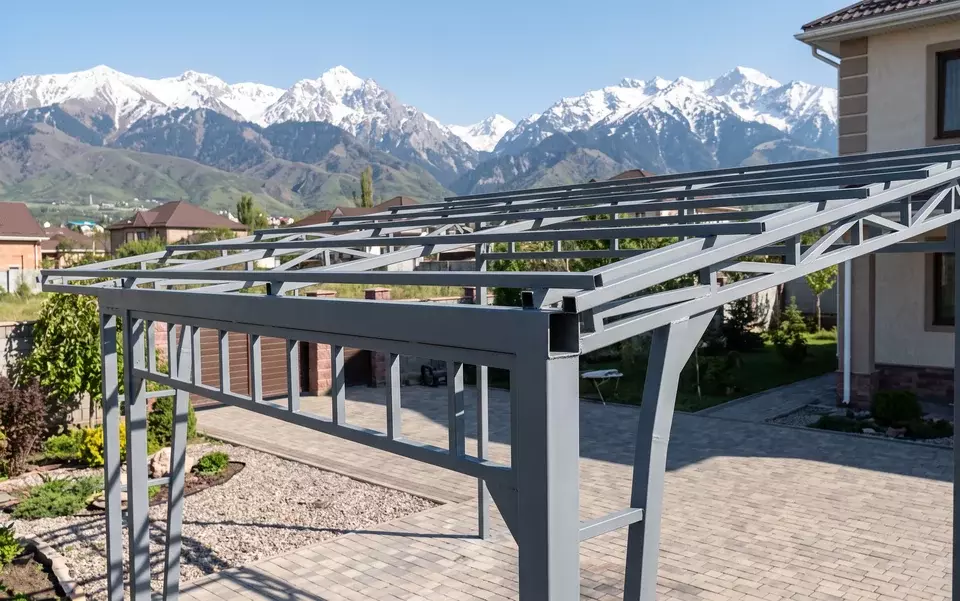
Our welding of gates and wickets starts from 40 000 ₸ for a standard swing structure made of 40×20 mm profile pipe — the price includes cutting with an angle grinder, welding with a MIG/MAG semi-automatic machine on MinarcMig, cleaning the seams with a brush and priming. For sliding gates with a cantilever mechanism the price is higher — from 50 000 ₸ for welding work, since precise welding of the guide rail and roller supports is required with a horizontal tolerance of no more than 2 mm per 6 meters. A car canopy (6×3 m) made of 60×40 mm profile pipe with polycarbonate — from 80 000 ₸ for welding work excluding material. The exact cost depends on the complexity of the trusses — triangular trusses with braces are cheaper than arched ones, which require bending pipes on a pipe bender and more precise fitting of joints.
How to order welding with Kemppi in Almaty — equipment, certification, callout
We explain how to order Kemppi welding — in the workshop or on site. We explain what equipment we use, who carries out the work and what warranty we give.
Kemppi equipment in action — what we use in the workshop and on call-outs
The PROFI-DOM workshop is equipped with Kemppi MinarcMig semi-automatic machines for MIG/MAG, Master inverters for MMA and MasterTig units for argon welding — for on-site work the welder takes a compact MinarcMig or Master depending on the task. The MinarcMig weighs about 10 kg and easily fits in a car trunk, while the MasterTig requires a stationary argon connection, so it is used only in the workshop. All three types of machines are equipped with a digital control panel that maintains the set mode for the metal thickness — this eliminates the human factor when setting the mode. The workshop also has a TIG mode for stainless steel from 0,8 mm thick, where minimal heat load on the part is important. Thanks to digital adjustment, the weld quality on site does not differ from the workshop, even if the voltage at the site is unstable.
Certified welders — who performs the work
All welding work is performed by our certified welders with MIG/MAG, MMA and TIG qualifications — each master has a certificate confirming qualification for critical seams. Certification means the welder has passed theoretical and practical testing on a specific type of equipment: for example, for the MinarcMig semi-automatic machine, the welder welds control samples of St3 steel 4 mm thick in vertical and overhead positions, after which the sample is tested for tensile strength and X-rayed. Certification is periodically renewed, so the master's skills are current, not "from Soviet times".
Warranty on welding work — what we guarantee and for how long
PROFI-DOM gives a 3-year warranty on welding work — both for load-bearing metal structures with critical seams and for decorative elements. For example, a 3-year warranty applies both to a balcony railing made of a 40×20 mm profile pipe and to a canopy frame made of an I-beam. The warranty covers seam strength, absence of defects (porosity, cracks, lack of fusion) and corrosion resistance in the welding zone. If a defect appears during the warranty period, we fix it free of charge.
How to order — workshop, callout, contacts
Kemppi welding in Almaty is available in two formats: parts can be brought to the workshop or a master with Kemppi equipment can be called to the site in Almaty and nearby suburbs. For a site visit, the master brings a MinarcMig semi-automatic machine or a Master inverter, consumables (wire, gas, electrodes) and protective equipment — you do not need to buy anything. Minimum order — from 5 000 ₸.
Conclusion
Welding with Kemppi equipment is a professional approach to joining metals that provides a stable arc, minimal spatter and high weld quality.
Key takeaways
- Weld quality: Kemppi equipment with synergic control automatically selects the arc parameters, which reduces the risk of lack of fusion and porosity.
- Versatility: The Kemppi fleet covers MIG/MAG, MMA and TIG — from fence welding to repair of aluminum structures.
- Time savings: Synergic and pulse modes reduce setup time and cut down the number of passes, especially on thin metals.
- Durability: Kemppi inverter power sources are designed for intensive work in the workshop and on site, which guarantees consistent results throughout their entire service life.
- Professional approach: the work is carried out by certified welders, which eliminates the typical mistakes of garage welding — overheating, deformation and brittle welds.