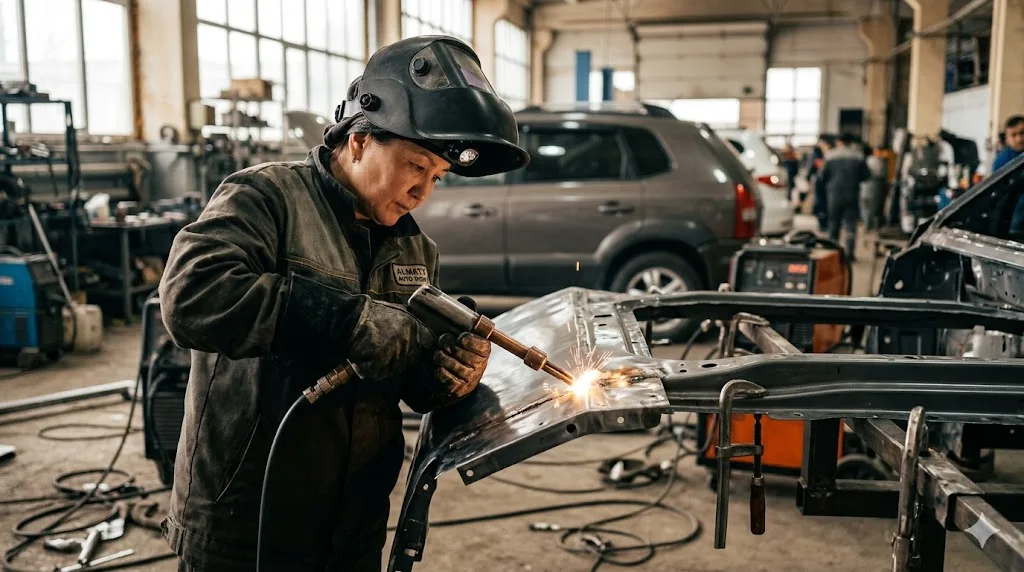
Spot resistance welding in Almaty
from 30 tg.* PER WELD POINT
We replace sills and arches with factory spot welds without body distortion: pitch 20–40 mm, spot on the body from 50 ₸, sill — in 30–90 minutes at the workshop or on-site.
 Body without distortion:
point spacing 20–40 mm Threshold or arch
in 30–90 minutes 3-year warranty
 Estimate based on a photo of the part,
the price does not change
Spot resistance welding in Almaty
from 30 tg.* PER WELD POINT
We replace sills and arches with factory spot welds without body distortion: pitch 20–40 mm, spot on the body from 50 ₸, sill — in 30–90 minutes at the workshop or on-site.
Body without distortion:
point spacing 20–40 mm
Threshold or arch
in 30–90 minutes
3-year warranty
Estimate based on a photo of the part,
the price does not change
Spot resistance welding in Almaty
from 30 tg.* PER WELD POINT
We replace sills and arches with factory spot welds without body distortion: pitch 20–40 mm, spot on the body from 50 ₸, sill — in 30–90 minutes at the workshop or on-site.
Body without distortion:
point spacing 20–40 mm
Threshold or arch
in 30–90 minutes
3-year warranty
Estimate based on a photo of the part,
the price does not change
Types of welding
work we do
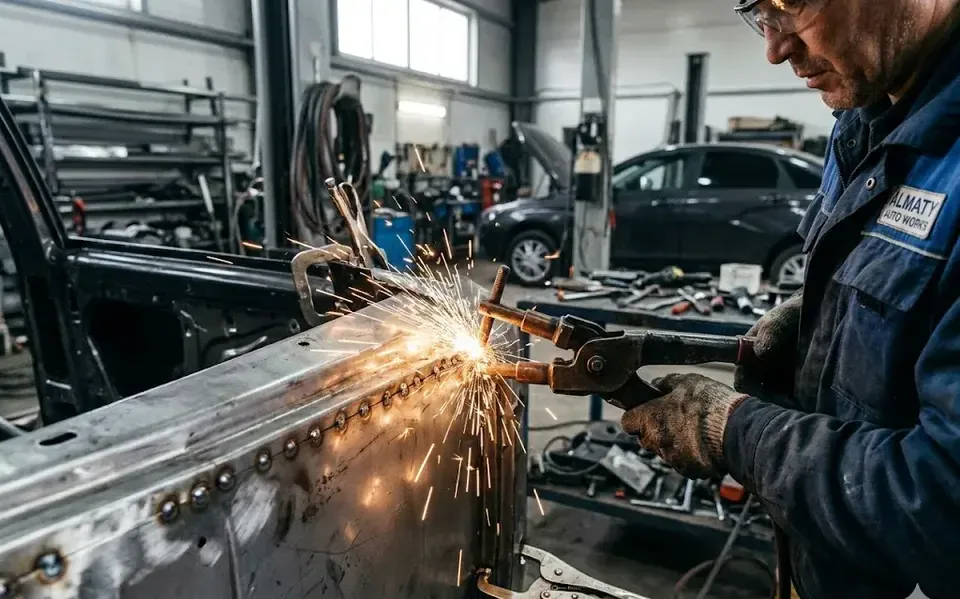
Welding of body panels
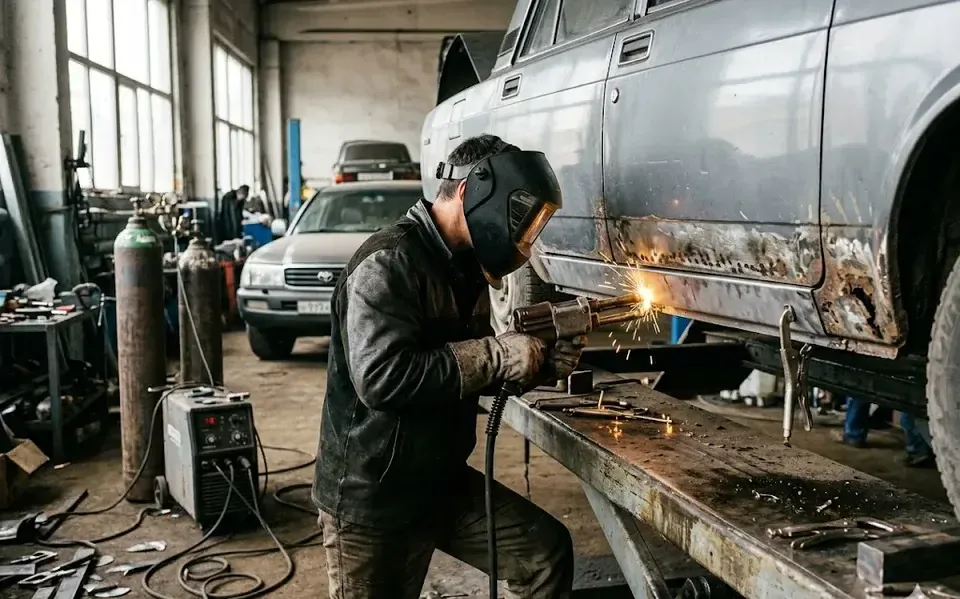
Car sill repair
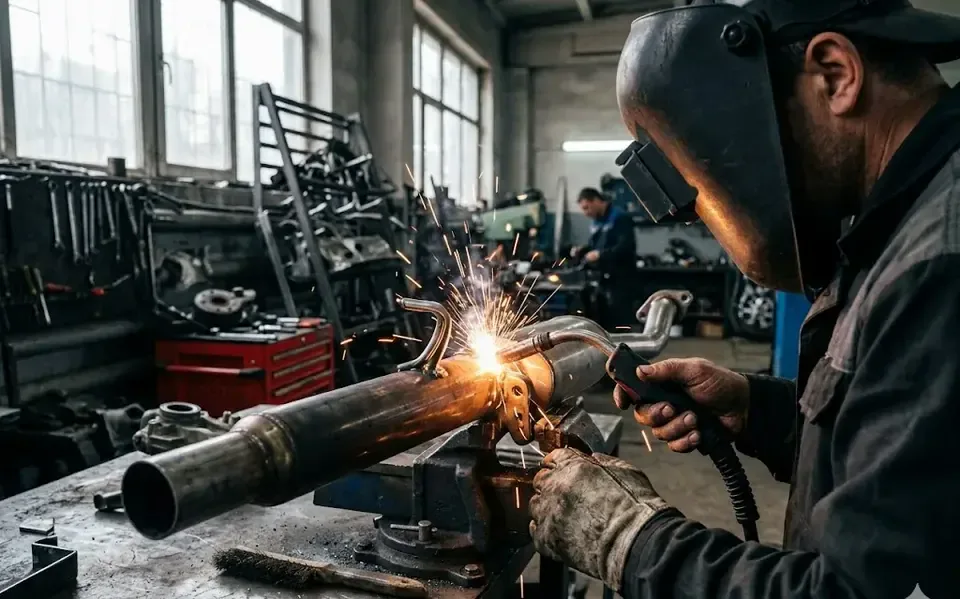
Welding wire and mesh
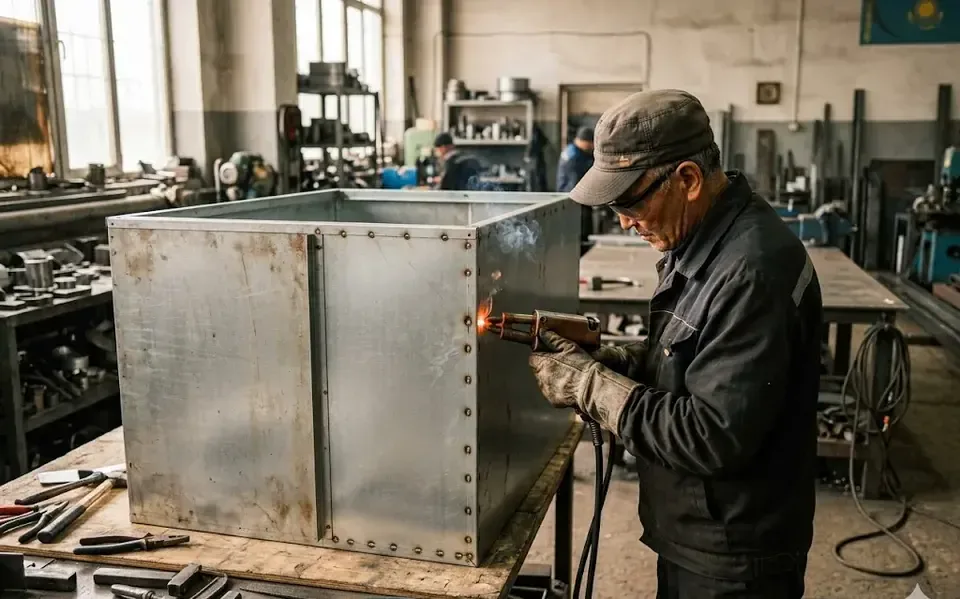
Manufacture of metal housings
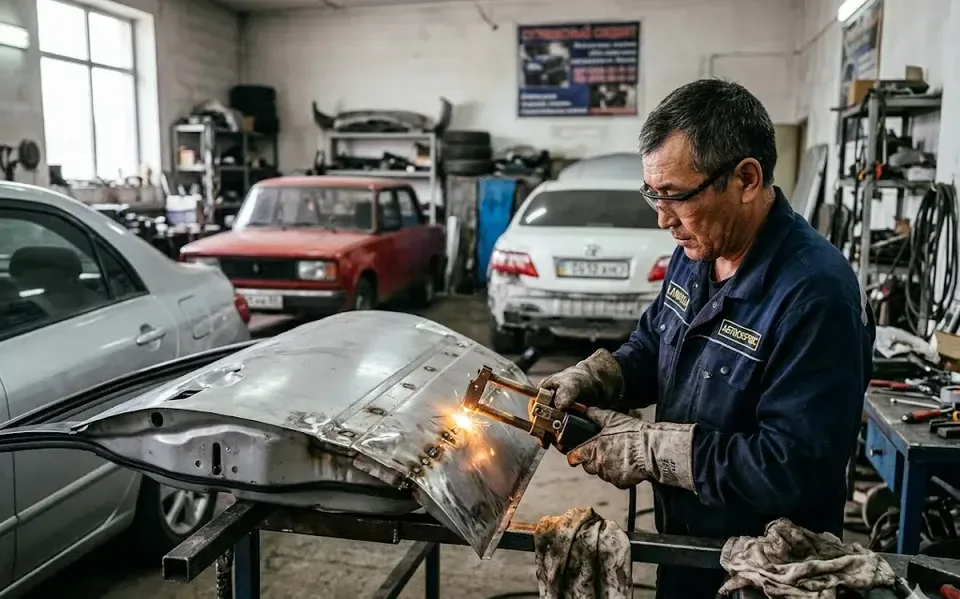
Repair of doors and bonnets
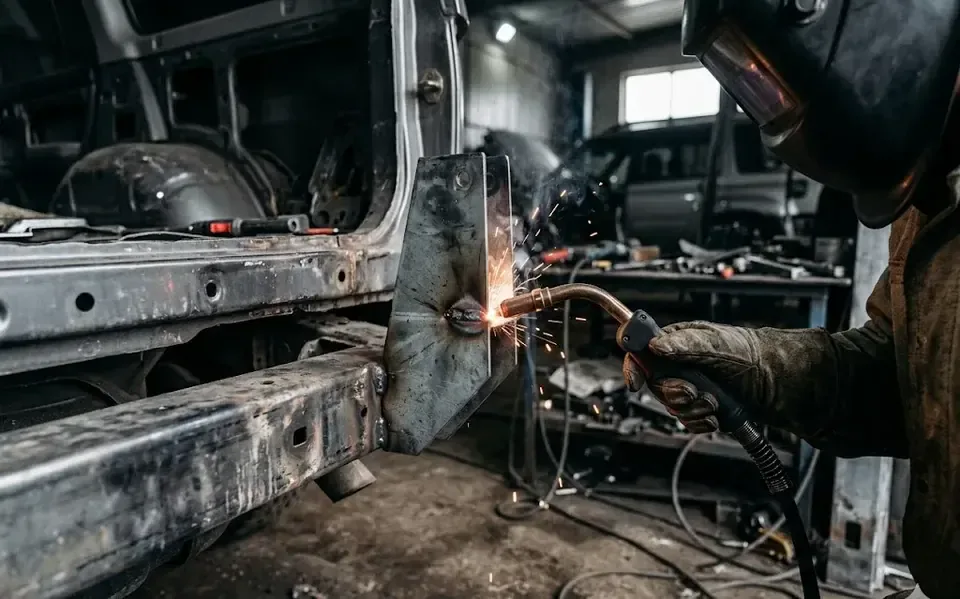
Welding of brackets and reinforcements
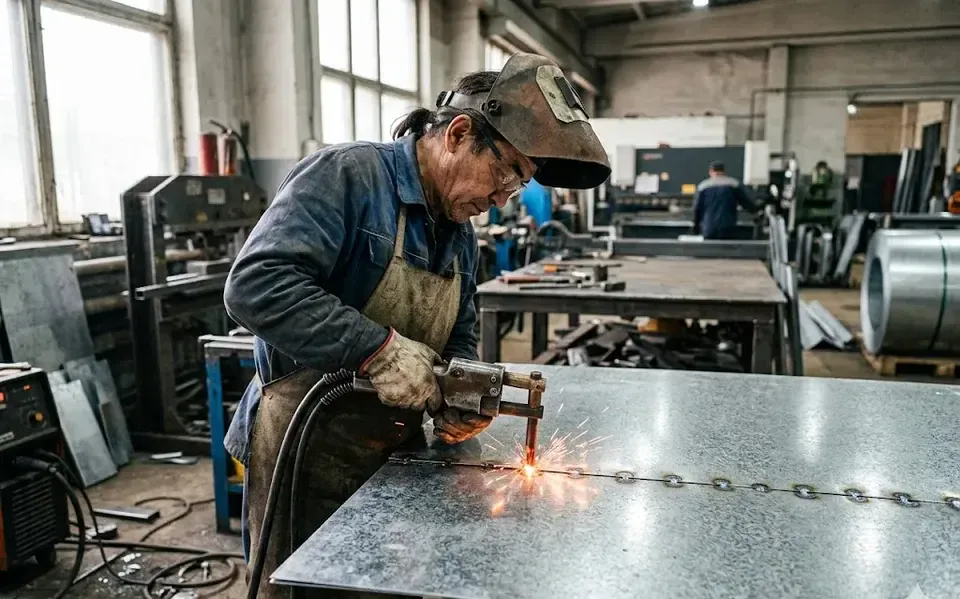
Joining galvanised sheet
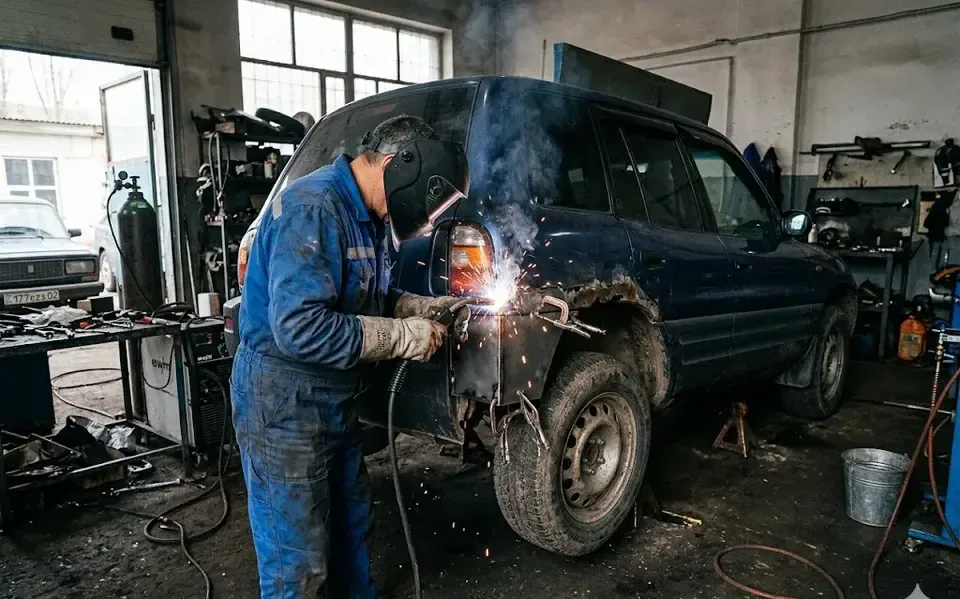
Wheel arch repair
Types of welding
work we do
Welding of body panels
Car sill repair
Welding wire and mesh
Manufacture of metal housings
Wheel arch repair
Welding of brackets and reinforcements
Joining galvanised sheet
Repair of doors and bonnets
We will call you back within 3 minutes
Types of welding
work we do
Welding of body panels
Car sill repair
Welding wire and mesh
Wheel arch repair
Repair of doors and bonnets
Welding of brackets and reinforcements
Joining galvanised sheet
Manufacture of metal housings
We will call you back within 3 minutes
Cost of SPOT RESISTANCE WELDING IN ALMATY
| SERVICE | COST | TIME |
|---|---|---|
| Site visit by a technician in Almaty | from 2 000 ₸ | from 1 hour |
| Minimum order | from 1 000 ₸ | from 30 min |
| Spot on a body panel (0,5–2 mm steel) | from 50 ₸ | from 1 hour |
| Spot on a thin sheet of 0,3–1 mm | from 60 ₸ | from 1 hour |
| Spot on 0,5–1 mm galvanised steel | from 70 ₸ | from 1 hour |
| Spot on 0,5–1 mm stainless steel | from 80 ₸ | from 1 hour |
| Threshold replacement (20–40 points) | from 3 000 ₸ | from 30 min |
| Wheel arch repair (15–30 points) | from 2 500 ₸ | from 30 min |
| Battery jumper, nickel strip (per spot) | from 30 ₸ | from 1 hour |
| Series of parts from 100 points (per point) | from 40 ₸ | from 1 day |
Преимущества СВАРОЧНЫХ РАБОТ ОТ Profi‑Dom

Factory spacing of the points is 20–40 mm
We join thresholds and arches with spot welds, like at the factory: the body retains rigidity and the geometry of the openings

Welder-bodyworker 11+ years
We select the current, force and pulse time for the metal: from 0,15 mm nickel tape to 3 mm sheet

Clamps, spotter and machine
Pliers with a 200 mm reach get to sills and arches without disassembling the interior, the spotter pulls out dents

Threshold in 30–90 minutes
We replace a body element in one visit, fixing the deadline and price in the estimate before work begins

Official 3 year warranty
Warranty on welded points — in the documents, we check each batch by pull-testing and inspection

Transparent price in KZT
Spot on the body from 50 ₸, sill from 3 000 ₸ — the price based on the photo is fixed in the estimate
Преимущества СВАРОЧНЫХ РАБОТ ОТ Profi‑Dom
We join thresholds and arches with spot welds, like at the factory: the body retains rigidity and the geometry of the openings
Factory spacing of the points is 20–40 mm
We select the current, force and pulse time for the metal: from 0,15 mm nickel tape to 3 mm sheet
Welder-bodyworker 11+ years
Pliers with a 200 mm reach get to sills and arches without disassembling the interior, the spotter pulls out dents
Clamps, spotter and machine
We replace a body element in one visit, fixing the deadline and price in the estimate before work begins
Threshold in 30–90 minutes
Warranty on welded points — in the documents, we check each batch by pull-testing and inspection
Official 3 year warranty
Spot on the body from 50 ₸, sill from 3 000 ₸ — the price based on the photo is fixed in the estimate
Transparent price in KZT
We will call you back within 3 minutes
Преимущества СВАРОЧНЫХ РАБОТ ОТ Profi‑Dom
We join thresholds and arches with spot welds, like at the factory: the body retains rigidity and the geometry of the openings
Factory spacing of the points is 20–40 mm
We select the current, force and pulse time for the metal: from 0,15 mm nickel tape to 3 mm sheet
Welder-bodyworker 11+ years
Pliers with a 200 mm reach get to sills and arches without disassembling the interior, the spotter pulls out dents
Clamps, spotter and machine
We replace a body element in one visit, fixing the deadline and price in the estimate before work begins
Threshold in 30–90 minutes
Warranty on welded points — in the documents, we check each batch by pull-testing and inspection
Official 3 year warranty
Spot on the body from 50 ₸, sill from 3 000 ₸ — the price based on the photo is fixed in the estimate
Transparent price in KZT
We will call you back within 3 minutes
HOW WE WORK
- 01.Discussion and estimate
You send a photo of the part or body — we quote a price per spot or element, which is fixed in the estimate.
- 02.Workshop or on-site visit
Bring the part to the workshop or call a specialist: for on-site visits we take clamps and a spot welding machine.
- 03.Inspection and cutting
We inspect the threshold or arch, cut out the rot down to healthy metal and fit a new part.
- 04.Approval of the contract
Before starting work, we fix the price, deadline and a 3-year warranty on welded points.
- 05.Metal preparation
We clean the joint to a shine with sandpaper 80–120 and degrease — paint and rust weaken the spot.
- 06.Spot welding
We set tack points at the factory pitch of 20–40 mm, selecting current and pulse time to match the metal thickness.
- 07.Quality control
We check the points by inspection and tearing out a sample: the core must remain on the part, without burn-through.
- 08.Anti-corrosion treatment and handover
We treat the points with an anti-corrosion compound and hand over the part or vehicle with a warranty in the documents.
Find out the cost of spot welding per 1 minute
catalogue of completed welding work
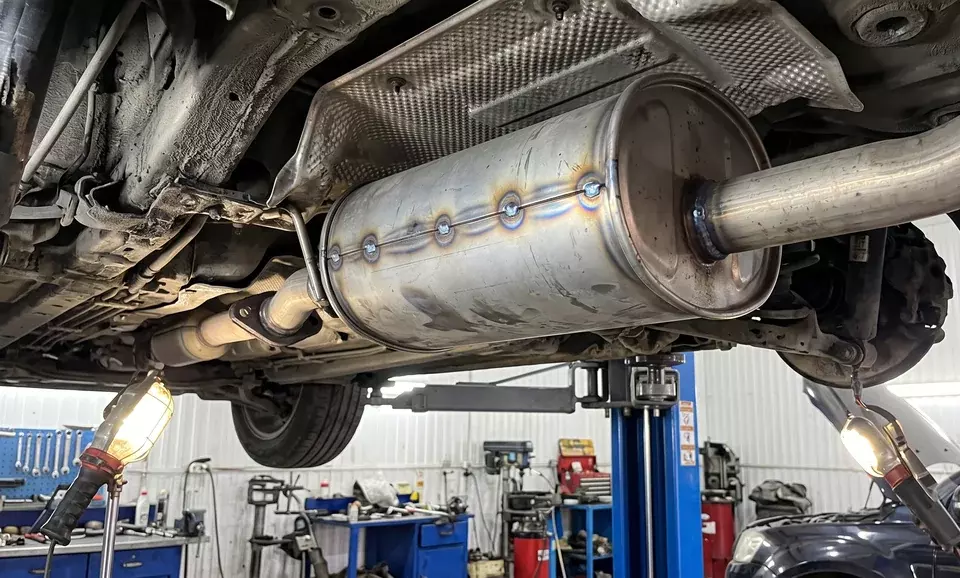 Exhaust system welding at a car service station in the Auezov district
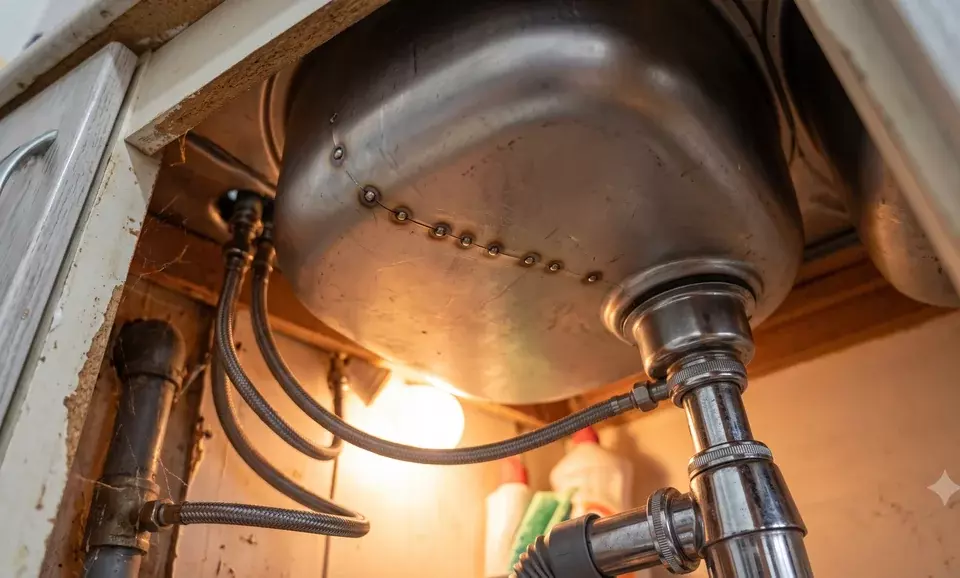 Repair of a stainless steel kitchen sink in a private house in the Medeu district
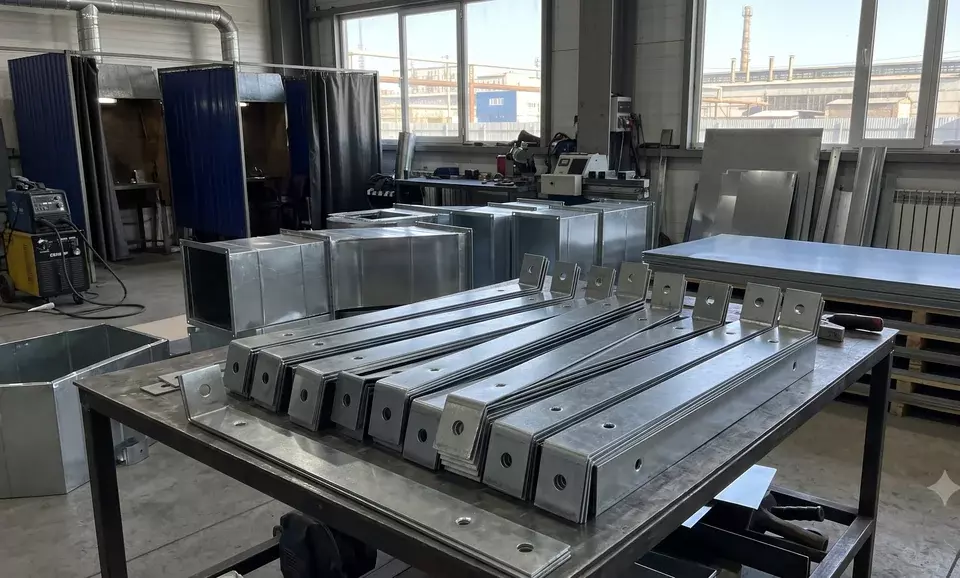 Manufacture of ventilation brackets for a retail premises in the Bostandyk district
 Welding of balcony railings in the Zhetysu district



FIND OUT THE COST OF WELDING WORK FOR YOUR PROJECT
Leave a request and we will contact you within 3 minutes
Thank you! We will contact you within 3 minutes.
By clicking the button you agree to the terms of the
Or call us at
+7 (707) 068-88-68Privacy PolicyFIND OUT THE COST OF WELDING WORK FOR YOUR PROJECT
Leave a request and we will contact you within 3 minutes
Thank you! We will contact you within 3 minutes.
By clicking the button you agree to the terms of the
Or call us at
+7 (707) 068-88-68Privacy PolicyFIND OUT THE COST OF WELDING WORK FOR YOUR PROJECT
Leave a request and we will contact you within 3 minutes
Thank you! We will contact you within 3 minutes.
By clicking the button you agree to the terms of the
Or call us at
+7 (707) 068-88-68Сварка точками в Алматы от PROFI‑DOM: кузов, тонкий лист, АКБ, цены
Spot welding at PROFI-DOM is the joining of metals in an overlap with copper electrodes under pressure, without filler or gas. We weld body panels, sills, arches, thin sheet, galvanized steel, stainless steel, wire, mesh and battery jumpers — in the workshop and with call-out across Almaty. A spot on a body panel — from 50 ₸, on nickel tape — from 30 ₸, call-out — from 2 000 ₸.
Published: 8 · Updated:
What spot resistance welding is and why it does not burn through metal
Let us look at the principle of spot resistance welding — why spots do not burn through thin metal, how it differs from arc welding and what thickness can be joined.
The principle of spot resistance welding — overlap, pressure, pulse
This method is the joining of two metal parts in an overlap with copper electrodes under pressure, through which a short current pulse is passed, without filler, gas or flux. Heat is generated strictly in the contact zone of the parts due to the resistance of the metal to the passage of current, and in this zone a weld nugget is formed — a molten area 4–8 mm in diameter, which after cooling firmly connects both parts. The clamping force of the electrodes (usually 150–400 kgf depending on thickness) holds the parts in the overlap and prevents the molten metal from flowing out — the nugget is formed inside, not on the surface.
How spot welding differs from arc welding — why spots do not burn through
In arc welding (MIG/MAG, MMA), the metal is melted by an open arc with filler — this produces a high temperature that burns through thin sheet and deforms panels. Resistance welding works without an arc: heat is generated only in the contact zone of the electrodes, the metal does not overheat and there is no burn-through. When arc welding a car body panel 0,8–1,2 mm thick, the electrode quickly burns right through the sheet, leaving a hole and melting the paint around it, and even setting the minimum current does not always help — the heat input is too high. This method produces local heating in a contact spot the size of a pea, while the rest of the part stays cold, so the geometry of the car body panel does not change and no distortion appears — none of the deformation from overheating that follows arc welding.
What metal thickness can be welded with spot resistance welding
We resistance spot weld metal from 0,3 mm to 3 mm thick — thin steel sheet, galvanised steel, stainless steel and car body panels. Thin 0,3–0,8 mm sheet requires a minimal pulse to avoid burn-through, while 2–3 mm requires a more powerful current and greater clamping force. For each thickness range we set our own mode — current from 4 to 18 kA, force from 150 to 600 kgf and pulse time from 0,08 to 0,5 seconds, and on galvanised metal the pulse time is reduced by 20–30% so as not to burn off the zinc coating at the edges of the spot.
How to prepare metal for spot welding — cleaning and degreasing
Before spot resistance welding we always clean the surface to a metallic shine and degrease it — this ensures stable electrode contact and forms the weld nugget without spatter. If paint, rust or oil remains on the metal, the resistance in the contact zone increases and the current flows unevenly — the spot may not fuse properly or a burn-through may appear. That is why preparation is a mandatory stage that we never skip: cleaning with a brush or abrasive paper of 80–120 grit, then degreasing with acetone or white spirit, and only after that does the part go under the electrodes — this guarantees consistent quality of every spot in the series.
Car body spot welding — the factory spot technology
Let us look at how spot resistance welding is used in car body repair — which body elements we weld with spots, how a spotter differs from welding tongs and why spots are better than an arc patch.
Which car body elements we spot weld — sills, arches, side members, panels
We weld sills, wheel arches, side members, inner and outer body panels with spot resistance welding — all elements that were joined with spots at the factory. Body steel 0,7–2,0 mm thick does not require pre-drilling: the electrodes compress the metal, a current pulse of 6–12 kA melts the core in 0,08–0,3 seconds, and the connection is made without a through hole. For sills and side members on the car, we set the spot welding current to 10–12 kA and force to 300–400 kgf — this gives a core diameter of 5–7 mm, as in the factory specification. When replacing a sill or arch, we maintain a spot pitch of 20–40 mm between centers, identical to the factory: this preserves body rigidity and the geometry of the opening, which is important for subsequent installation of doors or a fender.
Spotter in body repair — slide hammer and spots
A spotter is a spot resistance welding machine for body repair: it welds a slide hammer to a dent to pull it out without drilling or heating, and then welds panels with spots. Unlike a stationary machine, a spotter works from one side of the part — the electrode is applied to the outer panel, and the second contact is closed through the ground to the body. A pulse current of 4–8 kA welds a washer or pin to the metal in 0,04–0,1 seconds, after which the slide hammer pulls out the dent with a jerk without deforming neighbouring areas. We use a spotter for straightening dents on wings, doors and the roof — the mark from the welded washer is cleaned off with abrasive paper without leaving a residual spot, and the panel does not require a thick layer of filler.
Spot welding vs arc patching on a car body — which is better
In car body repair, resistance spot welding is preferable to an arc patch: it does not deform the panel, does not require grinding the seam and preserves the factory structure of the metal. An arc patch (MIG welding with filler) produces a continuous seam which, after grinding, often distorts — the metal stretches from overheating and waviness appears on the panel. Spot welding leaves cold areas 15–25 mm wide between the spots which do not change shape — the panel stays flat without hammering. An arc patch is acceptable on side members and reinforcements from 2 mm thick, where heating affects the geometry less, but on outer panels (wings, doors, roof) it causes overheating over an area of 10–15 cm² around the seam, which leads to corrosion from the reverse side.
How to tell quality car body spot welding from poor quality
- Appearance of the weld spot: round, without cracks or undercuts, the color of the metal around it — without blueing (a sign of overheating).
- Spot spacing: even, 20–40 mm between centres, with no gaps at the joint between parts.
- Pull-out test: when the control sample is torn off, the core remains on one of the parts; if the joint separates along the plane without a core, it is a defect.
- No burn-through: there is no through hole or melted metal on the reverse side of the part — when inspected through a mirror, the surface is smooth.
What else can be spot welded: from thin sheet to battery links
Spot resistance welding is used not only in car body repair — let us look at what other materials and products are joined with spot welds in Almaty workshops.
Welding of thin sheet and galvanised steel — without burn-through and without damaging the coating
We resistance spot weld thin steel sheet from 0,3 mm and galvanised metal — the zinc coating does not burn off and corrosion resistance is preserved even at the joint. For 0,5–1,5 mm sheet, the current is set to 5–8 kA and the pulse time to 0,08–0,12 s — the spot welds through without full penetration and without deforming the surface. With arc welding of galvanised metal, the zinc burns off over 5–10 mm around the seam, rust begins and the part loses its anti-corrosion properties. Resistance welding heats only the contact zone of the electrodes, 4–6 mm in diameter, the zinc around the spot remains intact and the corrosion protection is not compromised — this is especially important when repairing galvanised car body panels and air ducts.
Stainless steel welding — is it possible in Almaty
Yes, local workshops carry out resistance spot welding of stainless steel up to 2 mm thick — on equipment with pulse adjustment for stainless steel. Stainless steel has low thermal conductivity and high electrical resistance — under the standard mode for mild steel it overheats and burns through, so a shorter pulse (0,04–0,08 s) and lower force (150–250 kgf) are set so that the nugget forms without overheating. For AISI 304 and 316, the spot nugget diameter should be 3–5 mm for a sheet thickness of 1 mm — this ensures a joint with a tensile strength of 80–120 kg per spot. We select the mode for the grade of stainless steel to avoid darkening of the face side and preserve the corrosion resistance of the finished product.
Welding of wire and mesh — baskets, shelving, frames
At PROFI-DOM, wire and mesh are welded by spot contact welding — baskets, shelving, frames, and fences are made from rod with a diameter of 1–6 mm. For wire, special copper electrodes with a groove are used — they fix the rod and prevent it from shifting during compression, which is important for the precise pitch of spots in the mesh. For shelving and baskets, the pitch is set according to the customer's drawing: from 20 mm on fine-mesh netting to 100 mm on warehouse shelves. The current is adjusted according to the wire diameter: on a 3 mm rod — 10–12 kA, on 6 mm — 15–18 kA, so that the spot is welded through the full depth without burning. When welding mesh from wire of different diameters (base 4 mm, cross 2 mm), it is important to set the pulse according to the thicker rod — the thin wire will not burn through due to the shorter contact time.
Battery jumpers and nickel strips - welding for battery pack assembly
We resistance spot weld nickel strips and battery jumpers for assembling Li-Ion and Ni-MH batteries — without overheating the cell and with a guaranteed contact. When welding battery jumpers it is critical not to overheat the battery terminal: overheating destroys the electrolyte and reduces the cell capacity, so a short pulse of 0,01–0,03 s and a minimal force of 50–80 kgf are used so that the spot welds through a nickel strip 0,1–0,3 mm thick but does not damage the cell casing. For 0,15 mm strips the current is 1,5–2 kA, for 0,3 mm — 2,5–3,5 kA, and the spot nugget forms with a diameter of 1,5–2,5 mm without burning through the strip. The mode is adjusted individually for the type of battery — for Li-Ion the 18650 pulse is shorter than for Ni-MH to avoid a short circuit through the casing.
Furniture hardware — spot welding
We resistance spot weld furniture fittings — brackets, angles, hinges and embedded plates to the thin metal of frames. Fittings are usually made of galvanised or stainless steel 0,5–1,5 mm thick — this method joins them without deformation and without damaging the coating, which is important for the appearance of the furniture. For angles and hinges, the current is set to 6–8 kA and the pulse time to 0,06–0,1 s — a spot 3–4 mm in diameter withstands a pull-off load of 30–50 kgf. The fittings are welded at a pitch of 20–30 mm along the entire length of the attachment to eliminate play and misalignment during use.
Modes, series and quality control of the weld spot
We explain how spot resistance welding modes are set for different materials, how series repeatability is ensured and how the quality of every spot is checked.
Mode parameters — current, clamping force, pulse time, nugget diameter
The strength of a single spot depends on the nugget diameter — we form a nugget of 3–8 mm, which gives a shear force of from 200 to 1500 N depending on the metal thickness. The welding current (pulse) heats the parts to melting point, the electrode clamping force presses them together, and the pulse time determines how long the heating lasts — on thin sheet of 0,5 mm, 80 ms is enough; on wire of 3 mm, up to 200 ms is needed. The nugget diameter is directly related to the diameter of the working surface of the copper electrode: for spots on body panels we use 5–8 mm electrodes; on battery links, 2–3 mm. If the nugget is smaller than 3 mm, the joint will withstand no more than 200 N in shear — this is not enough on a car sill, where loads reach 1000 N, so setting the mode for the specific part is critical.
Table of spot welding settings for different materials and thicknesses
| Material | Thickness, mm | Current, kA | Clamping force, kgf | Pulse time, ms | Nugget diameter, mm |
|---|---|---|---|---|---|
| Steel sheet | 0,5–1,0 | 5–7 | 150–200 | 80–120 | 3–4 |
| Steel sheet | 1,0–2,0 | 7–9 | 200–300 | 120–180 | 4–6 |
| Galvanised | 0,5–1,0 | 4–6 | 120–180 | 60–100 | 3–4 |
| Stainless steel | 0,5–1,0 | 3–5 | 100–150 | 40–80 | 3–4 |
| Wire 3 mm | 3,0 | 8–10 | 250–350 | 150–200 | 5–6 |
| Nickel strip | 0,15–0,3 | 1,5–3,5 | 50–80 | 10–30 | 1,5–2,5 |
Production spot welding — spot pitch, tooling, repeatability
At PROFI-DOM we perform batch spot resistance welding of small parts — from 10 to 10 000 spots with fixed spacing and repeatability of each spot within 0,2 mm. The spot spacing (distance between the centres of adjacent joints) is chosen based on the metal thickness and the load on the part: on body panels the spacing is 20–40 mm, on mesh and grilles — 10–20 mm, on battery links — 5–10 mm. For batch work we make a jig that holds the parts and sets the spot spacing — the operator does not need to mark each spot, it is enough to place the part in the fixture and press the pedal, which eliminates human error for batches of 100 parts or more.
Weld nugget quality control — tear-out testing and visual inspection
We check the quality of every welding batch by two methods: visual inspection (shape, colour, absence of cracks) and a destructive peel test — the nugget should remain on one of the parts. During visual inspection we assess the electrode indentation (no deeper than 0,2 mm), the absence of undercuts and cavities, and the even colour of the spot without overheating. The peel test is destructive control: we tear the spot off with a jerk and see whether the nugget remains on the part — if the nugget remains, the joint is good; if the spot came off without a nugget, it is a reject and the mode is adjusted before the next test spot.
Spot resistance welding price — per spot, part, batch and callout
The price of spot resistance welding consists of the number of spots, the material, and the work format: we charge per spot, per part, per series, per car body element, and with a city visit. There are no hidden markups.
Price per spot and per part — what the cost depends on
One spot weld point costs from 30 ₸ on nickel tape and from 50 ₸ on a car body; the cost per part consists of the number of points, metal thickness and access complexity. For body panels made of 0,8–1,5 mm steel, a point costs from 50 ₸, galvanized — from 70 ₸ due to a shorter and more precise pulse, stainless steel — from 80 ₸, thin 0,3–1 mm sheet — from 60 ₸ because precise pulse time adjustment without burn-through is required. Access complexity matters: a point on the outer side of the sill is one approach, on the side member in the engine compartment — another, with repositioning of the tongs and fixing the part. For body work we calculate not by points but per element — sill, arch, side member — because the number of points is fixed by repair technology (20–40 per sill, 15–30 per arch). Based on a photo or the part itself, we name the exact amount — it is fixed in the estimate before the start and does not change due to 'access complexity'.
Price table for spot resistance welding in Almaty
| Work / product | What we join | Unit | Price from, ₸ |
|---|---|---|---|
| Spot on a body panel | Steel 0,5–2 mm | 1 spot | 50 |
| Car door sill (replacement) | Steel 0,8–1,5 mm, 20–40 spots | element | 3 000–5 000 |
| Wheel arch (repair) | Steel 0,8–1,5 mm, 15–30 spots | element | 2 500–4 000 |
| Thin sheet | Steel 0,3–1 mm | 1 spot | 60 |
| Galvanised | Steel 0,5–1 mm | 1 spot | 70 |
| Stainless steel | Steel 0,5–1 mm | 1 spot | 80 |
| Mesh / wire | Rod 1–6 mm | 1 spot | 50 |
| Battery jumper | Nickel strip 0,15–0,3 mm | 1 spot | 30 |
| Batch of parts (from 100 spots) | Any material | 1 spot | 40 |
| On-site visit in Almaty | — | 1 site visit | 2 000–3 000 |
For an accurate quote, it is enough to send a photo of the part or a drawing — the price is fixed in the estimate and does not change during the work.
Price per batch — volume discount
When ordering serial spot welding from 100 points, the price drops to 40 ₸ per point and below — the larger the volume, the lower the cost. A discount for a series is possible because the tooling is set up once, and each subsequent point requires less operator time: for 200 points on brackets made of 1 mm steel, the final price will be 8 000 ₸ instead of 10 000 ₸ with per-point payment. For series from 1000 points, the cost is discussed individually — we look at the material, tooling complexity, and deadlines. Serial welding is beneficial for workshops that regularly produce small batches of parts: you can bring a batch once a month and receive finished elements at a fixed price per point without recalculation.
Minimum order and on-site visit cost within the city
The minimum order for spot contact welding is from 1 000 ₸, with a call-out from 2 000 ₸ in the center and up to 3 000 ₸ for the outskirts (Aksai, Alatau, Shanyrak). For call-outs we bring a spot welding machine and tongs, so you get the same precision as in the workshop without having to transport large parts. For body elements that are not removed (sills, arches, underbody), a call-out is practically the only option, and its cost is fixed in the estimate before work begins. We agree on the time in advance — the welder arrives with a full kit and completes the work in one visit.
Equipment and how to order spot resistance welding in Almaty
We explain what equipment we work with, how to order the service with a call-out or at the workshop, and why this matters for quality.
Spot welding machine and tongs — what equipment we use
At PROFI-DOM we work on professional resistance welding machines with adjustable current and pulse time — this allows precise setting of the mode for any material and thickness from 0,3 to 3 mm. For body repair we use welding tongs with a 200 mm reach — they reach sills and rear arches without disassembling the interior, and a 4 kA spotter is used for pulling dents and tacking thin sheet up to 0,8 mm without burn-through. The stationary machine is used for serial parts and mesh, where repeatability of the spot with a core diameter tolerance of ±0,2 mm is important.
How to order a welding service — workshop or on-site visit
Spot resistance welding at PROFI-DOM is available in two formats: parts can be brought to the workshop or a master with equipment can be called to the site in Almaty. For the workshop, a drawing or sample is enough — we will weld a series of 50–500 spots in one pass with visual and feeler gauge inspection of each spot. When traveling around the city, we work with a resistance welding machine and tongs — we connect to a 220 V network or to the customer's generator if the site has no electricity. For a site visit, it is enough to describe the task and material — we will select the mode and come with equipment to perform the work on site without loss of quality.
Why equipment affects point quality
Welding quality directly depends on current stability and pulse time — on professional machines these parameters are adjusted to the millisecond, which eliminates overheating and burn-through. Machines with stabilization keep the current within ±3%, while household devices without stabilization fluctuate by ±15% —, which creates weak spots on 0,8 mm steel or burn marks on galvanized metal. For a car body, the spot core diameter is critical: on professional tongs it holds 4–6 mm at a clamping force of 150–300 kg, while on cheap tongs the force drops after 100 cycles, resulting in weak spots or burn marks — this is critical for body repair and serial parts.
Conclusion
We have gathered the key facts: from technology and materials to prices and ordering options in Almaty. These five conclusions will help you make a decision.
Key takeaways
- Spot resistance welding is suitable for steel, galvanised metal, stainless steel and nickel strip — from 0,3 to 3 mm, which covers most car body repair and small-part production tasks.
- The price depends on the volume and complexity: one point costs from 30 to 80 ₸, a series of 100 points — from 40 ₸ each, and a body element — from 2 500 ₸.
- The quality of a spot is determined by equipment and mode settings — professional machines with current and time adjustment deliver stable results without burn-through.
- You can order the service on a call-out basis or at our workshop — the call-out is convenient for large parts, while the workshop is better for series work.
- It is better to know the material and thickness in advance — the mode is selected based on them, and unnecessary work does not get into the estimate.