
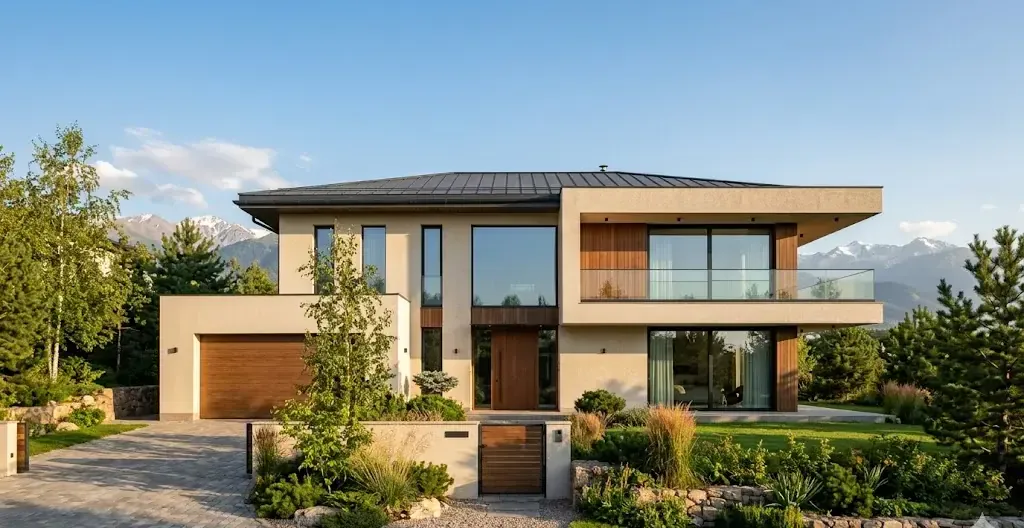
Facade plastering in Almaty
from 6 000 tg.* per linear metre
Durable, high-quality facade finishing thanks to compliance with building codes and the high qualifications of our craftsmen.
 Joints to GOST 5264-80
Installation from 1 day Arrival within 45 minutes
Installation from 1 day 3-year warranty
 Prices from 5000 ₸
Contract and estimate
Facade plastering in Almaty
from 6 000 tg.* per linear metre
Durable, high-quality facade finishing thanks to compliance with building codes and the high qualifications of our craftsmen.
Joints to GOST 5264-80
Installation from 1 day
Arrival within 45 minutes
Installation from 1 day
3-year warranty
Prices from 5000 ₸
Contract and estimate
Facade plastering in Almaty
from 6 000 tg.* per linear metre
Durable, high-quality facade finishing thanks to compliance with building codes and the high qualifications of our craftsmen.
Joints to GOST 5264-80
Installation from 1 day
Arrival within 45 minutes
Installation from 1 day
3-year warranty
Prices from 5000 ₸
Contract and estimate
Types of facade
work we do
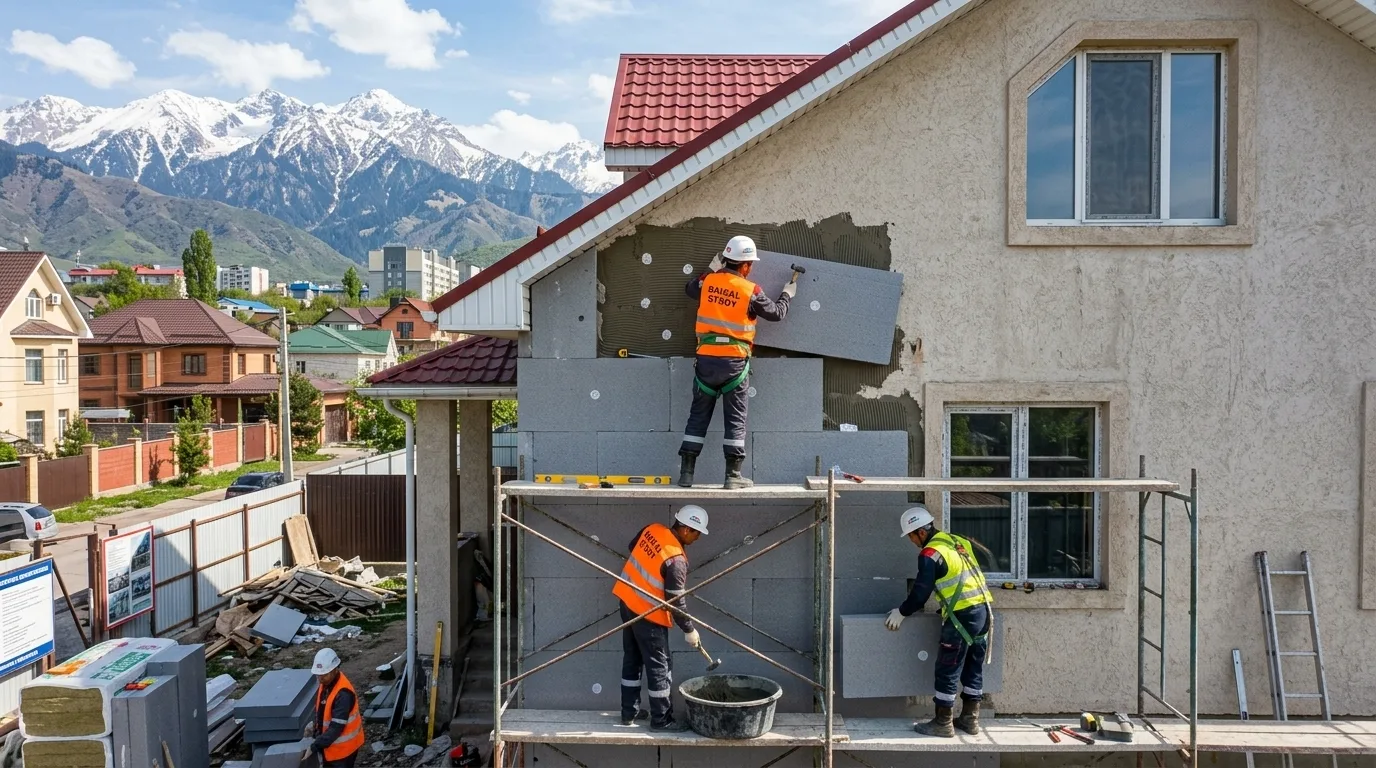
Facade insulation
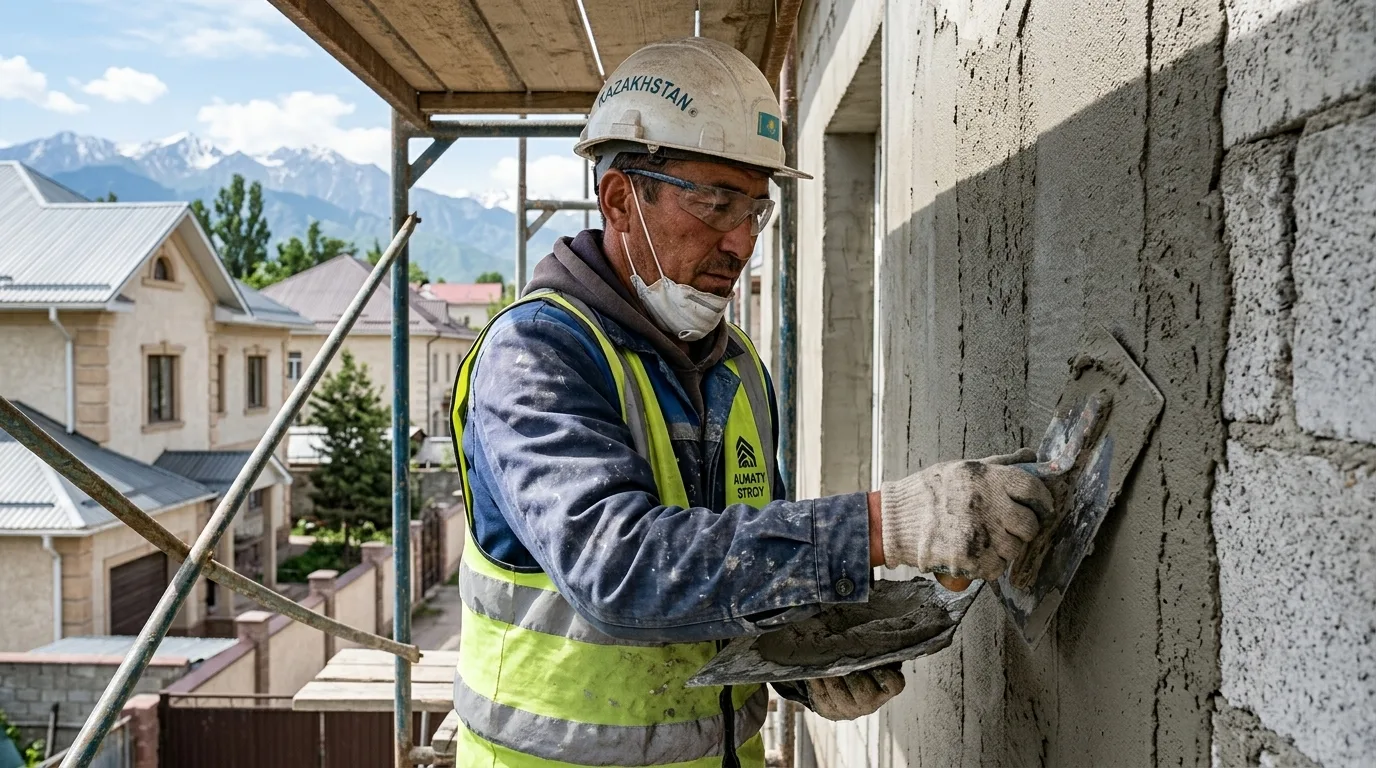
Plastering the walls
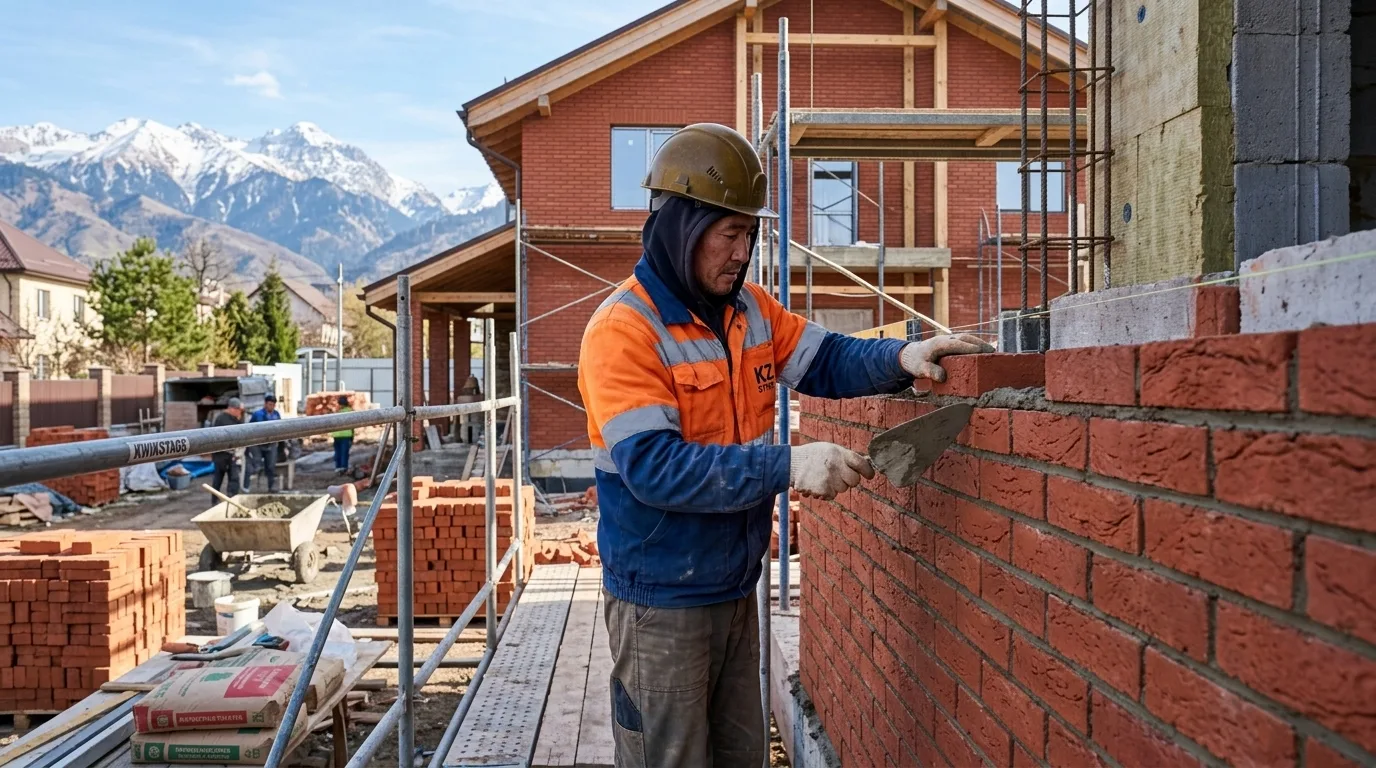
Brick cladding
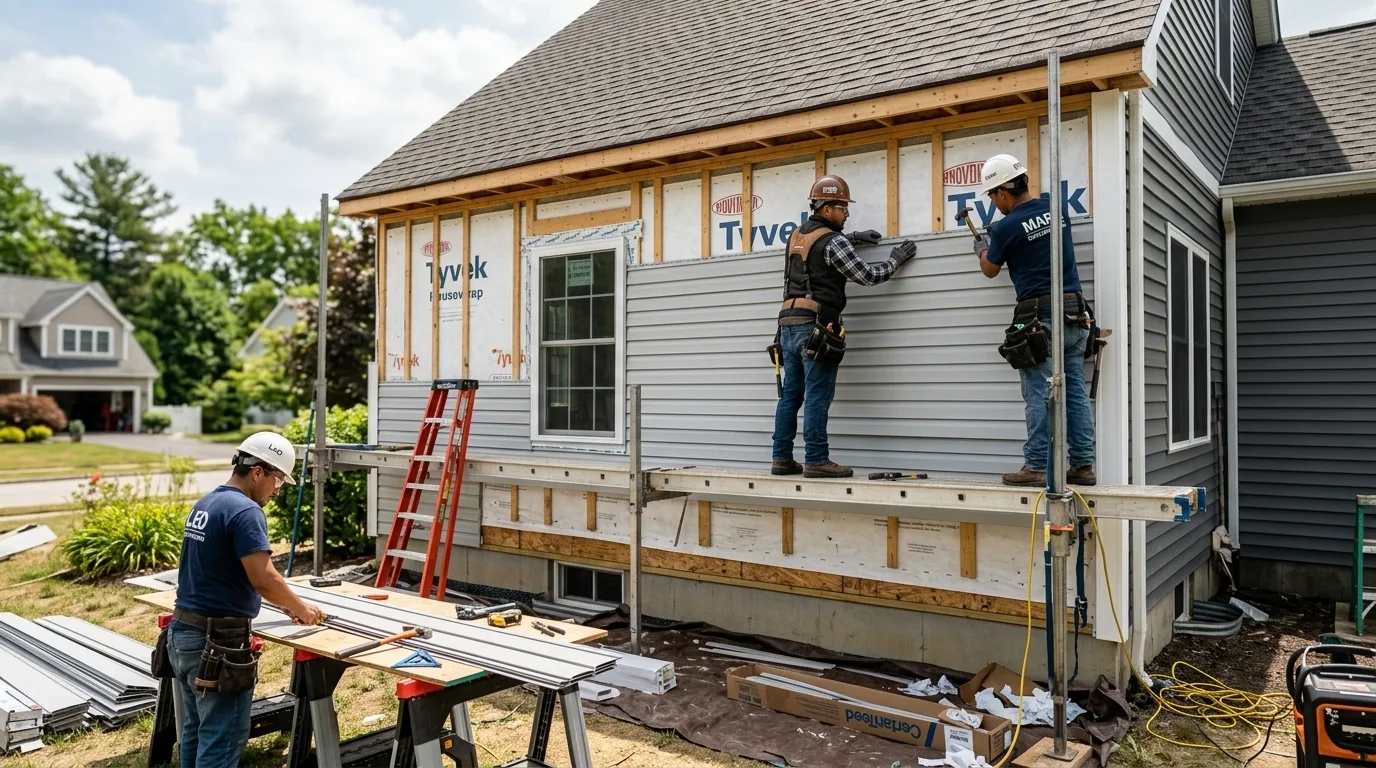
Siding installation
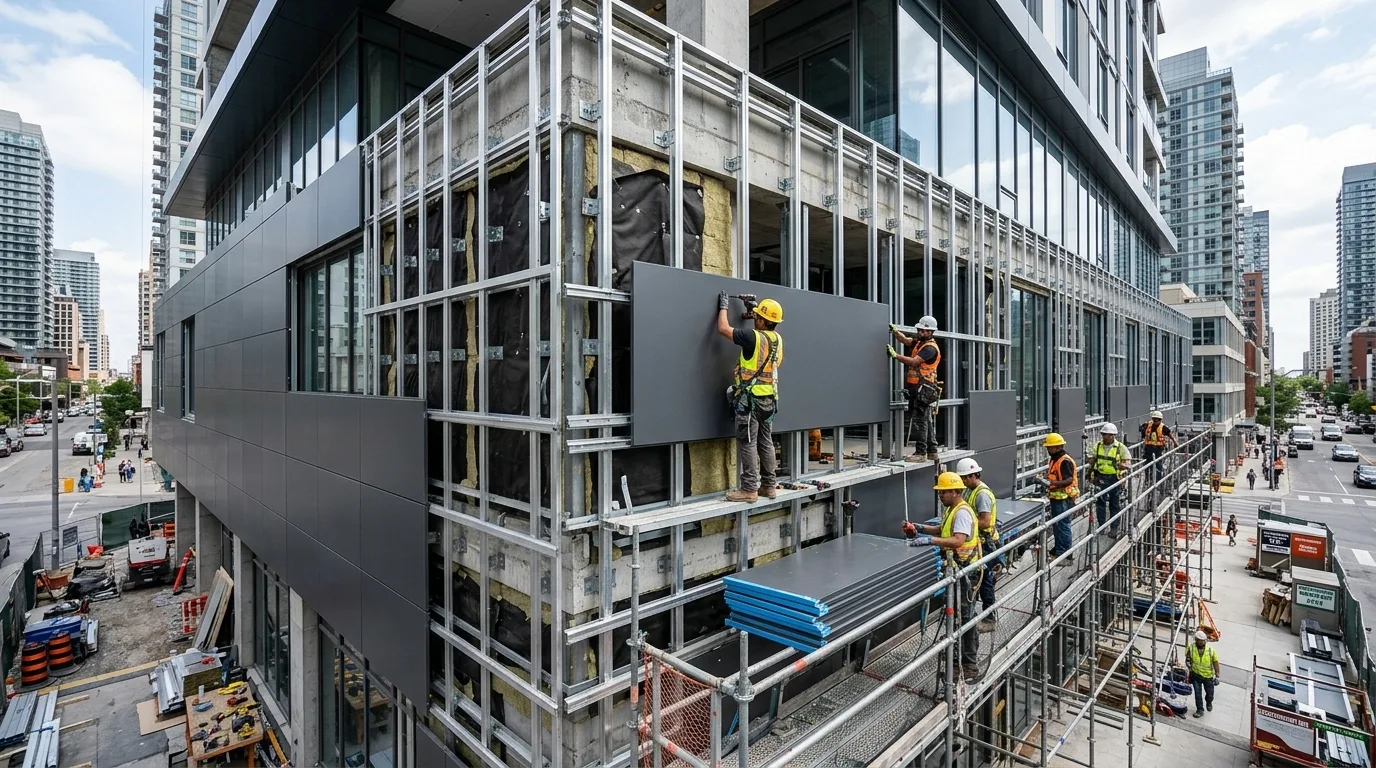
Construction of ventilated facades
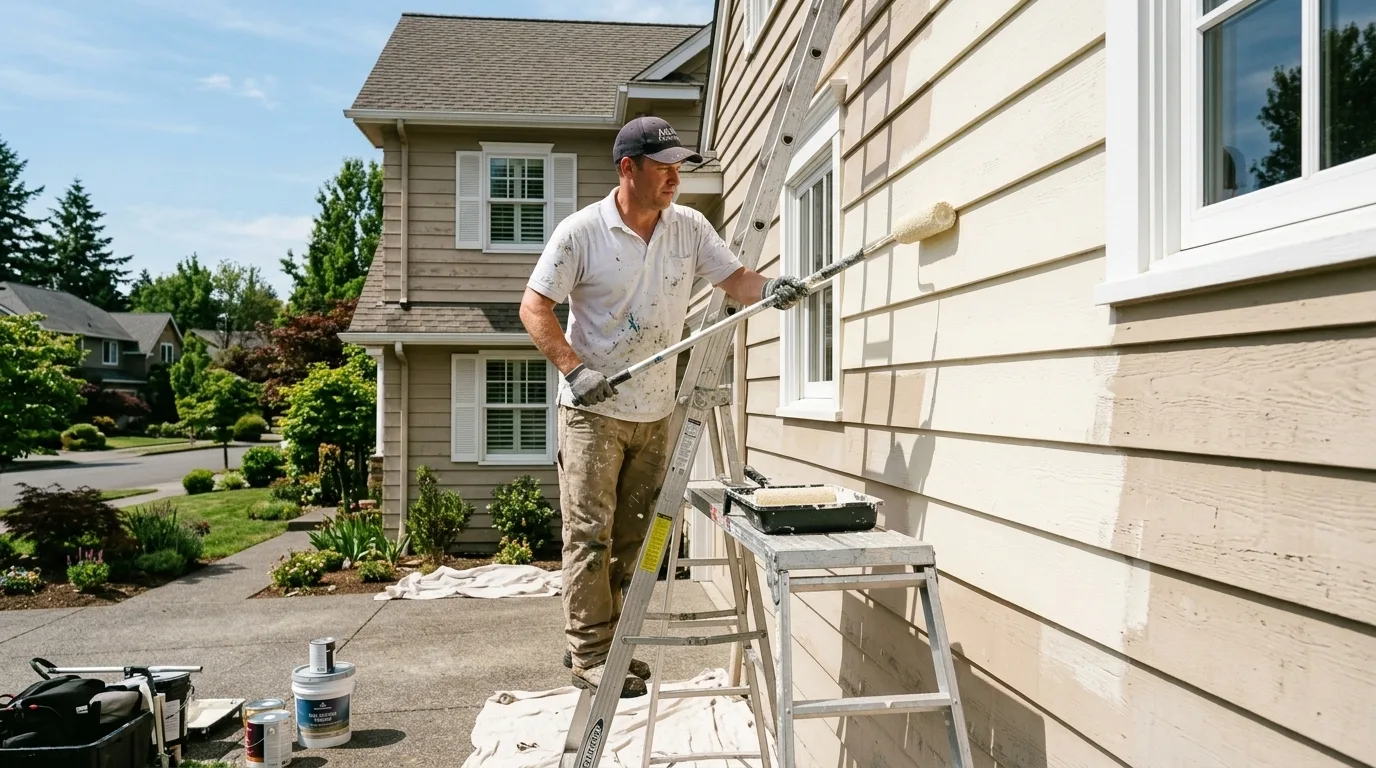
Facade painting
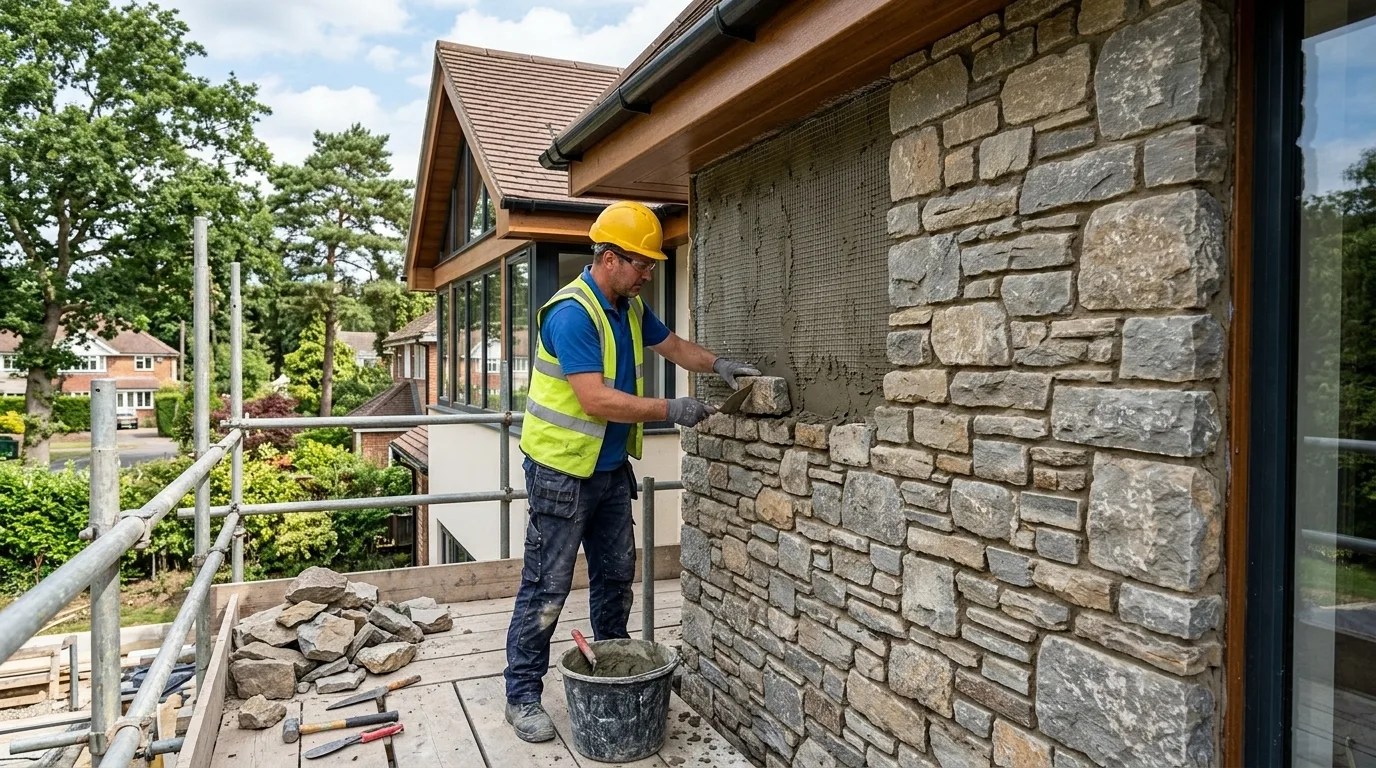
Stone finishing
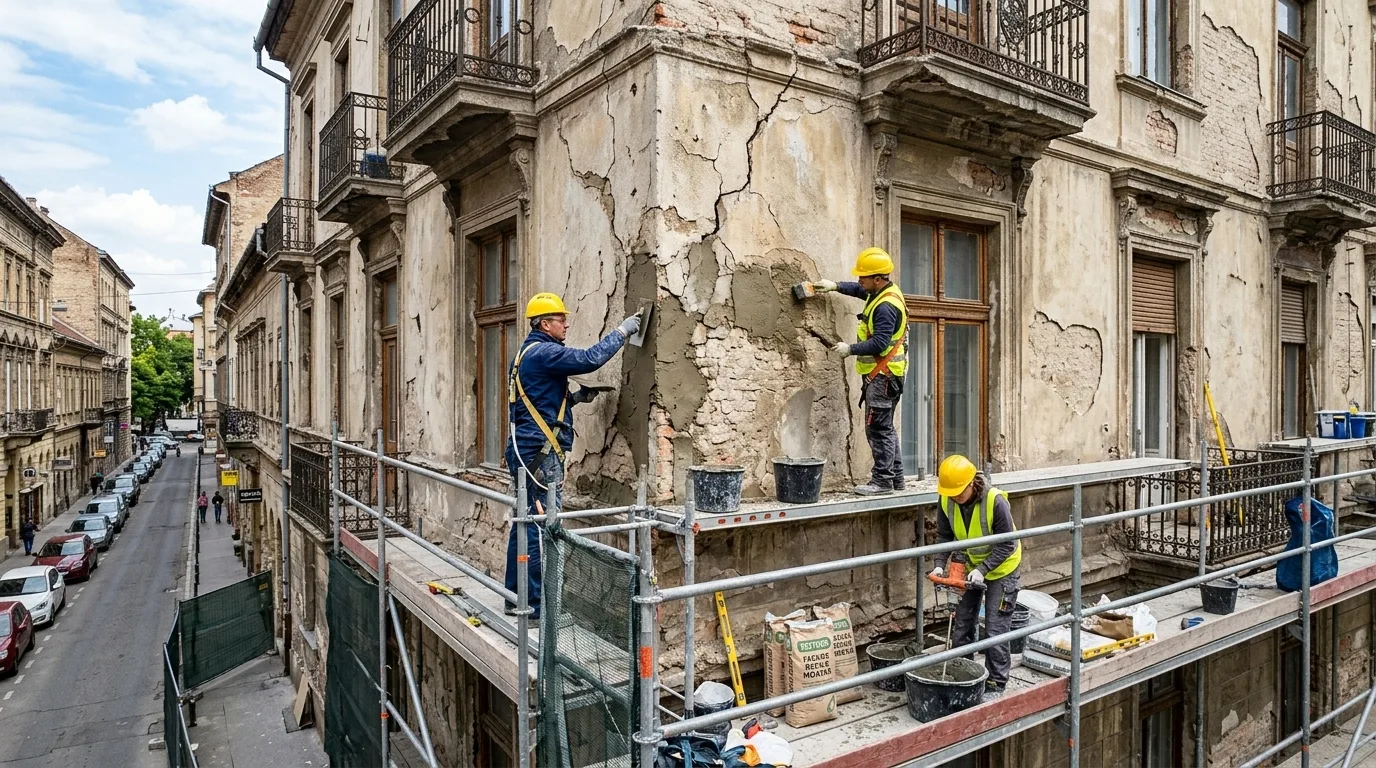
Facade repair
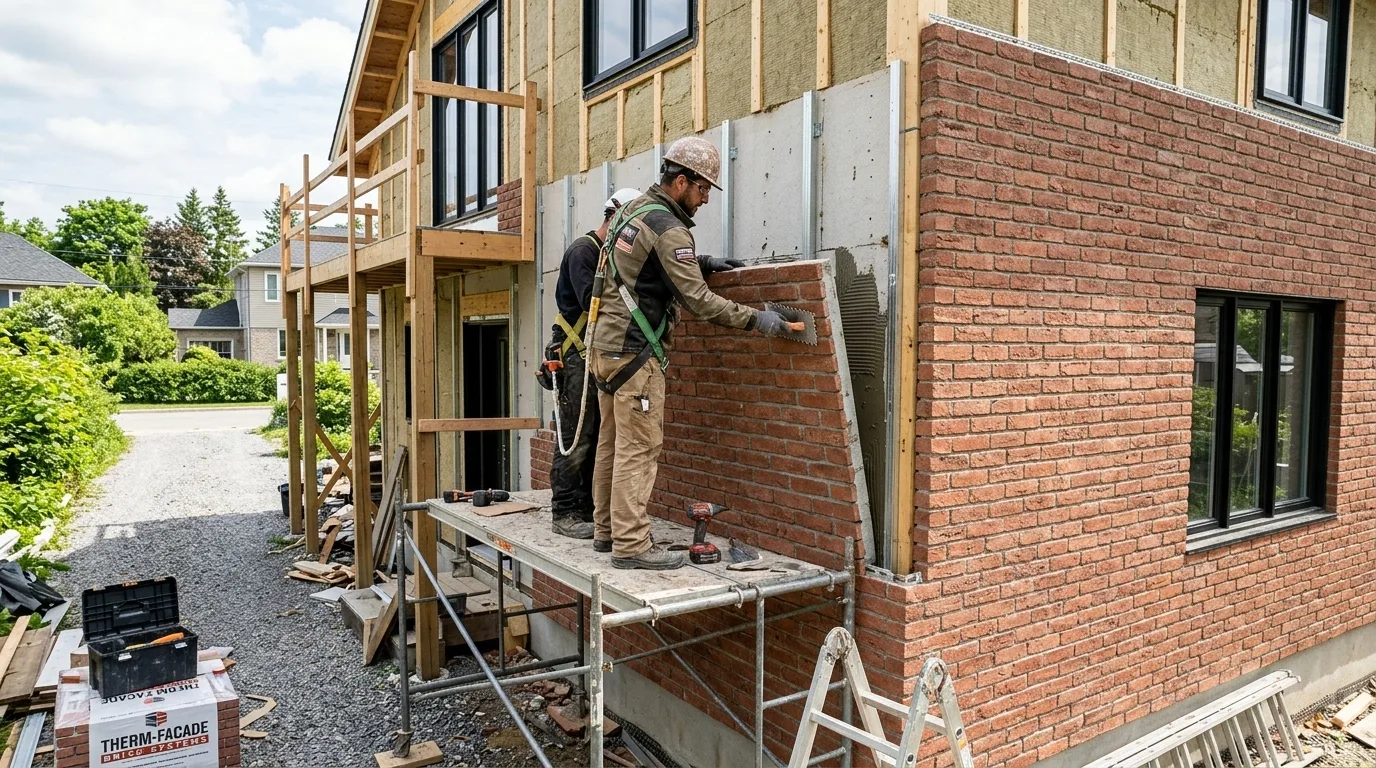
Installation of facade panels
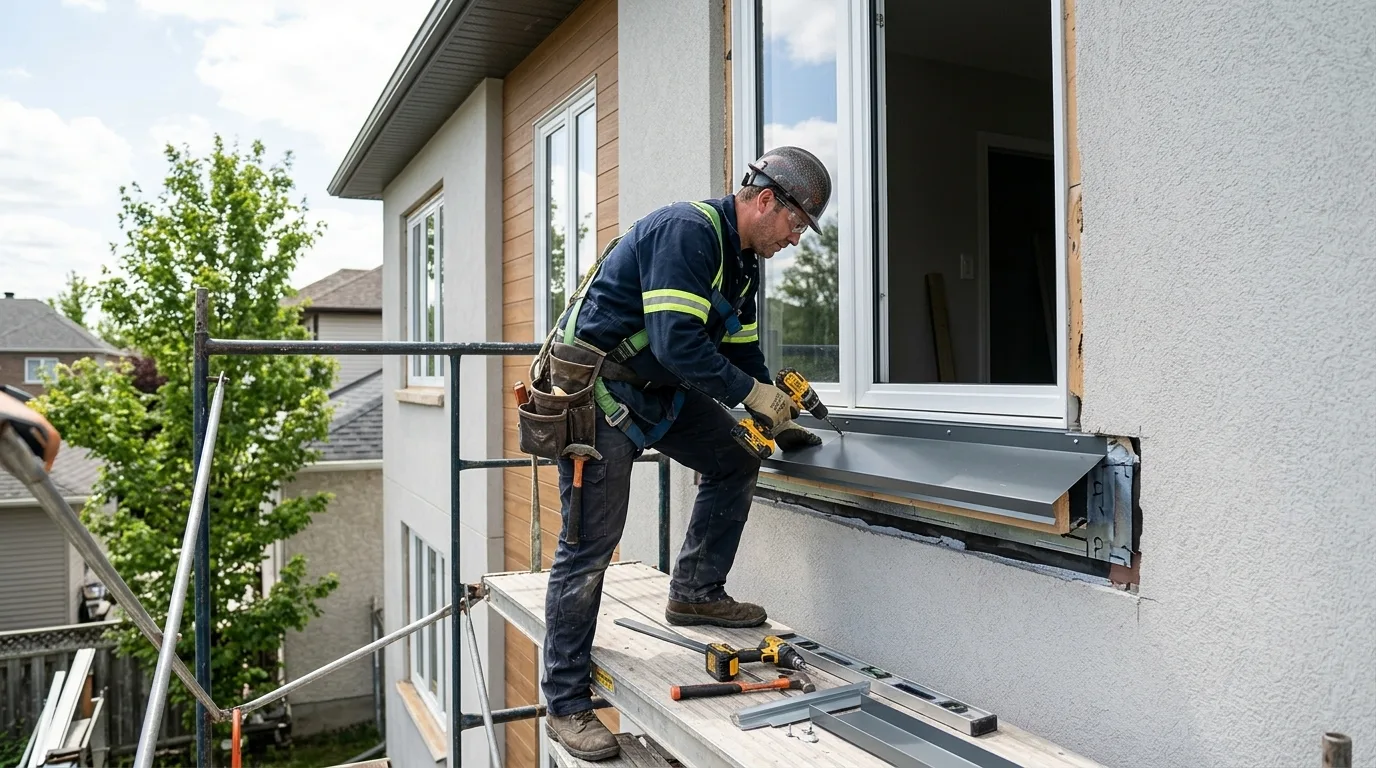
Installation of flashings and reveals
Types of facade
work we do
Facade insulation
Plastering the walls
Brick cladding
Siding installation
Installation of flashings and reveals
Facade repair
Facade painting
Stone finishing
Installation of facade panels
Construction of ventilated facades
We will call you back within 3 minutes
Types of facade
work we do
Facade insulation
Plastering the walls
Brick cladding
Installation of facade panels
Installation of flashings and reveals
Facade repair
Construction of ventilated facades
Facade painting
Stone finishing
Siding installation
We will call you back within 3 minutes
Cost of facade work in
Almaty
| SERVICE | COST | TIME |
|---|---|---|
| Specialist visit for a survey and consultation | from 5 000 ₸ | from 1 hour |
| Minimum order value | from 40 000 ₸ | — |
| Plastering the facade with cement-sand mortar | from 2 800 ₸/m² | from 2 days |
| Plastering the facade over insulation (wet facade) | from 3 200 ₸/m² | from 2 days |
| Bark beetle decorative plaster | from 2 500 ₸/m² | from 2 days |
| Shuba textured decorative plaster | from 2 300 ₸/m² | from 2 days |
| Plastering reveals | from 2 000 ₸/linear m | from 3 hours |
| Reinforcing with facade mesh | from 1 200 ₸/m² | from 1 day |
| Facade priming | from 400 ₸/m² | from 3 hours |
| Painting plaster with facade paint | from 1 500 ₸/m² | from 1 day |
| Erecting scaffolding | from 600 ₸/m² | from 1 day |
Advantages of facade work from Profi-Dom

Neat joints with no chips
We use professional jointing tools that prevent damage to the tiles during laying

Certified craftsmen
Each specialist confirms their qualification with an annual exam in facade technologies

Equipment for a wet facade
We use industrial mixers and plastering stations that ensure even application of the layers

Meeting the finishing deadlines
The average cycle of turnkey facade work takes 21 working days on a weekly schedule

5-year
warranty on the facade
We fix our obligations in a contract, including protection against plaster peeling and fastener corrosion

Transparent estimate in ₸
We fix the cost of materials and work in the estimate, with no hidden markups or extra charges
Advantages of facade work from Profi-Dom
We use professional jointing tools that prevent damage to the tiles during laying
Neat joints with no chips
Each specialist confirms their qualification with an annual exam in facade technologies
Certified craftsmen
We use industrial mixers and plastering stations that ensure even application of the layers
Equipment for a wet facade
The average cycle of turnkey facade work takes 21 working days on a weekly schedule
Meeting the finishing deadlines
We fix our obligations in a contract, including protection against plaster peeling and fastener corrosion
5-year
warranty on the facade
We fix the cost of materials and work in the estimate, with no hidden markups or extra charges
Transparent price in KZT
We will call you back within 3 minutes
Advantages of facade work from Profi-Dom
We use professional jointing tools that prevent damage to the tiles during laying
Neat joints with no chips
Each specialist confirms their qualification with an annual exam in facade technologies
Certified craftsmen
We use industrial mixers and plastering stations that ensure even application of the layers
Equipment for a wet facade
The average cycle of turnkey facade work takes 21 working days on a weekly schedule
Meeting the finishing deadlines
We fix our obligations in a contract, including protection against plaster peeling and fastener corrosion
5-year
warranty on the facade
We fix the cost of materials and work in the estimate, with no hidden markups or extra charges
Transparent price in KZT
We will call you back within 3 minutes
HOW WE WORK
- 01.Discussion and estimate
We visit the site or hold an online consultation to determine the scope of work precisely and prepare a transparent estimate with no hidden charges.
- 02.Visit for precise measurements
Our specialist comes at a time convenient for you, takes all the necessary measurements and records the features of the facade for a perfect fit of the material.
- 03.Creating the design and sketch
We develop a detailed cladding plan with a panel layout, so that you can see in advance how your house will look after installation.
- 04.Approval of the contract
In the contract we fix the final cost, the exact completion dates and the warranty obligations, so that you feel protected.
- 05.Preparation of materials
We order certified siding and all components, checking each batch for compliance with quality standards and colour.
- 06.Professional installation
Our craftsmen install the battens and fix the panels using a technology that prevents deformation and ensures a long facade service life.
- 07.Finishing and sealing
We carefully finish all corners, joints and openings, treating them with sealant to protect against moisture and draughts.
- 08.Handover of the site and cleanup
After the work is finished we remove the construction debris and carry out a final inspection together with you to make sure the result is flawless.
Find out the cost and timing of facade work in 1 minute
catalogue of completed facade work
 Facade insulation and plastering of a private house in the Alatau microdistrict
 Plinth cladding of a shopping centre on Abay Avenue
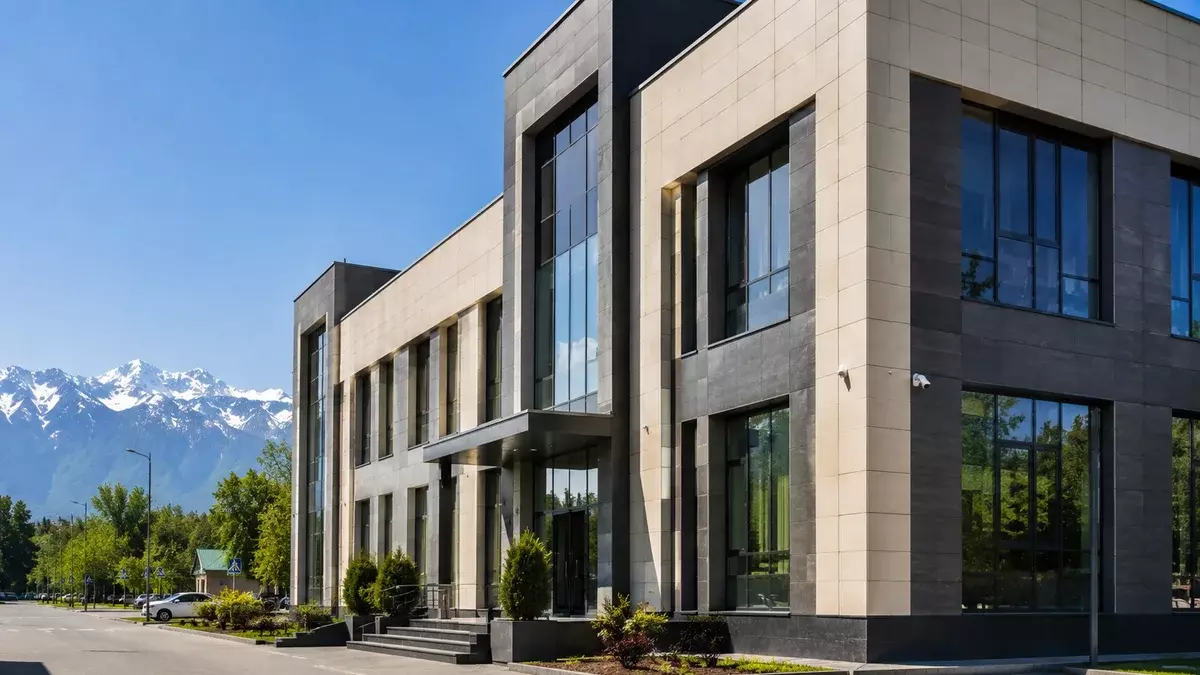 Installation of a ventilated facade on an office building in the Bostandyk district
 Painting and repair of the facade of an apartment building in the Samal microdistrict
FIND OUT THE COST OF FACADE WORK FOR YOUR PROJECT
Leave a request and we will contact you within 3 minutes
Thank you! We will contact you within 3 minutes.
By clicking the button you agree to the terms of the
 Privacy Policy
FIND OUT THE COST OF FACADE WORK FOR YOUR PROJECT
Leave a request and we will contact you within 3 minutes
Thank you! We will contact you within 3 minutes.
By clicking the button you agree to the terms of the
Or call us at
+7 (707) 068-88-68Privacy PolicyFIND OUT THE COST OF FACADE WORK FOR YOUR PROJECT
Leave a request and we will contact you within 3 minutes
Thank you! We will contact you within 3 minutes.
By clicking the button you agree to the terms of the
Or call us at
+7 (707) 068-88-68Facade plastering in detail
Facade plastering is a comprehensive system of insulation and decorative protection for a house. It includes installing insulation, reinforcing with fiberglass mesh and a finish coating. In Almaty, silicone and silicate compounds that withstand temperature swings are best. The price depends on the type of plaster and the complexity of the facade.
What facade plaster is and which types suit Almaty
Facade plaster is the finishing decorative and protective layer in the “wet facade” insulation system. For Almaty's climate, with swings from -30°C to +40°C, four types are suitable: mineral, acrylic, silicone and silicate — each with different vapour permeability, elasticity and service life.
Mineral facade plaster: composition and features
A cement-based mineral mix is the most affordable option, with a vapour permeability of 0,12 mg/(m·h·Pa) that lets the walls breathe and draw moisture out of the insulation. Compared with acrylic compounds, it has low elasticity — an elongation at break of only 2-5% — so on new houses that settle in the first 2-3 years, hairline cracks may appear. The material costs from 800 KZT/m², almost half the price of silicone equivalents. The mineral mix comes dry in bags, is mixed with water on site and applied in one pass — this speeds up the work but requires precise proportions. In the Almaty market, Ceresit CT 35 and Knauf Diamant are popular — both are UV-resistant and do not fade on the south side. For a climate with sharp temperature swings, mineral plaster must be painted with facade paint, otherwise microcracks appear within 2-3 seasons.
Acrylic facade plaster: elasticity and limitations
An acrylic polymer-based coating has high elasticity (elongation up to 30%), which prevents cracking caused by the house settling and ground vibrations — relevant for new cottages in the suburbs (Kargaly, Irgeli). It is sold ready to apply and is tinted throughout, which removes the need to paint after drying — saving 1-2 days of work. The vapour permeability of acrylic compounds is low — 0,03 mg/(m·h·Pa), so they cannot be used over mineral wool: moisture gets trapped in the insulation and destroys it within 3-5 years. The market offers Ceresit CT 60 and Capatect Akrylputz — they hold their colour for up to 10 years without fading, but require an antiseptic primer before application. In conditions of frequent rain and high humidity, acrylic coating is prone to biological damage — after 5-7 years it may need antiseptic treatment.
Silicone and silicate plaster: the best choice in Almaty
A silicone mix based on silicone resins combines vapour permeability (0,08 mg/(m·h·Pa)) with water repellency — water rolls off without soaking in, which is critical for areas with frequent drizzle (Aksai, Alatau). It is elastic (elongation up to 15%), applied in a thin 1,5-2,5 mm layer and tinted throughout — the facade keeps its rich colour for 15-20 years without fading. Silicate plaster based on water glass is cheaper (from 1800 KZT/m²), but requires quick application due to the short pot life of the mix — 30-40 minutes, which complicates work on large areas. Both types are compatible with expanded polystyrene and mineral wool, do not build up static electricity and therefore attract less dust — the facade stays clean longer without washing. For a climate with swings from -30°C in winter to +40°C in summer, silicone and silicate compounds last 20-25 years without repair, whereas acrylic ones need renewing after 7-10 years.
Comparison of facade plaster types: a specifications table
| Parameter | Mineral | Acrylic | Silicone | Silicate |
|---|---|---|---|---|
| Base | Cement | Acrylic resin | Silicone resin | Liquid glass |
| Vapour permeability, mg/(m·h·Pa) | 0,12 | 0,03 | 0,08 | 0,10 |
| Elasticity | Low | High | Medium | Medium |
| Service life, years | 10-15 | 7-10 | 20-25 | 15-20 |
| UV resistance | High | Medium | High | High |
| Price per m² (material) | from 800 KZT | from 1200 KZT | from KZT | from 1800 KZT |
When choosing between mineral and silicone, the difference in price per m² pays for itself within 5-7 years thanks to the absence of repainting costs — a mineral facade needs repainting every 3-4 years, while a silicone one keeps its colour for its whole service life.
The “wet facade” system (ETICS): structure and advantages
The price of facade plastering depends on the area, material and complexity of the facade — we calculate the exact amount after a measurement. Facade plastering is a sought-after solution that we carry out across Almaty and its suburbs. The wet facade system (ETICS) is a multi-layer structure in which each layer performs a strict function: from fixing the insulation to protecting against precipitation. Below we break down the structure and key advantages of the technology.
What a wet facade is and how it is built
A wet facade (ETICS) is an external insulation system in which all the layers are bonded with adhesive and plaster compounds by the “wet” method, without a ventilation gap. The first layer — a cement-polymer adhesive — is applied with a notched trowel to the cleaned wall, then the insulation board is pressed in — expanded polystyrene PSB-S or mineral wool with a density from 140 kg/m³. After setting, the insulation is additionally fixed with disc dowels at a rate of 6-8 per board. A reinforcing layer is installed over it: an alkali-resistant fiberglass mesh with a 5×5 mm cell is embedded in the same adhesive compound — this is exactly the stage that determines the facade's crack resistance. Next comes a quartz primer with quartz sand, and the finish is decorative plaster with the chosen texture. Unlike a ventilated facade, a wet facade has no voids between the insulation and the cladding — this eliminates convective heat loss and reduces the load on the foundation by 30-40% thanks to the system's lower weight.
How many layers are in the wet facade system
- - Adhesive compound: a cement-polymer mix for fixing the insulation to the wall, applied with a notched trowel in a 5-8 mm layer.
- - Insulation: expanded polystyrene PSB-S or mineral wool 50-150 mm thick — selected by a thermal calculation for the specific region.
- - Reinforcing layer: alkali-resistant fiberglass mesh with a density of 160 g/m², embedded in the adhesive compound — prevents cracking as the building settles.
- - Quartz primer: ensures adhesion between the base and decorative layers; applied with a roller or sprayer.
- - Decorative plaster: the finish coating with the chosen texture (bark-beetle, lamb's-wool, pebble) — protects the whole structure from UV and precipitation.
- - Skipping any layer, especially the reinforcing one with mesh, reduces the facade's service life by 2-3 times — cracks appear within just 1-2 seasons.
Advantages of a wet facade over the alternatives
A wet facade provides heat savings of up to 40% compared with an uninsulated wall and creates no cold bridges thanks to a continuous, unbroken layer of insulation. The dew point shifts from inside the wall into the insulation — this protects the load-bearing structures from freezing and prevents mould on the interior walls. Unlike a ventilated facade, ETICS requires no metal frame or decorative panels, which makes the square metre cheaper by 25-35%. The system is installed on brick, aerated concrete, monolithic concrete and even an old plaster layer — without reinforcing the foundation. For houses in Almaty with brick walls 380 mm thick, a wet facade with 100 mm of insulation reduces heat loss from 2,5 to 0,35 W/(m²·°C) — meeting modern thermal protection standards.
Facade plastering technology: stages and materials
Below is the step-by-step wet facade technology: from preparing the walls to the finish coating. The focus is on the critical stages, where mistakes cost the most.
Preparing the substrate and installing insulation
Substrate preparation for facade plastering includes cleaning the walls of dust and old paint, priming and levelling out differences of more than 10 mm with cement mortar. For aerated concrete houses, a preliminary deep-penetration primer is essential — otherwise the adhesive compound draws out the moisture and the insulation falls off within 2-3 years. The insulation (expanded polystyrene PSB-S 25F with a density of 16-18 kg/m³ or Rockwool Fasad Batts D mineral wool) is installed from the bottom up on a galvanised-steel starter profile with staggered joints as in brickwork; the layer thickness is 50-150 mm depending on the heat-loss calculation. For a brick house in Almaty conditions, 100 mm of polystyrene is enough; for aerated concrete, 50 mm. Umbrella dowels are driven in 24 hours after gluing, at 5-8 per square metre, at the corners and in the centre of the board. Before installation, check the wall unevenness with a two-metre straightedge — a deviation of more than 10 mm will require levelling, otherwise unevenness will show through on the finish layer.
Reinforcement with fiberglass mesh — why it is critically important
Reinforcement with fiberglass mesh in the base layer is the only way to prevent cracks on a facade: the mesh takes up the tensile stresses from temperature swings of up to 50°C (from -20°C in winter to +30°C in summer). Only alkali-resistant fiberglass mesh with a density of 145-165 g/m² (Valmiera or ConPro) is used — ordinary construction mesh dissolves in the alkaline environment of cement adhesive within 2-3 years. The mesh is embedded in a fresh 3-5 mm base plaster layer with a 10-15 cm overlap between sheets; at window and door corners, 20×30 cm mesh gussets are always laid at a 45° angle — this prevents diagonal cracks. A second base plaster layer with a total thickness of 5-7 mm is applied over the reinforced layer; once dry, it is floated and primed with quartz primer. Cutting corners on reinforcement (skipping the mesh or using non-alkali-resistant mesh) leads to cracks within 1-2 seasons — repair with removal of the decorative layer costs 2-3 times more than doing the job well in the first place.
Detailing of junction points — windows, doors, plinth
Window and door junctions in a wet facade are sealed with special connection profiles with drip edges — this prevents water from seeping under the system. The window profile is installed before the insulation: it is glued on with adhesive compound with the drip edge projecting 3-5 mm beyond the edge of the reveal, and a reinforcing mesh with a 20×30 cm gusset at a 45° angle is laid over the top. A galvanised-steel plinth profile with a drip edge is installed at the start — it takes the weight of the bottom row of insulation and directs rainwater away from the foundation. Where the system meets the roof or parapet, an exterior sealant (Ceresit CM 16) is used. A special profile with a rubber expansion insert is installed at the building's expansion joints. Statistically, 80% of wet facade defects (mould, detachment, freezing) occur precisely at the junctions with windows and the plinth — quality sealing of these details extends the facade's service life by 5-10 years.
Applying decorative plaster and finishing
Decorative plaster is applied to the primed base layer 24-48 hours after the primer has dried — the layer thickness depends on the filler fraction: 1,5-2,5 mm for bark-beetle (Ceresit CT 60), 2-4 mm for pebble (Ceresit CT 137), 1,5-2 mm for lamb's-wool (Sto Stolit K). Before application, the base is primed with a quartz primer containing quartz sand (Ceresit CT 16) — this evens out the substrate's absorbency and improves adhesion. The plaster is applied with a stainless-steel float in a continuous layer in one pass, without stopping at the edges of the working sections — otherwise the joint will be visible once it dries. The texture is formed with a plastic or rubber float after 5-15 minutes: for bark-beetle, with circular or vertical movements; for pebble, with light pressure without rubbing. Decorative plaster can be applied at a temperature of +5°C to +30°C and a humidity no higher than 80% —; in Almaty the best season is from May to September, when the daytime temperature stays steadily within this range.
Decorative textures and protection of the finish layer
From the surface pattern to its durability — the choice of plaster texture and the method of protection determine how the facade will look five to ten years after finishing.
Bark-beetle texture — a classic for facades
The “bark-beetle” texture is created by mineral granules in the plaster — as the float rubs them, the granules leave grooves imitating wood eaten by a beetle. The fraction size (1,5–3,5 mm) sets the depth and width of the grooves: the larger the granule, the more pronounced the pattern. For Almaty facades, with their frequent temperature swings and precipitation, a 2–2,5 mm fraction is best — it hides the minor wall unevenness that is inevitable after the base levelling and gets dirty less than smooth textures. The consumption of “bark-beetle” per square metre is 2,5–4,5 kg depending on the fraction and manufacturer (Ceresit, Knauf, Caparol). On south-facing facades, where heating reaches 60–70 °C in summer, the grooves of “bark-beetle” work as micro-ventilation channels — they reduce the thermal expansion of the coating and lower the risk of microcracks compared with continuous smooth surfaces.
Lamb's-wool and pebble textures — application features
The “lamb's-wool” texture is achieved with circular movements of the float — plaster with an even fraction creates a fine-grained surface resembling a lamb's fleece. Unlike “bark-beetle”, where the pattern depends on the direction of floating, “lamb's-wool” gives uniform graininess without directional lines, which forgives the mistakes of novice workers. The “pebble” texture, or “gravel”, is a random arrangement of large granules (2–4 mm) that remain on the surface after floating as little pebbles, creating a rough layer. The consumption of “pebble” plaster is 15–20 % higher than that of “bark-beetle” at the same fraction — up to 5–6 kg/m² — but the coating is more durable and resistant to impacts (branches, hail, accidental contact). In the city, “pebble” is more often chosen for plinth levels and facades of houses along busy streets (Abay and Raiymbek avenues) — mechanical strength here matters more than aesthetics.
Protecting the finish layer: impregnations and water-repellent treatment
Water-repellent treatment of the facade — applying a special silicone-based impregnation — reduces the plaster's water absorption to 0,5 % and prevents efflorescence and biological damage. Without such protection, mineral plaster absorbs up to 10–15 % of moisture relative to its own weight, which, in Almaty's frosts (–25 °C and below), leads to microcracks after 2–3 freeze-thaw cycles. Silicone impregnations (from Remmers, Ceresit CT 13, Caparol) do not change the colour or texture of the coating, but form an invisible film on the surface from which water runs off in droplets. For mineral plaster the water-repellent treatment is renewed every 3–5 years; for silicone, a single treatment after 10 years of service is enough, since its polymer matrix is water-repellent in itself. The impregnation is applied with a roller or sprayer at an air temperature of +5 to +25 °C — in the local season that is April-May or September, when there is no rain and the wind does not carry dust onto the fresh layer.
Facade plastering price per m²: a cost table
The final cost of facade work is made up of the price of materials, labour and the complexity of the building. Below is a breakdown by stage and a table for different types of coating.
What makes up the price per m²: a breakdown by stage
The price per square metre is made up of four components: substrate preparation (10-15%), insulation installation (25-30%), reinforcement with the base layer (20-25%), the finish coating (30-35%). Preparation covers cleaning the walls, priming and levelling the differences — on old houses of shell rock or cinder block this stage takes up to 2 days. Insulation installation includes gluing PSB-S-25F boards (100 mm) and dowelling at a rate of 6-8 dowels per square. Reinforcement with alkali-resistant mesh with a density from 145 g/m² is a critical stage: mesh below this threshold cracks within 2-3 years, and redoing it costs more than the initial saving of 200-300 KZT/m². Hidden costs most often arise from unaccounted junction details (windows, doors, plinth) — on a house with a facade area of 200 m² this can add 15-20% to the estimate if the contractor did not include them in the calculation.
Facade plastering cost table per m²
| Type of finish coat | Materials, KZT/m² | Labour, KZT/m² | Turnkey, KZT/m² | Service life, years |
|---|---|---|---|---|
| Mineral plaster | 1 800-2 500 | 2 500-3 000 | 8 500-10 000 | 10-15 |
| Acrylic plaster | 2 500-3 500 | 2 500-3 000 | 9 500-11 000 | 7-10 |
| Silicone plaster | 3 500-5 000 | 2 500-3 000 | 11 000-13 500 | 20-25 |
| Silicate plaster | 3 000-4 500 | 2 500-3 000 | 10 500-12 500 | 15-20 |
Turnkey includes: substrate preparation, 100 mm of insulation, mesh reinforcement, priming, finish coating.
What the estimate should include to avoid hidden costs
- - Facade area: specifying the deduction for window and door openings — contractors often count “by the blank wall”, inflating the estimate by 10-15%.
- - Materials by layer: adhesive, PSB-S-25F insulation, dowels (6-8 pcs/m²), alkali-resistant mesh, primer, decorative plaster — with brand and quantity.
- - Labour by stage: preparation, insulation installation, reinforcement, finishing — itemised separately so you can see where you can save without losing quality.
- - Junction details: windows, doors, plinth, corners — with the cost of the profiles (starter, plinth, drip edge) and labour specified.
- - Additional costs: delivery of materials, hoisting to the upper floor, scaffolding rental — these lines are often “forgotten” and billed after completion.
Turnkey facade plastering with PROFI-DOM
We arrange turnkey facade plastering: from a free visit by our technician to warranty servicing of the finished facade.
Free visit for measurement and estimate preparation
PROFI-DOM comes out for a free measurement within 1-2 business days of your request — the technician inspects the facade, measures the area and assesses the condition of the substrate. The specialist records the wall geometry, the depth of cracks in the old coating and level deviations that affect the amount of mix, and then draws up an estimate broken down by layer: adhesive, insulation, basalt mesh, primer and decorative plaster. The estimate lists the cost of materials and labour separately, with no hidden mark-ups — the client sees what they are paying for before signing the contract. During the measurement, the technician immediately determines the required insulation thickness from a thermal calculation for the specific house — this rules out overpaying for an excessive layer or insufficient insulation.
Selecting materials to suit the city's climate
PROFI-DOM's specialists select the type of facade plaster to suit Almaty's climate — for most houses they recommend silicone or silicate compounds that withstand temperature swings from -30°C to +40°C. In hilly areas (the Taugul, Duman and Koktobe neighbourhoods) with frequent rain and fog, we use silicate mixes with a vapour permeability above 0,03 mg/(m·h·Pa) — the walls breathe and do not accumulate moisture. On flat areas (Aksai, Alatau, Kairat) with dry air and dusty winds, silicone plaster with an elasticity of up to 15% — is applied — it does not crack as a new house settles. For buildings near Abay, Al-Farabi and Sain avenues, self-cleaning compounds are used: rain washes away the dust and the facade stays clean longer without frequent washing.
Workmanship warranty and facade service life
PROFI-DOM provides a warranty on facade plastering installation work from 1 year — during this period the crew fixes free of charge any defects caused by faulty installation: mesh detachment, cracks at the insulation joints or uneven colour of the finish coat. The manufacturer's warranty on materials is 10–15 years for silicone plasters and up to 25 years for basalt insulation with a density of 100–120 kg/m³ — these figures are confirmed by certificates of conformity handed to the client when the project is completed. The facade's service life depends on the quality of the substrate: on fresh gas block masonry without deformations the facade lasts the stated 15–20 years, while on old brick with cracks the term drops to 7–10 years without additional reinforcement. Before signing the acceptance certificate, check the material certificates — this is the only way to confirm the official warranty on the insulation and plaster, not just on the labour.
Examples of completed projects around the city
PROFI-DOM shows examples of completed projects — from private houses in the Aksai, Mamyr and Orbita neighbourhoods to commercial buildings in the city centre on Dostyk Avenue. The portfolio includes houses of various heights: for two- and three-storey cottages the crew uses scaffolding with a 1,5-metre spacing, and on buildings of 4 storeys and up — powered facade cradles with a lifting capacity of up to 300 kg. Every project is handed over with photo records of the intermediate stages: laying the insulation, reinforcing the corners, the finish coat — this lets you see the quality of the work layer by layer. The company does not hide the addresses of completed houses — the client can drive over and see the result in person before finishing their own facade.
Conclusion
The main takeaways on facade plastering — the choice of material, strict adherence to the technology and attention to junction details — determine whether the facade lasts ten years or cracks within one.
Key takeaways
- - Choice of material: in Almaty's climate, with its sharp swings, silicone and silicate plasters are best — they last 20-25 years without repair, unlike acrylic ones, which fade within 5-7 seasons.
- - Technology: the wet facade system includes 5 mandatory layers — skipping the reinforcement or cutting corners on 145 g/m² mesh leads to cracks within 1-2 winters.
- - Junction details: 80% of facade defects occur at windows, doors and the plinth — quality sealing of these areas with profiles and sealing tape extends the coating's service life by 5-10 years.
- - Estimate: a detailed estimate broken down by stage, with a separate line for junction details, is the only way to avoid hidden costs of 15-25% of the budget.
- - Seasonality: work is carried out at +5°C to +30°C — in Almaty the best period is from May to September, and it is better to allow a buffer of 2 weeks for each layer to dry.