Pipe fittings Almaty
Pressure up to 40 bar, tightness 100%
Products to GOST and ISO, temperature from –20 to +200 °C, shipped within 24 hours.
 Savings of up to 15% thanks to direct supplies from Kazakhstan and Russia
 Warehouse: 3 000 tonnes, 95% items in stock
 18 vehicles in our own fleet
 Every batch comes with GOST and EN certificates
Pipe fittings Almaty
Pressure up to 40 bar, tightness 100%
Products to GOST and ISO, temperature from –20 to +200 °C, shipped within 24 hours.
Savings of up to 15% thanks to direct supplies from Kazakhstan and Russia
Warehouse: 3 000 tonnes, 95% items in stock
18 vehicles in our own fleet
Every batch comes with GOST and EN certificates
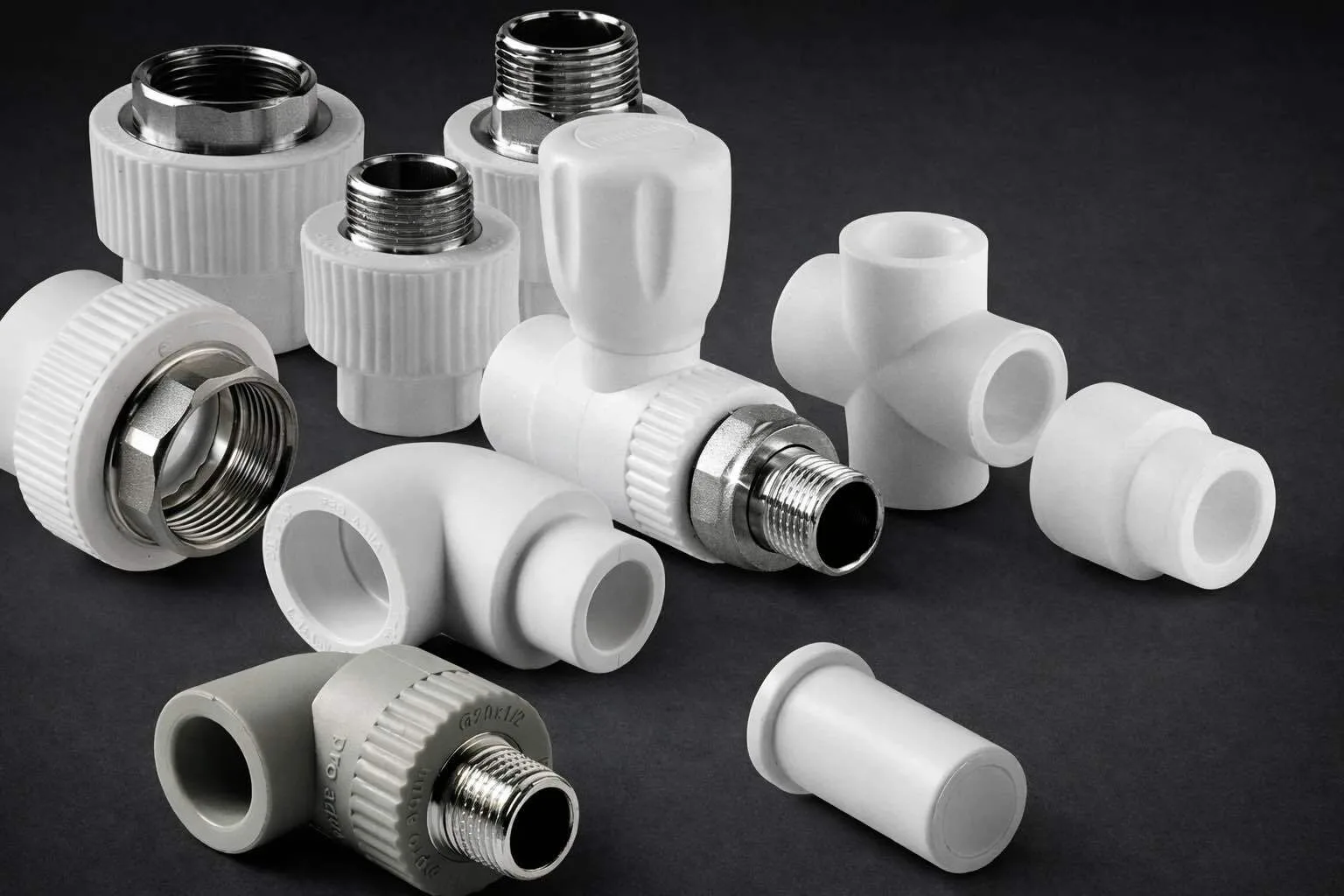
Pipe fittings Almaty
Pressure up to 40 bar, tightness 100%
Products to GOST and ISO, temperature from –20 to +200 °C, shipped within 24 hours.
Savings of up to 15% thanks to direct supplies from Kazakhstan and Russia
Warehouse: 3 000 tonnes, 95% items in stock
18 vehicles in our own fleet
Every batch comes with GOST and EN certificates
pipe fittings catalogue
The price is given per piece, including production and delivery
 Steel short-radius bend 90° Ø57×3.5 mm (St20) GOST 17375 in AlmatySteel short-radius bend 90° Ø76×3.5 mm (St20) GOST 17375 in AlmatySteel short-radius bend 90° Ø89×4.0 mm (St20) GOST 17375 in AlmatySteel short-radius bend 90° Ø108×4.0 mm (St20) GOST 17375 in AlmatySteel short-radius bend 90° Ø133×4.5 mm (St20) GOST 17375 in AlmatySteel short-radius bend 90° Ø159×5.0 mm (St20) GOST 17375 in AlmatySteel short-radius bend 90° Ø219×6.0 mm (St20) GOST 17375 in Almaty
 Steel concentric reducer 57×32×3.5 mm (St20) GOST 17378 in AlmatySteel concentric reducer 57×40×3.5 mm (St20) GOST 17378 in AlmatySteel concentric reducer 76×45×4.0 mm (St20) GOST 17378 in AlmatySteel concentric reducer 89×57×4.0 mm (St20) GOST 17378 in AlmatySteel concentric reducer 108×57×4.5 mm (St20) GOST 17378 in AlmatySteel concentric reducer 108×89×4.5 mm (St20) GOST 17378 in Almaty
 Steel equal tee Ø57×3.5 mm (St20) GOST 17378 in AlmatySteel equal tee Ø76×3.5 mm (St20) GOST 17378 in AlmatySteel equal tee Ø89×4.0 mm (St20) GOST 17378 in AlmatySteel equal tee Ø108×4.0 mm (St20) GOST 17378 in AlmatySteel equal tee Ø133×4.5 mm (St20) GOST 17378 in AlmatySteel equal tee Ø159×5.0 mm (St20) GOST 17378 in AlmatySteel equal tee Ø219×6.0 mm (St20) GOST 17378 in Almaty
 Flat flange PN16 DN50×16 mm (St3) GOST 12820 in AlmatyFlat flange PN16 DN80×18 mm (St3) GOST 12820 in AlmatyFlat flange PN16 DN100×20 mm (St3) GOST 12820 in AlmatyFlat flange PN16 DN150×22 mm (St3) GOST 12820 in AlmatyFlat flange PN16 DN200×24 mm (St3) GOST 12820 in AlmatyFlat flange PN16 DN300×28 mm (St3) GOST 12820 in Almaty
 Threaded coupling, female thread, 1/2" (Brass) GOST 8959 in AlmatyThreaded coupling, female thread, 3/4" (Brass) GOST 8959 in AlmatyThreaded nipple, male thread, 1/2" (Steel) GOST 8959 in AlmatyThreaded nipple, male thread, 3/4" (Steel) GOST 8959 in AlmatyThreaded elbow, female-male thread, 1/2" (Brass) GOST 8959 in AlmatyThreaded tee, female-female-female thread, 1/2" (Brass) GOST 8959 in Almaty
 Compression coupling HDPE 25 mm (10.0 mm) GOST 18599 in AlmatyCompression coupling HDPE 32 mm (10.0 mm) GOST 18599 in AlmatyCompression HDPE bend 90° 25 mm (10.0 mm) GOST 18599 in AlmatyCompression HDPE bend 90° 32 mm (10.0 mm) GOST 18599 in AlmatyCompression HDPE tee 25 mm (10.0 mm) GOST 18599 in AlmatyCompression HDPE tee 32 mm (10.0 mm) GOST 18599 in Almaty
OUR COMPANY'S SERVICES

Preparatory operations
Cutting (gas, plasma, laser, waterjet), bending, straightening, making forgings, metal casting, rolling, perforation, blanking and stamping.

Machining
Turning and milling (including CNC), drilling, boring, thread cutting, grinding, polishing, deburring and machining.


Heat and chemical treatment
Heat treatment (hardening, tempering, normalising), carburising, nitriding, boriding, carbonitriding, chemical oxidation (blackening).


Surface coatings and finishing
Electroplated coatings (galvanising, chrome plating, nickel plating, anodising), painting (powder, liquid, anti-corrosion), paint-and-varnish coatings, sandblasting.

Quality control
Ultrasonic testing, magnetic particle testing, radiographic testing, penetrant testing.

Welding and assembly
Welding work (arc, semi-automatic, argon-arc), assembly of steel structures.

Special technologies
Calibration (round, square, hexagon), hydroforming, laser marking.

Logistics and order assembly
Packaging of products, order assembly, warehousing services, delivery of rolled metal and finished products.

Engineering and design
Development of technical documentation, design of steel structures, material selection, and bespoke design and engineering solutions for the client.
OUR COMPANY'S SERVICES

Cutting (gas, plasma, laser, waterjet), bending, straightening, making forgings, metal casting, rolling, perforation, blanking and stamping.
Preparatory operations

Turning and milling (including CNC), drilling, boring, thread cutting, grinding, polishing, deburring and machining.
Machining
Heat treatment (hardening, tempering, normalising), carburising, nitriding, boriding, carbonitriding, chemical oxidation (blackening).
Heat and chemical treatment
Electroplated coatings (galvanising, chrome plating, nickel plating, anodising), painting (powder, liquid, anti-corrosion), paint-and-varnish coatings, sandblasting.
Surface coatings and finishing
Ultrasonic testing, magnetic particle testing, radiographic testing, penetrant testing.
Quality control

Welding work (arc, semi-automatic, argon-arc), assembly of steel structures.
Welding and assembly
Calibration (round, square, hexagon), hydroforming, laser marking.
Special technologies
Packaging of products, order assembly, warehousing services, delivery of rolled metal and finished products.
Logistics and order assembly
Development of technical documentation, design of steel structures, material selection, and bespoke design and engineering solutions for the client.
Engineering and design
We will call you back within 3 minutes
OUR COMPANY'S SERVICES
Cutting (gas, plasma, laser, waterjet), bending, straightening, making forgings, metal casting, rolling, perforation, blanking and stamping.
Preparatory operations
Turning and milling (including CNC), drilling, boring, thread cutting, grinding, polishing, deburring and machining.
Machining
Heat treatment (hardening, tempering, normalising), carburising, nitriding, boriding, carbonitriding, chemical oxidation (blackening).
Heat and chemical treatment
Electroplated coatings (galvanising, chrome plating, nickel plating, anodising), painting (powder, liquid, anti-corrosion), paint-and-varnish coatings, sandblasting.
Surface coatings and finishing
Ultrasonic testing, magnetic particle testing, radiographic testing, penetrant testing.
Quality control
Welding work (arc, semi-automatic, argon-arc), assembly of steel structures.
Welding and assembly
Calibration (round, square, hexagon), hydroforming, laser marking.
Special technologies
Packaging of products, order assembly, warehousing services, delivery of rolled metal and finished products.
Logistics and order assembly
Development of technical documentation, design of steel structures, material selection, and bespoke design and engineering solutions for the client.
Engineering and design
We will call you back within 3 minutes
Prices for pipe fittings
| CATEGORY | THICKNESS | STEEL GRADE | SIZE | UNIT OF MEASURE | AVERAGE PRICE |
|---|---|---|---|---|---|
| STEEL SHORT-RADIUS BENDS (90°) | |||||
| Bend | 3.5 | St20 | 57 | pcs | 1250 |
| Bend | 3.5 | St20 | 76 | pcs | 1980 |
| Bend | 4.0 | St20 | 89 | pcs | 2650 |
| Bend | 4.0 | St20 | 108 | pcs | 4100 |
| Bend | 4.5 | St20 | 133 | pcs | 6300 |
| Bend | 5.0 | St20 | 159 | pcs | 8900 |
| Bend | 6.0 | St20 | 219 | pcs | 21500 |
| STEEL CONCENTRIC REDUCERS | |||||
| Reducer | 3.5 | St20 | 57x32 | pcs | 510 |
| Reducer | 3.5 | St20 | 57x40 | pcs | 460 |
| Reducer | 4.0 | St20 | 76x45 | pcs | 880 |
| Reducer | 4.0 | St20 | 89x57 | pcs | 1150 |
| Reducer | 4.5 | St20 | 108x57 | pcs | 1650 |
| Reducer | 4.5 | St20 | 108x89 | pcs | 1580 |
| STEEL EQUAL TEES | |||||
| Tee | 3.5 | St20 | 57 | pcs | 1450 |
| Tee | 3.5 | St20 | 76 | pcs | 2310 |
| Tee | 4.0 | St20 | 89 | pcs | 2370 |
| Tee | 4.0 | St20 | 108 | pcs | 4080 |
| Tee | 4.5 | St20 | 133 | pcs | 5950 |
| Tee | 5.0 | St20 | 159 | pcs | 7630 |
| Tee | 6.0 | St20 | 219 | pcs | 18590 |
| STEEL FLAT FLANGES (PN16) | |||||
| Flange | 16.0 | St3 | Dn50 | pcs | 3850 |
| Flange | 18.0 | St3 | Dn80 | pcs | 5400 |
| Flange | 20.0 | St3 | Dn100 | pcs | 6950 |
| Flange | 22.0 | St3 | Dn150 | pcs | 11200 |
| Flange | 24.0 | St3 | Dn200 | pcs | 16800 |
| Flange | 28.0 | St3 | Dn300 | pcs | 24500 |
| THREADED FITTINGS (BRASS/STEEL) | |||||
| Coupling (female thread) | 2.5 | Brass | 1/2" | pcs | 850 |
| Coupling (female thread) | 3.0 | Brass | 3/4" | pcs | 1250 |
| Nipple (male thread) | 2.5 | Steel | 1/2" | pcs | 250 |
| Nipple (male thread) | 3.0 | Steel | 3/4" | pcs | 420 |
| Elbow (female-male thread) | 2.5 | Brass | 1/2" | pcs | 1150 |
| Tee (female-female-female thread) | 2.5 | Brass | 1/2" | pcs | 1480 |
| HDPE COMPRESSION FITTINGS (FOR WATER) | |||||
| Coupling | 10.0 | Hdpe | 25 | pcs | 480 |
| Coupling | 10.0 | Hdpe | 32 | pcs | 720 |
| Bend 90 | 10.0 | Hdpe | 25 | pcs | 560 |
| Bend 90 | 10.0 | Hdpe | 32 | pcs | 840 |
| Tee | 10.0 | Hdpe | 25 | pcs | 890 |
| Tee | 10.0 | Hdpe | 32 | pcs | 1150 |
- 01.OUR OWN WAREHOUSE OF 3 000 TONNES
Pipes, beams, sheets and rebar to GOST are in stock. More than 2 500 items available. We guarantee a selection for any project.
- 02.OUR COMPANY HAS BEEN OPERATING FOR 30 YEARS
We have been operating since 1994. Over this time we have found the best metal suppliers, and bulk purchasing allows us to cut costs for our clients.
- 03.cutting accuracy to ±1 mm
On Hypertherm CNC machines. We eliminate defects and metal waste. We save clients up to 15% of the budget on every project.
- 04.Delivery strictly on time
We deliver 98,5% of orders exactly on time thanks to our own fleet of 18 vehicles. You will avoid production downtime and penalties from clients.
- 05.A WIDE CHOICE OF METAL
We have 100+ items in stock: steel, aluminium and stainless steel from MMK, RUSAL and Severstal. Get the metal you need turnkey.
- 06.Direct supplies from 7 mills
We work directly, without intermediaries, with the MMK, NLMK and ChTPZ mills. Prices are 10-15% below market and every product comes with a quality certificate.
- 07.Dispatch from the warehouse in 3 hours
We will dispatch 95% items from our warehouse within 3 hours of your request. You will cut waiting time and speed up the start of the project.
- 08.Deferred payment of up to 30 days
We provide official deferred payment of up to 10 000 000 KZT for regular clients. Keep your working capital.
- 09.We will calculate the cost in 15 min
Send us a drawing or specification. Our engineer will prepare a quote with the exact cost in 15 minutes and send it to your email.
- 10.Packaging protects against corrosion
An anti-corrosion film and wooden spacers for sheet metal. Rebar in bundles of 2 tonnes. Storage life of up to 12 months.
Find out the cost of pipe fittings in 1 minute
Customer reviews of pipe fittings in Almaty
Your feedback matters a great deal to us
Metal fittings
HOW TO CHOOSE COMPONENTS AND NOT FLOOD YOUR NEIGHBOURS (AN HONEST GUIDE)
Do you know the scariest sound for any homeowner? It is not the wail of an alarm or thunder in a storm. It is the quiet, monotonous sound of water dripping somewhere behind the plasterboard at three in the morning. I have been working with plumbing in Almaty for over 15 years, and believe me, I have seen too many expensive renovations destroyed by a single penny part bought “with the change” at the nearest market.
Today we will talk about connectors. The topic seems boring until the thread strips on your tee. We will cover everything: from why a cheap fitting is as dangerous as a time bomb, to where you can even buy pipe components in our city so that you do not have to blush in front of the neighbours below afterwards. I will tell you what sellers usually keep quiet about, those who just want to hit their sales target.
What is a connector and why you should not skimp on it?
Let's be honest. There is a construction boom in Almaty right now. People are renovating and replacing old Soviet risers. And here is the classic picture: someone buys expensive Italian plumbing fixtures and an excellent boiler, but decides to cut the budget on the connectors. “What difference does it make, it's just a piece of metal,” he thinks. But the difference is enormous.
Expert advice from Ruslan Akhmetov, lead process engineer: “Never, do you hear, never buy components by weight without markings, even if the market seller swears on his mother that it is ‘pure Italy’. A quality fitting always has a clear manufacturer's stamp on the body. If the metal is smooth as a mirror and nameless — run. It is most likely silumin or recycled brass that will crack in six months.”
The evolution of connections: from gas welding to press jaws
To run the plumbing in an apartment, you needed a welder with an acetylene cylinder. Stench, dirt, scorched linoleum — that was a classic of the genre.
Then came threaded fittings on long nipples. This solved the welding problem but created a new one: tightness. We wound flax, coated it with paint (red lead), then switched to PTFE tape. The problem was the human factor. Wind too little — it leaks. Wind too much — the thread cracks.
There were dead ends too. For example, the collet (compression) components for first-generation metal-plastic. The ones tightened with a spanner. They leaked after a year or two for almost everyone. Why? Because the metal of the “line” “moves” with temperature changes, and the nut needs retightening. And who is going to retighten a nut walled up behind the tiles? That's right — nobody.
Today we live in the era of polymers and axial crimping. Almaty offers modern connectors in a huge range, and today's technologies let you assemble a system you can forget about for 50 years. But only if you choose the right type for your task.
Polypropylene components: the popular choice — fittings in Almaty
The pros and cons of “fusion welding”
The essence of the method is simple: the pipe and the fitting are heated with a special iron and fused into a single piece.
When it is done right, it lasts forever. The plastic molecules mix together, and there is no seam as such.
However, there is a nuance. I call it the “closed-eyes effect”. You cannot see what has happened inside the connection.
- Overheated it? The plastic flowed inward and narrowed the passage. The water barely flows, and the pump works to the point of wear.
- Underheated it? The joint seems to hold, but in a month it will leak under pressure.
If you are looking for polypropylene connectors in Almaty, go for well-known brands (Czech, Turkish). Local manufacturers are catching up on quality too, but plastic is not something to take chances with.
Brass and threaded fittings: a classic of the genre
This is where the biggest trap of the market lies.
There is proper brass (grade CW617N), and there is what we call “powder metallurgy” or silumin. The latter is junk. It is light, brittle and crumbles in your hands.
How to tell pipe fittings apart?
- Weight. A good 1/2-inch tee has noticeable heft. If it is as light as a feather, throw it away.
- Colour. Scrape it with a knife. If the metal inside is yellow — good. If it is white or grey, it is a zinc alloy, and it will rot from our chlorinated water in a couple of years.
If you want to buy brass parts and not make a mistake, do not look for the lowest price. A difference of 200 KZT could cost you the repair of the apartment below.
Comparison of component materials
Component material | Main application | Reliability (1-10) | Installation complexity | Price |
Polypropylene (PPR) | Water supply, heating (budget) | 8 (depends on the soldering) | Medium (a soldering iron needed) | Low |
Brass (Threaded) | Inlet units, meters, valves | 7 (depends on the sealant) | Low (wrenches needed) | High |
Press fittings (Metal-plastic) | Underfloor heating, manifold piping | 9 | High (special tool) | Medium/High |
PEX (Axial) | Concealed piping, heating | 10 (maximum) | High (special tool) | High |
Press fittings: the professionals' choice
This is the system that uses a slip sleeve. No rubber seals that can dry out and crack. Tightness is achieved through the memory of the pipe material, which clamps the joint, and it is fixed on top with a ring.
Why isn't this in every home in Almaty?
- The price of the connectors. This is about three times more expensive than polypropylene.
- The tool. Crimping jaws are expensive; the handyman from the housing office does not carry them.
But if you plan to embed the piping in the screed (underfloor heating or piping to radiators along the floor), forget about threads and collets. Press fittings only. This is an axiom. Walling up a demountable connection is like laying dynamite in the foundation of a house.
Expert advice from Ruslan Akhmetov, lead process engineer: “If you are hiring a crew, ask to see their tools. If they have come to install ‘underfloor heating’ or concealed piping with a couple of adjustable wrenches — send them packing. Quality installation of modern systems (PEX, metal-plastic) requires a specialised press tool. It is a marker of professionalism.”
Here the connectors are usually plastic, compression (collet) type. They are tightened by hand.
The main secret here is simple: do not over-tighten. Plastic threads strip in no time. And one more thing — watch the rubber ring inside. Often, when you push the line in, it gets “chewed up”, and then the joint drips. Lubricate the end of the line with soap or silicone before installation, and it will slide in smoothly.
Technical specifications: what to look at in the data sheet before buying fittings?
Parameter | Designation | The norm for an apartment | Expert comment |
Working pressure | PN (Nominal Pressure) | PN20 or PN25 | For cold water PN10 is enough, but for hot water and heating in Almaty take only PN25. Our city gets pressure surges. |
Diameter | DN or mm | 20mm, 25mm (1/2", 3/4") | 20mm (PPR) is too small for the main riser; it is only for branches to the mixer tap. |
Temperature | Tmax | 95°C | If it says 60°C or “for cold water supply” — it must not be used for heating! It will melt. |
Connectors must match the line not only in diameter but also in service class. You cannot fit a cold-water component to a heating pipeline, even if they physically fit together.
I often hear the question: "Ruslan, I want to buy fittings wholesale at Tastak (a popular market in Almaty), is it worth it?".
My answer: You can, if you are a pro and can tell a fake by feel. The markets are flooded with cheap Chinese counterfeits that copy well-known brands. The packaging is identical, but the brass inside is porous.
If you are an ordinary buyer, my advice is to go to specialist shops. There you have a warranty, receipts and, importantly, certificates. If the line bursts, you will have someone to make a claim against. At the market, the seller who sold you a defective item may be at a different stall with different goods tomorrow.
Expert advice from Ruslan Akhmetov, lead process engineer: “When buying threaded fittings, try screwing on the mating part right in the shop. The thread should run smoothly, without binding, but also without play. If the nut wobbles on the thread like a pencil in a glass, there will be no tightness no matter how much flax you wind on.”
- Mixing the incompatible. Trying to fuse polypropylene from different manufacturers. They may have different melting points. One is already flowing, the other is still solid. The result is an unreliable joint.
- Walling up unions and collets. Demountable connections (with cap nuts) must be accessible for servicing. Always! Hiding them under tiles is a crime against common sense.
- Using the “wrong” diameters. People try to save and fit a 16- line where a 20- or 25- is needed. As a result, you are standing in the shower, someone turns on the water in the kitchen — and you get scalded with boiling water because there was not enough pressure.
The financial question: the stingy pay twice
But the paradox is that it is precisely these pennies that determine the durability of the whole system.
By choosing a cheap tee, you save 300 KZT now but sacrifice peace of mind for 10 years ahead. The flip side of buying an expensive brand is that you may be overpaying for marketing, but you get consistent quality of alloy and geometry.
In Almaty the water is quite aggressive, and in old buildings the condition of the shared mains leaves much to be desired (rust, sand). A quality fitting has a strength reserve (“thick walls”) to resist corrosion longer. A cheap thin wall gets eaten through by pinholes in a couple of years.
Think about this. A connector is like a joint in the human body. While it works, you do not notice it. But the moment it “falls ill”, your whole life turns into hell. You would not fit yourself a cheap artificial joint, would you? So why does your home deserve any less?
If you are now choosing which metal fittings to use for your project, or have doubts about the estimate the builders have given you, do not hesitate to ask and to check.
And if you need professional help in selecting quality connectors and pipes and in turnkey outfitting of a site in Almaty, my team of engineers is always ready to help. We do not just sell bits of hardware — we design systems that work.