
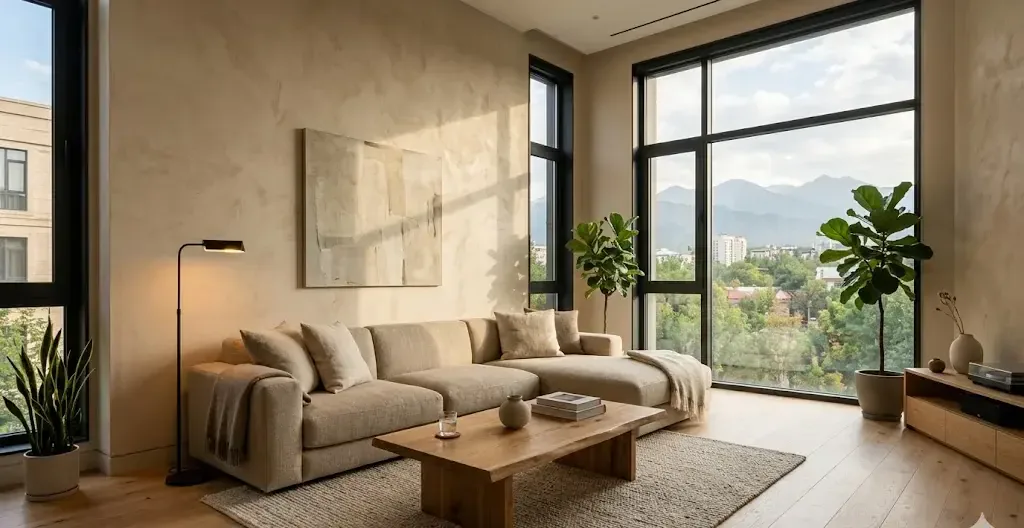
Decorative plaster in Almaty
from 6 000 tg.* per linear metre
Durable, high-quality facade finishing thanks to compliance with building codes and the high qualifications of our craftsmen.
 Joints to GOST 5264-80
Installation from 1 day Arrival within 45 minutes
Installation from 1 day 3-year warranty
 Prices from 5000 ₸
Contract and estimate
Decorative plaster in Almaty
from 6 000 tg.* per linear metre
Durable, high-quality facade finishing thanks to compliance with building codes and the high qualifications of our craftsmen.
Joints to GOST 5264-80
Installation from 1 day
Arrival within 45 minutes
Installation from 1 day
3-year warranty
Prices from 5000 ₸
Contract and estimate
Decorative plaster in Almaty
from 6 000 tg.* per linear metre
Durable, high-quality facade finishing thanks to compliance with building codes and the high qualifications of our craftsmen.
Joints to GOST 5264-80
Installation from 1 day
Arrival within 45 minutes
Installation from 1 day
3-year warranty
Prices from 5000 ₸
Contract and estimate
Types of facade
work we do
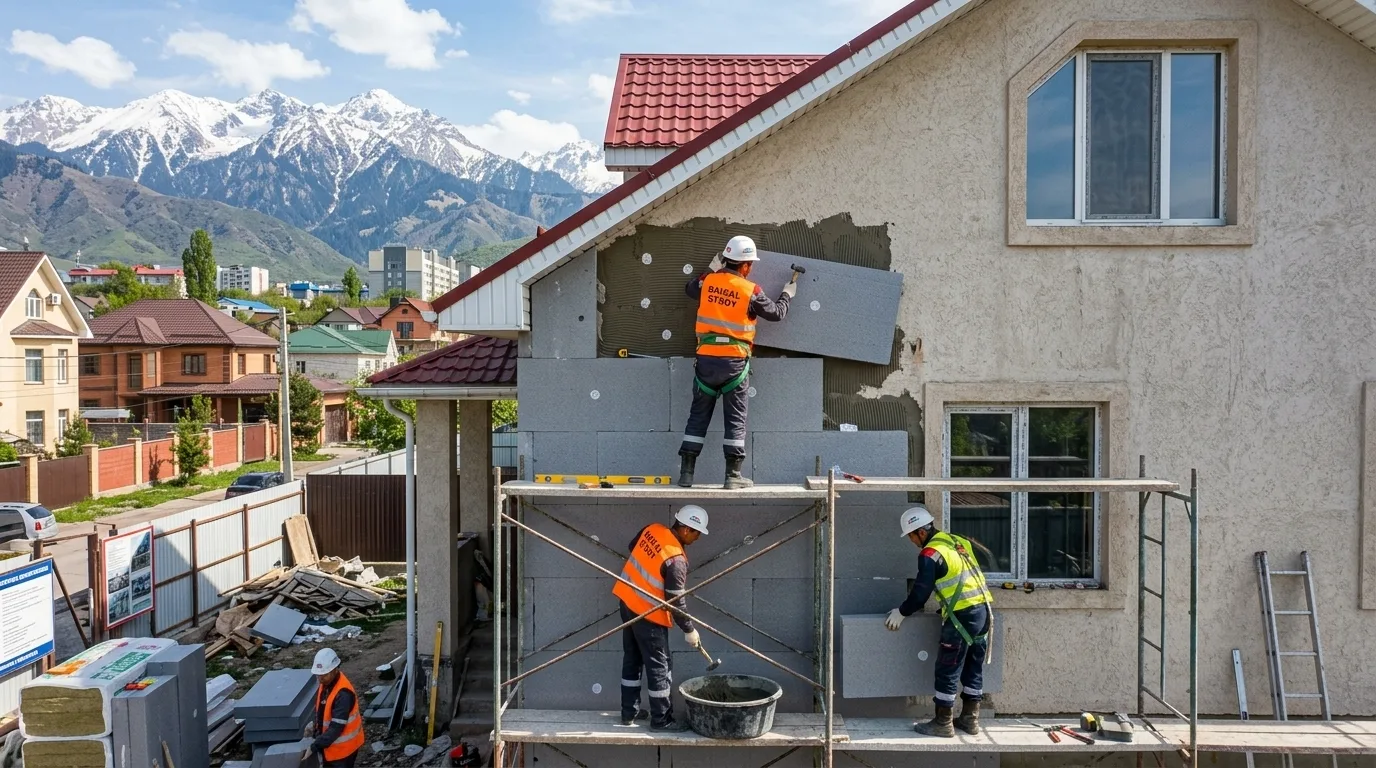
Facade insulation
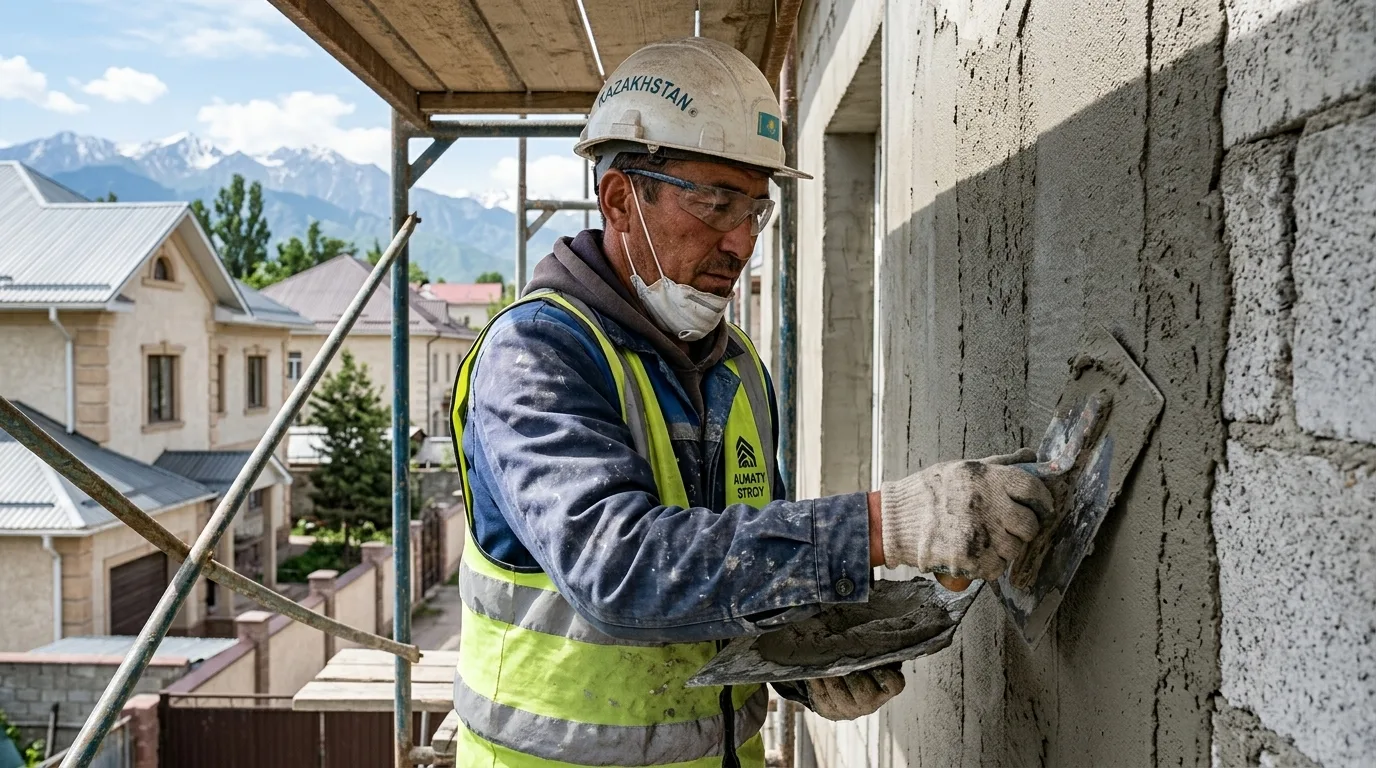
Plastering the walls
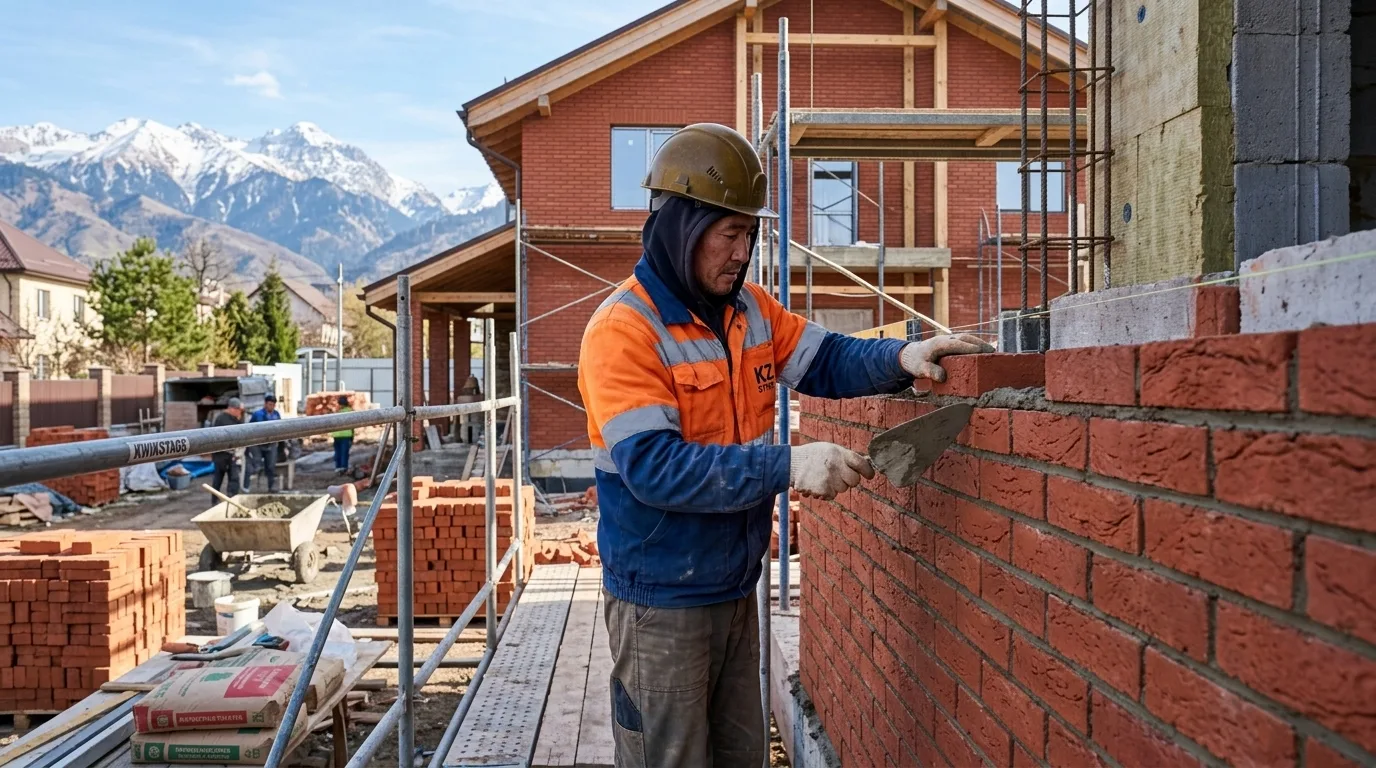
Brick cladding
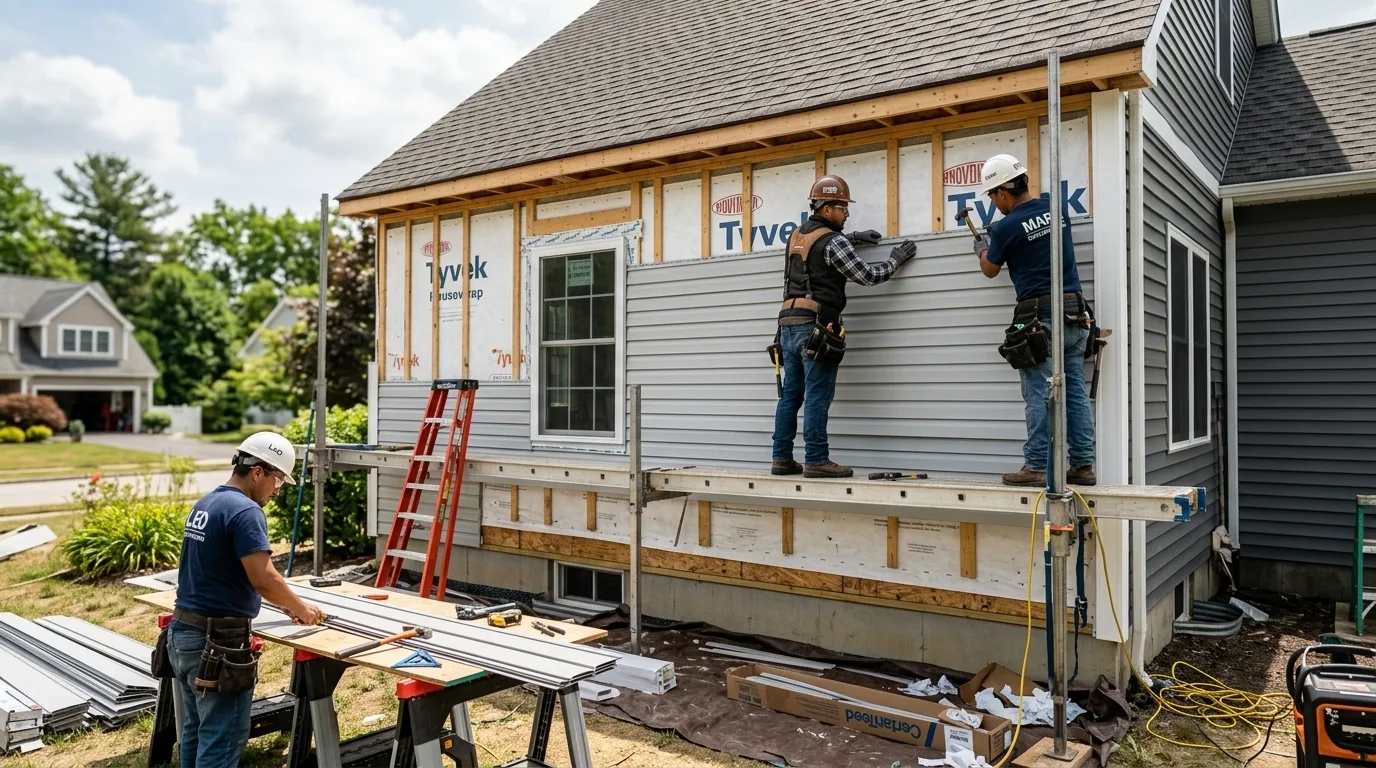
Siding installation
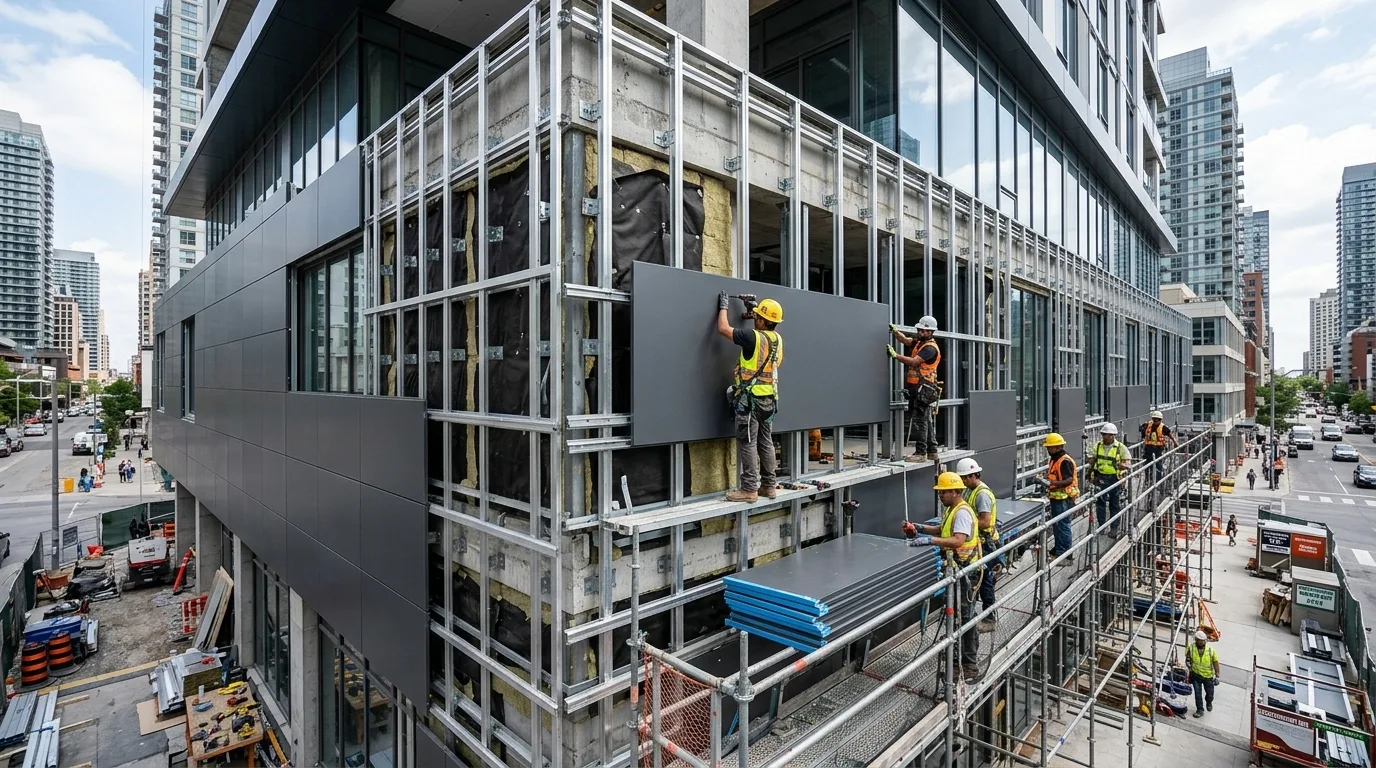
Construction of ventilated facades
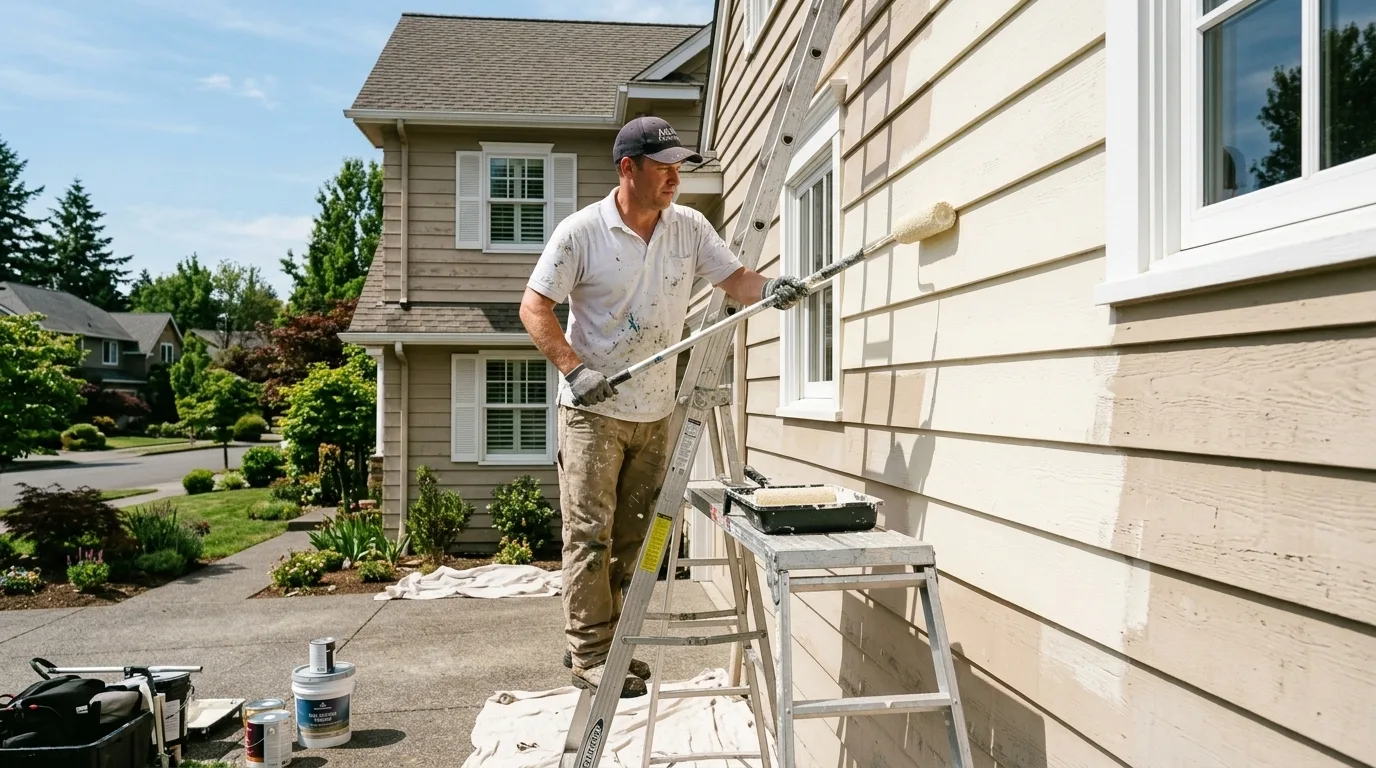
Facade painting
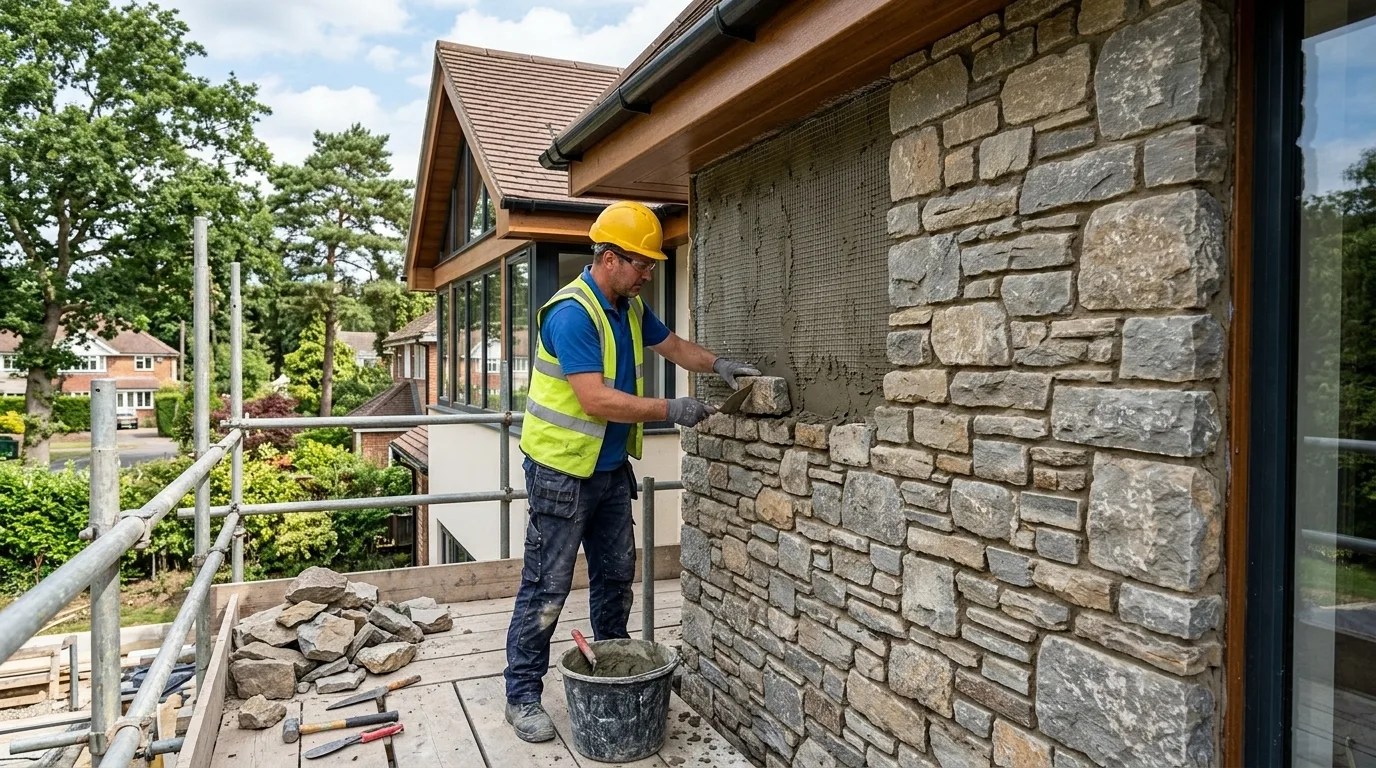
Stone finishing
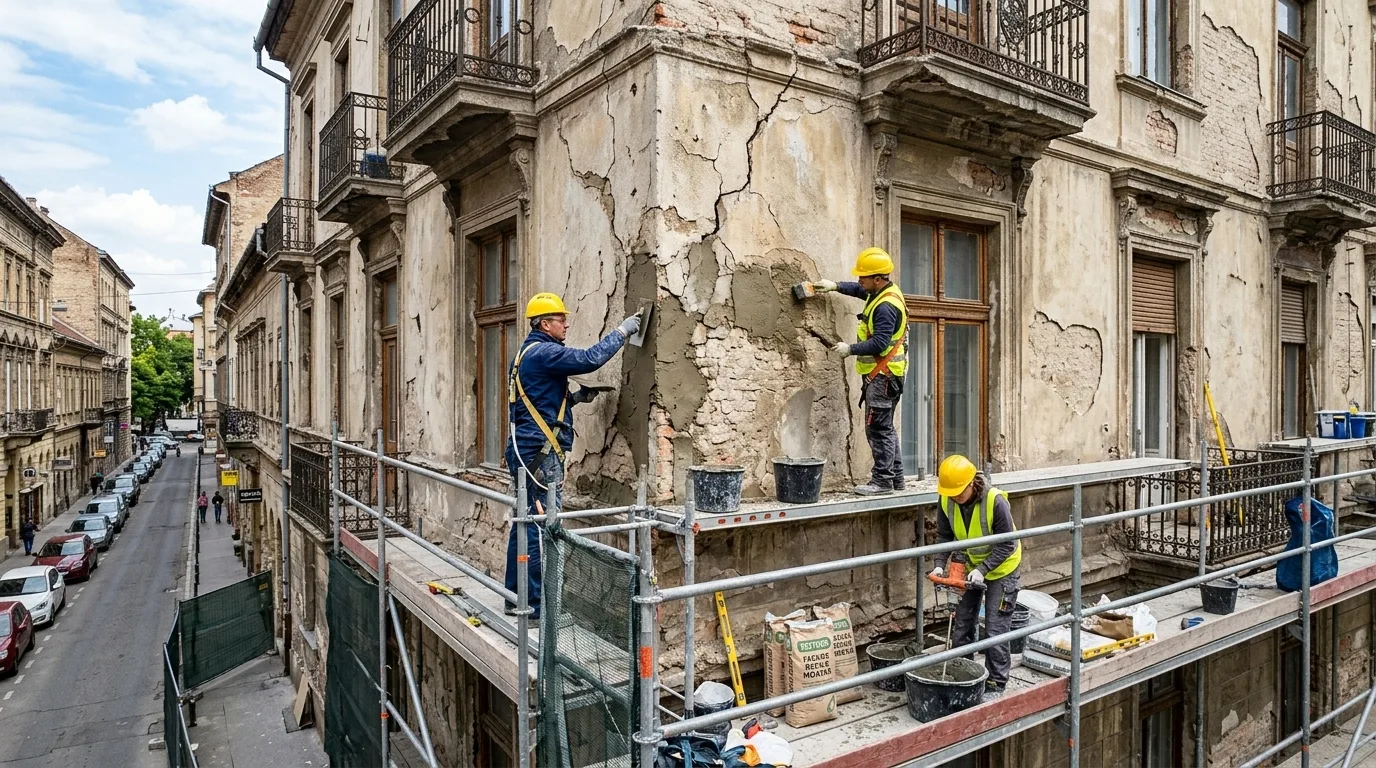
Facade repair
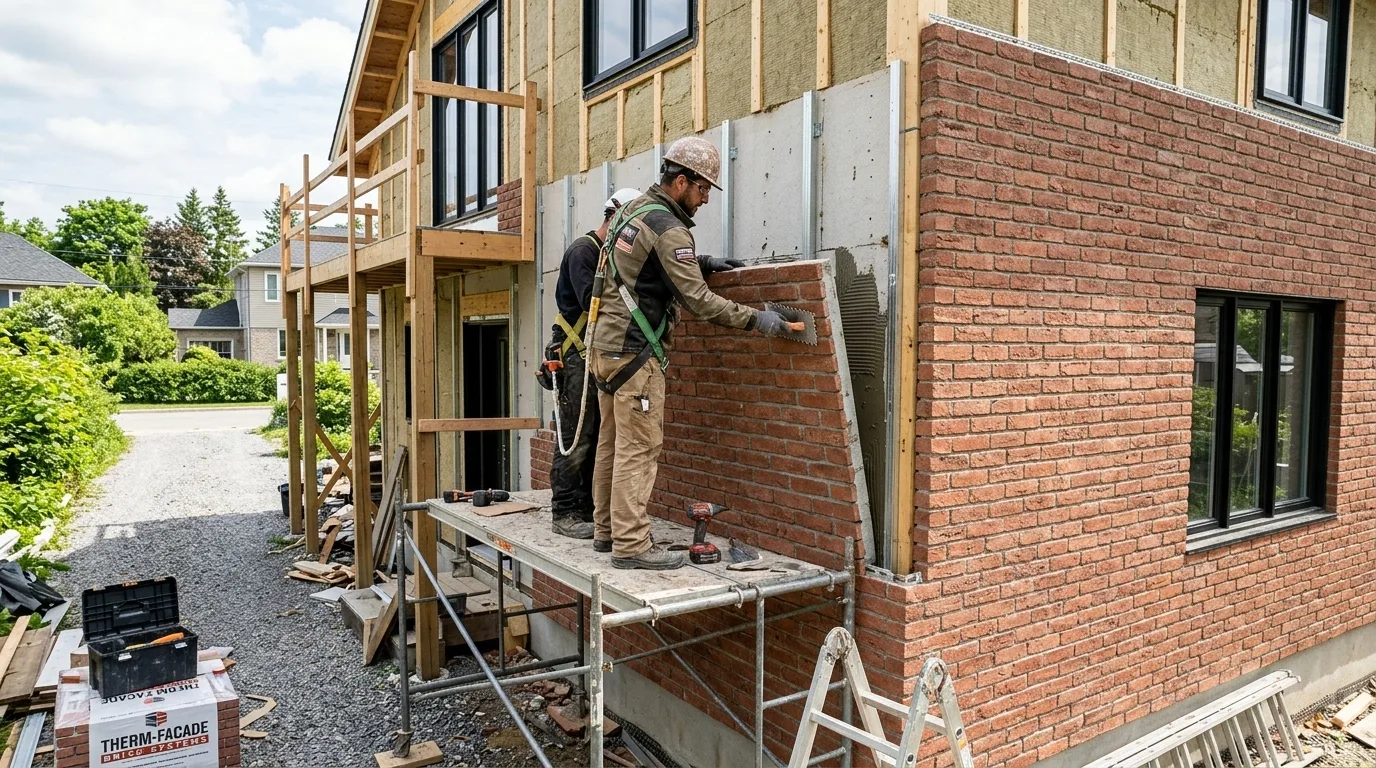
Installation of facade panels
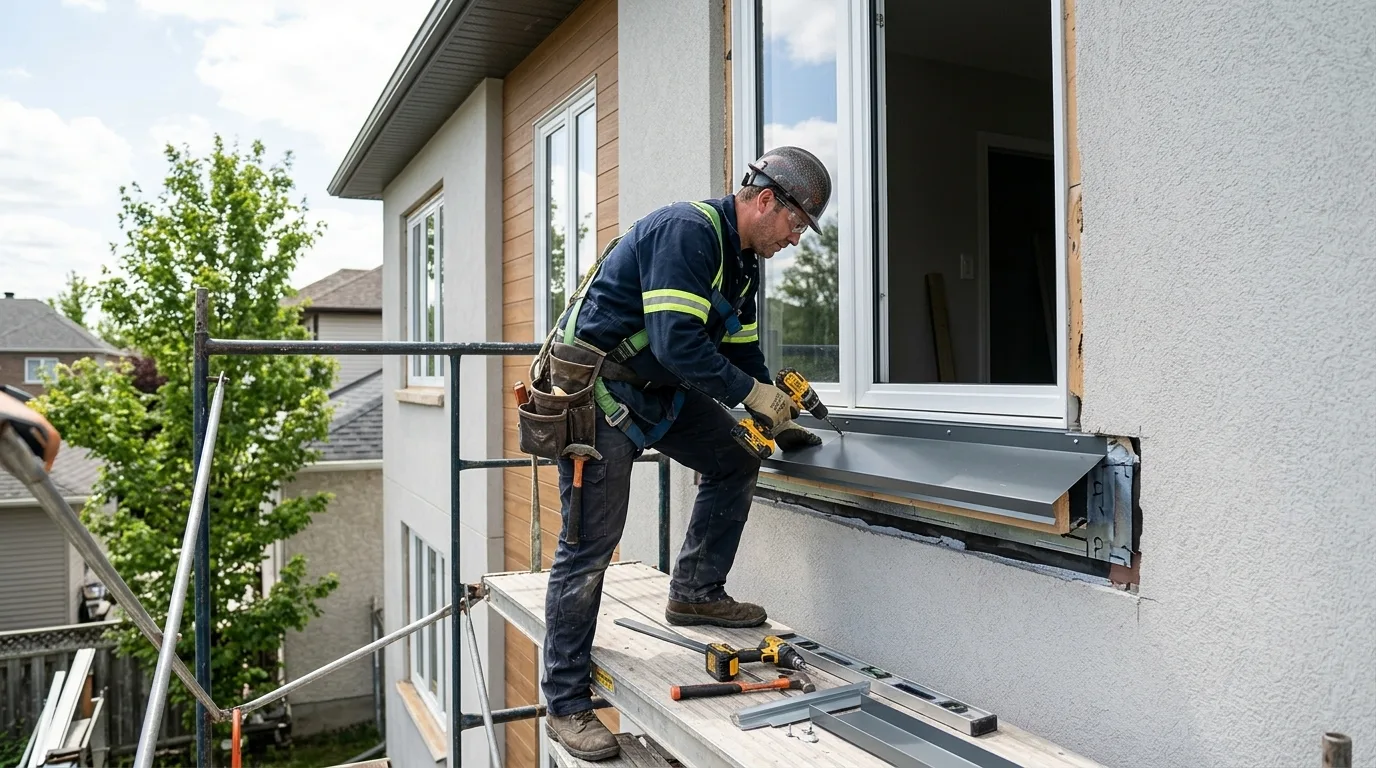
Installation of flashings and reveals
Types of facade
work we do
Facade insulation
Plastering the walls
Brick cladding
Siding installation
Installation of flashings and reveals
Facade repair
Facade painting
Stone finishing
Installation of facade panels
Construction of ventilated facades
We will call you back within 3 minutes
Types of facade
work we do
Facade insulation
Plastering the walls
Brick cladding
Installation of facade panels
Installation of flashings and reveals
Facade repair
Construction of ventilated facades
Facade painting
Stone finishing
Siding installation
We will call you back within 3 minutes
Cost of decorative plaster in Almaty
| SERVICE | COST | TIME |
|---|---|---|
| Specialist visit for a survey and consultation | from 5 000 ₸ | from 1 hour |
| Minimum order value | from 40 000 ₸ | — |
| Bark beetle decorative plaster | from 2 500 ₸/m² | from 2 days |
| Shuba textured decorative plaster | from 2 300 ₸/m² | from 2 days |
| Silicone decorative plaster | from 3 200 ₸/m² | from 2 days |
| Stone-effect textured plaster | from 4 500 ₸/m² | from 3 days |
| Mosaic plaster for the plinth | from 3 800 ₸/m² | from 2 days |
| Venetian plaster (interior) | from 6 000 ₸/m² | from 3 days |
| Surface preparation and priming | from 500 ₸/m² | from 3 hours |
| Tinting and painting decorative plaster | from 1 500 ₸/m² | from 1 day |
| Erecting scaffolding | from 600 ₸/m² | from 1 day |
Advantages of facade work from Profi-Dom

Neat joints with no chips
We use professional jointing tools that prevent damage to the tiles during laying

Certified craftsmen
Each specialist confirms their qualification with an annual exam in facade technologies

Equipment for a wet facade
We use industrial mixers and plastering stations that ensure even application of the layers

Meeting the finishing deadlines
The average cycle of turnkey facade work takes 21 working days on a weekly schedule

5-year
warranty on the facade
We fix our obligations in a contract, including protection against plaster peeling and fastener corrosion

Transparent estimate in ₸
We fix the cost of materials and work in the estimate, with no hidden markups or extra charges
Advantages of facade work from Profi-Dom
We use professional jointing tools that prevent damage to the tiles during laying
Neat joints with no chips
Each specialist confirms their qualification with an annual exam in facade technologies
Certified craftsmen
We use industrial mixers and plastering stations that ensure even application of the layers
Equipment for a wet facade
The average cycle of turnkey facade work takes 21 working days on a weekly schedule
Meeting the finishing deadlines
We fix our obligations in a contract, including protection against plaster peeling and fastener corrosion
5-year
warranty on the facade
We fix the cost of materials and work in the estimate, with no hidden markups or extra charges
Transparent price in KZT
We will call you back within 3 minutes
Advantages of facade work from Profi-Dom
We use professional jointing tools that prevent damage to the tiles during laying
Neat joints with no chips
Each specialist confirms their qualification with an annual exam in facade technologies
Certified craftsmen
We use industrial mixers and plastering stations that ensure even application of the layers
Equipment for a wet facade
The average cycle of turnkey facade work takes 21 working days on a weekly schedule
Meeting the finishing deadlines
We fix our obligations in a contract, including protection against plaster peeling and fastener corrosion
5-year
warranty on the facade
We fix the cost of materials and work in the estimate, with no hidden markups or extra charges
Transparent price in KZT
We will call you back within 3 minutes
HOW WE WORK
- 01.Discussion and estimate
We visit the site or hold an online consultation to determine the scope of work precisely and prepare a transparent estimate with no hidden charges.
- 02.Visit for precise measurements
Our specialist comes at a time convenient for you, takes all the necessary measurements and records the features of the facade for a perfect fit of the material.
- 03.Creating the design and sketch
We develop a detailed cladding plan with a panel layout, so that you can see in advance how your house will look after installation.
- 04.Approval of the contract
In the contract we fix the final cost, the exact completion dates and the warranty obligations, so that you feel protected.
- 05.Preparation of materials
We order certified siding and all components, checking each batch for compliance with quality standards and colour.
- 06.Professional installation
Our craftsmen install the battens and fix the panels using a technology that prevents deformation and ensures a long facade service life.
- 07.Finishing and sealing
We carefully finish all corners, joints and openings, treating them with sealant to protect against moisture and draughts.
- 08.Handover of the site and cleanup
After the work is finished we remove the construction debris and carry out a final inspection together with you to make sure the result is flawless.
Find out the cost and timing of facade work in 1 minute
catalogue of completed plastering work
 Facade insulation and plastering of a private house in the Alatau microdistrict
 Plinth cladding of a shopping centre on Abay Avenue
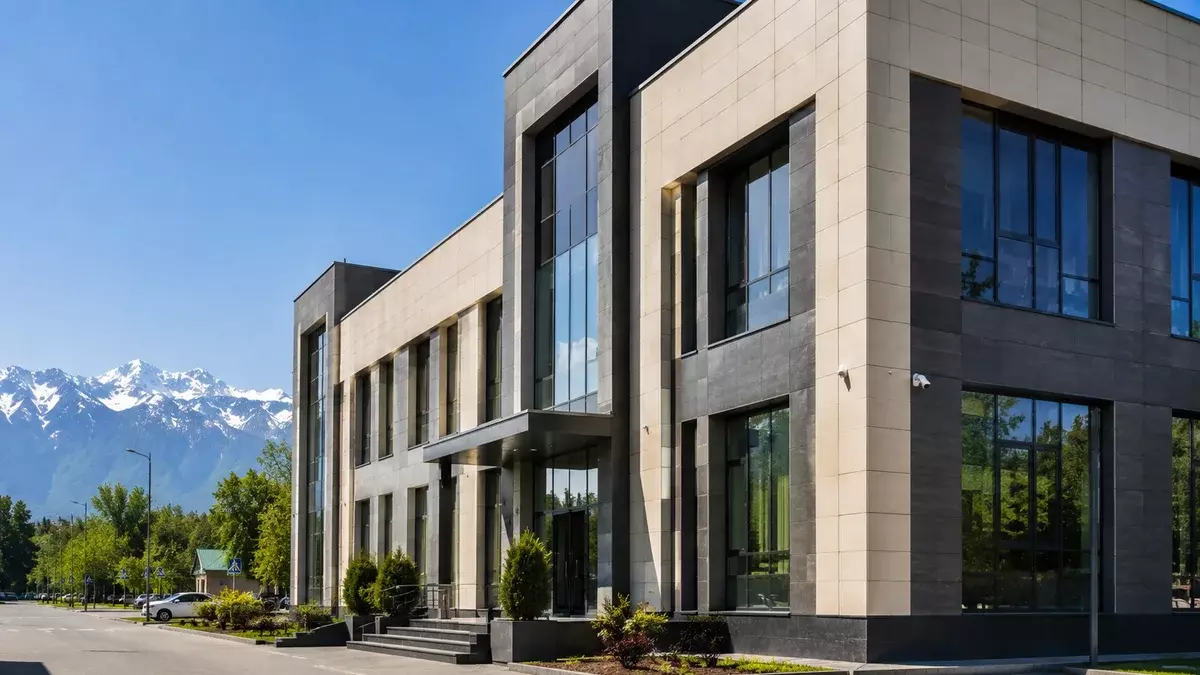 Installation of a ventilated facade on an office building in the Bostandyk district
 Painting and repair of the facade of an apartment building in the Samal microdistrict
FIND OUT THE COST OF PLASTERING FOR YOUR PROJECT
Leave a request and we will contact you within 3 minutes
Thank you! We will contact you within 3 minutes.
By clicking the button you agree to the terms of the
 Privacy Policy
FIND OUT THE COST OF PLASTERING FOR YOUR PROJECT
Leave a request and we will contact you within 3 minutes
Thank you! We will contact you within 3 minutes.
By clicking the button you agree to the terms of the
Or call us at
+7 (707) 068-88-68Privacy PolicyFIND OUT THE COST OF PLASTERING FOR YOUR PROJECT
Leave a request and we will contact you within 3 minutes
Thank you! We will contact you within 3 minutes.
By clicking the button you agree to the terms of the
Or call us at
+7 (707) 068-88-68About decorative plaster in detail
Decorative plaster is a final coating for facades and interiors, applied in a layer of 1–5 mm. In Almaty the popular textures are bark beetle, fur-coat, pebble, Venetian and mosaic. The price per m² depends on the texture and the base: from 3500 to 9500 KZT turnkey. At PROFI-DOM we work with mineral, acrylic, silicone and silicate compounds.
What decorative plaster is and what types there are
Decorative plaster is a final coating 1–5 mm thick that both levels and decorates the walls, unlike ordinary plaster, which is intended only for levelling before wallpaper or paint. The types are distinguished by binder (mineral, acrylic, silicone, silicate) and by texture — bark beetle, fur-coat, Venetian.
What decorative plaster is and how it differs from ordinary plaster
Decorative plaster is a final coating 1–5 mm thick that both levels and decorates the surface, unlike ordinary plaster, which serves only for levelling before the final finish. Colour pigments and fillers — stone chips, cellulose fibres, marble flour — are already added to such a mix, creating the texture without extra painting or papering. On a facade this coating works like a ‘fur coat’: it protects the walls from precipitation and temperature swings, while in an interior it lets you imitate stone, fabric or concrete without seams or joints. Thanks to its small thickness, it does not weigh down the facade or require reinforcement of the foundation — this is critical for old Khrushchev-era blocks in the Samal and Kamenka districts, where the load-bearing walls are designed for a limited load.
Types of decorative plaster by binder: mineral, acrylic, silicone, silicate
- - Mineral: a cement base, vapour-permeable, budget-friendly (from 2500 KZT/m²), but less elastic — it develops micro-cracks as the house settles, up to 1 mm.
- - Acrylic: a polymer base, UV-resistant, elastic (stretch up to 5%), but less vapour-permeable — not recommended on aerated concrete or mineral wool.
- - Silicone: a resin base, maximum elasticity (up to 150%) and durability (up to 25 years), does not attract dust — ideal for Almaty facades.
- - Silicate: liquid glass, high vapour permeability, suitable for aerated concrete and mineral wool, but requires a primer from the same manufacturer — otherwise it peels off within 2–3 seasons.
Which decorative plaster is best for a facade in Almaty
For a facade in Almaty, silicone decorative plaster is best — it withstands swings from −50°C to +70°C, does not crack as the house settles and keeps its colour for up to 15 years without fading. The local climate, with sharp daily fluctuations (for example, −20°C at night and +5°C during the day in February), destroys acrylic coatings in 4–5 seasons: the polymer loses its elasticity and a web of cracks appears. A silicone base, by contrast, stays flexible at any temperature and repels water, preventing the facade from getting soaked during thaws — this is critical for houses in the Alatau and Aksay districts, where the groundwater level is high. When choosing between bark beetle and fur-coat for a facade, bear in mind: bark beetle masks wall unevenness, while fur-coat holds better on decrepit bases thanks to its greater adhesion.
Textures for facade and interior: bark beetle, fur-coat, pebble, Venetian
Decorative facade plaster is a sought-after service that we carry out across Almaty and the suburbs. Each coating texture has its own purpose, consumption and price per m². We look at four popular options — bark beetle, fur-coat, pebble and Venetian — so that you can choose one to suit your project.
Bark beetle — features and use
Bark beetle is a texture with grooves 1–3 mm deep, created by floating in one direction; material consumption is 2–3 kg/m² and the turnkey price is from 3500 KZT/m². The grooves form thanks to mineral granules of a 1,5–3 mm fraction — the coarser the grain, the deeper the pattern, and on the facades of Almaty houses bark beetle on a silicone base withstands swings from −30 to +50 °C without cracking. Indoors it is used less often: the rough surface collects dust in the kitchen and hallway, so smooth coatings like Venetian plaster are more often chosen there. Bark beetle visually hides wall unevenness of up to 5 mm, so it is often chosen for the facades of old houses where the wall geometry is far from ideal.
Fur-coat — when this option is chosen
Fur-coat (shuba) is a texture with an even grainy relief applied with a roller or by spray; consumption is 2,5–4 kg/m², price from 3200 KZT/m² turnkey. The graininess is set by the 1–2,5 mm filler fraction, and the coarser the grit, the rougher the surface — for outbuildings and fences around Almaty, fur-coat is chosen more often than bark-beetle because of its price and ease of application. On the facade of a residential house it looks less neat: in side lighting, bald patches show if the mix was applied in two passes, and an uneven relief is harder to tint without streaks. Fur-coat holds onto worn substrates better than bark-beetle thanks to a larger contact area — it is recommended for facades where the old plaster is not firmly attached.
Pebble — strength and decorative appeal
Pebble plaster is a texture with inclusions of stone chips of a 1–3 mm fraction that creates a mosaic effect; consumption is 3–5 kg/m² and the turnkey price is from 4000 KZT/m². Unlike bark beetle, where the granules are distributed through the mass, here the chips protrude onto the surface and give a tactile relief without grooves — the plinth and entrance areas of Almaty houses are coated with pebble plaster because of its resistance to blows from a lawnmower or shoes. In colour it is versatile: the basic white can be tinted to any shade, including dark ones, which do not burn out thanks to the mineral pigment in the chips. Pebble texture is more abrasion-resistant than bark beetle, so it is chosen for the plinth and entrance areas — places where the coating is subject to mechanical loads.
Venetian — for interiors
Venetian plaster is a smooth texture with a marble effect, applied in 3–5 layers with polishing; the turnkey price is from 7000 KZT/m² and consumption is 0,5–1 kg/m² per layer. The material contains marble flour and an acrylic binder, which after floating with a metal trowel give a semi-transparent gloss — the more layers, the deeper the glow, and Almaty residents more often order Venetian plaster for classic-style living rooms instead of marble slabs. For bathrooms and kitchens, additional protection with wax is needed — without it, dark moisture streaks appear at the joints within 2–3 years. For loft-style interiors, Venetian plaster is combined with concrete textures, creating a contrast of gloss and matt without overloading the space.
A comparison of textures: bark beetle, fur-coat, pebble, Venetian
| Texture | Purpose | Consumption, kg/m² | Turnkey price, KZT/m² | Durability, years |
|---|---|---|---|---|
| Bark beetle | Facade, plinth | 2–3 | 3500–5000 | 10–15 |
| Fur-coat | Facade, outbuildings | 2,5–4 | 3200–4500 | 8–12 |
| Pebble | Facade, plinth, entrance areas | 3–5 | 4000–6000 | 12–18 |
| Venetian | Interior (living rooms, halls) | 0,5–1 per layer | 7000–9500 | 15–25 |
For a facade, bark beetle or pebble on a silicone base is best — they combine durability with a reasonable price.
The decorative plaster application technique
Decorative plaster price depends on the area, the material and the complexity of the facade — we calculate the exact amount after a site measurement. Applying the coating includes preparing the base, the base layer, forming the texture and the final fixing. Each stage affects the durability and the final cost of the work.
Preparing the walls before application
Before applying decorative plaster, the walls are cleaned of the old coating, deviations of more than 5 mm are levelled with a cement-sand mix, and they are primed with a deep-penetrating primer in 2 coats — each coat drying for 12 hours at +20°C. The moisture of the base must not exceed 4%, and on facades with frequent precipitation this figure reaches 8% after rain, so the work is planned for a dry period. Old water-based emulsion paint is removed with a sander using P80 grit, while oil paint is removed only mechanically with a scraper or sandblasting, as adhesion to gloss is zero. Cracks wider than 2 mm are cut open with an angle grinder and a diamond disc, primed and filled with Ceresit CN 83 repair compound. On smooth concrete surfaces, use a quartz-filled primer, Knauf Betokontakt — it creates a roughness that holds the decorative layer during temperature swings from −25°C to +35°C. If the old facade was painted with oil paint, it must be removed completely by mechanical means — the coating will not sit on a glossy surface and will peel off in the first year.
Applying the base layer and forming the texture
The base layer is applied with a trowel 1–2 mm thick, and after it dries a little (30–60 minutes at +20°C) the texture is formed — bark beetle is floated with a plastic float after 10–15 minutes strictly in one direction, as random movements create an ugly ‘dirty’ pattern. Fur-coat is applied with a roller with a 10–15 mm nap or sprayed through a spray gun with a 6–8 mm nozzle, and the mix consumption is 2–3 kg/m². Venetian plaster is polished with a steel trowel in 5–7 layers with intermediate drying of 4–6 hours, then waxed — without wax the surface absorbs moisture and loses its marble sheen. Pebble texture is applied with a short-nap roller (5–8 mm) for a fine fraction of 1–1,5 mm, and for a coarse fraction of 2–3 mm with a trowel, with consumption rising to 3,5 kg/m². On facades with strong winds (the Aksay and Kalkaman districts), float the bark beetle horizontally — visually this widens the wall, while vertical grooves collect dust from the roads.
How long the coating takes to dry
Decorative plaster dries in 24 to 72 hours depending on the layer thickness, temperature (+20°C) and humidity; it reaches full strength in 28 days, like concrete. At +10°C the drying time rises to 5–7 days, and at a humidity above 80% the coating will not dry at all — the best season for facade work across Almaty is from May to September. Interior work can be done all year round, but in winter, with the heating on, the humidity drops to 20–30% — and the plaster dries faster, yet micro-cracks appear from over-drying, so the walls are dampened with a sprayer 4–6 hours after application. Venetian plaster with wax dries for 48 hours before the next layer, with full curing in 14 days, and the wax is applied only after full polymerisation, otherwise the film cracks. On sites with heavy footfall and vibration from trams (Zheltoksan and Furmanov streets), increase the between-layer drying by 30% — — vibration slows the setting by 10–15%.
Can decorative plaster be applied over old plaster
The coating can be applied over old plaster if the base is solid, does not peel, has no cracks deeper than 2 mm and is primed in 2 coats. Old cement plaster is checked by tapping — a hollow sound indicates peeling, and such an area is removed down to the brick or concrete. On old facades of the housing stock from the 1970–80-s (the Taugul and Orbita districts), low-strength lime plaster is often found — it is knocked off completely with a rotary hammer, otherwise the decorative layer will fall off within 2–3 years. Before applying to an old facade, do a test: stick tape to the old plaster and tear it off sharply — if pieces remain on the tape, the base needs to be removed completely.
In-mass tinting and a protective layer
Applying decorative plaster is a sought-after service that we carry out across Almaty and the suburbs. Bark beetle plaster is a sought-after service that we carry out across Almaty and the suburbs. The colour of decorative plaster can be set in two ways: in-mass tinting (the pigment is added to the mix) or painting after application. We look at the pros and cons of each method.
In-mass tinting — advantages and features
In-mass tinting is the addition of pigment to the plaster mix at the mixing stage, which ensures an even colour throughout the layer thickness and fade resistance of up to 15 years. The pigment is distributed through the entire volume of the compound, not just over the surface, so the colour stays rich even after 10–12 years on south-facing facades (the Gorny Gigant and Kamenskoye Plato districts). The pigment consumption in in-mass tinting depends on the mix base: a white base requires 1–3% of pigment by weight of the dry mix, a grey one up to 5% for bright shades. With in-mass tinting, scratches and chips on the facade are almost invisible — the colour stays the same as on the surface, unlike painted coatings, where damage stands out.
Painting after application — when it is justified
Painting after application is cheaper than in-mass tinting by 15–20%, but it needs to be redone every 3–5 years and does not protect against chips — damage will be visible. Facade paints on an acrylic or silicone base are applied in 2 coats with a roller or spray gun, with consumption of 200–300 g/m² per coat. For facades in Almaty, with its dry climate and temperature swings from –25 °C in winter to +40 °C in summer, painting without tinting loses colour faster: within 2–3 years fading appears on the south side. Painting is justified if you plan to change the colour of the facade every 3–5 years — it is cheaper than removing and applying new tinted plaster.
A protective varnish on the facade — is it needed
A protective varnish is applied to decorative plaster for extra protection against UV, moisture and mechanical damage; it extends the coating's service life by 3–5 years. Acrylic or polyurethane varnishes form a transparent film 50–100 µm thick that prevents the absorption of dirt and precipitation. Varnish consumption is 150–250 g/m² in one coat, and the price is 800–1500 KZT per litre depending on the manufacturer. For facades with intense sun (300 sunny days a year), a protective varnish is essential for dark colours — without it they fade within 2–3 years.
Decorative plaster price per m² — a table
The cost of decorative plaster per m² in Almaty depends on the texture, the base, the complexity of the wall preparation and the scope of work. We give the current turnkey prices broken down by item.
Coating prices per m² by texture
| Texture | Base | Price per m² (labour), KZT | Price per m² (materials), KZT | Turnkey price, KZT/m² |
|---|---|---|---|---|
| Fur-coat | Mineral | 1500– | 1700–2500 | 3200–4500 |
| Bark beetle | Acrylic / silicone | 1800–2500 | 1700–2500 | 3500–5000 |
| Pebble | Silicone / silicate | –2800 | –3200 | 4000–6000 |
| Venetian | Acrylic / lime | 4000–5500 | 3000–4000 | 7000–9500 |
What is included in the turnkey estimate
- - Base preparation: cleaning the walls of the old coating, levelling deviations up to 5 mm, priming in 2 coats — from 800 KZT/m².
- - Materials: plaster mix (bark beetle, fur-coat, pebble), in-mass tinting, a protective varnish or wax — from 1700 KZT/m².
- - Craftsmen's work: applying the base layer, forming the texture, final finishing — from 1500 KZT/m² for simple textures.
- - Additional costs: removal of construction debris (from 15 000 KZT per truckload), protecting windows and doors with film, cleaning up after the work — 5–10% of the estimate.
An example calculation for a 150 m² facade
For a 150 m² facade with a bark beetle texture on a silicone base, the turnkey estimate will be 525 000–750 000 KZT (3500–5000 KZT/m² × 150 m²) — depending on the complexity of the wall preparation. On this area a crew of 2 craftsmen works for 7–10 days, and material consumption reaches 300–450 kg (2–3 kg/m² for bark beetle). To this sum add delivery of the mix (from 10 000 KZT across Almaty) and debris removal (from 15 000 KZT). For orders from 150 m², the price per m² drops by 10–15% thanks to a bulk discount on materials and optimised logistics — the total saving will be 50 000–110 000 KZT across the whole volume.
Turnkey decorative plaster with PROFI-DOM
Turnkey work saves you from having to find a crew, buy materials and oversee each stage separately. We look at what the full cycle of work looks like, what guarantees we give and why people choose us.
How we work: from measurement to final finishing
At PROFI-DOM we start with a free measurement — the estimator comes to the site, assesses the condition of the walls, measures the area and draws up a turnkey estimate broken down by item: base preparation (priming, filling, mesh reinforcement), the cost of material for the chosen texture and the price of the work per m². Once the estimate is approved, a contract is signed with fixed timeframes, cost and guarantee obligations — this completely rules out hidden extra charges during the work. On site a single crew of 2–3 craftsmen works, running the site from start to finish, which guarantees a uniform application style with no joints. When the work is finished, a quality manager checks the result for even texture and the absence of defects — only then is the handover certificate signed. At the end the client receives a receipt and a guarantee certificate for the work carried out.
Guarantees on work and materials
PROFI-DOM gives a guarantee on the work of 3–5 years depending on the type of texture and the operating conditions — if cracks appear within a year through the fault of our craftsmen, we fix them free of charge. The guarantee covers peeling of the coating, cracking due to a breach of the application technique and unevenness of colour or texture, but does not extend to cracks caused by the house settling (the first 2 years after construction) or mechanical damage — this is standard practice for all companies on the Almaty market. For facades on houses older than 2 years, we additionally recommend installing expansion joints where the walls meet the floor slabs — this reduces the risk of hairline cracks during the seasonal deformation of the building. If a defect is found during the guarantee period, it is enough to send a photo via WhatsApp — a craftsman comes out to inspect within 2 working days and draws up a repair report.
Our craftsmen and their experience
PROFI-DOM craftsmen have 5 years or more of experience, regularly undergo training in new application techniques and work with textures of any complexity — from bark beetle to Venetian. On site, crews of 2–3 work with a clear division of roles: one prepares the base, the second applies the base layer, the third forms the texture — this approach rules out the situation where one craftsman starts and another finishes with a different pattern. Before the work begins, the craftsmen come to the site with a sample — they apply a texture sample onto a piece of plasterboard so that the client can approve the pattern and colour before the main work starts. Each craftsman is assigned to the site from start to finish, which ensures a uniform application style and no joints on the facade.
Why people choose PROFI-DOM for finishing in Almaty
- - Transparent estimate: a fixed turnkey price with no hidden extra charges — every item is itemised before the work begins.
- - Guarantee of 3–5 years: free elimination of defects caused by our craftsmen during the guarantee period.
- - Experienced craftsmen: 5 years or more of service, regular training in new techniques for applying Venetian and bark beetle plaster.
- - Any textures: bark beetle, fur-coat, pebble, Venetian, mosaic — for facade and interior.
- - Free measurement: a visit across Almaty and the cottage communities (Astanay, Zhas Kanat, Nurly Tau) — the estimate is drawn up on the day of the inspection.
Conclusion
Decorative plaster is a final coating that both protects the facade and sets the style of the house, but the durability of the result depends directly on the sequence of decisions — from the choice of base to the finish layer.
Key takeaways
- - Choice of base: silicone compounds are best for facades in the Almaty climate — they are vapour-permeable and resistant to UV and sharp temperature swings from −30 °C to +40 °C.
- - Texture: bark beetle and pebble are practical options for a facade (they hide small defects and wash easily), Venetian is for interiors (it requires perfectly flat walls).
- - Tinting: in-mass tinting rules out streaks and patches during repairs, which is critical for facades — it is impossible to touch up a local chip without repainting the whole wall.
- - Wall preparation: quality priming and levelling along beads is the key to there being no cracks within 2–3 years, especially on aerated concrete and old plastered surfaces.
- - Estimate: budget for preparation (15–25% of the cost of the work) and a protective layer of varnish or wax — this extends the coating's service life from 5 to 10–12 years without redoing it.