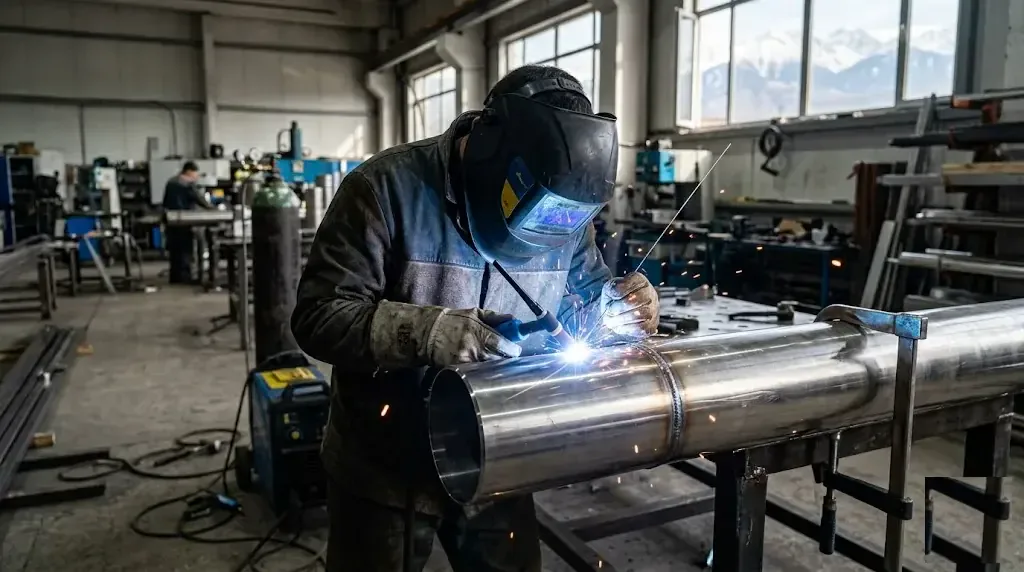
STAINLESS STEEL WELDING IN ALMATY
from 3 500 KZT* per metre of joint
Has the seam on stainless steel turned blue, is it leaking or rusting? We weld with argon and back purging and passivate the seam — it won't darken, and we'll test the tank at 2 atm.
 Argon TIG with purging — a
weld without discoloration Urgent — master
in 2 hours 3-year warranty
on every seam Tanks and tables
from 15 000 ₸ per item
STAINLESS STEEL WELDING IN ALMATY
from 3 500 KZT* per metre of joint
Has the seam on stainless steel turned blue, is it leaking or rusting? We weld with argon and back purging and passivate the seam — it won't darken, and we'll test the tank at 2 atm.
Argon TIG with purging — a
weld without discoloration
Urgent — master
in 2 hours
3-year warranty
on every seam
Tanks and tables
from 15 000 ₸ per item
STAINLESS STEEL WELDING IN ALMATY
from 3 500 KZT* per metre of joint
Has the seam on stainless steel turned blue, is it leaking or rusting? We weld with argon and back purging and passivate the seam — it won't darken, and we'll test the tank at 2 atm.
Argon TIG with purging — a
weld without discoloration
Urgent — master
in 2 hours
3-year warranty
on every seam
Tanks and tables
from 15 000 ₸ per item
Types of welding
work we do
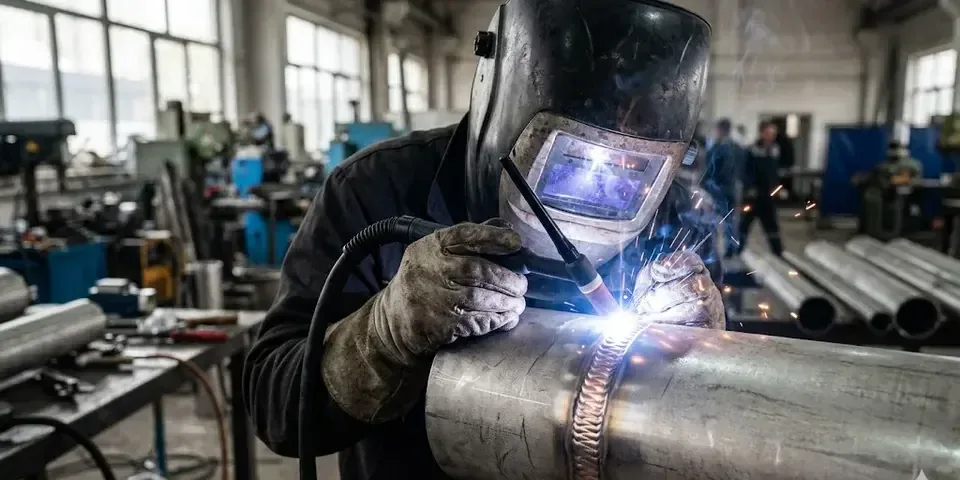
Stainless steel pipe welding
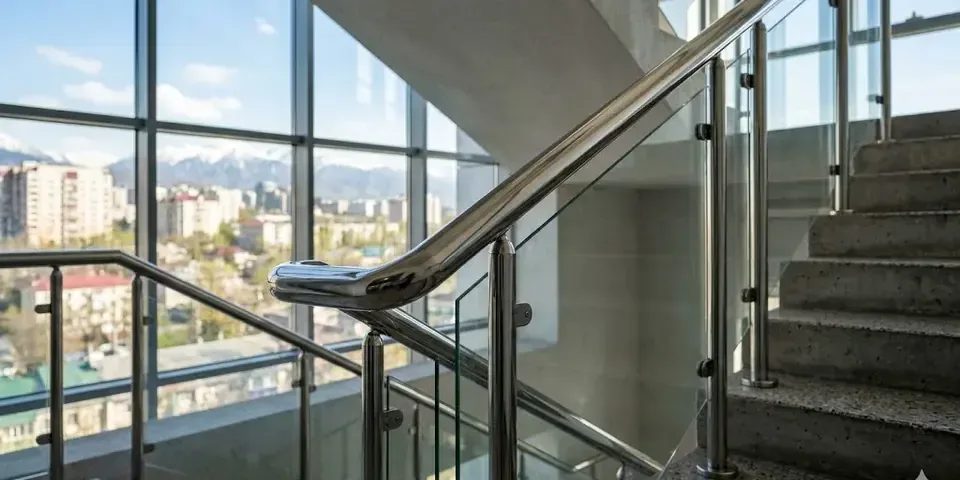
Manufacture of handrails
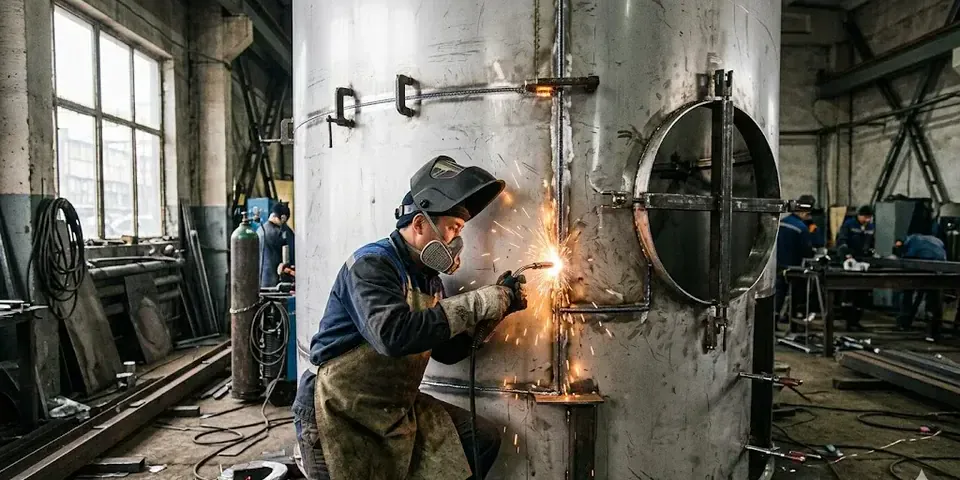
Welding of tanks and vessels
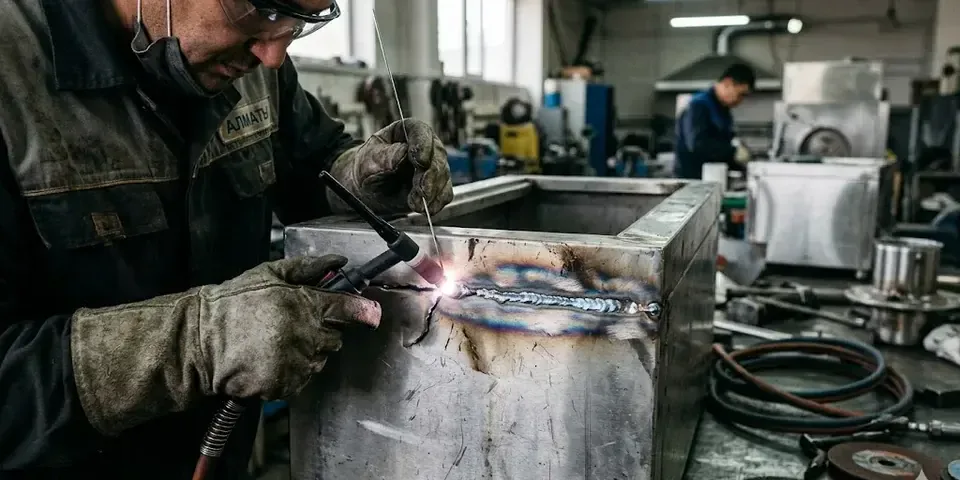
Repair of stainless steel items
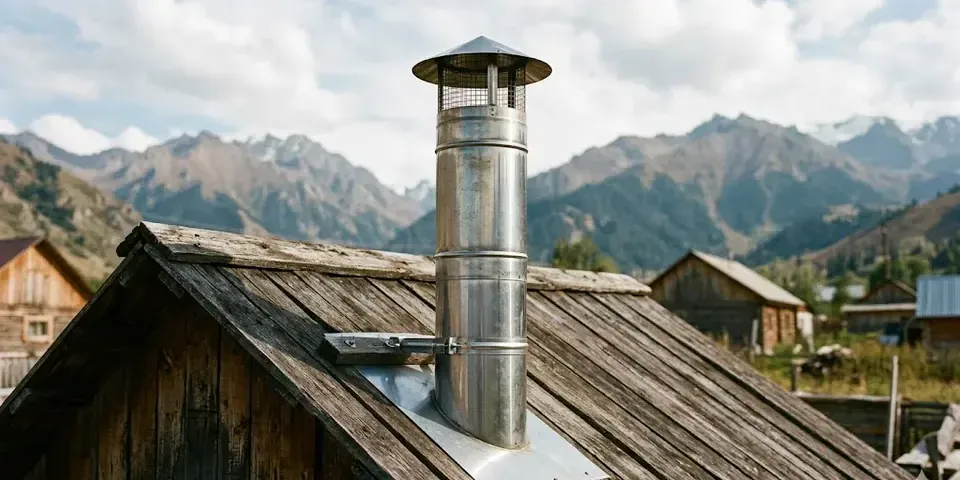
Chimney installation
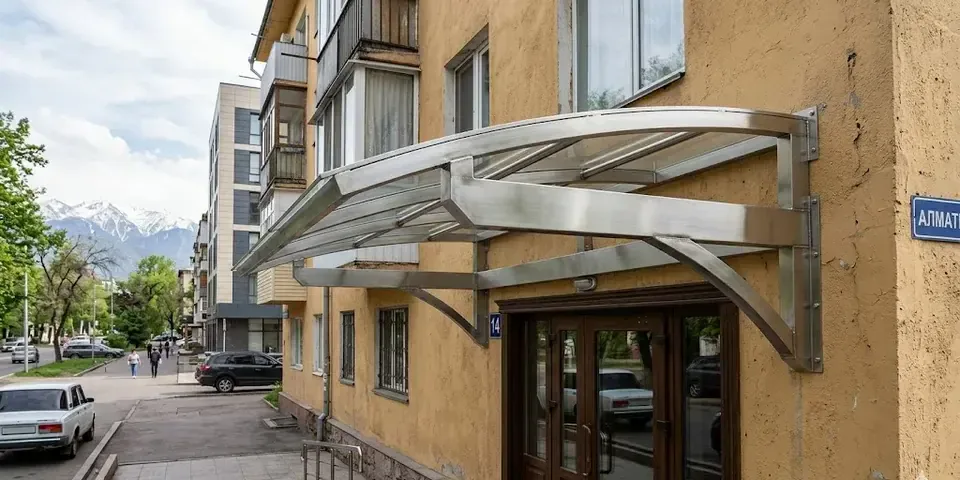
Manufacture of canopies
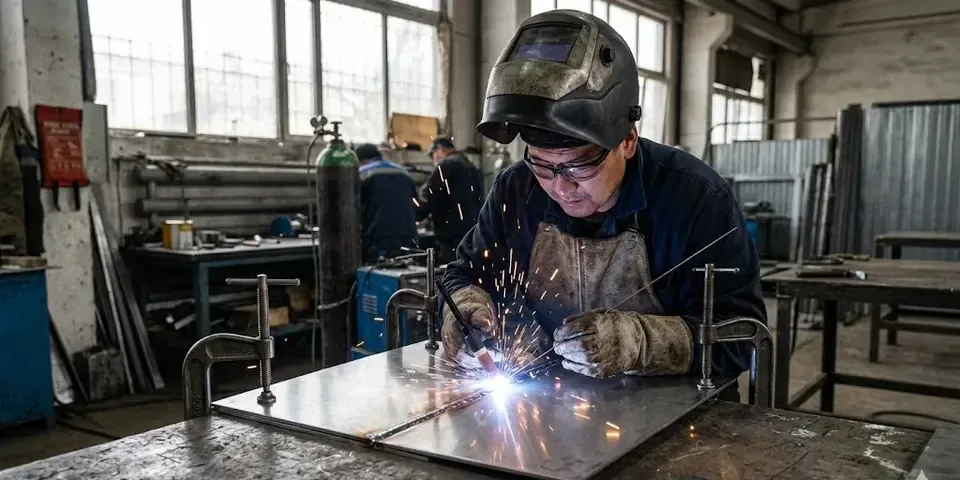
Stainless steel sheet welding
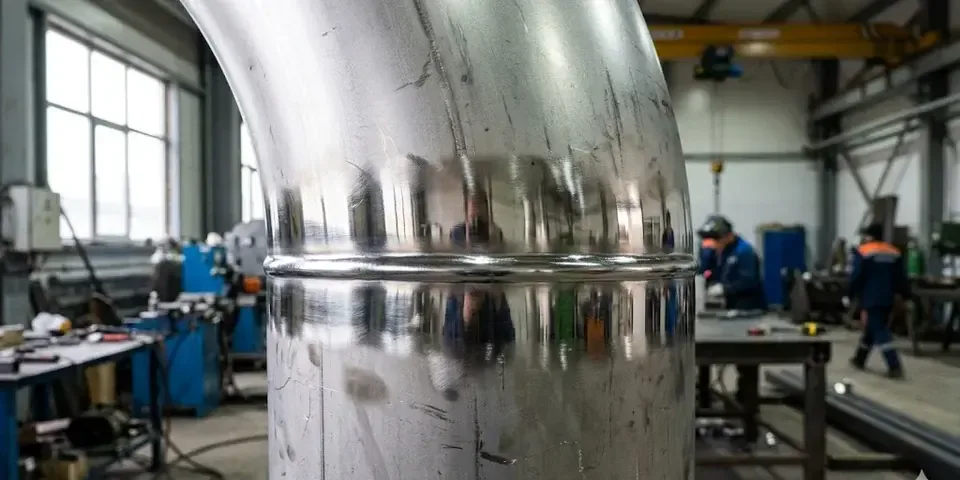
Polishing of welds
Types of welding
work we do
Stainless steel pipe welding
Manufacture of handrails
Welding of tanks and vessels
Repair of stainless steel items
Polishing of welds
Manufacture of canopies
Stainless steel sheet welding
Chimney installation
We will call you back within 3 minutes
Types of welding
work we do
Stainless steel pipe welding
Manufacture of handrails
Welding of tanks and vessels
Polishing of welds
Chimney installation
Manufacture of canopies
Stainless steel sheet welding
Repair of stainless steel items
We will call you back within 3 minutes
Cost of stainless steel welding in Almaty
| SERVICE | COST | TIME |
|---|---|---|
| Specialist visit within the city (diagnostics + consultation) | from 5 000 ₸ | from 1 hour |
| Minimum order (site visit + simple work) | from 10 000 ₸ | from 2 hours |
| Weld seam welding (per linear metre) | from 3 500 ₸ | from 0,5 hour |
| Welding a nozzle / elbow (per joint) | from 2 000 ₸ | from 0,5 hour |
| Welding of a reservoir / tank (per item) | from 15 000 ₸ | from 3 hours |
| Welding of handrails / guardrails (per connection point) | from 1 500 ₸ | from 1 hour |
| Crack / pinhole welding (per spot) | from 2 500 ₸ | from 0,5 hour |
| Thread restoration / surfacing (per item) | from 4 000 ₸ | from 1 hour |
| Weld grinding and polishing (per metre) | from 1 500 ₸ | from 0,5 hour |
| Weld passivation (chemical treatment, per metre) | from 1 000 ₸ | from 0,5 hour |
| Urgent call-out (within 2 hours) | + 3 000 ₸ | — |
Преимущества СВАРОЧНЫХ РАБОТ ОТ Profi‑Dom

TIG weld without discoloration
We weld with argon using ER308L/ER316L filler and purging at 6–8 l/min — the seam is silver, without bluing

Argon welder with 8+ years of experience
We work with AISI 304, 316, 321, and 430 — — we select the grade for food, outdoor, or hot environments
Pickling and passivation
We remove scale and restore the protective film — passivation from 1 000 ₸ per meter of weld

Pressure check 2 atm
We test tanks and pipes with pressurized water before handover — leaks are visible immediately, not at home

3-year warranty on the seam
If the seam leaks or rusts — we will re-weld and clean it for free, the term is written in the act

Price per metre, joint, item
Seam — from 3 500 ₸/m, pipe — from 2 000 ₸ per joint, tank — from 15 000 ₸; price in the estimate
Преимущества СВАРОЧНЫХ РАБОТ ОТ Profi‑Dom
We weld with argon using ER308L/ER316L filler and purging at 6–8 l/min — the seam is silver, without bluing
TIG weld without discoloration
We work with AISI 304, 316, 321, and 430 — — we select the grade for food, outdoor, or hot environments
Argon welder with 8+ years of experience
We remove scale and restore the protective film — passivation from 1 000 ₸ per meter of weld
Pickling and passivation
We test tanks and pipes with pressurized water before handover — leaks are visible immediately, not at home
Pressure check 2 atm
If the seam leaks or rusts — we will re-weld and clean it for free, the term is written in the act
3-year warranty on the seam
Seam — from 3 500 ₸/m, pipe — from 2 000 ₸ per joint, tank — from 15 000 ₸; price in the estimate
Price per metre, joint, item
We will call you back within 3 minutes
Преимущества СВАРОЧНЫХ РАБОТ ОТ Profi‑Dom
We weld with argon using ER308L/ER316L filler and purging at 6–8 l/min — the seam is silver, without bluing
TIG weld without discoloration
We work with AISI 304, 316, 321, and 430 — — we select the grade for food, outdoor, or hot environments
Argon welder with 8+ years of experience
We remove scale and restore the protective film — passivation from 1 000 ₸ per meter of weld
Pickling and passivation
We test tanks and pipes with pressurized water before handover — leaks are visible immediately, not at home
Pressure check 2 atm
If the seam leaks or rusts — we will re-weld and clean it for free, the term is written in the act
3-year warranty on the seam
Seam — from 3 500 ₸/m, pipe — from 2 000 ₸ per joint, tank — from 15 000 ₸; price in the estimate
Price per metre, joint, item
We will call you back within 3 minutes
HOW WE WORK
- 01.Request and photo
Send a photo of the product or seam — we'll call back in 3 minutes and give you a ballpark: seam from 3 500 ₸ per meter.
- 02.Technician call-out
The master arrives with an argon machine, checks the steel grade and metal thickness, and takes measurements.
- 03.Grade and additive
AISI 304 — for food items and home, 316 — for outdoor and acids, 321 — for chimneys up to 800 °C.
- 04.Estimate and contract
We fix the price, timeline, and a 3-year warranty on the seam in the contract — with no extra charges after welding begins.
- 05.Edge preparation
We cut the pipe and sheet without overheating and degrease the edges — otherwise pores and black spots will appear in the weld.
- 06.TIG argon welding
We weld with ER308L or ER316L filler, pipes — with argon purging from inside so the root does not oxidize.
- 07.Pickling and passivation
We remove heat tint and restore the protective chromium film — the weld does not turn blue or rust.
- 08.Inspection and handover
We test tanks and pipes with water pressure, polish the seams, and sign the act — from this date the warranty is 3 years.
Find out the cost of stainless steel welding in 1 minute
catalogue of completed welding work
 Welding of handrails for a staircase in a private house, Taugul microdistrict
The work took 3 days and cost 180 000 ₸. The client received a safe structure that needs no painting and is resistant to corrosion.
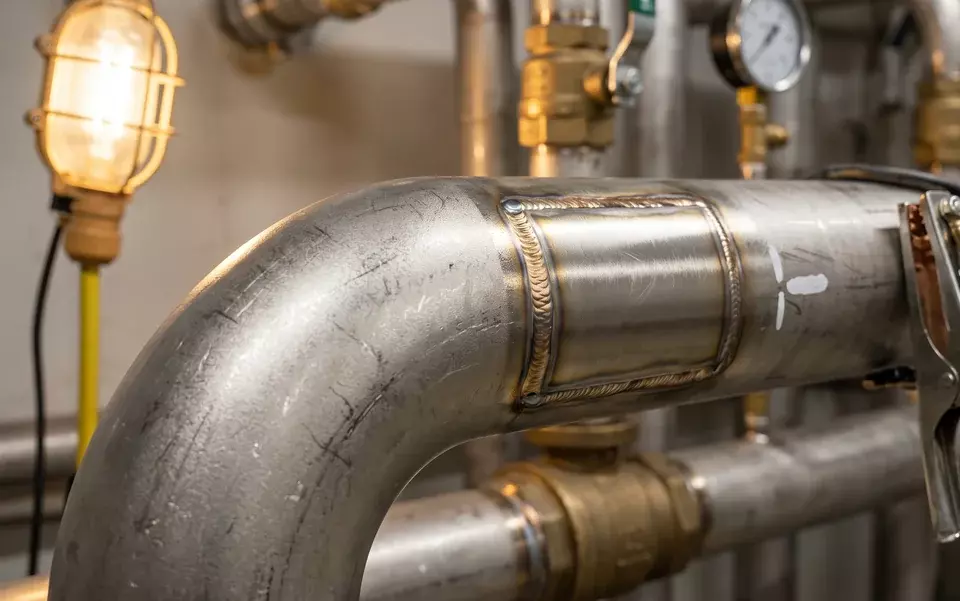 Repair of a ruptured hot water supply pipeline in the basement of an office building, Bostandyk district
The breakdown was fixed in 4 hours, the cost of the work — 45 000 ₸. Office tenants were not affected by downtime, and the system was up and running the same day.
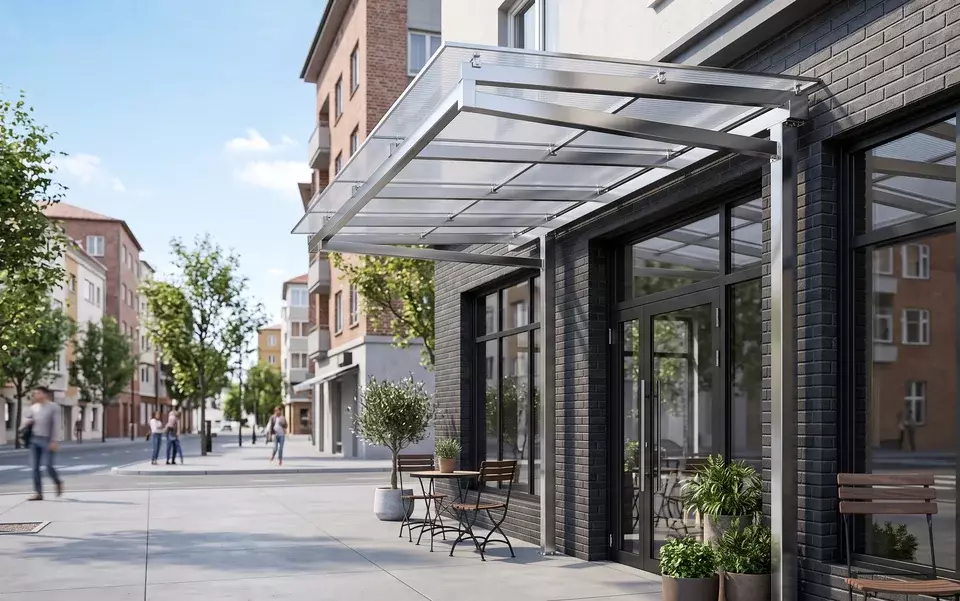 Manufacture and installation of a canopy over the entrance to a cafe, Zhibek Zholy Street
Production time — 5 days, final price — 220 000 ₸. The structure withstands snow load and does not rust, which will save budget on annual painting.
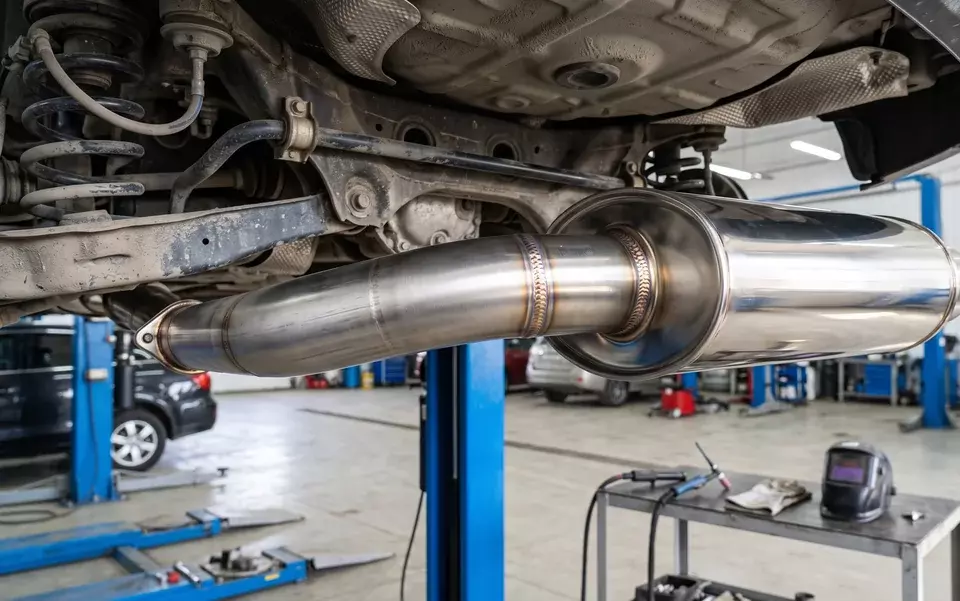 Welding of the exhaust system on a Toyota vehicle, service in the Alatau district
The work was completed in 2 hours, the cost was 25 000 ₸. The owner saved on buying a new complete muffler, and the service life of the system increased.

FIND OUT THE COST OF WELDING WORK FOR YOUR PROJECT
Leave a request and we will contact you within 3 minutes
Thank you! We will contact you within 3 minutes.
By clicking the button you agree to the terms of the
Or call us at
+7 (707) 068-88-68Privacy PolicyFIND OUT THE COST OF WELDING WORK FOR YOUR PROJECT
Leave a request and we will contact you within 3 minutes
Thank you! We will contact you within 3 minutes.
By clicking the button you agree to the terms of the
Or call us at
+7 (707) 068-88-68Privacy PolicyFIND OUT THE COST OF WELDING WORK FOR YOUR PROJECT
Leave a request and we will contact you within 3 minutes
Thank you! We will contact you within 3 minutes.
By clicking the button you agree to the terms of the
Or call us at
+7 (707) 068-88-68Услуги по сварке нержавейки в Алматы от PROFI‑DOM: марки, швы, цены
Stainless steel welding services at PROFI-DOM — TIG argon welding of railings, food equipment, tanks, and pipelines. We work with AISI 304/316/430 and ER308L/ER316L fillers, perform argon purging from inside the pipe, pickling, and passivation. Price — from 3 500 ₸ per meter of seam, pipeline joint — from 2 000 ₸, master's visit in Almaty — from 5 000 ₸.
Published: 2 · Updated:
Stainless steel and steel grade products: what we weld and why
Stainless steel is not a single material, but a family of grades with different properties. Let us look at what items we manufacture and which grade to choose for the task.
Stainless steel railings, handrails and guards
We make railings and handrails from 304 steel with a thickness of 1.5–2 mm — this is the optimal balance of strength and price in private houses and staircases in Almaty. TIG welding with ER308L filler gives a neat seam without discoloration, which on internal staircases does not require additional polishing. For outdoor railings and terraces, where de-icing agents are used in winter, we recommend AISI 316: the molybdenum additive makes it resistant to chlorides, and the structure lasts 5–7 years longer than grade 304- outdoors.
Food equipment and kitchen tables
For kitchen equipment in restaurants and cafes we use AISI 304 — — it is hygienic, withstands daily washing and contact with food. The weld on 304- steel is passivated after pickling and does not accumulate bacteria, which complies with sanitary standards for food production. If acid detergents are used in the workshop or vegetables are salted, it is better to choose AISI 316 — — it is acid-resistant and does not corrode even in aggressive environments, which extends the table's service life to 10–12 years versus 6–8 for the standard 304- grade.
Tanks, vessels and chimneys — which grade for what
We manufacture tanks for water and food media from AISI 304 with ER308L filler, and for chimneys and mangals — from AISI 321: it is stabilized with titanium and withstands heating up to 800 °C. For decorative canopies and facades, AISI 430 — is suitable; it is almost half the price of grade 304-, but it is magnetic and loses its shine outdoors, so it is not recommended for outdoor structures without a coating. Before ordering a hot water tank, check the wall thickness with the craftsman: for a volume of 200 liters or more, 2–3 mm metal is required, otherwise the weld seam will crack due to thermal expansion.
Table of stainless steel grades and products
| Product | Grade (AISI) | Filler rod | Feature |
|---|---|---|---|
| Railings, handrails, guards | 304 (1.5–2 mm) | ER308L | Optimal for interiors |
| Kitchen equipment, tables | 304 | ER308L | Hygienic, safe for food contact |
| Tanks for food media | 304 / 316 | ER308L / ER316L | Full tightness required |
| Equipment for aggressive environments | 316 | ER316L | Acid resistance |
| Chimneys, grills | 321 | ER308L | Heat resistance up to 800 °C |
| Decorative elements | 430 | ER309 | Budget option, magnetic |
If you are unsure between 304 and 316 —, for food contact choose 304, for aggressive environments and outdoor use — 316.
Why a stainless steel weld turns blue and rusts: causes and how to fix it
A blue or rusty area on stainless steel is not a cosmetic defect but a sign that the technology has been breached. We explain why this happens and how in our workshop we make welds clean and corrosion-resistant.
Where the blue discoloration comes from — the main causes
Blue discoloration on the seam (heat tint) is an oxide film that forms when the metal is overheated above 500 °C, when the protective chromium layer is destroyed. The higher the temperature, the thicker the oxide — from straw to purple and gray, and the deeper the heat-affected zone. Main causes: too high welding current (the welder is in a hurry), low travel speed, or insufficient argon flow in the torch — the gas does not have time to remove heat from the pool. On thin pipes (wall 1-2 mm), overheating occurs within seconds, especially without a copper backing or argon purge from inside. If the color is blue or purple, corrosion resistance in this zone is reduced, and rust may appear there over time, especially on food equipment.
Weld pickling and passivation — what it is and why it matters
After welding stainless steel, we обязательно perform seam pickling — we remove heat tint with a chemical compound, and then passivation — we restore the protective oxide film. Pickling removes scale and the chromium-depleted layer up to 0,1 mm deep; passivation (with nitric or citric acid) restores the Cr₂O₃ film on the joint surface within 15-20 minutes. At local food production facilities and in water tanks, we use pickling paste — it is applied with a brush to the weld and heat-affected zone, then rinsed off with distilled water. Without passivation, even a clean seam will eventually begin to rust because the chromium layer is disrupted after welding — this is especially critical for food equipment and tanks.
How to distinguish quality stainless steel welding from defects
- Silvery or straw colour: the joint is welded correctly, without overheating or loss of corrosion resistance.
- Blue or purple tint: overheating above 500 °C, cleaning and passivation are needed before use.
- Black spots or porosity: insufficient argon in the shielding gas or contamination of the edges with oil/grease.
- Ragged scale, runs: wrong welding mode — too high a speed or low welder skill.
- Rust on the weld: corrosion resistance compromised by intergranular corrosion, complete re-welding is required.
Why stainless steel rusts after welding
The reason is intergranular corrosion: during overheating, chromium burns out from the grain boundaries of the metal, and the weld loses its stainless properties. In the heat-affected zone (300-800 °C), carbon binds with chromium into Cr₂₃C₆ carbides, and around the grains a depleted zone with chromium content below 12 % — remains — it rusts like ordinary steel. The second reason is magnetic particles of ferrous metal from the tool or table that fuse into the weld and cause pitting corrosion. We prevent this by controlling heat input and use low-carbon grades AISI 304L/316L — they are less prone to chromium carbide precipitation during welding.
Stainless steel pipe welding: argon purging and tightness
Joining stainless pipes is one of the most difficult tasks: the weld must be hermetic and corrosion-resistant from the inside. We explain why argon purging is needed and how professionals weld pipelines.
Is argon purging needed when joining stainless steel pipes
Argon back purging from inside the pipe is mandatory when joining stainless steel pipelines for water, steam, and food media — without it, the weld root oxidizes and becomes brittle. On the outside everything looks fine, but inside a black scale of chromium oxides forms: on pipes 32 mm in diameter and larger, it occupies 1–2 mm on both sides of the joint. Grade A argon (99,993%) is supplied through a special plug at a flow rate of 6–8 l/min, displacing air from the pipe cavity — this ensures the root remains shiny and ductile like the base metal. Without purging, the scale eventually flakes off and clogs the system, and the joint loses its tightness and corrosion resistance.
How the root pass of a pipe is welded
PROFI-DOM welds the root pass on stainless pipe at minimum current with argon purge at 6–8 l/min — this gives a clean, shiny root without scale or porosity. The first, root layer is made by TIG welding without a filler rod: the melt fills the gap due to surface tension, and the argon purge from the back prevents the melt from oxidizing. On 10–20 mm pipes we weld manually, but always with purge: without it, on a 1,5 mm wall the root burns through in a second, and the joint has to be cut out. For pipes with a diameter from 20 mm we use orbital welding — it automates the process and gives an even seam around the entire circumference, especially on long pipelines.
Types of pipelines and weld requirements
- Water pipes: hermetic welding with argon purging, mandatory pressure test at 10–16 atm — without purging, a joint on a 2 mm wall leaks after 3–6 months.
- Food pipelines: a hygienic weld without pores or gaps, sanitary treatment after welding — on a milk line, even a microcrack becomes a breeding ground for bacteria.
- Steam pipelines: heat-resistant grade AISI 321 (titanium in composition), mandatory heat treatment of the seam — without it at 150 °C the joint cracks along grain boundaries.
- Chemical pipelines: acid-resistant AISI 316, argon purging + weld passivation with orthophosphoric acid — removes scale and restores the chromium oxide film.
Stainless steel welding price: per meter, joint and item
The cost of stainless steel work in Almaty consists of three calculation formats: per meter of seam, per joint or connection point, or per entire product — depending on the complexity and type of structure. The price includes TIG welding, filler material, argon purging, and seam cleaning.
How much does a meter of weld on stainless steel cost
Our argon welding costs from 3 500 ₸ per meter of seam — this price includes TIG welding, ER308L filler for AISI 304 or ER316L for AISI 316, argon purging for pipes and subsequent cleaning with a stainless steel brush. For food environments, we additionally treat the seam with pickling paste to restore the passive layer — this is another from 1 000 ₸ per meter, but without this operation, a kitchen table or tank will begin to rust along the weld line after 3–6 months. For thin metal (0.8–1.5 mm), the rate is higher than the base one: it requires a more careful mode and lower current to avoid burning through the part.
Price for welding railings and fences
Welding stainless steel railings costs from 1 500 ₸ per connection point — the price includes cutting the pipe on a cutting machine with cooling (to avoid overheating the edge), fitting joints to size, TIG welding with filler and final polishing of the seam to a matte shine. For handrails made of 42×2 mm pipe, we use a mode with argon purging from the inside — this prevents discoloration on the back side, which is visible on stair flights with an open bottom. If the railings have a complex configuration (spiral staircases, bends), the final price may be higher by 20–30% due to more joints and time for fitting — on a spiral flight for 12 steps there are about 25–30 joints instead of 6–8 on a straight span.
Price per item — tank, table, vessel
The price for manufacturing a stainless steel tank with a volume of 100 l in our workshop is from 35 000 ₸, and a kitchen table 1200×600 mm is from 25 000 ₸, including AISI 304 material with a thickness of 1.5 mm and delivery within the city. This cost includes cutting the sheet on a guillotine, rolling the shell for the tank, TIG welding all seams with argon purging, and checking tightness with water under a pressure of 2 atm — for tanks this is a mandatory stage, otherwise a leak along the seam will appear in the second year of operation. Ordering the product as a whole is often more profitable than paying per meter of weld — we optimize the cutting and the number of joints, reducing the final cost by 15–25% compared to element-by-element welding.
Price table for stainless steel welding at PROFI-DOM
| Item / work | Steel grade | Unit of calculation | Price from, ₸ |
|---|---|---|---|
| Argon welding | 304 / 316 | metre of weld | 3 500 |
| Railings, handrails | 304 | connection point | 1 500 |
| Kitchen table 1200×600 mm | 304 | item | 25 000 |
| Tank 100 l | 304 / 316 | item | 35 000 |
| Pipeline (argon backing) | 304 / 316 | butt joint | 2 000 |
| Welder call-out in Almaty | — | visit | 5 000 |
The exact price is calculated after a surveyor's visit — they assess the metal thickness, the complexity of the welds and the scope of work, so there are no surprises in the estimate.
Quality guarantee and welder certification
High-quality stainless steel welding is not just a beautiful seam, but also a guarantee that it will not leak or rust. Welding work on stainless steel in our workshop is carried out with control at every stage. Let us explain how quality is confirmed and what to look out for when choosing a welder.
How to check that a stainless steel welder is certified
The certification certificate confirms that the welder is authorized for critical stainless steel structures. It specifies which works the welder is authorized for: steam and hot water pipelines and food production equipment are different permits. Without certification, a craftsman can only weld non-critical products — fences, grills, simple handrails, but not milk tanks or steam pipes. When ordering, we always show the welder's certificate with a valid certification. A certified specialist knows the modes for each steel grade, is able to control heat input and makes a weld that passes visual and measurement inspection.
Warranty for stainless steel welding — what it covers
PROFI-DOM provides a warranty on weld seams — 3 years for tightness and absence of corrosion, subject to compliance with operating rules. This means that if after six months a rust stain or crack appears on the stair railing in a cottage in the Gorny Gigant microdistrict, we will re-weld and clean the defect area free of charge. For food tanks and pipelines, the warranty also includes a tightness check under working pressure: if the seam “sweats” when the line is started, we restore it at our own expense. But there is an important limitation — the warranty does not apply if the product was used in aggressive environments without approval, for example, an acid tank was welded from AISI 304 instead of 316. Therefore, we always clarify the operating conditions before starting work.
What quality control includes
- Visual inspection: we check the weld colour (no blue or purple spots) and the absence of porosity, cracks and undercuts — this is done by the master immediately after welding.
- Measurement inspection: we measure the width and height of the weld with a calliper and a welder's gauge, and check it against the drawing or technical specification.
- Hydraulic testing: for tanks and pipelines we supply water or air at a pressure 1,5 times higher than the working pressure — the weld must not leak.
- Capillary testing (dye penetrant inspection): for critical orders — food tanks or steam pipes — we apply a penetrant, which reveals microcracks invisible to the eye.
Common tasks: food equipment, railings, city-wide call-out
Each order dictates its own technology: a tank for a dairy shop requires a hygienic weld, railings require aesthetics, on-site repairs require mobility. Let us look at three typical scenarios and their specifics.
Welding of food-processing equipment to sanitary standards
For food equipment, seams must be hermetic, without pores and gaps, with subsequent passivation — this complies with sanitary standards for contact with products. In the manufacture of tanks for dairy production or tables for a meat shop, TIG is used with ER 308L filler (for grade 304-) or ER 316L (for 316-) — the weld composition matches the base metal, excluding galvanic corrosion. After welding, pickling and passivation are mandatory: scale is removed, the oxide film is restored, otherwise pitting corrosion from acids or detergents will begin in the heat-affected zone. In dairy and meat production, the seam must be easy to clean — without sharp edges and recesses where product accumulates, so the stainless steel welder cleans the root from inside the vessel.
Order stainless steel railings with on-site service across Almaty
The welder travels to all districts of the city for measurement and manufacture of stainless steel railings — minimum order — from 10 000 ₸, specialist visit — from 5 000 ₸. For railings, AISI 304 pipe with a wall thickness of 1,5–2 mm is used — this is sufficient for the load on stair flights in private houses, while the structure does not look massive. Seams on handrails are cleaned and polished to a matte shine so that there are no visible welding marks — the standard for interior products. When ordering, we first go for measurement, make a drawing, agree on the configuration, and only then start work — this eliminates dimensional errors and extra costs for rework.
How to order stainless steel welding in Almaty — step by step
We provide stainless steel welding services in Almaty at our workshop and with a specialist visiting the site.
- 1 — call or message: Describe the task (railings, tank, pipeline, equipment repair) by phone or on WhatsApp.
- Step 2 — site visit for measurement: The welder comes to inspect the site — a visit within the city from 5 000 ₸, urgent visit within 2 hours — plus 3 000 ₸.
- Step 3 — approval and contract: We fix the drawing, the steel grade (AISI 304 or 316), the scope of work and the price — no hidden mark-ups after welding begins.
- Step 4 — execution: The item is welded in the workshop or on site — with argon purging, pickling and passivation of the weld, and the welder cleans up the workplace afterwards.
- Step 5 — acceptance and payment: You accept the work and pay for it in cash or via Kaspi; there is no 100% prepayment.
Conclusion
We have gathered the main principles that make a seam on stainless steel reliable, airtight, and non-bluing — without excess theory, only practice. Typical tasks — railings, food equipment, tanks, and pipelines.
Key takeaways
- Choice of steel grade: for food contact and home — AISI 304, for aggressive environments and outdoor use — 316, for decorative purposes — 430.
- Weld quality: a silver or straw colour without blue tints and pores is a sign of a proper joint with controlled heat input.
- Argon purging: essential when welding pipes for water, steam and food media — without it the weld root oxidises and loses its tightness.
- Price: calculated per meter of seam, per joint or per item — a transparent system lets you understand the cost before work begins.
- Warranty: a quality weld must be backed by a warranty for leak-tightness and freedom from corrosion — this is protection against defects.