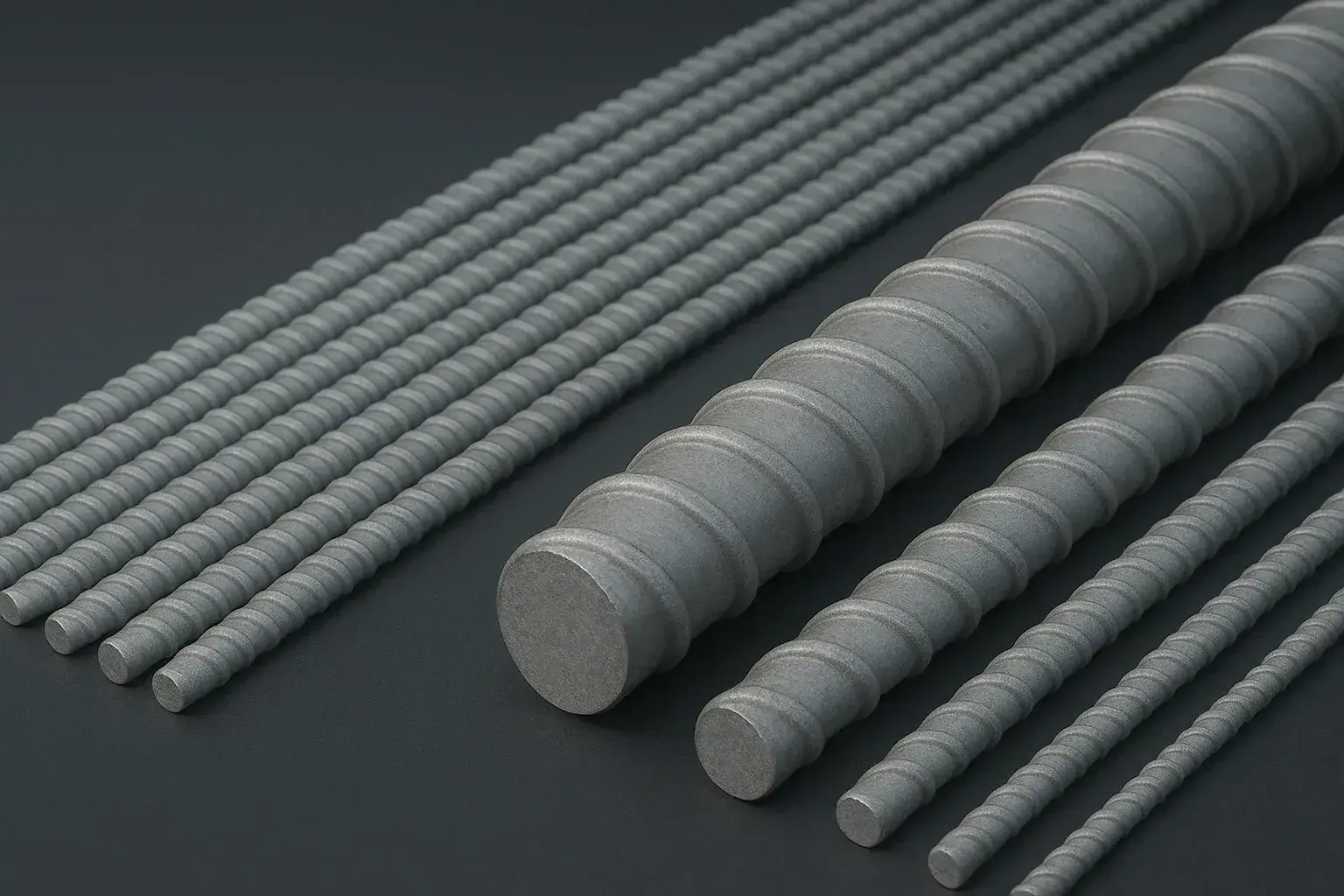
Rebar Almaty
With dispatch from 1 tonne in 2 hours
Rebar with a precise cross-section and 100% weldability. We speed up installation by 20%. A 5-year guarantee that the properties will be retained.
 Savings of up to 15% thanks to direct supplies from Kazakhstan and Russia
 Warehouse: 3 000 tonnes, 95% items in stock
 18 vehicles in our own fleet
 Every batch comes with GOST and EN certificates
Rebar Almaty
With dispatch from 1 tonne in 2 hours
Rebar with a precise cross-section and 100% weldability. We speed up installation by 20%. A 5-year guarantee that the properties will be retained.
Savings of up to 15% thanks to direct supplies from Kazakhstan and Russia
Warehouse: 3 000 tonnes, 95% items in stock
18 vehicles in our own fleet
Every batch comes with GOST and EN certificates
Rebar Almaty
With dispatch from 1 tonne in 2 hours
Rebar with a precise cross-section and 100% weldability. We speed up installation by 20%. A 5-year guarantee that the properties will be retained.
Savings of up to 15% thanks to direct supplies from Kazakhstan and Russia
Warehouse: 3 000 tonnes, 95% items in stock
18 vehicles in our own fleet
Every batch comes with GOST and EN certificates
rebar catalogue
The price is given per tonne, including production and delivery
 Rebar Ø8 (A500C) GOST 34028-2016 in AlmatyRebar Ø10 (A500C) GOST 34028-2016 in AlmatyRebar Ø12 (A500C) GOST 34028-2016 in AlmatyRebar Ø14 (A500C) GOST 34028-2016 in AlmatyRebar Ø16 (A500C) GOST 34028-2016 in AlmatyRebar Ø20 (A500C) GOST 34028-2016 in AlmatyRebar Ø25 (A500C) GOST 34028-2016 in AlmatyRebar Ø8 (A400 (A-III)) GOST 5781-82 in AlmatyRebar Ø10 (A400 (A-III)) GOST 5781-82 in AlmatyRebar Ø12 (A400 (A-III)) GOST 5781-82 in AlmatyRebar Ø14 (A400 (A-III)) GOST 5781-82 in AlmatyRebar Ø16 (A400 (A-III)) GOST 5781-82 in AlmatyRebar Ø20 (A400 (A-III)) GOST 5781-82 in AlmatyRebar Ø25 (A400 (A-III)) GOST 5781-82 in AlmatyRebar Ø8 (A240 (A-I)) GOST 5781-82 in AlmatyRebar Ø10 (A240 (A-I)) GOST 5781-82 in AlmatyRebar Ø12 (A240 (A-I)) GOST 5781-82 in AlmatyRebar Ø14 (A240 (A-I)) GOST 5781-82 in AlmatyRebar Ø16 (A240 (A-I)) GOST 5781-82 in AlmatyRebar Ø20 (A240 (A-I)) GOST 5781-82 in AlmatyRebar Ø25 (A240 (A-I)) GOST 5781-82 in AlmatyRebar Ø28 (A500C) GOST 34028-2016 in AlmatyRebar Ø32 (A500C) GOST 34028-2016 in AlmatyRebar Ø28 (A400 (A-III)) GOST 5781-82 in AlmatyRebar Ø32 (A400 (A-III)) GOST 5781-82 in AlmatyRebar Ø28 (A240 (A-I)) GOST 5781-82 in AlmatyRebar Ø32 (A240 (A-I)) GOST 5781-82 in Almaty

OUR COMPANY'S SERVICES

Preparatory operations
Cutting (gas, plasma, laser, waterjet), bending, straightening, making forgings, metal casting, rolling, perforation, blanking and stamping.
Machining
Turning and milling (including CNC), drilling, boring, thread cutting, grinding, polishing, deburring and machining.

Heat and chemical treatment
Heat treatment (hardening, tempering, normalising), carburising, nitriding, boriding, carbonitriding, chemical oxidation (blackening).

Surface coatings and finishing
Electroplated coatings (galvanising, chrome plating, nickel plating, anodising), painting (powder, liquid, anti-corrosion), paint-and-varnish coatings, sandblasting.

Quality control
Ultrasonic testing, magnetic particle testing, radiographic testing, penetrant testing.

Welding and assembly
Welding work (arc, semi-automatic, argon-arc), assembly of steel structures.

Special technologies
Calibration (round, square, hexagon), hydroforming, laser marking.
Logistics and order assembly
Packaging of products, order assembly, warehousing services, delivery of rolled metal and finished products.
Engineering and design
Development of technical documentation, design of steel structures, material selection, and bespoke design and engineering solutions for the client.
OUR COMPANY'S SERVICES

Cutting (gas, plasma, laser, waterjet), bending, straightening, making forgings, metal casting, rolling, perforation, blanking and stamping.
Preparatory operations
Turning and milling (including CNC), drilling, boring, thread cutting, grinding, polishing, deburring and machining.
Machining
Heat treatment (hardening, tempering, normalising), carburising, nitriding, boriding, carbonitriding, chemical oxidation (blackening).
Heat and chemical treatment
Electroplated coatings (galvanising, chrome plating, nickel plating, anodising), painting (powder, liquid, anti-corrosion), paint-and-varnish coatings, sandblasting.
Surface coatings and finishing

Ultrasonic testing, magnetic particle testing, radiographic testing, penetrant testing.
Quality control

Welding work (arc, semi-automatic, argon-arc), assembly of steel structures.
Welding and assembly
Calibration (round, square, hexagon), hydroforming, laser marking.
Special technologies
Packaging of products, order assembly, warehousing services, delivery of rolled metal and finished products.
Logistics and order assembly
Development of technical documentation, design of steel structures, material selection, and bespoke design and engineering solutions for the client.
Engineering and design
We will call you back within 3 minutes
OUR COMPANY'S SERVICES
Cutting (gas, plasma, laser, waterjet), bending, straightening, making forgings, metal casting, rolling, perforation, blanking and stamping.
Preparatory operations
Turning and milling (including CNC), drilling, boring, thread cutting, grinding, polishing, deburring and machining.
Machining
Heat treatment (hardening, tempering, normalising), carburising, nitriding, boriding, carbonitriding, chemical oxidation (blackening).
Heat and chemical treatment
Electroplated coatings (galvanising, chrome plating, nickel plating, anodising), painting (powder, liquid, anti-corrosion), paint-and-varnish coatings, sandblasting.
Surface coatings and finishing
Ultrasonic testing, magnetic particle testing, radiographic testing, penetrant testing.
Quality control
Welding work (arc, semi-automatic, argon-arc), assembly of steel structures.
Welding and assembly
Calibration (round, square, hexagon), hydroforming, laser marking.
Special technologies
Packaging of products, order assembly, warehousing services, delivery of rolled metal and finished products.
Logistics and order assembly
Development of technical documentation, design of steel structures, material selection, and bespoke design and engineering solutions for the client.
Engineering and design
We will call you back within 3 minutes
Cost of rebar in Almaty
| Number | Class / type | Steel grade | Length | Weight (kg/linear m or m²) | Weight of a piece / /1 m² (kg) | Price per piece (KZT) |
|---|---|---|---|---|---|---|
| 8 | A240 (A-I) | St3 | 11.7m | 0.395 | 4.622 kg | 1774 Kzt |
| 10 | A240 (A-I) | St3 | 11.7m | 0.617 | 7.219 kg | 2754 Kzt |
| 12 | A240 (A-I) | St3 | 11.7m | 0.888 | 10.39 kg | 3898 Kzt |
| 14 | A240 (A-I) | St3 | 11.7m | 1.21 | 14.157 kg | 5443 Kzt |
| 16 | A240 (A-I) | St3 | 11.7m | 1.58 | 18.486 kg | 7002 Kzt |
| 20 | A240 (A-I) | St3 | 11.7m | 2.47 | 28.899 kg | 10839 Kzt |
| 25 | A240 (A-I) | St3 | 11.7m | 3.85 | 45.045 kg | 17194 Kzt |
| 28 | A240 (A-I) | St3 | 11.7m | 4.83 | 56.511 kg | 21530 Kzt |
| 32 | A240 (A-I) | St3 | 11.7m | 6.31 | 73.827 kg | 28724 Kzt |
| 8 | A400 (A-III) | 35GS/25G2S | 11.7m | 0.395 | 4.622 kg | 1825 Kzt |
| 10 | A400 (A-III) | 35GS/25G2S | 11.7m | 0.617 | 7.219 kg | 2847 Kzt |
| 12 | A400 (A-III) | 35GS/25G2S | 11.7m | 0.888 | 10.39 kg | 4051 Kzt |
| 14 | A400 (A-III) | 35GS/25G2S | 11.7m | 1.21 | 14.157 kg | 5550 Kzt |
| 16 | A400 (A-III) | 35GS/25G2S | 11.7m | 1.58 | 18.486 kg | 7212 Kzt |
| 20 | A400 (A-III) | 35GS/25G2S | 11.7m | 2.47 | 28.899 kg | 11212 Kzt |
| 25 | A400 (A-III) | 35GS/25G2S | 11.7m | 3.85 | 45.045 kg | 17573 Kzt |
| 28 | A400 (A-III) | 35GS/25G2S | 11.7m | 4.83 | 56.511 kg | 22338 Kzt |
| 32 | A400 (A-III) | 35GS/25G2S | 11.7m | 6.31 | 73.827 kg | 28912 Kzt |
| 8 | A500C | St3sp/ps | 11.7m | 0.395 | 4.622 kg | 1831 Kzt |
| 10 | A500C | St3sp/ps | 11.7m | 0.617 | 7.219 kg | 2885 Kzt |
| 12 | A500C | St3sp/ps | 11.7m | 0.888 | 10.39 kg | 4168 Kzt |
| 14 | A500C | St3sp/ps | 11.7m | 1.21 | 14.157 kg | 5605 Kzt |
| 16 | A500C | St3sp/ps | 11.7m | 1.58 | 18.486 kg | 7319 Kzt |
| 20 | A500C | St3sp/ps | 11.7m | 2.47 | 28.899 kg | 11438 Kzt |
| 25 | A500C | St3sp/ps | 11.7m | 3.85 | 45.045 kg | 18001 Kzt |
| 28 | A500C | St3sp/ps | 11.7m | 4.83 | 56.511 kg | 23263 Kzt |
| 32 | A500C | St3sp/ps | 11.7m | 6.31 | 73.827 kg | 30292 Kzt |
| 6- equiv. | ABP (basalt-plastic) | Composite | 11.7m (pref.) | 0.08 | 0.936 kg | 1234 Kzt |
| 8- equiv. | ABP (basalt-plastic) | Composite | 11.7m (pref.) | 0.125 | 1.462 kg | 1899 Kzt |
| 10- equiv. | ABP (basalt-plastic) | Composite | 11.7m (pref.) | 0.18 | 2.106 kg | 2720 Kzt |
| 12- equiv. | ABP (basalt-plastic) | Composite | 11.7m (pref.) | 0.245 | 2.866 kg | 3783 Kzt |
| 14- equiv. | ABP (basalt-plastic) | Composite | 11.7m (pref.) | 0.32 | 3.744 kg | 4939 Kzt |
| 6- equiv. | ASP (fibreglass) | Composite | 11.7m (pref.) | 0.08 | 0.936 kg | 1036 Kzt |
| 8- equiv. | ASP (fibreglass) | Composite | 11.7m (pref.) | 0.125 | 1.462 kg | 1601 Kzt |
| 10- equiv. | ASP (fibreglass) | Composite | 11.7m (pref.) | 0.18 | 2.106 kg | 2322 Kzt |
| 12- equiv. | ASP (fibreglass) | Composite | 11.7m (pref.) | 0.245 | 2.866 kg | 3173 Kzt |
| 14- equiv. | ASP (fibreglass) | Composite | 11.7m (pref.) | 0.32 | 3.744 kg | 4098 Kzt |
| Cell: 50x50 mm | Mesh (polymer) | Polymer | 1 m² (in a roll) | 0.15 | 1 m²: 0.15 kg | 836340 KZT (per m²) |
| Cell: 100x100 mm | Mesh (polymer) | Polymer | 1 m² (in a roll) | 0.1 | 1 m²: 0.1 kg | 850414 KZT (per m²) |
- 01.OUR OWN WAREHOUSE OF 3 000 TONNES
Pipes, beams, sheets and rebar to GOST are in stock. More than 2 500 items available. We guarantee a selection for any project.
- 02.OUR COMPANY HAS BEEN OPERATING FOR 30 YEARS
We have been operating since 1994. Over this time we have found the best metal suppliers, and bulk purchasing allows us to cut costs for our clients.
- 03.cutting accuracy to ±1 mm
On Hypertherm CNC machines. We eliminate defects and metal waste. We save clients up to 15% of the budget on every project.
- 04.Delivery strictly on time
We deliver 98,5% of orders exactly on time thanks to our own fleet of 18 vehicles. You will avoid production downtime and penalties from clients.
- 05.A WIDE CHOICE OF METAL
We have 100+ items in stock: steel, aluminium and stainless steel from MMK, RUSAL and Severstal. Get the metal you need turnkey.
- 06.Direct supplies from 7 mills
We work directly, without intermediaries, with the MMK, NLMK and ChTPZ mills. Prices are 10-15% below market and every product comes with a quality certificate.
- 07.Dispatch from the warehouse in 3 hours
We will dispatch 95% items from our warehouse within 3 hours of your request. You will cut waiting time and speed up the start of the project.
- 08.Deferred payment of up to 30 days
We provide official deferred payment of up to 10 000 000 KZT for regular clients. Keep your working capital.
- 09.We will calculate the cost in 15 min
Send us a drawing or specification. Our engineer will prepare a quote with the exact cost in 15 minutes and send it to your email.
- 10.Packaging protects against corrosion
An anti-corrosion film and wooden spacers for sheet metal. Rebar in bundles of 2 tonnes. Storage life of up to 12 months.
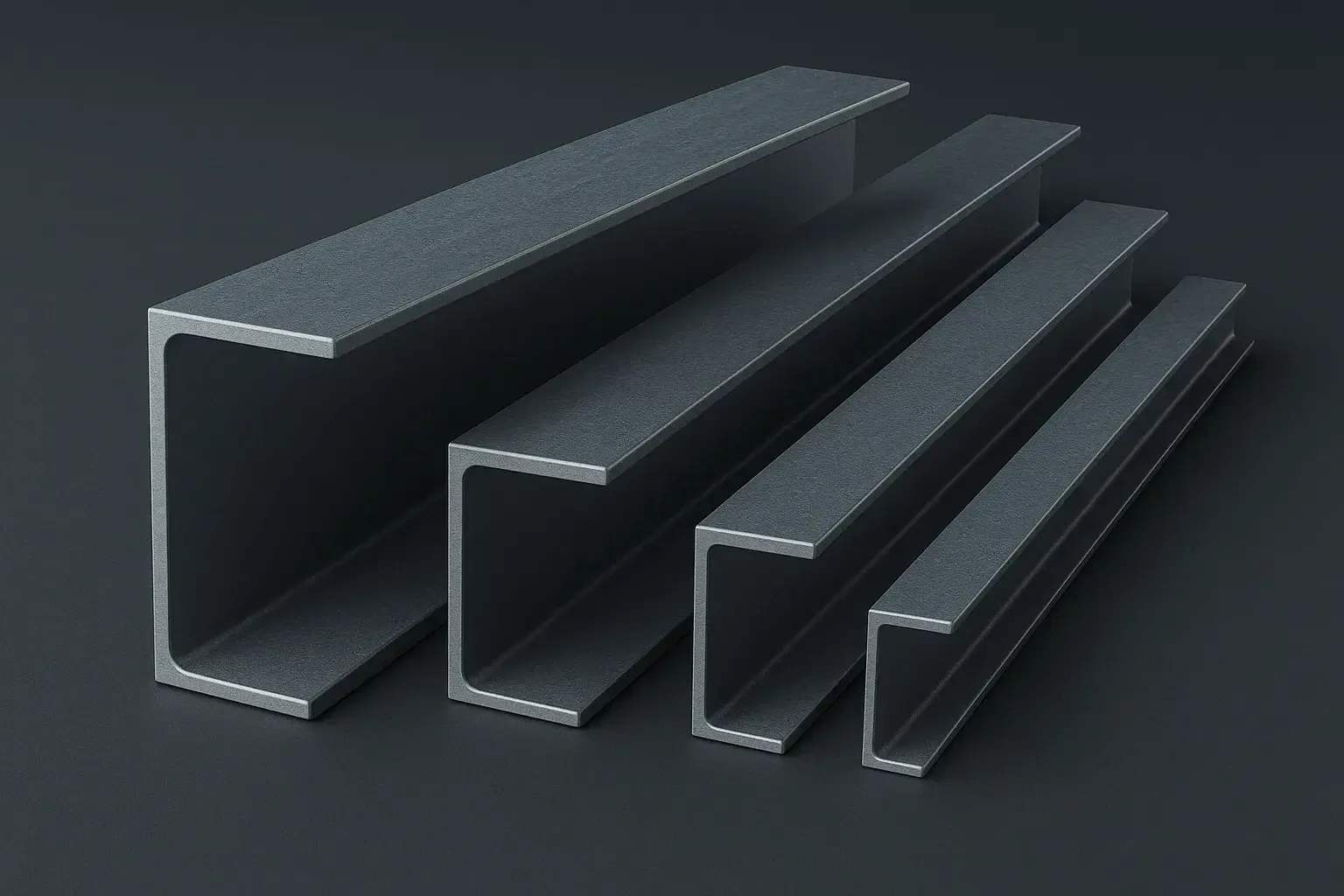
Find out the cost of a channel in 1 minute
Customer reviews of rebar in Almaty
Your feedback matters a great deal to us
Rebar in Almaty
Everyone who builds, from a private developer to the foreman of a large company, reaches the moment when a project moves from drawings to a real cage. This is where a dozen questions arise, and the strength, service life and safety of the whole building depend on the answers. What rebar is needed for a strip foundation? What do I risk by economising on diameter? How do I decode the marking and avoid overpaying? These are not just questions but hidden fears of cracks in the walls and budget overruns. This guide is an attempt to dispel those fears, turning your choice from guesswork into an informed engineering decision.
What is rebar and why is it needed? The complex made simple
The evolution of rebar: from stone frameworks to the steel heart of concrete
Predecessors: Even in antiquity, wood, bamboo and even stone frames were used to reinforce structures. The main drawback was the low tensile strength and the rotting of organic materials.
Steel’s first steps: With the advent of reinforced concrete in the 19th century, smooth steel bars began to be used. However, their main problem was a poor bond with concrete, which often led to “slippage” and delamination of the structure.
Dead-end branches: Alternative materials were also tried, such as fibreglass. But its use ran into an insurmountable obstacle — a low modulus of elasticity. A structure reinforced with fibreglass deflected under load significantly more than a steel one, which limited its use in critical projects.
A modern solution: The breakthrough was the invention of the periodic profile — ribs on the bar. This elegantly solved the main problem of its predecessors by providing a strong bond with concrete. Today’s reinforcing steel is not just “wire rod”; it is a complex metallurgical product in which the chemical composition and heat treatment are carefully chosen to achieve the optimal balance between strength, ductility and weldability.
Classification and types: Understanding the product range
By profile (appearance)
- Smooth (А-I, А240). Has a smooth cylindrical surface. Main use — assembly elements, stirrups, structural reinforcement. Not suitable for carrying the main loads in reinforced concrete due to its low bond.
- Periodic profile (А-III, А400, А500С, etc.). The surface of the bar has ribs (protrusions) set at an angle to the axis. This is the main working profile, which provides a reliable bond with concrete.
Expert advice from Yuri Krylov, head of the company:«Never use smooth bars as working reinforcement in critical structures — in floor slabs, beams or loaded columns. Their weak bond with concrete can play a fatal role under peak loads. You will save pennies on material but risk thousands on rework».
By purpose
- Working (longitudinal). It is this that takes the main tensile forces. It is the main “workhorse” of the cage.
- Structural (distribution). Serves to join the working rebar into a cage, distribute local loads and counteract concrete shrinkage.
- Assembly. Ensures the precise position of the working and structural bars in the formwork before the concrete is poured.
By installation method
- Piece-by-piece. Individual bars that are joined by hand directly on site. Suitable for small volumes.
- Meshes. Welded or tied mats of bars. Widely used to reinforce slabs, floors and road surfaces.
- Frameworks. Spatial structures for reinforcing columns, beams and piles.
Markings: How to read the code on bars
- ⌀16: The nominal diameter of the bar in millimetres. A key characteristic that determines the cross-sectional area and therefore the strength.
- A: Indicates that this is bar reinforcement.
- 500: The yield strength in MPa (megapascals). The higher the number, the stronger the steel. It is the point beyond which steel begins to deform irreversibly.
- С: An index indicating weldability (from the English “weldable”). For rebar that is to be joined by welding, this index is mandatory.
The main strength classes and their applications
- A240 (A-I): Smooth profile. Structural and for assembly.
- A300 (A-II): An obsolete class of periodic profile.
- A400 (A-III): The classic working rebar for most structures.
- А500С (А500С): The most common class today. It combines high strength with good weldability.
A500C vs A400: Which to choose today?
This is a key choice that most builders face. Let us compare them in detail.
| Parameter | Rebar A400 | Rebar A500C | What does this mean in practice? |
|---|---|---|---|
| Yield strength | 400 MPa | 500 MPa | For the same load you can use a smaller-diameter A500C, which saves metal (up to 10–12%) and reduces the weight of the structure. |
| Weldability | Limited | Good | Cages made of A500C can be safely welded without fear of reduced strength at the joints. For A400, tying is preferable. |
| Production technology | Hardening by heat treatment | Cold hardening | A500C has more uniform mechanical properties along the entire length of the bar. |
| Ductility | Higher | Slightly lower | A400 bends more easily without forming cracks, which can be critical for complex bent elements. |
| Prevalence | Becoming obsolete, less of it in warehouses | The main product range on the market | Finding the required diameter and volume of A500C in Almaty is easier and often cheaper. |
How to choose the right rebar diameter? From foundation to floor
Analogy: Choosing a diameter is like choosing a gear on a bicycle. For a flat road (an unloaded screed) first gear (a thin bar) is enough. For a steep climb (a loaded floor slab) you will need a heavy gear (a large-diameter bar). Trying to take the climb in a light gear will leave you stalled (the structure will crack).
| Type of structure | Recommended diameters | Notes |
|---|---|---|
| Strip foundation | Ø10 - Ø14 mm | For longitudinal bars in the top and bottom chords. |
| Slab foundation | Ø12 - Ø16 mm | The spacing between bars is 200-300 mm and depends on the load. |
| Reinforced ring beam | Ø10 - Ø12 mm | 4 bars at the corners, tied together with stirrups. |
| Floor slab | Ø10 - Ø12 mm (private house), Ø12 - Ø16 mm (multi-storey building) | Important: A calculation is essential! |
| Columns, girders | Ø14 - Ø32 mm and above | Calculated elements; the diameter is determined by the designer. |
Rebar range: A table of diameters and weights
| Diameter, mm | Cross-sectional area, cm² | Weight of 1 metre, kg | Weight of 1 tonne, metres |
|---|---|---|---|
| ø6 | 0.283 | 0.222 | 4504 |
| ø8 | 0.503 | 0.395 | 2532 |
| ø10 | 0.785 | 0.617 | 1620 |
| ø12 | 1.131 | 0.888 | 1126 |
| ø14 | 1.539 | 1.210 | 826 |
| ø16 | 2.011 | 1.580 | 633 |
| ø18 | 2.545 | 2.000 | 500 |
| ø20 | 3.142 | 2.470 | 405 |
Tying vs welding: The eternal dispute on the construction site
| Criterion | Tying with wire | Welding |
|---|---|---|
| Joint strength | Movable, not rigid | Absolutely rigid |
| Speed of work | Lower, manual labour | Higher, when using automatic machines |
| Staff qualifications | Medium | High (an experienced welder is required) |
| Effect on rebar | Does not change the properties of the metal | Can create «weak» zones at the point of overheating |
| Flexibility | The framework is easy to adjust | Changes after welding are almost impossible |
| Applicability | Universal | Only for the «C» index (weldable) |
Where to buy rebar in Almaty: What to look at when choosing a supplier
- Range availability. A good supplier always keeps the main diameters (from 8 to 20 mm) in stock in sufficient quantity.
- Quality and documentation. Always request certificates of conformity for the batch. Visually it should be free of deep scale, cracks and metal delamination.
- Origin. Quality product is made by large metallurgical plants. Products from unknown mini-mills may not meet the stated characteristics.
- Logistics. Check the delivery terms. Being able to bring the material exactly on time and unload it with a crane-manipulator on site will save you time and nerves.
- Pricing. A clear calculation system in which the rebar price per tonne is clearly stated, with no hidden surcharges.
Expert advice from Yuri Krylov, head of the company: «Do not chase the lowest price. Remember that the cost of rebar is only part of the total expense. Missed deadlines due to short deliveries and defective material that leads to rework will cost you many times more. Choose reputable suppliers who work transparently and are ready to take responsibility for the quality of their products».
5 little-known facts about rebar that will save you money and time
- It «fears» rust, but not all rust. Slight surface corrosion (rust) is not dangerous and can even improve bonding with concrete. But if rust has eaten into the bar's cross-section or there are pits and delamination — reject such material.
- Rebar has a “memory”. Once bent and then straightened, it will never return to its original state. This reduces its strength characteristics. Do not use previously bent bars as working reinforcement.
- There is “winter” rebar. For installation at sub-zero temperatures, a material made of steel resistant to cold-shortness is used. Ordinary steel becomes more brittle in the cold.
- Colour tells you nothing about the strength class. A dark blue, black or grey colour is merely a consequence of the features of the rolling mill and scale, not an indicator of quality.
- Transport matters. During carriage it must not come into contact with fuels and lubricants, oils or fuel. This impairs adhesion to concrete.
Conclusion
Frequently asked questions
about rebar
How does rebar A1 (A240) differ from A3 (A400)?
А1 (А240) rebar: Has a smooth surface profile. It is highly ductile and is excellent for assembly tasks, making stirrups or serving as distribution elements in structures that do not carry maximum loads.
А3 (А400) rebar: Has a periodic profile (crescent or ring ribbing). This provides a better bond with concrete. It is this rebar that is most often used as the main working reinforcement in critical reinforced-concrete structures (foundations, floor slabs, columns), as it has high strength characteristics.
How to decode rebar markings? For example, what does «A500C» mean?
«A» indicates that this is rebar.
«500» indicates a yield strength of 500 MPa (megapascals). This is a key strength indicator.
«C» means that the rebar is weldable. This is a crucial index showing that the bars can be joined by welding without losing their strength properties. Always pay attention to it if welding work is planned.
Which class of rebar (for example, А500С, А400, А240) is better to choose?
А500С: The most common and versatile class. The letter “С” indicates weldability without loss of strength. Ideal for most foundations, walls and floors in private and industrial construction.
А400 (АIII): An earlier but still used class of ribbed rebar. Used for critical structures.
А240 (АI): Smooth rebar, used for tying (stirrups) and distributing loads.
Tip: For private construction, А500С is most often chosen as the optimal combination of price, strength and ease of work (ductility and weldability).
How is rebar correctly joined together: by welding or tying?
Tying (the preferred method): Joining rebar bars with tying wire. This is the most common and recommended method.
Advantage: The joint remains flexible. This is critical, because during the pouring and curing of the concrete the cage must be able to “breathe” a little without creating critical stresses.
Welding: Permitted only for rebar classes that have the letter “С” in the marking (for example, А500С).
Limitation: Welding can change the metal structure in the weld zone, reducing its strength. It is usually used in the manufacture of ready-made cages or on sites where this is expressly specified in the design documentation.
What rebar diameter should I choose for a private house foundation?
For the strip foundation of a one- or two-storey house, working rebar with a diameter of 10-12 mm (class А3) is most often used, and 6-8 mm (class А1) for the auxiliary stirrups.
For a slab foundation the loads are higher, so bars with a diameter of 12-14 mm and more are usually used.
Important: The final decision must be made by the designer based on load calculations and the soil type.
Can rebar be welded together?
What are «rebar in coils» and «rebar in bars»?
In coils: Supplied, as a rule, in diameters up to 10-12 mm. Convenient for transport and for use as distribution reinforcement, for making meshes or elements that require bending.
In bars (rods): The standard length is 11,7 metres. Used for the main working longitudinal bars in the cages of foundations, columns and beams.
How to protect rebar from corrosion?
Galvanised rebar has a layer of zinc for increased corrosion resistance.
Rebar with a polymer coating.
Composite polymer rebar is completely immune to corrosion.
What is the difference between steel and fibreglass (composite) rebar?
Fibreglass rebar (АСП): 4-9 times lighter and completely corrosion-free. Ideal for certain types of foundations, road construction and aggressive environments. However, it has lower breaking strength, cannot be bent on the construction site and cannot be welded.
How to correctly calculate the required amount of rebar?
Create a diagram of the reinforcement cage showing all the bars.
Calculate the total length of all longitudinal, transverse and connecting elements.
Allow for the overlap of the bars (usually 30-50 rebar diameters) when joining them.
Add a 5-10% allowance for offcuts and errors.
Our managers are always ready to help you with a rough calculation based on your data.
What are the delivery and dispatch terms?
How much rebar is needed per cubic metre of concrete?
How to store rebar correctly on the construction site?
What is composite (fibreglass) rebar and is it worth using?
Advantages:
Corrosion resistance: Does not rust. Ideal for structures in aggressive environments (seawater, chemical plants).
Light weight: Significantly lighter than steel rebar.
Low thermal conductivity: Reduces cold bridges.
Limitations:
Low modulus of elasticity: “More flexible” than steel, which can lead to larger deflections of the structure.
Cannot be bent on site: Supplied in coils, but bending requires factory equipment.
Conclusion: It is suitable for non-critical structures, road slabs, screeds or high-humidity conditions, but its use in load-bearing elements (foundations, columns) requires a separate calculation and approval by the designer.
We also
make

CORRUGATED SHEETING

WELDING ELECTRODES

Hexagon bar

We also
make





CHECKER PLATE
EXPANDED METAL SHEETSTEEL PIPESPROFILE PIPESMETAL ANGLE BARCHANNEL BARMETAL BEAM
MASONRY MESH
Hexagon bar
WELDING ELECTRODES
CORRUGATED SHEETING
Square barWe will call you back within 3 minutes
We also
make
CHECKER PLATE
EXPANDED METAL SHEETSTEEL PIPESPROFILE PIPESMETAL ANGLE BARCHANNEL BARMETAL BEAM
MASONRY MESH
Hexagon bar
WELDING ELECTRODES
CORRUGATED SHEETING
Square barWe will call you back within 3 minutes