
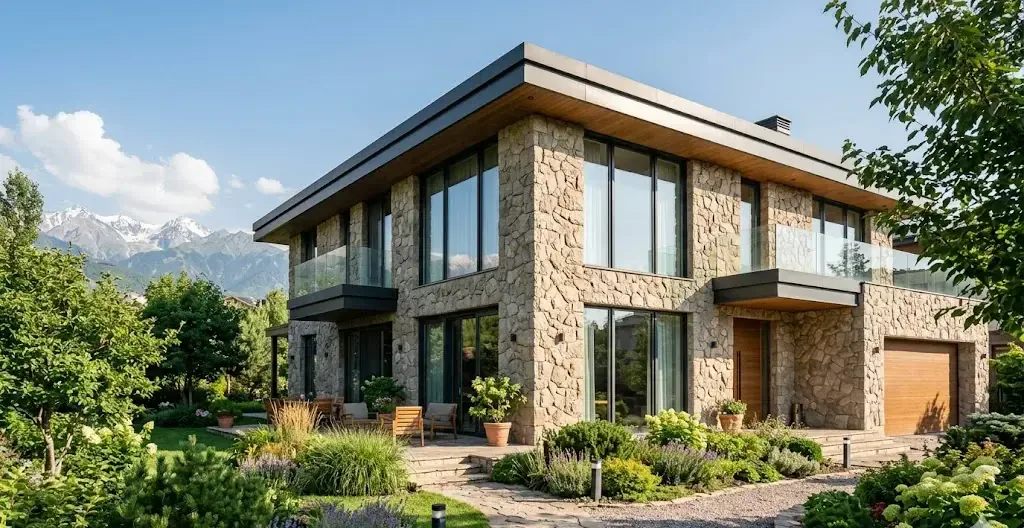
Stone facade cladding in Almaty
from 6 000 tg.* per linear metre
Durable, high-quality facade finishing thanks to compliance with building codes and the high qualifications of our craftsmen.
 Joints to GOST 5264-80
Installation from 1 day Arrival within 45 minutes
Installation from 1 day 3-year warranty
 Prices from 5000 ₸
Contract and estimate
Stone facade cladding in Almaty
from 6 000 tg.* per linear metre
Durable, high-quality facade finishing thanks to compliance with building codes and the high qualifications of our craftsmen.
Joints to GOST 5264-80
Installation from 1 day
Arrival within 45 minutes
Installation from 1 day
3-year warranty
Prices from 5000 ₸
Contract and estimate
Stone facade cladding in Almaty
from 6 000 tg.* per linear metre
Durable, high-quality facade finishing thanks to compliance with building codes and the high qualifications of our craftsmen.
Joints to GOST 5264-80
Installation from 1 day
Arrival within 45 minutes
Installation from 1 day
3-year warranty
Prices from 5000 ₸
Contract and estimate
Types of facade
work we do
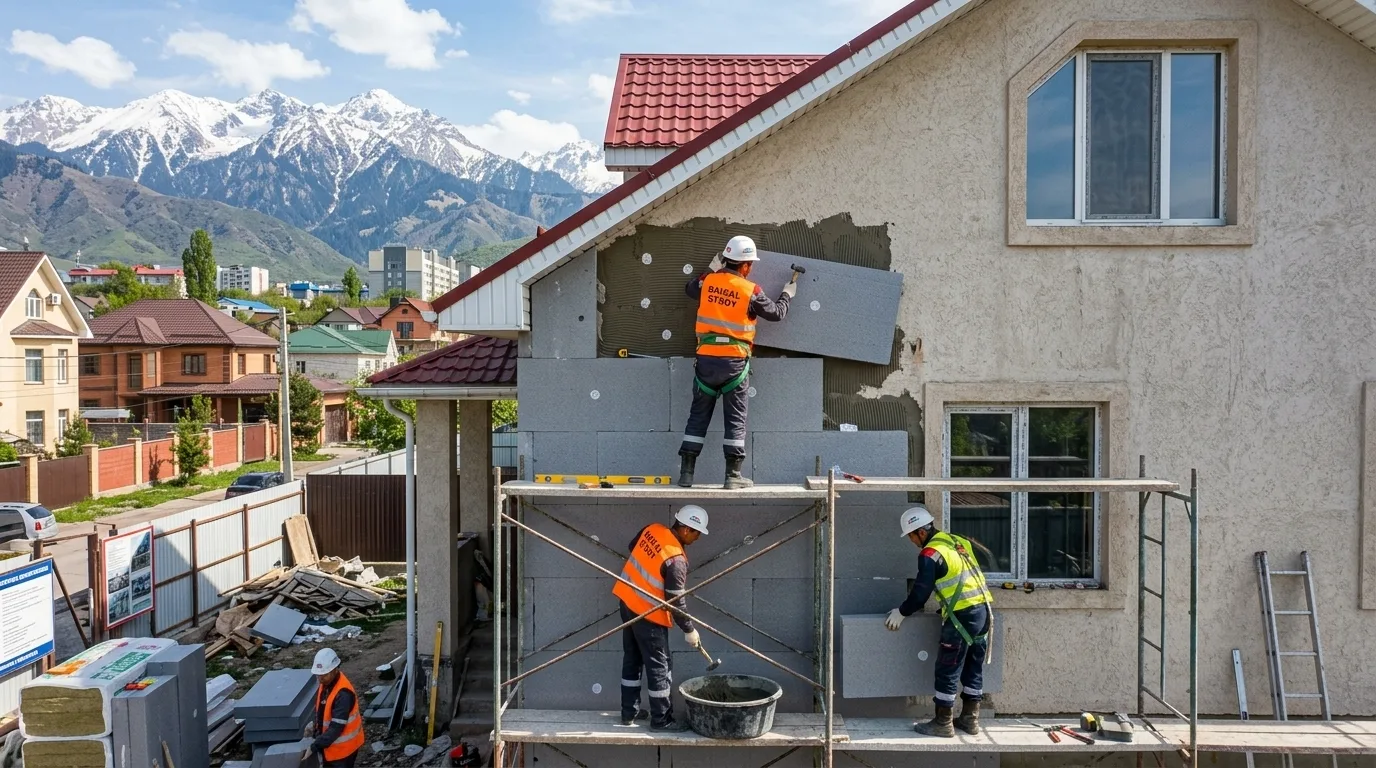
Facade insulation
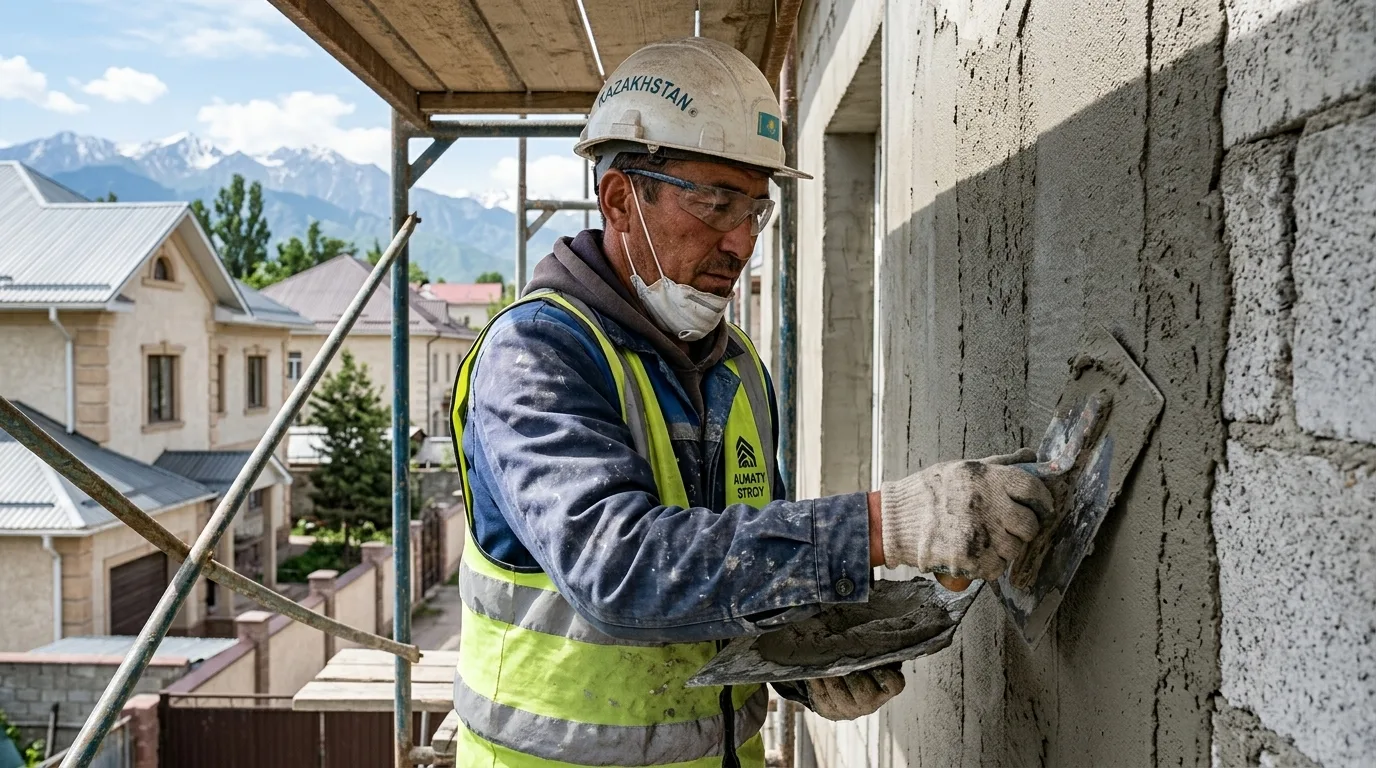
Plastering the walls
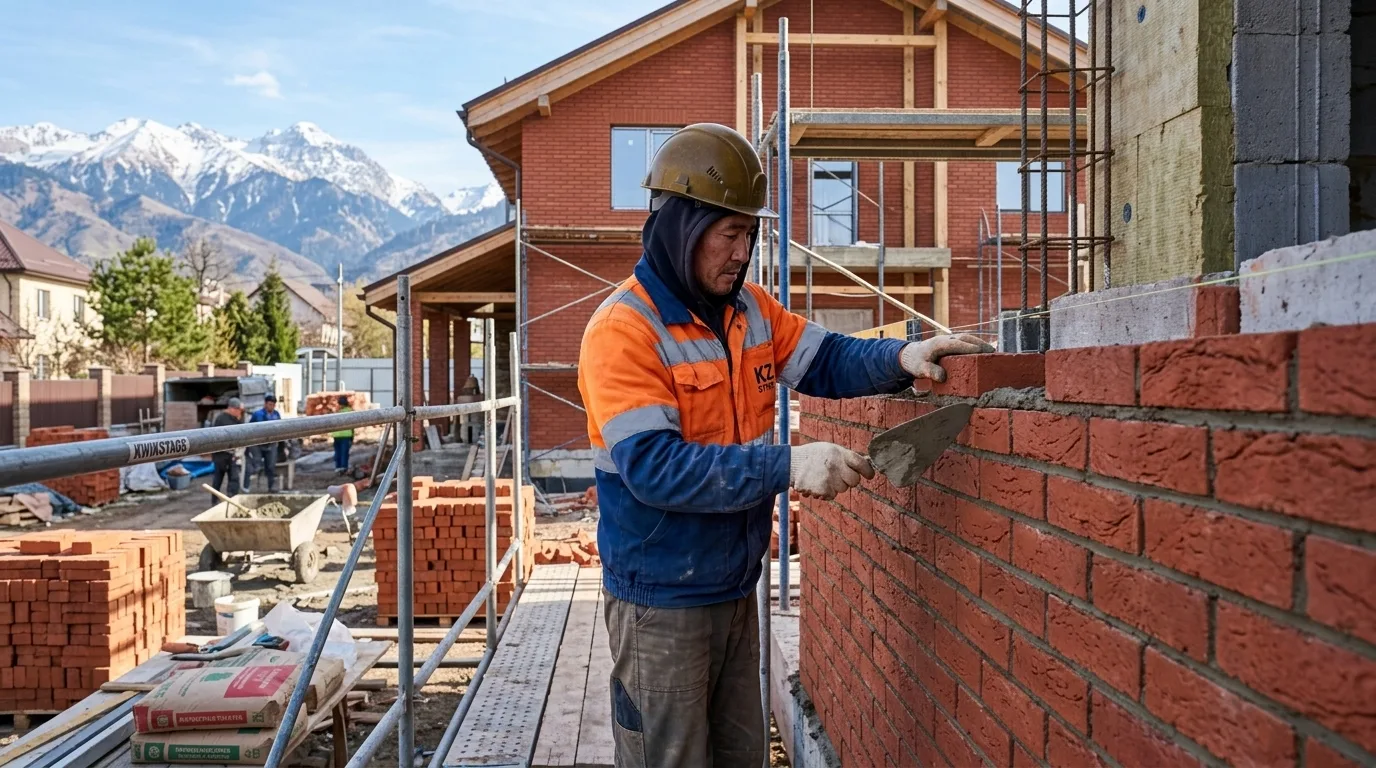
Brick cladding
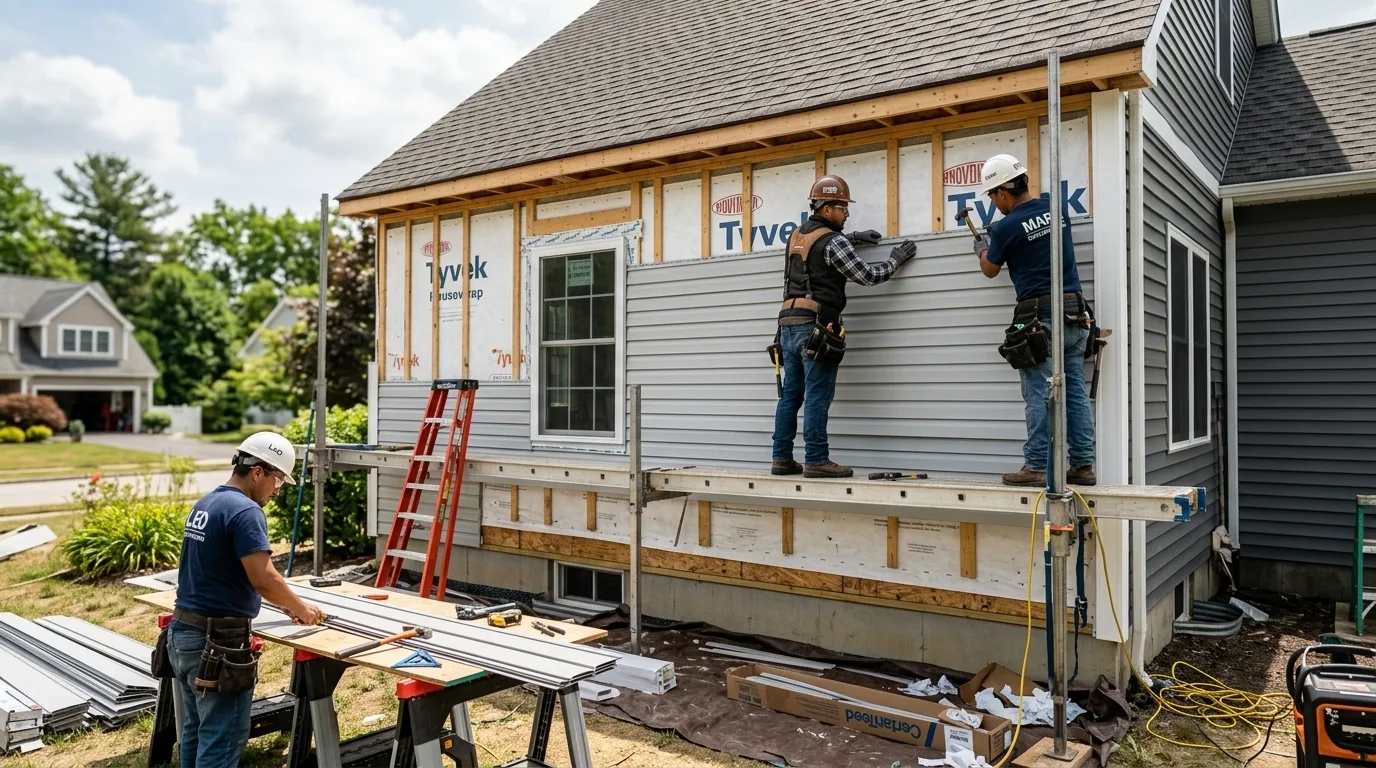
Siding installation
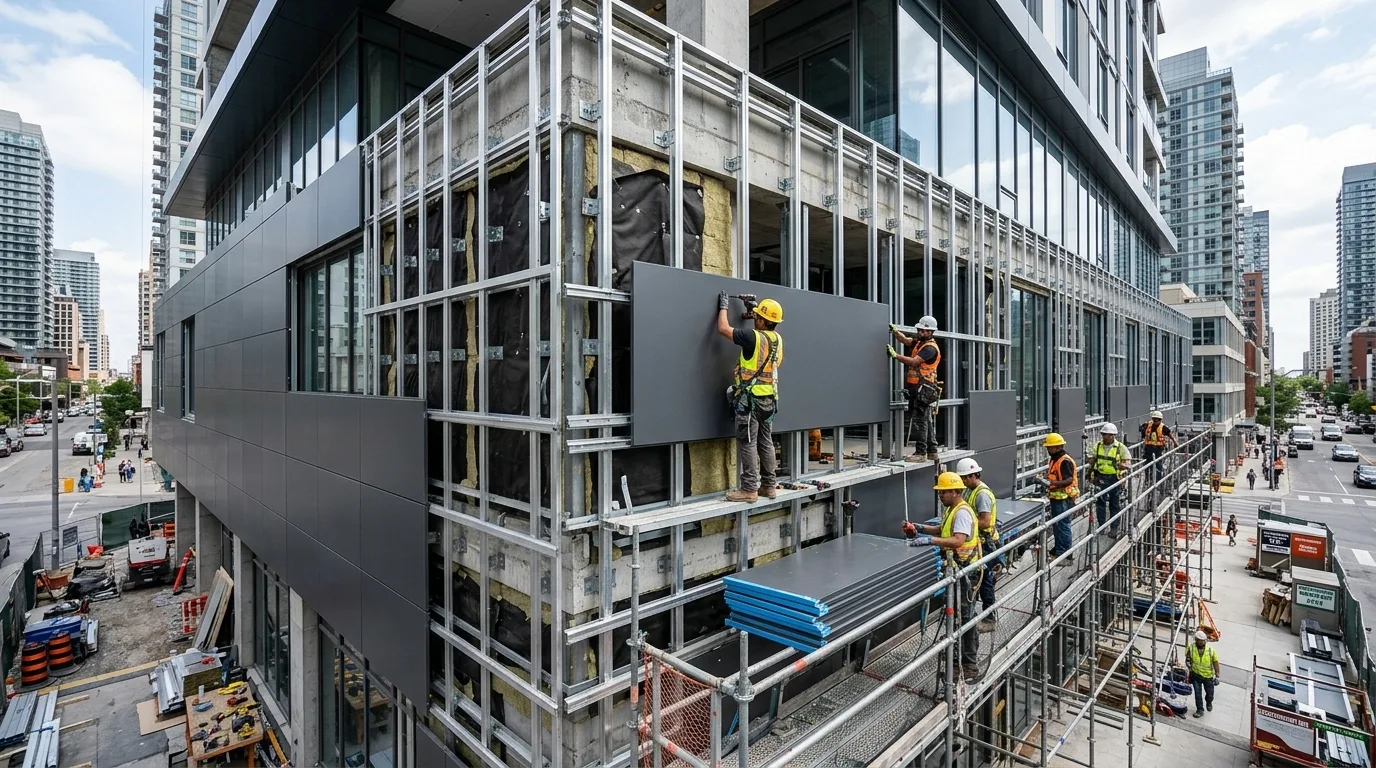
Construction of ventilated facades
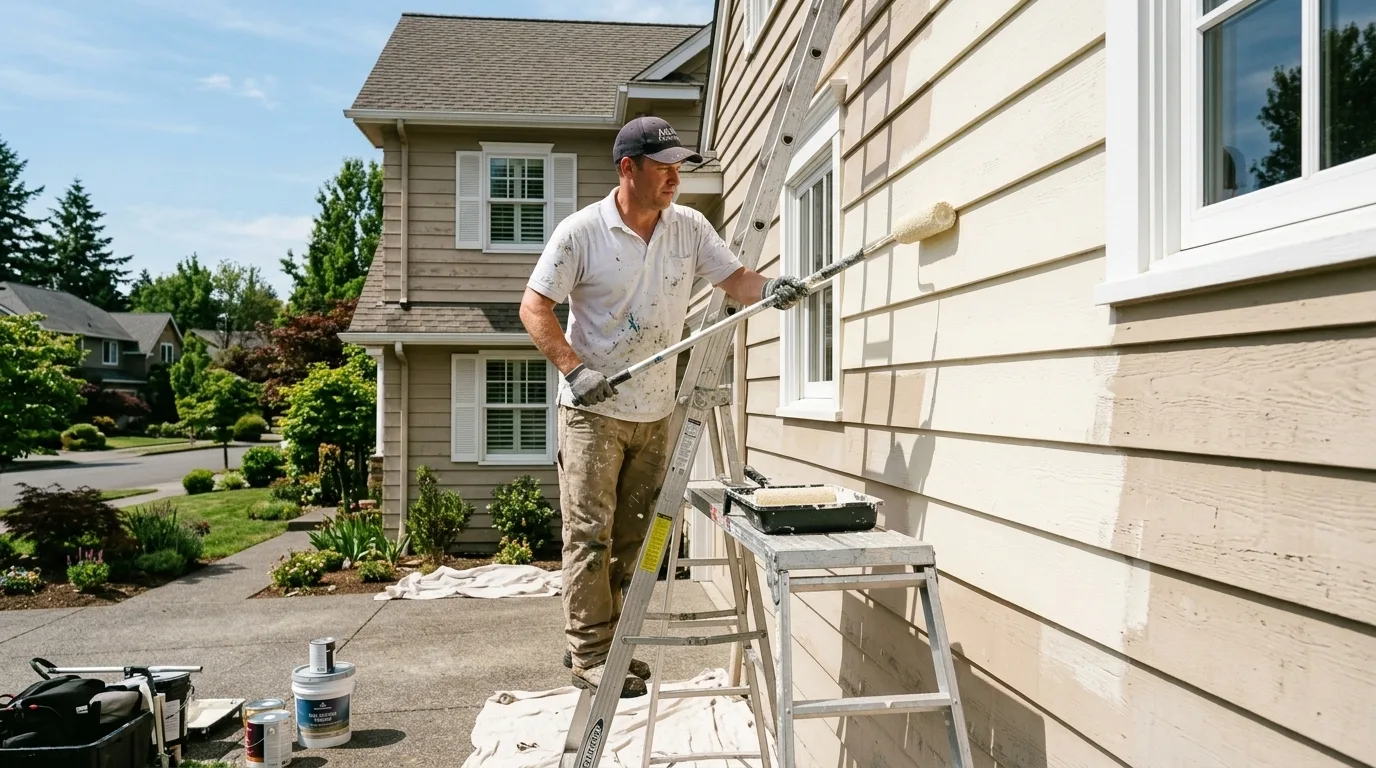
Facade painting
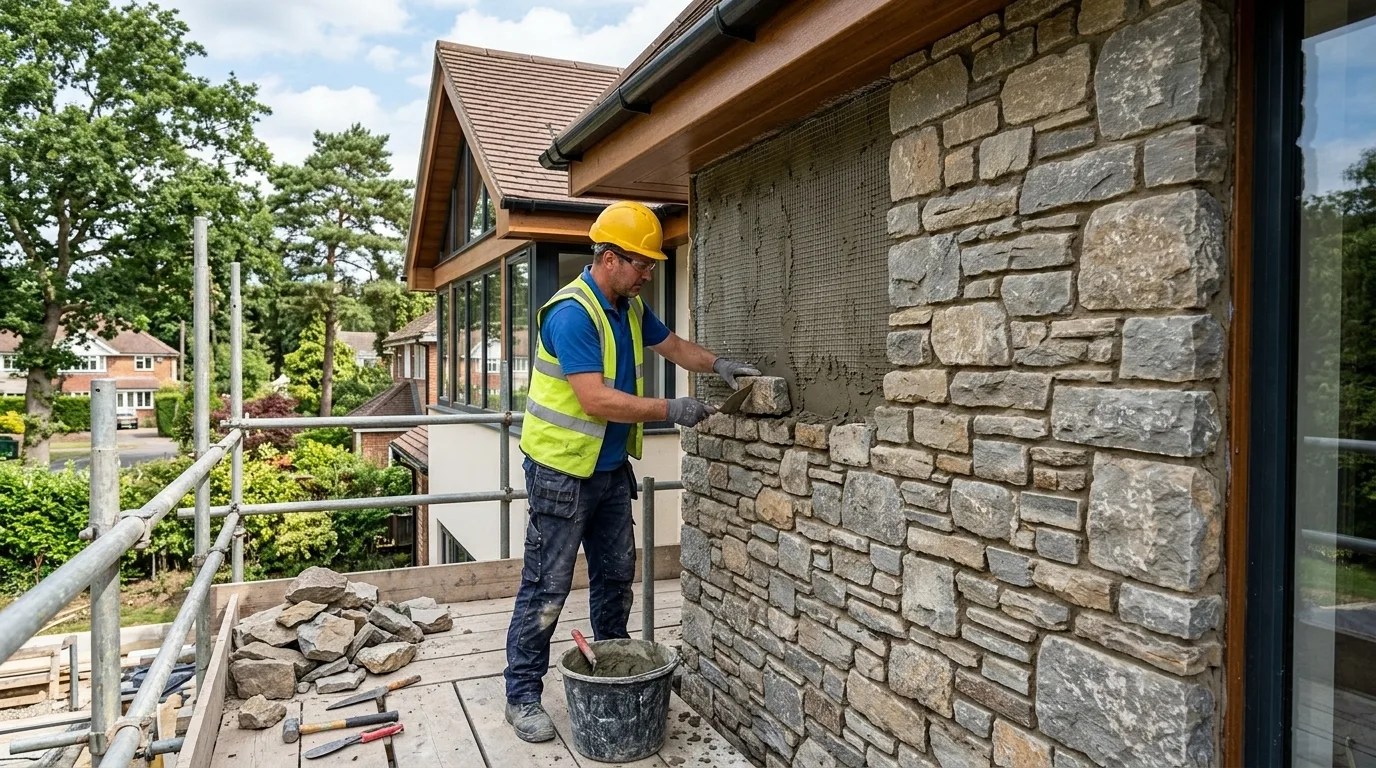
Stone finishing
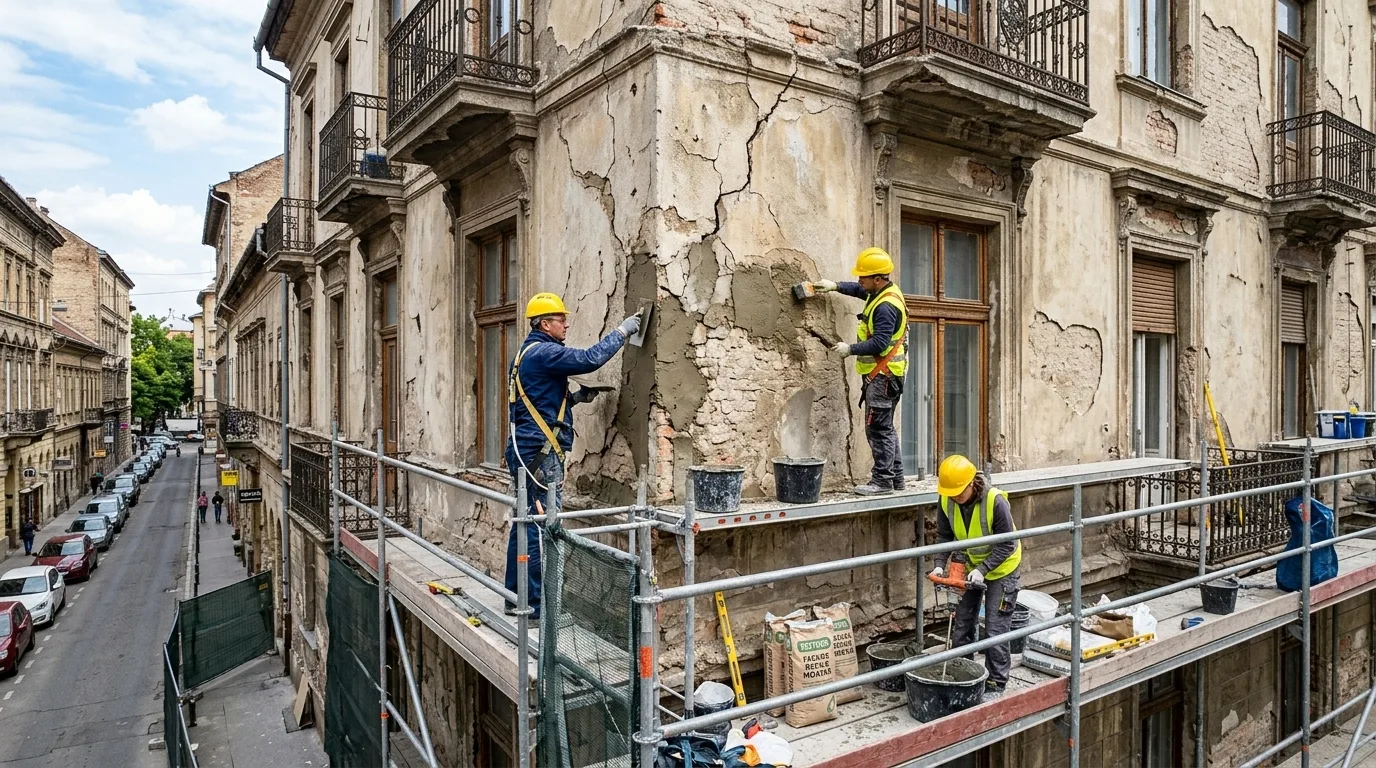
Facade repair
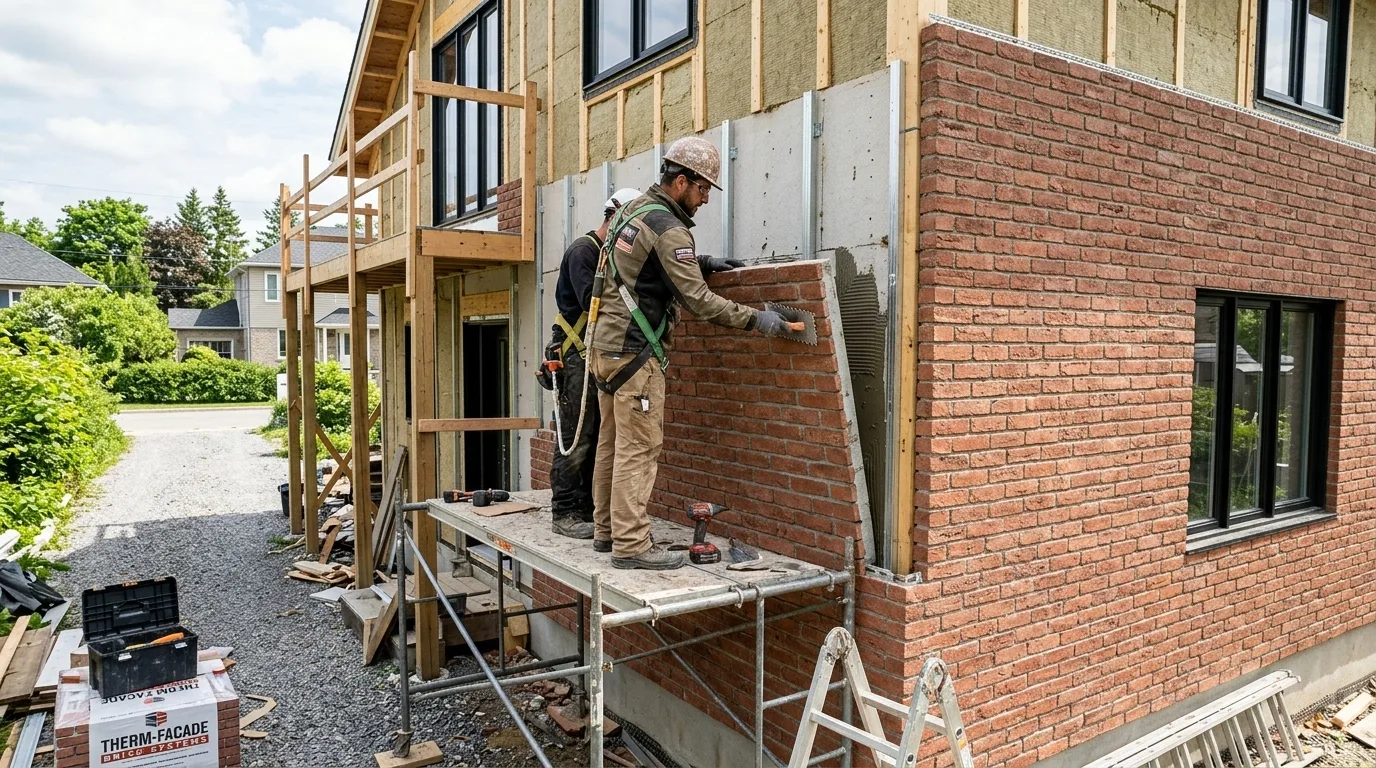
Installation of facade panels
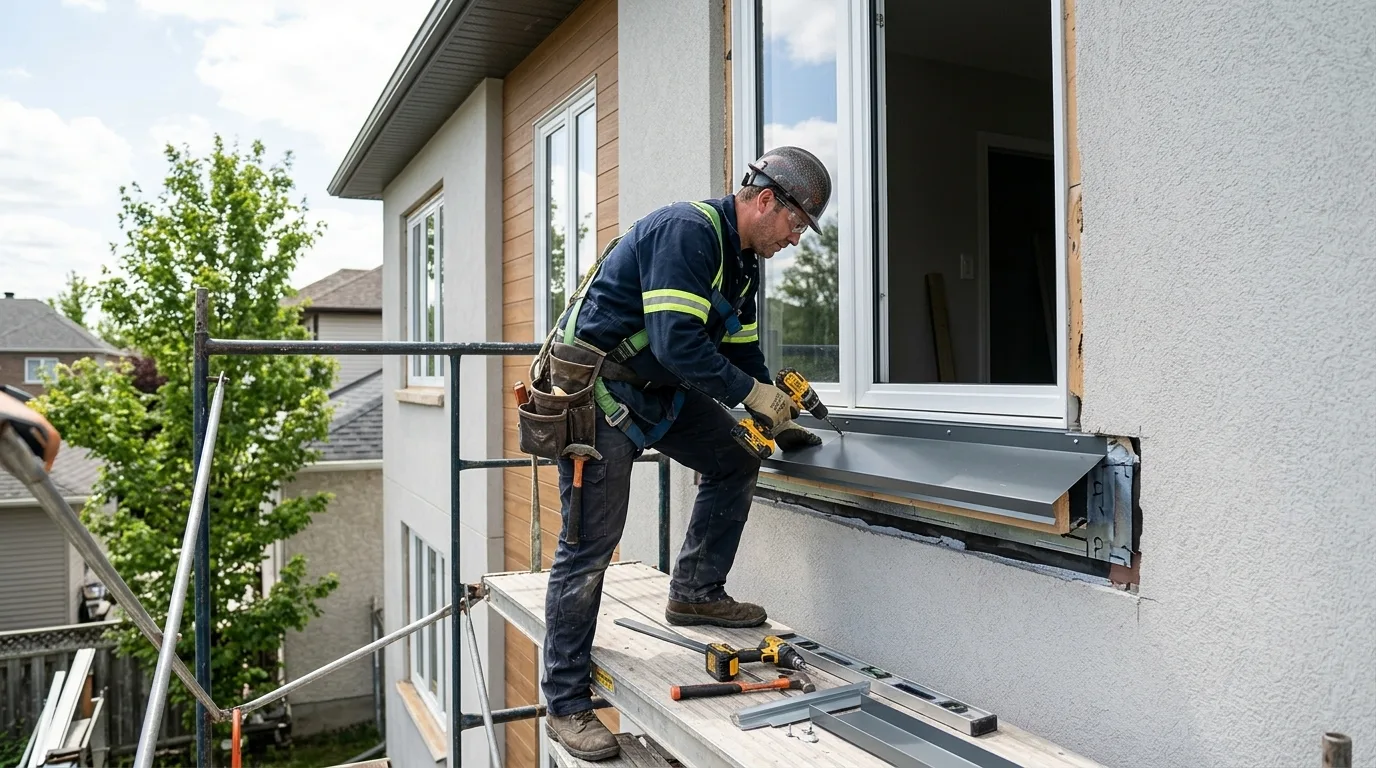
Installation of flashings and reveals
Types of facade
work we do
Facade insulation
Plastering the walls
Brick cladding
Siding installation
Installation of flashings and reveals
Facade repair
Facade painting
Stone finishing
Installation of facade panels
Construction of ventilated facades
We will call you back within 3 minutes
Types of facade
work we do
Facade insulation
Plastering the walls
Brick cladding
Installation of facade panels
Installation of flashings and reveals
Facade repair
Construction of ventilated facades
Facade painting
Stone finishing
Siding installation
We will call you back within 3 minutes
Cost of facade work in
Almaty
| SERVICE | COST | TIME |
|---|---|---|
| Specialist visit to the site (survey, consultation) | from 5 000 ₸ | from 1 hour |
| Minimum order value | from 50 000 ₸ | — |
| Facade cladding with granite (per m²) | from 12 000 ₸ | from 3 days |
| Facade cladding with marble (per m²) | from 15 000 ₸ | from 4 days |
| Facade cladding with travertine (per m²) | from 10 000 ₸ | from 3 days |
| Facade cladding with artificial stone (per m²) | from 7 000 ₸ | from 2 days |
| Laying clinker tiles with a stone effect (per m²) | from 8 000 ₸ | from 2 days |
| Sealing the joints (per linear metre) | from 1 500 ₸ | from 1 hour |
| Water-repellent treatment of the facade (per m²) | from 1 000 ₸ | from 1 day |
| Dismantling the old cladding (per m²) | from 3 000 ₸ | from 1 day |
Advantages of facade work from Profi-Dom

Neat joints with no chips
We use professional jointing tools that prevent damage to the tiles during laying

Certified craftsmen
Each specialist confirms their qualification with an annual exam in facade technologies

Equipment for a wet facade
We use industrial mixers and plastering stations that ensure even application of the layers

Meeting the finishing deadlines
The average cycle of turnkey facade work takes 21 working days on a weekly schedule

5-year
warranty on the facade
We fix our obligations in a contract, including protection against plaster peeling and fastener corrosion

Transparent estimate in ₸
We fix the cost of materials and work in the estimate, with no hidden markups or extra charges
Advantages of facade work from Profi-Dom
We use professional jointing tools that prevent damage to the tiles during laying
Neat joints with no chips
Each specialist confirms their qualification with an annual exam in facade technologies
Certified craftsmen
We use industrial mixers and plastering stations that ensure even application of the layers
Equipment for a wet facade
The average cycle of turnkey facade work takes 21 working days on a weekly schedule
Meeting the finishing deadlines
We fix our obligations in a contract, including protection against plaster peeling and fastener corrosion
5-year
warranty on the facade
We fix the cost of materials and work in the estimate, with no hidden markups or extra charges
Transparent price in KZT
We will call you back within 3 minutes
Advantages of facade work from Profi-Dom
We use professional jointing tools that prevent damage to the tiles during laying
Neat joints with no chips
Each specialist confirms their qualification with an annual exam in facade technologies
Certified craftsmen
We use industrial mixers and plastering stations that ensure even application of the layers
Equipment for a wet facade
The average cycle of turnkey facade work takes 21 working days on a weekly schedule
Meeting the finishing deadlines
We fix our obligations in a contract, including protection against plaster peeling and fastener corrosion
5-year
warranty on the facade
We fix the cost of materials and work in the estimate, with no hidden markups or extra charges
Transparent price in KZT
We will call you back within 3 minutes
HOW WE WORK
- 01.Discussion and estimate
We visit the site or hold an online consultation to determine the scope of work precisely and prepare a transparent estimate with no hidden charges.
- 02.Visit for precise measurements
Our specialist comes at a time convenient for you, takes all the necessary measurements and records the features of the facade for a perfect fit of the material.
- 03.Creating the design and sketch
We develop a detailed cladding plan with a panel layout, so that you can see in advance how your house will look after installation.
- 04.Approval of the contract
In the contract we fix the final cost, the exact completion dates and the warranty obligations, so that you feel protected.
- 05.Preparation of materials
We order certified siding and all components, checking each batch for compliance with quality standards and colour.
- 06.Professional installation
Our craftsmen install the battens and fix the panels using a technology that prevents deformation and ensures a long facade service life.
- 07.Finishing and sealing
We carefully finish all corners, joints and openings, treating them with sealant to protect against moisture and draughts.
- 08.Handover of the site and cleanup
After the work is finished we remove the construction debris and carry out a final inspection together with you to make sure the result is flawless.
Find out the cost and timing of facade work in 1 minute
catalogue of completed facade work
 Facade insulation and plastering of a private house in the Alatau microdistrict
 Plinth cladding of a shopping centre on Abay Avenue
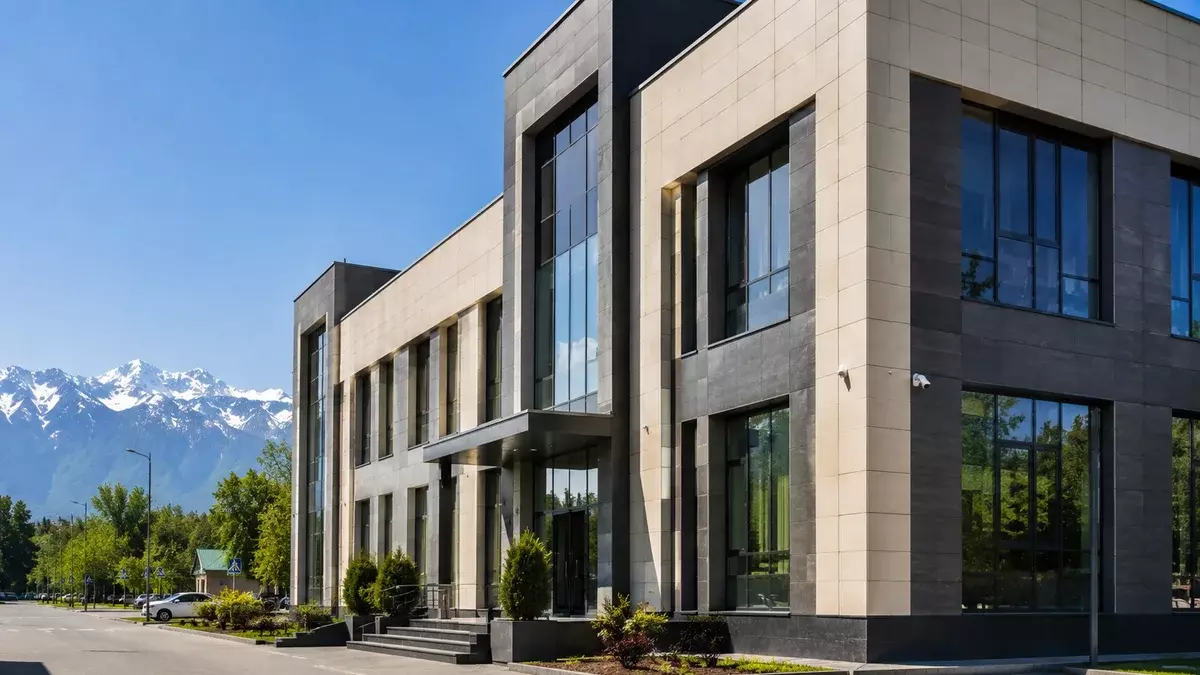 Installation of a ventilated facade on an office building in the Bostandyk district
 Painting and repair of the facade of an apartment building in the Samal microdistrict
FIND OUT THE COST OF FACADE WORK FOR YOUR PROJECT
Leave a request and we will contact you within 3 minutes
Thank you! We will contact you within 3 minutes.
By clicking the button you agree to the terms of the
 Privacy Policy
FIND OUT THE COST OF FACADE WORK FOR YOUR PROJECT
Leave a request and we will contact you within 3 minutes
Thank you! We will contact you within 3 minutes.
By clicking the button you agree to the terms of the
Or call us at
+7 (707) 068-88-68Privacy PolicyFIND OUT THE COST OF FACADE WORK FOR YOUR PROJECT
Leave a request and we will contact you within 3 minutes
Thank you! We will contact you within 3 minutes.
By clicking the button you agree to the terms of the
Or call us at
+7 (707) 068-88-68Stone facade cladding in detail
Stone facade cladding is the finishing of a building's walls with natural or artificial stone, which protects the facade and gives the house a prestigious look. In Almaty we carry out the full cycle of work: from the survey visit to hydrophobic treatment. The price per m² is from 8 000 to 25 000 KZT depending on the material and complexity.
What stone facade cladding is and which types of stone are used
Stone facade cladding is the finishing of exterior walls with natural or artificial stone, which protects the load-bearing structures from precipitation and temperature swings and gives the house a respectable look. The choice between natural rock and artificial equivalents depends on the budget, the weight of the finish and the climatic conditions.
What stone facade cladding is and why it is needed
This is a technology for finishing a building's exterior walls with natural or artificial stone, which both protects the load-bearing structures from precipitation and temperature swings and gives the facade a respectable look. Stone finishing is fixed in two ways: with adhesive over reinforced mesh (for light rock and artificial stone) or on an anchor system with a ventilation gap (for heavy natural stone). The second option is more complex and more expensive, but it eliminates the risk of granite weighing up to 80 kg/m² detaching. In the Almaty climate, with sharp temperature swings and frequent rain, such finishing acts as an additional thermal- and wind-insulating layer, extending the service life of the walls by 15–30 years.
Natural stone for a facade: granite, sandstone, slate
Three main types of natural stone are used for facade finishing in Almaty: granite (the hardest and heaviest, frost resistance up to F200), sandstone (a budget option with a beautiful texture, frost resistance F50–F100) and slate (a light layered stone, convenient for mounting on vertical surfaces). Granite is the only option for the plinth and blind area: its density of 2600–2800 kg/m³ and water absorption below 0,5% allow it to withstand direct contact with the ground and meltwater. Slate weighs one and a half times less than granite and is easier to cut, so it is preferred for facades with geometrically complex corners. In Almaty sandstone is popular for its warm beige and grey shades, which blend visually with any landscape, but it requires mandatory hydrophobic treatment — without protection, efflorescence appears within 2–3 seasons.
Artificial stone for a facade: concrete, flexible, clinker
Artificial facade stone comes in three main types: concrete facade stone (heavy but cheap, imitating natural rock), flexible stone (light, mounted on curved surfaces) and clinker tiles (the most frost-resistant, up to F200, with minimal water absorption). Concrete stone is the most common option on private houses in Almaty because of its price of 5000–9000 KZT/m², but it must be primed with a water repellent once every 3–4 years, otherwise its pores clog with dirt. Clinker tiles are more expensive — from 12000 KZT/m² — but their water absorption of less than 2% allows them to be mounted without grout directly onto frost-resistant adhesive. Flexible stone weighs only 3–5 kg/m² — 5–7 times lighter than natural granite — so it is often chosen for finishing old houses where the foundation is not designed for heavy cladding.
Natural or artificial stone for a facade — what to choose
Natural stone facade cladding is a sought-after solution that we carry out across Almaty and the suburbs. We compare natural and artificial stone by price, weight, frost resistance and durability. We help you choose a material to suit your budget, foundation and the climate of Almaty.
Comparison of natural and artificial stone: a table of parameters
| Parameter | Natural stone (granite, sandstone, slate) | Artificial stone (concrete, flexible, clinker) |
|---|---|---|
| Price per m² (material + work) | 15 000 – 25 000 Kzt | 8 000 – 15 000 Kzt |
| Weight of 1 m² | 40–80 kg (granite up to 80 kg) | 10–35 kg (flexible stone 3–5 kg) |
| Frost resistance | F100–F200 (granite, slate) | F50–F200 (clinker F200) |
| Service life | 30–50 years | 15–30 years (clinker up to 40 years) |
| Water absorption | 0,1–2% (granite minimal) | 3–8% (requires water-repellent treatment) |
| Installation complexity | High (requires reinforcement and a strengthened foundation) | Medium (easier to cut and fit) |
If the budget is limited to 10 000–12 000 KZT/m², artificial stone offers more options in texture and colour, but natural sandstone with proper hydrophobic treatment lasts 10–15 years longer.
Which stone to choose for Almaty's climate
For a city climate with swings from -30°C in winter to +40°C in summer, the best materials are those with frost resistance of at least F100 and water absorption of up to 3% — — granite, slate, clinker tiles and quality concrete stone with hydrophobic additives meet these requirements. Granite absorbs almost no moisture (0,1–0,5%) and withstands up to 200 freeze cycles, so on embankments and open terraces it lasts for decades without cracks. Clinker tiles F200, when properly laid on adhesive with anti-frost additives, hold up on north-facing facades where condensation does not dry out in winter. In Almaty, sandstone is best used on south- and west-facing facades, where there is more sun and moisture evaporates faster — on the north side it will accumulate water and break down within 5–7 seasons without hydrophobic treatment.
When natural stone is chosen and when artificial
Natural stone is chosen for permanent houses with a reinforced foundation, where prestige and a service life of 30 years or more matter, while artificial stone is chosen for light structures, the renovation of old buildings and budgets of up to 15 000 KZT per m². Granite and slate give a unique texture that cannot be reproduced in moulds — each block has its own pattern, and on the plinth it is not afraid of lawnmower impacts or melting snow. For frame houses and extensions, the weight of natural stone (40–80 kg/m²) is critical — without recalculating the foundation, the load-bearing walls may crack within a couple of seasons. With a budget of 15 000 KZT per m² it is realistic to make a facade of quality concrete stone imitating sandstone — visually it is almost indistinguishable, but it weighs 2–3 times less and does not require strengthening the foundation.
Installation technology: base, adhesive, reinforcement
Stone cladding price depends on the area, material and complexity of the facade — we calculate the exact amount after the survey. We break down the step-by-step technology of mounting stone on a facade: from base preparation to fixing. We explain why reinforcement and the right adhesive are the foundation of durability.
Preparing the base for stone cladding
Base preparation includes cleaning off old plaster and dirt, levelling the walls with cement-sand mortar, priming with an adhesion compound and mandatory reinforcement with fibreglass or metal mesh to prevent cracks. For old brick houses in the Medeu and Bostandyk districts of Almaty, where facades often crumble, additional surface strengthening with cement contact or concrete contact is required — otherwise detachment is inevitable. On aerated concrete and foam block walls, a levelling layer of Ceresit CT 24 or an equivalent, 5–15 mm thick, must be applied before priming to compensate for the unevenness of the blocks. Stone can be glued to old brick without plaster only after mechanically cleaning the joints and applying a deep-penetration primer — otherwise the adhesive will not bond with the dusty surface, and the covering will fall off within 1–2 seasons.
Which adhesive to use for stone facade cladding
Three types of adhesive are used for stone facade cladding: cement-based (for artificial stone and sandstone), flexible (for granite and heavy rock) and frost-resistant (for winter installation and north-facing facades) — all with adhesion of at least 1,0 MPa. Cement adhesive Kreisel 210 or Bergauf Keramik suits stone with a density of up to 2200 kg/m³ and a thickness of up to 30 mm; for heavier slabs a flexible compound with polymer additives is needed — for example, Ceresit CM 17 or Litokol K88, which withstand the dynamic loads of Almaty soils. The frost-resistant range Litoflex K80 or Weber.vetonit Frost allows stone to be installed at temperatures down to −10°C, but requires the base to be heated with heat guns a day before work begins. For natural granite weighing 60–80 kg/m², a flexible adhesive with polymer additives is required — an ordinary cement compound shrinks under load, and after a year the stone begins to pull away from the wall.
Reinforcing the base: when and how to do it
Reinforcing the base is mandatory when cladding with natural stone heavier than 40 kg/m², on walls of aerated concrete and foam blocks, and when the facade is more than 3 metres high — fibreglass mesh with a 5×5 mm cell or galvanised metal mesh is used. Fibreglass mesh with a density of 160–200 g/m² (for example, Sika Fiberglass Mesh) is embedded into the first layer of adhesive to 1/3 of its thickness, then a second layer is applied — this forms a monolithic base that distributes the load from the stone across the entire plane of the wall. Galvanised metal mesh with a 10×10 mm cell and a wire diameter of 1 mm is used on plinth floors and in areas of high wind load — it is fixed with dowels at a spacing of 300×300 mm through thermal washers to eliminate cold bridges. A ventilation gap beneath the stone covering is not required if the base is properly primed and reinforced — the stone is glued directly to the wall, and excess moisture escapes through the vapour-permeable adhesive and grout.
Adhesive installation of stone: a step-by-step technology
Adhesive mounting of stone is done with a notched trowel with a 8–12 mm notch height; the stone is pressed to the wall with a slight shift to squeeze out air, and the adhesive drying time before pointing the joints is 24–48 hours at a temperature of +15…+25°C. Installation begins from the corner of the building, checking each course with a level and fixing it with temporary wedges — vertical deviation must not exceed 2 mm per 2 metres of height, otherwise the joints will diverge. For a uniform joint thickness (3–8 mm for artificial stone, 5–12 mm for natural) plastic spacers or clips are used, which are removed 12 hours after the adhesive begins to set. If the air temperature is below +10°C, the adhesive drying time increases to 3–4 days, and at sub-zero temperatures installation is possible only with winter anti-frost additives — otherwise the water in the adhesive will freeze and destroy the bond.
Cladding the plinth and corners and water-repellent treatment of the facade
The plinth, corners and reveals are the most vulnerable zones of the facade, and hydrophobic treatment and pointing the joints directly affect the service life of the cladding. Let us look at each detail.
Plinth: installation features and waterproofing
Cladding the plinth with stone requires mandatory horizontal waterproofing between the foundation and the masonry, as well as the use of frost-resistant adhesive and stone with water absorption of no more than 3% — — granite, clinker and concrete stone with hydrophobic additives are optimal. In Almaty conditions, with frequent freeze-thaw cycles in winter and capillary moisture draw from the ground, waterproofing is laid in two layers: the first is a coating of bitumen-polymer mastic at the joint between the foundation and the wall, the second is a roll membrane with a 15–20 cm overlap onto the vertical surface. The adhesive for the plinth should be flexible, class C2E to EN 12004 — — it withstands base deformations from soil heaving, which in the foothill districts of Almaty (the Taugul and Kamenka neighbourhoods) reach 3–5 mm per season. Sandstone and flexible stone are unsuitable for the plinth — they absorb moisture from the ground and break down over 2–3 winters when frozen; the best choice for this zone is granite or clinker tiles with frost resistance F150–F200.
Corners and reveals: installation technology
Corners and reveals are clad with stone using ready-made corner elements (for artificial stone) or by cutting at 45 degrees (for natural stone) — this ensures a tight fit and protection against chipping in the areas of greatest mechanical load. Artificial facade stone in the ranges of many manufacturers (for example, White Hills, Camelot) includes L-shaped corner blocks 20–30 cm long, which are mounted without trimming and give a neat joint with a rounding radius of 2–3 mm. For natural stone, especially granite and travertine, corners are cut on a water-cooled stone saw — without it, microcracks remain on the edge and widen from moisture in winter. At the corners of the facade the stone experiences maximum thermal deformation, so flexible adhesive and mesh reinforcement within 20–30 cm of the corner are mandatory — otherwise cracks appear within 2–3 years.
Water-repellent treatment of the facade: protection against efflorescence
Hydrophobic treatment is the application to the facade of a special water-repellent compound (a water repellent) that penetrates into the pores of the stone to a depth of 3–10 mm and prevents white efflorescence, soaking and damage from freezing. In Almaty, where the water has a high content of hardness salts (up to 400 mg/l in the mains supply), efflorescence on facades of natural limestone or sandstone appears as early as 3–6 months after installation — a silicone-based water repellent (for example, Remmers Funcosil or Sika Hydrofuge) blocks this process for 8–10 years. The compound is applied with a roller or sprayer in two coats at an interval of 2–4 hours, with a consumption of 150–300 ml/m² depending on the porosity of the stone. The water repellent is applied 7–10 days after pointing the joints, once the adhesive and grout have fully dried — if the facade is treated earlier, moisture will be sealed inside and efflorescence will appear under the film, making it impossible to remove.
Joint pointing: why and how to do it
Pointing the joints is filling the gaps between stones with coloured frost-resistant grout, which locks the masonry together, compensates for thermal expansion and prevents water from getting under the cladding. Quality grout for the Almaty climate is cement-polymer, with frost resistance F100 and elasticity of at least 1 mm (class CG2 to EN 13888), for example Ceresit CE 40 or Litokol X5. The joint width depends on the type of stone: for artificial stone with even edges 5–8 mm is enough, for natural split stone — 10–15 mm, otherwise the grout cracks and falls out under seasonal deformations.
The price of stone facade cladding per m² — a breakdown of the estimate
We break down what makes up the price of stone facade cladding per m². We show the cost of materials, work and additional services in a table.
What makes up the price of stone facade cladding per m²
The price of stone facade cladding per m² is made up of the cost of the material (stone from 3 000 to 12 000 KZT/m²), adhesive compounds with reinforcement (1 500–2 500 KZT/m²), the work of the craftsmen (3 000–6 000 KZT/m²) and additional services — hydrophobic treatment, pointing the joints and the survey visit. Artificial concrete stone from local producers (KazGranit LLP, Art-Kamen) costs 3 000–5 000 KZT/m², natural sandstone from Chulaktau — 6 000–10 000 KZT/m², granite from Kazakhstan quarries — up to 15 000 KZT/m², while the craftsmen's work varies with the geometry of the facade: straight walls — 3 000 KZT/m², houses with arches, columns and bay windows — up to 6 000 KZT/m². On uneven walls with variations of more than 2 cm per metre, levelling and reinforcement add 1 500–3 000 KZT/m², raising the final price by 20–30% — — this cost item is most often overlooked at the initial estimate.
A table of prices for stone facade cladding per m²
| Type of cladding | Material (KZT/m²) | Labour (KZT/m²) | Preparation + consumables (KZT/m²) | Total turnkey (KZT/m²) |
|---|---|---|---|---|
| Artificial concrete stone | 3 000 – 5 000 | 3 000 – 4 000 | 2 000 – 3 000 | 8 000 – 12 000 |
| Flexible stone | 4 000 – 6 000 | 3 000 – 4 000 | 1 500 – 2 500 | 8 500 – 12 500 |
| Clinker tiles | 5 000 – 8 000 | 4 000 – 5 000 | 2 000 – 3 000 | 11 000 – 16 000 |
| Natural sandstone | 6 000 – 10 000 | 4 000 – 5 000 | 2 500 – 3 500 | 12 500 – 18 500 |
| Natural slate | 7 000 – 11 000 | 4 000 – 5 000 | 2 500 – 3 500 | 13 500 – 19 500 |
| Natural granite | 10 000 – 15 000 | 5 000 – 6 000 | 3 000 – 4 000 | 18 000 – 25 000 |
When you order cladding for the entire facade from 50 m², the price per m² drops by 10–15% thanks to bulk purchasing of material and fewer wasted trips — the difference is especially noticeable with granite and sandstone.
Additional services and their cost
The surveyor visit and estimate are free, hydrophobic treatment of the facade costs 500–1 000 KZT/m², pointing the joints with coloured grout — 300–500 KZT/m², and cladding corners and reveals adds 20–30% to the base price per m² due to the higher labour intensity. On houses of complex configuration — with semicircular windows or columns — the share of corners reaches 15–20% of the total facade area, which noticeably increases the estimate. Delivery of sandstone or granite from a quarry in the Zhambyl region to Almaty adds 500–1 500 KZT/m² depending on the weight of the batch. If a contractor quotes a total price without a breakdown by materials and work, there is a high risk of hidden surcharges for reinforcement or hydrophobic treatment — a transparent estimate lets you control the budget at every stage.
Turnkey stone facade finishing with PROFI-DOM
We explain how we carry out turnkey stone facade cladding in Almaty: from a free survey to the guarantee. We explain why a transparent estimate and fixed timeframes are our standard of work.
How we work: from the survey to handover of the project
We start with a free surveyor visit to any district of the city, draw up a transparent estimate broken down by materials and work, and after approval we bring the stone and consumables, carry out the installation in 5–14 days and hand over the site with a 1–3-year guarantee. The surveyor arrives with samples of stone and adhesives — on site you can compare colours and textures so as not to make a mistake with your choice. The estimate is fixed after the survey: it states the cost of each stage — base preparation, reinforcement, installation, hydrophobic treatment — and the price does not change even if hidden wall defects are discovered along the way. 2–4 installers work on site at the same time, which shortens the timeframe without loss of quality — we finish an average house of 150 m² in 7–9 working days. A fixed estimate with no hidden surcharges is our standard: if it turns out during the work that additional reinforcement or hydrophobic treatment is needed, we agree it with the client before the stage begins, rather than billing after the fact.
What materials and technologies we use
We use natural stone (granite, sandstone, slate) and artificial stone (concrete, flexible, clinker) from trusted suppliers, apply flexible and frost-resistant adhesives with adhesion from 1,0 MPa, reinforce the base with fibreglass mesh and always carry out hydrophobic treatment of the facade. Consumables — adhesive Ceresit CM 117, Ceresit CM 16 or Weber Vetonit — are selected to suit the type of stone: for heavy granite we use reinforced compounds, for flexible stone — elastic ones, to compensate for thermal deformations. We fix reinforcing mesh with a 5×5 mm cell on the plinth and corners of the building — this prevents cracks in the joints as the house settles or the soil shifts seasonally. We apply the water repellent in two coats after the joints have fully dried. The 1–3-year guarantee on the work covers stone detachment, cracks in the joints and efflorescence — if defects appear during the warranty period, we fix them free of charge, including the visit and materials.
Why PROFI-DOM is chosen for facade cladding in Almaty
PROFI-DOM is chosen for its transparent estimate with no hidden charges, fixed timeframes of 5–14 days, a free surveyor visit to any district and a 1–3-year guarantee on the work — we are responsible for the quality of installation and for protecting the facade from efflorescence. Unlike crews that work without a contract, we issue a work completion certificate and a warranty card — documentary proof that the finishing was done to specification and that the contractor is liable for defects. Every site is supervised by a foreman: he monitors the preparation of the base, the thickness of the adhesive layer and compliance with the temperature regime during installation — in winter we use fast-setting winter adhesives. We work with projects of any complexity — from finishing the plinth of a private house to the facades of cottages of 200+ m² — and for each we select the best combination of stone, adhesive and protection to suit the budget and the climate of Almaty.
Conclusion
Stone facade cladding is a long-term investment in the aesthetics and protection of the house, which pays off over decades when materials and technology are approached properly.
Key takeaways
Stone facade finishing is an investment in the durability and appearance of the house for 15–50 years. The choice between natural and artificial stone depends on the budget, the weight of the structure and the climatic conditions: in Almaty the optimal materials are those with frost resistance from F100 and water absorption up to 3%. The key factors of durability are proper base preparation with reinforcement, the use of flexible adhesive and mandatory hydrophobic treatment of the facade. The price per m² ranges from 8 000 to 25 000 KZT depending on the type of stone and the scope of work. When ordering such turnkey finishing, it is important to check the composition of the estimate: whether wall preparation, reinforcement, hydrophobic treatment and a warranty on installation are included — these items are often left out to lower the visible cost, and then the house starts to lose tiles within 2–3 winters.