
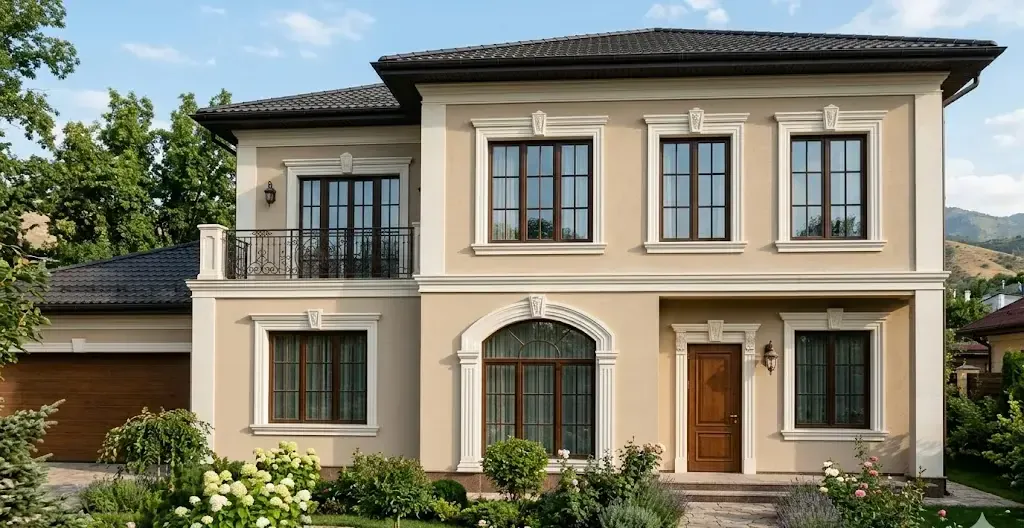
Facade window trim in Almaty
from 6 000 tg.* per linear metre
Durable, high-quality facade finishing thanks to compliance with building codes and the high qualifications of our craftsmen.
 Joints to GOST 5264-80
Installation from 1 day Arrival within 45 minutes
Installation from 1 day 3-year warranty
 Prices from 5000 ₸
Contract and estimate
Facade window trim in Almaty
from 6 000 tg.* per linear metre
Durable, high-quality facade finishing thanks to compliance with building codes and the high qualifications of our craftsmen.
Joints to GOST 5264-80
Installation from 1 day
Arrival within 45 minutes
Installation from 1 day
3-year warranty
Prices from 5000 ₸
Contract and estimate
Facade window trim in Almaty
from 6 000 tg.* per linear metre
Durable, high-quality facade finishing thanks to compliance with building codes and the high qualifications of our craftsmen.
Joints to GOST 5264-80
Installation from 1 day
Arrival within 45 minutes
Installation from 1 day
3-year warranty
Prices from 5000 ₸
Contract and estimate
Types of facade
work we do
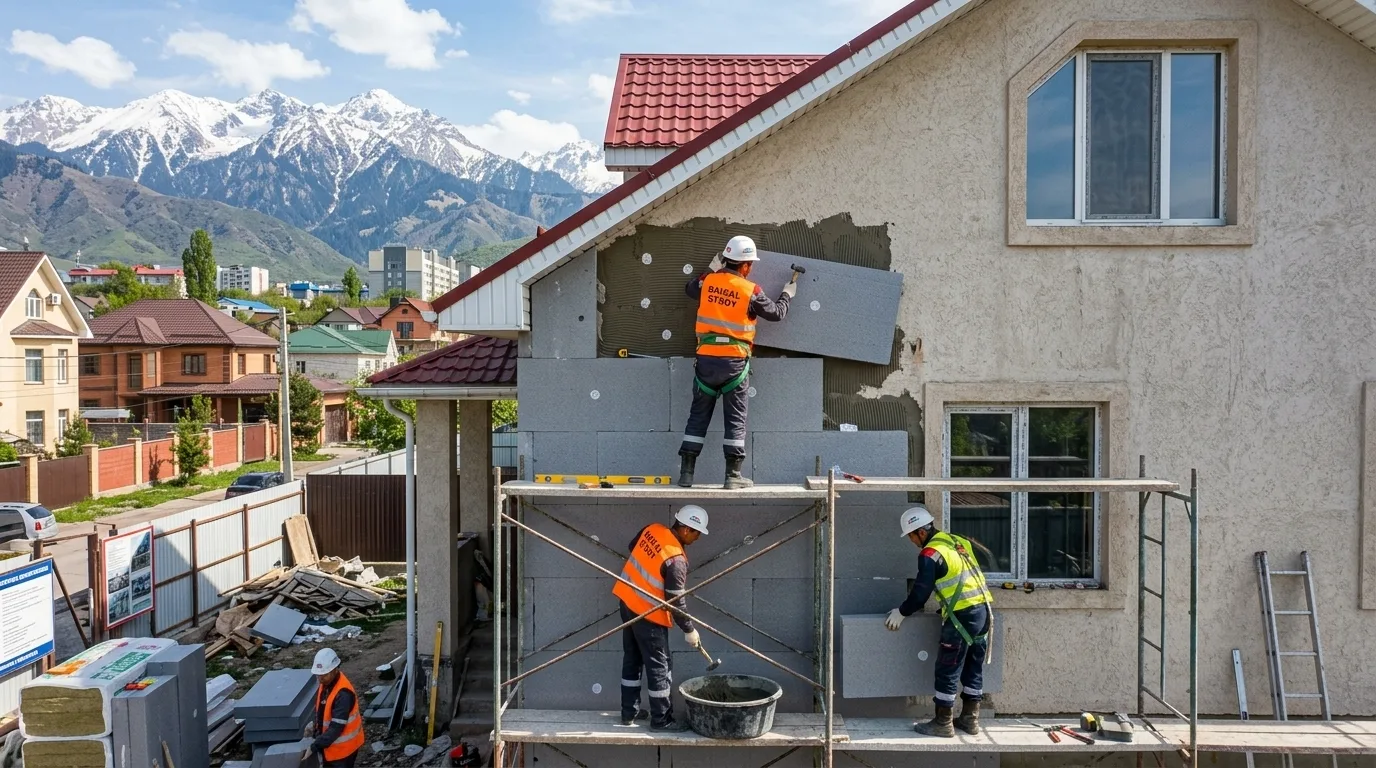
Facade insulation
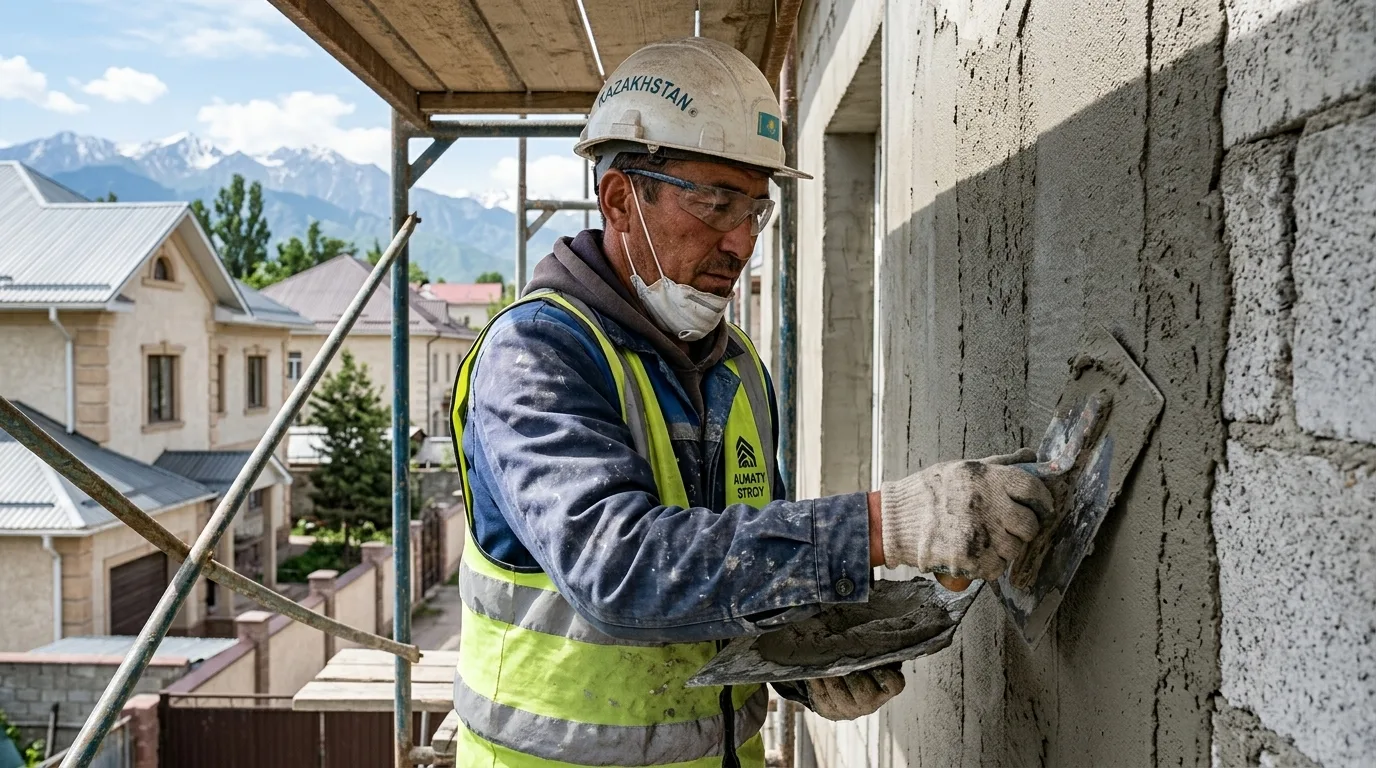
Plastering the walls
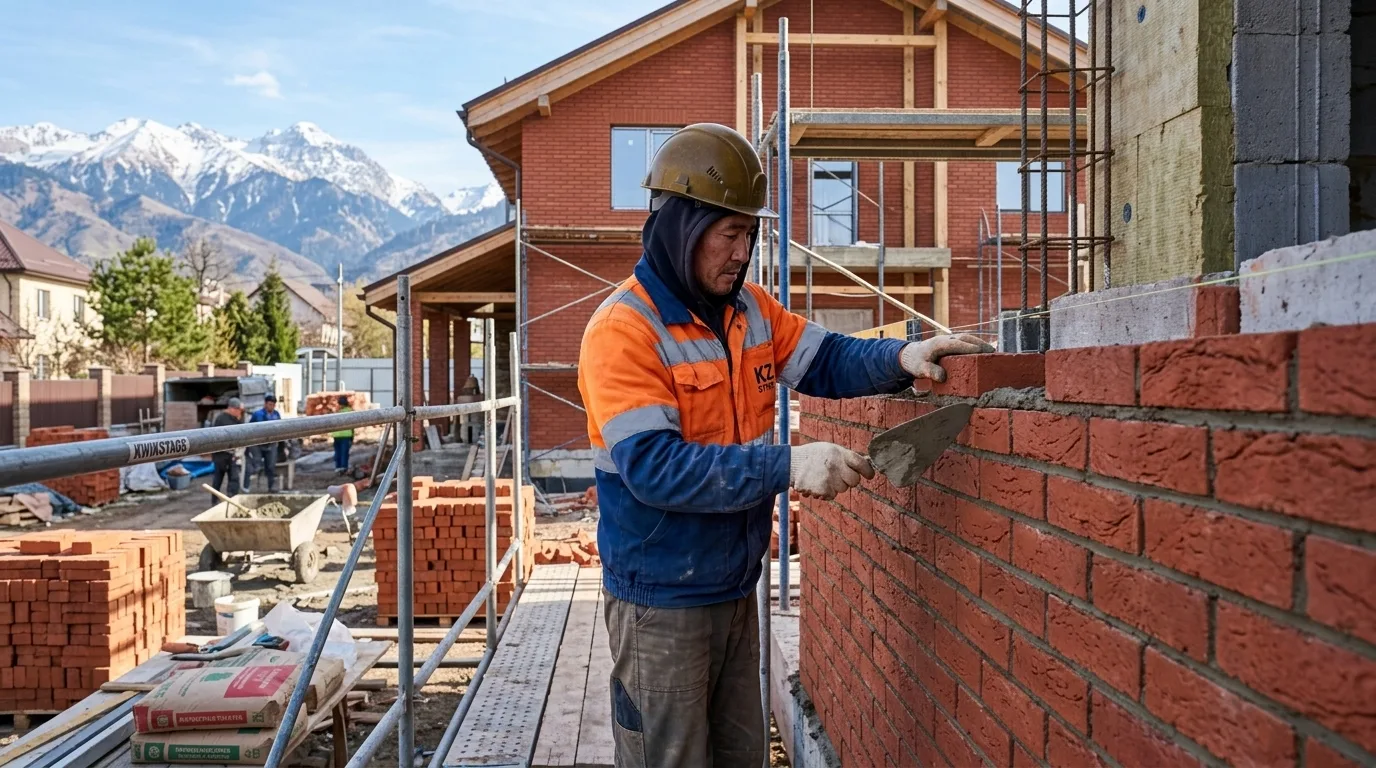
Brick cladding
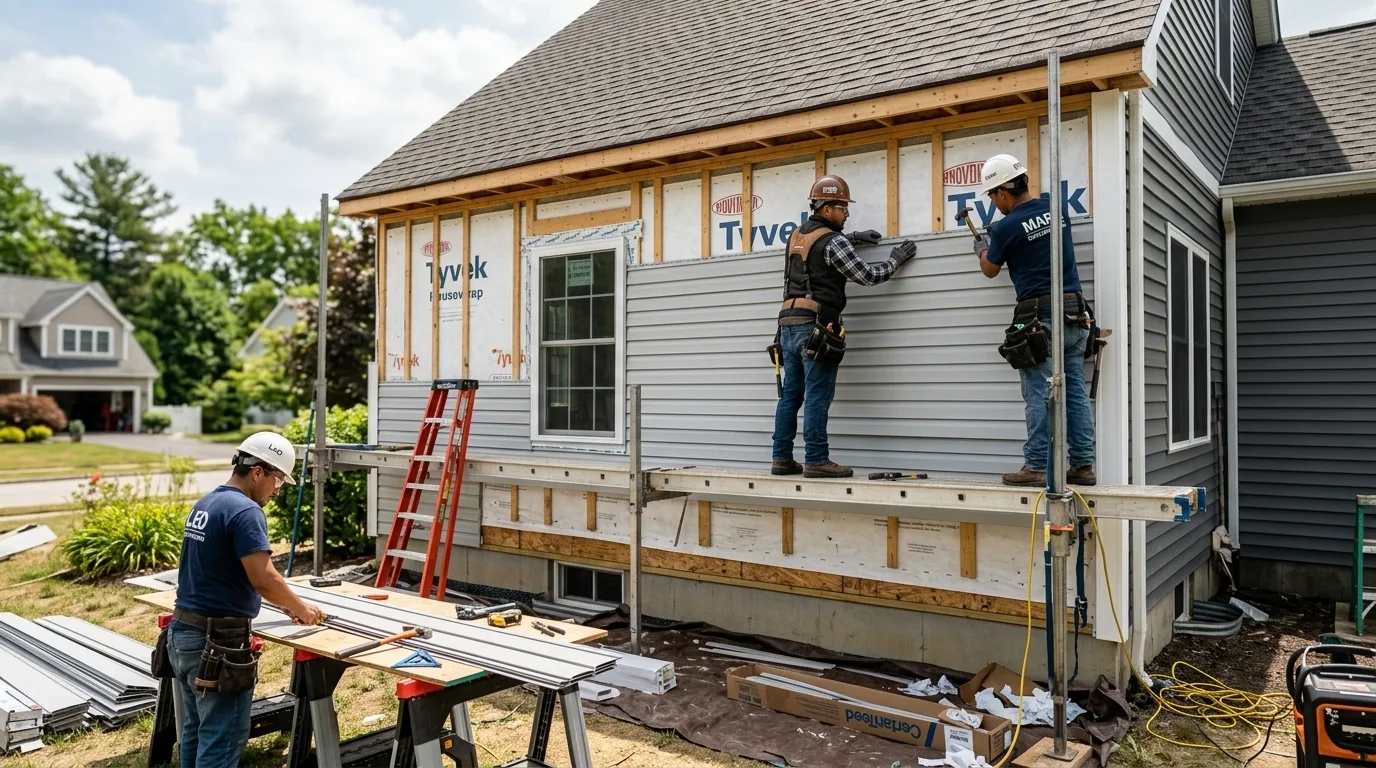
Siding installation
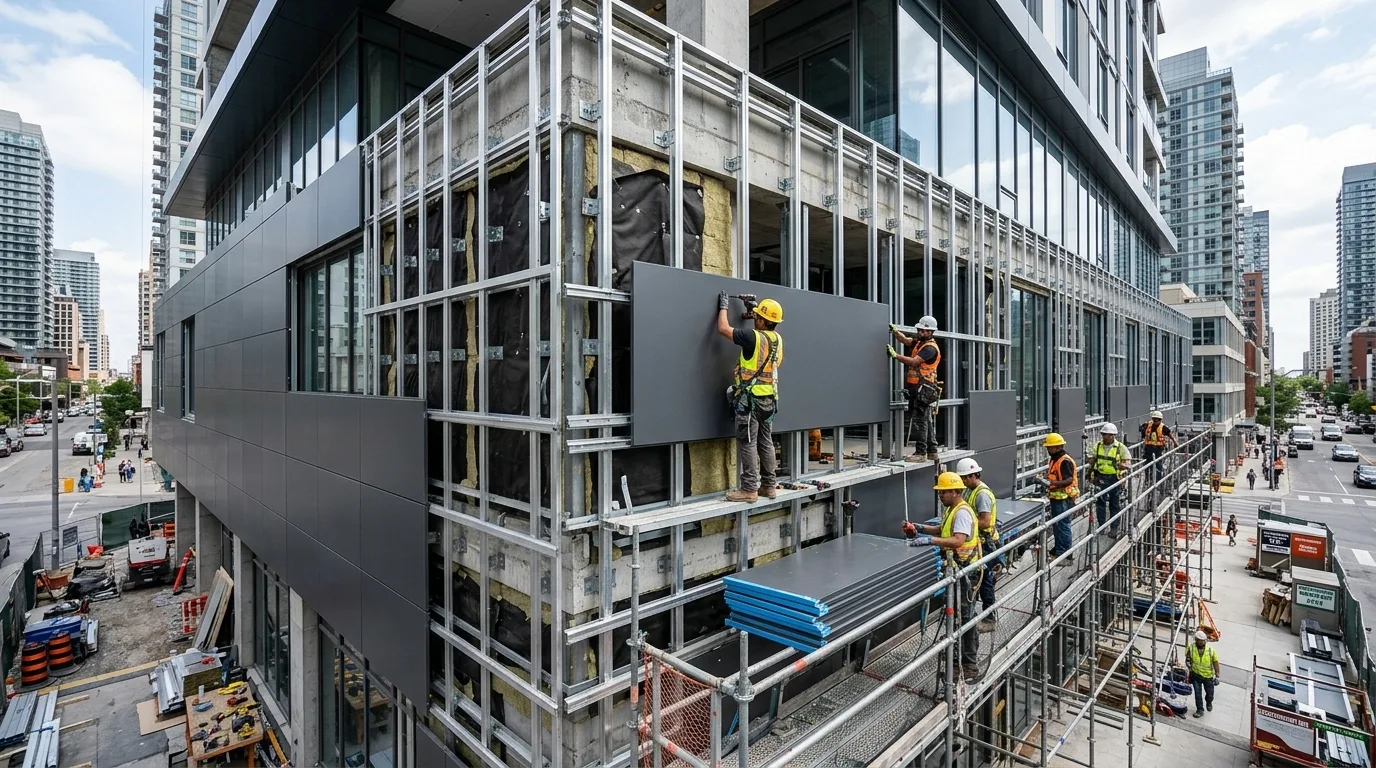
Construction of ventilated facades
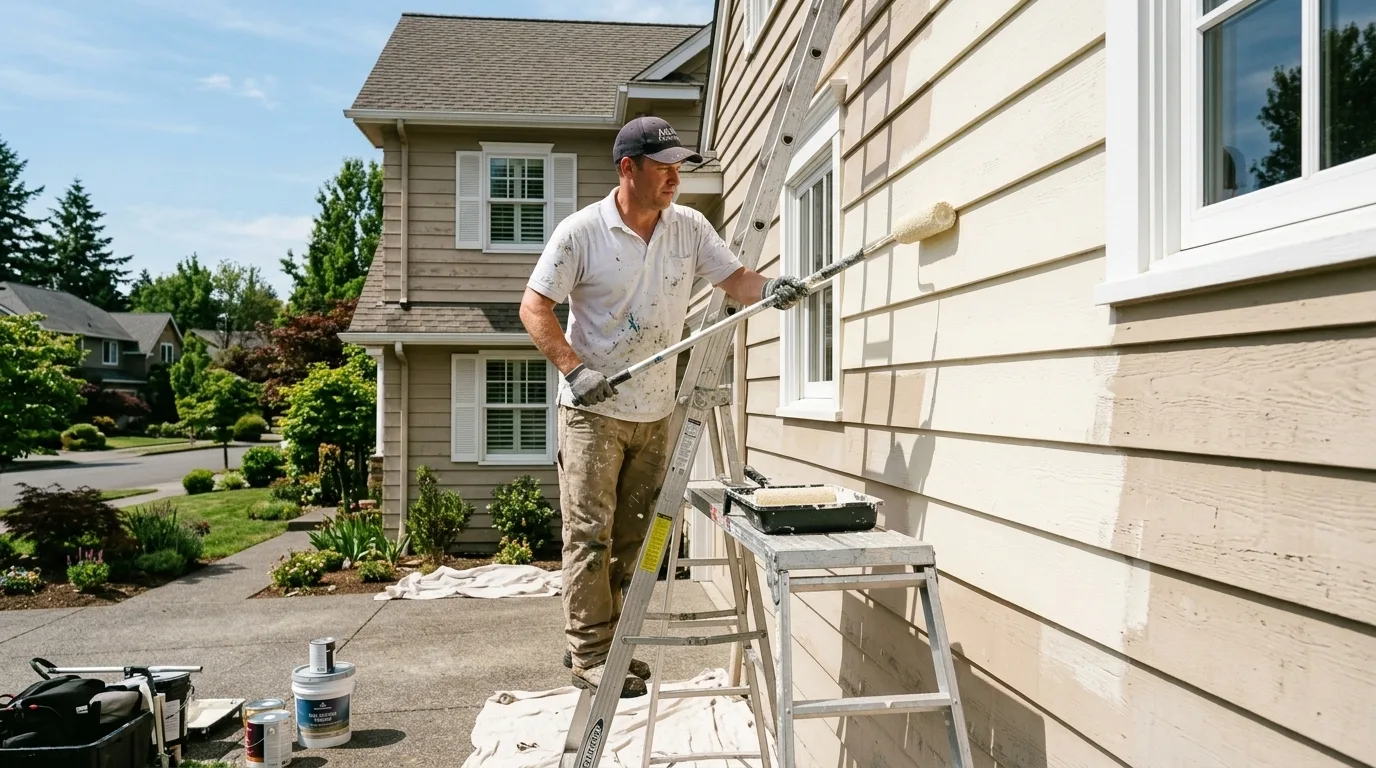
Facade painting
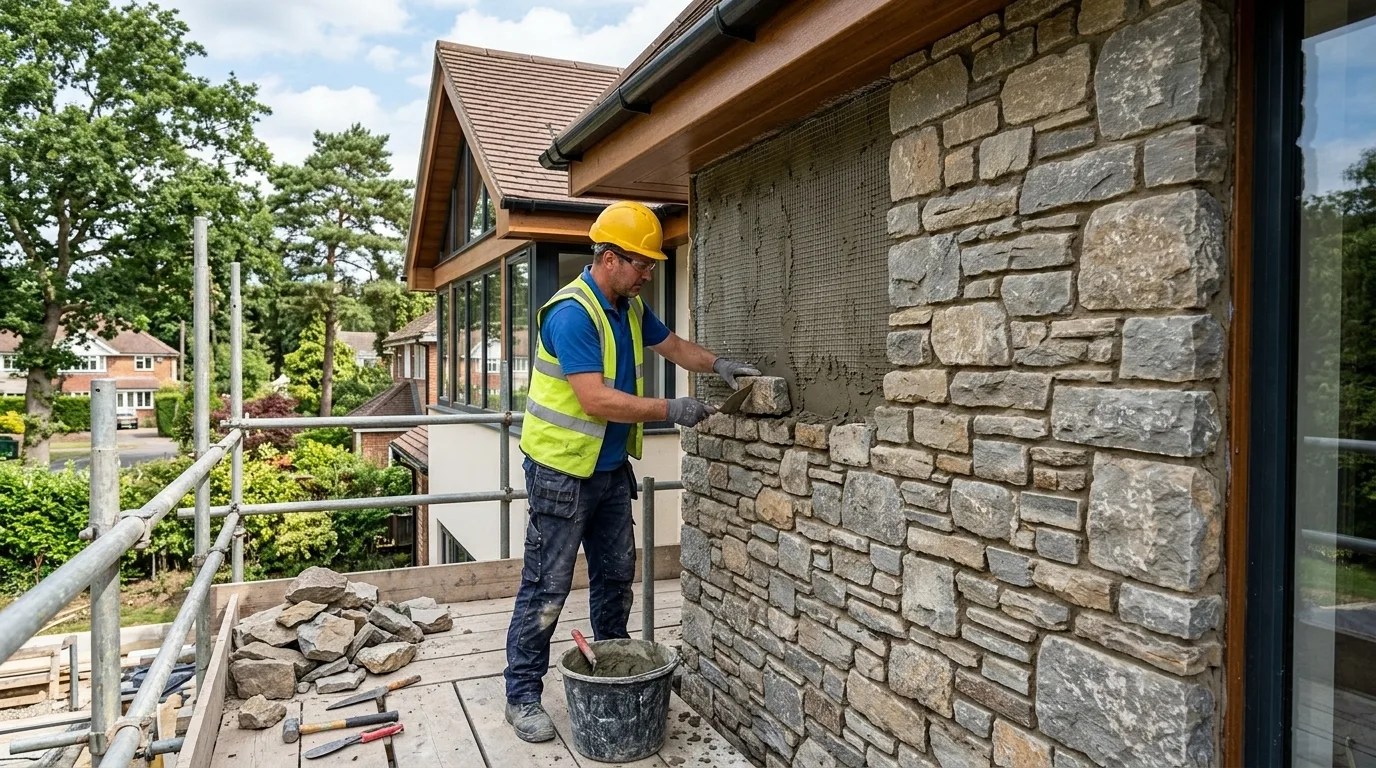
Stone finishing
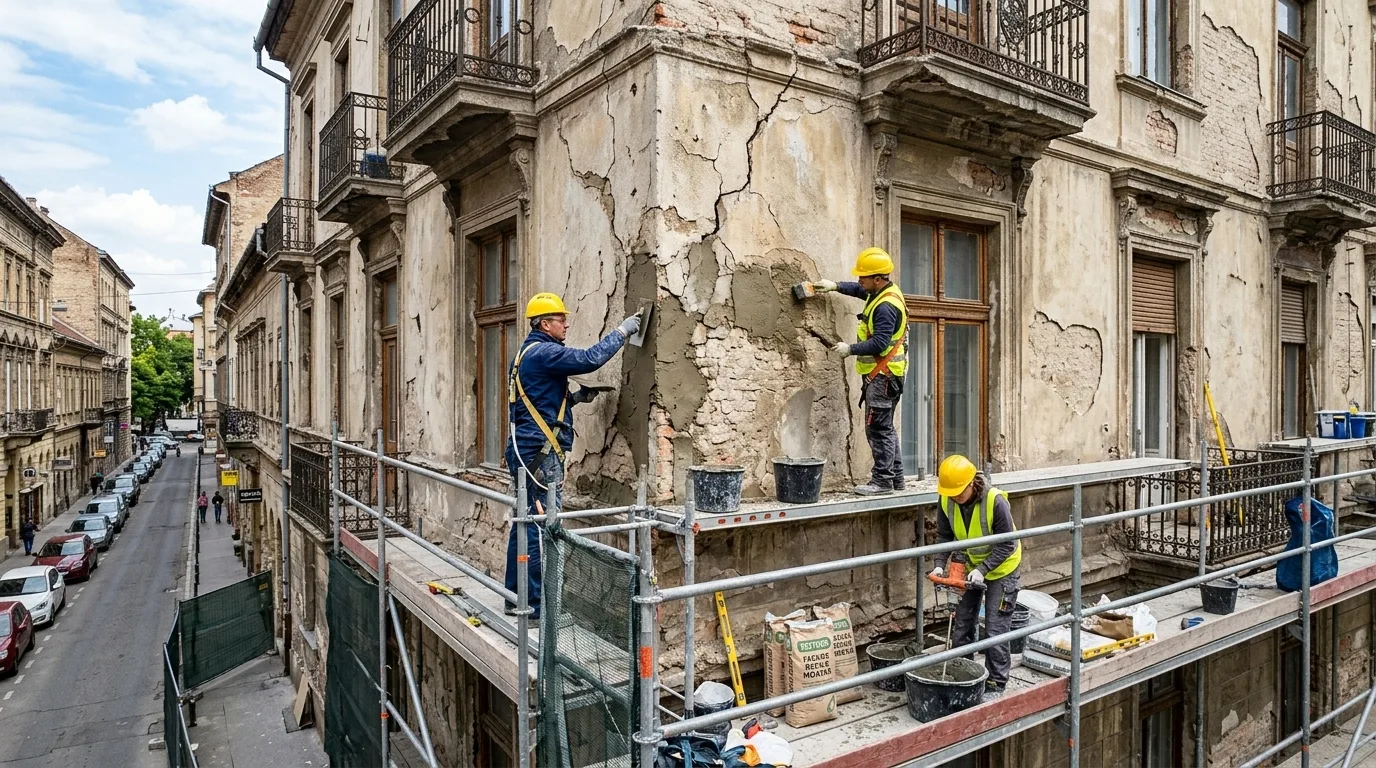
Facade repair
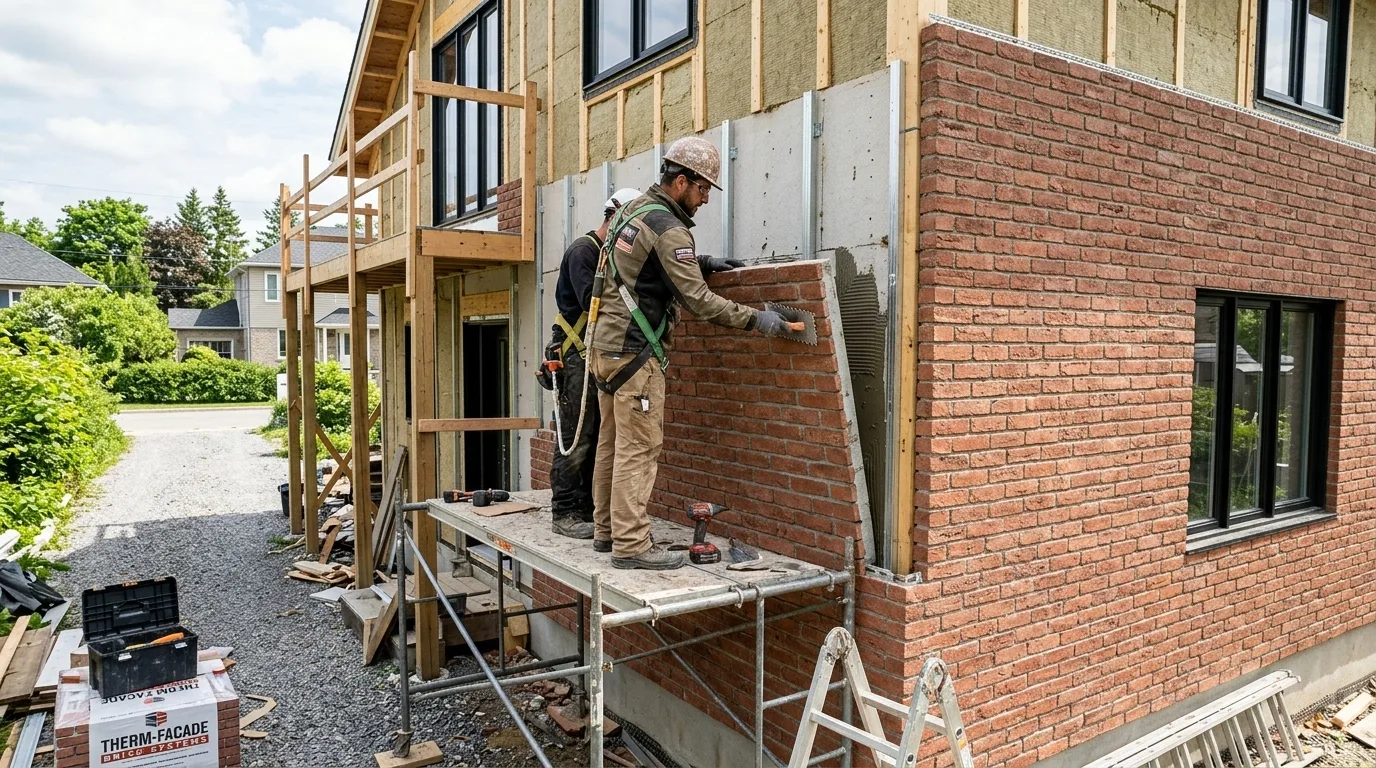
Installation of facade panels
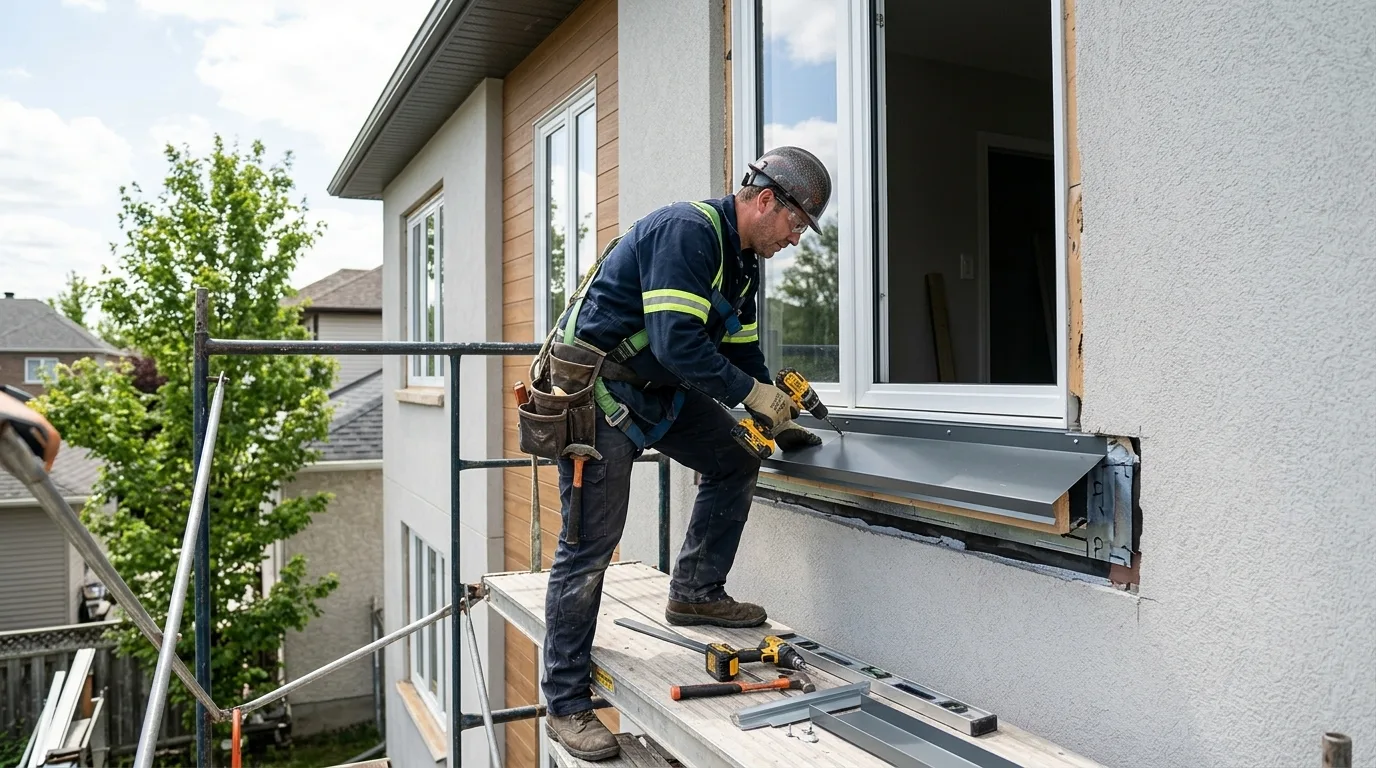
Installation of flashings and reveals
Types of facade
work we do
Facade insulation
Plastering the walls
Brick cladding
Siding installation
Installation of flashings and reveals
Facade repair
Facade painting
Stone finishing
Installation of facade panels
Construction of ventilated facades
We will call you back within 3 minutes
Types of facade
work we do
Facade insulation
Plastering the walls
Brick cladding
Installation of facade panels
Installation of flashings and reveals
Facade repair
Construction of ventilated facades
Facade painting
Stone finishing
Siding installation
We will call you back within 3 minutes
Cost of facade work in
Almaty
| SERVICE | COST | TIME |
|---|---|---|
| Specialist visit for a survey and consultation | from 5 000 ₸ | from 1 hour |
| Minimum order value | from 30 000 ₸ | — |
| Window trim with polystyrene decor | from 6 000 ₸/linear m | from 1 day |
| Window trim with polyurethane moulding | from 8 000 ₸/linear m | from 1 day |
| Window trim with brick or clinker | from 9 000 ₸/linear m | from 2 days |
| Installing a keystone (window pediment) above the window | from 5 000 ₸/pc | from 2 hours |
| Installing a window sill drip | from 1 500 ₸/linear m | from 1 hour |
| Plastering window reveals | from 2 000 ₸/linear m | from 3 hours |
| Painting trims | from 900 ₸/linear m | from 2 hours |
| Custom decor made to your sketch | from 15 000 ₸/pc | from 5 days |
| Removing old trims | from 1 000 ₸/linear m | from 1 hour |
Advantages of facade work from Profi-Dom

Neat joints with no chips
We use professional jointing tools that prevent damage to the tiles during laying

Certified craftsmen
Each specialist confirms their qualification with an annual exam in facade technologies

Equipment for a wet facade
We use industrial mixers and plastering stations that ensure even application of the layers

Meeting the finishing deadlines
The average cycle of turnkey facade work takes 21 working days on a weekly schedule

5-year
warranty on the facade
We fix our obligations in a contract, including protection against plaster peeling and fastener corrosion

Transparent estimate in ₸
We fix the cost of materials and work in the estimate, with no hidden markups or extra charges
Advantages of facade work from Profi-Dom
We use professional jointing tools that prevent damage to the tiles during laying
Neat joints with no chips
Each specialist confirms their qualification with an annual exam in facade technologies
Certified craftsmen
We use industrial mixers and plastering stations that ensure even application of the layers
Equipment for a wet facade
The average cycle of turnkey facade work takes 21 working days on a weekly schedule
Meeting the finishing deadlines
We fix our obligations in a contract, including protection against plaster peeling and fastener corrosion
5-year
warranty on the facade
We fix the cost of materials and work in the estimate, with no hidden markups or extra charges
Transparent price in KZT
We will call you back within 3 minutes
Advantages of facade work from Profi-Dom
We use professional jointing tools that prevent damage to the tiles during laying
Neat joints with no chips
Each specialist confirms their qualification with an annual exam in facade technologies
Certified craftsmen
We use industrial mixers and plastering stations that ensure even application of the layers
Equipment for a wet facade
The average cycle of turnkey facade work takes 21 working days on a weekly schedule
Meeting the finishing deadlines
We fix our obligations in a contract, including protection against plaster peeling and fastener corrosion
5-year
warranty on the facade
We fix the cost of materials and work in the estimate, with no hidden markups or extra charges
Transparent price in KZT
We will call you back within 3 minutes
HOW WE WORK
- 01.Discussion and estimate
We visit the site or hold an online consultation to determine the scope of work precisely and prepare a transparent estimate with no hidden charges.
- 02.Visit for precise measurements
Our specialist comes at a time convenient for you, takes all the necessary measurements and records the features of the facade for a perfect fit of the material.
- 03.Creating the design and sketch
We develop a detailed cladding plan with a panel layout, so that you can see in advance how your house will look after installation.
- 04.Approval of the contract
In the contract we fix the final cost, the exact completion dates and the warranty obligations, so that you feel protected.
- 05.Preparation of materials
We order certified siding and all components, checking each batch for compliance with quality standards and colour.
- 06.Professional installation
Our craftsmen install the battens and fix the panels using a technology that prevents deformation and ensures a long facade service life.
- 07.Finishing and sealing
We carefully finish all corners, joints and openings, treating them with sealant to protect against moisture and draughts.
- 08.Handover of the site and cleanup
After the work is finished we remove the construction debris and carry out a final inspection together with you to make sure the result is flawless.
Find out the cost and timing of facade work in 1 minute
catalogue of completed facade work
 Facade insulation and plastering of a private house in the Alatau microdistrict
 Plinth cladding of a shopping centre on Abay Avenue
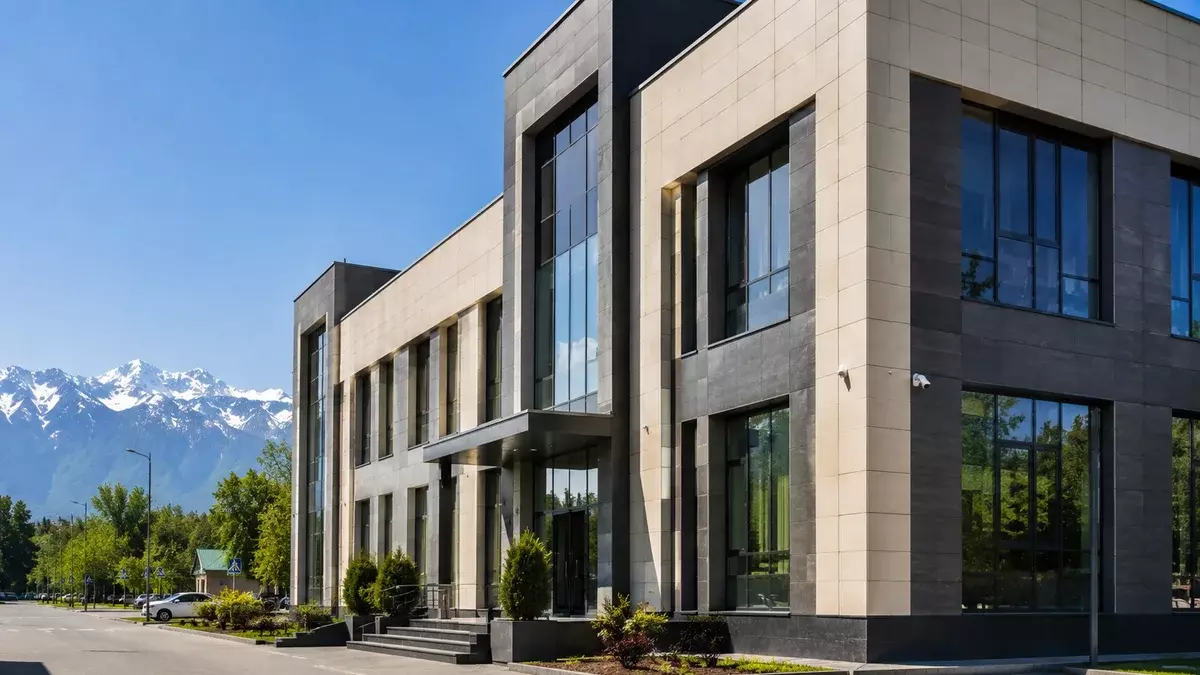 Installation of a ventilated facade on an office building in the Bostandyk district
 Painting and repair of the facade of an apartment building in the Samal microdistrict
FIND OUT THE COST OF FACADE WORK FOR YOUR PROJECT
Leave a request and we will contact you within 3 minutes
Thank you! We will contact you within 3 minutes.
By clicking the button you agree to the terms of the
 Privacy Policy
FIND OUT THE COST OF FACADE WORK FOR YOUR PROJECT
Leave a request and we will contact you within 3 minutes
Thank you! We will contact you within 3 minutes.
By clicking the button you agree to the terms of the
Or call us at
+7 (707) 068-88-68Privacy PolicyFIND OUT THE COST OF FACADE WORK FOR YOUR PROJECT
Leave a request and we will contact you within 3 minutes
Thank you! We will contact you within 3 minutes.
By clicking the button you agree to the terms of the
Or call us at
+7 (707) 068-88-68In detail about facade window trim
Facade window trim is a decorative finish of window openings that protects the joints from moisture and gives the house a finished look. At PROFI-DOM we make trim from coated expanded polystyrene and polyurethane turnkey: from measurement to painting. The price is from X KZT per linear metre.
Why frame windows on a house facade
Window casings on a facade are a sought-after solution that we carry out across Almaty and its suburbs. Window trim on a facade is both decor and engineering protection: it conceals the installation seams and gives the house a finished architectural appearance.
What facade window trim is and why it is needed
Facade window trim is a set of decorative elements (casings, mouldings, window cornices) mounted around the perimeter of the window opening on the outside of the building. Casings close the side and top joint between the frame and the wall, mouldings create relief lines, and sill cornices and reveal trims protect the lower part of the opening. In classic designs, window cornices are added — projecting canopies above the window that divert streams of water to the sides. In modern houses, concise profiles made of polyurethane or expanded polystyrene without carved details are common — they follow the geometry of the facade and do not overload it. Without trim, the joints between the window frame and the wall remain open to moisture and wind — over time this leads to freezing through and destruction of the facade.
How window trim protects the house facade
A window cornice is the upper trim element that diverts rainwater away from the window opening, preventing moisture from reaching the joint between the frame and the wall. In Almaty's climate, with sharp temperature swings and heavy precipitation, this canopy works as a barrier: water runs off its overhang without lingering on the reveals or seeping under the facade plaster. A lower sill cornice, installed with a slight slope, throws drops 15–20 cm away from the wall — enough to keep the plinth under the window dry even in a downpour. The combination of a window cornice and a sill cornice extends the service life of the facade coating by 5–7 years by reducing the moisture load on the area around the window. In Almaty's climate, with sharp temperature swings and heavy precipitation, the protective function of the trim is no less important than the decorative one — especially for houses with facade plaster.
Which houses benefit from facade window trim
Facade window trim is suitable for any private house — from classic cottages to modern minimalist buildings, regardless of the wall material. On wooden timber houses, casings additionally cover the shrinkage gaps that inevitably appear in the first two years after construction. On houses with siding or facade panels, the trim masks the ends of the cladding at the window opening and prevents wind from blowing under the panels. Owners of chalet- or country-style houses more often choose wide carved casings made of expanded polystyrene — they imitate expensive wood carving at 20–30% of its cost. Even on a house with a quality facade, windows without trim look 'flat' and lose architectural expressiveness — trim adds depth and completeness.
Types of window trim: casings, mouldings, window cornices
The price of window trim depends on the area, the material and the complexity of the facade — we calculate the exact amount after measuring. We go over the main types of facade window trim — how casings, mouldings, window cornices and other elements differ, and what each of them is for.
Facade casings — classic window trim
Facade casings are profiled elements mounted around the whole perimeter of the window, closing the joint between the frame and the wall and serving both a protective and a decorative function. In Almaty houses they are most often made of expanded polystyrene or polyurethane — these materials do not absorb moisture and do not crack under temperature swings from −30°C in winter to +40°C in summer, and last without repair for 15–20 and 30 years respectively. Casings can be flat or three-dimensional, carved or smooth: for classic styles wide profiled models of 80–150 mm are used, for minimalism narrow 40–60 mm ones, and on the local market you can order an imitation of wood carving made of expanded polystyrene — this is 3–4 times cheaper than natural wood and needs no seasonal repainting. Polyurethane casings are 40–50% more expensive than polystyrene ones, but they are more resistant to mechanical impacts — they are fitted on plinth levels and in walkways, where accidental contact with a lawnmower or a cart is possible.
Mouldings and window cornices — accents and protection
A window cornice is the upper decorative trim element installed above the window that protects the opening from running water, while mouldings are narrow profiles 10–30 mm thick used as standalone trim or in combination with casings. On Almaty houses window cornices are especially useful on south-facing facades — there slanting rain and snowmelt from the roof hit the window block directly, and without protection the installation foam breaks down within 2–3 years. In modern architecture window cornices are often made minimalist — in the form of a flat shelf or a light cornice that does not overload the facade but effectively diverts water. The combined 'window cornice + mouldings on the sides' option is popular in neoclassical cottages of Almaty settlements (Kotyr-Bulak, Izumrudny), where decor without bulk is needed — and the mouldings are fixed with facade adhesive and do not require reinforcement with anchors.
Sill cornices and reveal trims — lower and side protection
Sill cornices are the lower trim elements that divert water away from the wall beneath the window, while reveal trims close the side joints and give the window opening a finished look. In Almaty conditions, with frequent rain in spring and heavy snowmelt, a sill cornice with a drip edge is essential — without it, moisture runs down onto the plinth and foundation, soaking the insulation, and within a year dark streaks of mould appear under the window. Reveal trims usually come as a set with casings of the same material, so that there is no colour mismatch on the facade — their width is chosen to match the depth of the window reveal, typically 50–100 mm. Comprehensive window trim (casings + window cornice + sill cornice) gives maximum protection and looks coherent, but for a budget solution casings alone are enough — they cover the most vulnerable joint around the perimeter.
Comparison of window trim types — table
| Type of trim | Function | Where it is used | Style |
|---|---|---|---|
| Facade casings | Joint protection + decor | Around the window perimeter | Classic, modern, minimalism |
| Mouldings | Decorative accent | Upper part or perimeter | Modern, minimalism |
| Window cornices | Protection from precipitation | Above the window | Classic, neoclassical |
| Sill cornices | Water drainage | Under the window | All styles |
| Reveal trims | Closing the side joints | On the sides of the window | All styles |
Materials for window trim: what to choose in Almaty
Window decor on a facade is a sought-after solution that we carry out across Almaty and its suburbs. We compare the two main materials for facade window trim — coated expanded polystyrene and polyurethane — and explain which of them is better suited to Almaty's climate.
Coated expanded polystyrene — a budget and practical option
We use high-density expanded polystyrene with a protective coating — this material is light, does not absorb moisture and holds its shape well under temperature swings from -30 to +40 °C. Expanded polystyrene (EPS) with a density of 20-25 kg/m³ is glued on with facade adhesive, reinforced with fibreglass mesh with a 5×5 mm cell, primed and covered with a final plaster, after which it is painted with acrylic facade paint — the whole system weighs no more than 3-4 kg per square metre, which places no load on the wall even on aerated concrete or insulation. A typical budget option is an EPS casing 10-15 cm wide with a smooth or fine-rusticated surface, which is installed in 1-2 days on a standard window in Almaty houses of the 'custom project' series. Coated expanded polystyrene needs no special care — washing with water from a hose once a season is enough, and the trim keeps its look for 10-15 years.
Polyurethane — for complex shapes and high detailing
Polyurethane is a denser and more elastic material than expanded polystyrene, so we recommend it for complex architectural shapes: arches, shaped casings, elements with fine carving. Polyurethane (PU) with a density of 30-50 kg/m³ allows parts to be milled in steps of 1-2 mm — this makes it possible to reproduce moulding, plant ornaments or imitation wood carving, which is in demand on 'chalet' or 'neoclassical' style houses in the Alatau and Gorny Gigant cottage settlements. Installing PU is more complex: the material is heavier (up to 5-6 kg per linear m), requires reinforced fixing with adhesive foam and self-tapping screws with dowels, and the joints are filled with polyurethane filler, which is 30-40% more expensive than ordinary acrylic. Polyurethane better withstands impact loads — if branches or hail can strike the facade, this material will last longer than expanded polystyrene.
Comparison of expanded polystyrene and polyurethane — table
| Parameter | Coated expanded polystyrene | Polyurethane |
|---|---|---|
| Density | 20-25 kg/m³ | 30-50 kg/m³ |
| Frost resistance | Up to -30 °C | Up to -40 °C |
| Maximum detailing | Smooth / fine rustication | Fine carving / ornament |
| Weight per 1 linear m (a 15 cm casing) | 1,5-2 kg | 3,5-5 kg |
| Price per linear m, installed | From 5 500 KZT | From 9 000 KZT |
| Service life | 10-15 years | 15-20 years |
| PROFI-DOM recommendation | Standard rectangular windows | Arches, shaped forms, fine carving |
Which material to choose for Almaty's climate
For Almaty's climate, with sharp temperature swings (from -25 in winter to +35 in summer) and frequent precipitation, both materials are suitable, but coated expanded polystyrene is the optimal choice in terms of the price-to-durability ratio. Temperature swings and high humidity (up to 70-80% in the winter months) have the greatest effect on the joints between elements — it is they that crack first, not the material itself, so local homeowners should pay attention not so much to the density of the EPS or PU as to the technology of reinforcing the seams with fibreglass mesh and the quality of the final coating. Polyurethane is justified only on non-standard projects: arches, bay windows, windows with radiused tops — where expanded polystyrene cannot achieve the required geometry. The main thing is not the material itself but the quality of installation: even expensive polyurethane will crack if the surface is prepared incorrectly or the joint-reinforcement technology is violated.
Technology for installing facade window trim
We explain how window trim is installed — from surface preparation to final painting, and why professional installation matters more than the choice of material.
Surface preparation and measurement visit
Before installing the trim, the surface around the window must be cleaned of old finish, dust and dirt, and the old casings removed, so that the new trim sits on a clean base. The surveyor comes to the site with a laser level and a digital rangefinder — he checks the vertical and horizontal of the opening, records deviations in millimetres and draws the layout of the elements on site. Even in houses built to a standard design, the actual geometry of the opening can differ from the drawing by 10-15 mm due to shrinkage or wall curvature. The measurement visit is a mandatory stage, because cutting the parts precisely to the real dimensions rules out gaps and misalignment during fixing, and the slightest gap of 2-3 mm at a joint between elements will spoil the look of the facade.
Fastening the elements with adhesive and reinforcing the joints
Casings and other trim elements are fixed with a special polyurethane adhesive for facade decor, which is applied with a notched trowel to the back of the element, after which the part is pressed against the wall for 10-15 seconds until the initial set. The adhesive grabs within 2-3 hours, but full polymerisation takes a day — during this time the trim must not be loaded. The joints between elements are always sealed with reinforcing fibreglass mesh and filled with adhesive compound, so that over time cracks from thermal expansion do not appear on the seams — the difference between day and night temperatures across Almaty can reach 15-20 °C. Additional fixing with dowels is required only for massive elements wider than 150 mm or window cornices with an overhang of more than 80 mm — for standard casings up to 100 mm wide, quality adhesive with reinforced joints is more than enough.
Painting and final finishing
After the adhesive has fully dried, in 24 hours the joints are filled with a final acrylic compound, the whole surface is primed with a penetrating compound, and only then is the final paint applied — acrylic or silicone, depending on the wall base. Two-coat painting with intermediate drying of 4-6 hours gives a rich colour and protection from UV radiation: quality paint marked 'for facades' does not fade or chalk for at least 5-7 years, even on the south side. The choice of colour is practically unlimited — modern paints are tinted to the RAL palette (more than 200 shades), but in practice, on Almaty private houses, white, beige and grey tones are more often chosen, as they do not visually overload the facade and go with any wall colour.
Can window trim be done by yourself
Technically, you can install casings yourself, but without experience working with facade decor and professional tools there is a high risk of mistakes: misalignment from uneven adhesive application, gaps at the joints from careless cutting at 45°, an element peeling off due to insufficient pressing or wrongly chosen adhesive. At home people rarely use a level and a notched trowel, and joint reinforcement is often skipped — as a result, cracks appear at the joints within the very first season, letting in moisture. Saving 20-30 thousand KZT per window on installation turns into redoing the work within 1-2 years: removing the peeled-off elements, cleaning and re-installing will cost at least twice as much as the original professional work.
Price of facade window trim — cost table
We explain what makes up the price of facade window trim across Almaty — the cost of materials, installation and additional services — and give specific figures for a standard window.
What makes up the price of window trim
The price is calculated per linear metre and includes the cost of the material (coated expanded polystyrene or polyurethane), making the elements, installation on adhesive with reinforcement and the final painting in any RAL colour. The surveyor's visit for measurement and drawing up the estimate is free and without obligation: we come, measure the windows with a laser tape, record the condition of the reveals and the wall layer, and then issue a precise estimate broken down by item. For a standard 1.5×1.5 m window, the final amount is made up of 6 linear m of trim multiplied by the cost per linear m of the chosen material. Additional costs arise if surface preparation is required: removing the old trim, levelling the reveals with plaster, sealing the gaps around the frame — this work is priced separately after inspection, and its volume varies up to 8000 KZT per window depending on the wear of the facade.
How many linear metres are needed for one window
For a standard 1.5×1.5 m window, 6 linear metres of trim are required — 1.5 m on each of the four sides if the trim runs around the whole perimeter. For a 1.5×2.0 m window (tall, often found in private houses) the perimeter will be 7 linear m, and for a 2.0×2.0 m balcony block, 8 linear m. The calculation is simple: add the height and width of the window in metres and multiply by two — you get the perimeter in linear m, which is exactly how much material is needed for casings or mouldings around the contour. If the trim is done only at the top and bottom (without side casings), the consumption is reduced to the sum of the width of the top and bottom elements — for a 1.5×1.5 m window this is 3 linear m, but this option suits only minimalist facades with siding or plaster on the reveals.
Table of turnkey window trim prices
| Parameter | Coated expanded polystyrene | Polyurethane |
|---|---|---|
| Price per linear m | from 10 000 KZT | from 16 000 KZT |
| Price for a 1.5×1.5 m window (6 linear m) at PROFI-DOM | from 60 000 KZT | from 96 000 KZT |
| Measurement visit | Free | Free |
| Installation (1–2 days for a house of up to 10 windows) | Included | Included |
| Painting in a RAL colour | Included | Included |
| Workmanship warranty | 1 year | 3 year |
A budget option for window trim
The most budget option is casings made of coated expanded polystyrene without window cornices or sill cornices; the cost of such a solution for a standard window is from 60 000 KZT turnkey. If you add a simple window cornice with a small overhang, the price rises by 12 000–15 000 KZT per window — this is still cheaper than polyurethane equivalents by about 30%. It is not worth saving on the material: cheap uncoated foam in Almaty's climate breaks down from UV radiation and moisture within one or two seasons, so we use only high-density expanded polystyrene (EPS-35) with an acrylic protective layer that withstands up to 50 freeze-thaw cycles.
Turnkey facade window trim with PROFI-DOM
We explain how to order facade window trim from a single company — from the surveyor's visit to the final painting with a warranty on the work.
What the 'turnkey' service includes
The 'turnkey facade window trim' service includes: a surveyor's visit to the site, drawing up the estimate, making the elements to your dimensions, installation on adhesive with joint reinforcement, and final painting in any colour from the RAL palette. The surveyor comes with profile samples — you immediately see how the future decor will look on the house wall and choose the casing width (from 80 to 250 mm) and the depth of the relief. Once the design is approved, a crew of two installers comes to the site: surface preparation, applying the adhesive foam, fixing the elements, sealing the joints with reinforcing mesh and filling — all in one working day on a standard house of up to 10 windows. The final painting with acrylic facade paint is done a day after the filler has dried, and the colour is agreed from the RAL Classic or RAL Design catalogue. The measurement visit is free for all districts of Almaty — the estimate is fixed before work begins, with no hidden surcharges.
Installation warranty and what to do if problems arise
PROFI-DOM gives a warranty on installation work from 1 year — if during this period an element comes unstuck, cracks or changes colour, we will replace or repair it free of charge. The contract sets out specific terms: the warranty covers the decor peeling off the wall, cracks appearing at the joints between elements and a change in the paint colour that is not the owner's fault (mechanical damage and self-removal are not covered). If a warranty case arises, it is enough to call the foreman — the crew arrives within 3 working days, and the repair takes from 2 to 4 hours. Most problems with trim (cracks, peeling) arise from violations of the technology — we use reinforcing mesh on all joints and quality adhesive, so warranty cases are rare.
How to choose a trim design to suit the house style
At PROFI-DOM we help select a trim design to match the architectural style of the house — for classic styles we recommend wide profiled casings with window cornices, for modern styles narrow smooth mouldings. At the consultation the surveyor shows photos of completed projects around the city: neoclassical cottages in Gorny Gigant with massive casings and keystones, minimalist houses in Alatau with flat mouldings without relief, chalets in Kargalinka with wooden decor ready for painting. If the budget is limited but you want an expensive look — choose smooth casings 150 mm wide with a contrasting drip cap: they cost 20–30% less than profiled ones, but thanks to crisp lines and quality painting they look premium.
Why it is worth ordering window trim from us
We specialise in facade decor across Almaty and use proven materials (coated expanded polystyrene and polyurethane), give a warranty on the work and carry out installation in 1–2 days for a private house. The average turnaround for an order from measurement to final painting is 7–10 days, including making the elements on a CNC machine (complex profiles with keystones and window cornices require 3–4 days of production). Our portfolio includes more than 50 projects in the city and suburbs: from simple country cottages to houses with moulded decor in the Empire style. We are not subcontractors — all the work is done by our in-house installation crew under the supervision of a foreman, so the quality is consistent and the deadlines are met.
Conclusion
We have covered the key points of choosing and installing facade window trim — from materials to installation technology. Here are the main conclusions worth remembering.
Key takeaways
- - Window trim is not only decor but also protection of the facade from moisture, wind and temperature swings.
- - The choice of material depends on the budget and the style of the house: coated expanded polystyrene offers the optimal balance of price and durability, while polyurethane is for complex architectural solutions.
- - Installation with adhesive and dowels ensures reliable fixing for decades, provided the base-preparation technology is followed.
- - The price of the trim is made up of the material, the complexity of the profile and the volume of work — a turnkey order is often more cost-effective than hiring crews stage by stage.
- - The trim project is best entrusted to specialists: mistakes in measurement and fixing lead to misalignment and loss of tightness.