
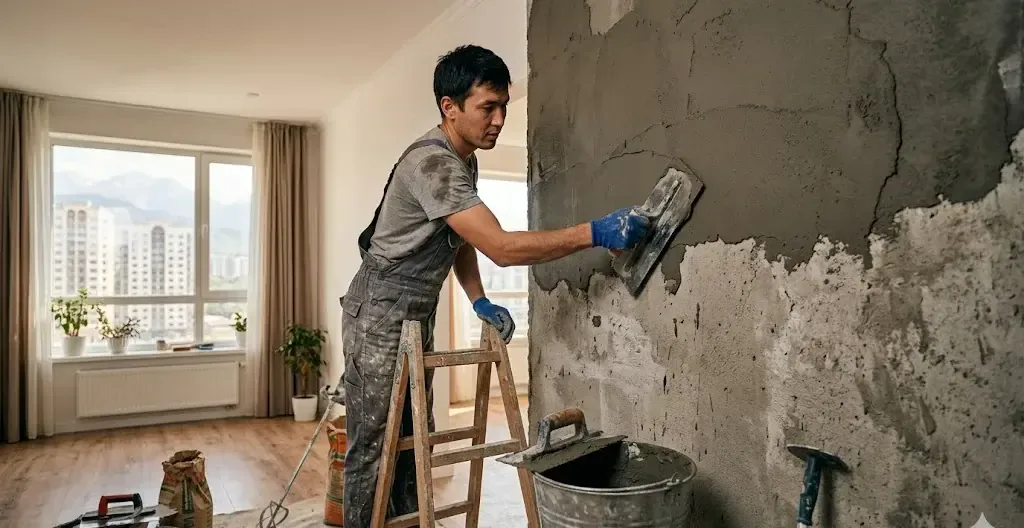
Wall plastering in Almaty
from 6 000 tg.* per linear metre
Durable, high-quality facade finishing thanks to compliance with building codes and the high qualifications of our craftsmen.
 Joints to GOST 5264-80
Installation from 1 day Arrival within 45 minutes
Installation from 1 day 3-year warranty
 Prices from 5000 ₸
Contract and estimate
Wall plastering in Almaty
from 6 000 tg.* per linear metre
Durable, high-quality facade finishing thanks to compliance with building codes and the high qualifications of our craftsmen.
Joints to GOST 5264-80
Installation from 1 day
Arrival within 45 minutes
Installation from 1 day
3-year warranty
Prices from 5000 ₸
Contract and estimate
Wall plastering in Almaty
from 6 000 tg.* per linear metre
Durable, high-quality facade finishing thanks to compliance with building codes and the high qualifications of our craftsmen.
Joints to GOST 5264-80
Installation from 1 day
Arrival within 45 minutes
Installation from 1 day
3-year warranty
Prices from 5000 ₸
Contract and estimate
Types of facade
work we do
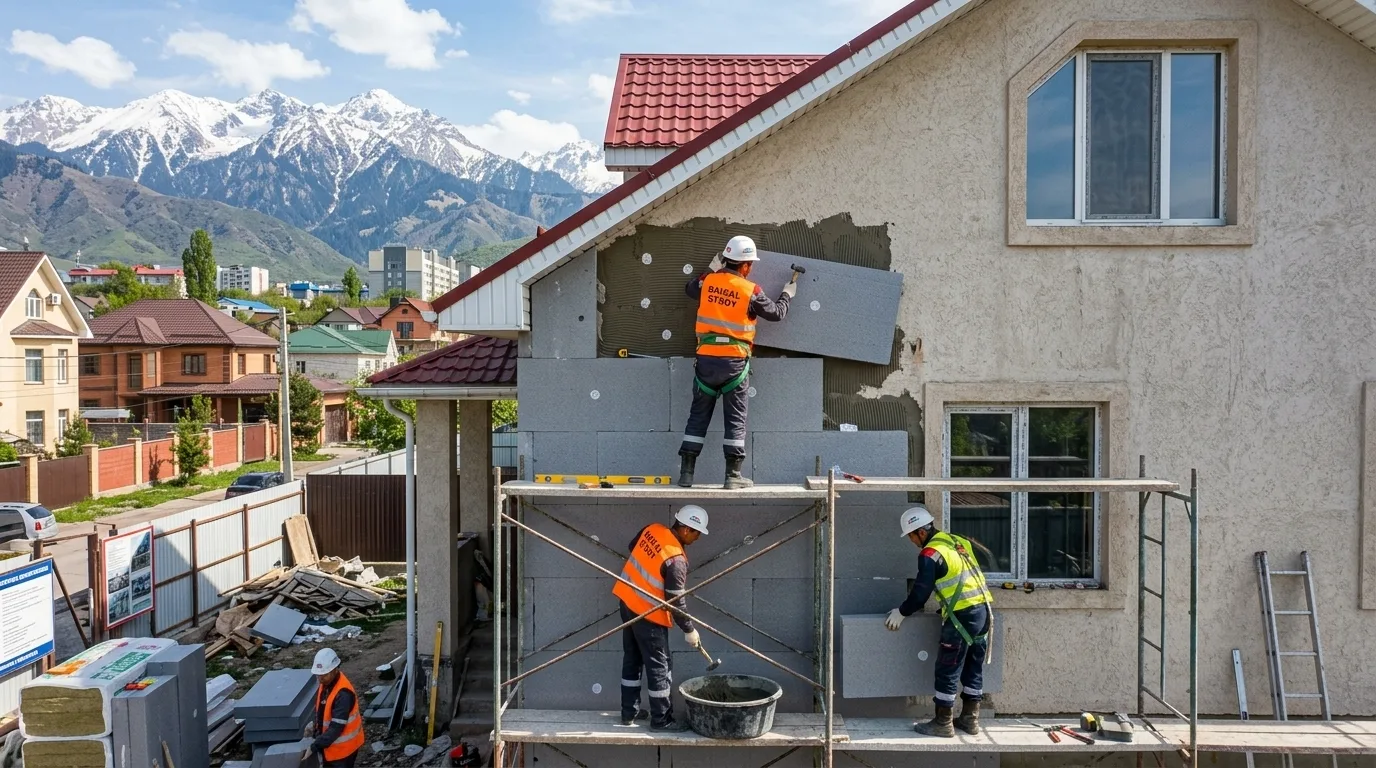
Facade insulation
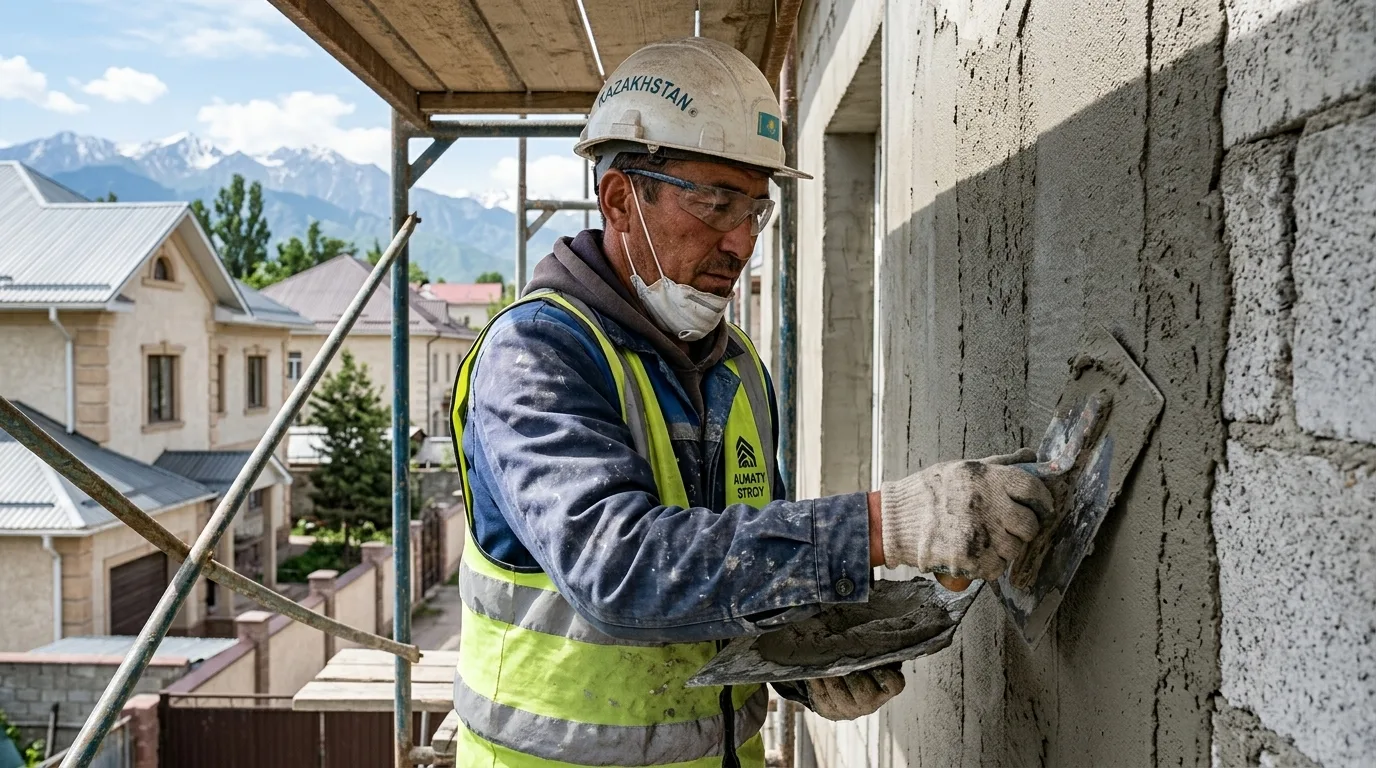
Plastering the walls
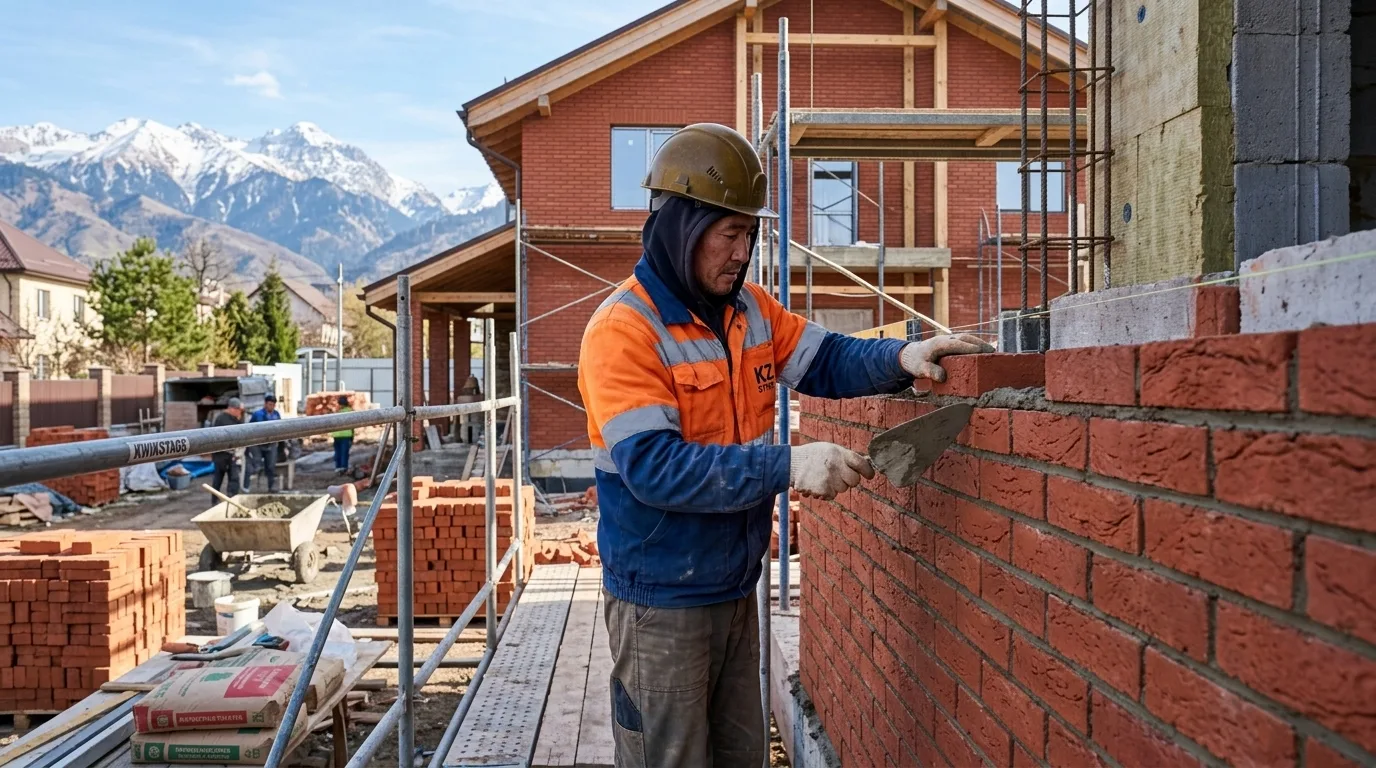
Brick cladding
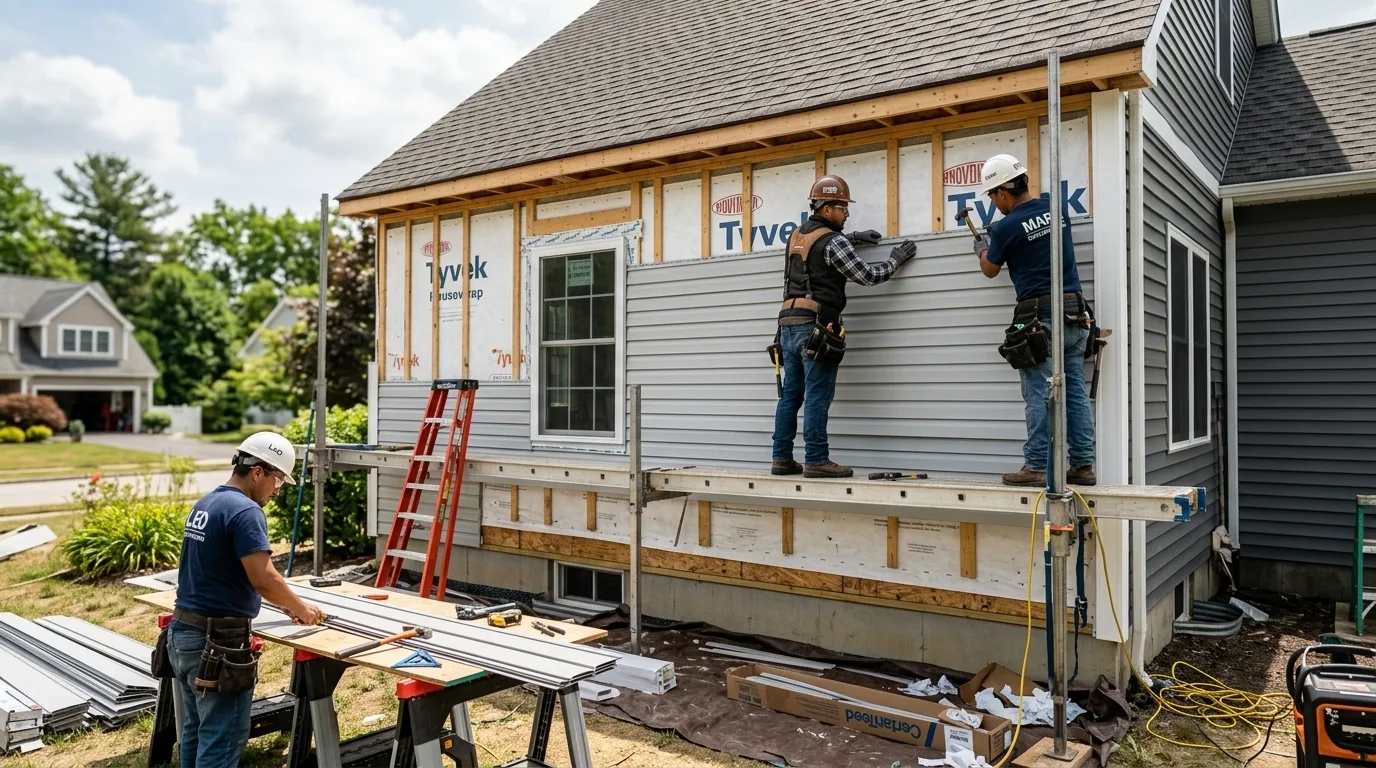
Siding installation
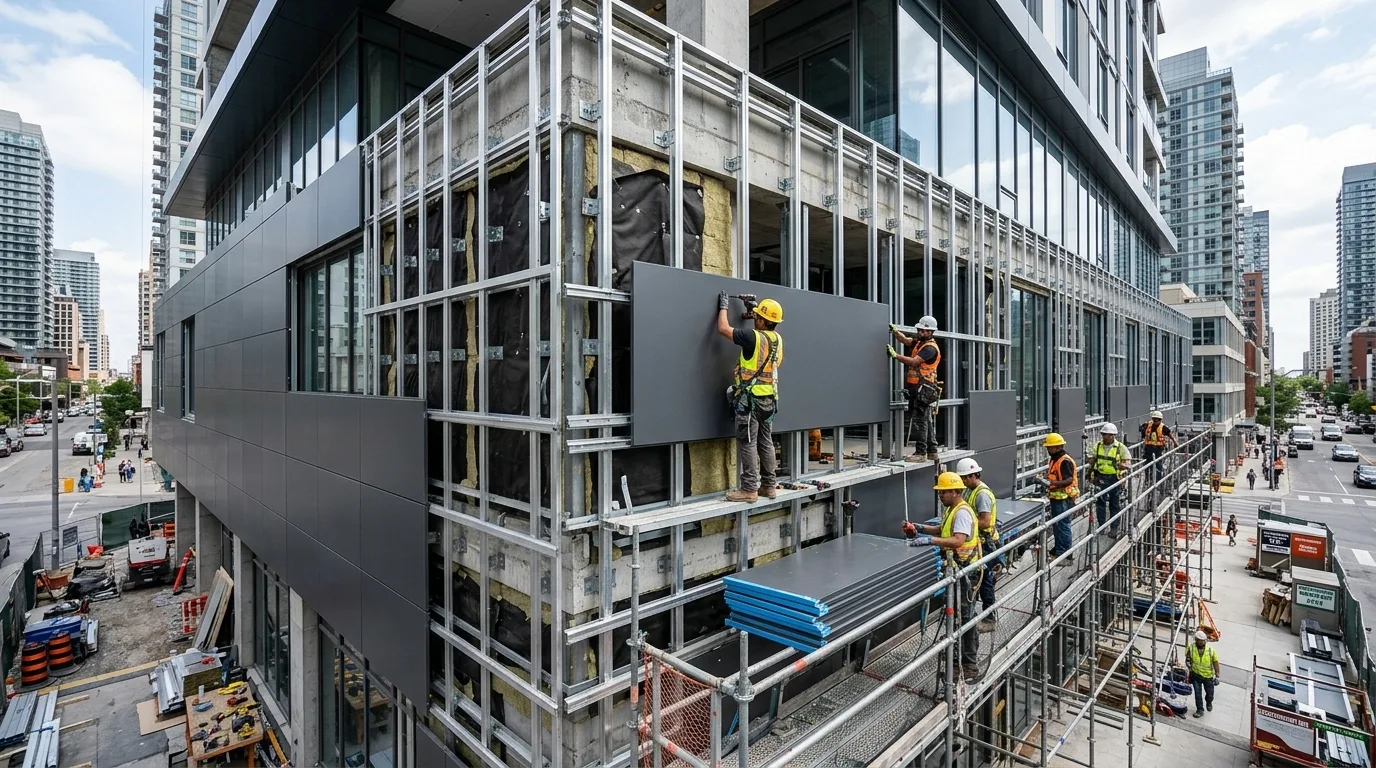
Construction of ventilated facades
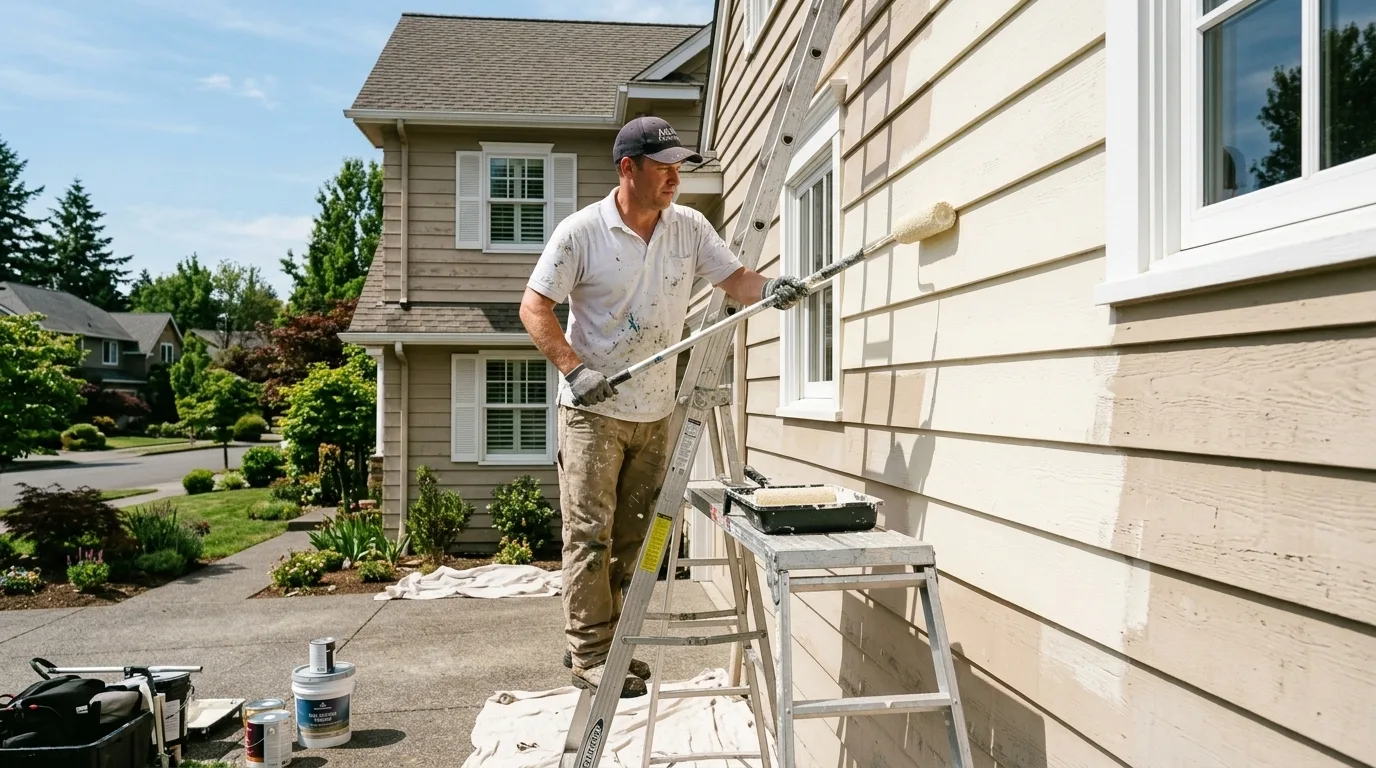
Facade painting
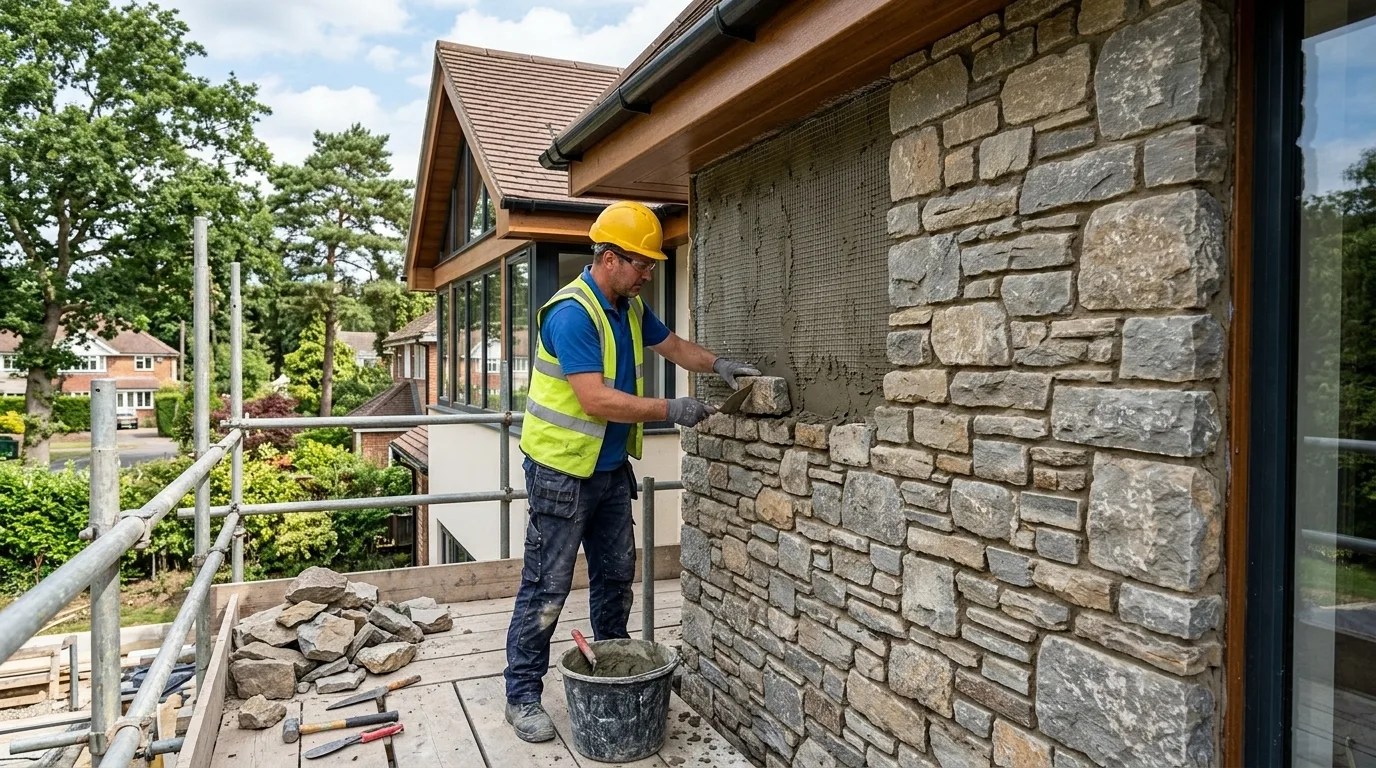
Stone finishing
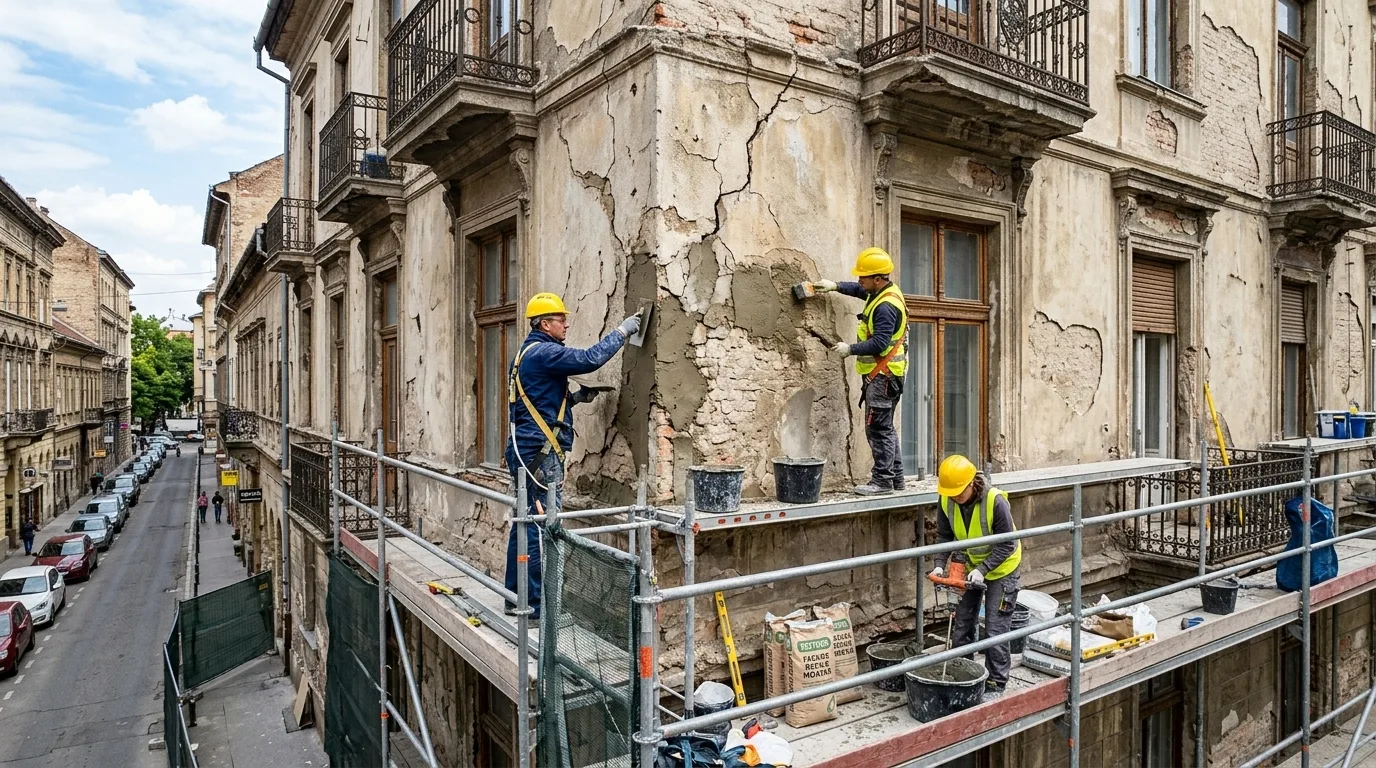
Facade repair
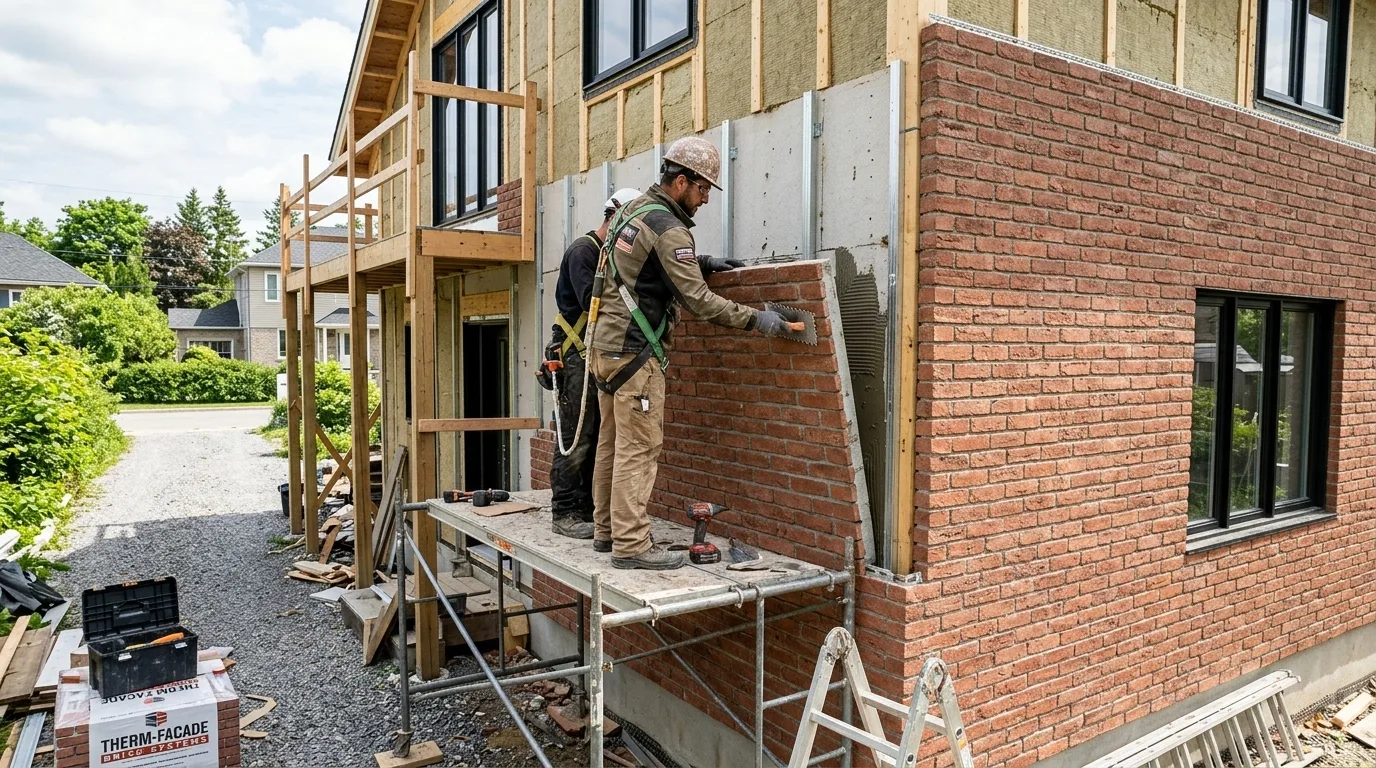
Installation of facade panels
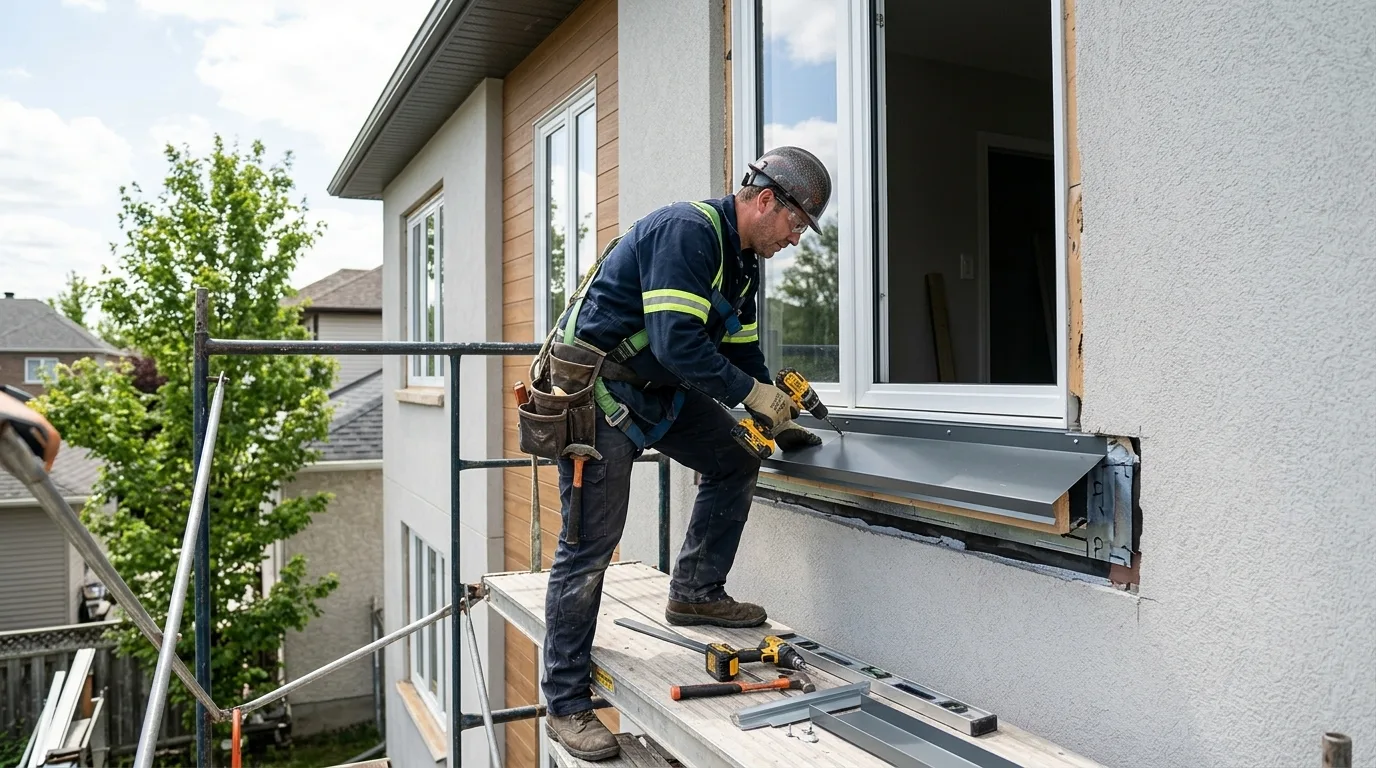
Installation of flashings and reveals
Types of facade
work we do
Facade insulation
Plastering the walls
Brick cladding
Siding installation
Installation of flashings and reveals
Facade repair
Facade painting
Stone finishing
Installation of facade panels
Construction of ventilated facades
We will call you back within 3 minutes
Types of facade
work we do
Facade insulation
Plastering the walls
Brick cladding
Installation of facade panels
Installation of flashings and reveals
Facade repair
Construction of ventilated facades
Facade painting
Stone finishing
Siding installation
We will call you back within 3 minutes
Cost of facade work in
Almaty
| SERVICE | COST | TIME |
|---|---|---|
| Master's visit to the site (within the city) | from 5 000 ₸ | — |
| Minimum order value | from 25 000 ₸ | — |
| Wall plastering with a gypsum mix (up to 2 cm) | from 3 500 ₸ | from 2 h |
| Wall plastering with a cement mix (up to 2 cm) | from 4 000 ₸ | from 2 h |
| Plastering reveals (up to 30 cm) | from 5 000 ₸ | from 1,5 h |
| Levelling walls (layer thickness from 2 to 5 cm) | from 5 500 ₸ | from 3 h |
| Plastering arches and complex curved surfaces | from 7 000 ₸ | from 4 h |
| Priming the walls (before plastering) | from 800 ₸ | from 30 min |
| Fitting the plaster mesh (reinforcement) | from 1 500 ₸ | from 1 h |
| Installing beacons (guides) | from 1 200 ₸ | from 1 h |
| Floating and sanding the plaster | from 1 800 ₸ | from 1,5 h |
| Cleaning up and removing construction waste | from 3 000 ₸ | from 1 h |
Advantages of facade work from Profi-Dom

Neat joints with no chips
We use professional jointing tools that prevent damage to the tiles during laying

Certified craftsmen
Each specialist confirms their qualification with an annual exam in facade technologies

Equipment for a wet facade
We use industrial mixers and plastering stations that ensure even application of the layers

Meeting the finishing deadlines
The average cycle of turnkey facade work takes 21 working days on a weekly schedule

5-year
warranty on the facade
We fix our obligations in a contract, including protection against plaster peeling and fastener corrosion

Transparent estimate in ₸
We fix the cost of materials and work in the estimate, with no hidden markups or extra charges
Advantages of facade work from Profi-Dom
We use professional jointing tools that prevent damage to the tiles during laying
Neat joints with no chips
Each specialist confirms their qualification with an annual exam in facade technologies
Certified craftsmen
We use industrial mixers and plastering stations that ensure even application of the layers
Equipment for a wet facade
The average cycle of turnkey facade work takes 21 working days on a weekly schedule
Meeting the finishing deadlines
We fix our obligations in a contract, including protection against plaster peeling and fastener corrosion
5-year
warranty on the facade
We fix the cost of materials and work in the estimate, with no hidden markups or extra charges
Transparent price in KZT
We will call you back within 3 minutes
Advantages of facade work from Profi-Dom
We use professional jointing tools that prevent damage to the tiles during laying
Neat joints with no chips
Each specialist confirms their qualification with an annual exam in facade technologies
Certified craftsmen
We use industrial mixers and plastering stations that ensure even application of the layers
Equipment for a wet facade
The average cycle of turnkey facade work takes 21 working days on a weekly schedule
Meeting the finishing deadlines
We fix our obligations in a contract, including protection against plaster peeling and fastener corrosion
5-year
warranty on the facade
We fix the cost of materials and work in the estimate, with no hidden markups or extra charges
Transparent price in KZT
We will call you back within 3 minutes
HOW WE WORK
- 01.Discussion and estimate
We visit the site or hold an online consultation to determine the scope of work precisely and prepare a transparent estimate with no hidden charges.
- 02.Visit for precise measurements
Our specialist comes at a time convenient for you, takes all the necessary measurements and records the features of the facade for a perfect fit of the material.
- 03.Creating the design and sketch
We develop a detailed cladding plan with a panel layout, so that you can see in advance how your house will look after installation.
- 04.Approval of the contract
In the contract we fix the final cost, the exact completion dates and the warranty obligations, so that you feel protected.
- 05.Preparation of materials
We order certified siding and all components, checking each batch for compliance with quality standards and colour.
- 06.Professional installation
Our craftsmen install the battens and fix the panels using a technology that prevents deformation and ensures a long facade service life.
- 07.Finishing and sealing
We carefully finish all corners, joints and openings, treating them with sealant to protect against moisture and draughts.
- 08.Handover of the site and cleanup
After the work is finished we remove the construction debris and carry out a final inspection together with you to make sure the result is flawless.
Find out the cost and timing of facade work in 1 minute
catalogue of completed facade work
 Facade insulation and plastering of a private house in the Alatau microdistrict
 Plinth cladding of a shopping centre on Abay Avenue
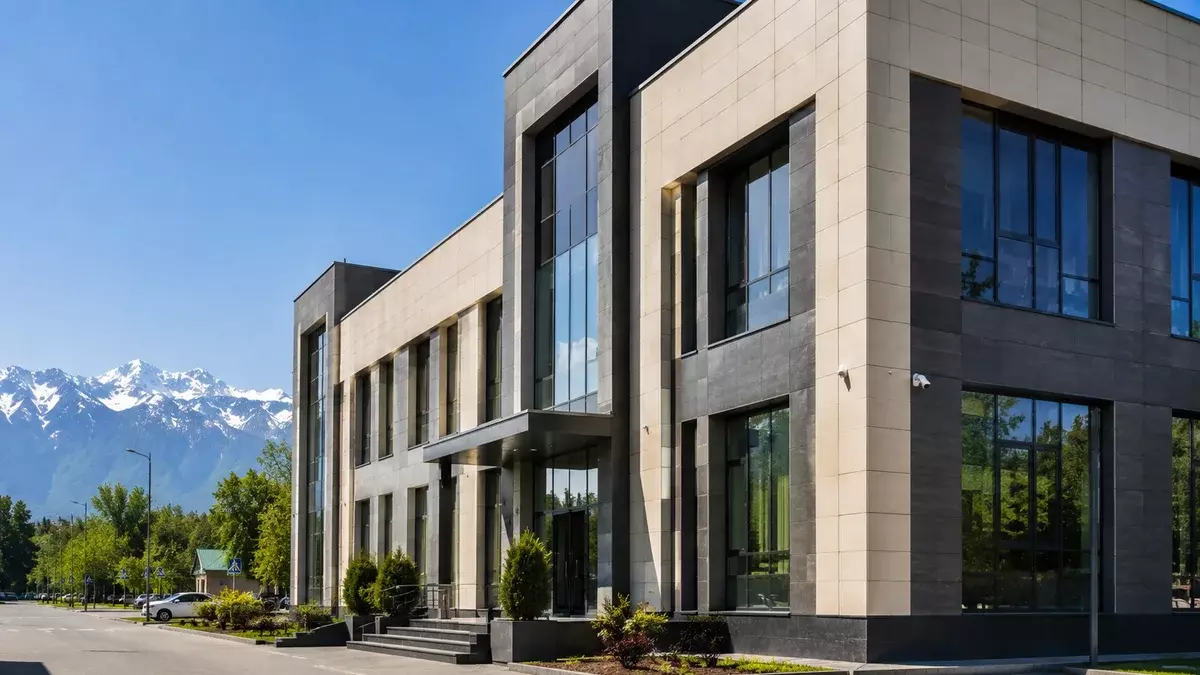 Installation of a ventilated facade on an office building in the Bostandyk district
 Painting and repair of the facade of an apartment building in the Samal microdistrict
FIND OUT THE COST OF FACADE WORK FOR YOUR PROJECT
Leave a request and we will contact you within 3 minutes
Thank you! We will contact you within 3 minutes.
By clicking the button you agree to the terms of the
 Privacy Policy
FIND OUT THE COST OF FACADE WORK FOR YOUR PROJECT
Leave a request and we will contact you within 3 minutes
Thank you! We will contact you within 3 minutes.
By clicking the button you agree to the terms of the
Or call us at
+7 (707) 068-88-68Privacy PolicyFIND OUT THE COST OF FACADE WORK FOR YOUR PROJECT
Leave a request and we will contact you within 3 minutes
Thank you! We will contact you within 3 minutes.
By clicking the button you agree to the terms of the
Or call us at
+7 (707) 068-88-68Wall plastering in detail
Wall plastering is a basic finishing stage that determines the evenness and durability of the final coating. In Almaty we carry out gypsum, cement and lime plastering by manual and machine methods. The price per m² depends on the type of mix, the layer thickness and the condition of the base. A free estimator's visit — the estimate on the day you get in touch.
Types of wall plaster and where they are used
Wall plastering Almaty is a sought-after service that we carry out across Almaty and the suburbs. Wall plastering is not a one-size-fits-all mortar, but a choice to suit a specific room. Let us look at the three main types of mix and their purpose in Almaty apartments and houses.
Gypsum plaster — for dry rooms
Gypsum plaster is used in living rooms, hallways and other dry rooms with normal humidity — it gives a smooth surface without shrinkage. In Almaty bedrooms and halls, a gypsum layer of 5 to 50 mm can level even the uneven walls of Khrushchev-era blocks and new builds in a single pass, without extra filling before wallpaper or paint. Working with gypsum is faster than with cement: it sets in 45-60 minutes and fully dries in 5-7 days at a temperature of +18…+22 °C. Gypsum ‘breathes’, regulating the microclimate: it absorbs excess moisture and releases it when the air is dry, so in bedrooms and children's rooms this option is more comfortable than cement.
Cement plaster — for wet areas and facades
Cement wall plaster is the only option for bathrooms, showers, kitchens and facades, because it is not afraid of water or temperature swings. Under the frequent humidity swings of Almaty bathrooms, a cement mix with a strength grade of M150-–M200 holds the tiles without peeling at a layer of 10 to 30 mm. On the facades of private houses in the Medeu or Bostandyk districts, cement with anti-frost additives down to -30 °C rules out cracks after the winter freeze-thaw cycle. In a bathroom, gypsum plaster under the tiles will start to get damp within six months — cement lasts for decades without losing strength.
Lime plaster — for historic buildings and eco-friendly interiors
Lime plaster is used on walls in old houses with brick walls and in interiors where vapour permeability and a natural composition matter. In historic buildings of Almaty on Zhibek Zholy Street or in houses from the 1950-s, lime mortar made with slaked lime restores breathing walls without sealing the pores with cement. The mix is suitable under a final finish of decorative plaster or silicate paint, but requires reinforcement with glass-fibre mesh for a layer over 15 mm. In new builds, lime mix shrinks by up to 2 mm per metre — for modern concrete walls it is better to choose gypsum or cement.
Comparison of plaster types: gypsum, cement, lime
| Parameter | Gypsum | Cement | Lime |
|---|---|---|---|
| Rooms | Bedrooms, living rooms, hallways | Bathrooms, kitchens, facades | Old houses, eco-interiors |
| Moisture resistance | No | Yes | Medium |
| Layer thickness | 5–50 mm | 10–30 mm | 10–25 mm |
| Shrinkage | Minimal | Up to 1 mm/m | Up to 2 mm/m |
| Finish ready for painting | No filler needed | Requires filler | Requires filler |
| Price per m² (work) | Medium | Above average | High |
For painting, gypsum is better — it gives a perfectly smooth surface without extra filling, which saves both time and budget on the final finish.
Hand and machine plastering — the differences
Wall plastering across Almaty is done in two ways — by hand and mechanically. The difference lies not only in speed, but also in the quality of the bond and the final price per m².
Machine plastering — speed and uniformity
Machine plastering of walls is applied with a plastering station that feeds the ready mix under pressure — the speed is 3–4 times higher than the manual method. In one shift a mechanised crew covers 50–70 m² against 15–20 m² by hand, and the mix is blended in the station automatically, without lumps or air bubbles across the whole plane of the wall. The compound is driven into the base under high pressure, filling the pores and micro-cracks — the bond with concrete or brick is 20–30% stronger than with a manual throw, and the losses from spraying are 3–5% against 8–10% with manual work. On sites from 50 m², the machine method gives a saving on material that outweighs the cost of renting the station, so for large volumes local crews choose exactly this one.
Hand plastering — precision on difficult areas
Manual wall plastering is indispensable in corners, niches, around pipes and in areas with deviations of more than 3 cm — the craftsman controls each layer visually and by touch. With deviations of 5 cm the machine method applies an equal layer over the whole wall, so in the hollows the mix consumption rises sharply, while on the protrusions the excess has to be cut off after drying; by hand, though, the craftsman lays mortar only in the depressions, drawing out the plane along the beads without overconsumption — the saving of mix on complex relief reaches 15–20%. For rooms up to 50 m², the manual method is more cost-effective — setting up the station and flushing the hoses takes an hour, which on a small volume eats up the gain in speed, and on walls with deviations of 5 cm manual work gives lower mix consumption thanks to local control of the layer.
Comparison of the hand and machine methods
| Parameter | Hand plastering | Machine plastering |
|---|---|---|
| Speed | 15–20 m²/shift | 50–70 m²/shift |
| Adhesion quality | Good | Excellent (20–30% stronger) |
| Difficult areas | Yes | No (manual finishing required) |
| Mix consumption | Higher (losses up to 10%) | Lower (losses 3–5%) |
| Price per m² | Higher | Lower by 15–20% |
| Recommended volume | Up to 50 m² | From 50 m² |
On sites from 100 m², the machine method pays off through speed — the crew finishes in 2–3 days instead of a week, which is especially important when the deadline for finishing an apartment is tight.
Plastering technology: beacons, application, floating
Wall plastering price per m2 depends on the area, the material and the complexity of the facade — we calculate the exact amount after a site measurement. Plastering walls is a sequence of strict operations: the geometry of the walls and the consumption of finishing materials depend on how the beads are set and the floating is done.
Setting the beacons — the basis of even walls
Plaster beads are set by laser level at a spacing of 1–1,5 metres — they define the plane and the minimum layer thickness from 5 mm. The T-section metal beads are fixed with a fast-setting gypsum mortar (Rotband or Volma-Sloy), not on dowels — this eliminates play when pressing with the straightedge. In Almaty new builds with wall curvature of up to 30 mm, the bead spacing is reduced to a metre to compensate for the deviations and avoid wasting mix. After the mortar sets (15–20 minutes) the straightedge checks the plane across all the beads — the deviation must not exceed 0,5 mm per 2 metres. If the beads are set with an error of 2 mm, the final finish — wallpaper or paint — will reveal every unevenness, and it will have to be corrected with filler.
Applying the plaster — from the spatter coat to levelling
The mix is applied in three layers: the spatter coat (a liquid mortar for adhesion), the base coat (the main layer) and the finish coat (a final layer of 2–3 mm). The spatter coat is made with a gypsum or cement mix the consistency of runny sour cream — it is thrown on with a trowel or scoop without smoothing, to create a rough base. The base coat is applied 2–3 hours after the spatter coat with a wide spatula or trowel, filling the space between the beads from the bottom up — the thickness of a single pass does not exceed 20 mm for gypsum and 15 mm for cement, otherwise the mortar slides down. An h-shaped straightedge cuts off the excess, and the finish coat is floated after it has lightly set. Skipping the spatter coat reduces the bond strength by 40% — — within a year the coating can peel off the wall in whole pieces.
Floating the plaster — preparing for the finish
Floating is done 2–4 hours after application, when the mortar has set but not dried — the surface is smoothed with a float in circular motions. A polyurethane float with a coarse grain (for gypsum) or a felt one (for cement) is used — a fine-grained one clogs and scratches the layer. The motions go in a spiral from the centre to the edges: the float is pressed at an angle of 30°, removing micro-unevenness and filling the pores with slurry (a liquid paste of mortar). After floating, the surface is checked against the light with a torch — shadows reveal hollows, which are touched up with the same mortar. If you float too early, the mortar ‘floats’ and the plane is disturbed; if too late, the surface becomes hard and floating does not give a smooth result.
Drying the plaster — how long to wait before the final finish
A gypsum layer dries in 7–14 days at a thickness of 10–20 mm, a cement one in 14–28 days, depending on the temperature and ventilation. In Almaty apartments with radiators and closed windows the moisture leaves more slowly — the period rises to 20 days for gypsum with a 15 mm layer. Humidity is checked with a moisture meter: 2–3% is acceptable for gypsum and 4–5% for cement before filling. The drying must not be sped up with heat guns — the top layer dries while moisture remains inside, which leads to cracks and peeling within a month.
Quality control — checking with a straightedge and level
Quality control is carried out with a two-metre straightedge — the gap between the straightedge and the wall must not exceed 2 mm per metre. A spirit level checks the vertical and horizontal: a deviation of up to 1 mm per metre of height is allowed for ordinary rooms and up to 0,5 mm for walls to be painted. Tapping with a wooden mallet reveals voids — a hollow sound indicates peeling, which is cleaned off and re-plastered. If, when checking with the straightedge, the gap is more than 3 mm, bumps will show through the wallpaper or paint — the defect must be fixed before the final finishing.
Preparing and priming the base
Wall levelling work begins not with mixing the mortar but with preparing the base. Whether the coating lasts a year or ten years depends on how the wall is cleaned and primed.
Cleaning the walls — removing old coatings and dust
Preparing walls for plastering includes removing old wallpaper, paint and flaking coatings and dust extraction with an industrial vacuum cleaner. Oil paint or enamel is cleaned off with an angle grinder and wire brush or a special remover — on concrete walls in Almaty Khrushchev-era blocks this takes up to 2 hours for a 15 m² room. Whitewash is washed off with soapy water, otherwise the gypsum mix will fall off together with the chalk layer. Mould and fungus are treated with an antiseptic — without it the spores will grow through the new layer within 3–4 months. If old paint is left, the new layer will not set — within a month it will come off together with pieces of paint, especially on the ceiling.
Priming — why and with what primer
Priming the walls before applying the mortar is mandatory — the primer strengthens the base, reduces absorbency and prevents mould. For dense concrete and smooth tiles a concrete-contact primer with quartz sand is used — it creates a rough film that the mix adheres to. For aerated concrete and brick, a deep-penetrating acrylic primer is suitable — it penetrates 5–10 mm and binds the dust. On old plastered walls with crumbling areas, a strengthening primer is applied in two coats, each dried for 3–4 hours. On concrete walls without a primer, the gypsum mix gives its water up to the concrete in 10–15 minutes — the mortar does not have time to gain strength and cracks.
Mesh reinforcement — when it is needed
Reinforcing mesh is used when the layer is 20 mm thick or more, at the junctions of dissimilar materials and in places where cracks are likely. Galvanised metal mesh with a 10×10 mm cell is used for cement mortars — it holds a layer of up to 50 mm on facades and in damp basements. Fibreglass mesh with a density of 160 g/m² is used under gypsum compounds indoors — it does not rust and distributes the load as the building settles. In door and window openings the mesh is laid in diagonal strips at an angle of 45° — this prevents cracks in the corners. At the junction of aerated concrete and brick, without mesh a crack appears in 80% of cases — temperature swings and the shrinkage of the materials cause different deformation.
Temperature conditions — can you plaster in winter
Levelling walls in winter in Almaty is possible at an indoor temperature from +5°C and a humidity of no more than 70% — — the mortar must set, not freeze. Cement mixes can be applied at +5…+30°C, but in Almaty new builds with autonomous heating the temperature is raised in winter with 5–7 kW heat guns per 30–40 m². Gypsum compounds are more temperamental — at +5°C they dry three times longer than at +20°C, and in a draught they crack. The humidity is controlled with a hygrometer: if it is above 70%, the mortar does not release water, and the coating turns into a soft mass that can be pressed in with a finger even after a week. At sub-zero temperatures the water in the mortar freezes, and ice crystals tear the structure apart — in spring the layer crumbles and has to be redone.
Wall plastering price per m² — table
The cost of plastering work is made up of the type of mix, the application method and the condition of the walls. Let us break down what the price consists of and how not to overpay.
What is included in the price per square metre
The price per m² includes preparing the base, priming, setting up the beads, applying the mortar, floating and cleaning the work area. In new builds with a monolithic frame, reinforcing the slab joints with mesh tape is added — that is a further 150–200 KZT/m², although in standard estimates this item is often skipped. On the secondary market, where the walls are covered with old lime wash or oil paint, mechanical cleaning is needed (up to 500 KZT/m²) along with additional priming with concrete-contact primer (about 250 KZT/m²). The mix consumption built into the estimate is calculated by the average layer thickness: for gypsum 8–10 kg/m² at 10 mm, for cement 15–18 kg/m². A client's own material makes the work cheaper by 15–20 %, but the contractor is entitled to raise the rate per m² — to offset the downtime while it is purchased. Estimates often leave out debris removal and dust extraction — clarify these items before signing the contract so you do not get a bill for 10–15 % extra.
Wall plastering price table for Almaty
| Type of work | Price per m² (work) | Price per m² (work + material) |
|---|---|---|
| Gypsum plaster (hand-applied) | 2 500 Kzt | 3 800 Kzt |
| Gypsum plaster (machine-applied) | 2 000 Kzt | 3 300 Kzt |
| Cement plaster (hand-applied) | 3 000 Kzt | 4 500 Kzt |
| Cement plaster (machine-applied) | 2 500 Kzt | 4 000 Kzt |
| Lime plaster (hand-applied) | 3 500 Kzt | 5 200 Kzt |
| Plaster for wallpaper | 2 800 Kzt | 4 200 Kzt |
| Plaster for painting | 3 200 Kzt | 4 600 Kzt |
| Plaster for tiling | 2 700 Kzt | 4 100 Kzt |
The prices in the table are market averages for the current season; at PROFI-DOM the cost is fixed in the estimate and does not change during the work, including levelling deviations of up to 30 mm at no extra charge. A turnkey order with material is more cost-effective than ordering separately — the saving on logistics and bulk purchase of the mix comes to 10–15 %.
How to check the estimate — the real material consumption
The consumption of gypsum mix is 8–10 kg/m² with a 10 mm layer, of cement mix 15–18 kg/m²; multiply by the area and the layer thickness and you get the real volume. On a site in the Aksay-2 district, a client was charged for 42 bags of Rotband for a 20 m² room with an average layer of 15 mm, whereas an honest calculation gives 30 bags (8,5 kg × 20 m² × 1,5 of layer = 255 kg, divided by 30 kg per bag). A difference of 12 bags — an extra 18 000 KZT on material alone. To double-check, require the estimate to state the average layer thickness for each wall separately, not averaged over the room — the difference between the wall and the ceiling often adds +5 mm to the stated figure. If a consumption of 12 kg/m² is given for gypsum with a 10 mm layer, that is an overstatement of 20–30 %; an honest contractor always calculates by thickness.
Additional costs — what can increase the estimate
Additional costs include levelling large deviations (over 30 mm), removing the old coating and taking away the debris. In houses built in the 1970–1980-s the vertical deviation of the walls reaches 5–8 cm — such a surface takes 2–3 times more mix, and the price per m² rises proportionally. Removing an old finish layer 20–30 mm thick costs 600–800 KZT/m², and removing construction debris is a further 3 000–5 000 KZT per truckload. If the walls lean by 5 cm, the cost of levelling can double — an honest estimator will warn about this before the work begins.
Turnkey wall plastering with PROFI-DOM
Ordering turnkey plastering work across Almaty is not just calling in a crew, but a transparent process with a fixed estimate and a guarantee. Here is how we work.
How to order wall plastering — from request to finish
At PROFI-DOM, ordering plastering work begins with a free visit from an estimator — he assesses the condition of the walls, measures the deviations and draws up a detailed estimate. The estimator comes at a time convenient for you, the measurements take 30–40 minutes, and the estimate, broken down by type of work and materials, is ready on the day you get in touch. Once the estimate is agreed, we sign a contract setting out the scope of work, the timeframe and the final price with no hidden mark-ups. We deliver the materials to the site the day before the start so that the crew does not wait for the supply. On site, a crew of 2–3 craftsmen works under a foreman who checks the wall geometry with a straightedge and level after each stage. Final acceptance — you inspect the walls together with the foreman and sign the handover certificate, and only then is the work considered accepted. If hidden defects are discovered during the work (voids under the old layer, cracks in the slab), the estimator warns you about the extra costs before the work begins, not after the fact.
Warranty on plastering work — what it covers and how to claim it
PROFI-DOM gives a warranty on plastering work from 1 year — if cracks or peeling appear within this period, the crew fixes the defects free of charge. The warranty covers the mortar peeling off the base, deviation of the wall geometry (more than 2 mm from vertical over 2 m), as well as shrinkage cracks if they are not caused by movement of the load-bearing structures. Cracks in the coating in the first month are most often linked to the settling of the house or a breach of the drying technology — the warranty covers only work defects, not the settling of the building. To get warranty service, simply call the office — we send a crew within 3 working days of the request. An important nuance: the warranty is void if, after us, you chased the walls or drilled them without agreement — this is mechanical damage to the layer, not an application defect.
Why people choose PROFI-DOM — experience and approach
PROFI-DOM carries out plastering work across Almaty and its suburbs — in that time our crews have plastered more than 500 projects, from apartments to cottages. We have 12 craftsmen on staff with 5 years or more of experience, all employed rather than hired for one-off jobs — this rules out the situation where there is a crew today and none tomorrow. Each project is run by a foreman who personally checks the quality with a straightedge and level — this rules out the situation where a craftsman “forgot” to set the beacons. We use only trusted mixes — Knauf gypsum and Ceresit cement — and buy them centrally, which rules out fakes from the market. Our approach is a fixed estimate with no surcharges for “urgency” or “complexity”: if the walls are uneven, we calculate on the facts straight away rather than negotiating on site.
Completion times — what they depend on and how to plan
At PROFI-DOM the timeframes for plastering work are stated in the contract: a 3--room apartment (80–100 m²) takes 5–7 days with machine application. The timeframe shifts if the walls need additional levelling or removal of the old layer — the estimator warns about this in the estimate. A 1--room apartment (35–45 m²) takes 2–3 days, and a private house (150–200 m²) takes 10–14 days with one crew working. Machine plastering is 2–3 times faster than manual work on the same volume: what takes 6–7 days by hand, the machine does in 2–3. The drying time of a layer — from 7 to 14 days depending on the thickness and humidity — is built into the schedule before the final finishing, and the drying must not be sped up with heat guns: cracks are guaranteed.
Conclusion
Wall plastering is not about ‘slapping on mortar’, but about engineering: choosing the mix for the room's humidity, controlling the layer thickness and strictly observing the drying times.
Key takeaways
Levelling surfaces is not simply a matter of ‘slapping on some mortar’, but an engineering process with clear parameters: the type of mix for the room, the layer thickness, the application technique and the drying time. A mistake at any stage — from skipping the primer to breaking the drying times — leads to cracks, peeling and repeat costs. The choice between gypsum, cement and lime is dictated by the humidity and purpose of the room, and the choice between manual and machine methods by the scope of work and the complexity of the walls. A transparent estimate broken down by type of work and materials is the only way to avoid overpaying. And most importantly: quality levelling is an investment in the final finish that pays off with even wallpaper, smooth paintwork and long-lasting tiles without surprises.