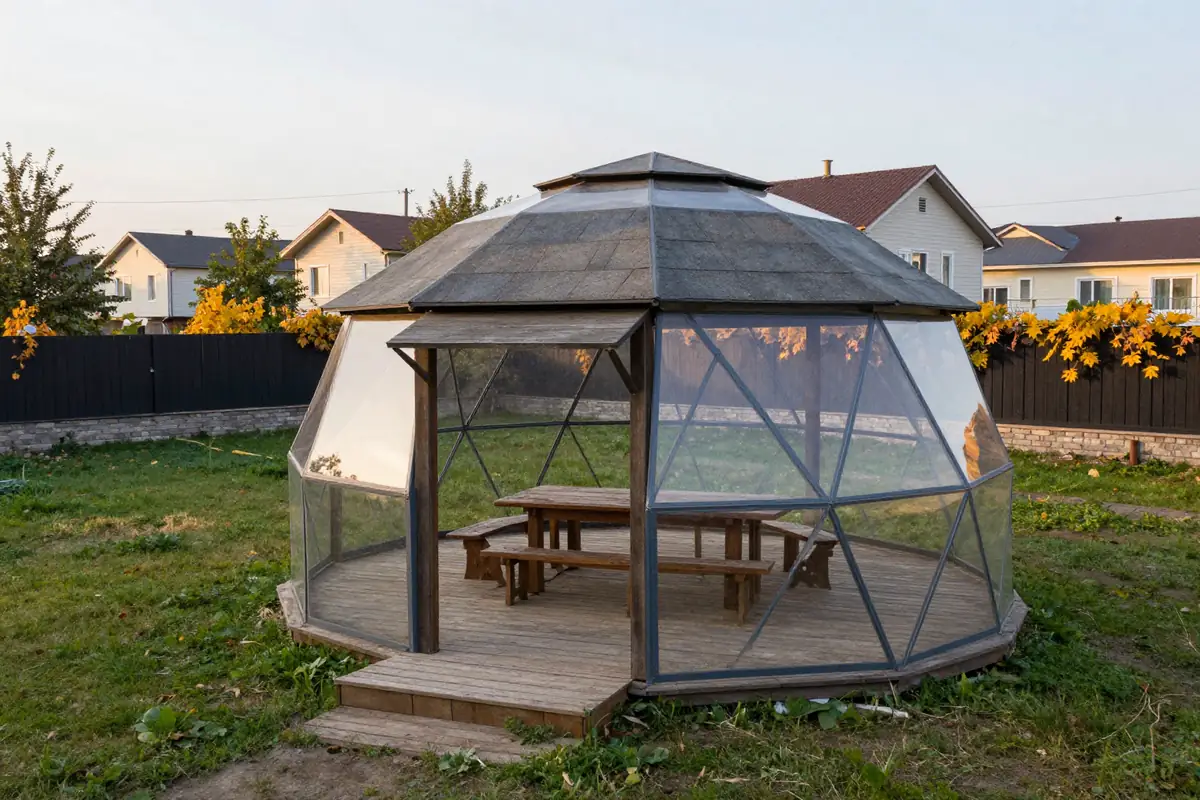
Dome gazebo in Almaty
Turnkey geodesic dome made of triangular faces in 5–25 days. Ribs, connectors, sealing of joints — from 590 000 ₸
 Installation in 2-4 days for a tent and polycarbonate dome
 5-year guarantee on work with a written contract
 Dome project in 24 hours or 5% discount on the whole order
 No intermediaries and savings up to 25%
Dome gazebo in Almaty
Turnkey geodesic dome made of triangular faces in 5–25 days. Ribs, connectors, sealing of joints — from 590 000 ₸
Installation in 2-4 days for a tent and polycarbonate dome
5-year guarantee on work with a written contract
Dome project in 24 hours or 5% discount on the whole order
No intermediaries and savings up to 25%
Find out the cost of a dome gazebo in 1 minute
Why the dome gazebo is ordered from us

The shape bears the load
A sphere made of triangular facets works as a shell: snow and wind are distributed across all ribs at once. That's why a dome with a diameter of 4–6 m withstands what breaks a flat roof.

Dome
in 5–25 days
Tent dome Ø4 m — 5–7 days, polycarbonate Ø4 m — 7–10 days, wooden Ø5 m — 14–18 days, panoramic with double-glazed windows Ø5 m — 20–25 days.

joints without leaks
We treat every connector node with sealant and close the joints of the faces with cover strips with a seal. Water rolls down the sphere and does not leak between the faces.

Ventilation at the zenith
A valve at the top releases heated air: in summer heat doesn't build up under the sphere, in winter moisture escapes. We include it in the design from the start.

Our own production
We cut and prepare the ribs at our own production facility, bring connectors and cladding to the site, and our own crew assembles without intermediaries. Hence the price from 590 000 ₸ and a 5-year warranty.

Snow and seismicity
We calculate the dome for snow in the foothills of 150–200 kg/m² and for wind, and anchor the frame to the foundation. Almaty is in a 9--point zone, so we build in a reserve for the joints.
Why the dome gazebo is ordered from us
A sphere made of triangular facets works as a shell: snow and wind are distributed across all ribs at once. That's why a dome with a diameter of 4–6 m withstands what breaks a flat roof.
The shape bears the load
Tent dome Ø4 m — 5–7 days, polycarbonate Ø4 m — 7–10 days, wooden Ø5 m — 14–18 days, panoramic with double-glazed windows Ø5 m — 20–25 days.
Dome
in 5–25 days
We treat every connector node with sealant and close the joints of the faces with cover strips with a seal. Water rolls down the sphere and does not leak between the faces.
joints without leaks
A valve at the top releases heated air: in summer heat doesn't build up under the sphere, in winter moisture escapes. We include it in the design from the start.
Ventilation at the zenith
We cut and prepare the ribs at our own production facility, bring connectors and cladding to the site, and our own crew assembles without intermediaries. Hence the price from 590 000 ₸ and a 5-year warranty.
Our own production
We calculate the dome for snow in the foothills of 150–200 kg/m² and for wind, and anchor the frame to the foundation. Almaty is in a 9--point zone, so we build in a reserve for the joints.
Snow and seismicity
We'll reply in 15 minutes
What we build dome gazebos from

A dome has no separate walls and roof — everything rests on the edges, connectors, and face cladding:
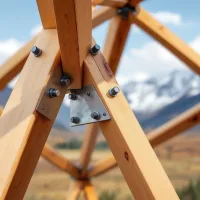
Planed dry timber for the ribs, nodes — on steel connectors. We impregnate the wood with antiseptic before assembly: under the cladding it does not rot or warp.
Wood
Metal
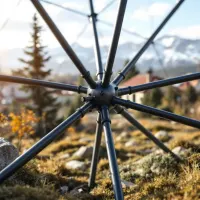
Profiled and round pipe with powder coating. We cut the ribs according to calculation, joints on bolts — it holds wind and snow rigidly.
Cladding
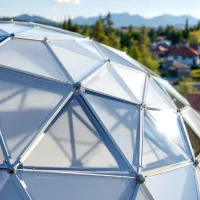
Polycarbonate, PVC membrane, OSB with soft roofing, or double-glazed windows. We seal the joints, and at the zenith — a valve.
We do not offer a standard dome: we calculate the 2V, 3V, or 4V frequency for your diameter, check the soil, wind, and snow on the site — the rib cross-section and connector spacing depend on this.
We place the round podium on posts, piles, or a slab, and anchor the frame to the base. The floor is a terrace board on joists with a gap. What this gives:
The dome stands exactly on the base ring, without distortion of the faces
Water goes under the podium, not standing under the gazebo floor
Anchoring against wind
What we build dome gazebos from
A dome has no separate walls and roof — everything rests on the edges, connectors, and face cladding:
Wood
Planed dry timber for the ribs, nodes — on steel connectors. We impregnate the wood with antiseptic before assembly: under the cladding it does not rot or warp.
Metal
Profiled and round pipe with powder coating. We cut the ribs according to calculation, joints on bolts — it holds wind and snow rigidly.
Cladding
Polycarbonate, PVC membrane, OSB with soft roofing, or double-glazed windows. We seal the joints, and at the zenith — a valve.
Anchoring against wind
Water goes under the podium, not standing under the gazebo floor
The dome stands exactly on the base ring, without distortion of the faces
We place the round podium on posts, piles, or a slab, and anchor the frame to the base. The floor is a terrace board on joists with a gap. What this gives:
We do not offer a standard dome: we calculate the 2V, 3V, or 4V frequency for your diameter, check the soil, wind, and snow on the site — the rib cross-section and connector spacing depend on this.
What we build dome gazebos from
A dome has no separate walls and roof — everything rests on the edges, connectors, and face cladding:
Wood
Planed dry timber for the ribs, nodes — on steel connectors. We impregnate the wood with antiseptic before assembly: under the cladding it does not rot or warp.
Metal
Profiled and round pipe with powder coating. We cut the ribs according to calculation, joints on bolts — it holds wind and snow rigidly.
Cladding
Polycarbonate, PVC membrane, OSB with soft roofing, or double-glazed windows. We seal the joints, and at the zenith — a valve.
We place the round podium on posts, piles, or a slab, and anchor the frame to the base. The floor is a terrace board on joists with a gap. What this gives:
We do not offer a standard dome: we calculate the 2V, 3V, or 4V frequency for your diameter, check the soil, wind, and snow on the site — the rib cross-section and connector spacing depend on this.
Anchoring against wind
Water goes under the podium, not standing under the gazebo floor
The dome stands exactly on the base ring, without distortion of the faces
Types of dome gazebos

Panoramic
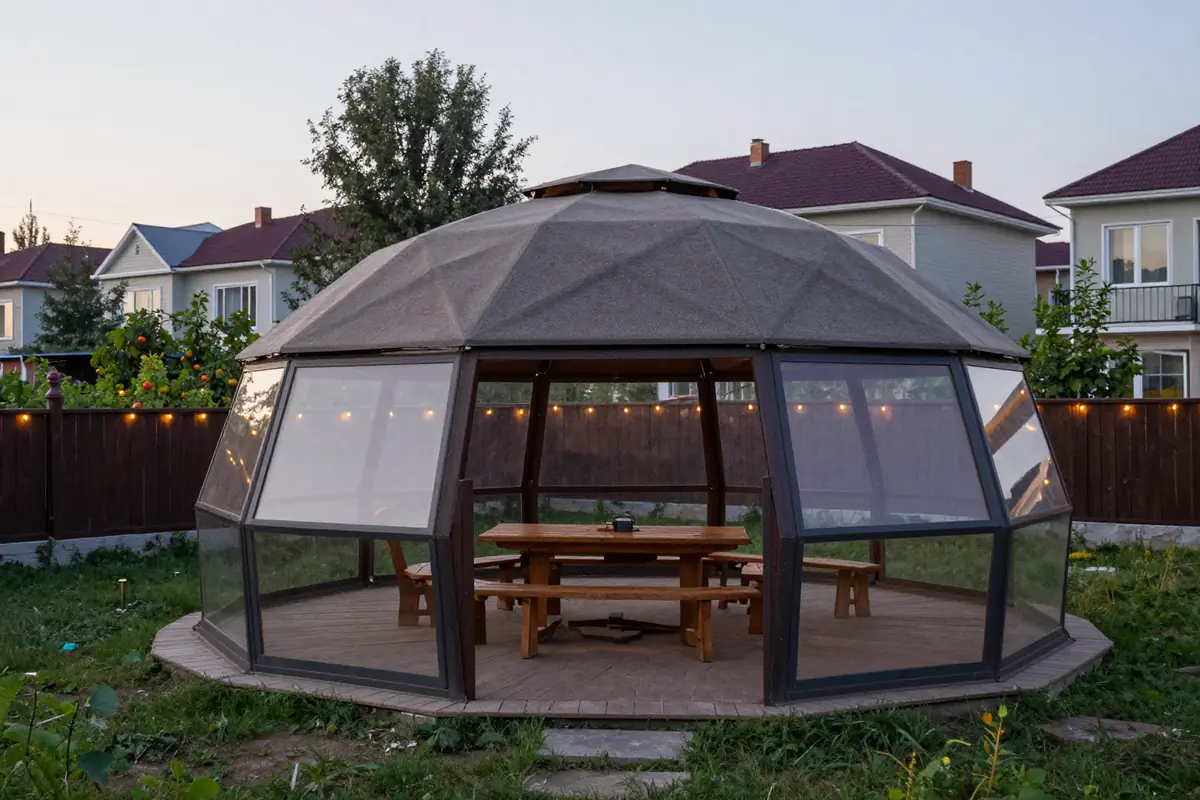
Steel frame with reinforced ribs and double-glazed windows in the facets: a view of the garden and mountains across the entire sphere.

- From 3 900 000 ₸ for Ø5 m
- Timeframe 20–25 days
- Reinforced edges for double-glazed windows
Advantages:

Combined
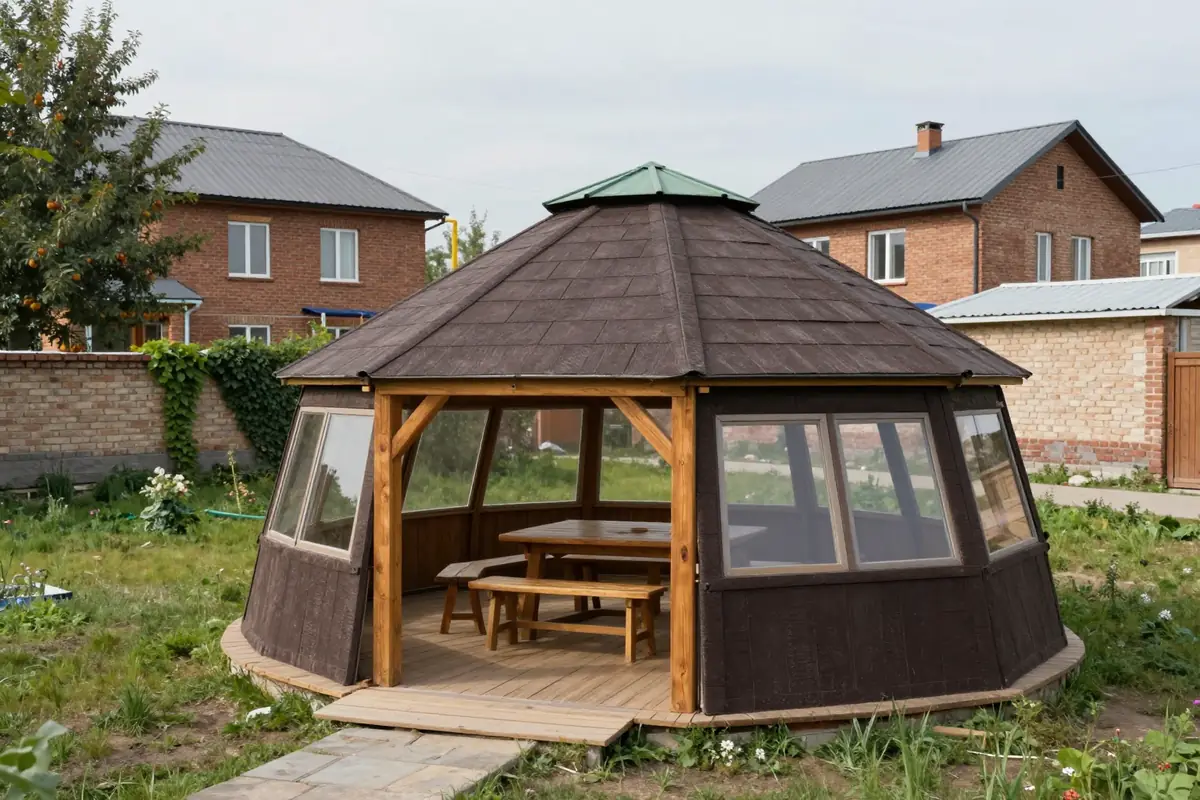
Blind edges with soft tiles on OSB plus window-edges for light and view.
- From 1 450 000 ₸ for Ø6 m
- Timeframe 16–20 days
- Tiles and window-edges
Advantages:

Wooden
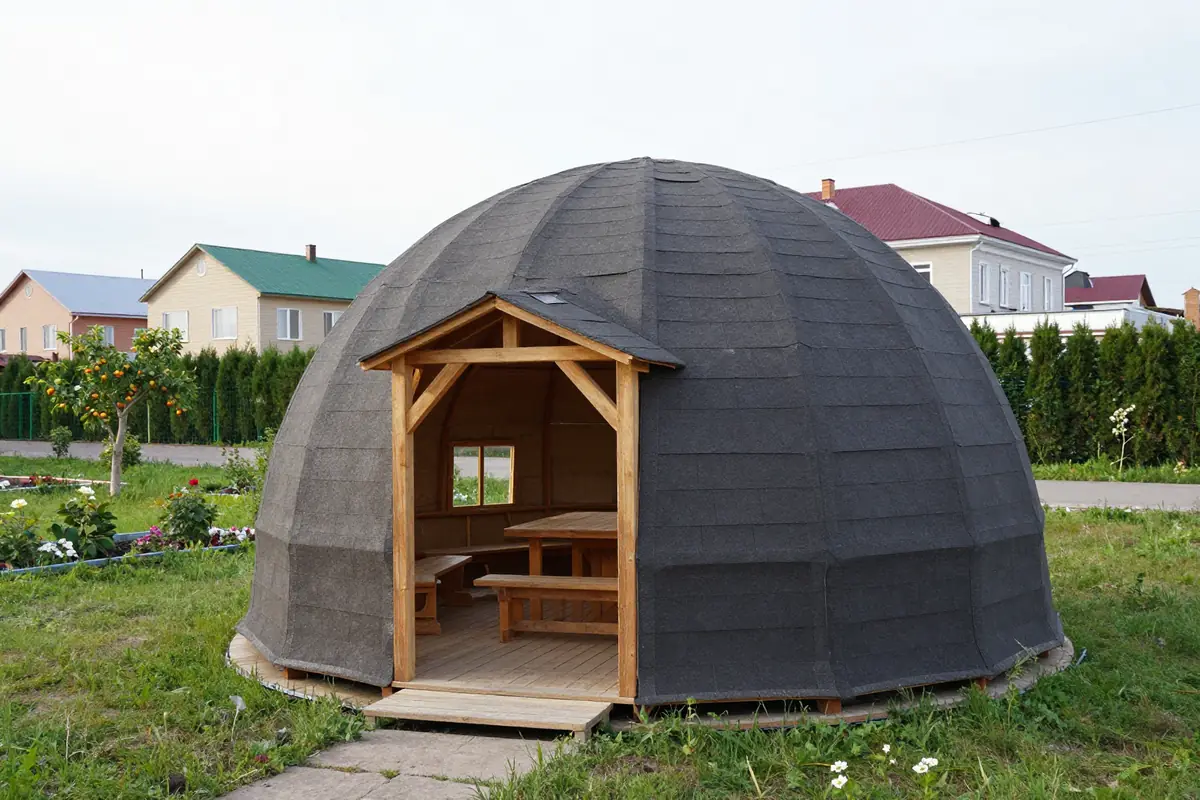
Ribs made of dry timber on steel connectors, OSB cladding with soft tiles, a solid warm sphere.
- From 1 250 000 ₸ for Ø5 m
- Timeframe 14–18 days
- Timber ribs, warm cladding
Advantages:

Polycarbonate
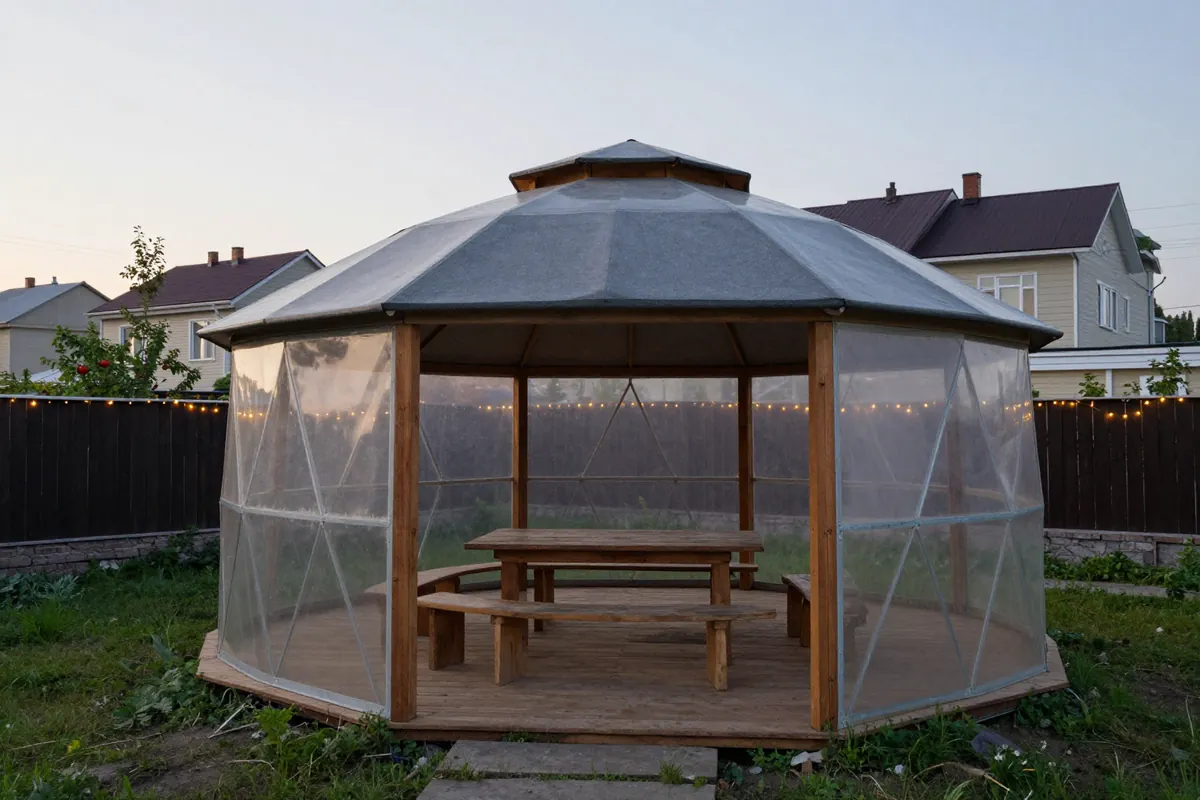
Steel frame and cellular polycarbonate in the edges: a light dome with diffused light.
- From 690 000 ₸ for Ø4 m
- Timeframe 7–10 days
- Diffused light during the day
Advantages:

Tent
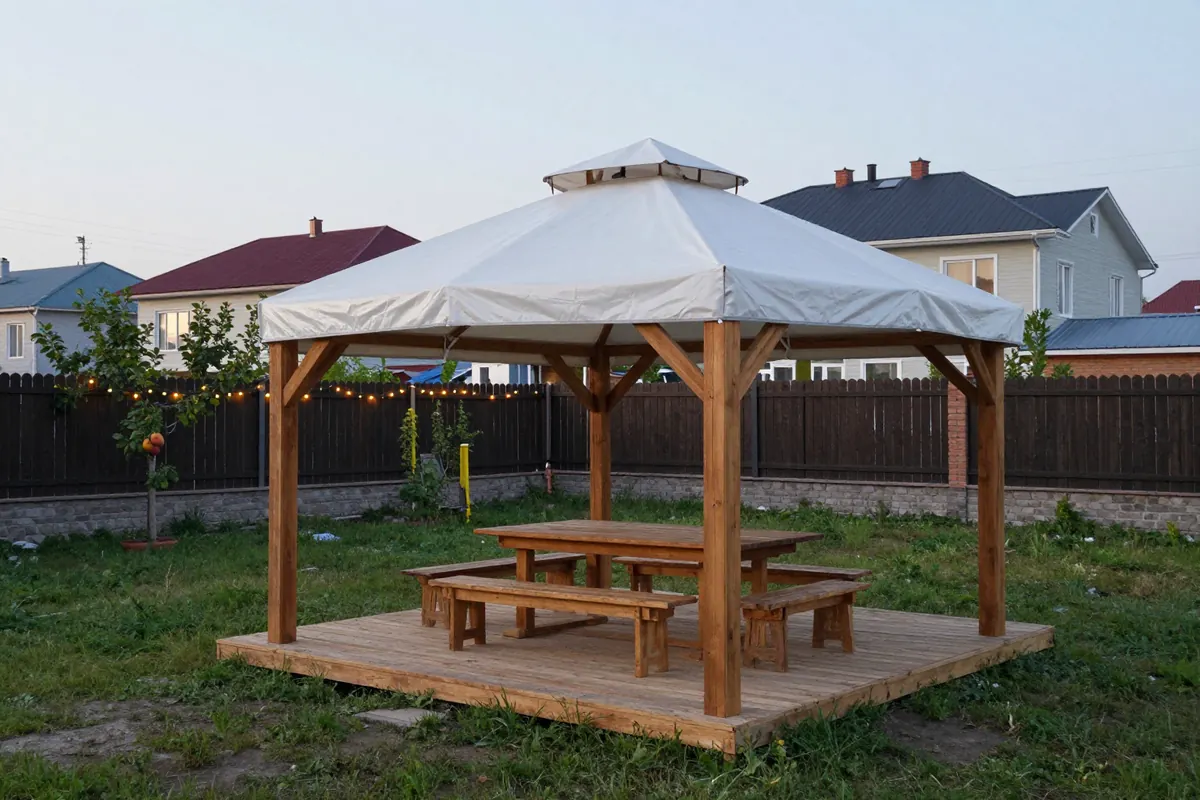
Steel frame and PVC tent membrane along the edges, quick installation and lightweight structure.
- From 590 000 ₸ for Ø4 m
- Timeframe 5–7 days
- Light seasonal dome
Advantages:
We'll reply in 15 minutes
Types of dome gazebos
Panoramic
Steel frame with reinforced ribs and double-glazed windows in the facets: a view of the garden and mountains across the entire sphere.
- From 3 900 000 ₸ for Ø5 m
- Timeframe 20–25 days
- Reinforced edges for double-glazed windows
Advantages:
Combined
Blind edges with soft tiles on OSB plus window-edges for light and view.
- From 1 450 000 ₸ for Ø6 m
- Timeframe 16–20 days
- Tiles and window-edges
Advantages:
Wooden
Ribs made of dry timber on steel connectors, OSB cladding with soft tiles, a solid warm sphere.
- From 1 250 000 ₸ for Ø5 m
- Timeframe 14–18 days
- Timber ribs, warm cladding
Advantages:
Polycarbonate
Steel frame and cellular polycarbonate in the edges: a light dome with diffused light.
- From 690 000 ₸ for Ø4 m
- Timeframe 7–10 days
- Diffused light during the day
Advantages:
Tent
Steel frame and PVC tent membrane along the edges, quick installation and lightweight structure.
- From 590 000 ₸ for Ø4 m
- Timeframe 5–7 days
- Light seasonal dome
Advantages:
We'll reply in 15 minutes
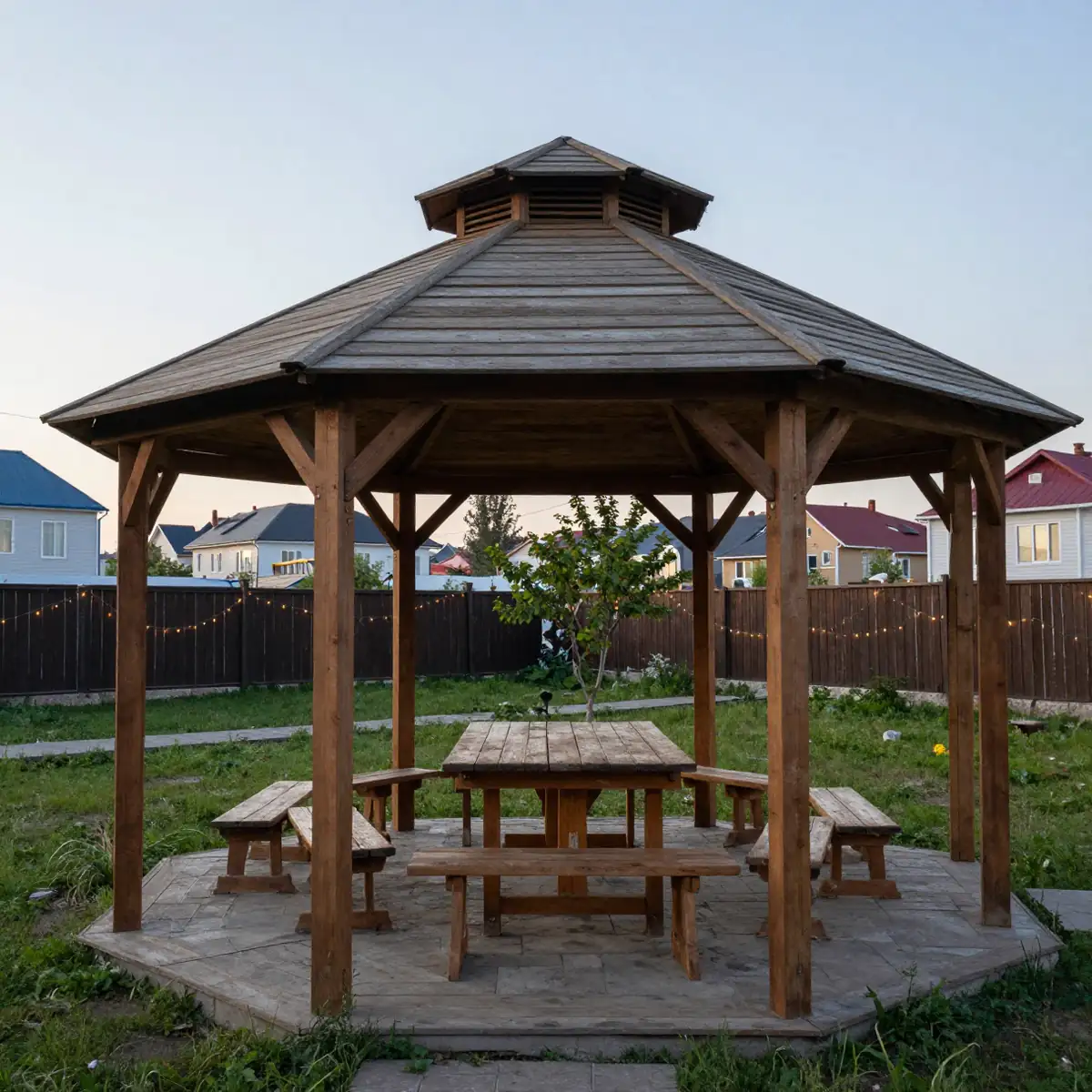
we make dome gazebos to size:
We calculate the diameter and face frequency for your plot
Drawing the dome in 3D: ribs, connectors, cladding of the faces
We add a podium, valve, and lighting according to the budget
By clicking the button you agree to the terms of the
 Privacy Policy
we make dome gazebos to size:
LEAVE A REQUESTBy clicking the button you agree to the terms of the
We calculate the diameter and face frequency for your plot
Drawing the dome in 3D: ribs, connectors, cladding of the faces
We add a podium, valve, and lighting according to the budget
Or call us at
+7 (700) 347-98-76Privacy Policywe make dome gazebos to size:
LEAVE A REQUESTBy clicking the button you agree to the terms of the
We calculate the diameter and face frequency for your plot
Drawing the dome in 3D: ribs, connectors, cladding of the faces
We add a podium, valve, and lighting according to the budget
+7 (700) 347-98-76Or call us at
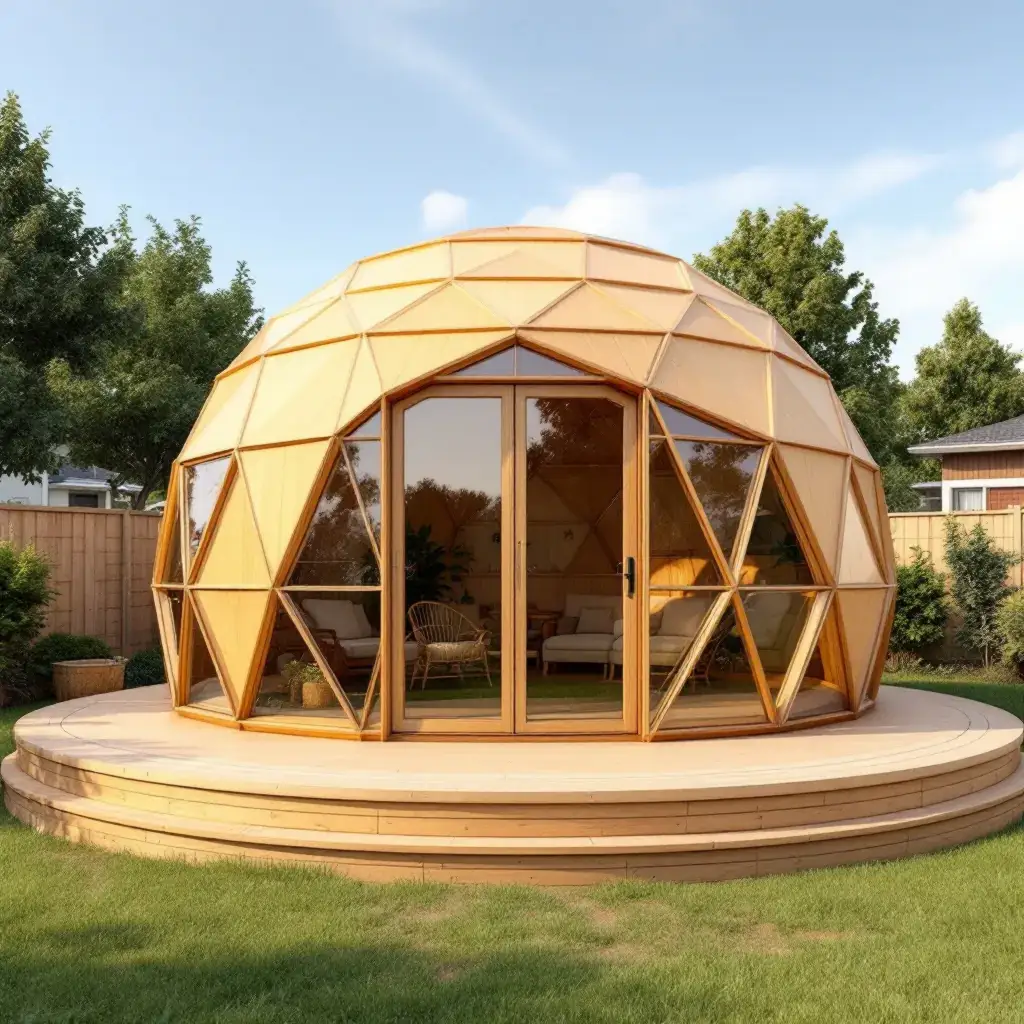
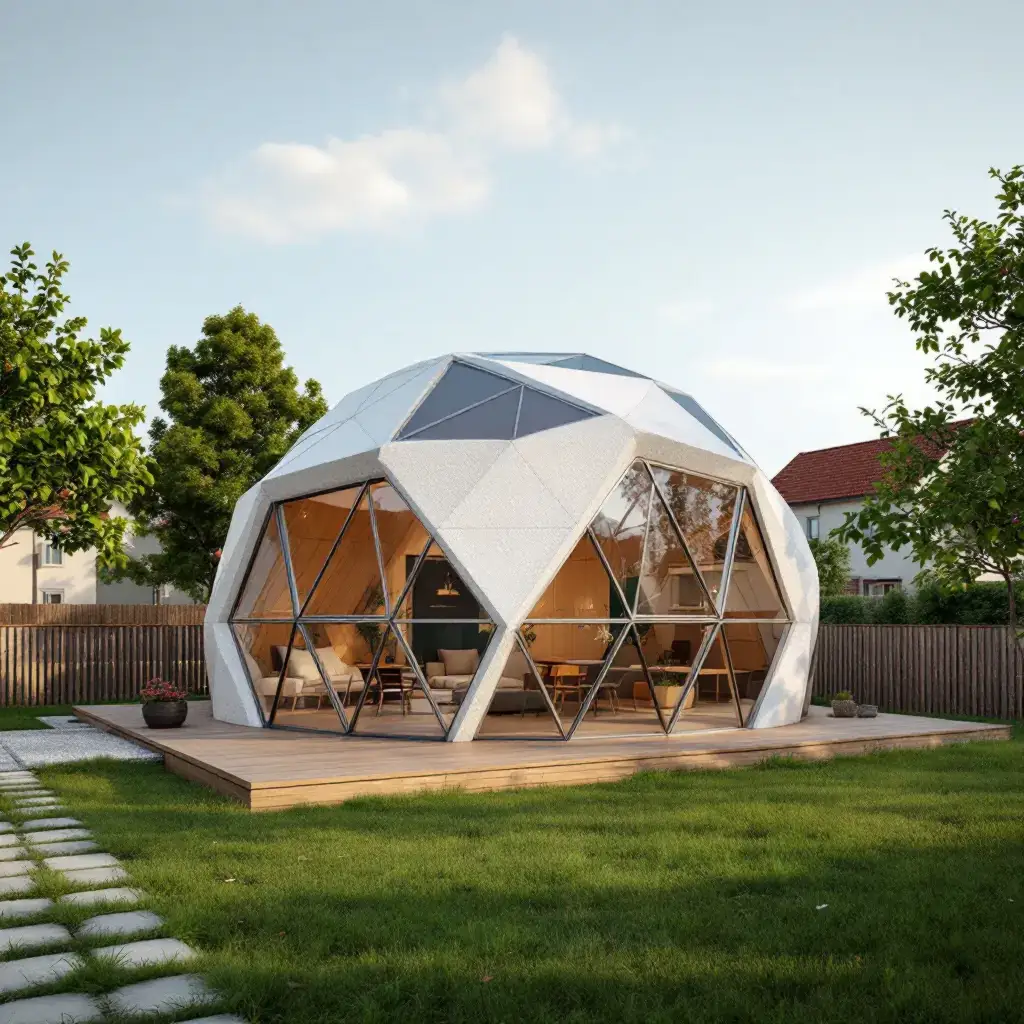
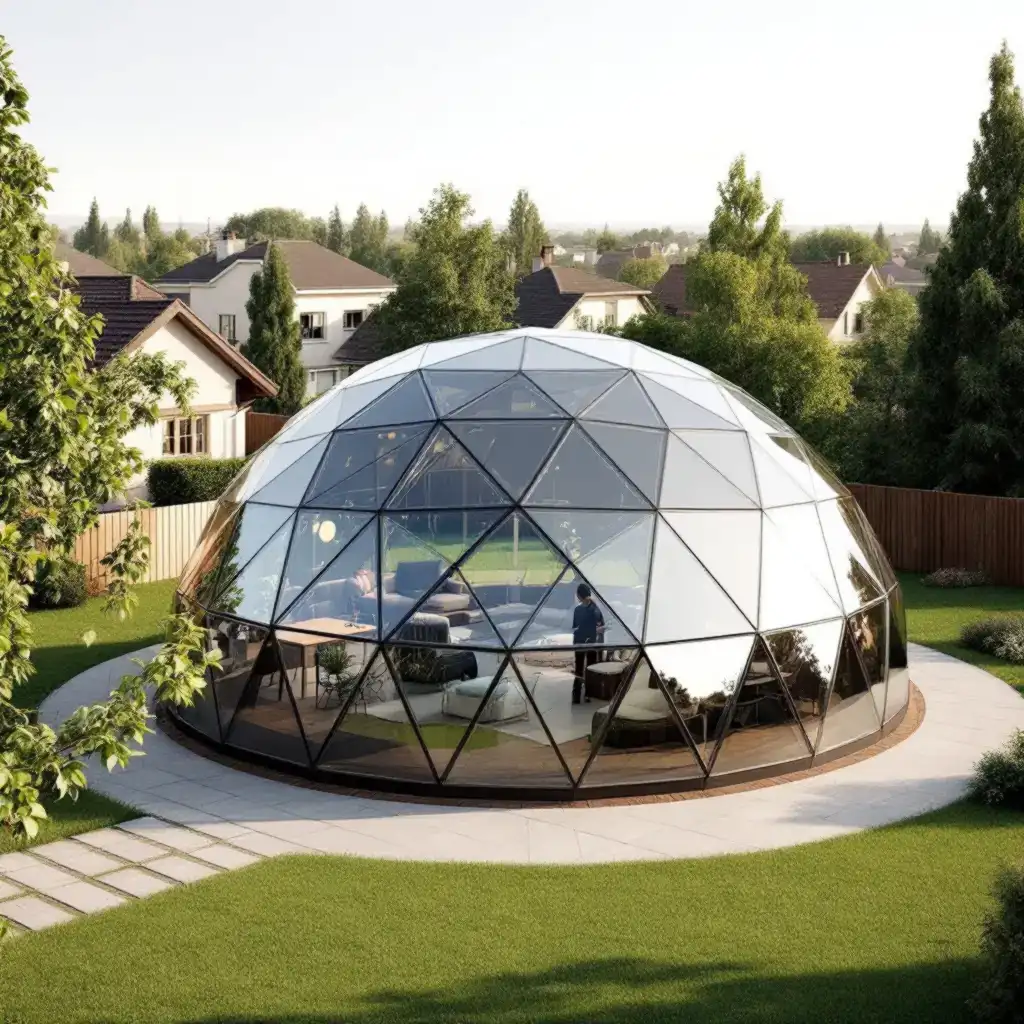
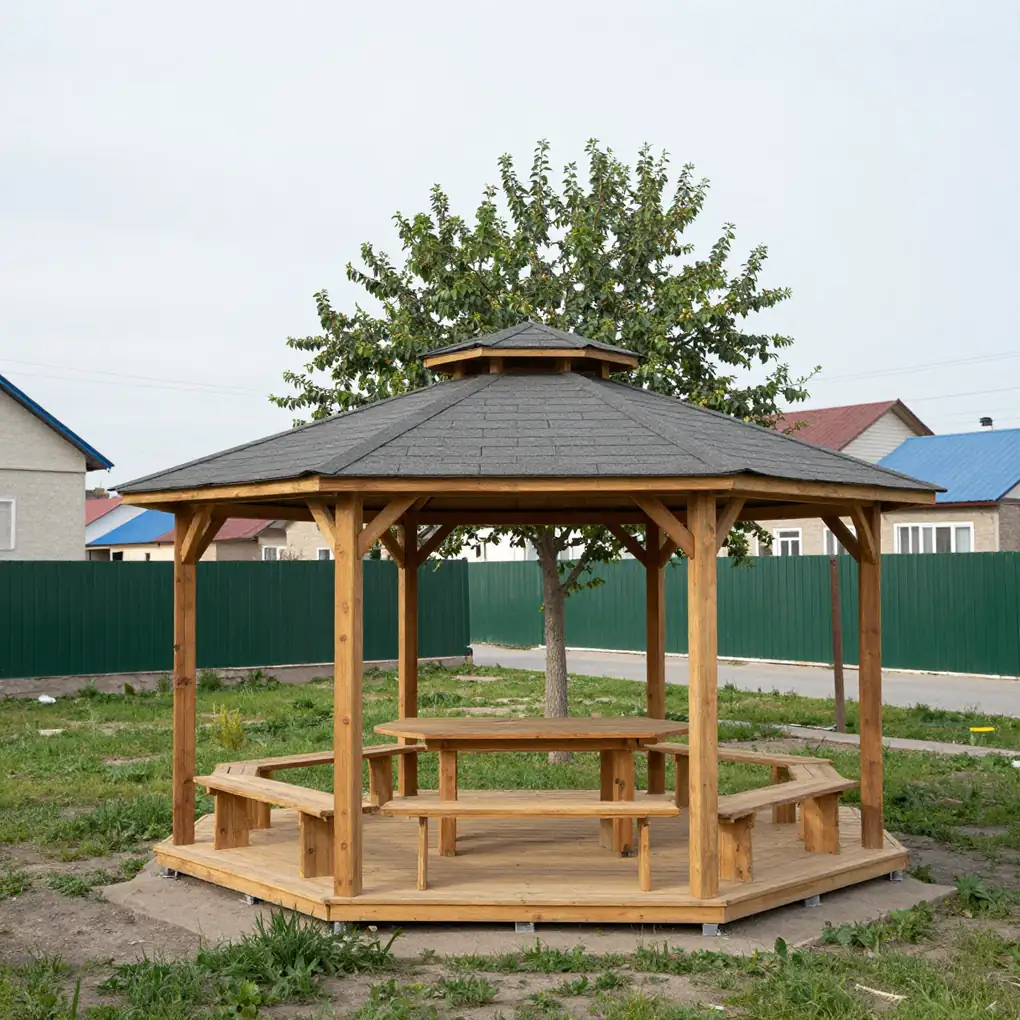
Examples of dome gazebos
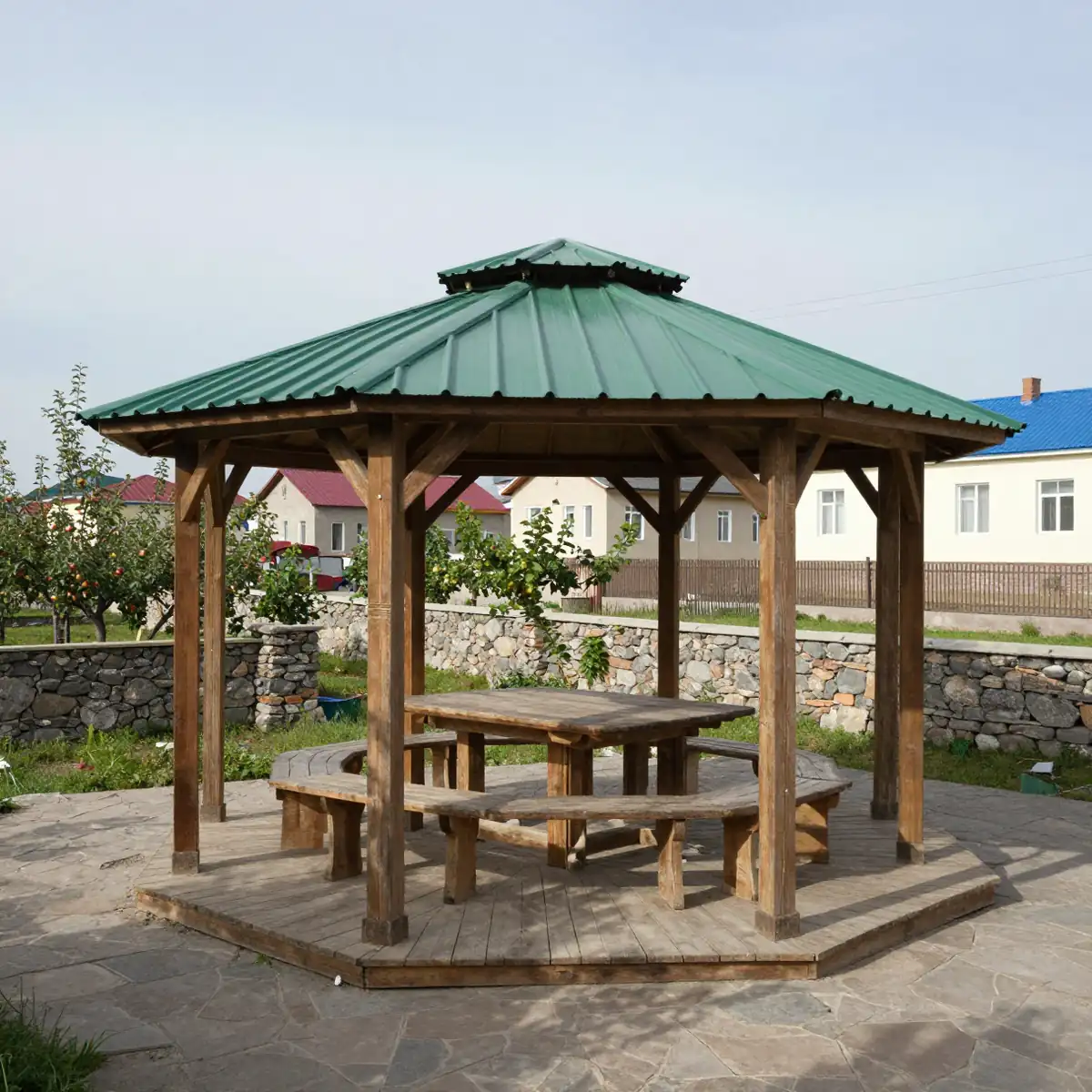
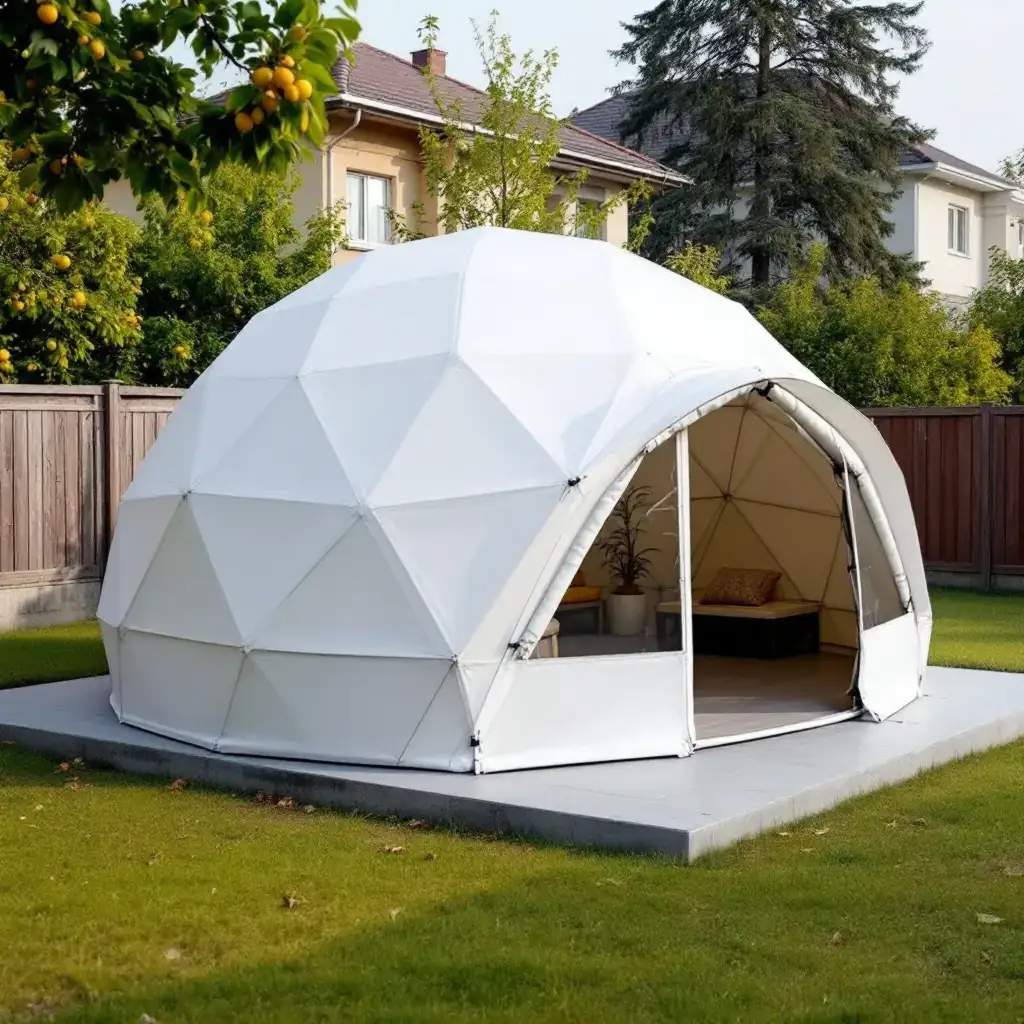
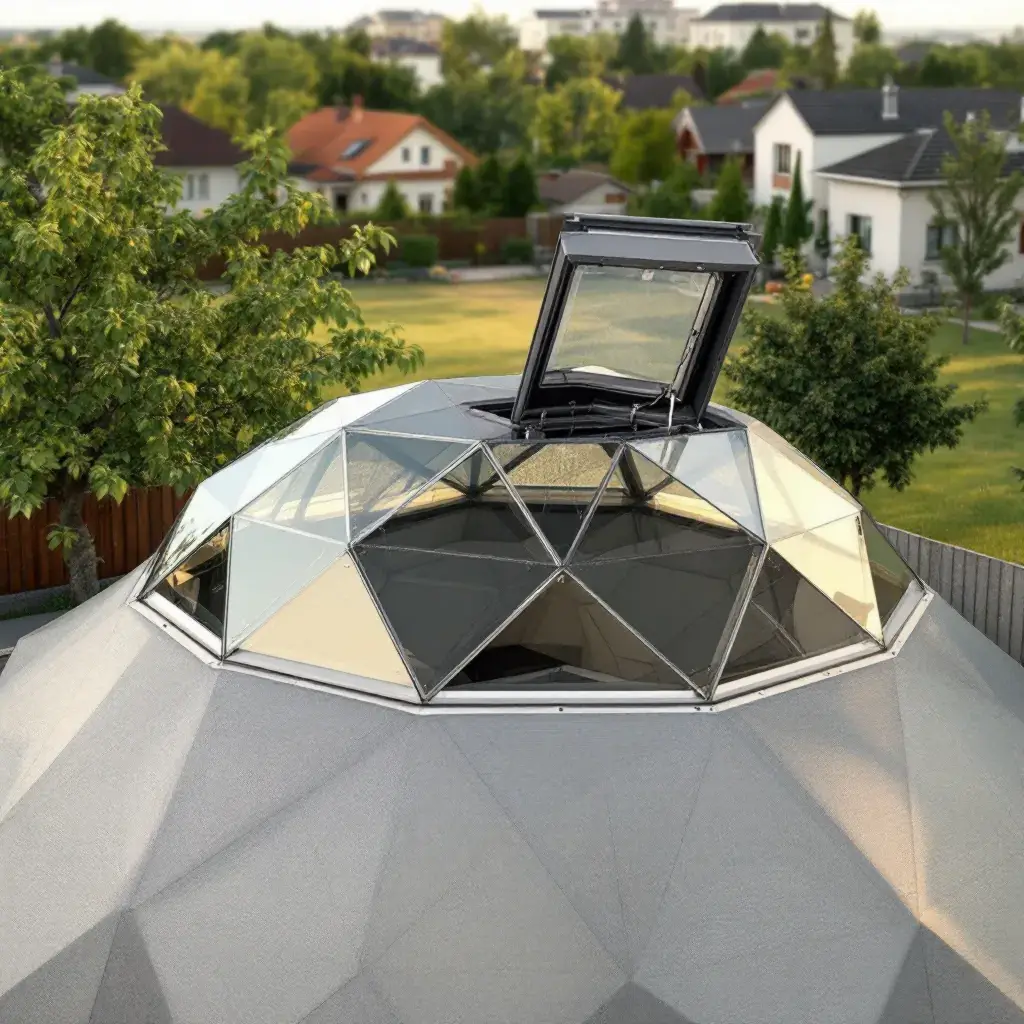
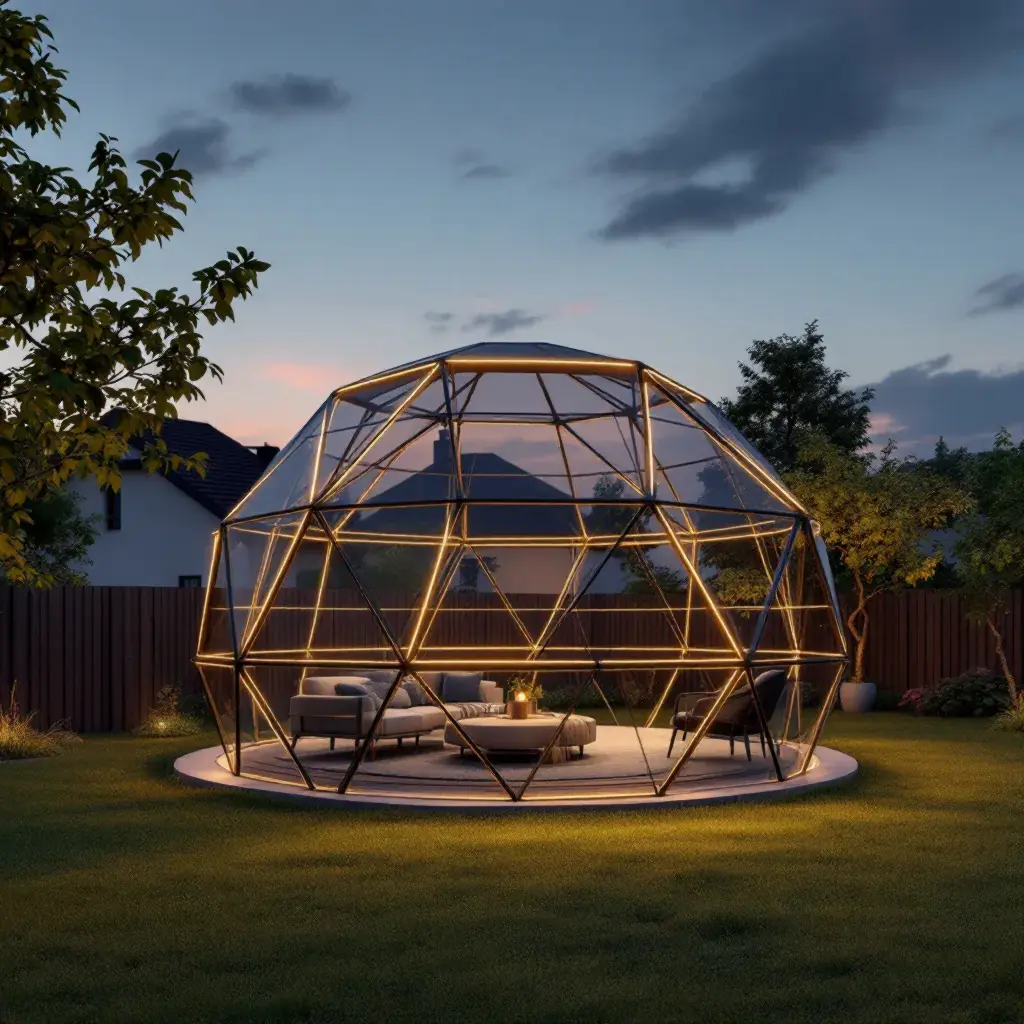
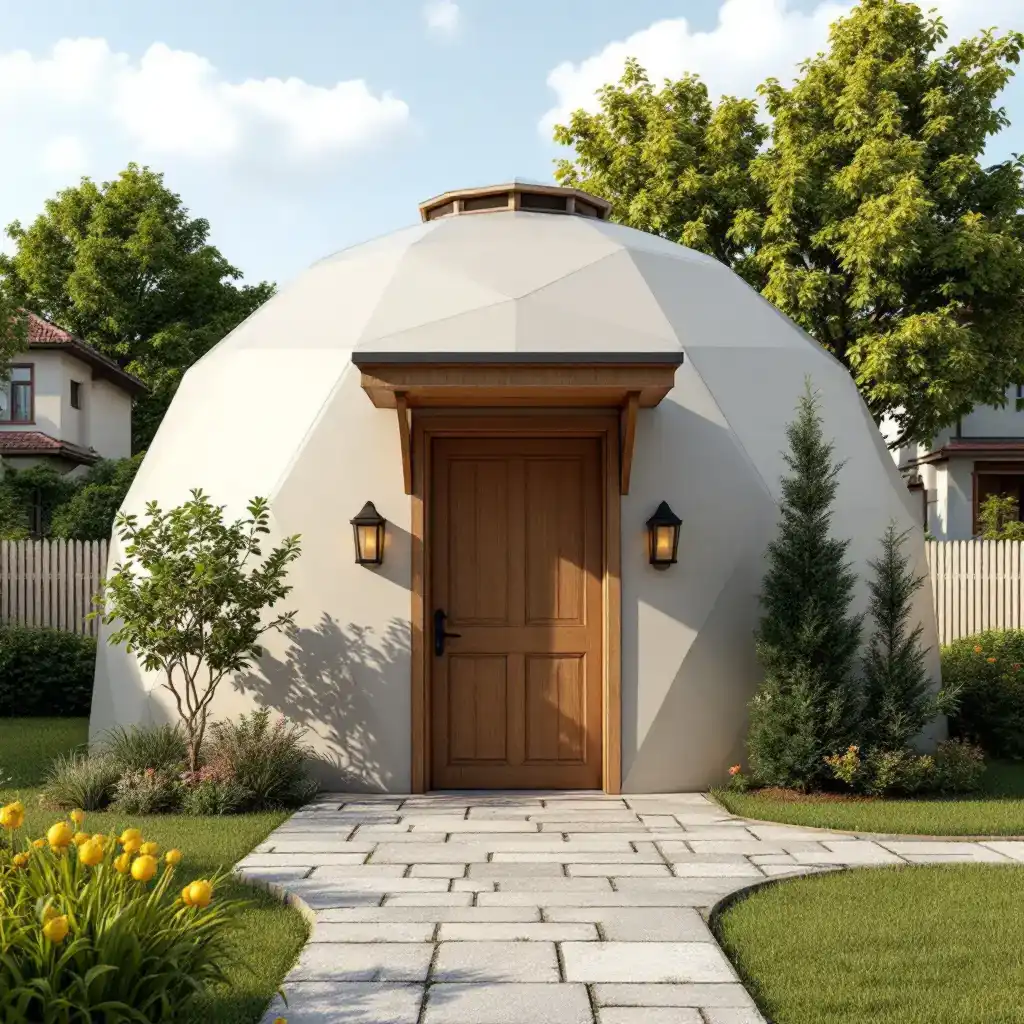
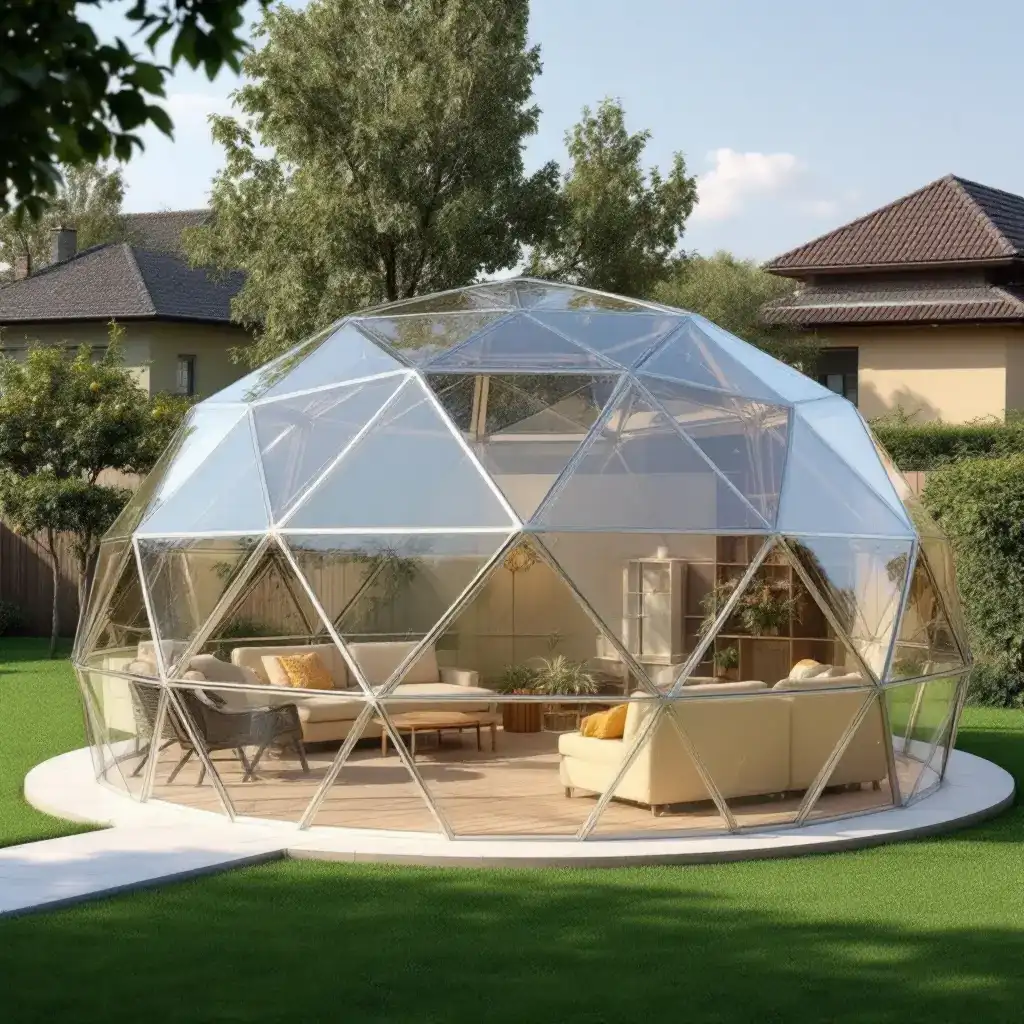
Domes made of polycarbonate, wood, and membrane
Prices for dome gazebos in Almaty
| SERVICE | COST |
|---|---|
| TURNKEY DOME GAZEBOS | |
| Tent dome made of PVC membrane, steel, Ø4 m | from 590 000 ₸ |
| Dome made of cellular polycarbonate, steel, Ø4 m | from 690 000 ₸ |
| Wooden dome with soft roofing, Ø5 m | from 1 250 000 ₸ |
| Monolithic polycarbonate dome, Ø5 m | from 1 390 000 ₸ |
| Combined: tiles and faceted windows, Ø6 m | from 1 450 000 ₸ |
| Insulated dome with a stove and chimney, Ø6 m | from 2 650 000 ₸ |
| Panoramic dome, double-glazed windows in all facets, Ø5 m | from 3 900 000 ₸ |
| FOUNDATION, CLADDING, AND EXTRAS | |
| Concrete posts along the base ring | from 60 000 ₸ |
| Screw piles for the dome, 8–12 pcs | from 110 000 ₸ |
| Monolithic round slab 150 mm | from 140 000 ₸ |
| Podium and decking board floor | from 18 000 ₸ per m² |
| Tinted polycarbonate for southern faces | from 6 000 ₸ per m² |
| Shading curtains along the edges | from 9 000 ₸ per m² |
| Insulation of the edges with 100 mm mineral wool | from 9 500 ₸ per m² |
| Window-facet with a double-glazed unit | from 85 000 ₸ each |
| Ventilation valve at the zenith | from 35 000 ₸ |
| Door portal with a canopy | from 150 000 ₸ |
| Lighting along the dome ribs | from 45 000 ₸ |
| Fireproof chimney penetration through the edge | from 70 000 ₸ |
| Electrical connection | from 25 000 ₸ |
| Development of a custom design | from 30 000 ₸ |
| Delivery across Almaty | from 15 000 ₸ |
| Delivery across the region | from 25 000 ₸ |
How we build a dome gazebo
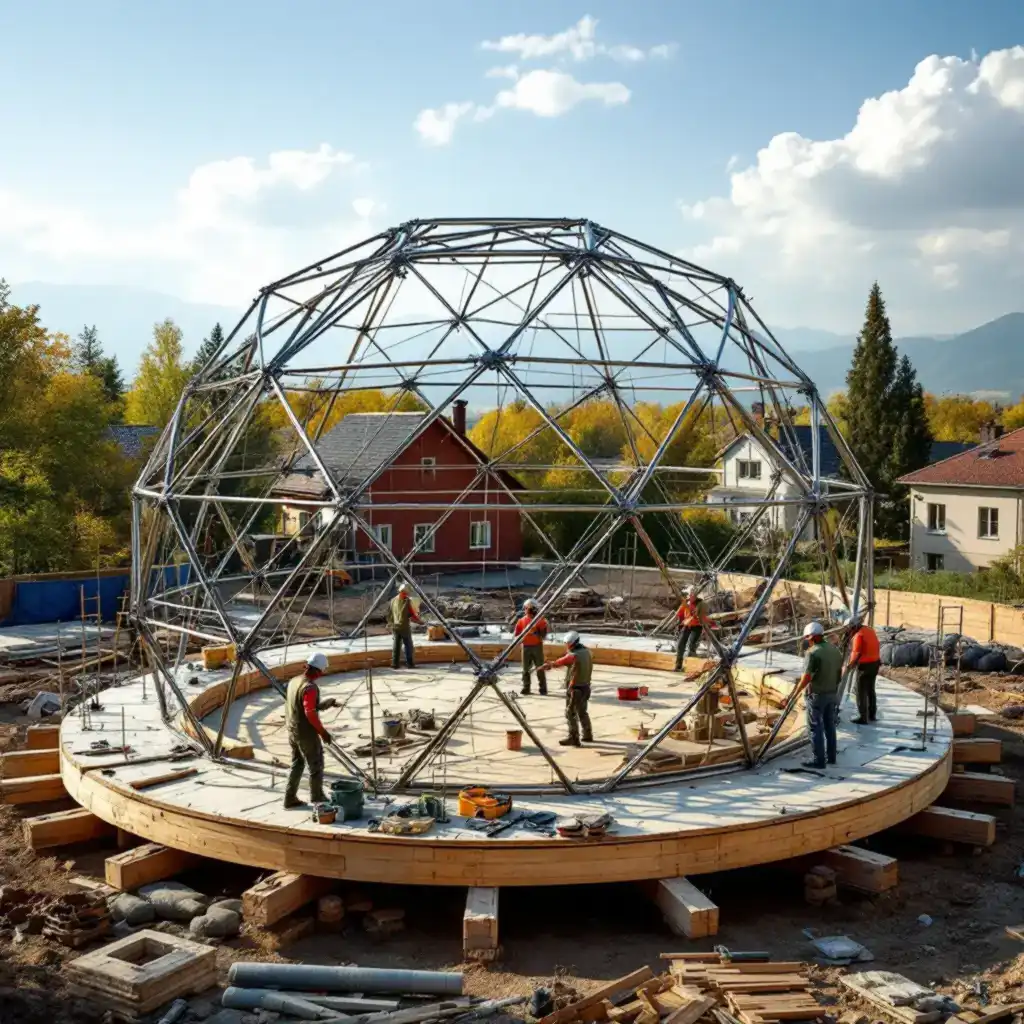

01.
Measurement and diameter
We inspect the plot, soil and wind. A visit in Almaty is free.
02.
Design and estimate
We calculate the frequency 2V, 3V or 4V and select the sheathing for the faces.
03.
Contract
We fix the price, deadlines and a 5-year warranty on the structure.
04.
Manufacturing
We prepare the ribs and units at our own production facility.
05.
Foundation and assembly
Supports or slab, frame on connectors, cladding and sealing.
06.
Handover and warranty
We check the joints by pouring water, remove debris, sign the act.
How we build a dome gazebo
Measurement and diameter
We inspect the plot, soil and wind. A visit in Almaty is free.
01.
Design and estimate
We calculate the frequency 2V, 3V or 4V and select the sheathing for the faces.
02.
Contract
We fix the price, deadlines and a 5-year warranty on the structure.
03.
Manufacturing
We prepare the ribs and units at our own production facility.
04.
Foundation and assembly
Supports or slab, frame on connectors, cladding and sealing.
05.
Handover and warranty
We check the joints by pouring water, remove debris, sign the act.
06.
We'll reply in 15 minutes
Let's calculate your dome

Thank you! We will contact you within 3 minutes.
By clicking the “Leave a request” button, you agree to the terms
Leave a request — we will select the diameter and cladding for the plot and calculate the estimate
Let's calculate your dome
Thank you! We will contact you within 3 minutes.
By clicking the “Leave a request” button, you agree to the terms
Privacy PolicyLeave a request — we will select the diameter and cladding for the plot and calculate the estimate
By clicking the “Leave a request” button, you agree to the terms
Thank you! We will contact you within 3 minutes.
Let's calculate your dome
Privacy PolicyLeave a request — we will select the diameter and cladding for the plot and calculate the estimate
Dome gazebo: how the geodome is constructed
A dome gazebo is a geodesic dome of triangular faces on a wooden or steel frame, which PROFI-DOM designs, manufactures at its own production facility and installs turnkey: diameter 4–8 m, cladding with polycarbonate, PVC membrane or OSB with tiles, a 5-year warranty on the structure; the base and floor are calculated separately.
Published: · Updated:
What is a geodome: frequency, diameter, capacity
A geodesic dome is not a "round one with a roof" but a structure made of triangular faces. This shape maintains strength without internal supports and columns. We explain what frequency, diameter and capacity mean.
Dome frequency 2V, 3V, 4V — what it means in practice
Frequency is the number of segments the sphere is divided into: 2V gives large faces and a simple frame, 3V is the base option for 4–6 m gazebos, 4V gives small faces for large 6–8 m domes. In a geodesic structure, frequency determines how many edges and connector nodes are in the frame: a 2V hemisphere has about 65 edges, 3V has from 120 to 165 depending on height, and 4V has around 250. The higher the frequency, the more edges and nodes — the frame is more complex and expensive, but the sphere is smoother and stiffer; a dome gazebo for 6–8 people is usually assembled using the 3V scheme, while 4V is justified when the diameter exceeds 6 m.
Diameter and capacity: how many people can sit at the table
We calculate seating capacity from the diameter: a 4 m dome is a table for 4–6 people, 5 m — 6–8 people, 6 m — 8–10 people, 7–8 m — a large company, a recreation area with a grill. The dome height is approximately half the diameter: at 4 m it is 2 m, at 6 m — 3 m, at 8 m — 4 m, and this determines whether a grill with an exhaust hood will fit inside. A dome has no corners or internal columns, so the usable area is used almost entirely. But the walls of the sphere are inclined inward, and at the edge the height drops quickly: dome gazebos are planned so that the table and grill stand closer to the center, and the benches along the perimeter.
Dome frame: wood on connectors or steel pipe
The frame supports the entire sphere — the joints, anchoring, and the dome's behavior under snow and wind depend on it. In the foothills, the choice between wood and steel is decided not by taste but by the loads on the specific plot.
Wooden ribs on connectors: pros and limitations
The wooden frame is assembled from planed dry timber, and the joints are tightened with metal “star” connectors — this is a warm-looking, repairable structure clad with polycarbonate or OSB with soft tiles. The rib cross-section is selected from 50×100 mm for a diameter of 4 m up to 70×150 mm for 6-8 m, and the connectors are cast aluminum or powder-coated steel — cheap stamped “stars” crack at the seam during the very first installation. The moisture content of the timber on arrival is no higher than 18%: raw timber “off the truck” shrinks, causing bolted joints to separate by 3-5 mm within a season. One set of ribs and connectors for a dome with a diameter of 5 m weighs about 180-220 kg — two people can lift it without a crane. A dome gazebo on wooden ribs looks warmer than steel and is easier to repair: a damaged rib is replaced entirely without touching the neighboring facets. If the timber has no factory antiseptic treatment, treat the ribs before assembly, not after: under the cladding you will not be able to touch them up.
Steel pipe on bolts, powder coating, and anchoring for seismic activity
We assemble the frame from profile and round pipe 40×40–60×60 mm: the ribs are cut and drilled to calculated lengths at the production facility, powder-coated over primer, and on site mounted on bolts through steel connector nodes. We calculate for seismicity of 9 points, snow in the foothills up to 150–200 kg/m² and strong wind gusts in open areas: for this, the rib is taken with a wall no thinner than 2–3 mm. The frame is fastened with anchors at each support point of the ring — two anchors M12–M16 per support, otherwise when the soil moves, the sphere will "move" together with the base. At PROFI-DOM, fastening to the podium is calculated together with the base, not "as built": a rigid steel node holds the sphere better than wood during gusts and snow, but an error in anchoring negates this advantage.
Dome cladding: polycarbonate, PVC membrane, OSB with tiles, glass
The cladding determines whether the dome will be bright in summer and warm in winter. On a sphere, the material behaves differently than on a flat roof: the facets are inclined at different angles, there are many joints, and this is the main selection criterion.
Comparison of claddings: light, season, installation, purpose
Before buying a dome gazebo, compare the claddings: the light inside, the season, and the complexity of installation depend on it.
| Cladding | Light transmission | Season | Installation specifics | What it is suitable for |
|---|---|---|---|---|
| Cellular polycarbonate | high, diffused | all year round | light, cut along the edge, requires sealing of edges | summer dining room, dacha |
| Monolithic polycarbonate | tall, transparent | all year round | stiffer, more expensive than cellular, fastened with thermal washers | capital dome, garden view |
| PVC tent membrane | medium, matte | warm season | stretches along the sphere, seams are welded | seasonal lightweight dome |
| OSB + soft roofing | no (solid) | all year round | continuous backing, trimming on the edges | insulated dome for year-round use |
| Glass / double-glazed windows | maximum | all year round | heavy, requires reinforced edges | year-round dome with a view |
Soft roofing on a sphere lays only on a continuous substrate of OSB or plywood and requires trimming on triangular faces — otherwise the edges come off after the first rainy season.
Entrance, window-faces and glazing: how to assemble a bright dome
A dome gazebo does not have to be entirely transparent or entirely solid. We combine cladding: we close the solid faces with OSB and tiles, the light ones with polycarbonate, give part of the triangles to window-faces and double-glazed windows, and also install a door portal with a canopy. At PROFI-DOM, triangular faces are glazed on reinforced ribs — the standard rib of a 2V dome with a diameter of 4 meters does not support the weight of glass without additional framing. Tinted polycarbonate in the southern faces noticeably reduces heating and removes the greenhouse effect, which otherwise turns the dome into a hothouse by noon. If the dome is planned for panoramic glazing or year-round recreation, insulation and reinforced ribs for glass are included at the design stage — redoing the cladding on a finished sphere is more difficult and expensive than choosing it right away. Other solutions with glass are on the glazed gazebos page.
Foundation and floor: podium on piles, columns or slab
A dome stands only as level as the base beneath it: a geodesic sphere has no corners, so any skew of the podium is immediately visible along the edges and seams of the cladding.
Why a dome needs a level round base
The dome rests on a ring along the perimeter, and any unevenness of the podium takes the sphere out of geometry — the edges stop matching, and the cladding goes in waves. For a geodesic sphere with a diameter of 4 meters, the circumference of the base is 12,6 meters, and a deviation of the ring in height of only 15-20 mm already creates a gap in the rib fastening unit. Therefore, the foundation is calculated in three options: monolithic slab, concrete pillars, screw piles — each type has its own scheme for anchoring the frame. On a plot with a slope in the foothills, a level area is not "filled in", but leveled along supports of different heights — otherwise in spring the soil will shift, and the dome will skew along with it.
Piles, posts or slab: what to choose for your plot
We select the foundation based on the terrain: screw piles — for slopes and weak soil, concrete posts — for a level plot, a monolithic slab — for a capital dome with heavy cladding and glass. The request "dome gazebo price" also includes the foundation: posts — from 60 000 ₸, piles — from 110 000 ₸, slab — from 140 000 ₸. Screw piles are driven below the freezing depth — 1,2–1,5 meters, blade diameter 250–300 mm for a 5–6-meter dome. 300×300 mm concrete posts are installed at a pitch of 1,5–2 meters around the ring (for a 4–6 m dome this is 8–12 supports), on top — strapping made of 100×150 mm timber and terrace floor boards. A 150–200 mm slab with double reinforcement is used for domes from 6 meters. At PROFI-DOM, the frame is anchored at every support point of the ring according to a single design, so the sphere sits evenly and holds its geometry.
Operation: leaks, overheating, condensation and ventilation
Before buying dome gazebos, people most often fear three things: that the sphere will leak at the joints, turn into a greenhouse in summer, and collect condensation on the facets in winter. All three are solved at the assembly stage, not after.
Sealing joints: why the dome does not leak
We seal the joints of the faces along the entire length of the rib and separately treat the nodes of metal connectors — that is exactly where leakage most often appears if the joint is left "by eye". On polycarbonate we install a profile with a rubber seal and neutral silicone, on the PVC membrane — a thermal seam and a clamping bar along the ribs, and on rigid sheathing with soft tiles — an underlay carpet with an overlap of 100 mm and a valley carpet at the connector nodes. The door portal is a separate risk zone: water more often leaks not along the faces but along the upper crossbar of the portal if it was treated with the same silicone as the ribs and no visor was installed. Water does not linger on the sphere but quickly goes down along the face, so what is critical is not the coating but the quality of the sheathing's adjacency to the rib and to the door portal.
Overheating, condensation and ventilation: how to avoid a greenhouse
Overheating and condensation are about air exchange: ventilation valves are installed in the upper part of the dome, and light-colored faces are tinted or covered with shading curtains. For a sphere with a diameter of 4–5 m, two or three valves at the zenith and one supply valve at the bottom near the portal are enough — hot air escapes through the top, and in summer it is noticeably cooler inside than in a dome without valves. When a mangal is used inside, ventilation is calculated separately: the inflow comes from below near the portal, and the exhaust goes through the valves at the zenith, so smoke does not linger under the sphere. Open options for cooking are collected among gazebos with a mangal. A dome with a stove requires a non-combustible chimney penetration through the face and insulation along the ribs with 100 mm mineral wool — otherwise warm air meets the cold face, and condensation runs along the joints.
Dome gazebo price: what the estimate consists of
The phrase "turnkey" means different things to different sellers: one counts only the frame with cladding, another adds the foundation, and a third leaves the floor and installation to you. Let's break down what items make up the estimate.
What is included in "turnkey" and what is purchased separately
For us, "turnkey" means measurement, design, frame, cladding and installation; the base and floor are separate line items in the estimate, and the stove, mangal, furniture and insulation are discussed separately if the dome is planned for year-round use. The estimate includes site inspection, a pile or column podium, wooden ribs with connectors or a steel pipe, cladding of the faces, floor, installation and additional elements at the joints. PROFI-DOM signs a contract and draws up the estimate before work begins, so the price does not surface during construction. The main share of the estimate is the frame and base, not the cladding: trying to save on the podium and joints costs more than choosing a simpler face material.
Buy a dome gazebo turnkey: measurement, design, installation and warranty
PROFI-DOM provides free measurement across Almaty, designs the dome with facet layout, manufactures the frame at its own production facility, installs it with its own crews, and gives a 5-year warranty on the structure. On site we take the slope, soil condition, and support points, after which the project fixes the 3V or 4V frequency, diameter, and anchoring scheme. You can take a ready-made kit with delivery, but then you will have to assemble the facet layout, fasteners, and joint sealing yourself or find a separate crew. A customer without intermediaries gets one contract for the entire cycle — from piles to the last facet — so responsibility for geometry and tightness is not diluted between the kit supplier and installers.
Conclusion
We have gathered the main things worth keeping in mind before ordering: from the dome frequency to ventilation. Below are conclusions that will save nerves and money at the assembly stage; other shapes and materials are collected in the general gazebo section.
Key takeaways
- Kit or turnkey: a kit with delivery is cheaper at the start, but you assemble the layout of edges, fasteners and sealing of joints yourself; with full contracting, one contract is responsible for geometry and joints.
- Dome frequency: 3V is the base for 4–6 m gazebos, 4V is for spheres larger than 6 m; the higher the frequency, the more ribs and nodes.
- Frame: wood on connectors is repairable and cheaper to replace ribs, steel holds wind and foothill snow more rigidly.
- Cladding: polycarbonate and PVC membrane give light and panorama, OSB with soft tiles — a blind warm sphere for winter.
- Foundation: piles, posts, or a slab are selected based on the terrain; the skew of the podium is immediately visible from the edges of the cladding.
- Operation: leaks, overheating and condensation are addressed by sealing joints and ventilation valves at the assembly stage, not after the first winter.
- Price: the main share of the estimate is the frame and base, not the cladding; saving on the podium and joints costs more.
 Айдос БаймуханбетовGate installation masterExperience 21 years · Rating 4,62 (81 reviews)About the author
 Dilshot SaparovForeman of installersExperience 15 years · Rating 4,7 (100 reviews)About the author
 Bakhitshat KhamraevGate installerExperience 16 years · Rating 4,88 (65 reviews)
 Bakhtiyar D.WelderExperience 12 years · Rating 4,5 (58 reviews)
 Vladimir ShkurkoMetal structures masterExperience 20 years · Rating 4,88 (75 reviews)
 Dauren TleukulMetal structures welder-assembler23 years of experience · Rating from 4,96 (50 reviews)
 Edil NugmanovGate installerExperience 15 years · Rating 4,63 (28 reviews)
 Kosylbek KurmangazhievGate installer23 years of experience · Rating from 5,0 (60 reviews)