
Which corrugated sheet to choose for a roof: a guide to grades, thickness and coating
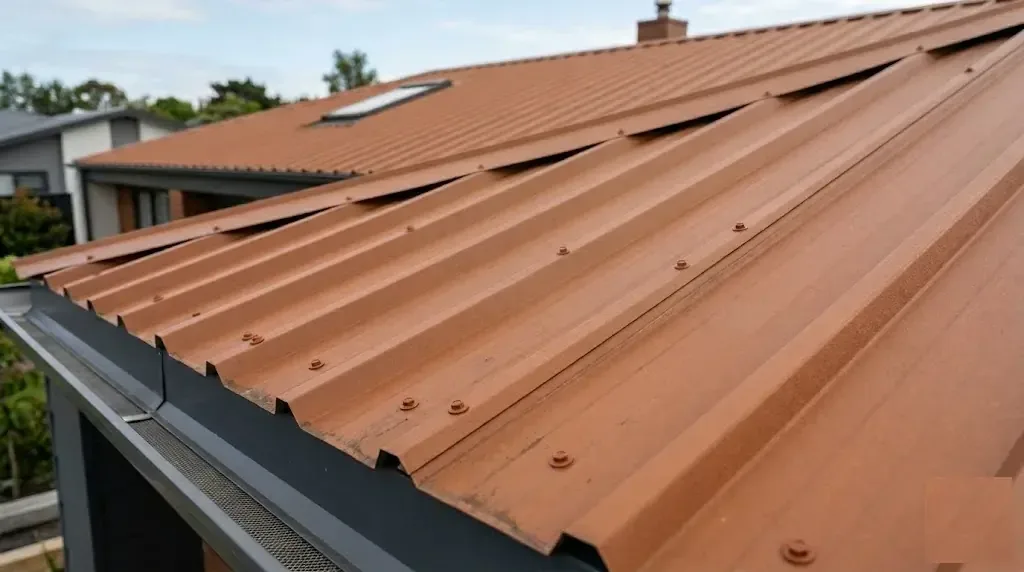
For the roof of a private house, the optimal choice is corrugated sheet of grade NS35 or H60 with a metal thickness of 0,5 mm and a polymer coating of polyester (glossy or matte). The corrugation height of 35–60 mm provides sufficient load-bearing capacity on pitched roofs with a slope from 10°. For roofs with a low slope (5–10°), H60 or H75 is required.
Corrugated sheet marking — S, NS, N: what to choose for a roof
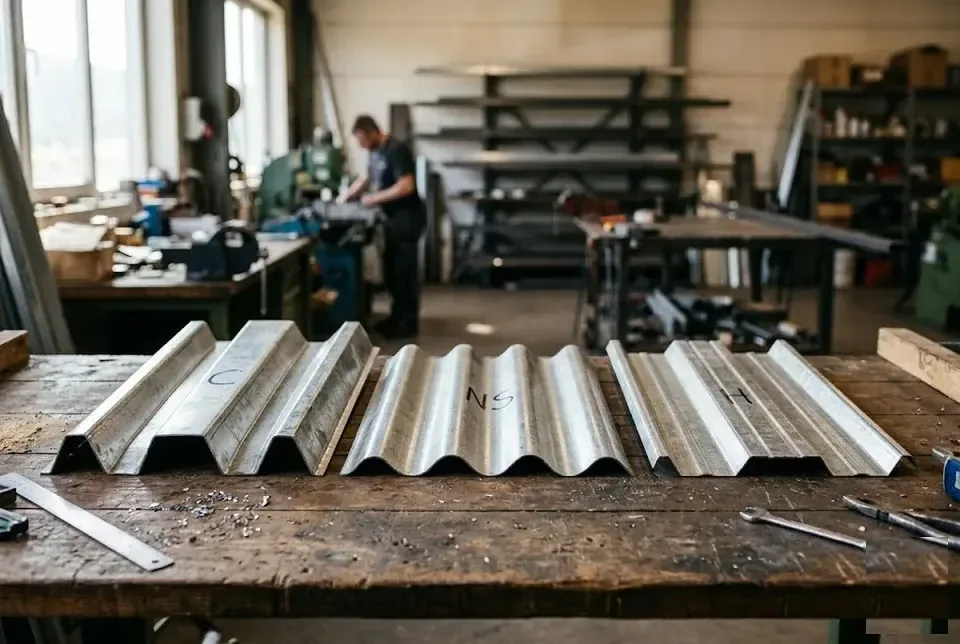
Which corrugated sheet for a roof is a common question, so let's examine it in detail. The marking of corrugated sheet is the first thing a buyer encounters. The letters S, NS, N and the numbers indicate the purpose and load-bearing capacity. Let's figure out what they mean and which grade to choose for roofing.
What the letters in corrugated sheeting marking mean — S, NS, N
The marking of corrugated sheets according to GOST 24045- consists of a purpose letter (C — wall, H — load-bearing, HC — universal) and a number indicating the corrugation height in millimeters. For the wall series (C), the corrugation 8–21 mm — C8, C10, C21, C44 — is designed for vertical loads of facades and fences, and not for snow pressure or the weight of a person. Load-bearing corrugated sheet H (H60, H75, H114) has a corrugation from 60 to 114 mm and reinforced longitudinal stiffening ribs, and is used in industrial roofs with large spans between supports. The universal series HC (HC35, HC44) occupies an intermediate position: the corrugation 35–44 mm provides sufficient rigidity on pitched roofs without overloading the rafters with the weight of the sheet — HC35 weighs about 5,5 kg/m² versus 7,5 kg/m² for H60. Wall corrugated sheet (C) is not designed for roof loads — its use on a roof leads to deformation and leaks.
NS35 or N60 — — which corrugated sheet is best for a private house roof
For a pitched roof of a private house with a slope of 10° or more, corrugated sheet NS35 — is optimal; it provides sufficient rigidity at a lower price than H60. With a batten spacing of up to 1 meters and a snow load of up to 180 kg/m² (the standard for the foothills of the Trans-Ili Alatau), NS35 holds the weight without deflections, and the difference in weight saves on delivery: for a roof of 150 m², approximately 300 kg less metal is used than with H60. H60 has a corrugation of 60 mm and additional stiffening ribs on the trapezoid, which increases the load-bearing capacity to 300–400 kg/m², but for a typical cottage with a slope of 15–25°, this is excessive — the overpayment for the sheet is 30–40% without an increase in reliability. H60 is justified for roofs with a slope of 5–10°, high snow loads, or large spans between supports — in other cases, its excessive load-bearing capacity leads to overpayment.
Comparison of corrugated sheet grades for roofing — table
| Grade | Type | Corrugation height | Roof pitch | Recommended load | Application |
|---|---|---|---|---|---|
| NS35 | Universal | 35 mm | from 10° | Medium | Pitched roofs of private houses |
| NS44 | Universal | 44 mm | from 10° | Medium+ | Roofs with a wider batten spacing |
| N60 | Load-bearing | 60 mm | from 5° | High | Low-pitch roofs, high snow loads |
| N75 | Load-bearing | 75 mm | from 5° | Very high | Industrial roofs, large spans |
| N114 | Load-bearing | 114 mm | from 3° | Extreme | Industrial facilities, special loads |
| From 21 | Wall | 21 mm | from 15° (with frequent battens) | Low | Outbuildings, canopies (not for a dwelling) |
Can wall-grade corrugated sheet (S) be used for a roof
Wall corrugated sheet (C8, C10, C21, C44) is not recommended for the roof of a residential house — its low corrugation does not provide sufficient rigidity for snow and wind loads. For C21 the corrugation is only 21 mm: under a load of 100 kg/m² the sheet deflects by 4–6 mm between the battens, which leads to leaks at the overlaps and gradual destruction of the ridge seal. In the conditions of the Almaty foothills, where the snow load reaches 180 kg/m², the wall profile deforms within one winter — the sheet folds up like a house with no possibility of restoration. The exception is outbuildings (shed, garage) with frequent battens (spacing 0,3–0,5 m) and short spans, where the load is minimal.
What corrugation height is needed for a roof
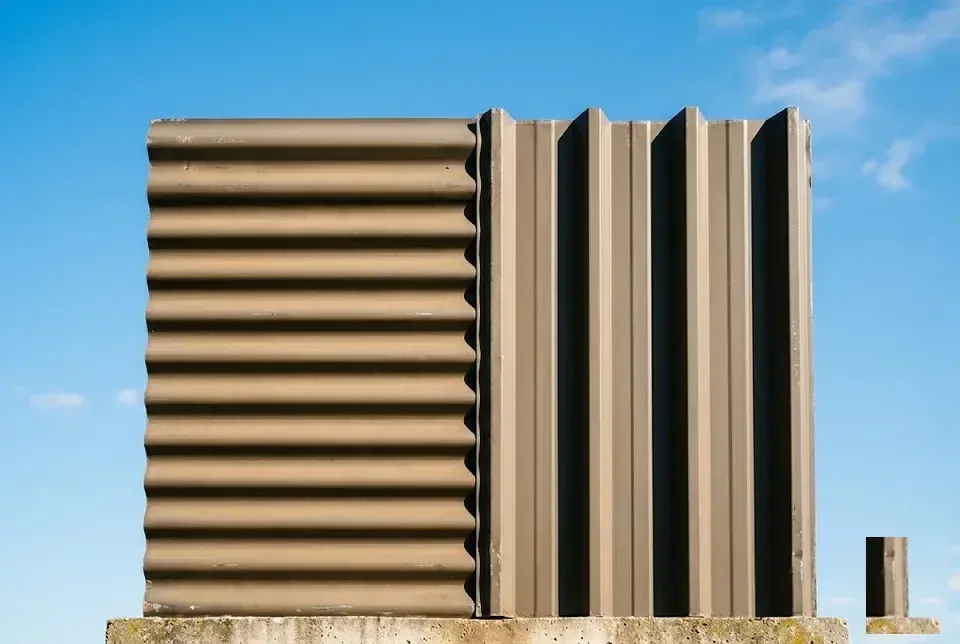
Corrugation height is the second most important parameter after the marking. It determines what load the roof will withstand and what batten spacing is permissible. Let us look at which profile height to choose for different types of roofs.
How corrugation height affects the load-bearing capacity of corrugated sheet
The corrugation height directly determines the load-bearing capacity of corrugated sheeting: the higher the corrugation, the stiffer the sheet and the greater the batten spacing it allows. A sheet with a 20 mm corrugation (grade S20) at a batten spacing of 1 metre deflects under a load of 120–140 kg/m², while profile N75 with a 75 mm corrugation holds the same 1 metre with a margin of up to 400 kg/m² — the 3–4-fold difference is achieved through the geometry of the tall trapezoid working as a beam. In foothill areas, where the snow load exceeds 180 kg/m², a corrugation below 35 mm fails on deflection even at a batten spacing of 0,5 m: NS35 provides a margin of 15–20%, while S20 is already operating at its limit. Corrugated sheeting with a 60 mm corrugation withstands up to 250 kg/m² at a spacing of 1 m — on flat roofs with a slope of up to 5°, take a profile no lower than N60, otherwise the sheet will deform under the very first snowfall.
Recommendations on grades for roofing
For the roof of a private house, the optimal corrugation height is 35–60 mm: NS35 on pitched roofs with a slope of 10° or more, N60 for shallow roofs (5–10°) and regions with high snow loads. NS35 — is the most popular option on the Almaty market: at a batten spacing of 0,7–1 m it spans openings of up to 3,5 m and costs 15–20% less than N60. N60 is chosen for roofs with a slope of 5–10° or in dacha settlements near the foothills (Kargaly, Aksai), where the load reaches 200–220 kg/m² — its tall corrugation provides stiffness without frequent battens. N75 — is an industrial category for hangars: on an ordinary house it is excessive, but if you have an attic with purlins every 2–3 metres, N75 is justified. A corrugation height of less than 35 mm does not provide stiffness for roofing — the sheet “plays” under load, loosening the fasteners and causing leaks, so for roofing take a minimum of NS35, even on a steep slope.
Relationship between batten spacing and corrugation height
The pitch of the battens under corrugated sheeting is determined by the corrugation height and the snow load: for NS35 — 0,5–1 m, for H60 — up to 1,5 m, for H75 — up to 3 m. On a pitched roof with a slope of 25° and NS35, the boards are placed at 0,8–1 m intervals — this is enough for the design snow load of 150 kg/m², and when switching to H60 the pitch is increased to 1,2–1,5 m, but the sheet itself costs 20–25% more. On shallow roofs (slope 5–10°) with H60, the battens are installed at 0,5–0,7 m intervals — the snow load here is higher and snow slides off less readily. The higher the corrugation, the less frequently the battens are placed, which saves timber but makes the profile more expensive: before buying, compare both options taking into account the prices of boards and corrugated sheeting in your region.
What thickness of corrugated sheet for roofing — 0,4, 0,5 or 0,7 mm
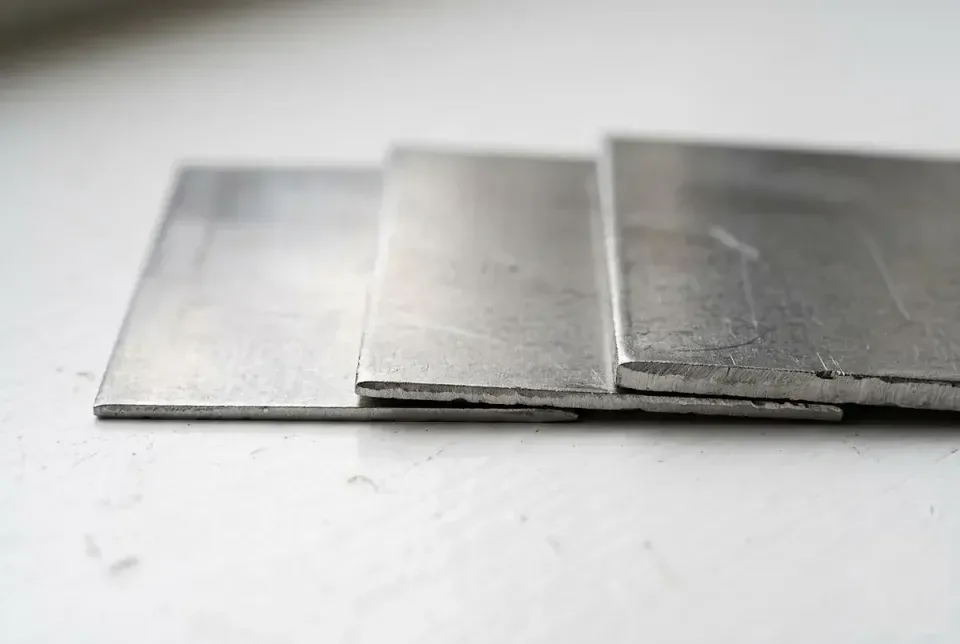
Grades of corrugated sheet for roofing — a frequent question, so let's examine it in detail. Metal thickness is a parameter where people often cut corners by choosing 0,4 mm. But for roofing this is a risk: a thin sheet may not withstand snow load. Let's look at which option is justified for different conditions.
Corrugated sheet thickness 0,4 mm — the minimum for roofing
A thickness of 0,4 mm is the minimum permissible for roofing, but only with frequent battens (spacing up to 0,5 m) and a low snow load (up to 100 kg/m²). Such a sheet weighs about 4,5 kg/m², which allows it to be installed without a crane, but the load-bearing capacity of NS35 or C21 corrugated sheet at this thickness is only 70–90 kg/m² with a support spacing of 0,5 m — for the Almaty foothills (Medeu, Kamenka), where the standard load reaches 180–200 kg/m², this is critically low. In the plains districts (Alatau) with a slope of more than 30°, 0,4 mm is still acceptable on sheds and canopies, but for a residential house we do not recommend this thickness: under a load above 150 kg/m² such corrugated sheet deforms within 2–3 winters, and the saving turns into a complete roof replacement.
Corrugated sheet thickness 0,5 mm — the optimal choice for a private house
A thickness of 0,5 mm is the optimal choice for the roof of a private house: it withstands a snow load of up to 200 kg/m² with a batten spacing of up to 1 m and does not require paying extra for excessive strength. The sheet weighs 5,5–6 kg/m², can be lifted by two people, and the load-bearing capacity of NS35 or H60 corrugated sheet at this thickness reaches 150–180 kg/m² with a support spacing of 1 m — this is enough for most pitched roofs in Almaty with a load of 160–180 kg/m² (Bostandyk, Auezov districts). Standard 25 µm polyester on 140 g/m² galvanising provides 15–20 years without corrosion, while premium coatings such as PVDF or Printech extend the service life to 25 years. 0,5 mm corrugated sheet with a polyester coating lasts 15–20 years without loss of load-bearing capacity — this is the standard in most pitched roofs.
When a thickness of 0,7 mm and above is needed
A thickness of 0,7 mm is required for roofs with large spans (batten spacing up to 1,5 m), high snow loads (from 250 kg/m²) or for industrial facilities. The sheet weighs 8–9 kg/m² — lifting it requires at least four people or mechanisation, and the load-bearing capacity of H60 or H75 corrugated sheet at this thickness reaches 300–350 kg/m², which allows spanning up to 3 m without intermediate supports. In Almaty such corrugated sheet is justified for roofs with a slope of less than 10° (flat roofs of garages, terraces) and for industrial workshops in the Industrial Zone. For a private house, a thickness of 0,7 mm makes sense only in extreme snowfalls or a roof slope of less than 5° — in other cases it is excessive strength and unnecessary expense.
Comparison of corrugated sheet thicknesses for roofing — table
| Thickness | Snow load | Batten spacing | Application | Service life |
|---|---|---|---|---|
| 0,4 mm | up to 100 kg/m² | up to 0,5 m | Outbuildings, southern regions | 10–15 years |
| 0,5 mm | up to 200 kg/m² | up to 1,0 m | Private houses, standard conditions | 15–25 years |
| 0,7 mm | up to 300 kg/m² | up to 1,5 m | Low-pitch roofs, industry | 25–40 years |
At the same thickness, corrugated sheet with a higher corrugation (H60 vs NS35) withstands a greater load — these parameters work in tandem, so when choosing 0,4 mm for roofing, be sure to take a grade no lower than NS35.
Polymer coatings for corrugated sheet: comparison and selection
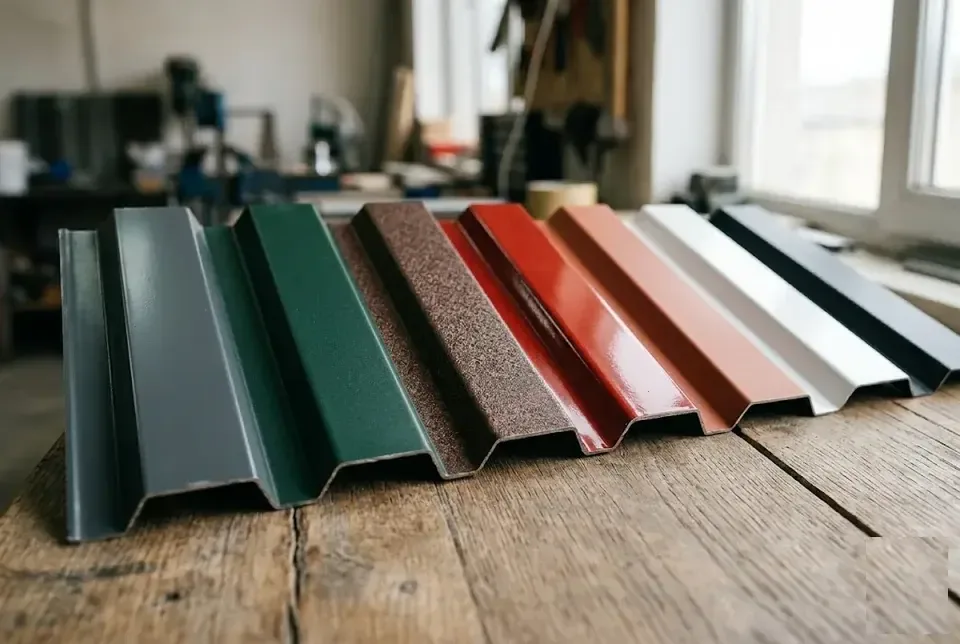
Load-bearing corrugated sheet for roofing is a common question, so let's examine it in detail. The thickness of corrugated sheet for a roof is a common question, so let's examine it in detail. The polymer coating protects the metal from corrosion and determines the appearance of the roof. The choice of coating determines how many years the roof will last without repair. Let's look at the main options.
Glossy polyester (PE) 25 μm — basic coating
Glossy polyester 25 µm thick is the most affordable coating for corrugated sheet, providing 15–20 years of service under standard operating conditions. This layer is applied to galvanised steel by painting with polyester enamel and gives an even glossy sheen — on Almaty roofs it can be seen from afar, which gives the house a neat appearance for minimal money. However, polyester is sensitive: during installation it easily gets scratches from soles or tools, and under direct sun the fading becomes noticeable after 5–7 years, especially on southern slopes. Glossy polyester is sensitive to scratches and fades in the sun within 5–7 years — for southern regions it is better to choose matt polyester or PVDF.
Matte polyester (MPE) 35 μm — an improved option
Matte polyester with a thickness of 35 microns differs from glossy not only in texture, but also in greater resistance to UV radiation — it lasts 20–25 years and fades more slowly. The coating composition includes light-scattering particles: the surface does not glare in the sun, and minor scratches from branches or hail are almost invisible on it — on Almaty roofs this is a serious advantage due to frequent spring storms. An additional 10 microns of layer provide a margin of corrosion resistance at bends and fastening points, where the glossy counterpart often cracks under temperature deformations. The matte surface glares less in the sun and better masks minor scratches — a practical choice for a house roof in southern regions.
Pural 50 µm — a premium coating for a durable roof
PVDF 50 µm thick is a polyurethane coating that lasts 30–40 years and is resistant to UV radiation, temperature changes and mechanical damage. Unlike polyester, PVDF retains elasticity at frosts down to –60 °C and does not crack at bends — this is important for Almaty, where winter swings from –25 °C during the day to –5 °C at night are not uncommon. Scratches appear less often on PVDF, and if they do occur, corrosion beneath them does not spread as it does on thin polyester, thanks to a denser polyurethane barrier. Paying extra for PVDF is justified for roofs of complex shape (many valleys, junctions), where the risk of coating damage is higher, and for regions with an aggressive environment (industrial zones, seacoast).
PVDF and aluminium-zinc — special coatings
PVDF (27 µm) is a fluoropolymer coating for aggressive environments (sea coast, industrial zones) and lasts 30+ years; aluminium-zinc is a zinc-aluminium coating that outperforms conventional galvanising in corrosion resistance by a factor of 2–3. PVDF on 80% consists of polyvinylidene fluoride — this composition barely fades and withstands acid rain, which is relevant for roofs near thermal power plants or chemical factories, of which there are several in Almaty. Aluminium-zinc (55% aluminium, 43% zinc, 2% silicon) is applied without a polymer layer and forms its own protective film on the cut edges, but it scratches easily during installation, and the scratches do not heal over as they do on galvanising. Aluminium-zinc does not require an additional polymer coating for corrosion protection, but it is inferior to pural in scratch resistance — it is chosen for industrial facilities.
Comparison of polymer coatings for corrugated sheet — table
| Coating | Thickness | Service life | UV resistance | Mech. resistance | Price (rel.) |
|---|---|---|---|---|---|
| Glossy polyester (PE) | 25 µm | 15–20 years | Medium | Low | Basic |
| Matte polyester (MPE) | 35 µm | 20–25 years | High | Medium | +10–15% |
| Pural | 50 µm | 30–40 years | Very high | High | +40–60% |
| PVDF | 27 µm | 30+ years | Maximum | Medium | +50–70% |
| Aluminium-zinc | — | 20–30 years | High | Low | +20–30% |
For a standard private house, matte polyester (MPE) offers the optimal price-quality ratio — it lasts 20–25 years and costs only 10–15% more than glossy. If the budget allows, Pural pays for itself on roofs of complex configurations due to the lower risk of damage during installation.
Which corrugated sheet suits your pitch and roof
The roof slope is the main factor determining the choice of corrugated sheet grade. The smaller the slope, the higher the requirements for load-bearing capacity and joint sealing. Let us look at which material suits different slopes.
Corrugated sheet for a low-pitch roof (5–10°)
For a roof with a slope of 5–10°, load-bearing grade corrugated sheet H60 or H75 — is required; their high corrugation (60–75 mm) provides rigidity and prevents leaks at a low slope. On a shallow roof, water stays longer, and the snow load is at its maximum: an H60 sheet made of 0,7 mm steel withstands up to 600 kg/m² of distributed load — twice as much as NS35 of the same thickness, and the purlin spacing is allowed up to 1,5 meters, which saves lumber on the frame. At a slope of less than 10°, the sheet overlap is increased to two waves, and the joints are additionally sealed — this is a mandatory condition for shallow roofs, otherwise capillary suction of water into the gaps is inevitable.
Corrugated sheet on a pitched roof (10–15°)
For a pitched roof with a slope of 10–15°, corrugated sheet NS35 or NS44 — is optimal; they provide sufficient load-bearing capacity at a moderate price. NS35 with a corrugation of 35 mm and a thickness of 0,5 mm withstands a snow load of up to 150 kg/m² with a batten spacing of 0,5–0,6 m — this covers the standards for the Almaty region and southern regions of Kazakhstan, where the design load is 70–100 kg/m². NS44 with a corrugation of 44 mm is stiffer: it can be laid on battens with a spacing of up to 1 m without loss of load-bearing capacity, and sheets are overlapped by one wave. On slopes of 10–15°, the batten spacing under NS35 varies from 0,5 to 1 m depending on the snow zone — for the south, the maximum is used; for the north, the minimum.
Corrugated sheet for a steep roof (more than 15°)
For a steep roof with a slope of more than 15°, any corrugated sheeting with a corrugation height of at least 35 mm is suitable — NS35 remains the optimal choice in terms of the price-to-reliability ratio. On such slopes, snow slides off under its own weight, so the peak load on the sheet is reduced by 30–50% compared with a shallow roof: the load-bearing capacity of NS35 0,5 mm is excessive here for a dwelling of up to 150 m², and the batten spacing can be increased to 1–1,2 m, cutting board consumption by 15–20%. For steep roofs, the minimum permissible thickness is 0,4 mm provided the battens are frequent, but on a dwelling 0,5 mm is more reliable: the overpayment is about 150–200 KZT per linear metre against the risk of deformation from a point impact of hail.
Table for choosing corrugated sheet by roof pitch
| Roof pitch | Recommended grade | Sheet overlap | Batten spacing | Note |
|---|---|---|---|---|
| 5–10° | H60, H75 | 2 waves | up to 1,5 m | Mandatory sealing of joints |
| 10–15° | NS35, NS44 | 1 wave | 0,5–1,0 m | A standard option for private houses |
| 15–20° | NS35 | 1 wave | up to 1,0 m | Optimal balance of price and reliability |
| more than 20° | NS35 | 1 wave | up to 1,2 m | Snow slides off on its own |
Allowance for snow and wind loads when selecting corrugated sheeting
Snow load determines the required load-bearing capacity of the corrugated sheet: for regions with a load of up to 150 kg/m², NS35 is sufficient; at 150–250 kg/m², H60 is needed; above that — H75. In Kazakhstan the zones differ drastically: for Astana and the northern regions the design load under SP RK 2.04-01- reaches 200–250 kg/m², while for Shymkent and the south it is only 70–100 kg/m², so in the north NS35 on a shallow roof will buckle under the snow after the very first winter. Wind load is critical for steppe regions with frequent hurricanes — here corrugated sheet with a higher corrugation (H60) is chosen and fastening is reinforced with screws at every other corrugation, otherwise in a gust of 30 m/s the sheet will be torn off together with the battens.
Mistakes when choosing corrugated sheet for a roof
Even knowing the theory, it is easy to make a mistake when choosing corrugated sheeting — taking a wall grade, saving on thickness or misjudging the slope. Let us look at typical mistakes and how to avoid them.
Mistake 1 — using wall corrugated sheet for roofing
The main mistake is using wall corrugated sheeting (S8, S10, S21) for the roof of a dwelling: the low corrugation does not provide stiffness, and the sheets deflect under the weight of snow even with a frequent batten spacing of 30–40 cm. Wall corrugated sheeting is designed for the vertical load from wind, not for a snow pack, which on a pitched roof presses perpendicular to the plane of the sheet. On roofs with a slope of up to 20° in Almaty, the design snow load reaches 150–200 kg/m² — for S8 this is critical: a deflection of 5–10 mm between supports leads to loss of tightness at the locks and leaks. For roofing, take only roofing grades NS35, NS44 or N60 with a corrugation height of at least 35 mm — they withstand the load on battens with a spacing of up to 1 metre.
Mistake 2 — saving on metal thickness
Saving on thickness is the second most common mistake: 0,4 mm corrugated sheet is suitable only for temporary structures; for a residential house the minimum thickness is 0,5 mm, and for regions with hail or snow — 0,7 mm. A 0,4 mm sheet deforms even during installation — if you step between the battens, a dent remains where the protective layer cracks and corrosion begins. In Almaty winters with swings from −20 to +5 °C, condensation on the inner side of the roof more actively destroys thin metal, and pea-sized hail leaves irreversible dents on 0,4 mm. The price difference between 0,4 and 0,5 mm is 15–20%, but the service life of a 0,4 mm roof is reduced 2–3 times because of corrosion at the points of deformation.
Mistake 3 — incorrect calculation of overlap and fasteners
A typical mistake is saving on screws: for a corrugated sheet roof, 8–10 screws per 1 m² are required, with fastening every other corrugation, and at the eaves and ridge — in every corrugation. A craftsman fastens by eye — putting 4–5 screws per square — and in the first strong wind the sheets begin to breathe: the rubber washer under the head loses its seal, and water leaks into the holes. For Almaty houses with attics, unsealed fasteners are also a cause of insulation freezing: moisture condenses on the cold metal and runs down into the roof assembly. Insufficient overlap (less than 20 cm at a slope of up to 15°) causes leaks at the joints; for small slopes the overlap is increased to 30 cm with mandatory sealing with bitumen tape.
Mistake 4 — ignoring additional elements
Without ancillary components (ridge, eaves strip, valleys, end strips), a corrugated sheeting roof loses its tightness: snow blows in through the open ends and water gets into the joints. At the ridge, without an aero element under the ridge, ventilation of the under-roof space is disrupted — condensate is not removed and the rafter system begins to rot within 2–3 years. In Almaty, with frequent winds up to 20 m/s, uncovered end strips also create noise — the sheets vibrate in the wind, producing a hum inside the house. Installing quality ancillary components made of the same material and colour as the corrugated sheeting increases the total roof cost by 10–15% but extends its service life by 5–7 years.
Conclusion
We have gathered the key criteria for choosing corrugated roofing sheets - from marking to thickness and coating. Here are the main conclusions that will help you avoid mistakes.
Key takeaways
- For a dwelling, choose load-bearing corrugated sheeting N or NS with a corrugation height of at least 35 mm and a metal thickness of at least 0,5 mm.
- The roof slope determines the minimum corrugation height: the smaller the slope, the higher the corrugation must be — for slopes up to 10°, a height of 60 mm and above is needed so that water does not leak under the roof.
- Choose the polymer coating for the climate of Almaty: polyester is suitable for moderate weather, while Pural or PVDF is for mountain areas with temperature fluctuations and ultraviolet.
- Do not skimp on thickness and additional elements — these are the main causes of leaks and short service life.
- Before purchasing, check the certificates for compliance with GOST and the actual metal thickness with a micrometer: the declared 0,5 mm may turn out to be 0,45 mm from unscrupulous suppliers.