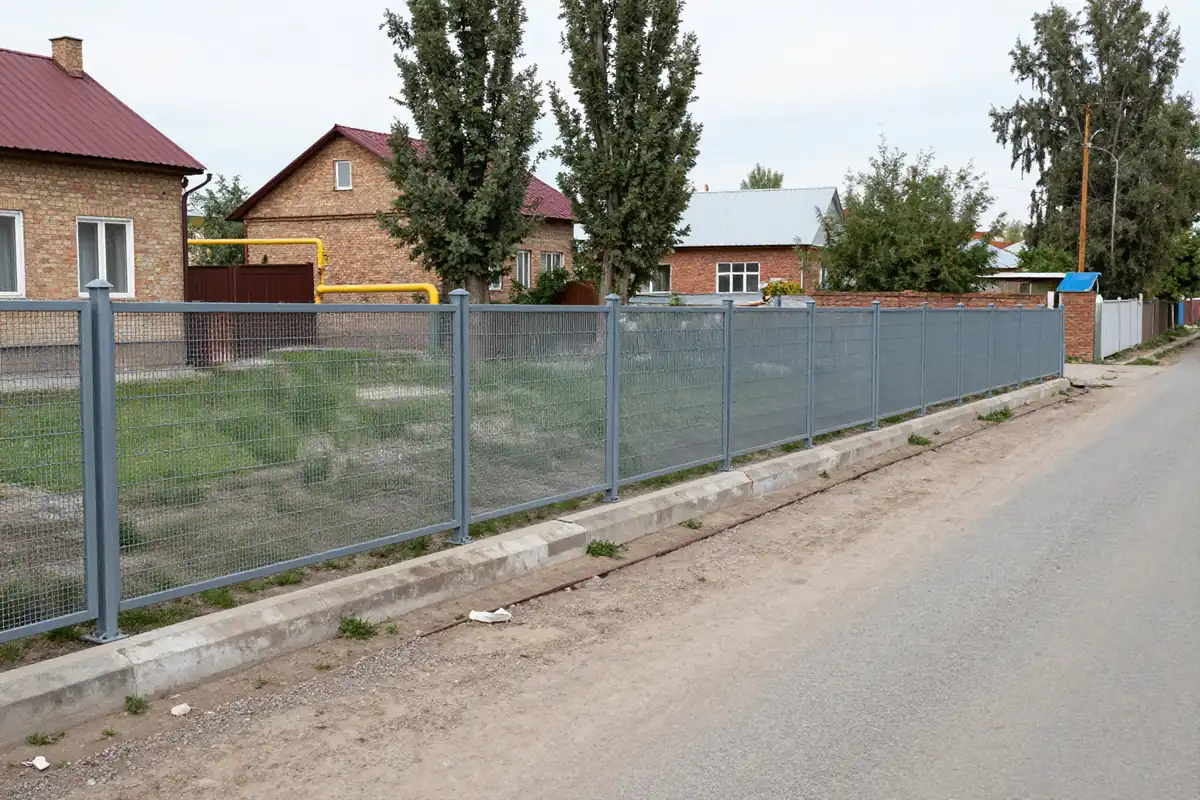
3D fence in Almaty
Panels made of 4–5 mm rod, galvanizing and RAL powder coating. Turnkey with posts and installation, from 6 200 ₸ per linear meter
 Our own production — no middlemen
 5 years warranty on the structure
 Free measurement and estimate for your site
 Installation — 2 days
3D fence in Almaty
Panels made of 4–5 mm rod, galvanizing and RAL powder coating. Turnkey with posts and installation, from 6 200 ₸ per linear meter
Our own production — no middlemen
5 years warranty on the structure
Free measurement and estimate for your site
Installation — 2 days
3D fence in Almaty
Panels made of 4–5 mm rod, galvanizing and RAL powder coating. Turnkey with posts and installation, from 6 200 ₸ per linear meter
Our own production — no middlemen
5 years warranty on the structure
Free measurement and estimate for your site
Installation — 2 days
Find out the cost of a 3D fence in 1 minutes
Why 3D fence is ordered from us

Panels from our own workshop
Panels of our own production: 4–5 mm rod, V-shaped ribs, cell 200×50 mm. Without intermediaries — savings up to 30%.

Fixed price
in the contract
We fix the price, scope of work and warranty in the contract before installation begins. The final amount does not increase during the work.

Posts below the freezing depth
We concrete 60×40 or 60×60 mm profile posts below the freezing depth. Caps close the end, water does not get inside.

Rust protection
The rod is galvanized, with a RAL powder coating on top: green, brown or graphite. The polymer covers weld points and cuts.

Price without markup
Our own production of panels, installation by our own crew, without intermediaries. Price from 6 200 ₸ per linear meter, warranty 5 years.

Calculation for wind and soil
We select the post spacing and rod for the wind at the plot. On a slope and heaving soil we recommend a strip foundation 60×20 cm.
Why 3D fence is ordered from us
Panels of our own production: 4–5 mm rod, V-shaped ribs, cell 200×50 mm. Without intermediaries — savings up to 30%.
Panels from our own workshop
We fix the price, scope of work and warranty in the contract before installation begins. The final amount does not increase during the work.
Fixed price
in the contract
We concrete 60×40 or 60×60 mm profile posts below the freezing depth. Caps close the end, water does not get inside.
Posts below the freezing depth
The rod is galvanized, with a RAL powder coating on top: green, brown or graphite. The polymer covers weld points and cuts.
Rust protection
Our own production of panels, installation by our own crew, without intermediaries. Price from 6 200 ₸ per linear meter, warranty 5 years.
Price without markup
We select the post spacing and rod for the wind at the plot. On a slope and heaving soil we recommend a strip foundation 60×20 cm.
Calculation for wind and soil
We'll reply in 15 minutes
What we make the 3D fence from

The characteristics of the panel, posts and coating determine how long the fence will last. Composition:
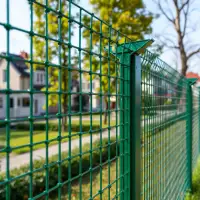
Welded panels made of 4–5 mm rod with V-shaped ribs, mesh 200×50 mm, height 1,03–2,43 m.
Panels
Posts and fasteners
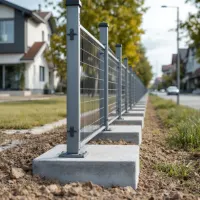
Profile posts 60×40 and 60×60 mm with plugs, fastening with galvanized clamps.
Coating
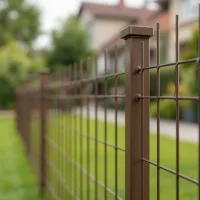
Galvanizing and RAL powder coating: green 6005, brown 8017, graphite 7016.
We design the 3D fence for the plot: we look at the boundaries, terrain and entrance, select the panel height, RAL color, and places for the gate and wicket.
We concrete the posts below the freezing depth; on a slope and weak soil we install a strip foundation 60×20 cm. What this gives:
Posts are level, without tilt
The base covers the gap under the section
Even fence line
What we make the 3D fence from
The characteristics of the panel, posts and coating determine how long the fence will last. Composition:
Panels
Welded panels made of 4–5 mm rod with V-shaped ribs, mesh 200×50 mm, height 1,03–2,43 m.
Posts and fasteners
Profile posts 60×40 and 60×60 mm with plugs, fastening with galvanized clamps.
Coating
Galvanizing and RAL powder coating: green 6005, brown 8017, graphite 7016.
Even fence line
The base covers the gap under the section
Posts are level, without tilt
We concrete the posts below the freezing depth; on a slope and weak soil we install a strip foundation 60×20 cm. What this gives:
We design the 3D fence for the plot: we look at the boundaries, terrain and entrance, select the panel height, RAL color, and places for the gate and wicket.
What we make the 3D fence from
The characteristics of the panel, posts and coating determine how long the fence will last. Composition:
Panels
Welded panels made of 4–5 mm rod with V-shaped ribs, mesh 200×50 mm, height 1,03–2,43 m.
Posts and fasteners
Profile posts 60×40 and 60×60 mm with plugs, fastening with galvanized clamps.
Coating
Galvanizing and RAL powder coating: green 6005, brown 8017, graphite 7016.
We concrete the posts below the freezing depth; on a slope and weak soil we install a strip foundation 60×20 cm. What this gives:
We design the 3D fence for the plot: we look at the boundaries, terrain and entrance, select the panel height, RAL color, and places for the gate and wicket.
Even fence line
The base covers the gap under the section
Posts are level, without tilt
Types of 3D fences

Standard
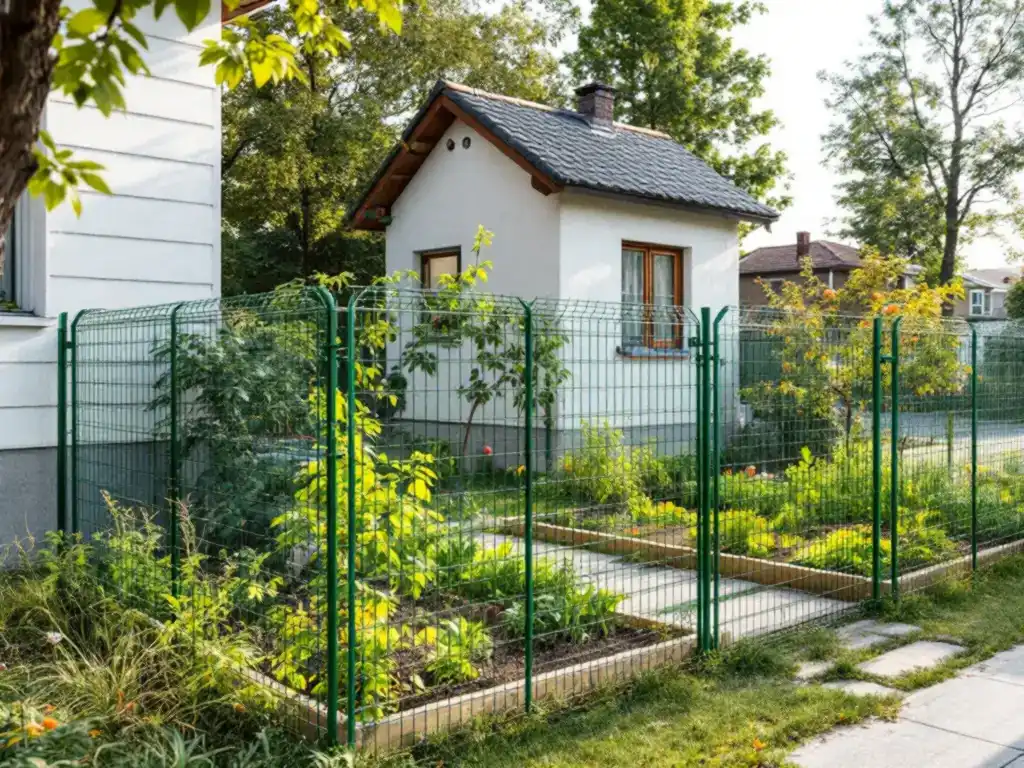
1,53 m panels made of 4 mm rod on 60×40 posts: a lightweight fence, lets wind through and does not shade the garden beds.

- From 6 200 ₸ per linear meter
- Post 60×40 mm
- Rod 4 mm, green RAL
Advantages:

Reinforced
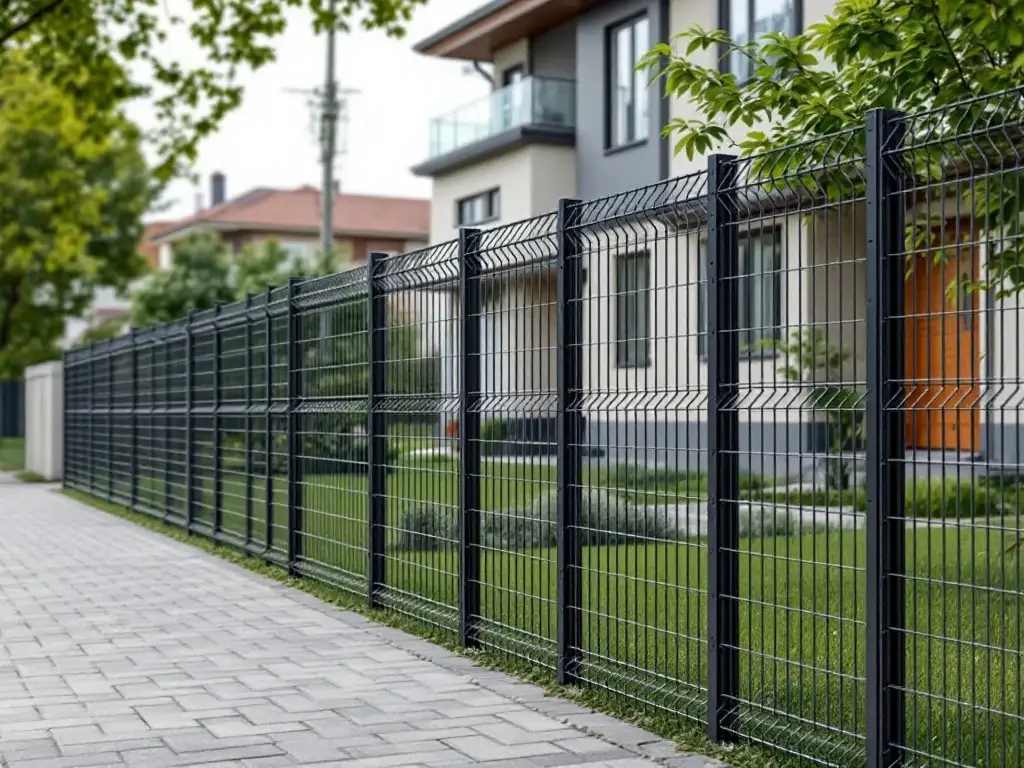
2,03 m panels made of 5 mm rod on 60×60 posts: tall and rigid, impossible to climb over without a ladder.
- From 8 500 ₸ per linear meter
- Height 2,03 m, graphite RAL
- Rod 5 mm, post 60×60
Advantages:

With shading
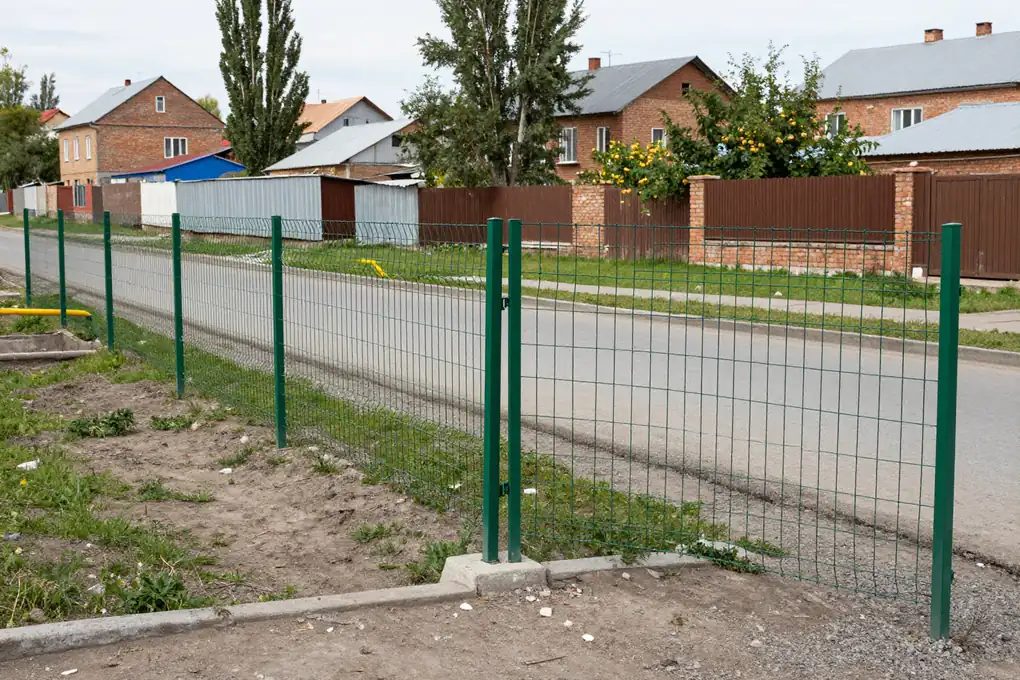
2,03 m sections with PVC shading tape: the yard is almost invisible from the street, yet wind passes through.
- From 10 500 ₸ per linear meter
- Rod 5 mm, height 2,03 m
- Tape to match the panel color
Advantages:

On the base
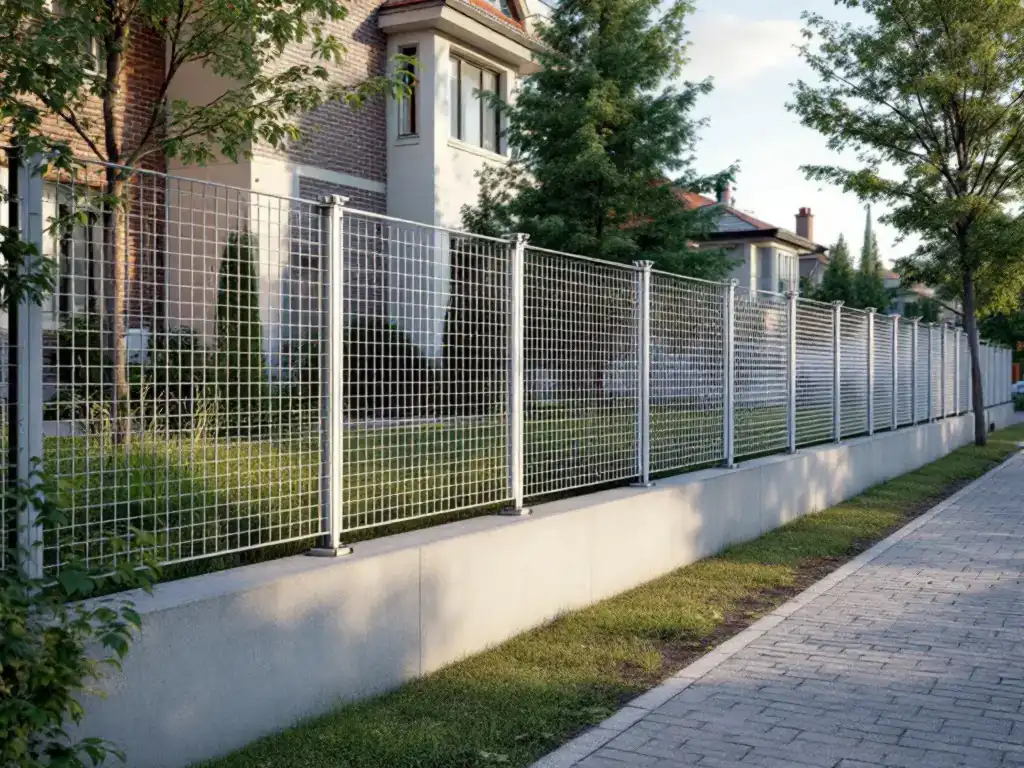
2,03 m sections on a 60×20 cm strip foundation: no gap underneath, holds the terrain difference.
- From 14 000 ₸ per linear meter
- Foundation 60×20 cm
- Base around the perimeter
Advantages:

With polycarbonate
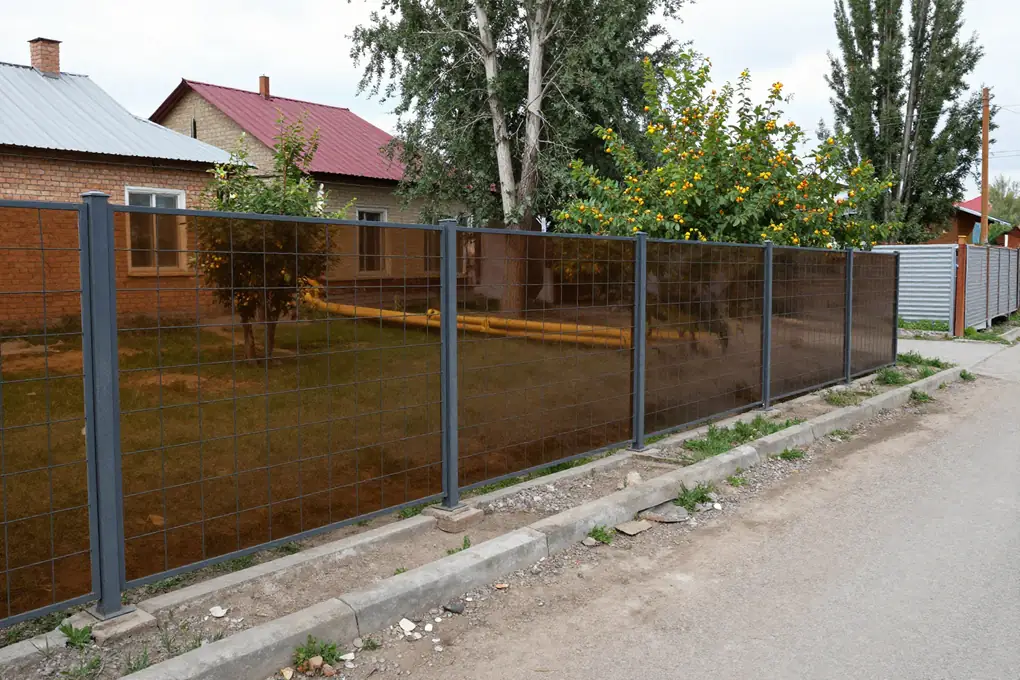
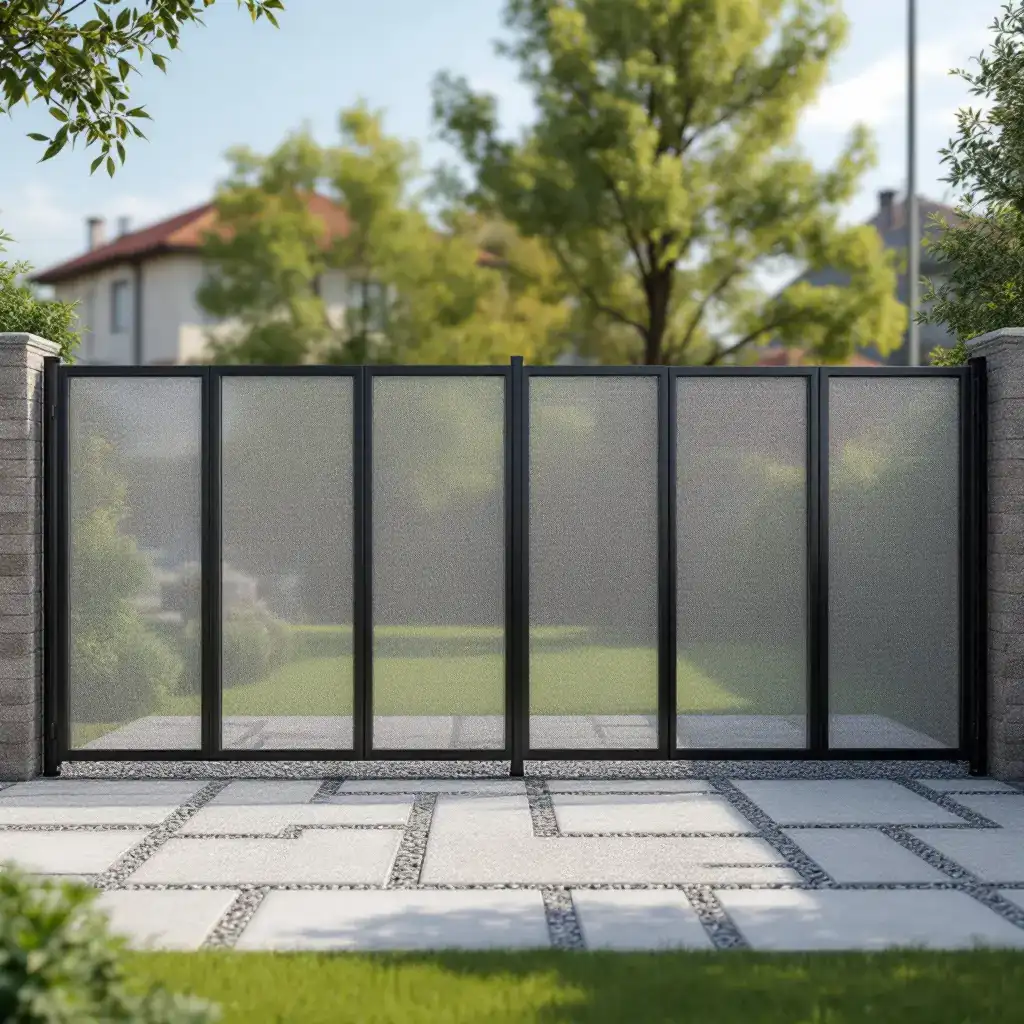
2,03 m sections with polycarbonate sheets on the inside: the yard is hidden from view, light passes through.
- From 15 500 ₸ per linear meter
- Light passes into the yard
- Solid infill of sections
Advantages:
We'll reply in 15 minutes
Types of 3D fences
Standard
1,53 m panels made of 4 mm rod on 60×40 posts: a lightweight fence, lets wind through and does not shade the garden beds.
- From 6 200 ₸ per linear meter
- Post 60×40 mm
- Rod 4 mm, green RAL
Advantages:
Reinforced
2,03 m panels made of 5 mm rod on 60×60 posts: tall and rigid, impossible to climb over without a ladder.
- From 8 500 ₸ per linear meter
- Height 2,03 m, graphite RAL
- Rod 5 mm, post 60×60
Advantages:
With shading
2,03 m sections with PVC shading tape: the yard is almost invisible from the street, yet wind passes through.
- From 10 500 ₸ per linear meter
- Rod 5 mm, height 2,03 m
- Tape to match the panel color
Advantages:
On the base
2,03 m sections on a 60×20 cm strip foundation: no gap underneath, holds the terrain difference.
- From 14 000 ₸ per linear meter
- Foundation 60×20 cm
- Base around the perimeter
Advantages:
With polycarbonate
2,03 m sections with polycarbonate sheets on the inside: the yard is hidden from view, light passes through.
- From 15 500 ₸ per linear meter
- Light passes into the yard
- Solid infill of sections
Advantages:
We'll reply in 15 minutes
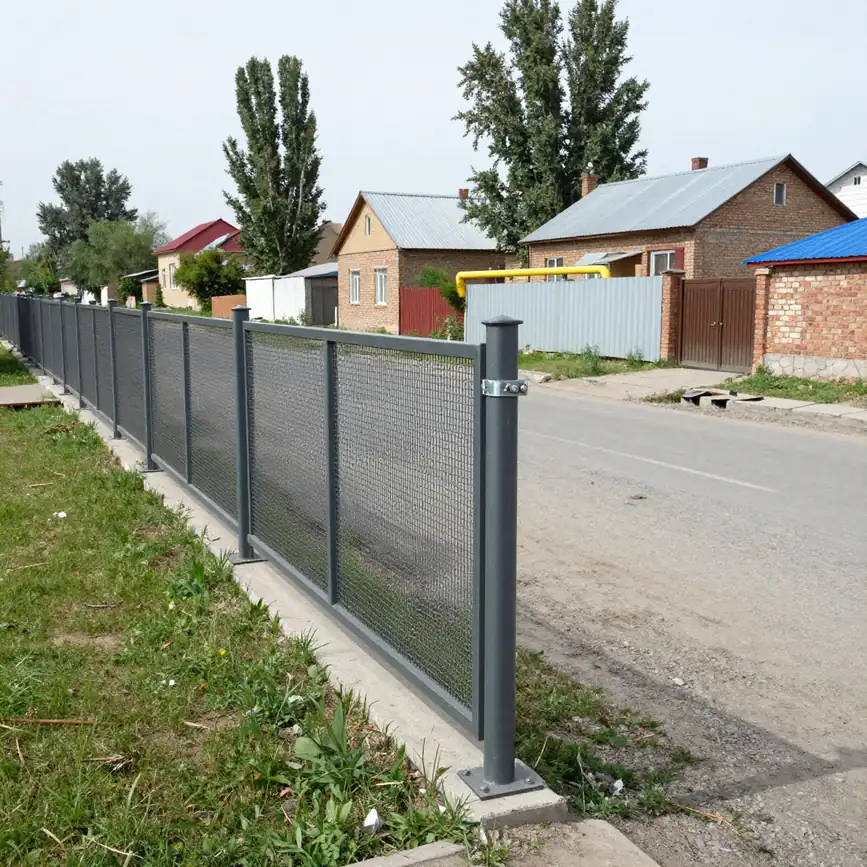
we make 3D fences to size:
We look at boundaries, terrain and entrance
We select the height, RAL color and gates
We calculate the estimate: panels, posts, installation
By clicking the button you agree to the terms of the
 Privacy Policy
we make 3D fences to size:
LEAVE A REQUESTBy clicking the button you agree to the terms of the
We look at boundaries, terrain and entrance
We select the height, RAL color and gates
We calculate the estimate: panels, posts, installation
Or call us at
+7 700 499 59 62Privacy Policywe make 3D fences to size:
LEAVE A REQUESTBy clicking the button you agree to the terms of the
We look at boundaries, terrain and entrance
We select the height, RAL color and gates
We calculate the estimate: panels, posts, installation
+7 700 499 59 62Or call us at
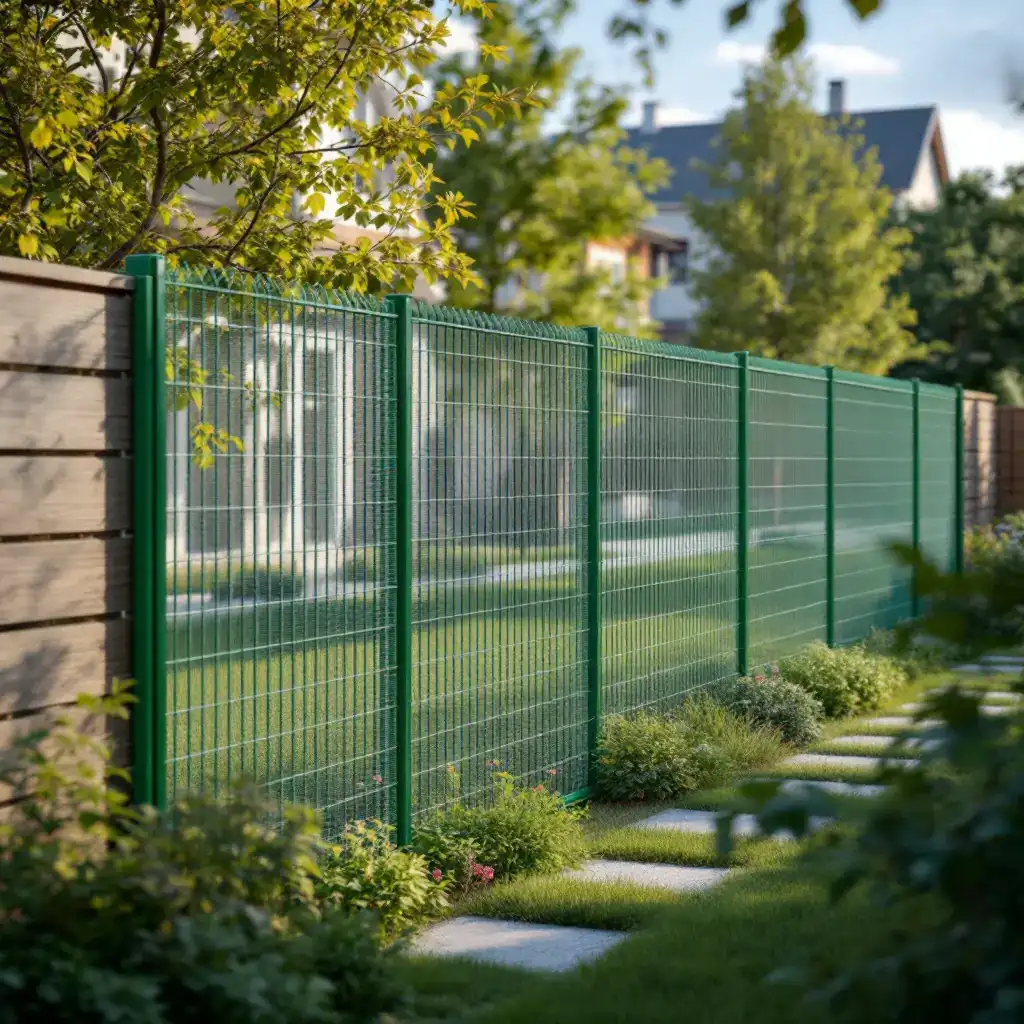
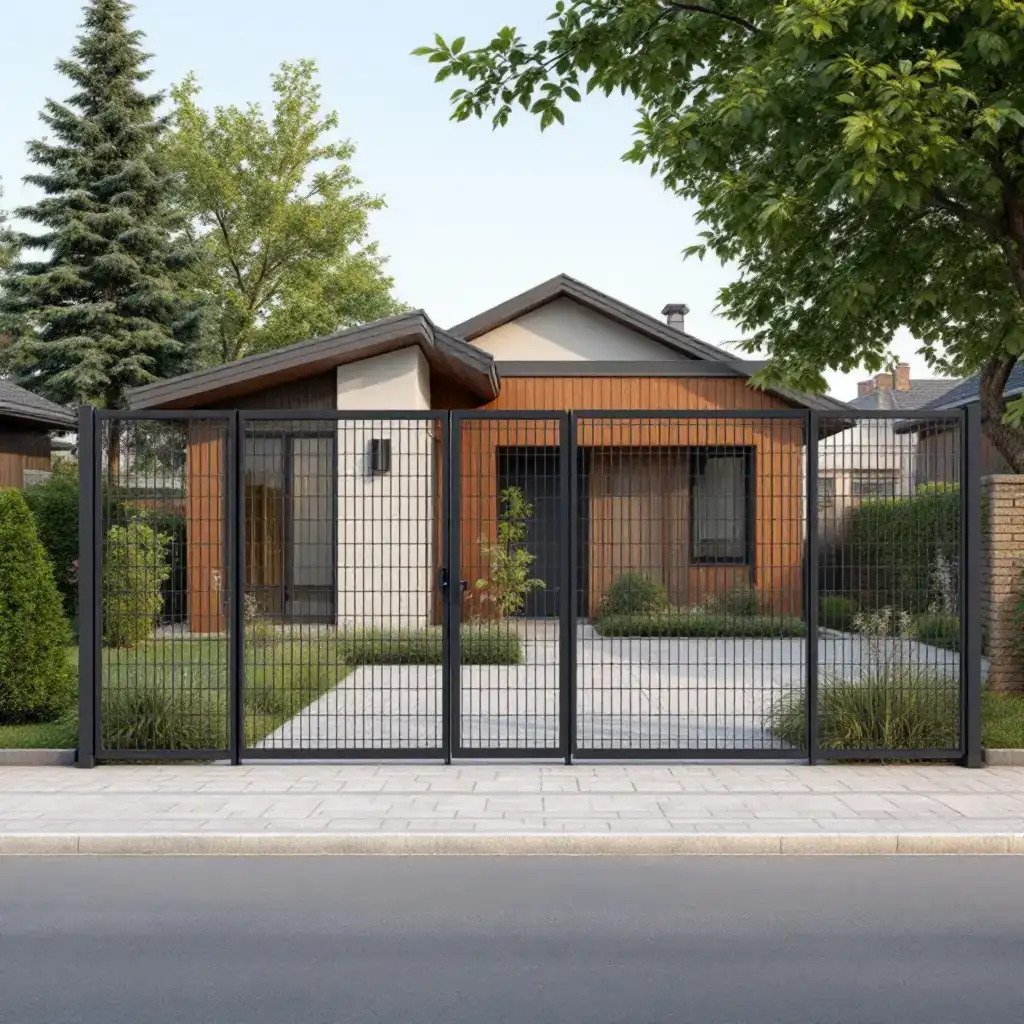
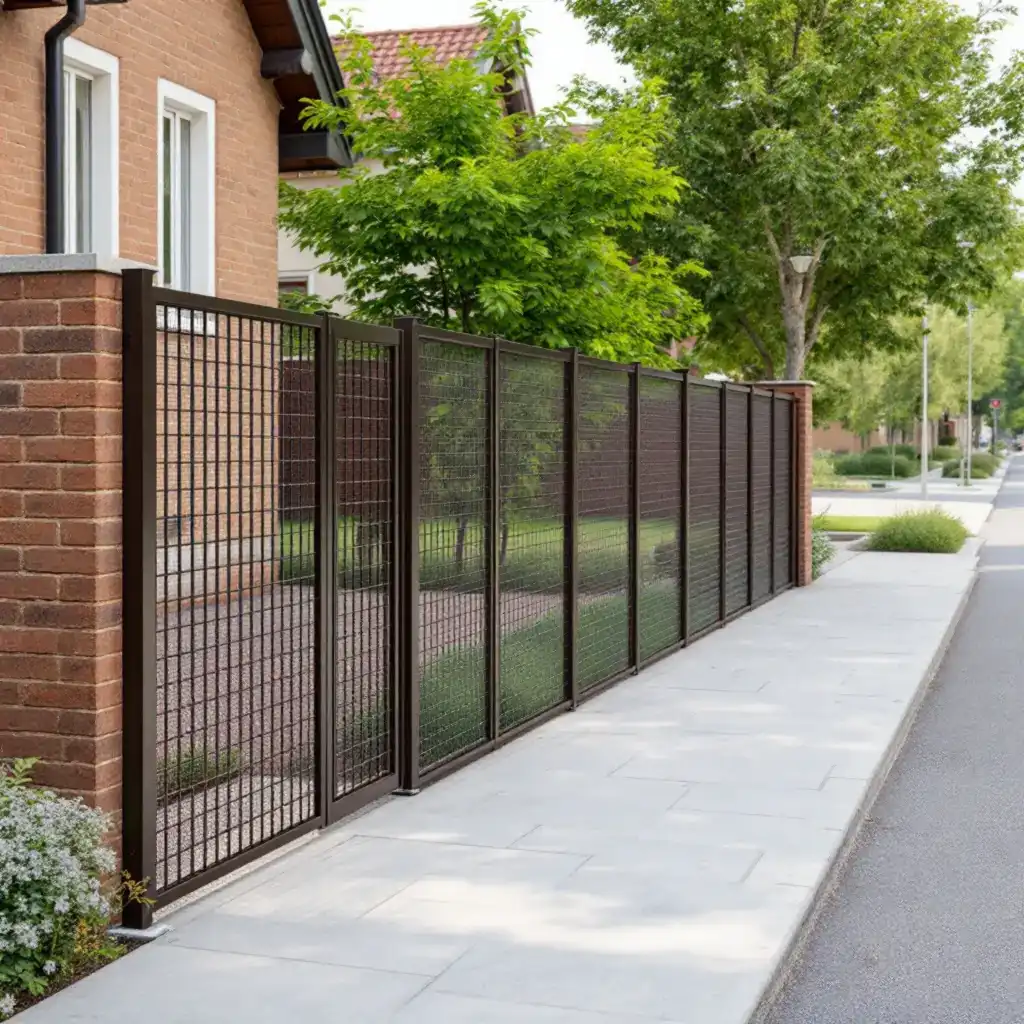
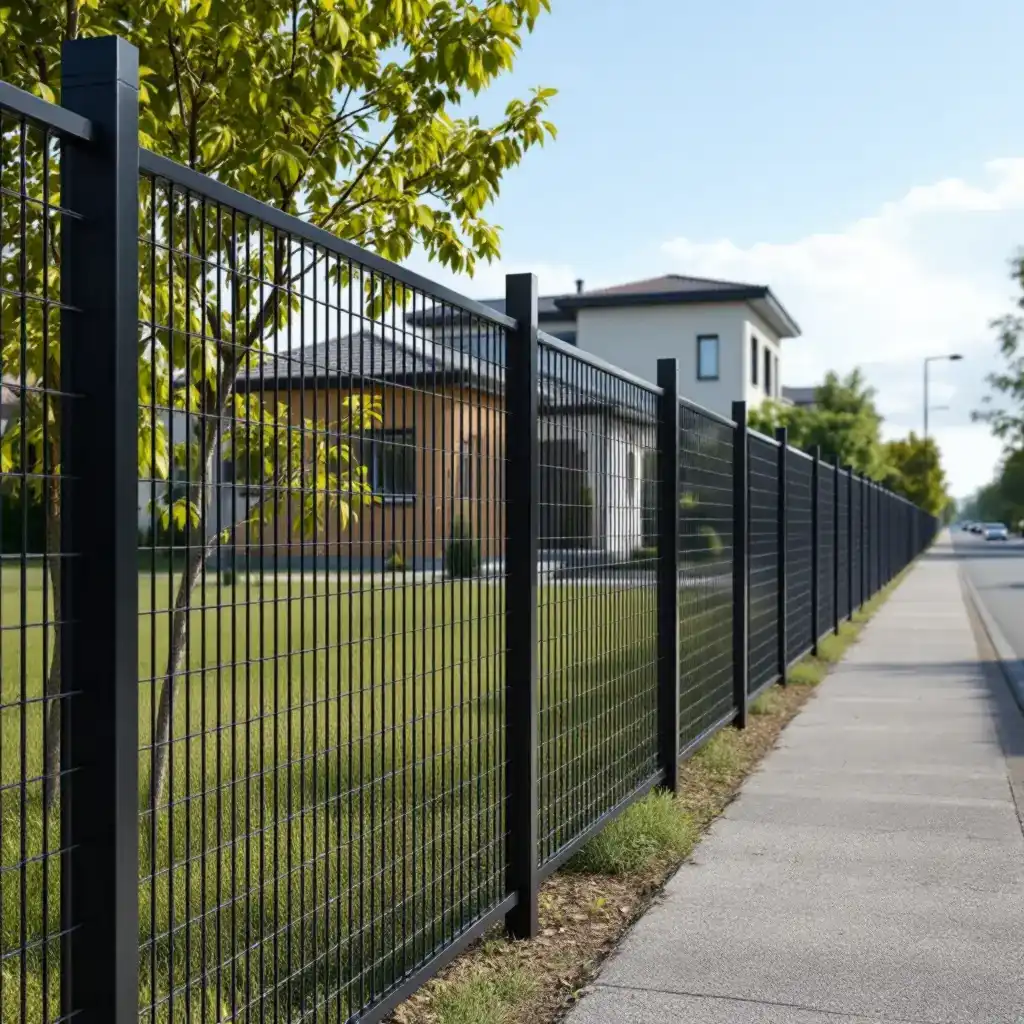
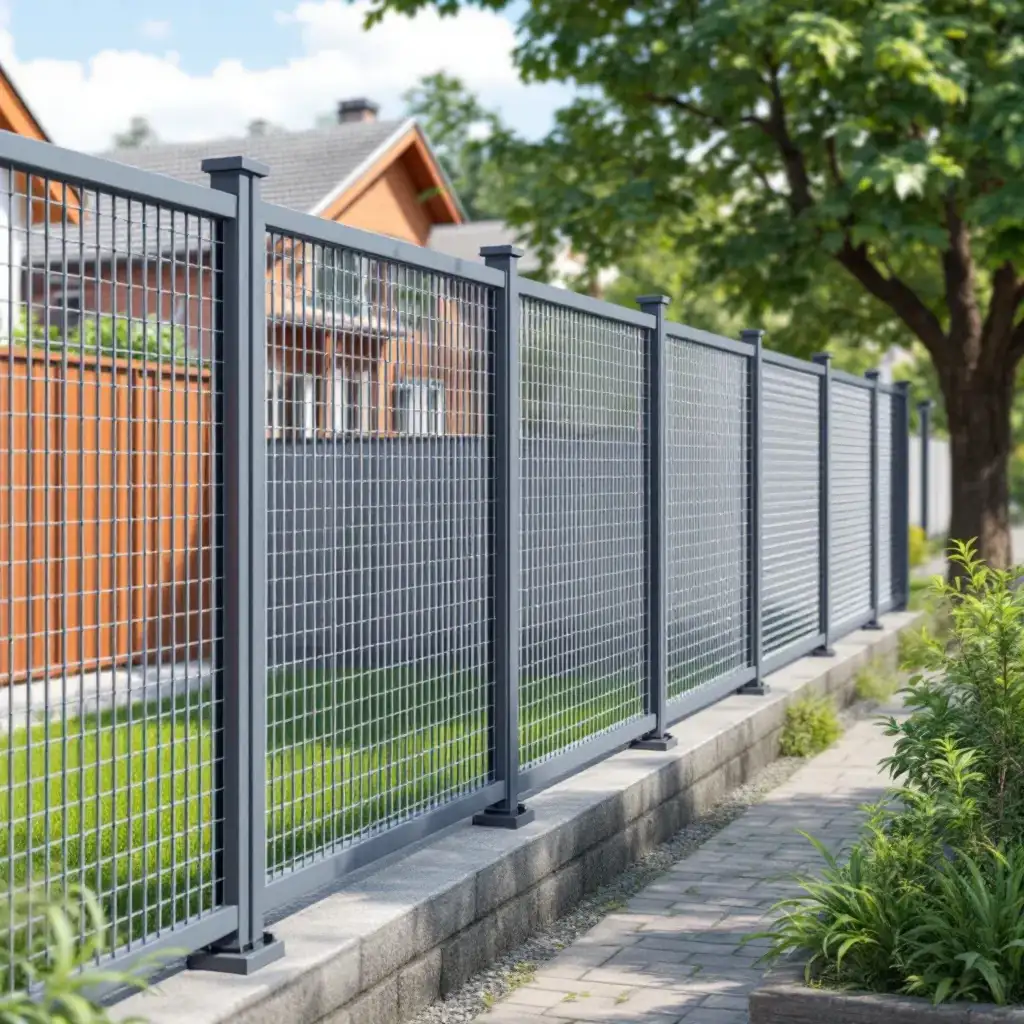
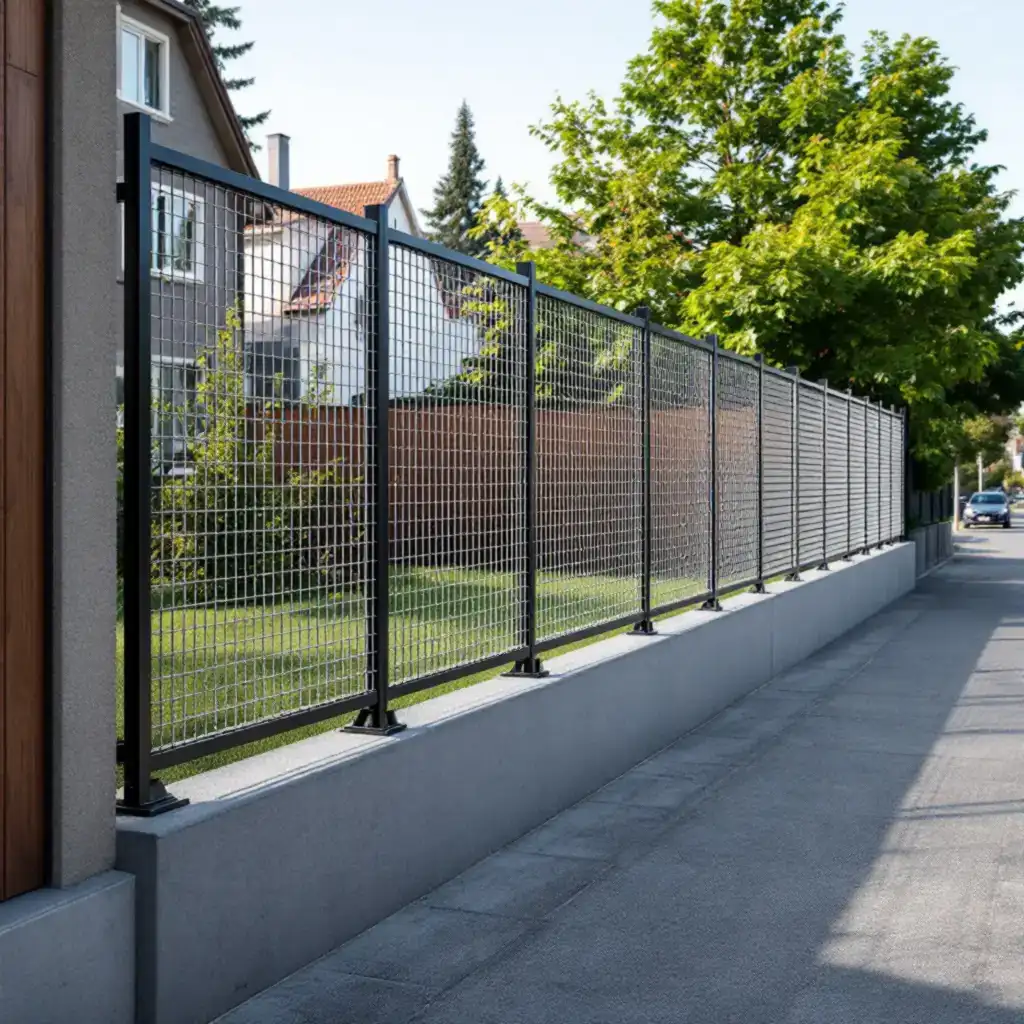
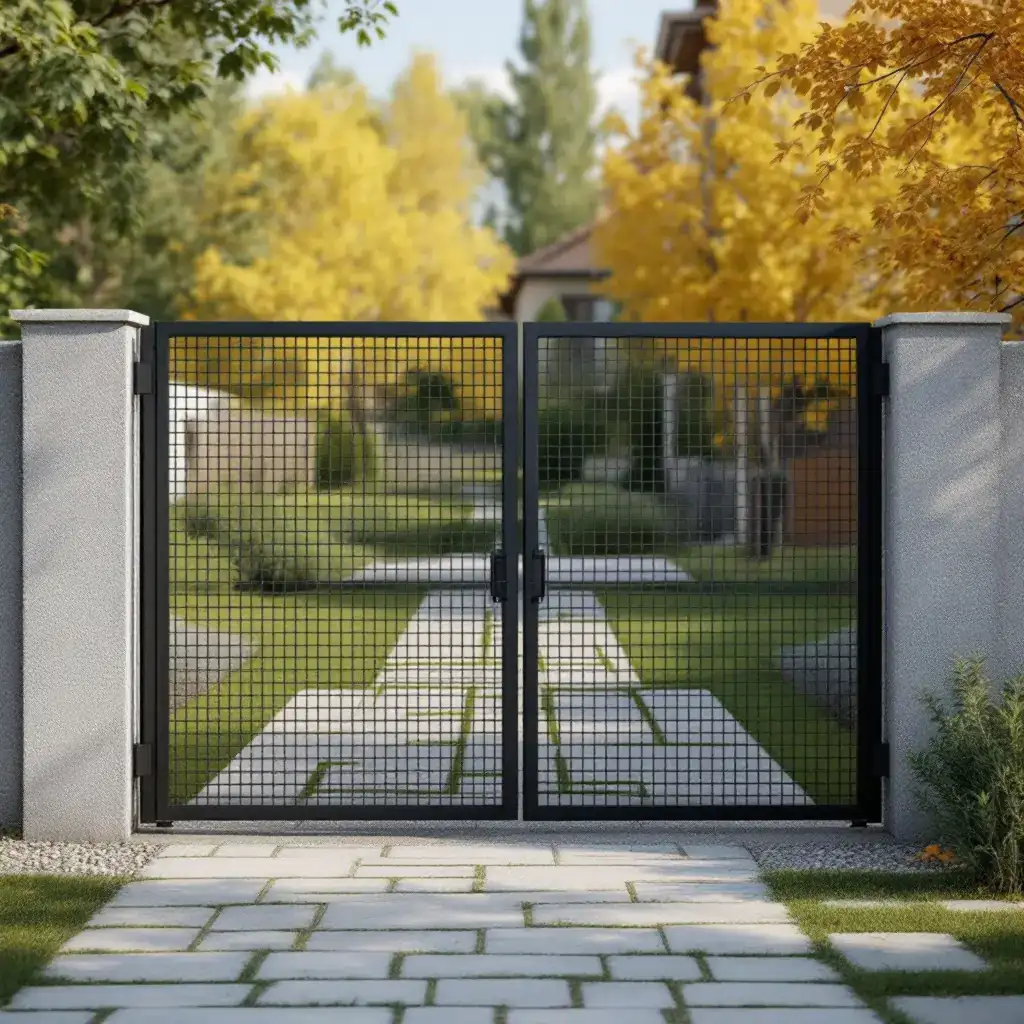
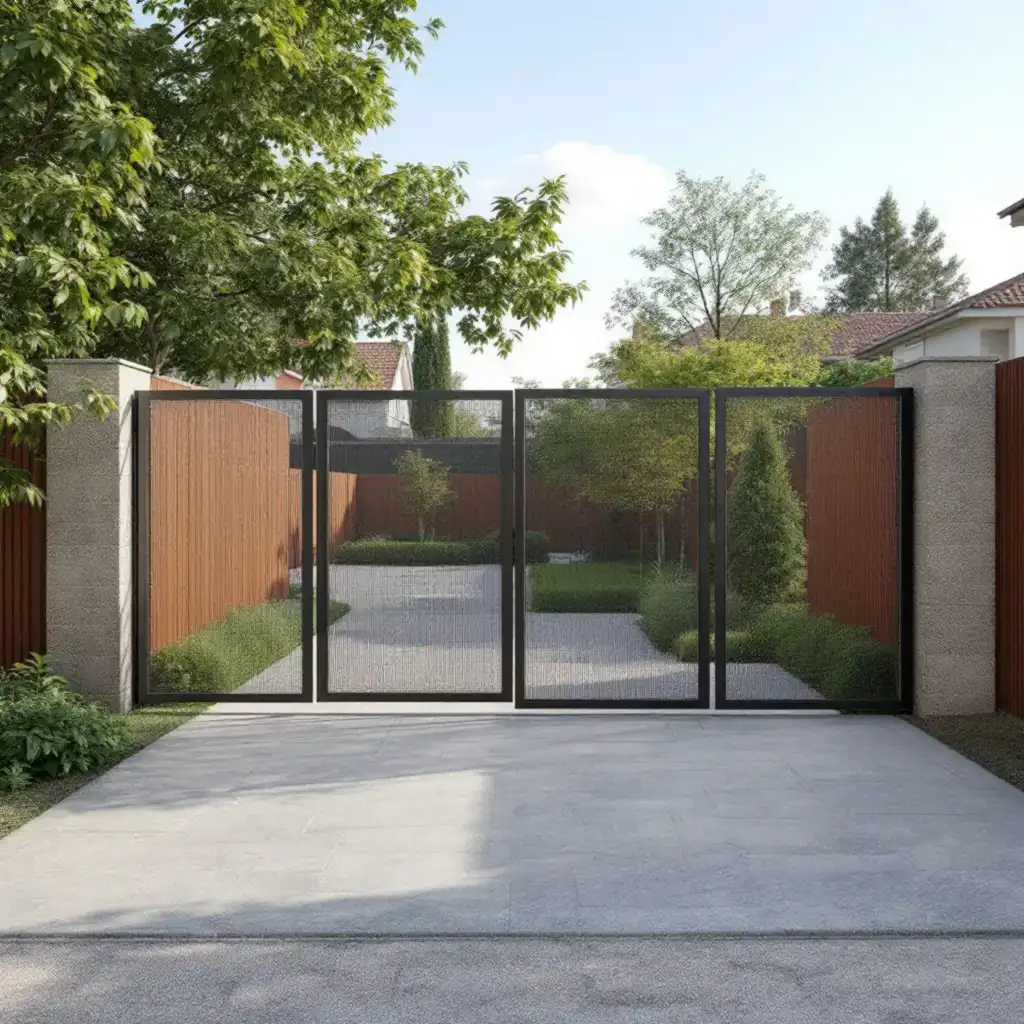
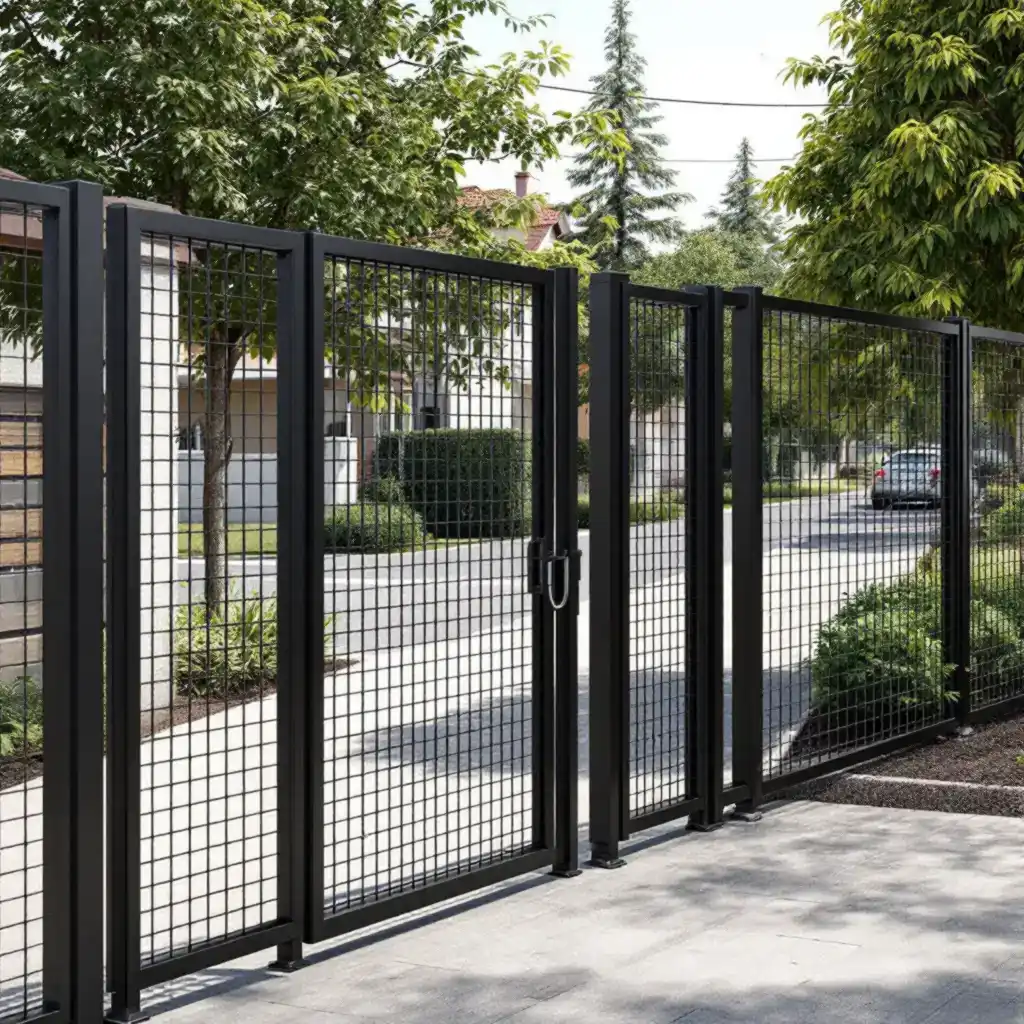
Fence examples
Height, colour and infill options
Prices for 3D fences in Almaty
| SERVICE | COST |
|---|---|
| 3D TURNKEY FENCE, PER LINEAR M | |
| 3D fence 1,53 m, rod 4 mm | from 6 200 ₸ |
| 3D fence 1,73 m, rod 5 mm | from 7 100 ₸ |
| 3D fence 2,03 m, rod 5 mm | from 8 500 ₸ |
| 3D fence 2,43 m, rod 5 mm | from 10 200 ₸ |
| With PVC shading tape, 2,03 m | from 10 500 ₸ |
| On a strip foundation, 2,03 m | from 14 000 ₸ |
| With polycarbonate, 2,03 m | from 15 500 ₸ |
| POSTS, GATES AND WORKS | |
| Strip foundation 60×20 cm | from 5 500 ₸ per linear meter |
| Concreting the posts | included in the price |
| PVC shading tape | from 2 000 ₸ per linear meter |
| Polycarbonate inserts | from 7 000 ₸ per linear meter |
| Swing gates up to 4 m | from 45 000 ₸ |
| Sliding gates | from 85 000 ₸ |
| Wicket with lock | from 35 000 ₸ |
| Gate automation | from 120 000 ₸ |
| Dismantling of a wooden fence | from 1 500 ₸ per linear meter |
| Dismantling of a metal fence | from 2 000 ₸ per linear meter |
| Dismantling of a brick fence | from 3 500 ₸ per linear meter |
| Painting posts to match the panels | included in the price |
| Measurement in Almaty | free of charge |
| Fence design | free of charge |
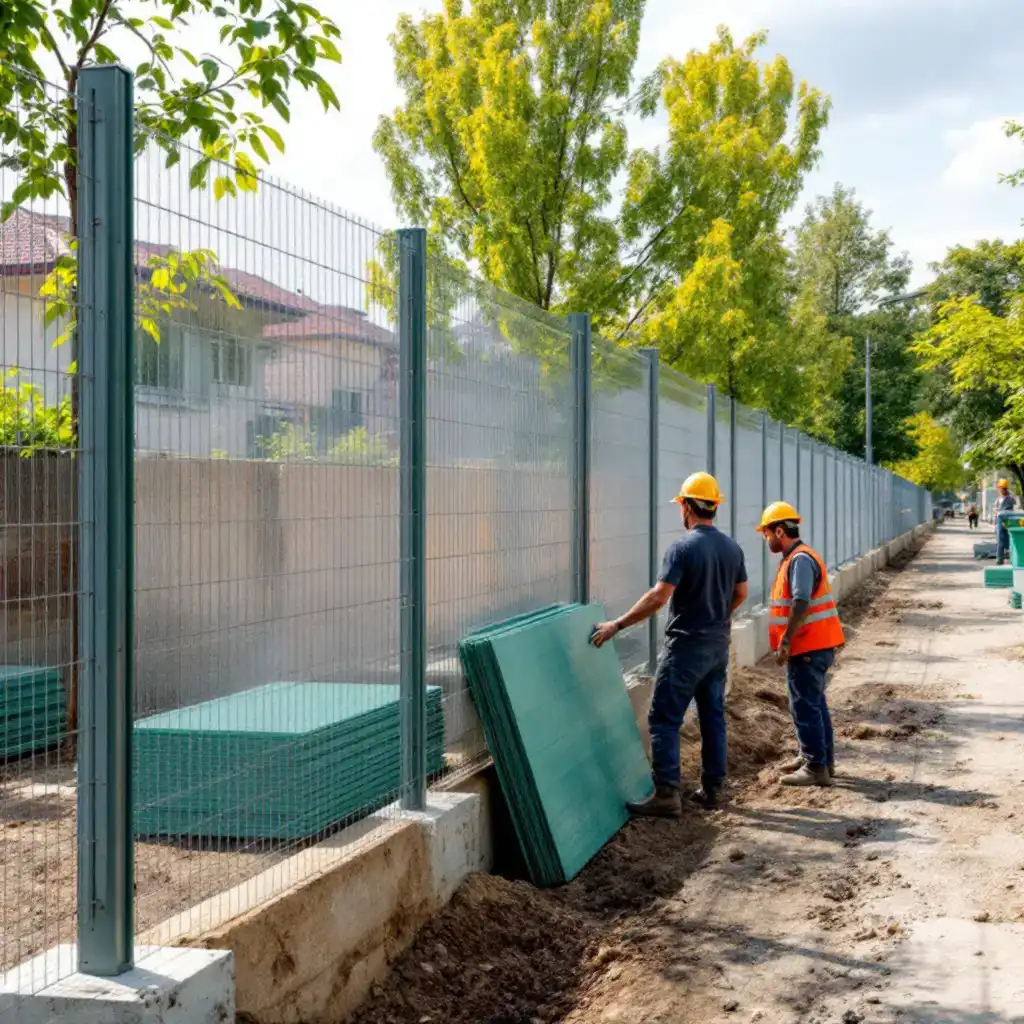
How we install a 3D fence

01.
Measurement
We look at the boundaries, terrain and entrance. Exit within Almaty is free.
02.
Design and estimate
We calculate the linear footage, panel height, posts and fasteners.
03.
signing the contract
We fix prices, deadlines and a 5-year warranty in the contract.
04.
Set
We prepare panels, posts and fasteners for your perimeter.
05.
Posts and installation
We concrete the posts, fasten the panels with clamps, and install the gates and wicket.
06.
Handover and warranty
We show the fence, remove the offcuts, 5 years warranty.
How we install a 3D fence
Measurement
We look at the boundaries, terrain and entrance. Exit within Almaty is free.
01.
Design and estimate
We calculate the linear footage, panel height, posts and fasteners.
02.
signing the contract
We fix prices, deadlines and a 5-year warranty in the contract.
03.
Set
We prepare panels, posts and fasteners for your perimeter.
04.
Posts and installation
We concrete the posts, fasten the panels with clamps, and install the gates and wicket.
05.
Handover and warranty
We show the fence, remove the offcuts, 5 years warranty.
06.
We'll reply in 15 minutes

We will calculate your fence

Thank you! We will contact you within 3 minutes.
By clicking the “Leave a request” button, you agree to the terms
Leave a request — we will measure the site for free and calculate an estimate for a 3D fence
We will calculate your fence
Thank you! We will contact you within 3 minutes.
By clicking the “Leave a request” button, you agree to the terms
Privacy PolicyLeave a request — we will measure the site for free and calculate an estimate for a 3D fence
By clicking the “Leave a request” button, you agree to the terms
Thank you! We will contact you within 3 minutes.
We will calculate your fence
Privacy PolicyLeave a request — we will measure the site for free and calculate an estimate for a 3D fence
Everything about the 3D fence
3д забор от PROFI‑DOM — это сварные панели с V-образными рёбрами жёсткости, оцинкованный пруток 4–5 мм и порошковое покрытие поверх горячей оцинковки. Мы производим панели сами, ставим профильные столбы с бетонированием и работаем по договору с фиксированной ценой, гарантия на конструкцию — 5 лет.
Published: 16 · Updated:
3D panel structure: rod, cell, height, and stiffening ribs
3D panel is the basic module of the fence: the rigidity of the section, the visibility of the yard and the final estimate depend on its parameters. We analyse the rod, the cell, the height and the stiffening ribs — what determines how the fence behaves after five and ten years.
What is a 3D panel and how does it differ from 2D
A 3d fence is assembled from welded panels with V-shaped bends — horizontal stiffening ribs across the entire width of the sheet. Panels 1,53 m high usually have three such bends, 2,03 m — four. In the 2D version there are no ribs: rigidity is provided by a double horizontal rod, so such mesh is heavier and more expensive at the same height. The bends act as stiffening ribs: the panel holds its shape under wind and does not sag if you lean on it, even though the rod remains thin. PROFI-DOM works with panels of its own production, without intermediaries — the geometry of the bends is the same throughout the batch, and the sections fit onto the posts in an even line without adjustment.
Rod and cell: how 3d mesh maintains rigidity
The panel is welded from galvanized rod 4 or 5 mm, the cell is 200×50 mm or 150×50 mm. A 4 mm rod is enough for sections up to 1,53 m in quiet areas, 5 mm is taken for 1,73–2,43 m panels and for open, windy places. A 200×50 mm cell is the standard for a private house and dacha. A 150×50 mm cell is denser: it is harder for a dog to squeeze through and for a child to climb over, and the section comes out stiffer and heavier. The rod diameter and cell pitch solve different tasks: a thick rod is responsible for the stiffness of a tall section, a small cell — for the density of the fabric, and on a tall fence one does not replace the other.
Height and width: how to select panels for the plot
The standard panel width is 2,5 m, height — 1,03; 1,23; 1,53; 1,73; 2,03 or 2,43 m. For 50 meters of perimeter, 20 panels and 21 posts with a spacing of 2,5 m are used. A fence made of 3d panels with a height of 1,03–1,23 m is suitable for a front garden and internal zoning, 1,53–1,73 m — for a dacha and the border with a neighbor, 2,03 m and above — for the street: such a fence cannot be climbed over without a ladder. On sections above 2 m, we install a 5 mm rod and a post with a larger cross-section: a tall section has a larger area that catches the wind.
How to distinguish a quality panel from a thin one
- Welding: cells are uniform across the entire surface, weld points are intact, without burn-throughs or gaps.
- Rod diameter: measure with a caliper at three points — a noticeable deviation from the stated one indicates thinner metal.
- Cuts and weld points: on a good panel they are covered with a polymer layer, on a cheap one — bare metal that rusts first.
- Section weight: compare with the manufacturer's data sheet; if the panel is noticeably lighter, the rod is thinner than declared.
- Coating: the powder layer is even, without drips or bare spots, and does not peel at bends.
- Components: galvanized brackets and bolts must come with the panel, otherwise the fasteners will rust before the fabric.
Coating and rust protection: galvanizing, polymer and colors
Corrosion starts where the metal is exposed — at weld points and on rod cuts. That is why the coating for a fence matters more than the color. Let's look at how bare galvanizing differs from polymer, which palette to choose and how to extend the service life of the sections.
Galvanizing and polymer: why a 3d metal fence does not rust at welding points
We install panels with a polymer coating over galvanization: zinc protects the rod, and the powder layer covers weld points and cuts, which rust first on bare galvanization. Zinc works as a protector — it oxidizes before steel and protects it even at the edge. The polymer on top adds a dense layer of about 100 microns. Before spraying, the panel is degreased: without this preparation, the powder sits on dirt and peels off over time. Under double protection, moisture and air do not reach the steel, so corrosion does not start at the weld point. If the mesh is already turning rusty at the weld, local touch-up helps only briefly — rust comes from inside the joint. It is cheaper to take a panel with polymer right away than to repair galvanized one later.
Coating colors: brown, green and graphite
The main panel colors are green RAL 6005, brown RAL 8017 and graphite RAL 7016. If you need a 3d brown fence, we take RAL 8017: it looks calm next to brick, wood and roofing tiles. Green RAL 6005 gets lost against the garden and is well suited for a dacha, graphite RAL 7016 — for modern facades with dark finishes. In the Almaty sun, it is not the shade but the quality of the powder that holds the color: good polymer does not fade for years, cheap one loses saturation in a few seasons. Dark colors heat up more in the sun — on the south side of the plot this should be taken into account when choosing between graphite and green. We paint gates and wickets in the same RAL as the sections so there is no color mismatch.
How long a 3D fence will last and how to maintain it
- Coating resource: a panel with galvanisation and polymer serves for decades without repainting, if the layer is not damaged.
- Inspection once a year: check the weld points, the edges of the rod, and the lower edge of the fabric — the first chips appear there.
- Washing: dust is rinsed off with a hose at low pressure, abrasives and solvents leave matte spots.
- Repair of chips: a scratch down to metal is cleaned, degreased and touched up with repair enamel in RAL color.
- What accelerates corrosion: contact of the panel with the ground, constant wetting of the bottom edge, and fasteners made of black metal without zinc.
Posts, fasteners and base for Almaty soils and wind
The panel rests on posts and a foundation, not the other way around: a well-thought-out profile, fasteners, and concreting determine whether the structure will last ten years or warp after the first winter. We break down the components and local soils.
Posts and fasteners: how to assemble a fence from 3d mesh
We equip the fence with profile posts 60×40 and 60×60 mm, fasten sections with brackets or clips and cover the posts with caps against moisture. Profile 60×40 mm with a 2 mm wall is suitable for sections up to 1,73 m high; for 2,03 m and above we install 60×60 mm — in the wind the difference in rigidity is immediately noticeable. Galvanized brackets fix the panel to the post at several points along the height and prevent the section from rattling in gusts of wind. We take the post with a length reserve for concreting so that the top of the mesh and the post run in one line. A cap for the post is inexpensive, but without it water collects inside the pipe and in winter ruptures the metal — in the PROFI-DOM estimate this unit is included by default, not as an option. During acceptance, check that caps are on all posts and the fasteners are tightened.
Concreting on heaving soil: how to install a 3d fence on difficult ground
On heaving soil we concrete the posts below the freezing depth, and leave driving and screw piles for sections up to 1,53 m on level sandy areas without heaving. We check how deep the soil freezes during measurement: we drill the hole below this mark and fill it with concrete. The post in such a hole works as an anchor. Heaving pushes out a shallowly dug support in winter and lowers it in spring: if you concrete to 40–50 cm, the fence starts to "wander", and the sections separate at the fasteners. Depth matters more here than the concrete grade: an extra 20 cm of hole is more reliable than a stronger mix.
Wind and seismic loads: which fence can withstand an open plot
For windy areas we select a 5 mm rod, 60×60 mm post and 2,5 m post spacing — such a combination withstands gusts without deformation of the mesh. The mesh fabric lets wind through, so the load on it is less than on a solid fence. But a tall section on a thin rod and sparse posts still begins to vibrate. A light mesh section during an earthquake hardly accumulates inertial load. It is more important that the posts stand in concrete at the required depth and do not lose verticality. A strip foundation or base is an option: it ties the supports together, levels out terrain differences and closes the gap under the panel. If the plot is on a slope, it is better to lay the base immediately, before installing the sections.
Privacy and additions: shading, polycarbonate, gates and wicket
The 3D panel is see-through — this is a structural property of the mesh, not a defect. We'll look at how to add privacy without changing the section and how to complete the perimeter with gates in a matching style.
How to make a 3d fence with polycarbonate and shading tape
We install PVC shading tape in the panel for partial privacy or polycarbonate sheets for full privacy — both options are mounted on a ready fence without reworking the sections. The tape is pulled horizontally through the cells and covers most of the view but leaves ventilation. Sheets of monolithic or cellular polycarbonate are attached to the inner side of the section with plastic ties or clips; the sheet color is matched to the RAL of the sections or taken transparent. A hedge along the fence works together with the mesh: Virginia creeper or ivy closes the gaps in two or three seasons. At PROFI-DOM, tape and sheets can be ordered together with the panels, and we do the cutting on site. Keep in mind that polycarbonate turns the section into a solid shield and adds wind load, so on tall sections it is better to install it in fragments.
Gates and wicket in 3D style
- Gates: frame made of profile pipe, infill — the same 3D panel as in the sections; swing or sliding.
- Gate: standard width about 1 m, with lock and handle, on its own posts next to the gates.
- Single RAL color: 6005, 7016, or 8017 — — the same powder coating as on the sections.
- Automation: if needed, we lay the cable for the drive during installation so the base doesn't have to be opened later.
- Gate posts: we install them with a larger cross-section than for sections and concrete them deeper — they bear the weight of the leaves.
What makes up the cost per linear meter: panels separately or turnkey
The price per meter is not the price of a panel. We break down what makes up the estimate for the entire perimeter and when a turnkey order comes out more even than buying sections separately.
What makes up the price per linear meter
When a person searches for "3d fence price", they usually look at the cost of a section, but a linear meter consists of the panel, post, fasteners, concreting and installation. The section itself is the largest but not the only item in the estimate. A noticeable part is made up of posts with concreting and crew work; gates, a wicket and dismantling of the old fence are calculated separately. Prices for mesh from sellers differ slightly, but for posts and installation the difference can be large: one saves on pipe cross-section and concreting depth, another lays them with a reserve. At PROFI-DOM we calculate the cost of a linear meter as one line for the entire perimeter — with panel, post, fasteners, concrete and installation. Comparing offers by the price of one section is meaningless: calculate the estimate for the entire fence.
Panels separately or turnkey: which is more profitable
A request for “3d mesh price” shows the cost of the bare mesh, but you still need posts, clamps, caps, concrete and crew labor on top. Buying panels separately seems cheaper until these items are added into one sum. A hired crew charges for installation separately and is not responsible for mesh supplied by the customer. A direct contractor with its own production and crews gives you one contract and one responsibility for the whole fence: panel, post, fasteners and installation come as one package. If you do buy yourself, check the post length against the concreting depth for your soil in advance and verify the fastener kit — shortages usually show up on installation day.
3D fence options PROFI-DOM works with
| Option (rod, height, coating) | Where it is appropriate | Rigidity | Visibility |
|---|---|---|---|
| Rod 4 mm, up to 1,53 m, RAL polymer | Dacha, border with neighbor, recreation area | Basic | High |
| Rod 5 mm, 1,73–2,03 m, polymer RAL | Private house, facade | Increased | High |
| Cell 150×50 mm, 1,73 m, polymer RAL | Plot with children and dogs | Increased | High |
| 5 mm rod + PVC shading tape | Boundary with the neighbor | Increased | Medium |
| Rod 5 mm + polycarbonate inserts | Facade, recreation area | Increased | Low |
The option is chosen based on the plot's task, not the price per section: for a border with a neighbor, a 4 mm rod is enough, while for the street-facing facade, 5 mm with polymer is specified.
How to choose a contractor, installation stages, contract and warranty
You can buy a fence as panels on a marketplace, hire a private crew, or order from a direct manufacturer. We'll break down how these schemes differ and what installation looks like from measurement to warranty card.
Marketplace, private crew or direct contractor
Installing a 3d fence with a direct contractor is a single contract for material and installation: PROFI-DOM installs sections of its own production with its own crews, without a reseller's markup. On a marketplace, the buyer gets the mesh and posts separately, looks for installers themselves and pays twice — for the goods and for the work, while the panel seller gives no warranty on installation. A private crew may be cheaper, but it is responsible only for its own work, and if a panel has sagged, the culprit has to be sought between the seller and the installers. With a direct contractor, the estimate is fixed before work begins: it includes sections, posts, fasteners, concrete and installation.
Installation of a 3d fence: stages from measurement to warranty
- Free measurement and design: the surveyor goes to the site, takes elevation differences, marks the line of posts and calculates the footage taking into account gates and wicket.
- Contract and estimate: we fix the price per linear meter, rod, section height, post cross-section, and concreting method.
- Installation: the crew concretes the posts, sets the sections level and tightens the fasteners; we install a fence on posts in 2 days, with a strip foundation — longer: the concrete needs to gain strength.
- Handover and warranty: we check the fence together with you and remove the offcuts; we give a 5-year warranty on the structure.
Conclusion
We've gathered the key parameters that determine whether a fence will stand for ten years or warp after the first winter — from the rod to the full estimate for the plot.
- Rod and height: 4 mm holds a section up to 1,53 m, 5 mm — for 1,73–2,03 m and windy areas.
- Coating: polymer over hot-dip galvanizing protects weld points and cuts — corrosion starts exactly there.
- Foundation: on heaving soil, posts are concreted below the freezing depth; driving and piles — only for light sections.
- Privacy: shading tape or polycarbonate is added without changing the load-bearing structure and posts.
- Estimate: a linear meter is calculated for the entire perimeter — panel, post, fasteners, concrete, gates, wicket and installation.
- Wind: on an open plot, a 5 mm rod and a 60×60 mm post are needed — the stiffness margin pays off.
 Айдос БаймуханбетовGate installation masterExperience 21 years · Rating 4,62 (81 reviews)About the author
 Dilshot SaparovForeman of installersExperience 15 years · Rating 4,7 (100 reviews)About the author
 Bakhitshat KhamraevGate installerExperience 16 years · Rating 4,88 (65 reviews)
 Bakhtiyar D.WelderExperience 12 years · Rating 4,5 (58 reviews)
 Vladimir ShkurkoMetal structures masterExperience 20 years · Rating 4,88 (75 reviews)
 Dauren TleukulMetal structures welder-assembler23 years of experience · Rating from 4,96 (50 reviews)
 Edil NugmanovGate installerExperience 15 years · Rating 4,63 (28 reviews)
 Kosylbek KurmangazhievGate installer23 years of experience · Rating from 5,0 (60 reviews)